The mutual defence agreement signed by Türkiye and Qatar on November 13, 2026, represents more than an expansion of bilateral military cooperation. It reflects a gradual restructuring of Middle Eastern security arrangements, as regional governments seek additional military guarantees while preserving their established strategic partnerships.
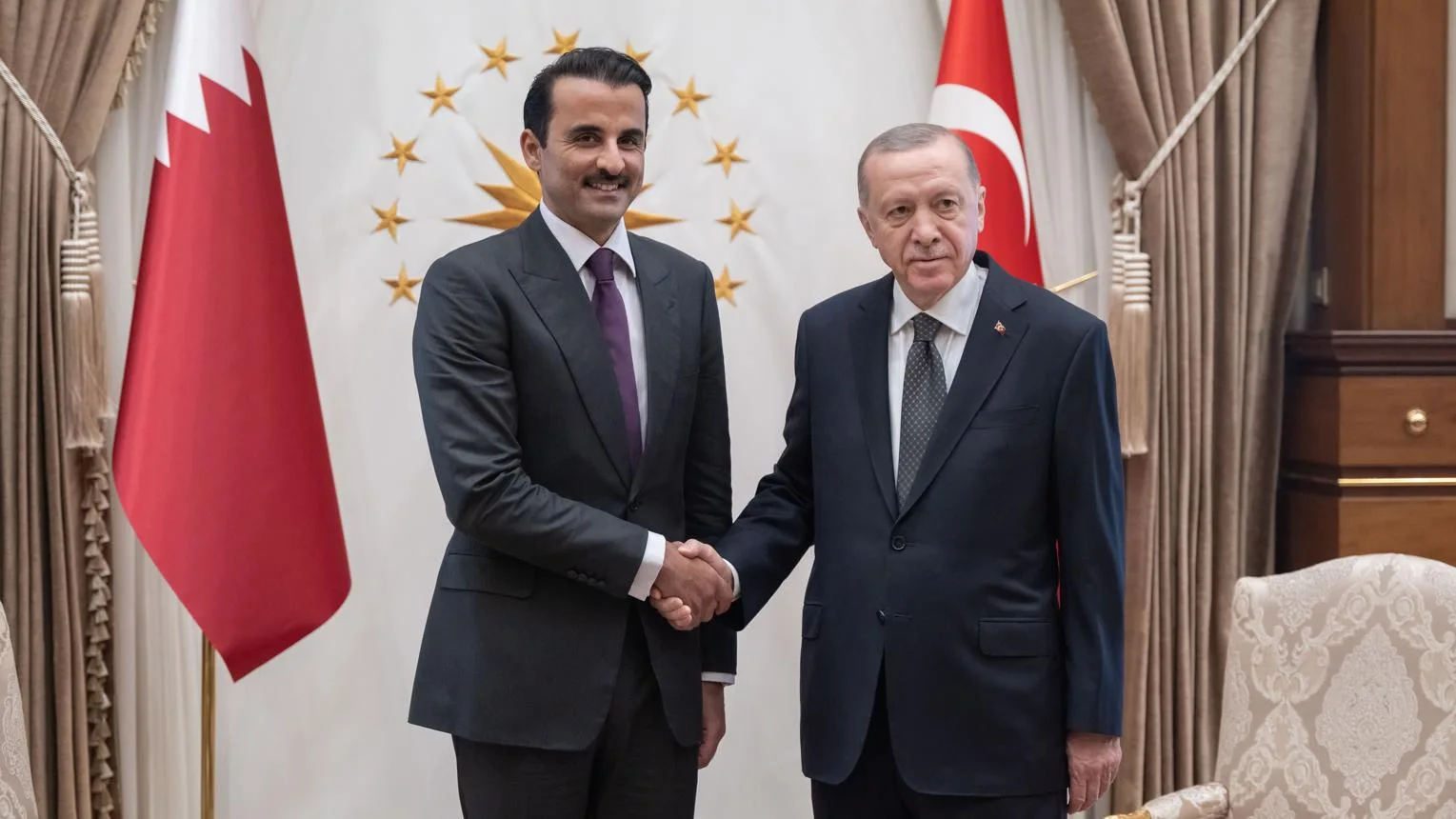
Meeting in Istanbul, Turkish President Recep Tayyip Erdoğan and Qatar's Emir Sheikh Tamim bin Hamad Al Thani formalised a commitment to strengthen collective defence. Their joint statement established a unified position against external armed attacks targeting either country and called for closer strategic consultations, joint exercises, defence-industrial cooperation and military training.
The agreement comes amid a regional security environment transformed by the conflict involving Iran and growing uncertainty over the effectiveness of existing deterrence arrangements. For Gulf governments, acquiring sophisticated military equipment is no longer sufficient. The increasingly important question is which partners can provide credible assistance when regional security deteriorates.
Türkiye and Qatar already maintain an extensive military relationship. Ankara has an established military presence in Qatar, and both governments have developed cooperation in training, defence procurement and diplomatic coordination. The new agreement gives this relationship a more explicit strategic dimension by linking the security of each country to that of the other.
The development also illustrates Türkiye's expanding regional ambitions. As a NATO member with a growing defence industry and considerable operational experience, Ankara is seeking to consolidate its position as a security provider beyond its immediate neighbourhood.
Its agreement with Qatar follows the defence pact concluded in August with Saudi Arabia and Pakistan, adding another layer to an emerging network of security commitments.
These arrangements do not yet constitute an integrated regional alliance. Their decision-making procedures, military obligations and operational mechanisms are not necessarily identical. Nevertheless, their expansion suggests that regional governments increasingly favour overlapping guarantees rather than exclusive dependence on a single external power.
For Qatar, diversification is particularly significant. Its geographical position, energy infrastructure and diplomatic role expose it to the consequences of regional confrontation. Credible protection requires a combination of air defence, intelligence cooperation, military presence and rapid-response capabilities.
The United States remains central to Qatar's security architecture. The agreement with Türkiye does not indicate that Washington is being replaced. Instead, it points towards a multilayered security system in which American partnerships coexist with increasingly autonomous regional commitments.
Such arrangements also create uncertainties. Multiple defence agreements may strengthen deterrence, but they can complicate coordination during a crisis. Their credibility ultimately depends on the specific assistance mechanisms established and the political willingness of participating governments to act.
The Gulf is therefore moving towards a security structure that is less exclusively dependent on American protection. Türkiye is emerging as an additional strategic actor rather than an immediate substitute for Washington.
The November 13 agreement marks another stage in this transition. Its lasting significance will depend on whether political commitments can be translated into operational capabilities and sustained military coordination.
Principal sources: Turkish Ministry of Foreign Affairs, joint communiqué of November 13, 2026; Reuters, November 13, 2026; The National, November 14, 2026.
Atlas Limits Research Desk
Atlas Limits’ editorial and analytical desk.