On October 20, 2026, a parliamentary vote in eastern Libya altered the diplomatic balance of the Eastern Mediterranean. Seven years after Turkey and the Tripoli-based government signed a controversial maritime agreement, the political authorities in eastern Libya, which had long rejected it, finally approved the document.
The decision did not physically move a border, allocate an offshore gas field, or settle an international legal dispute. Yet its strategic significance is considerable. Ankara has secured recognition of a central element of its Mediterranean policy from a Libyan political camp that once opposed Turkey's military intervention.
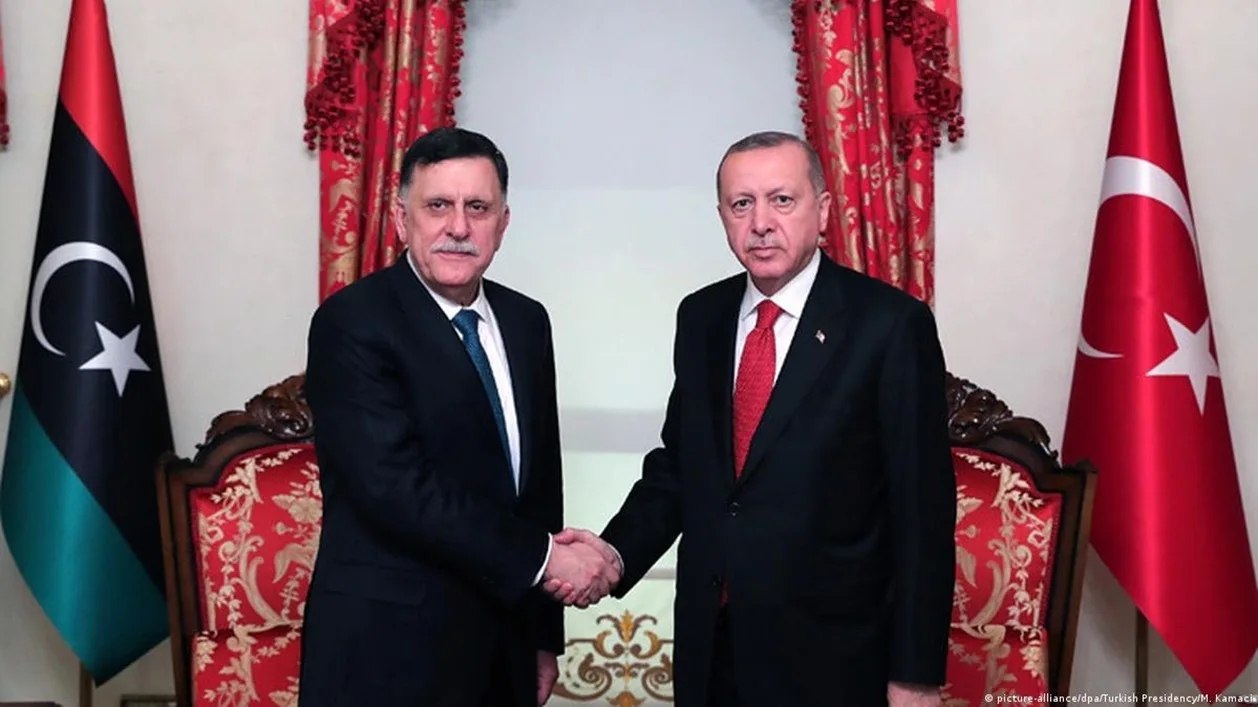
The reversal is striking. In 2019, when President Recep Tayyip Erdoğan signed the agreement with Fayez al-Sarraj's Government of National Accord, forces commanded by Khalifa Haftar were advancing toward Tripoli. Turkey intervened in support of the government they were fighting. In 2026, the eastern House of Representatives in Tobruk has approved that same agreement and reversed its earlier decision to sever political relations with Ankara.
The development extends beyond reconciliation between former adversaries. It reflects a broader transformation of Mediterranean power relations, where military alliances, maritime claims and energy interests increasingly transcend the divisions created by earlier conflicts. 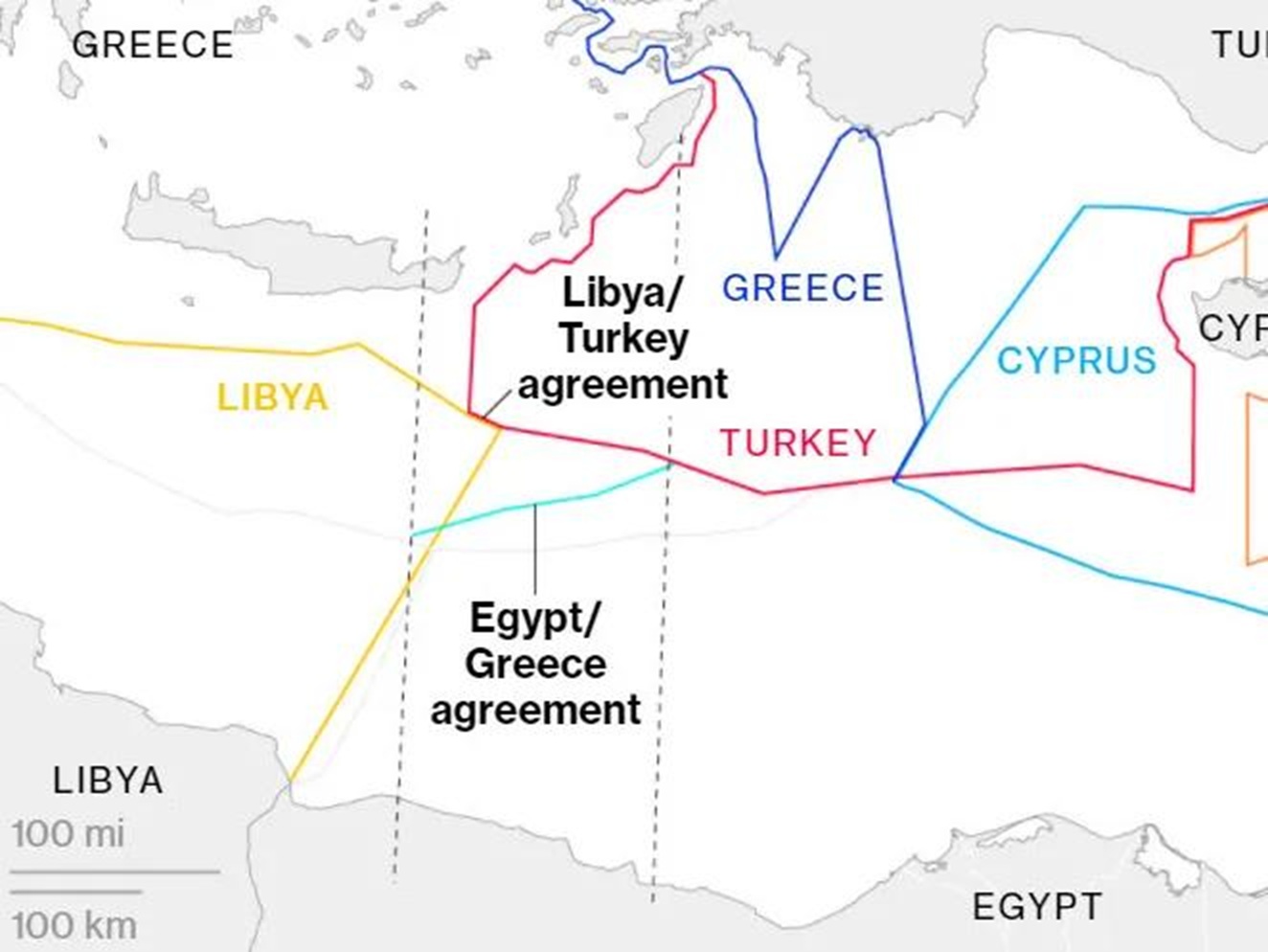
A Boundary Drawn Through Regional Rivalries
The origins of the dispute lie in the maritime memorandum signed in Istanbul on November 27, 2019. Turkey and Libya's internationally recognized Government of National Accord agreed to delimit their maritime jurisdiction areas in the Mediterranean. The agreement entered into force on December 8 and was registered with the United Nations on December 11.
The geographical logic advanced by Ankara is straightforward but deeply contested. Turkey and Libya claim that their mainland coastlines can generate maritime entitlements allowing them to establish a common boundary across the Eastern Mediterranean.
The difficulty lies in the islands situated between these coasts, particularly Crete.
Greece maintains that the agreement disregards the maritime entitlements of Greek islands, including their continental shelf and exclusive economic zone rights. Turkey argues for an approach that gives substantial weight to mainland coastlines and challenges the maritime effect claimed for islands in certain delimitation circumstances.
The disagreement involves more than competing maps. It concerns how international law should be applied to a complicated geographical setting.
Under Article 121 of the United Nations Convention on the Law of the Sea, qualifying islands can generate maritime zones. International jurisprudence nevertheless distinguishes between the existence of maritime entitlements and the weight given to particular geographical features when drawing an equitable boundary.
Some islands have received reduced effect in specific delimitation cases. That does not establish a general right to disregard them.
Turkey is not a party to UNCLOS, unlike Greece, although applicable customary international law remains relevant to both countries.
Registration of the 2019 memorandum with the United Nations does not constitute international judicial approval of its legality. Equally, endorsement by Libya's eastern parliament cannot, by itself, impose a maritime boundary on third states whose rights may be affected.
This distinction is central to understanding the October 2026 development. Ankara has secured a diplomatic achievement, not a definitive international legal ruling.
Haftar's Political Reversal
The significance of the parliamentary decision lies less in the wording of the 2019 agreement than in the identity of the political actors now supporting it.
During the battle for Tripoli, Turkey and Haftar's forces stood on opposite sides of the conflict. Eastern Libyan forces benefited from external support, including from Egypt and the United Arab Emirates, while Ankara provided decisive assistance to the internationally recognized government.
Turkish involvement helped alter the military balance in 2020. Haftar's offensive failed, and the ceasefire concluded in October that year consolidated a territorial division that continues, in different institutional forms, today.
Libya remains divided between internationally recognized authorities in the west and competing political and military structures in the east, where Haftar retains considerable influence.
For years, that fragmentation limited Turkey's reach. Ankara maintained strong relationships in Tripoli but faced opposition from political and military actors in Benghazi and Tobruk.
The October 20 vote changes that equation.
Eastern lawmakers approved the maritime memorandum and reversed their 2020 decision to break political relations with Ankara. The eastern authorities now portray cooperation with Turkey as consistent with Libya's national interests.
This does not mean that Libya has achieved political reunification or that its competing administrations have adopted a unified foreign policy. Institutional fragmentation, competing security structures and divergent economic interests remain.
What has changed is Turkey's ability to engage across those divisions.
Rather than relying exclusively on the Tripoli government, Ankara has gradually cultivated relations with eastern Libyan officials, military figures and economic networks.
Turkey is no longer positioning itself solely as the external partner of one Libyan faction. It is seeking to become a power with which all major Libyan political centers must negotiate.
Energy as an Instrument of Sovereignty
The Eastern Mediterranean is not merely a theater of territorial competition. Offshore gas discoveries, electricity interconnections and exploration projects have transformed the region's strategic calculations.
Major discoveries off Israel, Cyprus and Egypt have created expectations of significant energy development.
Egypt's Zohr field, discovered in 2015, was initially estimated to contain approximately 30 trillion cubic feet of gas, equivalent to roughly 850 billion cubic meters.
Such discoveries have encouraged regional governments to seek greater control over maritime resources, although commercial production depends on far more than geological potential. Water depth, infrastructure availability, financing, market demand and legal certainty all determine whether offshore resources can be developed economically.
For Turkey, energy policy intersects with a broader objective: preventing its exclusion from maritime delimitation arrangements and regional infrastructure networks.
Turkey possesses a substantial Mediterranean coastline, significant domestic energy demand and a strategic position between several producing and consuming regions. Ankara has long sought to strengthen its role as an energy corridor linking Russia, the Caucasus, the Middle East and Europe.
The Libyan agreement fits within that ambition, but it guarantees neither commercially recoverable resources nor future production.
In June 2025, Libya's National Oil Corporation and Turkey's state energy company TPAO signed a memorandum concerning geological and geophysical studies in four offshore areas.
The arrangement demonstrated an intention to translate maritime cooperation into practical exploration activity.
It did not establish that commercially viable reserves had been discovered, nor did it eliminate the political and legal risks associated with offshore investment.
The distinction between maritime claims, exploration authorization, resource discovery and commercial production remains essential. These stages can be separated by many years.
The strategic value of the Turkey–Libya agreement therefore lies partly in the options it creates, rather than in resources already proven or developed.
Greece Faces a Changed Diplomatic Landscape
For Athens, the October 20 decision represents a diplomatic setback.
Until now, Greece could point to opposition from eastern Libya as evidence that the 2019 memorandum lacked broad political acceptance within Libya itself.
That argument has become less persuasive following the eastern parliament's approval, even though the underlying legal dispute remains unresolved.
Greece's Foreign Ministry immediately rejected the decision, maintaining that the memorandum violates international maritime law and cannot infringe the sovereign rights of regional states.
Athens argues that Greek islands generate maritime entitlements that must be considered in any lawful delimitation.
The controversy forms part of the longstanding Greek-Turkish rivalry, but the Libyan dimension expands its geographical reach.
The dispute is no longer confined to the Aegean Sea or waters surrounding Cyprus. It also encompasses maritime areas south of Crete, where energy exploration and competing jurisdictional claims increasingly intersect.
In 2020, Greece and Egypt signed an agreement partially delimiting their exclusive economic zones. That arrangement challenged the maritime configuration advanced by Turkey and Libya.
The two agreements reflect competing approaches to the legal organization of the Eastern Mediterranean. Neither can conclusively determine the rights of third states merely through its existence.
Future competition may increasingly center on exploration licenses, scientific research campaigns and subsea infrastructure.
These activities are economically important, but they can also become practical expressions of jurisdiction in disputed maritime spaces.
The most immediate danger is not necessarily a major military confrontation. It is the possibility of incidents involving research vessels, surveillance ships or naval units protecting activities that one state considers lawful and another regards as an infringement.
Egypt and the Changing Loyalties of Eastern Libya
The political repositioning of Haftar's camp also presents a challenge for Egypt.
Cairo has long regarded eastern Libya as a priority security environment. The countries share a land border extending more than 1,100 kilometers, making instability in Libya a direct concern for Egyptian national security.
Egypt's relationship with eastern Libyan authorities has served several purposes: containing armed groups, preserving strategic depth along its western frontier and limiting the influence of competing regional powers.
Turkey was among those competing powers during the years when Ankara and Cairo supported opposing sides in Libya.
Their bilateral relationship has since normalized, reducing the intensity of their confrontation without eliminating differences over maritime jurisdiction.
The 2020 Greek-Egyptian delimitation agreement remains an important element of Cairo's regional position.
Eastern Libya's approval of the Turkish memorandum therefore creates a complicated diplomatic situation. Political actors traditionally close to Egypt have now endorsed an arrangement that Cairo opposed.
This does not mean Egypt has lost its influence in Libya.
Rather, it suggests that eastern Libyan actors are diversifying their external relationships, even when doing so creates tensions with established partners.
For the eastern authorities, improved relations with Ankara may offer access to investment, technical cooperation and broader political recognition.
The underlying logic is increasingly transactional. Libyan power centers are seeking to convert territorial control and institutional influence into economic resources and diplomatic leverage.
The European Union's Maritime Dilemma
The European Union's response confirms that the dispute extends beyond Turkey and Greece.
Since 2019, European institutions have maintained that the maritime memorandum infringes the sovereign rights of third states and is inconsistent with the law of the sea.
The position has been repeated in European institutional documents, including assessments of EU-Turkey relations.
On October 20, 2026, the EU reiterated its rejection of the agreement and reaffirmed solidarity with Greece and Cyprus.
Yet translating legal objections into regional influence remains difficult.
Turkey is a NATO member, a major trading partner of the European Union, a central actor in migration management and a significant military power in both the Black Sea and Eastern Mediterranean.
Libya is important to European energy supplies and Mediterranean migration policy.
The EU must therefore defend the interests of its member states while maintaining working relationships with two countries whose cooperation it needs.
The contradiction is visible in regional infrastructure projects.
The Great Sea Interconnector, designed to link the electricity systems of Greece, Cyprus and eventually Israel, carries an estimated investment cost of approximately €1.9 billion.
Seabed survey activities associated with the project have already been affected by maritime disagreements with Turkey.
Even when infrastructure does not directly cross the areas covered by the Turkey–Libya memorandum, it may become entangled in the wider contest over maritime jurisdiction.
Control of the seabed and the legal authority to conduct activities there are becoming strategic assets, alongside commercial routes and energy terminals.
Turkey's Expanding Mediterranean Strategy
The Libyan development forms part of a broader transformation in Turkish foreign policy.
Ankara's maritime strategy is frequently associated with the concept of Mavi Vatan, or Blue Homeland, which emphasizes maritime interests, naval capabilities and the defense of Turkish claims in surrounding seas.
The Eastern Mediterranean occupies an important place within that strategic framework, alongside the Black Sea and the Aegean.
Libya offers Turkey a particularly valuable partner.
Its Mediterranean coastline extends for approximately 1,800 kilometers, while its territory connects North Africa, the Sahara and routes toward sub-Saharan Africa.
Turkish engagement in Libya can consequently serve multiple objectives: preserving maritime agreements, supporting construction and reconstruction businesses, developing military relationships, participating in energy projects and maintaining political influence on the southern Mediterranean shore.
The novelty of 2026 is that these ambitions no longer depend exclusively on Tripoli.
Ankara can now engage more extensively with actors controlling eastern territories, energy installations and commercial networks.
This does not establish that Turkey will obtain permanent military facilities in eastern Libya. Such an outcome would depend on additional political agreements and security arrangements.
It does, however, expand the range of possible cooperation.
More importantly, it strengthens Turkey's negotiating position. In a fragmented country, the ability to maintain relationships with rival centers of authority can become more valuable than exclusive alignment with a single government.
Political Recognition Does Not Resolve International Law
The Turkey–Libya maritime agreement illustrates an important distinction in international relations: diplomatic influence can expand without the legal status of contested claims being conclusively settled.
The eastern parliament's approval strengthens Ankara's position within Libya's political system.
It reduces a major internal contradiction that had surrounded the memorandum since 2019.
But it does not automatically convert disputed maritime spaces into uncontested Turkish or Libyan jurisdiction.
Third-state rights, the maritime effect of islands and the legality of particular delimitation lines remain separate questions.
Their resolution would require negotiations, agreements respecting applicable rights, or judicial settlement under procedures accepted by the parties concerned.
Libya's continuing institutional fragmentation adds another layer of uncertainty. The eastern parliament's decision is politically significant, but it does not by itself resolve every question of institutional authority or implementation.
The next developments will therefore matter more than the vote alone.
If rapprochement leads to substantial investment, exploration campaigns, commercial agreements or expanded security cooperation, Turkey's influence in Libya may become more durable.
If internal Libyan disagreements persist, or if legal and commercial risks prevent energy projects from progressing, the practical effects may remain limited.
The Return of Political Geography
The Mediterranean has often been portrayed as a space of growing economic interconnection, where trade and energy infrastructure would gradually encourage cooperation among neighboring states.
Maritime disputes demonstrate that interdependence does not eliminate territorial competition or strategic rivalry.
The October 20, 2026 vote also shows how rapidly regional alignments can change.
Turkey, which helped defeat Haftar's offensive against Tripoli six years earlier, has now secured political approval of its maritime agreement from institutions associated with his camp.
Greece retains its legal arguments but has lost a diplomatic advantage in eastern Libya. Egypt must accommodate the diversification of its Libyan partners' relationships. The European Union continues to defend its legal position without possessing an immediate solution to Libya's political fragmentation.
Libya itself remains at the center of a competition extending far beyond its borders. Its geography, resources and coastline continue to provide strategic significance despite the weakness of its national institutions.
The decisive question is therefore not whether Ankara has definitively redrawn Mediterranean boundaries. It has not.
The more revealing question is how Turkey has managed to transform a former fault line of the Libyan war into a new instrument of regional influence.
In the Eastern Mediterranean, maritime boundaries remain contested. The alliances through which states seek to defend them, however, have begun to change.
Main Sources
- Reuters, October 20, 2026 — Eastern Libyan parliamentary approval and regional reactions.
- Associated Press, October 20, 2026 — Turkey–Libya maritime agreement and the evolution of relations with eastern Libyan authorities.
- Greek Ministry of Foreign Affairs, October 20, 2026 — Official Greek response to the parliamentary decision.
- United Nations Treaty Collection, registration No. 56119 — November 27, 2019 Turkey–Libya maritime memorandum.
- European Commission, Türkiye Report 2025 — Maritime disputes, energy cooperation and the European Union's legal position.
- United Nations Convention on the Law of the Sea, 1982 — Articles 74, 83 and 121 on maritime delimitation and the regime of islands.
Methodological note: official statements are presented as the legal positions of their respective governments or institutions. Potential military, energy and diplomatic consequences are analyzed as scenarios rather than established outcomes.
Atlas Limits Research Desk
Atlas Limits’ editorial and analytical desk.