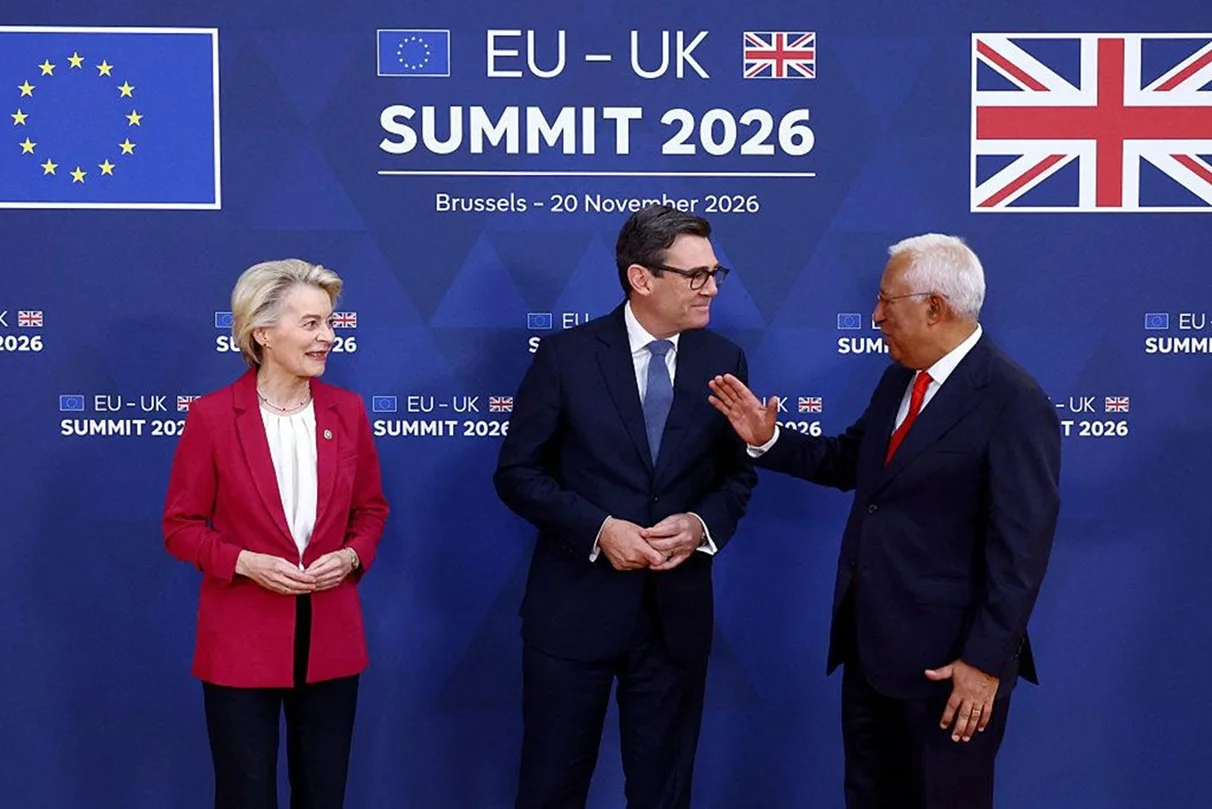
Brexit was conceived as a restoration of political and regulatory sovereignty. More than six years after the United Kingdom formally left the European Union, and almost six years after its departure from the single market and customs union, London and Brussels are rebuilding some of the economic mechanisms whose disappearance fundamentally altered their relationship. The Brussels summit of November 20, 2026, represents an important stage in that process. The two sides concluded negotiations on new sanitary and phytosanitary arrangements and the linking of their carbon markets, while advancing cooperation on youth mobility, energy and European security.
This development amounts neither to a reversal of Brexit nor to the United Kingdom's reintegration into the European Union. It reflects a search for a new equilibrium between institutional autonomy and economic interdependence. London wants to reduce trade costs and recover some of the advantages of proximity to Europe without returning to the EU's broader institutional framework. Brussels, meanwhile, seeks to facilitate exchanges with a major economic and strategic partner without undermining the integrity of the single market or establishing arrangements that would allow a third country to enjoy its benefits without accepting corresponding obligations.
The result is an emerging architecture of selective cooperation, built around sectors in which the economic costs of separation have become sufficiently apparent to justify new forms of integration. Agriculture and food production, energy, industrial decarbonisation and temporary mobility are becoming the principal areas through which British-European relations are being gradually reconstructed.
The Economic Cost of a Restored Border
Understanding the significance of the current rapprochement requires returning to the institutional transformation produced by Brexit. The United Kingdom formally left the European Union on January 31, 2020, before withdrawing from the single market and customs union at the end of the transition period on December 31 of that year. The Trade and Cooperation Agreement, provisionally applied from January 2021, preserved tariff-free and quota-free trade in qualifying goods, subject to rules of origin. It did not, however, maintain the free movement of goods, services, capital and people under the conditions that had prevailed before withdrawal.
This distinction is fundamental. A free-trade agreement is not a single market. The absence of tariffs does not eliminate customs declarations, regulatory inspections, certification requirements or the costs associated with divergent standards. British and European businesses have had to reorganise commercial procedures, adapt supply chains and absorb administrative expenses that did not previously apply to trade within the European market.
These costs are not distributed evenly. Large companies generally possess the legal, customs and logistics capabilities required to absorb some of the additional complexity. Small and medium-sized enterprises, particularly those exporting limited volumes or products subject to sanitary controls, can face disproportionately high fixed costs. An administrative requirement that appears relatively modest may become economically decisive when applied to low-value shipments or perishable goods.
The fragmentation of trade therefore cannot be measured solely through lost export volumes. It also appears in abandoned transactions, substituted suppliers, deferred investments and commercial relationships that are never established. Aggregate trade statistics can obscure these transformations, particularly when prices, exchange rates and changes in supply routes simultaneously affect the value of recorded exchanges.
According to figures presented by the British government, UK agri-food exports to the European Union have declined by 32.5% since 2019. This illustrates the deterioration of trading conditions in a sector particularly exposed to border formalities, although the entire decline cannot be attributed to Brexit without accounting for other economic developments during the period.
The rapprochement initiated in 2025 responds to this underlying reality: regulatory autonomy carries political value, but it also generates economic costs whose persistence eventually changes governmental calculations.
Agri-Food Trade: Reconstructing Market Access
The sanitary and phytosanitary agreement is arguably the most immediately tangible component of the renewed relationship. Negotiations concluded at the Brussels summit provide for a common framework of rules covering a substantial share of animals, plants and agri-food products traded between Great Britain and the European Union. Implementation is scheduled for March 1, 2028, with certain transitional provisions.
The underlying mechanism is straightforward. When two economic areas apply equivalent sanitary requirements under a common agreement, many of the border controls intended to verify product compliance can be removed. Export health certificates, phytosanitary documentation and numerous physical inspections currently accompanying trade should consequently disappear for covered products.
The significance extends beyond administrative simplification. Agricultural and food products move through value chains in which delivery times, predictable inspections and preservation conditions directly determine profitability. A company exporting cheese, meat, horticultural products or processed food may lose more through logistical delays or additional certification than through a conventional tariff.
British government estimates suggest that the agreement could generate up to £5.1 billion annually in economic benefits. This figure represents an official projection of potential gains, not wealth already created or guaranteed fiscal revenue. Its realisation will depend on effective implementation, business adoption and the subsequent development of trade flows.
The expected benefits are nevertheless structural. Lower fixed costs could enable some companies to recover export markets that became commercially difficult to serve after Brexit. They could also encourage the reintegration of British suppliers into European production and distribution networks, particularly where sanitary requirements had made transactions excessively complicated.
Yet this simplification rests on a significant institutional concession: the United Kingdom accepts the continuing alignment of part of its regulatory framework with that of the European Union. The arrangement provides for dynamic regulatory alignment in the relevant fields, meaning that British rules will need to adapt to applicable developments in European legislation.
This is where the central contradiction of Brexit re-emerges. London can eliminate certain controls by accepting common rules, but its capacity to determine those rules independently remains constrained by the functioning of the European market. Britain recovers some of the economic advantages of integration without regaining the decision-making rights it exercised as an EU member state.
The agreement therefore constitutes functional rather than institutional reintegration. It facilitates the movement of particular products without restoring the full range of economic freedoms associated with the single market.
Carbon Markets: A New Industrial Frontier
The second major agreement concerns the linking of British and European emissions trading systems. Following Brexit, the United Kingdom established its own carbon market, separate from the EU Emissions Trading System. Both mechanisms pursue comparable objectives in reducing industrial emissions, but their prices, regulations and trajectories can diverge.
This separation has become particularly consequential with the development of the European Union's Carbon Border Adjustment Mechanism. The EU seeks to prevent domestic producers, subject to carbon pricing, from being disadvantaged by imports originating in jurisdictions where emissions face less stringent constraints. For British companies, this emerging framework risked transforming regulatory divergence into an additional commercial cost.
The agreement on linking carbon markets seeks to reduce this fragmentation. By connecting the two systems, London and Brussels intend to make their climate policies more compatible and avoid certain reciprocal carbon-border charges on covered goods, subject to the conditions established by their respective regulatory frameworks.
The British government estimates that this cooperation could deliver up to £3.8 billion in annual economic benefits and protect approximately £6.5 billion in exports exposed to European carbon-border measures. Again, these are forward-looking estimates. They should not be interpreted as new revenues or savings that have already materialised.
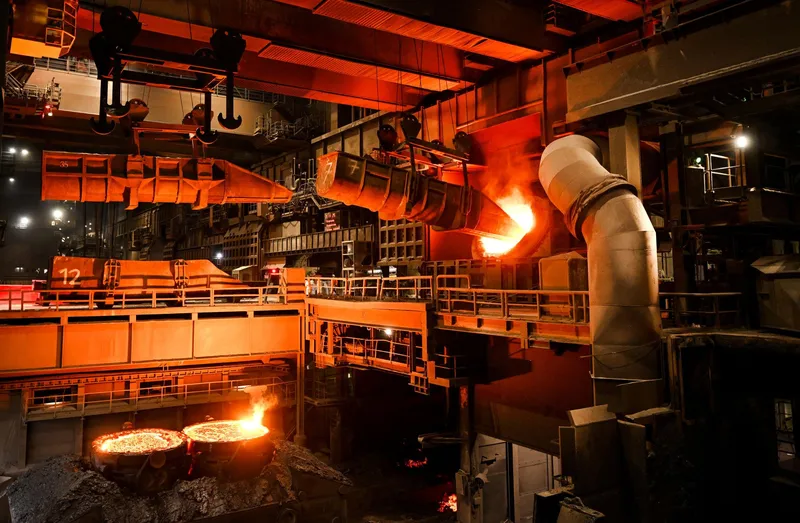
The industrial implications are substantial. Steel, aluminium and other emissions-intensive activities are particularly sensitive to differences in carbon pricing. When neighbouring jurisdictions impose different environmental costs, companies face complex decisions concerning production locations, decarbonisation investment and the organisation of commercial flows.
Linking the markets does not, however, mean that carbon costs will disappear. Greater convergence could also alter the prices paid by British industrial producers. If European allowances trade persistently above British levels, deeper integration could increase certain domestic costs even while reducing trade frictions. The benefits must therefore be assessed across the productive system rather than solely through the removal of border obstacles.
More fundamentally, the agreement illustrates a broader transformation of trade policy. Economic borders are no longer defined exclusively by tariffs or import quotas. They increasingly emerge through environmental standards, emissions traceability and the compatibility of regulatory systems.
Within this changing industrial geography, market access depends increasingly on regulatory alignment. The United Kingdom is confronting the reality that formal regulatory sovereignty does not necessarily translate into effective economic autonomy when its principal trading partners establish standards that determine access to their markets.
Electricity and the Logic of Shared Infrastructure
Energy cooperation represents a third area in which institutional separation encounters physical interdependencies that are difficult to reverse. The United Kingdom and continental Europe are connected by electricity interconnectors that allow energy to move according to production conditions, consumption patterns and market prices.
These infrastructures are particularly important in an energy system increasingly shaped by renewable generation. Wind and solar output fluctuate with weather conditions, while electricity demand changes throughout the day and across seasons. The ability to import or export power rapidly helps balance networks and can reduce procurement costs.
The United Kingdom's departure from the European internal electricity market complicated the mechanisms governing cross-border capacity allocation and trading coordination. The physical infrastructure remained in place, but its commercial operation had to adapt to a separate regulatory framework.
The November 2026 summit confirmed progress towards an agreement that would allow British participation in the European internal electricity market. These advances should not, however, be confused with membership already taking effect: the terms of participation and associated commitments remain subject to further negotiation.
The European Union has notably linked this prospect to negotiations over a British contribution to European cohesion. This condition reflects a consistent institutional principle: access to certain common infrastructures and arrangements may entail financial contributions and regulatory obligations.
The strategic stakes are significant. Industrial electrification, the expansion of data centres, the growth of computing capacity associated with artificial intelligence and the transformation of transport systems are increasing the economic value of interconnected electricity networks. Under these conditions, energy coordination becomes a factor of competitiveness as well as an instrument of supply security.
Cooperation between London and Brussels is therefore not simply a diplomatic rapprochement. It responds to the practical necessity of managing infrastructure whose performance depends on decisions taken on both sides of the English Channel.
Mobility: A Controlled Opening, Not the Return of Free Movement
The new youth mobility arrangement provides another illustration of selective integration. The two partners have agreed on a programme allowing young adults to spend a temporary period in each other's territories for work, study or cultural experience.
The announced framework covers people aged 18 to 31, with an annual ceiling of 100,000 participants in each direction and stays lasting up to three years. Implementation is envisaged no later than January 2030. Certain questions, including the university tuition fees applicable to participating students, remain unresolved.
This opening does not restore the general freedom of movement that existed before Brexit. It operates through eligibility criteria, time limits and numerical ceilings that allow the authorities to retain control over the flows concerned.
The political significance is clear. Free movement was one of the principal sources of confrontation during the 2016 referendum campaign and subsequent negotiations. A comprehensive return to that principle remains politically sensitive in the United Kingdom. The negotiated programme offers a way to expand mobility opportunities without immediately reopening the entire debate over European immigration.
Its economic effects could nevertheless extend beyond the direct number of participants. Temporary movement encourages academic exchanges, language acquisition, professional networking and skills mobility. These mechanisms gradually support economic integration by strengthening connections between businesses, educational institutions and labour markets.
They cannot, however, replace the professional recognition arrangements, permanent mobility rights and cross-border recruitment mechanisms that characterised membership of the single market. Companies will continue to encounter constraints when accessing certain skills, particularly where professions are regulated or residence conditions remain restrictive.
Mobility is consequently becoming an instrument of targeted cooperation rather than a general economic freedom.
Defence Brings Together Two Partners That Cannot Ignore Each Other
The reconstruction of British-European relations extends beyond economics. The Brussels summit also confirmed deeper cooperation on security, defence and foreign policy, building on the strategic partnership established in May 2025.
The war in Ukraine, the transformation of Europe's security environment and uncertainty surrounding the international commitments of major powers have strengthened the case for closer coordination. The United Kingdom remains one of Europe's principal military powers, possesses nuclear capabilities and plays a central role within NATO. The European Union, meanwhile, is developing financial, industrial and regulatory instruments intended to reinforce its defence capabilities.
The cooperation under discussion covers hybrid threats, maritime security, military mobility, crisis management and industrial capabilities. The partners also welcomed the conclusion of negotiations on a framework for British participation in European civilian crisis-management missions.
These developments expose the limitations of interpreting Brexit exclusively through trade. The institutional boundaries separating the United Kingdom from the European Union do not correspond to the geographical boundaries of security threats. Critical infrastructure, digital networks, military supply chains and industrial production capabilities remain deeply interconnected.
Nevertheless, a distinction persists between strategic cooperation and industrial integration. British companies' access to certain European defence financing or procurement instruments depends on specific rules and separate negotiations. Converging geopolitical interests do not automatically guarantee participation equivalent to that enjoyed by EU member states.
Defence therefore illustrates the same underlying logic as trade: operational necessity encourages rapprochement, while institutions continue to determine the conditions of participation.
Negotiated Sovereignty Rather Than Absolute Autonomy
The post-Brexit rapprochement raises a fundamental question about the nature of economic sovereignty in contemporary advanced economies. Leaving the European Union restored the United Kingdom's legal capacity to define much of its regulatory and commercial policy independently. But that capacity does not mean every divergence is economically beneficial.
A British company seeking to sell into the European market must still comply with the requirements applicable to products placed on that market. Where these requirements differ from domestic standards, the company may need to maintain two compliance systems, obtain additional certifications or modify its production processes.
Regulatory divergence therefore carries an opportunity cost. It may allow national policies to be better adapted to particular objectives, but it can also reduce economies of scale and complicate access to the country's principal regional market.
The new agreements introduce a form of negotiated sovereignty. London retains its status as a third country and selects the areas in which it accepts deeper convergence. Brussels preserves the principles of its legal order and makes access to particular benefits conditional on corresponding obligations.
This architecture is not entirely symmetrical. The European Union represents a substantially larger market than the United Kingdom and possesses considerable regulatory power. When London chooses to align with European rules to facilitate trade, it may influence their development through consultation mechanisms without recovering the voting rights it exercised as a member state.
The United Kingdom must therefore choose between two forms of influence: the capacity to determine its national standards independently and the ability to participate directly in shaping common standards that structure a substantial part of its economic environment.
The 2026 rapprochement does not resolve this contradiction. It makes it more explicit by establishing, sector by sector, the conditions under which British autonomy can coexist with the requirements of European integration.
The Limits of Fragmented Reintegration
Despite their significance, the new agreements do not reconstruct the economic area that existed before Brexit. The United Kingdom remains outside the European customs union. Customs formalities, rules of origin and numerous commercial requirements therefore continue to apply to goods that do not benefit from specific arrangements.
Services represent another major limitation. Finance, legal activities, consulting, professional services and digital businesses depend on authorisation, recognition and supervisory frameworks that are not restored by agreements covering agri-food products or carbon markets.
For the City of London, this distinction is particularly important. Brexit removed the European passporting rights previously available to many financial institutions established in the United Kingdom. Equivalence regimes and regulatory cooperation arrangements do not automatically reproduce those rights and remain, depending on the activity, more limited or conditional.
Regulatory fragmentation also continues to influence investment decisions. An international company considering a factory, logistics centre or services platform must compare taxation, energy costs, skills availability and the ease of serving multiple markets from a single location.
Sectoral agreements may improve that calculation, but they do not eliminate all the uncertainties associated with institutional separation. A company may benefit from simplified circulation of certain food products while continuing to face customs formalities for equipment, mobility restrictions affecting employees or separate regulatory obligations for services.
The resulting model is one of differentiated integration, potentially effective in particular sectors but more complex to administer than a single market. Each new agreement has its own scope, governance procedures, dispute-resolution mechanisms and conditions for revision.
The central question then becomes one of overall coherence. A growing collection of sectoral arrangements may progressively reduce the economic costs of Brexit, but it may also produce a system of relations that is difficult for businesses to navigate and governments to develop.
The Political Calculation in London and Brussels
For the British government, rapprochement responds to a growth imperative. Reducing trade barriers can support productivity, improve investment conditions and ease certain price pressures. It also offers the possibility of presenting tangible economic results without immediately embarking on a process of European re-accession.
This strategy nevertheless carries political risks. The more agreements depend on alignment with European rules, the more opponents may portray them as a reduction in the regulatory autonomy achieved through Brexit. Conversely, advocates of deeper integration may argue that sectoral arrangements remain insufficient compared with the economic costs of separation.
The debate therefore no longer concerns only formal membership of the European Union. It increasingly concerns the conditions under which the United Kingdom should accept common obligations in exchange for more frictionless access to the continental market.
For Brussels, the calculation is different. The Union has an interest in stabilising relations with a major neighbouring economy, particularly in an international environment characterised by industrial competition, trade tensions and growing requirements for strategic coordination.
It must nevertheless preserve a credible distinction between the rights associated with membership and the advantages available to a third country. If the United Kingdom could recover most of the benefits of the single market without accepting its institutional obligations, the political and legal equilibrium of European integration could be weakened.
The negotiations consequently rest on a carefully delimited exchange of concessions. London obtains economic simplification in areas where the costs of Brexit are most visible. Brussels secures regulatory alignment, level-playing-field guarantees or financial contributions where access to common arrangements justifies such requirements.
This compromise remains evolutionary. The agreements concluded at the negotiating level in November 2026 create opportunities, but their effective scope will depend on legal procedures, implementation schedules and subsequent political decisions.
A New Form of European Integration
The rapprochement between the United Kingdom and the European Union reveals a broader transformation in relations between sovereign states within advanced economies. Integration is no longer necessarily confined to a choice between full membership and complete separation. It can develop through specialised arrangements adapted to the economic and political constraints of individual sectors.
This evolution is particularly visible where material interdependencies are strongest. Electricity networks do not stop at political borders. Agri-food supply chains depend on compatible standards. Climate policies generate commercial consequences beyond national jurisdictions. Defence industries rely on capabilities and supply networks extending far beyond domestic markets.
Brexit established a clear institutional separation. The agreements of 2026 demonstrate that this separation has not eliminated the economic and strategic forces pushing London and Brussels towards cooperation.
The future trajectory will depend on several factors: the capacity of the agreements to deliver their projected benefits, the evolution of British political debate, the willingness of European institutions to deepen sectoral arrangements and the pressures generated by the geopolitical environment.
Closer cooperation could progressively bring the two economies together in additional fields. It would not necessarily lead to re-accession, because regulatory convergence and institutional membership remain distinct choices. Conversely, renewed political tensions could delay implementation or limit further integration.
The November 20, 2026, summit therefore does not close the economic history of Brexit. It opens a different phase, in which the two partners are less concerned with redefining their separation than with correcting its most costly consequences.
The significance of this evolution lies in an enduring reality: the United Kingdom can remain politically outside the European Union while continuing to be deeply integrated into its economic, energy and strategic environment. But that interdependence now requires negotiations, concessions and specific institutions where common membership previously provided a general framework.
Brexit redrew Europe's legal boundaries. The current rapprochement demonstrates that its economic boundaries remain considerably more difficult to move.
Atlas Limits Research Desk
Atlas Limits’ editorial and analytical desk.