In São Tomé and Príncipe, vanilla cultivation is opening new opportunities for small farmers. Behind one of the world's most valuable spices lies a much larger economic question: how can tropical countries transform the wealth of their land into lasting prosperity?
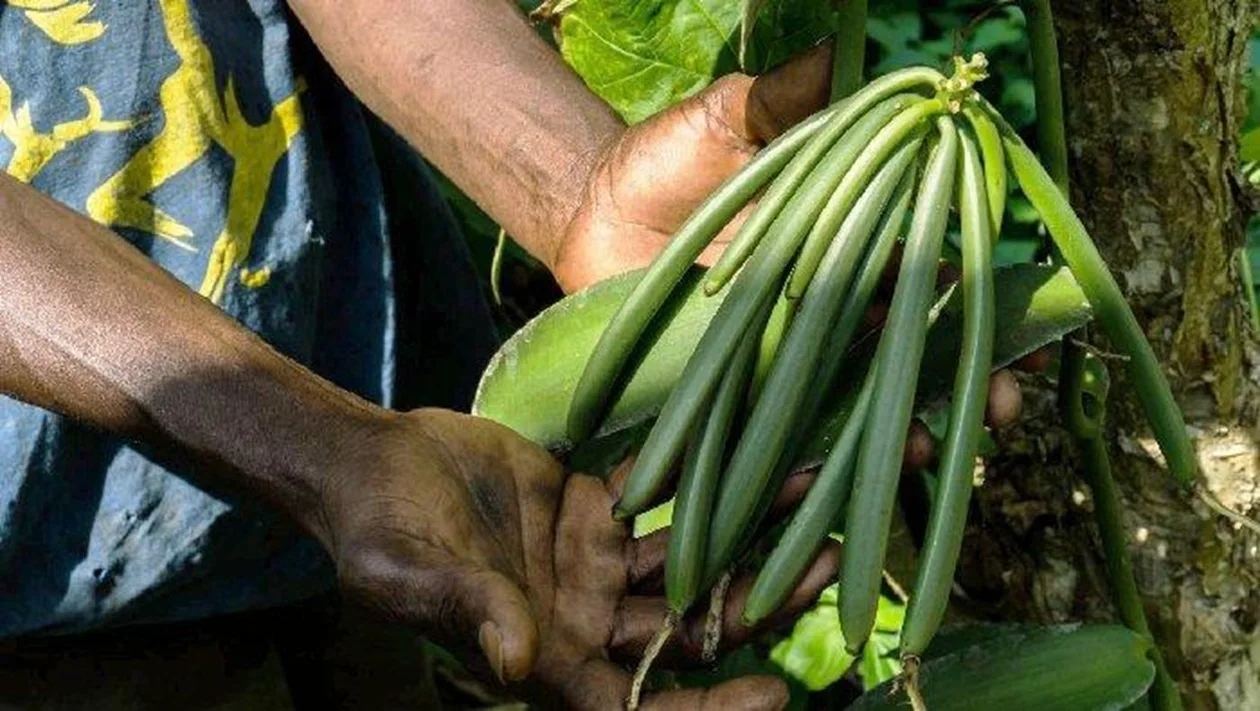
In the humid plantations of São Tomé and Príncipe, off the coast of Central Africa, a new crop is gradually finding its place among the remnants of an agricultural economy shaped by colonial history. Vanilla vines climb trees beneath dense tropical vegetation, where warmth and humidity provide favorable conditions for their growth. Each flower requires careful attention, each pod must be nurtured until maturity, and every harvest demands a degree of precision that few agricultural products require. For the farmers cultivating this delicate orchid, the promise is considerable: producing a commodity whose market value can far exceed that of traditional tropical crops.
Agence France-Presse recently reported on the emergence of this activity, describing a developing agricultural sector that could improve incomes for local producers. The initiative remains modest in scale. Around 50 farmers supply L'Atelier Vanilha, a local operation involved in processing the crop, with reported production ambitions of approximately 300 kilograms of prepared vanilla at full capacity. Its commercial prospects include premium markets in France, Switzerland and Belgium.
These figures may appear insignificant against the scale of international agricultural trade. Yet they illustrate a much broader transformation. Across several tropical economies, historically organized around exporting large quantities of relatively low-value agricultural commodities, specialized crops are increasingly seen as a way to escape the limitations of an economic model inherited from centuries of unequal commercial relationships.
Vanilla possesses a characteristic that distinguishes it from most agricultural commodities. Its scarcity is determined not only by the climatic conditions required for cultivation, but also by the extraordinary intensity of human labor involved in its production. This combination makes it one of the world's most expensive spices, commonly ranked among the costliest after saffron. It also makes vanilla particularly vulnerable to imbalances between supply, demand, speculation and quality.
In São Tomé, this small tropical flower therefore tells a story extending far beyond the plantations of the archipelago. It reveals a global market in which economic value often accumulates far from the places of production, a limited number of countries account for much of the supply, and farmers remain vulnerable despite the sometimes spectacular prices commanded by their harvests. 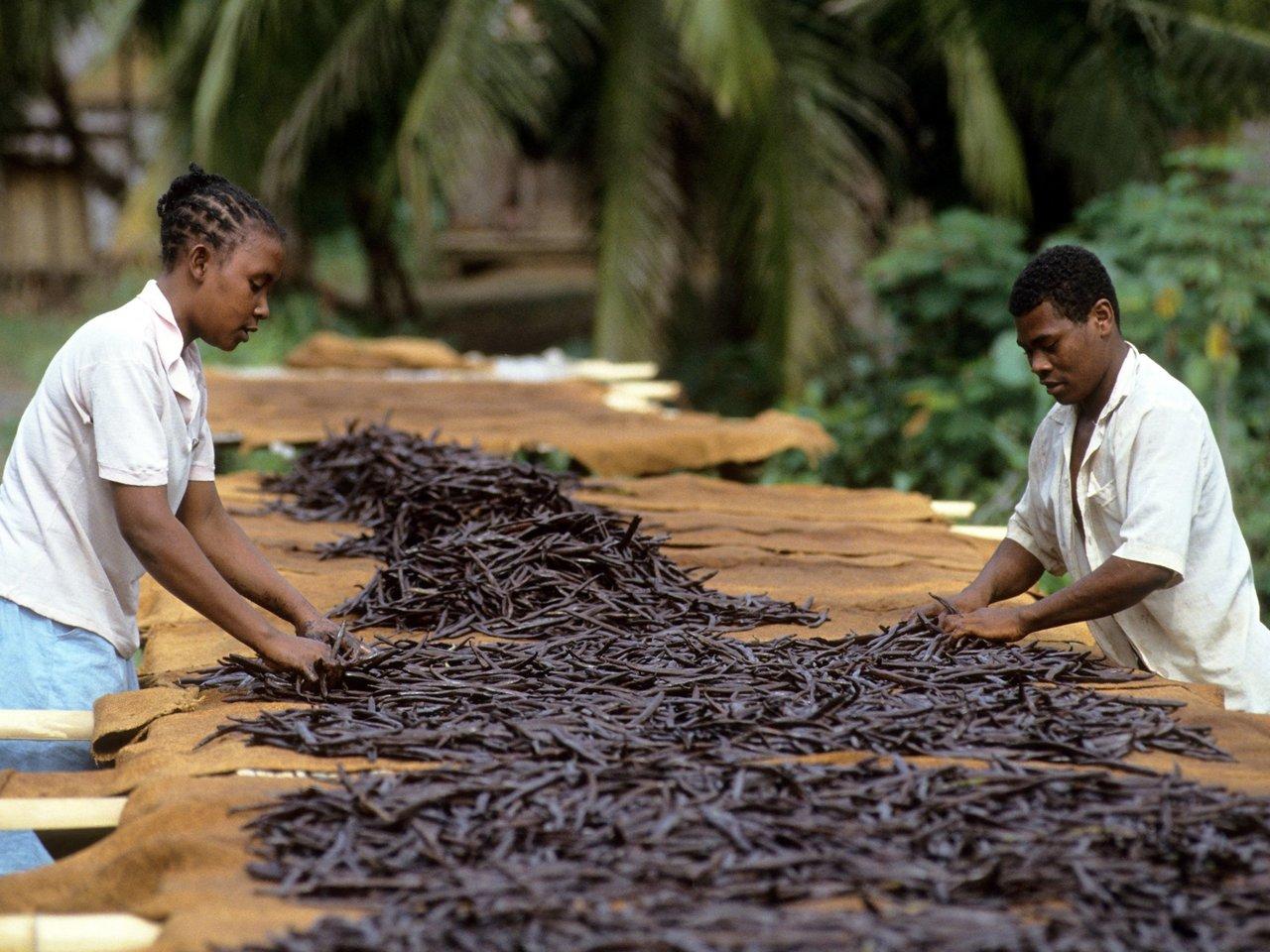
A wealth created by patience
Vanilla did not originate in Africa. Its history begins in the tropical regions of Mexico and Central America, where Indigenous populations knew and used this orchid long before its introduction into European commercial networks. Its expansion across the world was initially constrained by a biological obstacle: outside its native environment, natural pollination was generally insufficient to sustain regular commercial production.
The development of an effective manual pollination technique on Réunion Island in 1841 by Edmond Albius, then a twelve-year-old enslaved boy, transformed the prospects for vanilla cultivation. By bringing the flower's reproductive organs into contact, this method made it possible to establish plantations across several tropical territories.
Nearly two centuries later, much of the process still depends on meticulous human intervention. A vanilla flower generally remains open for only one day. In regions where suitable natural pollinators are absent or insufficient, pollination must take place manually during this narrow window. The pods then require several months to mature before undergoing a complex preparation process involving an initial curing treatment, sweating, drying and conditioning.
This transformation is essential. Fresh green pods have not yet developed the full aromatic complexity of the commercial product. Post-harvest processing allows their characteristic sensory qualities to emerge and determines a substantial part of their final value.
The price of vanilla therefore reflects more than the scarcity of a tropical plant. It incorporates accumulated labor, time, expertise and agricultural risk. Yet none of these factors guarantees that the farmer receives a proportionate share of the price eventually paid by consumers.
This discrepancy lies at the heart of one of the industry's greatest economic paradoxes.
Madagascar, the global power of a vulnerable spice
To understand São Tomé and Príncipe's ambitions, it is necessary to look toward the Indian Ocean.
Madagascar has occupied a dominant position in the production and export of natural vanilla for decades, although its precise share varies according to harvest seasons, statistical classifications and the countries included in the comparison.
The Sava region, in the northeast of the island, forms the historical center of this industry. Tens of thousands of households depend directly or indirectly on vanilla cultivation, collection, preparation and trade. The sector connects relatively isolated farming communities with multinational food manufacturers, perfume producers and international distributors.
Such a position might appear to confer considerable economic power on Madagascar. In practice, it also exposes the country to exceptional dependence on a narrow and unstable market.
International vanilla prices have experienced dramatic fluctuations. During the severe market tensions of the second half of the 2010s, certain grades of prepared vanilla reached several hundred dollars per kilogram, with quotations occasionally exceeding $500. These prices encouraged speculative trading, stimulated plantation expansion and intensified competition for available supplies.
Yet exceptionally high prices also produced damaging consequences. Premature harvesting, theft, traceability problems and deteriorating quality undermined confidence in parts of the supply chain. As production recovered and buyers adjusted their purchasing strategies, prices subsequently fell sharply.
For farmers who had invested several years in establishing their plantations, the reversal could be devastating. A crop that appeared extraordinarily profitable during one season could lose much of its economic appeal only a few years later.
Vanilla demonstrates that a high price does not necessarily produce stable wealth. The more a market depends on a limited number of producing regions and commercial networks, the more fluctuations in output, intermediary decisions and buyer expectations can amplify instability.
Climate adds another layer of vulnerability. Cyclones crossing the southwestern Indian Ocean can destroy plantations, damage infrastructure and disrupt distribution networks. The geographical concentration of production can therefore turn a regional weather event into a potential disturbance for the global market.
For manufacturers dependent on natural vanilla, this vulnerability creates an incentive to diversify sourcing. For countries capable of establishing new plantations, it creates an economic opportunity.
São Tomé, from cocoa to agricultural diversification
São Tomé and Príncipe has an agricultural history very different from Madagascar's, although both economies share certain historical legacies.
Located in the Gulf of Guinea, the archipelago was long organized around large agricultural estates known as roças, established during Portuguese colonial rule. Cocoa occupied a central position, making the territory one of the world's major producers in the early twentieth century.
That commercial prosperity, however, rested on profoundly unequal structures of land ownership and labor. Following independence in 1975, the country faced the difficult transformation of its productive economy, the limitations of its infrastructure and the constraints imposed by a small domestic market.
Agriculture remains an important component of the country's economy. Cocoa, including organic and specialty varieties, continues to play a significant role in agricultural exports. But dependence on a narrow range of commodities exposes São Tomé and Príncipe to international price fluctuations and the structural disadvantages faced by small island economies.
Vanilla emerges in this context as a possible instrument of diversification.
It offers several potential advantages. Its high value relative to its weight can reduce the importance of transportation costs, a particularly significant consideration for an island economy located far from major consumer markets. Vanilla can also be integrated into certain agroforestry systems, provided appropriate agronomic conditions are maintained. Finally, a limited but carefully processed harvest could appeal to buyers seeking distinctive origins and stronger traceability.
These prospects must nevertheless be placed in perspective.
São Tomé and Príncipe does not currently possess a vanilla industry comparable to Madagascar's. The AFP report describes an emerging activity with encouraging income opportunities, not the arrival of a new global export power.
The distinction matters. Producing a few hundred kilograms of a valuable spice does not automatically establish a sustainable industry. Farmers and processors must organize collection, master preparation techniques, guarantee consistent quality, finance inventories and develop commercial relationships strong enough to prevent excessive dependence on a handful of buyers.
The real economic challenge often begins after the harvest.
Where value accumulates beyond the plantation
In traditional agricultural economies, production frequently dominates public policy. Expanding cultivated land, increasing yields and developing exports are generally presented as the principal drivers of growth.
Vanilla requires a different perspective.
A pod harvested too early, improperly cured or insufficiently dried can lose a substantial portion of its commercial value. Conversely, a carefully processed, graded, packaged and certified product can access more remunerative market segments.
Economic value therefore depends not simply on the quantity produced, but on the ability to control the stages separating the plantation from the final market.
These stages require technical expertise, suitable facilities and, above all, capital.
Processing and conditioning can immobilize the product for an extended period. A small farmer facing immediate financial needs may be unable to wait several months before receiving payment for the harvest.
The farmer may therefore sell green or partially processed pods to an intermediary with the financial and logistical resources needed to complete the transformation.
That intermediary assumes genuine costs and risks. But the intermediary may also capture a substantial share of the additional value generated through processing and market access.
As vanilla moves toward food manufacturers, perfume companies and specialized retailers, its price incorporates further components: sanitary controls, storage, insurance, transportation, formulation, branding and distribution.
It would therefore be misleading to interpret every difference between farm-gate prices and retail prices as an unjustified margin. But it would be equally misleading to ignore the imbalances in bargaining power that structure these value chains.
For São Tomé, the decisive question is not simply how much vanilla farmers can produce. It is how much of the processing, standardization and commercialization can be organized locally.
An industry exporting exclusively green pods would risk reproducing the dependencies observed in other tropical crops. One capable of selling prepared, traceable and internationally recognized vanilla could retain more income and expertise within the country.
The real competitor comes from laboratories
Natural vanilla faces another competitor, less visible than rival producing countries: industrially manufactured vanillin.
Vanillin is one of the principal molecules responsible for vanilla's characteristic aroma. It can be extracted from natural vanilla pods, but it can also be manufactured through chemical or biotechnological processes using various raw materials.
Across the global food industry, most vanillin used does not come directly from vanilla beans. Industrial processes can produce large quantities at costs generally far below those associated with extraction from the natural spice.
This economic difference explains why many biscuits, desserts, confectionery products and vanilla-flavored foods do not necessarily contain significant quantities of natural vanilla.
The natural vanilla market therefore operates according to a different logic from that of mass-produced industrial flavorings.
Natural producers cannot sustainably compete with synthetic alternatives on price alone. Their competitive advantages depend on the aromatic complexity of natural vanilla, geographical origin, product quality, consumer preferences and the specific requirements of certain manufacturers.
This distinction is especially important for new producing countries.
São Tomé and Príncipe would have little to gain from confronting established producers through standardized, high-volume production. Its more plausible opportunity lies in specialized output aimed at market segments that value quality and geographical identity.
But this strategy carries limitations of its own.
Premium markets remain relatively narrow. They require consistency in quality and supply that small agricultural industries can struggle to guarantee. A new origin may initially attract buyer curiosity without necessarily generating sustained demand.
Scarcity creates a commercial opportunity. It does not, by itself, constitute an industrial strategy.
Tropical Africa searches for new agricultural industries
The São Toméan experience belongs to a broader movement toward agricultural diversification across tropical Africa.
Uganda has developed vanilla production for international markets. The Comoros have a long history of aromatic crops, particularly vanilla and cloves. Other territories possess agroclimatic conditions that could support specialized production, although competitiveness depends on much more than soil fertility or rainfall.
These countries do not begin from equivalent positions.
Some already possess commercial networks, processing expertise and established relationships with international buyers. Others must build nearly the entire value chain.
All confront a common difficulty: integration into global value chains does not automatically guarantee local economic development.
The history of West African cocoa provides a particularly revealing example.
Côte d'Ivoire and Ghana together account for a major share of global cocoa bean production, while much of the advanced processing, finished-product manufacturing and brand value creation takes place elsewhere.
Coffee, cotton and several other agricultural commodities display comparable structures to varying degrees.
Vanilla could offer a different trajectory precisely because production volumes are smaller and certain preparation stages can be carried out at artisanal or cooperative scale.
But that possibility requires an economic environment capable of supporting producers beyond cultivation itself.
Agricultural credit, technical training, collective organization, quality standards and marketing infrastructure become as important as yields.
For small island states, this question acquires an additional dimension. Their limited domestic markets and high logistical costs make the establishment of large agricultural industries difficult. Yet they can sometimes develop specialized sectors in which quality partially compensates for disadvantages of scale.
Success depends less on multiplying plantations than on building a coherent economic system around them.
When climate redraws the geography of spices
The geography of vanilla production rests on relatively specific climatic conditions.
Tropical temperatures, sufficient humidity, suitable shade and water availability directly influence plant growth and harvest consistency.
Climate change introduces growing uncertainty into these conditions.
Extreme weather events, changing rainfall patterns and periods of unusual heat or drought can affect plantations. As a perennial crop requiring several years of investment, vanilla is particularly vulnerable to events capable of damaging plants and production infrastructure over extended periods.
In dominant producing regions, this vulnerability can cause major supply disruptions. In emerging regions, it makes adaptation strategies essential from the outset.
Agroforestry offers one possible response.
Combining vanilla vines with shade trees and other crops can help regulate local microclimates, protect soils and diversify agricultural incomes. It cannot, however, eliminate weather-related risks or plant diseases.
For São Tomé and Príncipe, where agricultural landscapes already include tree-based systems inherited partly from cocoa cultivation, certain forms of agroforestry integration may prove particularly relevant.
But agricultural diversification must not become a justification for uncontrolled expansion of cultivated land.
In a small island territory where ecosystems are valuable and land resources limited, rising farm incomes must be reconciled with the preservation of forests, soils and biodiversity.
Vanilla marketed as a natural and sustainable product would lose part of its economic credibility if its expansion depended on degrading the environments that make its cultivation possible.
The trap of agricultural gold
Whenever a commodity reaches exceptional prices, it inspires hopes of rapid economic transformation in producing countries.
Yet the economic history of the tropics is marked by a succession of products presented, at different moments, as almost inexhaustible sources of prosperity: sugar, coffee, cocoa, rubber, cotton, spices and vegetable oils.
Some genuinely contributed to wealth accumulation and infrastructure development. But they also created commercial dependencies, concentrated land ownership and long-lasting vulnerabilities.
Vanilla is not exempt from this contradiction.
A profitable market can improve the incomes of thousands of families, encourage agricultural investment and generate new local activities. But a rapid increase in prices can also provoke excessive plantation expansion, followed by a severe reversal when supply grows.
Specialization becomes dangerous when producers abandon other crops to concentrate almost exclusively on a commodity whose prices they cannot control.
For São Tomé, the challenge is precisely to avoid this trajectory.
Vanilla could complement cocoa, food crops and other agricultural products rather than replace them. It could provide additional income for certain households without becoming the foundation of a new national dependency.
Such caution is particularly important because premium markets have their own demand cycles. A highly sought-after spice today can experience rapid price changes as new origins emerge, consumer preferences evolve or industrial innovations alter demand.
Sustainable agricultural wealth is therefore not measured by the exceptional price achieved by a kilogram of produce during a single season.
It is measured by farmers' ability to maintain incomes, invest, withstand crises and retain meaningful control over their economic activities.
Sovereignty begins after the harvest
In a global economy where agricultural value chains remain deeply asymmetric, vanilla reveals an essential reality: possessing the natural conditions required for production does not mean controlling the economic value of what is produced.
Climate, land and labor make it possible to grow the spice. But processing, financing, certification, commercial networks and relationships with consumers largely determine how the resulting wealth is distributed.
For a country such as São Tomé and Príncipe, the objective should not be to become another Madagascar. Such an ambition would be disproportionate to the country's territory, population and productive capacity.
The objective is to build an industry suited to its scale, capable of adequately rewarding farmers while retaining a meaningful share of the activities that give the product its value.
This could involve cooperative processing facilities, transparent commercial partnerships, financing mechanisms adapted to agricultural production cycles and a recognized geographical identity.
None of these solutions is automatic. Each requires economic organization, sustained investment and the ability to meet demanding buyer expectations.
Vanilla will not, by itself, transform São Tomé and Príncipe's economy. The scale of the emerging industry does not justify such a conclusion. It could, however, become a laboratory for agricultural diversification, where success is measured less by export volumes than by the quality and stability of the incomes generated.
In the plantations of São Tomé, the gesture of a farmer manually pollinating a flower may seem almost insignificant against the immense scale of global trade.
Yet it contains a question shared by many economies of the Global South: how can the labor performed at the beginning of a value chain cease to be the activity that captures the smallest share of its rewards?
The answer lies not only in the price of vanilla. It lies in everything built around the pod, between harvest and consumer.
Because the true gold of the tropics is not necessarily the commodity that commands the highest price.
It is the one whose value remains long enough in the country of origin to transform the lives of those who produce it. 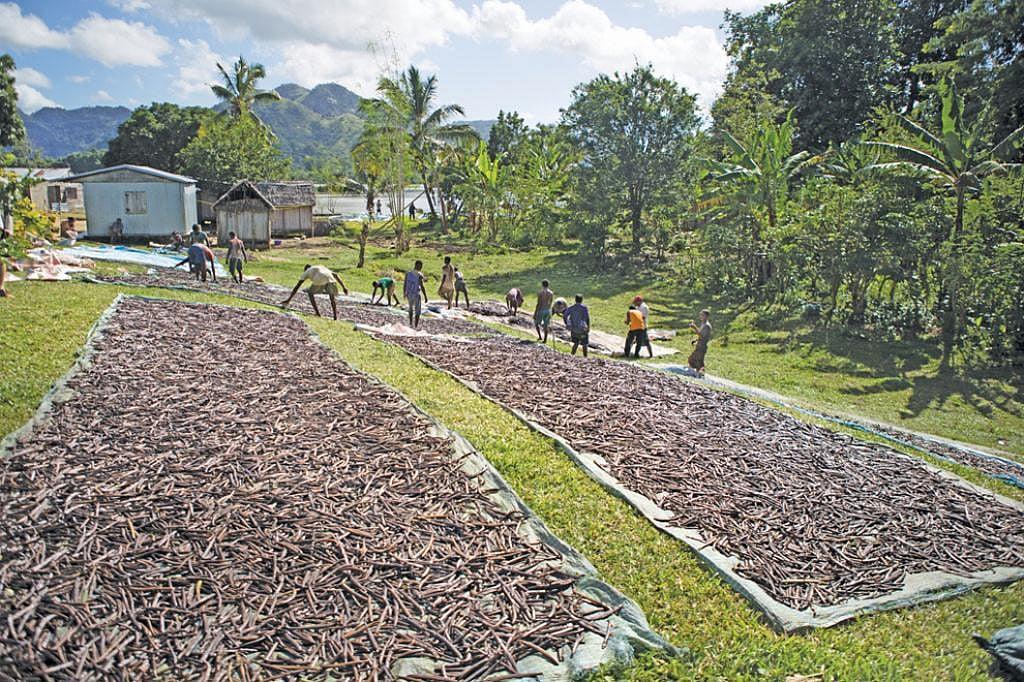
Main sources
- Agence France-Presse (AFP) — October 2026 reporting on emerging vanilla cultivation in São Tomé and Príncipe, including the development of L'Atelier Vanilha, participating farmers, processing activities and premium export markets.
- Food and Agriculture Organization of the United Nations (FAO), FAOSTAT — International agricultural production statistics, including vanilla, cocoa and major producing regions.
- International Trade Centre (ITC), Trade Map — International vanilla trade statistics, export markets and major importing countries.
- World Bank, World Development Indicators — Economic and agricultural indicators for São Tomé and Príncipe and Madagascar.
- United Nations Conference on Trade and Development (UNCTAD) — Research on commodity dependence, economic diversification and global value chains.
- French Agricultural Research Centre for International Development (CIRAD) — Agronomic and economic research on vanilla cultivation, tropical farming systems and product quality.
Methodological note: Historical prices mentioned in this article refer to levels observed during the market tensions of the 2010s, not current market quotations. The figures concerning São Tomé and Príncipe's emerging vanilla industry describe a specific reported operation and should not be interpreted as national production totals. Institutional sources provide the broader analytical and statistical framework; their complete underlying datasets have not been independently revalidated for this edition.
Atlas Limits Research Desk
Atlas Limits’ editorial and analytical desk.