An economy can grow faster than its own infrastructure. Vietnam is beginning to provide an almost full-scale demonstration. In the third quarter of 2026, its gross domestic product expanded by 9.95% year on year. Industry and construction grew by 12.5%. Industrial production rose by 14.8%. Merchandise exports jumped by 30.4%, while asset accumulation increased by 21.39%. Over the first nine months of the year, the Vietnamese economy has now grown by 9.01%.
Taken separately, each of these figures tells the same success story: that of a country becoming one of the principal beneficiaries of Asia’s industrial reconfiguration.
Taken together, they tell something more interesting.
Because a factory never arrives alone.
It consumes electricity, uses roads and ports, imports machinery and components, employs workers, occupies land, relies on suppliers and requires credit. The supplier that opens next door, in turn, needs a building, a power connection, equipment, employees and financing. The port must be expanded. The electricity grid must be reinforced. The bank must lend more. And to lend more, it needs more equity.
At close to 10% growth, Vietnam therefore no longer needs merely to build factories.
It needs to expand, almost simultaneously, everything that allows an industrial economy to function.
The Export Machine
The first layer is spectacular.
Over the first nine months of 2026, Vietnamese exports reached $434.3 billion, up 24.5% year on year. Manufactured and processed goods alone accounted for $392.8 billion, or more than 90% of total exports.
Vietnam is now deeply integrated into global industrial supply chains. Electronics, equipment, textiles, machinery and other manufactured products have gradually transformed the country into a production platform positioned between China, East Asia, the United States and Europe.
But another figure reveals the precise nature of this transformation: 80.7% of Vietnam’s exports during the first nine months of the year came from the foreign-invested sector.
The achievement is therefore considerable, but its structure remains distinctive. Vietnam has built an extraordinarily competitive industrial platform before fully developing the domestic ecosystem capable of supporting it and capturing all the value it generates.
That gap is precisely what is beginning to become visible.
Imports are rising even faster than exports. They reached $453.7 billion during the first nine months of 2026, an increase of 36.7%. The country consequently recorded a cumulative trade deficit of $19.4 billion, despite returning to a modest surplus in September.
More importantly, 94.1% of those imports consisted of goods destined for production: machinery, equipment, components, raw materials and fuels.
In other words, part of the explosion in imports is not a symptom of excessive consumption. It is the raw material of industrial expansion itself.
Vietnam is importing what it needs to build more.
The Energy Bill
The first constraint is physical.
An industrial economy does not operate on GDP growth rates. It operates on kilowatt-hours.
During the first nine months of 2026, Vietnam’s electricity production and imports approached 266 billion kWh, up 9.3%. Industrial production, meanwhile, increased by 12.3% over the same period. In September alone, the industrial production index rose by 16.7% year on year, including a 17.1% increase in manufacturing.
The electricity system is still holding.
But the margin is narrowing.
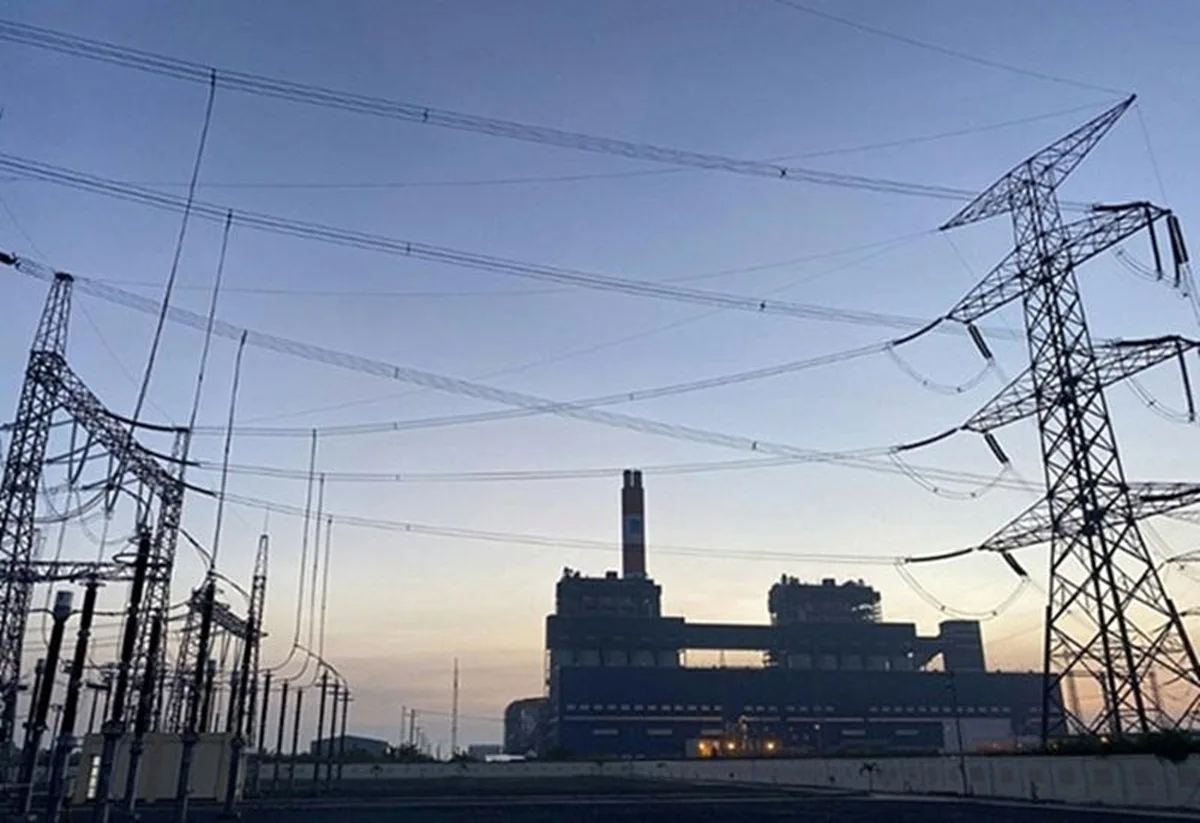
Nearly half of the electricity mobilized since January still comes from coal. Hydropower supplies roughly a quarter, non-hydro renewables a little more than 12%, while the country already imports part of its electricity.
More importantly, the problem extends beyond the power grid.
Vietnam has become structurally dependent on imported energy. The Ministry of Industry and Trade estimates that net imports already accounted for more than 40% of primary energy demand in 2025. Vietnam’s 2026 external trade figures consequently reveal substantial deficits in petroleum products, coal and crude oil.
The more Vietnamese industry produces, the more energy the country must secure to keep that industry operating.
The equation becomes even more difficult when looking ahead. Ministry projections point to a potential electricity capacity shortfall of more than 4 GW as early as 2027, potentially approaching 14 GW by 2030 if new generation and grid projects are delayed.
Vietnam’s problem is therefore not yet that of a country systematically running out of electricity.
It is that of a country whose productive apparatus risks expanding faster than the energy system being built to power it.
Then Come the Banks’ Balance Sheets
The second constraint is less visible.
It sits inside balance sheets.
Vietnamese banks are now preparing nearly $7 billion in share sales through the end of 2027. According to available estimates, this could become the largest recapitalization wave ever undertaken by the country’s banking sector.
Vietcombank is considering selling approximately 6.5% of its equity. BIDV has already completed an initial placement this year and is planning another transaction. VPBank is preparing to raise several hundred million dollars. HDBank is also considering a major share sale, while Techcombank has discussed the possibility of further opening its capital to foreign institutions.
Japanese and South Korean investors are naturally watching the process. Mizuho is already a shareholder in Vietcombank. SMBC holds a stake in VPBank. Other Asian banks have long sought greater exposure to one of the region’s fastest-growing economies.
But reducing these transactions to foreign investors’ appetite would miss the essential point.
Vietnamese banks need capital because the Vietnamese economy needs credit.
A company builds a factory with equity, but also with debt. A developer builds a warehouse with credit. A logistics company buys trucks with financing. A supplier acquires machinery with a loan. An energy project requires billions before producing its first kilowatt-hour.
When all of these investments accelerate simultaneously, bank assets expand.
And their capital must follow.
The Capital Beneath the Capital
This is where the mechanics of industrialization become particularly interesting.
Bank credit is not an infinite resource. The more a bank lends, the more capital it must hold to absorb the potential losses associated with those assets. Vietnam is simultaneously preparing its financial system for stricter prudential requirements, with a transition toward Basel III standards by 2030.
Industrial growth therefore encounters a constraint several layers beneath the factory itself.
To build more factories, the economy needs more credit.
To distribute more credit, it needs larger banks.
For their balance sheets to expand without becoming excessively fragile, those banks need more equity.
And when a national economy cannot generate that capital quickly enough domestically, it must seek it elsewhere.
This is one reason why Vietnam’s gradual opening to international capital is consistent with its industrial strategy.
Historically, the banking sector has been heavily protected: aggregate foreign ownership is generally capped at 30%, while individual stakes are also restricted. Hanoi has nevertheless begun loosening some of these constraints. For several institutions, the foreign ownership ceiling can now reach 49%. Offshore financing possibilities are expanding as well.
This is not a contradiction of Vietnam’s industrialization strategy.
It is one of its consequences.
Vietnam imported industrial capital to build its factories. It is now beginning to import more financial capital to strengthen the banks that must finance the economy surrounding those factories.
Growth Consumes Capital
There is, however, a paradox.
The $7 billion being sought by the banks may appear considerable. Yet it does not guarantee a lasting improvement in their financial strength.
Fitch has specifically warned that new capital could be rapidly absorbed by credit expansion. A bank can raise equity today and see its capital ratio come under pressure again tomorrow if its loan book expands even faster.
That is the difference between recapitalizing a stable system and chasing a system that is accelerating.
In Vietnam, the latter is becoming plausible.
The government wants to sustain extremely high growth through the end of the decade while simultaneously mobilizing considerable investment in infrastructure. If companies, households, property developers and major public projects all borrow at the same time, bank balance sheets become one of the principal multipliers of economic policy.
But also one of its principal vulnerabilities.
The Next Number to Watch
The question is therefore no longer simply how much credit is being created.
It is what that credit is financing.
Real estate represents roughly a quarter of bank lending, and non-performing loans in the sector are rising. Excessively rapid credit expansion can support investment, employment and construction for years before revealing that some assets were financed at prices or under growth assumptions that are difficult to sustain.
It is a familiar mechanism in rapidly catching-up economies.
Credit initially accompanies growth. Asset prices then rise. Collateral becomes more valuable. That appreciation allows additional borrowing. Banks continue lending because the economy remains dynamic and the collateral appears solid.
The cycle can remain virtuous for a long time.
Until it does not.
This does not mean that Vietnam is heading toward a banking crisis. It means that asset quality is now becoming an indicator as important as GDP growth.
Non-performing loans, provisions, real-estate exposure, capital ratios and the pace of credit expansion will increasingly show whether the financial system is keeping pace with industrialization — or beginning to fall behind it.
The Cost of the Miracle
This may be where the real Vietnamese story lies.
The country is frequently presented as one of the great beneficiaries of industrial diversification away from China. That interpretation is correct, but incomplete. It observes the factory when its doors open. It pays less attention to everything that had to be built behind it.
Industrialization at close to 10% growth has its own income statement.
It requires power plants and high-voltage transmission lines. Ports, highways and warehouses. Housing and urban transport. Imported machinery. Oil, gas and coal. Engineers and technicians. Banks capable of financing the entire system. And then additional capital allowing those banks to continue lending.
Every success therefore shifts the constraint to the next layer.
Yesterday, the Vietnamese question was whether the country could attract enough factories to become a major Asian manufacturing platform.
It largely has.
Today, the question is different: can it build the energy, financial, logistical and technological systems quickly enough to transform that platform into an autonomous industrial power?
The transition from one to the other will probably define the next stage of Vietnam’s development.
Because attracting a factory requires an industrial policy.
Keeping several thousand factories running sustainably requires an entire country.
Main Sources
National Statistics Office of Vietnam — Report on the Socio-Economic Situation in the Third Quarter and First Nine Months of 2026, October 2026.
National Statistics Office of Vietnam — Index of Industrial Production in September 2026, October 2026.
Reuters — Vietnam's banks tap investors for $7 billion as economy runs red hot, October 7, 2026.
Reuters — Vietnam's quarterly GDP grows fastest in 4 years as exports boom, October 3, 2026.
Vietnam Electricity (EVN) — Operational Situation in September 2026; Key Tasks for the Last Three Months of 2026, October 2026.
Ministry of Industry and Trade of Vietnam — data and projections relating to Vietnam’s electricity balance for 2026–2030.
Fitch Ratings — assessments of capitalization and credit growth in Vietnam’s banking sector.
VIS Rating / Moody’s — assessments of bank capitalization, credit growth and asset quality in Vietnam.
Atlas Limits Research Desk
Atlas Limits’ editorial and analytical desk.