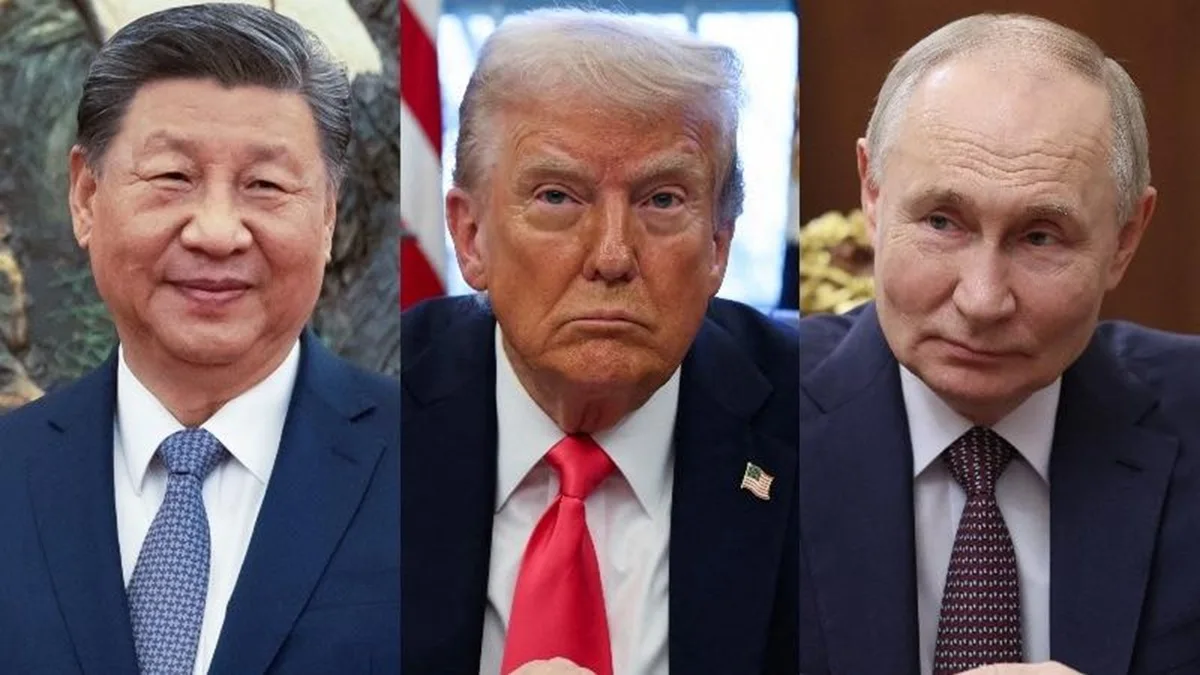
The prospect of a meeting between Donald Trump, Vladimir Putin and Xi Jinping in China raises a question extending far beyond the immediate significance of a diplomatic summit: are the three principal military and strategic powers seeking to redefine how they manage their rivalries, potentially at the expense of multilateral institutions and the countries excluded from their negotiations?
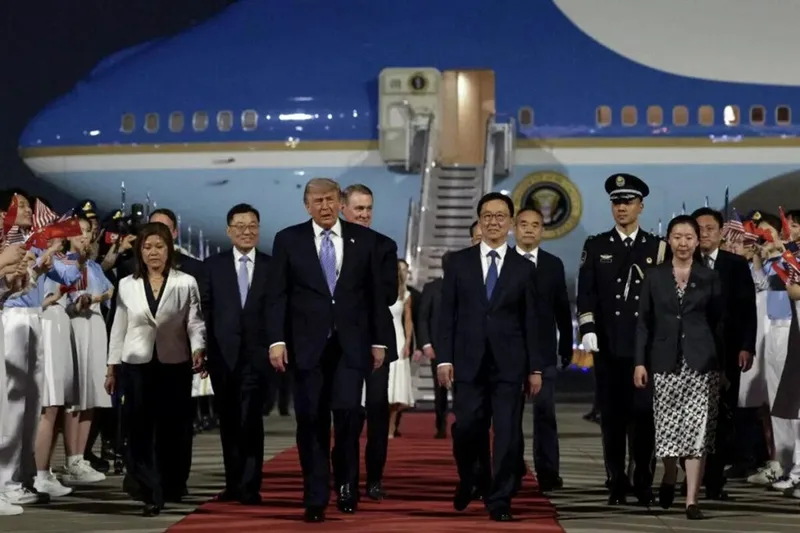
The international order is not transformed solely by wars, economic crises or shifts in alliances. It also evolves when major powers change how they communicate, negotiate and acknowledge one another's interests. A trilateral meeting between the American, Russian and Chinese presidents, as announced by Washington for November 19 in Shenzhen, would therefore carry implications extending well beyond its immediate agenda.
Since the end of the Cold War, relations between Washington, Moscow and Beijing have developed along largely distinct trajectories. The United States has progressively identified China as its principal strategic competitor, while its relationship with Russia has deteriorated into an indirect confrontation over Ukraine. Beijing, meanwhile, has strengthened its partnership with Moscow without abandoning its economic relationships with Western economies.
These three trajectories have produced a paradoxical configuration. The powers whose decisions shape much of global strategic stability maintain numerous bilateral channels, yet lack a permanent trilateral mechanism capable of addressing their increasingly interconnected rivalries.
The possibility of a joint summit therefore raises a fundamental question: have contemporary rivalries become sufficiently dangerous to encourage their principal protagonists to seek new forms of coordination?
Rivalry Does Not Exclude Negotiation
The first mistake would be to interpret such a meeting as evidence of political rapprochement among the three leaders. The United States, China and Russia pursue profoundly different, and sometimes incompatible, strategic objectives.
Washington seeks to preserve its technological, military and financial pre-eminence while limiting the costs of its international commitments. Beijing aims to increase its influence over the rules governing the global economy and international security, protect its territorial interests and reduce its vulnerability to American instruments of pressure. Moscow seeks recognition of its security interests, the preservation of its status as a major nuclear power and relief from the constraints imposed by its confrontation with the West.
These ambitions would not disappear around a common negotiating table. They could, however, make such a table necessary.
The history of international relations suggests that mechanisms of stabilization often emerge when adversaries recognize the potential costs of uncontrolled confrontation. American-Soviet détente was not based on ideological convergence. It largely reflected an acknowledgment of mutual vulnerability, particularly in the nuclear domain.
The present situation differs in one essential respect. Strategic competition is no longer organized exclusively around two superpowers. China now possesses industrial, technological and military capabilities that allow it to directly influence American and Russian strategic calculations.
The international system must therefore accommodate three centers of nuclear power whose interests intersect without necessarily converging.
Trilateral diplomacy could represent a response to this complexity. It would not eliminate rivalries, but could seek to contain their most dangerous consequences.
Nuclear Arms Control: The First Test of a New Balance
The selection of nuclear disarmament as the principal announced subject gives the proposed meeting particular significance. It follows the expiration in February 2026 of New START, the last major bilateral treaty limiting the deployed strategic nuclear arsenals of the United States and Russia. The disappearance of this framework does not mean that all military communication has ceased, but it deprives both countries of a legally binding instrument for limitation and verification.
The central difficulty lies in the asymmetry of their arsenals. The United States and Russia each possess several thousand nuclear warheads, while China, whose arsenal is estimated at more than 600 warheads, continues to expand its capabilities from a considerably lower base. Washington wants Beijing included in a future arms-control framework. China has so far shown limited interest in an agreement that might impose disproportionate restrictions given the difference in existing capabilities.
This asymmetry makes negotiations based on identical ceilings particularly difficult. From Washington's perspective, an agreement excluding China could constrain American capabilities without limiting the expansion of its principal Asian competitor. For Beijing, accepting restrictions comparable to those imposed on the two largest nuclear powers would amount to recognizing a strategic equivalence that does not yet exist in quantitative terms. Moscow, meanwhile, could argue that any new framework must also account for missile-defense systems, precision conventional weapons and the nuclear capabilities of American allies.
Negotiations would therefore concern more than the number of warheads. They would touch upon the very definition of strategic balance.
Hypersonic systems, space capabilities, missile defenses and artificial intelligence-assisted command technologies further complicate the equation. Nuclear stability no longer depends exclusively on the numerical relationship between arsenals. It also rests on states' ability to preserve retaliatory capabilities, correctly interpret adversaries' signals and prevent conventional crises from escalating into nuclear confrontation.
Under these circumstances, the first realistic outcome of trilateral diplomacy would probably not be a disarmament treaty. It could instead involve more limited commitments: consultation mechanisms, greater transparency regarding certain doctrines, exchanges on escalation risks or communication arrangements during crises.
Such measures would be less spectacular than an agreement reducing nuclear arsenals, but they could carry immediate strategic value.
Arms control therefore constitutes a distinctive negotiating arena: the three powers may share an interest in preventing catastrophe without sharing a common vision of international order.
China: Host Power and Central Actor
The choice of Shenzhen is not incidental. Located at the heart of one of China's principal industrial and technological centers, the city symbolizes the economic transformation that has enabled Beijing to become a systemic competitor of the United States.
China is hosting APEC leaders on November 18 and 19 under a theme centered on building an Asia-Pacific community oriented toward shared prosperity. The Chinese Ministry of Foreign Affairs has confirmed Xi Jinping's participation, his chairmanship of the summit and the organization of bilateral meetings, without explicitly announcing the trilateral encounter in its November 13 statement.
This diplomatic distinction matters. Washington presents the meeting through the lens of strategic security and arms control. Beijing officially places the summit within a regional economic and multilateral framework. The two approaches are not incompatible, but they reflect different priorities.
For China, simultaneously hosting the American and Russian presidents would offer several advantages.
The first would be symbolic. Beijing would emerge as a venue for dialogue among powers whose bilateral relationships remain marked by major tensions. Such diplomatic centrality would reinforce China's ambition to move beyond participation in existing international institutions toward a greater role in shaping their mechanisms.
The second advantage would be strategic. China maintains a close partnership with Russia while preserving substantial economic interdependence with the United States. It therefore occupies a distinctive position within the triangle: closer relations with Moscow strengthen its resistance to American pressure, but excessive dependence on Russia would constrain its autonomy.
The third advantage would be institutional. A meeting of this nature could allow Beijing to present its diplomacy as an alternative to rigid bloc politics. China could argue that rivalries should be managed through consultation among powers rather than through the continuous expansion of confrontation.
Such a presentation would nevertheless contain a contradiction. Diplomacy concentrated among three capitals could hardly claim to be fully multilateral if decisions affecting other states were taken without their participation.
Beijing would therefore have an interest in securing the prestige of a trilateral meeting without creating the impression that it seeks to replace international institutions with a directorate of great powers.
Russia: Between Strategic Recognition and Growing Dependence
For Vladimir Putin, the political significance of such a meeting would be different.
Since the full-scale invasion of Ukraine in 2022, Russia has experienced a profound deterioration in its relations with Western powers. Sanctions, technological restrictions and the contraction of numerous economic exchanges with Europe have increased the importance of its relationships with China and several non-Western partners.
The Russian president's presence alongside the American and Chinese leaders would offer a form of diplomatic recognition. It would reaffirm Russia's indispensable role in discussions concerning global nuclear security, notwithstanding the consequences of the war in Ukraine.
That recognition would not, however, constitute a complete restoration of Russia's international position.
Russia retains a major nuclear arsenal, a permanent seat on the United Nations Security Council and significant capabilities in the energy, military and space sectors. Yet its economic and industrial weight remains substantially below that of the United States and China. The asymmetry among the three powers would therefore become particularly visible in negotiations extending beyond nuclear issues.
Moscow could seek to use its military and diplomatic position to compensate for this economic disparity.
Its relationship with Beijing would also be central to its calculations. The more Russia depends on Chinese markets, technologies and commercial outlets, the more important it becomes to preserve room for maneuver. Renewed direct dialogue with Washington could contribute to that autonomy, even without a lasting political rapprochement.
The trilateral meeting could therefore serve apparently contradictory objectives: reinforcing the image of a Sino-Russian partnership in opposition to the West while allowing Moscow to demonstrate that it maintains independent strategic relations with the United States.
This ambiguity is inherent in triangular diplomacy. Each participant seeks to improve its position relative to the other two without necessarily pursuing a common alliance.
Washington and the Simultaneous Management of Two Competitors
For the United States, the principal challenge would lie in the possibility of managing two rivalries that consume considerable diplomatic, military and economic resources.
China represents a first-order competitor in advanced technologies, industrial supply chains, trade and the projection of power across the Indo-Pacific. Russia presents a different kind of strategic threat, centered on nuclear capabilities, European security and the risks of military escalation.
These challenges are not independent. Stronger Sino-Russian relations alter American calculations because they can complicate Washington's ability to concentrate military and diplomatic resources on a single theater.
Trilateral diplomacy could provide Washington with an opportunity to test divergences of interest between Beijing and Moscow.
It would nevertheless be excessive to interpret this necessarily as an attempt to reproduce American strategy in the 1970s, when rapprochement with China helped transform the balance of the Cold War. The circumstances are fundamentally different. Contemporary China possesses economic power incomparable to that of the earlier period, while its partnership with Russia rests on established strategic interests, even though it does not constitute a formal military alliance.
The American administration might instead seek to prevent its rivalries with both competitors from becoming simultaneously unmanageable.
Such an approach would not require abandoning technological competition, trade restrictions or existing military commitments. It would seek to introduce negotiating capacity into relationships that would remain fundamentally competitive.
The announced absence of an immediate agreement also suggests that Washington regards the encounter as a diplomatic opening rather than the culmination of advanced negotiations.
The decisive question would therefore be continuity. An isolated summit can produce a historic image without durably transforming international relations. Only the establishment of follow-up mechanisms, accompanied by verifiable commitments, would demonstrate that a new architecture of dialogue is genuinely emerging.
Ukraine and the Risk of Diplomacy Without Those Directly Concerned
One of the most sensitive features of the proposed meeting concerns the place reserved for Ukraine.
According to information communicated by Washington, the war is not expected to feature on the trilateral summit's agenda. This declared exclusion does not, however, eliminate concerns surrounding a meeting among the American, Russian and Chinese leaders. Ukrainian President Volodymyr Zelensky has notably expressed concern about the possible emergence of a redistribution of spheres of influence resembling, in principle, the arrangements made among great powers in the middle of the twentieth century.
The reference to Yalta carries considerable historical weight, but it requires careful handling. The February 1945 conference took place under the particular circumstances of the closing stages of the Second World War. Today's distribution of power, international institutions and economic interdependencies are profoundly different.
The contemporary risk does not necessarily lie in a secret agreement dividing the world into spheres of influence. It lies more in a gradual evolution of diplomatic practices in which militarily dominant powers might be tempted to treat certain regional conflicts as variables in the management of their strategic relationships.
Ukraine directly illustrates this tension. For Kyiv, national security and territorial integrity cannot be subordinated to negotiations conducted by external powers. For Moscow, the conflict forms part of a broader confrontation over Europe's security architecture. For Washington, it simultaneously represents a question of strategic credibility, transatlantic relations and the allocation of military resources.
These interpretations are difficult to reconcile.
Trilateral diplomacy could help reduce certain risks of escalation without resolving the political and territorial causes of the war. It could also produce the opposite effect if it created the impression that the security of third countries could be negotiated in their absence.
The distinction between risk management and conflict resolution therefore becomes essential.
Dialogue among nuclear powers may be necessary for global stability. It does not, by itself, provide a sufficient basis for determining the political future of states directly affected by their rivalries.
Taiwan and the Limits of Strategic Negotiation
Taiwan represents another fundamental test, even if it does not appear among the principal publicly announced subjects.
For Beijing, Taiwan is a matter of national sovereignty and a central question in Sino-American relations. For Washington, stability in the Taiwan Strait concerns the credibility of its regional policy, its relationships with Asian partners and the security of industrial supply chains essential to the global economy.
The disagreement extends beyond diplomatic positions. It involves the American military presence in Asia, Chinese deterrence capabilities and the possibility of a crisis capable of triggering direct confrontation.
A trilateral meeting could not resolve this question through a simple arrangement among leaders. Russia does not occupy a position in the Taiwan Strait comparable to that of the United States or China. Nevertheless, changes in its relationships with Washington and Beijing could indirectly influence their strategic calculations.
Taiwan thus demonstrates the limits of a potential three-way dialogue. The principal theaters of rivalry do not involve the same actors, interests or possibilities for compromise.
Trilateral diplomacy could encourage a better mutual understanding of escalation thresholds. It could not replace regional security mechanisms or disregard the interests of the populations and governments directly concerned.
Iran and the Interconnection of Regional Crises
The possible inclusion of the war in Iran on the agenda would give the meeting an additional dimension. Unlike nuclear arms control, which concerns a shared long-term interest in stability, the Iranian question involves regional positions, military commitments and more immediate energy interests.
AFP reports that Washington intends to discuss the conflict during the meeting, although no detailed negotiating program has been made public.
The three powers possess different forms of leverage. The United States exercises decisive military and diplomatic influence over several Middle Eastern balances. Russia maintains important political and security relationships in the region. China is a major economic actor, particularly through its energy supplies and commercial relationships.
These positions could provide an opportunity to discuss limiting escalation risks, protecting maritime routes and establishing conditions for regional stabilization.
They could equally reveal the extent of existing disagreements. None of the three states approaches the Middle East with identical priorities or commitments.
The value of trilateral dialogue would therefore depend on its ability to produce concrete results without transforming regional crises into mere bargaining instruments among external powers.
For energy-importing economies, particularly in Europe, Africa and Asia, the stakes would be considerable. A sustained reduction in tensions could lower some of the risk premiums affecting oil markets, maritime transport and insurance. Conversely, spectacular diplomacy without operational consequences could leave supply-chain vulnerabilities largely unchanged.
Europe and the Risk of Strategic Marginalization
The possibility of institutionalized dialogue among Washington, Beijing and Moscow raises a particularly difficult question for Europe.
The European Union represents a major economic, commercial and regulatory power. It exercises considerable influence over industrial, environmental and digital standards. Several of its member states possess significant military capabilities, while France maintains an independent nuclear arsenal.
Yet Europe lacks a unified strategic decision-making center comparable to those of the United States, China or Russia.
This fragmentation could become a disadvantage if major international security negotiations were progressively concentrated within a trilateral format.
The issue would not merely be one of diplomatic protocol. It would concern Europe's capacity to influence decisions affecting continental security, arms control, economic sanctions and technological balances.
A security architecture negotiated primarily between Washington and Moscow, with Chinese participation, could place Europeans in an uncomfortable position: directly exposed to the consequences of decisions while insufficiently represented in their formulation.
The military dependence of parts of Europe on the United States would accentuate this difficulty. American and European interests remain broadly aligned on numerous issues, but their priorities and timelines are not necessarily identical.
American diplomacy increasingly oriented toward negotiation among great powers could encourage Europeans to strengthen their own defense capabilities and strategic decision-making autonomy.
Such an evolution would not necessarily imply a weakening of the Atlantic Alliance. It could nevertheless accelerate efforts to build a more robust European pillar capable of sustaining an independent strategic position even when Washington's priorities change.
The central question would then be whether Europe can translate its economic weight into geopolitical influence.
Multilateralism Confronts Great-Power Diplomacy
The announced meeting comes amid the weakening of traditional mechanisms of international governance.
The United Nations Security Council remains the principal body responsible for maintaining international peace and security. Yet disagreements among its permanent members regularly limit its capacity to act. Multilateral economic institutions are likewise affected by commercial fragmentation, technological restrictions and the increasing politicization of interdependence.
In this context, direct dialogue among the three major powers could appear to offer a pragmatic response to institutional paralysis.
It would nevertheless be dangerous to confuse diplomatic effectiveness with international legitimacy.
The United States, China and Russia possess considerable means of influencing global balances, but they do not represent the entirety of international interests or the diversity of other states' positions.
India, Japan, European powers, major emerging economies and countries across the Global South pursue their own strategic objectives. Their economic, demographic and regional importance cannot be reduced to the status of secondary partners.
Trilateral diplomacy could therefore produce two opposing effects.
It could strengthen multilateralism if it helped overcome certain disagreements and restore the possibility of compromise within existing institutions.
Alternatively, it could contribute to multilateralism's erosion if major decisions were made within a restricted framework before being presented to other states as arrangements already settled.
The distinction would depend less on the format of the meeting than on its institutional consequences.
A consultation mechanism among great powers is not necessarily incompatible with a rules-based order. It would become incompatible if it sought to replace respect for sovereignty and international commitments with the recognition of power relationships alone.
A New Geometry of Power
The most profound transformation might ultimately concern the structure of international competition itself.
The contemporary system corresponds neither to Cold War bipolarity nor to the relative unipolarity that followed the collapse of the Soviet Union. It is characterized by an uneven distribution of power across different domains.
The United States retains major advantages in global military capabilities, alliances, international finance and several strategic technological sectors.
China possesses considerable industrial and commercial strength, growing innovation capabilities and decisive influence over numerous supply chains.
Russia retains military and nuclear capabilities that provide strategic influence disproportionate to the size of its economy.
This configuration does not produce a single hierarchy. It generates several partial, sometimes contradictory balances.
A power may dominate one domain while remaining dependent on a competitor in another. The United States and China are engaged in technological competition while maintaining substantial economic exchanges. Russia possesses nuclear deterrence capabilities comparable to those of the United States, but lacks equivalent economic power.
Trilateral diplomacy could represent an attempt to manage these asymmetries without eliminating them.
It would rest on an implicit recognition: none of the three powers can independently impose a stable international order, yet each retains the capacity to profoundly disrupt the order the others seek to establish.
This negative strategic interdependence could become a driver of negotiation.
It would not necessarily generate trust. It could nevertheless encourage limited arrangements designed to prevent the most costly scenarios.
What the Shenzhen Summit Will Actually Reveal
The historical importance of a meeting cannot be established by its announcement alone.
Several developments would help determine its true significance.
The first would be explicit confirmation of the encounter by all three governments. As of November 14, the American announcement has been documented, but China's official communication concerning APEC has not yet mentioned the trilateral format.
The second would be the definition of a negotiating agenda. A general discussion about reducing nuclear weapons would not carry the same significance as a commitment to establish an arms-control framework supported by a timetable and dedicated working groups.
The third would concern diplomatic continuity. The announcement of regular consultations, technical mechanisms or meetings among national security officials would constitute a more substantial signal than a general political declaration.
The fourth would concern the treatment of regional crises. A commitment to limiting escalation risks would be fundamentally different from an attempt to negotiate the future of territories or states without their participation.
Finally, the reactions of other powers would provide an essential indicator. Europe, India, Japan and major regional actors could welcome a reduction in nuclear tensions while opposing the emergence of a closed diplomatic system.
These elements would make it possible to distinguish three trajectories: an essentially symbolic encounter, the opening of limited strategic dialogue or the gradual establishment of a durable consultation mechanism.
At this stage, none can be considered certain.
Stabilization Diplomacy Rather Than a New World Order
The announced Shenzhen summit could represent an important stage in the evolution of relations among the United States, China and Russia. Its significance might lie less in the agreements concluded than in the possible recognition of a need for coordination among powers engaged in simultaneous rivalries.
The contemporary world presents a fundamental contradiction. Economic, technological and environmental interdependencies make cooperation indispensable, while strategic competition undermines the trust required to organize it.
The three powers may share an interest in limiting nuclear risks, preserving certain conditions of economic stability and preventing the uncontrolled expansion of conflicts. Yet they continue to pursue divergent political and territorial objectives.
A joint meeting would not eliminate this contradiction. It could simply provide a framework for managing it.
The danger would be to assume that stability negotiated among the most powerful actors is sufficient to produce a legitimate international order. Global security also depends on the rights, interests and participation of states that do not possess comparable means of coercion.
The future of this diplomacy will therefore depend on its capacity to reconcile two requirements: recognizing the realities of power while preserving the principles of an international system that cannot be reduced to relations among a handful of capitals.
If Shenzhen were to open a new phase of strategic dialogue, its historical importance would not lie in formalizing a division of the world, but in determining whether the great powers can learn to limit their confrontations without claiming the authority to decide the future of others.
Principal Sources
Chinese Ministry of Foreign Affairs — Official announcement concerning the APEC summit, November 13, 2026.
Associated Press — Trilateral meeting and prospects for nuclear arms control, November 13, 2026.
Reuters — Announced summit in Shenzhen, November 13, 2026.
AFP — American statements and diplomatic implications, November 14, 2026.
Congressional Research Service — Trump–Xi relations and US–China strategic dialogue, September 2026.
Atlas Limits Research Desk
Atlas Limits’ editorial and analytical desk.