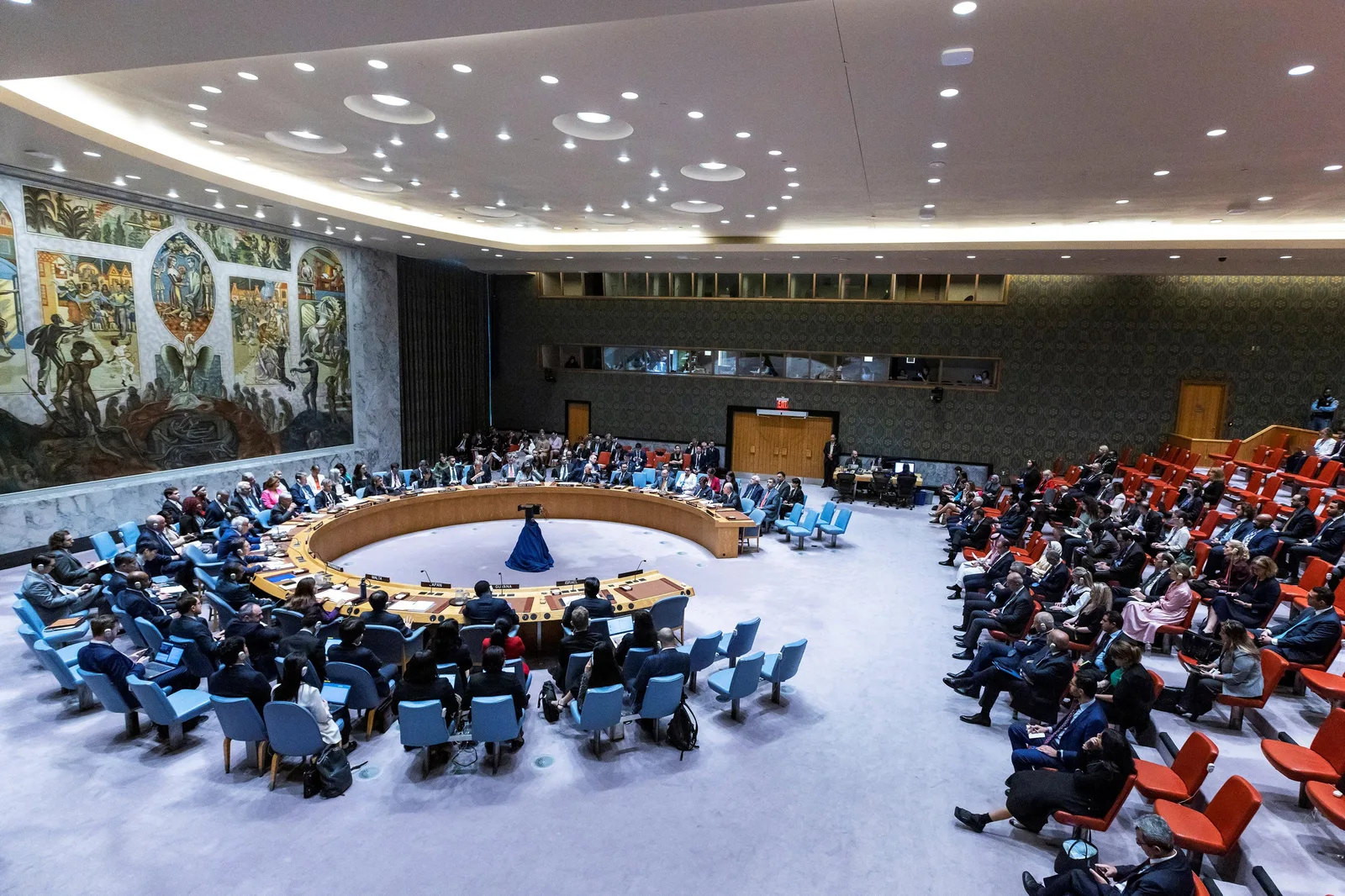
On the eve of an expected Security Council vote, the United States is seeking to reshape the political framework of the Western Sahara dispute. Morocco’s autonomy proposal remains at the center of negotiations, while the future of the United Nations mission, the consultation of affected populations, and the guarantees required for a possible settlement are becoming increasingly contentious. Behind successive revisions to the draft resolution lies a deeper question: can the UN begin transforming the institutions of a conflict before its parties have agreed on a political solution? 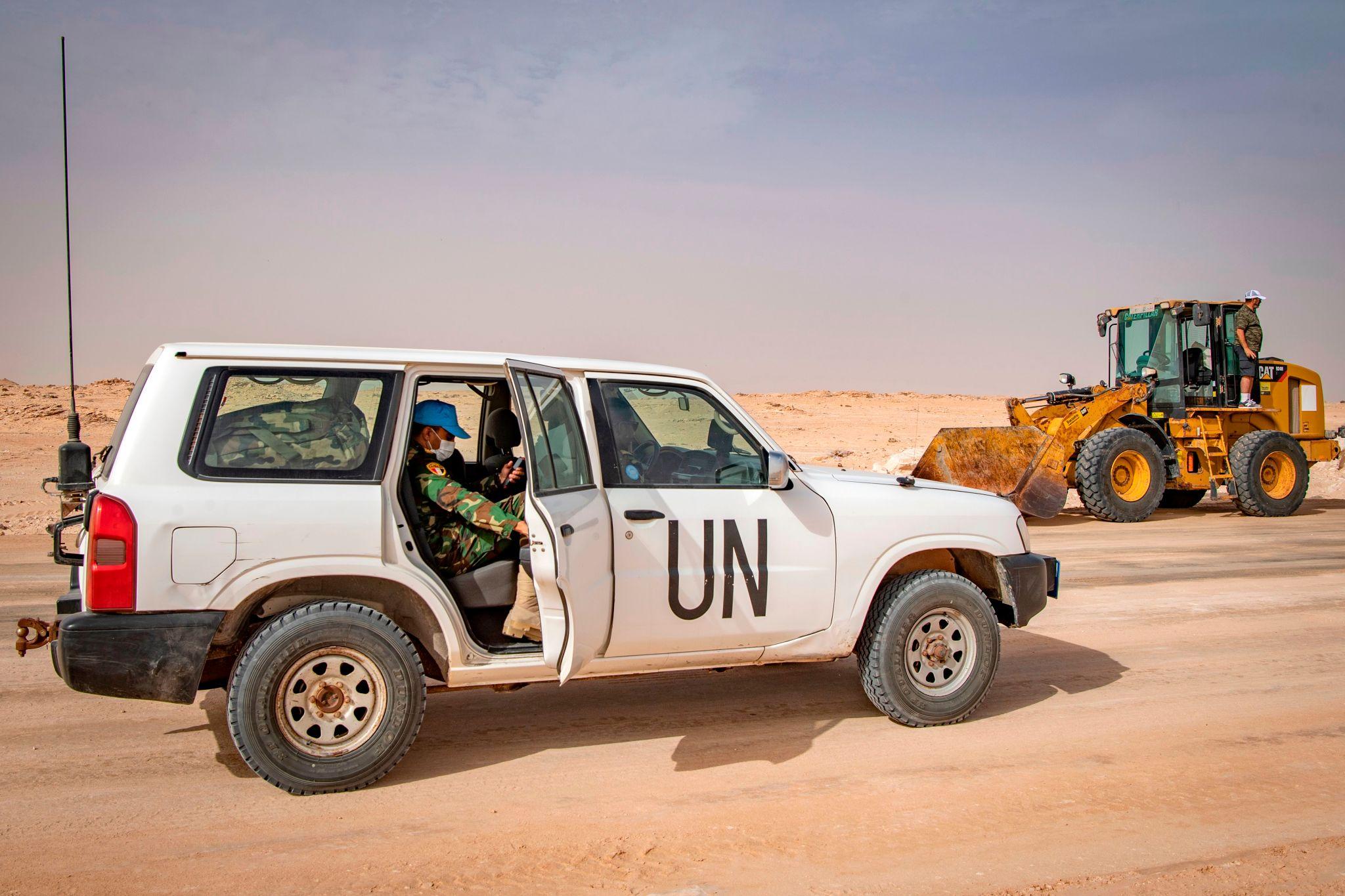 Morocco–United States–Algeria–United Nations | Sovereignty, autonomy, multilateral diplomacy and security architecture — draft resolution under negotiation; no final decision adopted as of October 29, 2026
In New York, the diplomatic struggle over Western Sahara is increasingly being fought over individual words.
They appear in draft resolutions, move from one version to another, disappear, and sometimes return in modified form. Some concern sovereignty. Others address self-determination. Still others determine the name, personnel, and responsibilities of a United Nations operation that has been present in the desert for thirty-five years.
These changes may appear technical.
They are anything but.
Behind the language being negotiated at the Security Council lies a question that the Western Sahara dispute has long allowed the international community to postpone: if autonomy under Moroccan sovereignty becomes the preferred starting point for a political settlement, what should happen to the international mechanism established when organizing a referendum was the central operational objective?
That is the significance of the October 2026 negotiations over the renewal of the United Nations Mission for the Referendum in Western Sahara, known as MINURSO.
Its current mandate expires on October 31.
The United States, which leads the drafting process, has circulated successive versions of a resolution that goes considerably beyond a routine administrative extension.
The initial proposal envisaged a rapid transformation of the mission and a substantial reduction in its military presence. Subsequent versions reportedly softened several of those provisions while preserving the ambition of redirecting the political process around Morocco's autonomy initiative.
As of October 29, no final resolution has been adopted. Information about the latest drafts comes primarily from journalistic accounts and reproductions of diplomatic documents that have not yet been officially published by the Security Council.
Nevertheless, the successive revisions are already revealing.
The question is no longer simply whether MINURSO will be renewed. It is what role the United Nations intends the mission to play in a political process whose underlying parameters have changed considerably.
A Mission Created for a Settlement That Never Materialized
The contradiction dates back to 1991.
That year, Morocco and the Polisario Front accepted a ceasefire under United Nations auspices. MINURSO was established to support a settlement plan providing for a referendum on the territory's future.
The referendum never took place.
Disagreements over voter identification, eligibility criteria, the organization of the ballot, and the political conditions surrounding it progressively paralyzed the mechanism.
Successive mediation initiatives failed to overcome the fundamental differences between Rabat and the Polisario Front.
The mission, however, survived the failure of the political arrangement it had originally been created to implement.
Over time, its operational activities became increasingly concentrated on military observation, monitoring developments on the ground, preventing incidents, and maintaining channels of communication between the parties.
Since the resumption of hostilities in November 2020, following the Guerguerat crisis, that stabilization function has become even more important.
The conflict has not returned to the intensity of the major military campaigns of the 1970s and 1980s, but the ceasefire is no longer holding.
Firing incidents continue to be reported near Morocco's defensive berm, while airstrikes and other armed incidents contribute to persistent tensions.
MINURSO therefore operates within a paradox.
It retains the name of a referendum mission while performing functions primarily associated with conflict prevention and security monitoring.
This contradiction is not new.
What has changed in October 2026 is that it has become a central issue in the negotiations over the mission's mandate.
The Decisive Turning Point of Resolution 2797
To understand why institutional transformation is now being considered, it is necessary to return to October 31, 2025.
On that date, the Security Council adopted Resolution 2797, extending MINURSO's mandate until October 31, 2026.
But the resolution's significance extended well beyond the continuation of the UN presence.
In unusually explicit terms, the Council called for negotiations conducted under the authority of the Secretary-General and his Personal Envoy to proceed on the basis of Morocco's autonomy proposal.
It also recognized that genuine autonomy could represent one of the most feasible outcomes to the dispute.
This constituted a major diplomatic advance for Rabat.
Since 2007, Morocco has advocated a formula based on maintaining its sovereignty while granting substantial political, administrative, and economic powers to the institutions of an autonomous region.
The initiative does not envisage the creation of an independent state.
Instead, it proposes a particular territorial arrangement within the Kingdom, combining regional institutions with powers reserved for the central government.
For years, the plan attracted growing diplomatic support without becoming the explicitly central framework of UN negotiations.
Resolution 2797 altered that balance.
It did not constitute a formal United Nations recognition of Moroccan sovereignty over Western Sahara.
It did not eliminate the principle of self-determination.
Nor did it transform Morocco's proposal into an agreement accepted by all parties.
But it gave the initiative a new degree of political centrality.
The distinction is fundamental.
The Council was no longer simply asking the parties to seek an abstract political solution. It was directing negotiations toward an identifiable institutional proposal.
At the same time, the resolution requested a strategic review of MINURSO's future.
These two developments were connected.
The Council had changed the starting point of political negotiations while opening the possibility of reconsidering the international instrument responsible for stabilizing the conflict.
October 2026 represents the first major test of that new relationship.
Washington Attempts to Accelerate the Transition
The first American draft, dated October 20 and reported by several media outlets that obtained access to the document, reflected an ambition for a substantial break with the existing framework.
The text reportedly presented autonomy under Moroccan sovereignty as the only viable solution to the conflict.
It also envisaged a profound reorganization of MINURSO.
According to reproduced provisions, the peacekeeping mandate would have ended in the spring of 2027.
A special political mission would then have taken over, while a substantial reduction in uniformed personnel would have proceeded according to a binding timetable.
The draft also contemplated changing the mission's name by removing the reference to a referendum.
Taken together, these measures would have represented a considerable institutional transformation.
The underlying logic was clear.
The United States was seeking to adapt the United Nations presence rapidly to a political trajectory favoring autonomy rather than indefinitely maintaining an institutional structure historically associated with a referendum that had never been organized.
Yet this approach raised a fundamental difficulty.
MINURSO is not merely a surviving institution from an earlier diplomatic process.
It is also a monitoring and conflict-prevention mechanism operating in an environment where hostilities have resumed.
Reducing its operational capacity rapidly, before a political agreement and new security guarantees were established, risked creating a dangerous gap between diplomatic ambition and military reality.
A mission can be renamed by a Security Council decision.
But changing its name does not eliminate the risks it helps contain.
This tension emerged as one of the important considerations in consultations among Council members.
October 20–26: The Search for a Compromise
A second American draft, circulated on October 26 and examined by media outlets including Agenzia Nova, reportedly modified several of the initial provisions.
The first adjustment concerned political language.
Autonomy under Moroccan sovereignty was no longer described as the only viable solution, but as the most viable one.
The difference between these formulations is significant.
The first tends to exclude alternative outcomes.
The second establishes a strong political preference without automatically converting that preference into a legally predetermined result.
The revised text also reportedly restored an explicit reference to self-determination in its operative provisions addressing the settlement.
For Rabat, however, the essential element remained intact.
In this version, Morocco's autonomy proposal continued to be presented as the sole basis for negotiations.
Such wording would go beyond Resolution 2797, which had established the Moroccan initiative as a basis for negotiations without expressly making it exclusive.
The second adjustment concerned MINURSO.
The deadlines requiring a 50 percent reduction in personnel and the scheduled termination of the peacekeeping component were removed.
The mission would instead be extended until October 31, 2027, while proposals for its restructuring would be referred to a further assessment.
A possible renaming to MINUSO reportedly remained under consideration, but the operational transformation would become gradual and subject to subsequent decisions.
This revision reflected a diplomatic trade-off.
Washington retained the objective of political reorientation while abandoning the attempt to impose an immediate security transformation whose consequences had not been fully resolved.
It illustrated the fundamental difference between announcing a new doctrine and creating the conditions for implementing it.
October 28: Consultation Returns to the Center of the Debate
Another development was reported on October 28 by Agenzia Nova, which said it had examined a more advanced version of the American draft.
According to that account, the text continued to favor Morocco's autonomy proposal while giving greater attention to the consultation of the populations concerned.
The arrangements reportedly under discussion included residents of the territory, refugees in the Tindouf camps, and Sahrawi communities living abroad.
The Secretary-General could be requested to present different options for obtaining their views on a possible settlement.
The draft also reportedly contemplated changes to MINURSO's mandate and designation, alongside a review of its future configuration.
These provisions require caution.
At the time of writing, the final document has not been authenticated through an official Security Council publication.
Its precise wording, procedural status, and possible retention until the vote therefore remain to be confirmed.
It would be premature to claim that the Council has decided to eliminate every referendum-related possibility, organize a particular consultation, or immediately transform the mission.
Nevertheless, the issue raised by these reports is fundamental.
A settlement based on autonomy does not, by itself, resolve the question of legitimate consent.
It remains necessary to determine who would be consulted, under which procedures, on what text, with which guarantees, and under whose supervision.
This could become one of the most complex aspects of the process.
Autonomy Is More Than a Diplomatic Formula
The diplomatic progress of Morocco's autonomy initiative opens a more demanding phase.
As long as autonomy remained a general political proposal, discussions could concentrate on its broad principles: Moroccan sovereignty, regional institutions, the distribution of powers, and constitutional guarantees.
But once an autonomy proposal becomes the central framework for an international negotiation, institutional questions become unavoidable.
How extensive would regional legislative authority be?
What would be the status of the autonomous executive?
Which powers would remain exclusively under Rabat's authority?
How would regional courts interact with the national judicial system?
What fiscal arrangements would provide the region with its own financial resources?
Who would exercise local policing powers?
How would autonomy guarantees be incorporated into Morocco's constitutional framework?
What protections would prevent the unilateral reduction of devolved powers?
How would political representation, the participation of displaced populations, and the reintegration of people who have spent decades in the Tindouf camps be organized?
These questions are not objections to autonomy as a principle.
They are the conditions required to translate it into functioning institutions.
Territorial autonomy takes many forms around the world.
Some arrangements grant extensive legislative and budgetary authority. Others remain closely dependent on the central government.
Their stability rests on different constitutional provisions, financing mechanisms, and political guarantees.
Western Sahara presents an additional difficulty.
The proposed status would be intended to help resolve a longstanding international conflict, not merely reorganize domestic administration.
It would therefore have to respond simultaneously to the sovereignty requirements defended by Rabat, the representation concerns of affected populations, and the political conditions of a negotiated settlement.
The more Morocco's autonomy proposal advances diplomatically, the more its precise institutional content becomes decisive.
Morocco Holds an Advantage, but Not an Agreement
Morocco's position is considerably stronger today than it was in the early 2000s.
The Kingdom administers most of the territory, including its principal cities and Atlantic coastline.
It is developing roads, ports, energy facilities, and urban infrastructure that deepen the territory's economic integration with the rest of the country.
Diplomatically, the United States recognized Moroccan sovereignty in December 2020.
In 2024, France stated that the present and future of Western Sahara fell within the framework of Moroccan sovereignty.
Since 2022, Spain has considered the autonomy plan the most serious, credible, and realistic basis for resolving the dispute.
The United Kingdom has also strengthened its support for an autonomy-based settlement within the Moroccan state.
These positions are not all legally equivalent.
Nevertheless, they converge toward an increasingly pronounced diplomatic preference.
Resolution 2797 gave that momentum an institutional expression at the Security Council.
It would, however, be inaccurate to conclude that the conflict has been settled.
The Polisario Front continues to defend independence and the right to self-determination.
Algeria remains its principal external supporter.
Western Sahara remains on the United Nations list of Non-Self-Governing Territories.
No final agreement has been signed between the parties.
The distinction between diplomatic advantage and political settlement therefore remains essential.
Morocco has secured an important transformation in the parameters of negotiation.
It has not yet obtained universal acceptance of a definitive solution.
It is precisely within this space between favorable momentum and the absence of an agreement that the October negotiations are taking place. 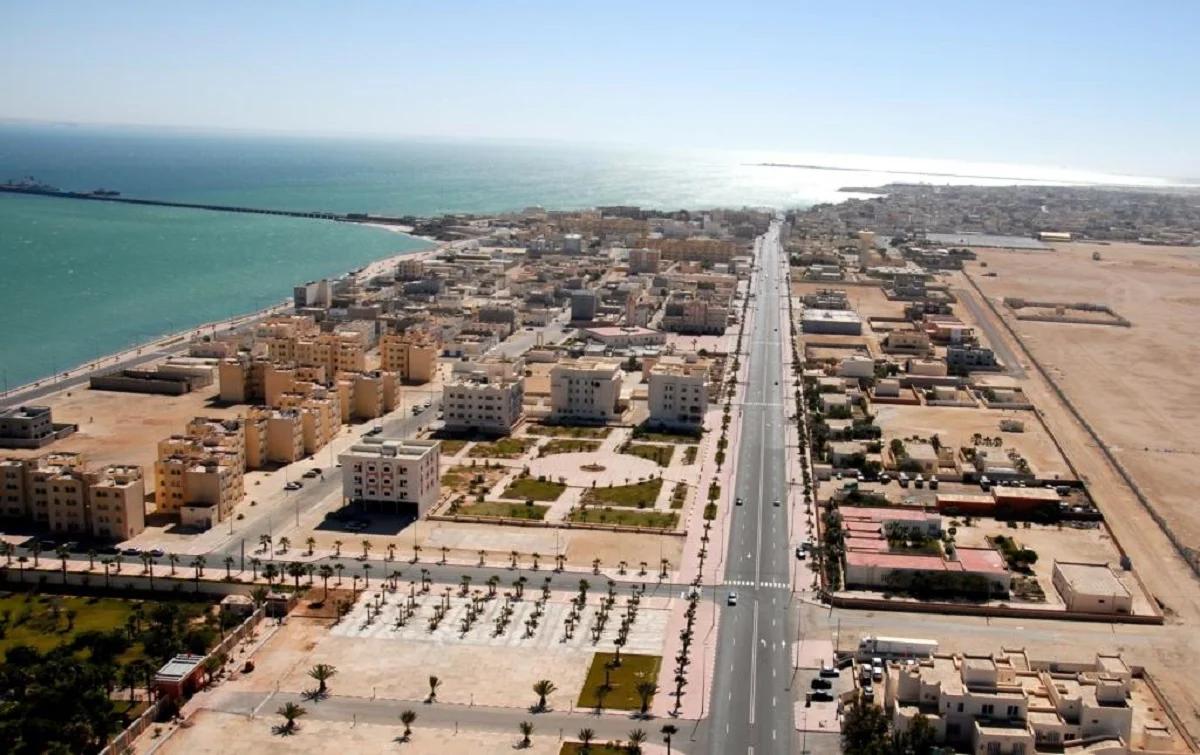
Algeria and the Polisario Face a Transformed Negotiating Framework
The growing prominence of autonomy in Security Council language creates a strategic difficulty for both the Polisario Front and Algeria.
The Polisario advocates a self-determination process that preserves the possibility of independence.
It argues that negotiations restricted to autonomy under Moroccan sovereignty would predetermine the outcome.
Algeria supports that position while maintaining that it is not a party to the conflict in the same capacity as Morocco and the Polisario Front.
In practice, Algeria remains indispensable to the process.
It hosts the Tindouf refugee camps, provides political support to the Polisario, and participates in diplomatic consultations organized under UN auspices.
Discussions held in Madrid and Washington during 2026, bringing together Morocco, the Polisario, Algeria, and Mauritania, demonstrated that a four-participant dialogue could be reactivated.
But returning to the negotiating table does not mean that fundamental differences have been overcome.
The central question remains the range of possible outcomes.
For Rabat, autonomy must operate within Moroccan sovereignty.
For the Polisario, an acceptable settlement must preserve an effective choice concerning the territory's final status.
Algeria rejects the reduction of self-determination to the endorsement of a predetermined arrangement.
The Security Council is now attempting to bring these positions closer together from a starting point favorable to the Moroccan plan.
This represents a change in the diplomatic balance, not the disappearance of disagreement.
The challenge is particularly significant because Western Sahara has structured the rivalry between Morocco and Algeria for decades.
Their closed land border, severed diplomatic relations, and strategic competition across the Maghreb give the conflict a regional dimension extending beyond the territory's formal status.
A durable settlement would therefore need to be sufficiently robust not to depend solely on a temporary diplomatic balance of power.
Refugees and the Problem of Consent
Among the issues likely to gain importance is the situation of refugees living in the Tindouf camps.
The American drafts reported in October reportedly refer to an expanded role for the United Nations High Commissioner for Refugees in registration procedures and the preparation of possible durable solutions.
This is politically sensitive.
Refugee registration is first and foremost a humanitarian concern.
It involves identification, protection, access to assistance, and a clearer understanding of population needs.
It does not automatically establish an electoral register.
These two processes must remain distinct.
A possible consultation on an autonomy arrangement would raise additional questions.
Would participation include residents of the territory, refugees, displaced people, and members of the diaspora?
What eligibility criteria would apply?
What guarantees would protect freedom of expression?
Who would supervise the process?
What legal effect would its outcome have?
The history of the referendum that never took place demonstrates how difficult such questions can become.
Western Sahara has already experienced the failure of a political process largely paralyzed by disputes over who should be entitled to participate in a vote.
It would therefore be risky to assume that a consultation on autonomy would automatically avoid similar difficulties.
The difference would lie in its purpose, procedures, and the degree of prior agreement between the parties.
That is why any provisions concerning consultation, if retained in the final resolution, will require particularly close examination.
They could become an important source of legitimacy for a settlement.
They could also create another point of deadlock if their scope remains insufficiently defined.
The Security Council Confronts Its Own Divisions
The October negotiations are not taking place within a politically homogeneous Security Council.
The United States, France, and the United Kingdom now support, to varying degrees, a settlement centered on Moroccan autonomy.
Russia and China have maintained more cautious approaches, emphasizing the UN framework and the need for an outcome accepted by the parties.
During the vote on Resolution 2797, Russia, China, and Pakistan abstained.
Algeria did not participate in the vote.
The resolution was adopted, but not unanimously.
This configuration helps explain some of the revisions to the American draft.
Overly exclusive language on autonomy can generate reservations.
A rapid transformation of MINURSO can raise operational concerns.
Reducing the role of self-determination can complicate the search for compromise.
Conversely, a text that merely repeats earlier formulations may appear insufficient to countries seeking to accelerate the settlement process.
Washington must therefore reconcile two objectives.
It wants to advance a political framework favorable to autonomy while assembling a sufficiently strong majority to adopt a credible resolution.
The result will depend not only on the ambition of the initial proposal, but also on what Council members ultimately accept in the final text.
This is a fundamental feature of multilateral diplomacy.
The most revealing document is not always the most ambitious draft, but the one that survives negotiation.
Transforming MINURSO Before Peace Has Been Secured?
The debate over the UN mission may be the most revealing element of the current diplomatic sequence.
MINURSO performs several functions that extend beyond its historical designation.
It monitors military activity, helps prevent escalation, documents certain incidents, and sustains an international presence in an area where communication between the parties remains limited.
These functions remain useful precisely because the conflict has not been resolved.
Removing the reference to a referendum from the mission's name could reflect a change in the Security Council's political doctrine.
But reducing its operational capabilities before a security agreement is in place could weaken one of the few international mechanisms available to prevent incidents.
The distinction between political mandate and military presence therefore becomes essential.
A mission can be tasked with supporting a settlement without immediately ceasing to monitor a conflict.
Conversely, maintaining all its existing structures indefinitely could become difficult to justify if a political agreement fundamentally transformed relations between the parties.
Several institutional trajectories are therefore possible.
The Council could renew the mission without major changes while awaiting political progress.
It could preserve operational capabilities while modifying certain priorities.
It could ask the Secretary-General to prepare a gradual transformation.
Or it could eventually establish a political mission specifically designed to support the implementation of an agreement.
The decisive question is not simply whether MINURSO will disappear.
It is when an architecture of stabilization can be replaced by an architecture of peace implementation.
And, above all, under which guarantees.
The Economic Stakes of a Settlement
Behind the legal and institutional negotiations lies another, less visible but equally important dimension: the territory's economy and its regional integration.
For several years, Morocco has invested heavily in infrastructure across its southern provinces.
The development of Dakhla, port projects, road networks, energy facilities, and connections toward Mauritania form part of a strategy extending well beyond territorial administration.
Western Sahara represents a potential link between Morocco's economy, the Atlantic coastline, and West African markets.
The Dakhla Atlantic port project illustrates this ambition.
It is not simply another port development.
It is intended to establish a logistical connection between Morocco and economies farther south.
This strategy forms part of a broader transformation in African economic geography, where transport corridors, port access, and energy infrastructure are becoming major instruments of regional influence.
Yet international legal uncertainty continues to affect certain investments and commercial relationships.
Judgments issued by the Court of Justice of the European Union in October 2024 reaffirmed legal constraints applicable to agreements between the European Union and Morocco insofar as they concern Western Sahara.
Favorable diplomatic developments do not automatically eliminate those constraints.
An internationally recognized and legally stabilized settlement could therefore have important economic consequences.
It could change investment conditions, contractual guarantees, trade arrangements, and access to international financing.
Conversely, an ambitious diplomatic resolution without an effective political agreement would leave some of the current uncertainties unresolved.
The economic dimension reinforces the importance of institutional settlement.
Transforming territorial advantage into lasting stability requires more than infrastructure development. It also requires predictable legal and institutional conditions under which that infrastructure can operate internationally.
What the Security Council Vote Could Actually Change
As October 31 approaches, several dimensions of the eventual resolution will need to be distinguished.
The first concerns the status of Morocco's autonomy proposal.
Will the Council preserve the language of Resolution 2797, identifying the proposal as the basis for negotiations?
Will it adopt a more exclusive formulation?
Or will it choose a compromise that leaves the parties greater negotiating flexibility?
The second concerns self-determination.
Will the final text continue to refer to it explicitly?
Will it establish procedures for consultation?
Or will these questions be left for subsequent negotiations?
The third concerns MINURSO.
Will the mission simply be renewed?
Will it be renamed?
Will its mandate change?
Will the Council request another strategic review?
Will restructuring be scheduled or merely considered?
The fourth concerns the timetable.
Precise deadlines can generate political momentum.
But they can also become unrealistic when they precede agreement between the parties.
The fifth concerns guarantees.
An autonomy arrangement cannot be evaluated solely through a theoretical distribution of powers.
Its credibility also depends on institutional protections, political rights, dispute-resolution mechanisms, and conditions for public participation.
Finally, the positions of Security Council members will matter.
A resolution adopted with broad support after substantial concessions would not carry the same implications as a more ambitious text that exposes deep divisions.
These elements will determine the decision's actual significance.
A new resolution could represent an important step without constituting a definitive settlement.
It could also consolidate a transformation of the diplomatic framework without immediately changing the legal or military situation on the ground.
The essential task will be to avoid confusing these different stages.
Is Diplomatic Time Catching Up With Reality on the Ground?
For half a century, two processes have advanced at different speeds.
On the ground, Morocco has consolidated its administration over most of Western Sahara, developed infrastructure, and strengthened the economic integration of the areas it controls.
Within international institutions, the political settlement has remained largely blocked by disagreements over self-determination and the absence of an agreement between the parties.
This divergence has produced a durable but unstable arrangement: a largely consolidated territorial reality without a universally accepted political settlement.
Resolution 2797 began narrowing that gap by giving Morocco's autonomy proposal a central role.
The American drafts of October 2026 now seek to go further.
They attempt to change not only the terms of negotiation, but also the institutional instruments intended to accompany its outcome.
This ambition explains both the importance of the moment and the difficulty of the discussions.
For Rabat, the challenge is to convert favorable diplomatic momentum into a durable settlement framework.
For the Polisario Front, it is to preserve an effective ability to influence the territory's final status and the modalities of self-determination.
For Algeria, the issue remains inseparable from regional balances and its position on decolonization.
For the United States, the objective is to transform a strategic preference into a multilateral advance.
For the United Nations, the challenge is more institutional: supporting political change without pretending that an agreement already exists where the parties remain deeply divided.
That is why the expected decision cannot be reduced to an immediate diplomatic victory or defeat.
It must be assessed against a more demanding question.
Does it genuinely bring the parties closer to an implementable settlement, or does it merely alter the language and structures surrounding a conflict that remains unresolved?
An Important Decision, but Not Yet the End of the Dispute
As of October 29, 2026, Morocco continues to administer most of Western Sahara.
The Polisario Front maintains its claims and positions east of the defensive berm.
Algeria remains involved in the dispute.
MINURSO continues its activities under the mandate established by Resolution 2797.
No final political agreement has been concluded.
The most significant change lies in how major powers and the Security Council now envisage the stages of a settlement.
For decades, the United Nations presence symbolized the persistence of an unfinished political process.
It could gradually become one of the instruments of a political transition, provided a sufficiently robust agreement is reached.
But such a transformation cannot simply be declared in advance.
Credible autonomy requires clearly defined institutions.
Legitimate consultation requires acceptable procedures.
Durable peace requires security guarantees.
Restructuring the international presence requires ensuring that the stabilization functions currently performed by MINURSO can be preserved or replaced.
The American initiative seeks to bring these dimensions together.
Its successive revisions demonstrate that they cannot be resolved through a single political declaration.
Morocco now enjoys a considerable diplomatic advantage.
The autonomy proposal it has defended since 2007 occupies a central place in Security Council discussions.
But moving from diplomatic preference to a stable institutional order is a far more complex undertaking.
That is the stage now beginning to emerge from the texts being negotiated in New York.
The real significance of October 2026 therefore extends beyond the future of a mission established in 1991.
It concerns whether the United Nations is prepared to begin transforming the international framework surrounding Western Sahara while preserving the guarantees required for a settlement that has yet to be constructed.
For thirty-five years, MINURSO has embodied a solution that never materialized.
The question now is whether it can become an instrument of a solution that has not yet been agreed.
And it may be in that distinction, more than in declarations of sovereignty or changes of institutional terminology, that the true significance of the Security Council's next decision will ultimately be found.
Atlas Limits Research Desk
Atlas Limits’ editorial and analytical desk.