For centuries, controlling the seas primarily meant possessing a fleet capable of imposing its will upon them. Venice, the Dutch Republic, the British Empire and later the United States successively combined economic power, maritime commerce and naval capability. That logic has not disappeared. But it is no longer sufficient to understand contemporary maritime power.
The system that keeps the oceans functioning today is far more complex. A ship may be owned by a Greek company, built in South Korea, registered in Liberia, financed by a European or Asian bank, insured by a club operating from London, chartered by a Swiss trader, carrying Gulf oil to China, passing through a strait bordered by several states and ending its voyage at a terminal operated by a foreign group.
A few metres beneath its hull, fibre-optic cables may simultaneously be carrying communications between continents.
The question “Who controls the seas?” therefore no longer has a single answer.
Modern maritime power is distributed among those who own the ships, those who organise the flows, those who control the passages, those who operate the ports, those who provide insurance and financing, those who own or operate digital infrastructure and, ultimately, those who can deploy military force.
Understanding the seas therefore means understanding one of the most complex architectures of globalisation.
The Sea Remains the Physical Infrastructure of the World
The digitalisation of the economy can create the impression of a world gradually becoming detached from geography. Goods tell a much more material story.
According to UN Trade and Development (UNCTAD), more than 80% of international merchandise trade by volume is transported by sea. Raw materials, hydrocarbons, minerals, grain, vehicles, machinery, industrial components and consumer goods still move overwhelmingly across the oceans. (unctad.org)
At the beginning of 2025, the world fleet comprised approximately 112,500 vessels representing 2.44 billion deadweight tons of capacity. A first concentration of power is already visible behind these figures: Greece, China and Japan together controlled more than 40% of global carrying capacity. (unctad.org)
But “controlling” a fleet must be understood carefully.
The economic owner of a vessel, its operator, its charterer and the state whose flag it flies may be four different actors. Global maritime commerce functions precisely through this dissociation.
The sea is therefore less an environment dominated by a single power than an immense system of interlocking dependencies.
The Paradox of Flags
On land, the nationality of a company and the jurisdiction in which it operates are relatively straightforward to identify. At sea, matters become more complicated.
A vessel must be registered under the flag of a state. That flag determines an essential part of the legal and regulatory framework governing the ship. Yet the world's largest maritime registries do not necessarily correspond to its largest economic or military powers.
As of 1 January 2025, Liberia accounted for approximately 17.4% of global tonnage, Panama for 15.2% and the Marshall Islands for 12.5%. Together, these three registries therefore represented close to half of global capacity. (unctad.org)
This system of international registries — often described as “flags of convenience” when it allows owners to register ships in countries other than those in which they are established — is one of the defining characteristics of the maritime economy.
It enables shipowners to arbitrage between taxation, operating costs, regulation, labour law and administrative requirements. But it also fragments the very notion of maritime sovereignty.
The nationality of the capital no longer necessarily corresponds to the nationality of the ship.
Greece illustrates the distinction particularly well: its influence derives far more from economic ownership of the fleet than from the number of vessels actually sailing under the Greek flag.
The first layer of power at sea is therefore already divided: ownership is not registration, registration is not operation, and operation does not necessarily mean carrying one's own goods.
The Straits: Geography Reasserts Itself
Maritime globalisation may bypass political borders. It cannot easily bypass geography.
A handful of narrow passages concentrate a considerable share of global flows: the Strait of Malacca, the Strait of Hormuz, Bab el-Mandeb, the Bosporus and Dardanelles, and the Strait of Gibraltar. Two artificial infrastructures have become almost as important as natural straits: the Suez and Panama canals.
Their significance is particularly evident in energy transportation.
According to the U.S. Energy Information Administration, approximately 23.2 million barrels per day of petroleum and petroleum products passed through the Strait of Malacca during the first half of 2025, equivalent to around 29% of global maritime oil flows. The Strait of Hormuz handled approximately 20.9 million barrels per day over the same period. (eia.gov)
These figures transform a few dozen or hundred kilometres of water into systemic infrastructure.
When a route is disrupted, trade does not necessarily stop. It becomes longer.
That is precisely what the Red Sea crisis demonstrated. Attacks on merchant vessels led many operators to avoid Bab el-Mandeb and Suez and reroute around Africa via the Cape of Good Hope. UNCTAD estimates that rerouting contributed to a 5.9% increase in ton-miles travelled in 2024, almost three times the growth in transported volumes. By May 2025, tonnage transiting Suez remained around 70% below its 2023 level. (unctad.org)
A strait therefore does not have to be formally closed to exert considerable influence. The risk associated with crossing it merely has to become high enough to alter the decisions of shipowners, insurers and cargo owners.
Maritime control often begins with control over the cost of passage.
Ports: The Gateways of Globalisation
A ship without a port is little more than a floating warehouse.
Maritime power therefore lies not only in the ability to transport goods, but also in the ability to load, unload, store, transship and connect them to inland networks.
Shanghai, Ningbo-Zhoushan, Singapore, Busan, Rotterdam, Jebel Ali, Tanger Med and Port Said are not merely local infrastructures. They are nodes in a global network.
Their efficiency can influence an entire trade route. The World Bank notes that the time container ships spend in port is a major determinant of logistics costs and supply-chain reliability. Disruptions in the Red Sea and constraints at the Panama Canal further affected aspects of global port performance in 2024. (worldbank.org)
But ownership adds another layer.
A port generally belongs to a state or public authority. Its terminal, however, may be operated for decades by a foreign company.
PSA International, DP World, Hutchison Ports, APM Terminals, COSCO Shipping Ports and China Merchants Port Holdings participate in networks extending far beyond their domestic markets. Major international operators can manage dozens of terminals across several continents. UNCTAD has noted that some of the largest groups operate between 50 and 100 terminals worldwide. (unctad.org)
Such expansion does not automatically amount to political control over the territory concerned. A port concession remains subject to the laws of the host state. But it creates durable economic relationships, provides access to important logistical information and can generate industrial dependencies that are difficult to replace quickly.
Port geopolitics is therefore not merely about owning quays. It is about being present at the interfaces where flows change networks.
Shipping Companies Control the Routes
Between the owner of the vessel and the owner of the port stands another actor: the company that actually organises transportation.
Container shipping is structured around a relatively limited number of major carriers capable of operating global networks. They determine rotations, frequencies, ports of call, deployed capacity and transshipment hubs.
That capability gives carriers considerable power.
When a major shipping line alters a route or removes a port call, the consequences can spread to exporters, importers, secondary ports and inland logistics networks. Maritime connectivity itself becomes a strategic economic variable.
Yet this power is not sovereign. A shipping company depends on shipyards to renew its fleet, banks and financial markets to fund investment, ports to operate, states for access to territorial waters, regulatory authorities for compliance and insurers to make its activities economically sustainable.
Each actor therefore controls part of the system while simultaneously depending on the others.
Insurance: The Invisible Power over the Oceans
Yet there is another maritime actor rarely visible on maps.
The insurer.
A ship can technically put to sea without belonging to a major power. Integrating it normally into international trade becomes much more difficult if it can no longer obtain the necessary insurance coverage.
Maritime risks are substantial: collision, pollution, cargo losses, crew injury or death, damage to port infrastructure, wreck removal, war, piracy and third-party liability.
A crucial share of these risks is covered by Protection and Indemnity Clubs, or P&I Clubs.
The twelve members of the International Group of P&I Clubs currently provide liability coverage for approximately 87% of the world's ocean-going tonnage. (igpandi.org)
This concentration gives the maritime insurance ecosystem considerable influence.
The power of insurance does not lie in directly commanding ships. It lies in determining the economic conditions under which they can sail.
An area considered dangerous can trigger higher war-risk premiums. An activity exposed to sanctions can become difficult to insure. An ageing or poorly maintained vessel may face deteriorating insurance conditions. A cargo can become legally or financially problematic to transport.
Western sanctions imposed on certain Russian flows since 2022 have particularly highlighted this dimension. They have also contributed to the development of alternative circuits, non-Western insurers and a so-called “shadow fleet” designed to reduce dependence on Western maritime services.
Insurance therefore demonstrates an essential feature of contemporary power: it is not always necessary to physically prohibit movement when its legal and financial risks can be increased sufficiently.
Beneath the Ships, a Second Ocean
Over this commercial architecture lies another infrastructure carrying not goods, but information.
Submarine fibre-optic cables form the physical backbone of intercontinental communications.
TeleGeography estimates that more than 99% of intercontinental data traffic travels through these cables, while noting that a perfectly precise global measurement remains difficult because comprehensive satellite traffic data are unavailable. (resources.telegeography.com)
The parallel with maritime commerce is striking.
Cables also follow geographical corridors. They converge at particular landing zones. They cross straits. They connect hubs. They can be accidentally damaged by anchors or fishing activity and have also become sensitive infrastructure amid growing geopolitical rivalry. (resources.telegeography.com)
Control of the seas therefore acquires another dimension.
The issue is no longer merely who can transport a container from Shanghai to Rotterdam, but who can maintain communications between London, New York, Marseille, Mumbai, Singapore or Tokyo.
The same oceans simultaneously support the circulation of energy, goods, capital and information.
Globalisation literally rests upon several networks layered across the same maritime space.
And Behind It All, the Navies
Only at this stage does the traditional actor of maritime power finally appear: the navy.
Its importance has not disappeared. Its function within the broader architecture has changed.
A naval force can escort merchant ships, monitor straits, combat piracy, protect critical infrastructure, preserve access to particular routes or, during conflict, attempt to deny those routes to an adversary.
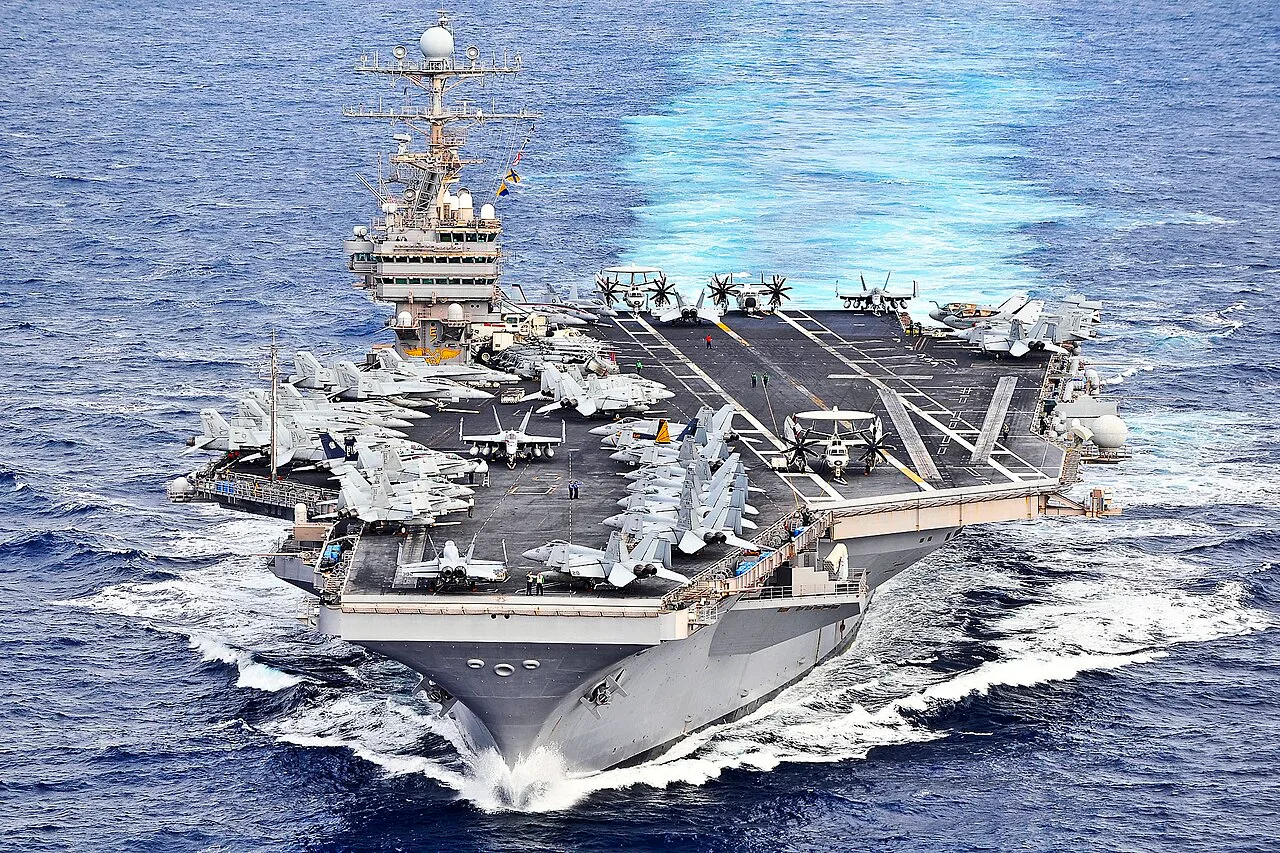
The United States still possesses an unmatched ability to project sustained naval power over long distances, supported by carrier strike groups, submarines, logistics capabilities and an extensive network of alliances and bases.
China, meanwhile, is developing a navy increasingly capable of operating farther from its shores, an evolution consistent with its commercial weight and its dependence on routes linking Asia to the Middle East, Africa and Europe. India is strengthening its role in the Indian Ocean. Japan is expanding its maritime capabilities. France and the United Kingdom retain significant ocean-going forces and territories or strategic footholds across multiple seas.
But even the world's most powerful navy does not “control” the oceans economically on a daily basis.
It does not independently determine the flag flown by a tanker, its insurer, the terminal at which it will berth, the price of its freight or the submarine cable through which payment instructions for its cargo will travel.
Naval power is better understood as the final layer of the system.
When maritime law, contracts, insurance and commercial mechanisms function normally, military power often remains in the background. When the maritime order is threatened, its presence immediately becomes visible.
Military force therefore remains the ultimate guarantor of a system whose daily functioning depends primarily on civilian actors.
Maritime Power Has Become Systemic
The hypothetical case of a single vessel is ultimately enough to demonstrate the scale of the issue.
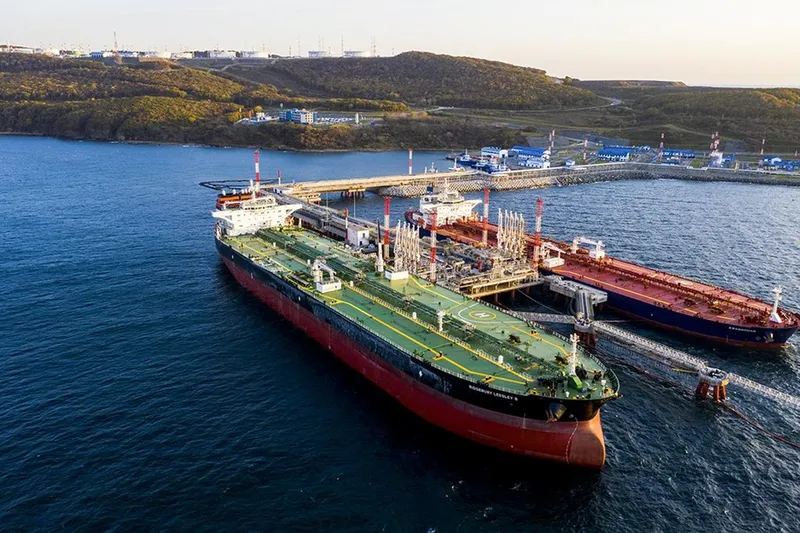
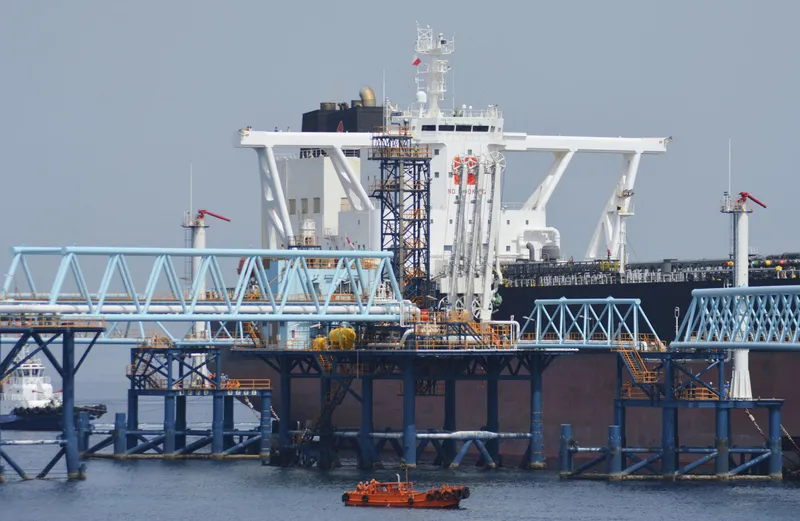
Imagine a tanker owned by a Greek group. It was built in South Korea, financed by several banks, registered in Liberia and insured through a P&I Club. It loads oil in the Gulf, passes through Hormuz, crosses the Indian Ocean and then Malacca before reaching an Asian refinery. Its route is tracked by satellite. Its contracts are negotiated across several jurisdictions. The associated payments travel through international financial networks. Submarine cables carrying part of the world's communications run close to its route.
Which country controls that ship?
Greece because its owner is Greek?
Liberia because it flies the Liberian flag?
The producing state because it controls the cargo?
The coastal states because the ship passes through their waters?
The insurer because it covers the risk?
The port operator because it controls access to the terminal?
The naval power capable of protecting — or preventing — its passage?
The answer is precisely that none of these actors controls it entirely.
And each controls one dimension of it.
So Who Controls the Seas?
Maritime power in the twenty-first century is not a pyramid. It is a network.
States control territorial waters and certain passages. Shipowners control assets. Shipping companies organise routes. Flag states provide jurisdiction. Ports control interfaces. Insurers make risk economically manageable. Cable operators maintain digital infrastructure. Financial institutions enable financing and settlement. Navies ultimately guarantee, contest or interrupt freedom of navigation.
No single actor possesses the whole system.
This fragmentation can create the impression of an extraordinarily resilient architecture. Yet it produces another reality: a remarkable concentration of vulnerabilities.
A handful of straits. A handful of major ports. A handful of maritime registries. A handful of insurance networks. A handful of major carriers. A handful of submarine cable corridors. A handful of naval powers capable of genuinely global operations.
Maritime globalisation is therefore simultaneously decentralised in its actors and concentrated in its infrastructure.
That is probably where the answer to the original question lies.
No one controls the seas. But controlling enough of the points through which they function can confer almost as much power as owning them.
Main Sources
- UN Trade and Development (UNCTAD) — Review of Maritime Transport 2025; data on global seaborne trade, the merchant fleet, vessel ownership, flags and maritime-route disruptions.
- UN Trade and Development (UNCTAD) — data and analysis on ports, terminal operators and global logistics chains.
- U.S. Energy Information Administration (EIA) — World Oil Transit Chokepoints; data on Malacca, Hormuz, Bab el-Mandeb, Suez, Panama and other major energy chokepoints.
- World Bank / S&P Global Market Intelligence — Container Port Performance Index 2024; analysis of container-port performance and vulnerabilities.
- International Group of P&I Clubs — data on maritime liability coverage and the role of P&I Clubs in global ocean-going tonnage.
- TeleGeography — data and analysis on the role, concentration and vulnerability of submarine cables in intercontinental communications.
Atlas Limits Research Desk
Atlas Limits’ editorial and analytical desk.