The technology selloff has revived comparisons with the dot-com crash. Beyond the collapse in valuations lies a more consequential question: how can a genuine industrial revolution generate excessive financial expansion, and when does a reversal in expectations become a systemic risk?
The financial market correction of autumn 2026 marks a turning point in how investors assess artificial intelligence. For several years, expectations of a profound transformation in productivity, corporate operations and digital infrastructure supported an extraordinary expansion in technology valuations. Investment in semiconductors, data centers and artificial intelligence models became increasingly central to expectations of global economic growth. As markets begin to question the prospective returns on this investment, however, the assumptions that sustained the expansion are being reassessed.
By November 20, approximately $9 trillion in market capitalization had been erased from global equities since their August peaks, according to Reuters. This figure does not represent losses attributable exclusively to artificial intelligence, nor does it measure an equivalent destruction of productive capital. It reflects changes in the market value of equities amid concerns about technology valuations, interest rates, inflation and broader economic conditions.
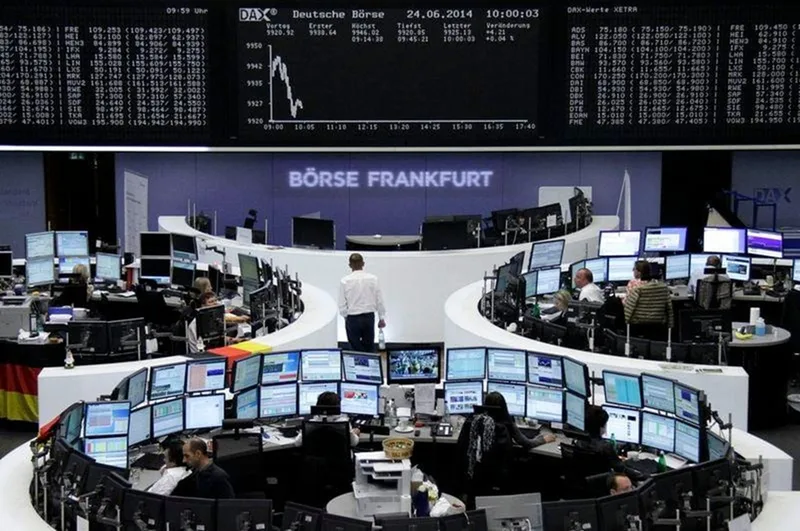
The S&P 500 declined 3.7% on November 20, while the Nasdaq lost more than 5% during the session. Semiconductor companies experienced particularly severe selling pressure, exposing the vulnerability of markets increasingly dependent on a relatively small group of technology businesses.
The correction does not, by itself, establish that artificial intelligence represents a generalized speculative bubble. It does demonstrate that investors are reconsidering the relationship between technological progress, capital expenditure and the earnings required to justify current valuations.
Financial history provides numerous examples of genuine technological revolutions accompanied by excessive investment and speculative valuations. Railroads, electricity, automobiles, telecommunications and the commercial internet all generated waves of capital formation that sometimes exceeded the capacity of individual companies to deliver sustainable returns.
The infrastructure created during these expansions frequently survived the financial crises that followed. Many of the companies financing it did not. 
When expectations overtake earnings
A financial bubble develops when asset prices become increasingly dependent on expectations of further appreciation rather than on independently supportable future cash flows.
This process does not necessarily require irrational behavior by individual investors. It can emerge from decisions that appear reasonable when examined separately but collectively depend on increasingly optimistic assumptions.
Artificial intelligence illustrates this mechanism particularly clearly.
The underlying technological progress is real. Advanced models are improving, computing capabilities are expanding, businesses are deploying automation, and semiconductor manufacturers are responding to substantial industrial demand. Major cloud providers possess established distribution networks and commercial relationships that allow new services to reach customers rapidly.
The difficulty arises when the expected benefits of the same technological transformation are incorporated simultaneously into valuations throughout the supply chain.
Semiconductor manufacturers are valued according to expected future equipment demand. Data-center operators are valued according to anticipated utilization rates. Model developers are valued according to prospective subscription, licensing and enterprise revenues. Companies adopting artificial intelligence may themselves receive higher valuations because investors expect improved productivity and operating margins.
These expectations are interconnected. Ultimately, they depend on the ability of final customers to generate sufficient economic value to support the entire structure.
If enterprise adoption proceeds more slowly than anticipated, if competition compresses prices or if productivity gains accrue mainly to customers rather than technology suppliers, earnings expectations may need to be revised across several industries simultaneously.
The resulting adjustment can be substantial because equity valuations reflect discounted expectations of future cash flows. Companies whose market value depends heavily on profits expected many years ahead are especially sensitive to changes in discount rates and long-term growth assumptions.
A company trading at fifty times expected earnings can experience a severe decline if investors reduce the valuation multiple to thirty, even if its underlying profits continue growing.
A technological revolution can therefore continue while the market value of companies associated with it contracts dramatically.
The central distinction is between technological validity and financial valuation. The first does not guarantee the second.
The dot-com bubble: a correct revolution at the wrong price
The most direct historical comparison is the internet bubble of the late 1990s.
The commercial expansion of the internet, the emergence of web browsers and the rapid adoption of personal computers convinced investors that the global economy was entering a new technological era.
That conviction proved correct. The internet transformed commerce, communications, financial services, media and corporate organization.
The financial error concerned the speed at which the transformation would generate profits, the companies that would capture those profits and the prices investors were willing to pay for their shares.
Netscape's initial public offering in August 1995 became an early symbol of the emerging internet investment boom. Over the following years, technology companies increasingly accessed public markets despite limited revenues, substantial operating losses and uncertain business models.
Traditional valuation measures were sometimes displaced by expectations based on user growth, website traffic and projected market share.
Abundant financing enabled companies to expand aggressively before demonstrating sustainable profitability. Capital raised through equity markets funded advertising, acquisitions, recruitment and infrastructure. Rising valuations facilitated additional fundraising, reinforcing the expansion.
The Nasdaq Composite reached 5,048.62 points on March 10, 2000. By October 2002, it had lost approximately 78% of its value.
Numerous companies disappeared, while others survived only after major restructuring. Even established technology businesses experienced dramatic valuation declines.
Cisco provides an important example. Its networking equipment was central to the expansion of the internet, and the company possessed substantial commercial operations. Nevertheless, its share price suffered a severe collapse when investors reassessed the extraordinary growth assumptions embedded in its valuation.
The subsequent development of the internet did not reverse the losses experienced by investors who had purchased technology shares at excessive prices.
The telecommunications industry revealed an equally important mechanism.
During the boom, companies financed extensive fiber-optic networks and communications infrastructure on the assumption that future demand would justify the investment. When financing conditions deteriorated and capacity proved excessive relative to immediate commercial demand, several operators experienced financial distress.
WorldCom filed for bankruptcy in 2002.
Yet the underlying infrastructure did not disappear. Networks built during the expansion subsequently supported the development of the digital economy.
The dot-com episode demonstrates that a technological transformation can generate substantial long-term economic value while destroying enormous amounts of financial capital during its initial commercialization.
Artificial intelligence presents a partially different structure. Several leading companies already generate substantial profits and possess established commercial franchises, unlike many speculative internet companies in 1999.
This financial strength reduces certain immediate insolvency risks. It does not eliminate the possibility of excessive investment, disappointing returns or significant equity multiple compression.
Railroads and the economics of overbuilt infrastructure
The railway booms of the nineteenth century offer an even older precedent for understanding the industrial dimension of artificial intelligence.
Railroads promised to transform transportation, reduce costs, integrate markets and reshape national economies. These expectations attracted extraordinary amounts of capital.
During Britain's Railway Mania of the 1840s, speculative enthusiasm encouraged the promotion of numerous railway projects. When valuations collapsed, investors suffered substantial losses despite the enduring economic importance of railway infrastructure.
In the United States, railway expansion contributed to repeated episodes of speculation, excessive borrowing and financial instability, including the Panic of 1873.
The historical lesson concerns the distinction between the social value of infrastructure and the private returns earned by its financiers.
A railway network can improve national productivity while leaving individual operators insolvent. Infrastructure can be economically indispensable over several decades while having been constructed too early, in the wrong locations or at excessive cost.
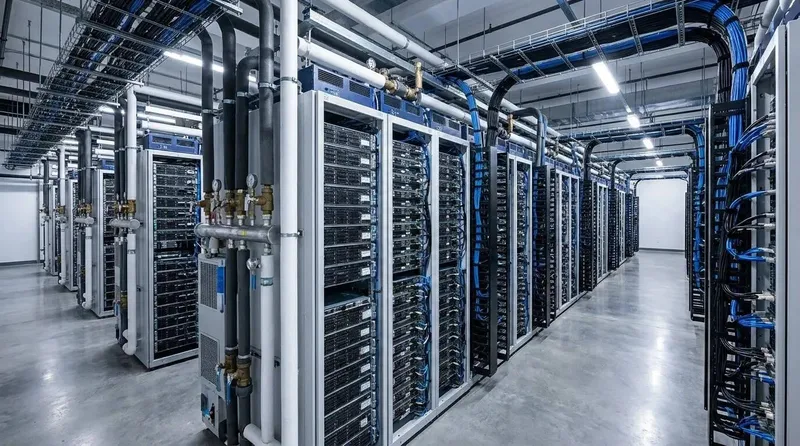
Data centers present a comparable problem.
Their expansion may increase computing capacity, accelerate artificial intelligence adoption and enable productivity improvements across multiple industries. But these benefits do not guarantee that every facility will achieve its projected utilization rate or generate sufficient revenue to cover construction, energy, financing and equipment replacement costs.
Artificial intelligence infrastructure also introduces a particularly demanding form of technological depreciation.
Buildings, electrical connections and fiber networks may remain useful for decades. Advanced computing accelerators can face competitive obsolescence much sooner as new generations of processors improve performance and energy efficiency.
Investors must therefore recover substantial capital expenditure over uncertain economic horizons.
Falling computing costs may accelerate the adoption of artificial intelligence while simultaneously reducing the profitability of infrastructure built under earlier pricing assumptions.
The European Central Bank's November 2026 Financial Stability Review estimates that cumulative capital expenditure by major US technology companies could reach approximately $5.5 trillion by 2030, although projections remain uncertain.
The ECB also observes that capital expenditure exceeded operating cash flows for most major US hyperscalers in 2026, increasing their reliance on external financing.
This shift matters because investment financed primarily through internally generated cash flow presents a different financial risk from expansion increasingly supported by debt and external capital.
When investment commitments extend beyond internally available resources, disappointing returns can affect creditors, bond markets and institutions financing the expansion.
The railway precedent suggests that artificial intelligence infrastructure may remain valuable long after some of the financial structures used to construct it have been restructured.
Japan's asset bubble: the relationship between valuations and credit
Japan's asset bubble of the late 1980s provides another important historical comparison.
Its relevance lies less in technological speculation than in the interaction between rising asset prices, borrowing capacity and financial confidence.
During the expansion, increasing equity and real-estate valuations strengthened collateral values and supported additional bank lending. Credit expansion, in turn, helped sustain demand for financial and property assets.
This created a reinforcing cycle in which rising prices facilitated borrowing and borrowing contributed to further price increases.
The Nikkei 225 reached a closing peak of 38,915.87 points on December 29, 1989. The subsequent collapse in equity and property prices weakened collateral values, damaged bank balance sheets and contributed to a prolonged period of economic stagnation.
The structure of Japanese bank lending in the 1980s differs substantially from the financing of American technology companies today.
Nevertheless, the underlying feedback mechanism remains relevant.
Rising equity valuations can facilitate capital raising, improve financing conditions and allow companies to use their shares for acquisitions. Private investors may also accept elevated valuations when they anticipate profitable public listings.
When valuations decline, these advantages can reverse.
Companies may face more expensive financing, greater dilution when issuing equity and reduced flexibility in funding new investments. Projects that appeared viable under favorable capital-market conditions may become financially unattractive.
The most serious vulnerabilities arise when financing depends heavily on future valuations rather than established operating cash flows.
The Japanese experience illustrates how a decline in asset prices can become a persistent economic problem when the financial system has relied on those prices to sustain credit expansion.
1929: leverage and forced liquidation
The Wall Street crash of 1929 demonstrates another mechanism through which a market correction can become self-reinforcing.
During the late 1920s, American economic expansion was accompanied by rapid industrial development, the spread of automobiles and electricity, and growing enthusiasm for equities.
Purchases financed through margin borrowing became an important component of speculative activity.
Investors could acquire securities using borrowed money, with their holdings serving as collateral.
When equity prices declined, lenders demanded additional collateral or repayment. Investors unable to meet these margin calls were forced to sell securities.
Those sales contributed to further price declines, triggering additional margin calls and forced liquidation.
The result was a feedback mechanism in which falling prices generated transactions that intensified the decline.
The stock-market crash was not the sole cause of the Great Depression. Banking failures, monetary contraction, structural economic weaknesses and international transmission mechanisms were central to the subsequent collapse in economic activity.
Nevertheless, the episode illustrates the destabilizing potential of leverage.
The same principle remains relevant in modern markets, although financial instruments and market structures have changed substantially.
Leveraged investment funds, derivatives positions, collateral requirements and volatility-sensitive strategies can all generate forced adjustments when asset prices move sharply.
A decline initially justified by weaker earnings expectations can therefore become amplified by the financial constraints of investors.
The market price then reflects not only revised fundamental expectations but also the immediate need of certain participants to reduce exposure.
2008: when asset losses become systemic
The global financial crisis of 2008 offers a different lesson.
Its origins lay in the expansion of mortgage lending, the deterioration of underwriting standards and the distribution of credit risks through securitized products and complex financial structures.
Mortgage loans were pooled into securities and distributed among banks, investment funds and institutional investors. Derivatives, leverage and short-term wholesale funding created additional layers of exposure.
When the underlying housing market deteriorated, uncertainty about asset values spread through the financial system.
The crisis became systemic because declining asset prices interacted with solvency concerns, collateral requirements, funding withdrawals and collapsing confidence between financial institutions.
This distinction is essential when evaluating artificial intelligence.
A severe decline in the market capitalization of a technology company does not automatically threaten financial stability. Equity investors can absorb losses without the company becoming insolvent.
Systemic risk arises when those losses undermine leveraged borrowers, impair creditors, trigger forced asset sales or interrupt essential financing channels.
The relevant questions therefore extend beyond equity valuations.
Who ultimately finances artificial intelligence infrastructure? How much of that financing involves debt? Which institutions hold the exposures? What collateral supports the borrowing? Are commitments transparent, and can investors absorb losses without selling unrelated assets?
The financial system of 2026 does not reproduce the mortgage securitization architecture of 2008.
But the historical comparison identifies the conditions under which a sector-specific correction could spread through credit markets and institutional balance sheets.
Index concentration and the structure of modern markets
The contemporary equity market introduces another important dimension.
Major American stock indices are largely weighted by market capitalization. As a small group of technology companies appreciates, its collective weight in benchmark indices increases.
Investors purchasing diversified index funds consequently acquire significant exposure to these companies, even when they have no intention of making a concentrated investment in artificial intelligence.
This structure creates a common source of risk across portfolios.
Additional inflows into index-tracking funds are allocated according to benchmark weights, while market-capitalization changes automatically alter the relative exposure of existing portfolios.
Passive investing does not mechanically cause speculative bubbles. Index funds generally replicate market prices rather than independently determining fundamental valuations.
However, concentration can increase the sensitivity of diversified portfolios to developments affecting a small number of companies.
The ECB's November 2026 review specifically examines the interaction between large equity issuance, passive investing and market concentration. It identifies potential vulnerabilities arising from common exposures and abrupt changes in investor sentiment.
Derivatives and systematic investment strategies introduce further complexity.
Volatility-targeting funds may reduce equity exposure when realized volatility increases. Leveraged investors may be required to reduce positions when collateral values decline. Certain option-hedging strategies can intensify market movements, depending on dealers' positioning and prevailing market conditions.
These mechanisms do not always amplify declines. Their effects depend on portfolio structures, market liquidity and the direction of hedging requirements.
But when falling prices coincide with rising volatility, investor redemptions and deleveraging, the combined effect can accelerate market corrections.
The resulting selling pressure may extend well beyond the companies whose earnings expectations initially deteriorated.
Circular financing and the artificial intelligence ecosystem
One of the most distinctive features of the current artificial intelligence expansion is the growing financial interdependence of its participants.
Large technology platforms invest in model developers, provide them with computing infrastructure and enter into long-term commercial agreements. Model developers use part of their financing to purchase cloud services. Infrastructure providers expand capacity to meet projected demand, generating additional orders for semiconductor manufacturers.
These arrangements can have legitimate commercial purposes.
They help secure supplies, distribute development costs, guarantee computing access and accelerate technological progress.
Their financial implications become more difficult to assess when investment commitments, commercial revenues and financing arrangements reinforce one another.
The concern is not necessarily that reported revenues are fictitious.
It is that revenues recognized by one participant may depend on financing supplied to another participant within the same economic ecosystem, rather than on sufficient independent demand from final customers.
A model developer may purchase computing capacity using externally raised capital. The cloud provider records revenue and expands its infrastructure. Semiconductor manufacturers receive additional orders. The entire supply chain can report strong growth while the profitability of the ultimate end market remains uncertain.
If investors become less willing to finance model developers, computing expenditure may slow. Cloud providers may revise capital spending plans, while semiconductor manufacturers adjust demand forecasts.
Valuations can then decline across several interconnected industries.
The ECB explicitly identifies the opacity of interconnected ownership structures, purchasing commitments and financing arrangements as a potential source of financial contagion.
This does not establish that artificial intelligence revenues are broadly artificial. It demonstrates the difficulty of measuring final economic demand when financial and commercial relationships are tightly intertwined.
The distinction between internally generated demand and demand supported by continuing external financing is therefore central to evaluating the sustainability of the investment cycle.
Interest rates and the repricing of future growth
Financial bubbles cannot be understood independently of monetary conditions.
Interest rates influence equity valuations, corporate financing costs and the minimum returns required for investment projects.
When real interest rates are low, distant future profits have a relatively high present value. Investors are more willing to finance businesses whose immediate earnings are limited but whose long-term growth prospects appear substantial.
When discount rates rise, the present value of those future profits declines.
The effect is particularly significant for growth companies whose valuations depend heavily on earnings expected many years ahead.
Higher bond yields can therefore produce substantial equity multiple compression even when operating results remain relatively strong.
Interest rates also affect physical investment.
A data center financed through borrowing must generate sufficient revenue to cover operating expenditure, equipment depreciation and financing costs.
As borrowing costs increase, projects that previously appeared attractive may no longer meet investors' required returns.
Companies may postpone construction, reduce equipment orders or renegotiate long-term commitments.
The November 2026 correction reflects precisely this interaction between concerns about artificial intelligence valuations and expectations of tighter monetary conditions.
It would therefore be misleading to attribute the entire market decline exclusively to doubts about the technology.
The repricing reflects changes in both expected earnings and the cost of capital used to value them.
Historically, the most abrupt adjustments often occur when optimistic growth expectations and favorable financing conditions deteriorate simultaneously.
From equity correction to systemic risk
A major technology selloff does not necessarily constitute a global financial crisis.
Shareholders can experience substantial losses while companies continue operating. Infrastructure can remain productive. Investment programs can be reduced without triggering a generalized credit contraction.
The systemic danger emerges when several transmission channels begin reinforcing one another.
The first is the wealth effect. Sustained equity losses reduce household and institutional portfolio values, potentially weakening consumption, confidence and risk appetite.
The second is industrial investment. Major technology companies now represent an important source of demand for semiconductors, electrical equipment, specialized construction and energy infrastructure. A coordinated reduction in capital expenditure could affect suppliers and regional economies dependent on these projects.
The third is credit transmission. Corporate bonds, private credit, infrastructure-backed lending and specialized financing structures can distribute losses from borrowers to lenders and institutional investors.
The fourth is market liquidity. Redemptions, margin calls and collateral constraints can force investors to sell assets unrelated to the original source of the correction.
The fifth is international contagion. American technology equities are widely held by investors across the world, while semiconductor production and digital infrastructure supply chains extend across Asia, Europe and North America.
A reassessment of American technology investment can therefore affect foreign equity markets, industrial exports, capital flows and exchange rates.
The ECB considers European banks relatively resilient overall but identifies growing vulnerabilities among certain non-bank financial intermediaries.
This distinction is important. Financial contagion in 2026 may emerge through investment funds, private financing vehicles and capital markets rather than reproducing the bank-centered mechanisms of 2008.
What makes 2026 different from 2000
The similarities between the artificial intelligence expansion and the dot-com bubble are significant, but so are the differences.
Many of the most speculative internet companies of the late 1990s lacked sustainable earnings, established customer relationships or reliable business models.
By contrast, several leading artificial intelligence investors are among the world's largest and most profitable companies.
Their advertising, software, cloud and digital services businesses generate substantial revenue and provide financing capacity that speculative internet start-ups generally did not possess.
Demand for computing infrastructure is also observable through equipment orders, data-center construction and energy consumption.
The current cycle cannot therefore be reduced to speculation surrounding businesses without economic activity.
Yet the strength of these companies introduces another form of concentration risk.
Because their market capitalizations are so large and their representation in global equity portfolios so extensive, valuation adjustments can affect a much broader investor base.
Their scale may reduce individual insolvency risk while increasing the macrofinancial consequences of changes in their investment strategies.
Artificial intelligence infrastructure is also capital intensive. Data centers require specialized processors, cooling systems, electrical connections and long-term energy supplies.
Construction commitments and equipment procurement cannot always be adjusted as rapidly as financial expectations.
Finally, the industry operates within an increasingly restrictive geopolitical environment. Semiconductor export controls, US-China technological competition, energy constraints and national industrial policies influence production costs, market access and supply-chain resilience.
The current configuration therefore combines concentrated equity valuations, capital-intensive infrastructure development and considerable uncertainty surrounding future commercial returns.
Identifying the transition from exuberance to crisis
Historical precedents suggest that the most important indicators extend beyond headline equity declines.
A sustained divergence between capital expenditure and final customer revenues would indicate that the industry is investing faster than its independently profitable demand is developing.
Deteriorating free cash flow would reveal whether infrastructure commitments are consuming an increasing share of internally generated resources.
Widening corporate credit spreads, refinancing difficulties and rising borrowing costs would suggest that the correction is moving beyond equity valuations.
Large investment fund redemptions, margin calls and liquidity shortages would indicate that financial constraints are beginning to amplify fundamental losses.
Finally, simultaneous reductions in semiconductor orders, data-center construction and computing capacity commitments would suggest that financial repricing is feeding back into the real economy.
These developments must be considered collectively.
Multiple compression can represent a healthy normalization after excessive optimism. Lower earnings forecasts can reflect an ordinary industrial adjustment.
A systemic crisis requires a more consequential interaction between losses, leverage, liquidity and economic contraction.
A technological revolution can outlive its bubble
Financial history provides a consistent warning against confusing technological progress with investment returns.
The dot-com crash did not prevent the internet from transforming the global economy. Railway speculation did not invalidate the economic importance of transportation networks. Japan's asset collapse demonstrated how financial losses can generate prolonged stagnation when they impair the banking system. The crisis of 2008 showed how interconnected credit structures can turn sector-specific losses into global financial instability.
Artificial intelligence combines elements of these historical experiences without reproducing any one of them exactly.
Its capacity to improve productivity does not guarantee adequate returns for every company or infrastructure project involved. Conversely, declining equity valuations do not demonstrate that the underlying technology lacks economic value.
The central tension lies between three different time horizons.
Financial markets continuously reprice expectations. Industrial investment requires substantial capital commitments over several years. Productivity improvements may take considerably longer to appear in corporate earnings and national economic statistics.
When these horizons diverge, markets can finance infrastructure faster than profitable demand develops.
The infrastructure may ultimately prove useful, but its original investors may not recover the capital committed. Productivity gains may accrue primarily to customers rather than technology providers. Companies that dominate the beginning of an investment cycle may not capture its largest long-term rewards.
As of November 21, 2026, the evidence establishes a major market correction, increasing scrutiny of artificial intelligence investment returns and growing regulatory concern about concentration, leverage and interconnected financing.
It does not establish that a systemic crisis comparable to 2008 has already begun.
The decisive question is therefore not simply whether artificial intelligence constitutes a bubble. It is how much of its market valuation rests on sustainable future earnings, how much depends on continuously available financing, and whether potential losses can be absorbed without disrupting broader credit and investment.
This is the boundary between productive transformation and financial excess.
As in previous industrial revolutions, artificial intelligence may permanently reshape the global economy while financial markets discover that they paid too much, too early, for the profits they expected it to generate.
Atlas Limits Research Desk
Atlas Limits’ editorial and analytical desk.