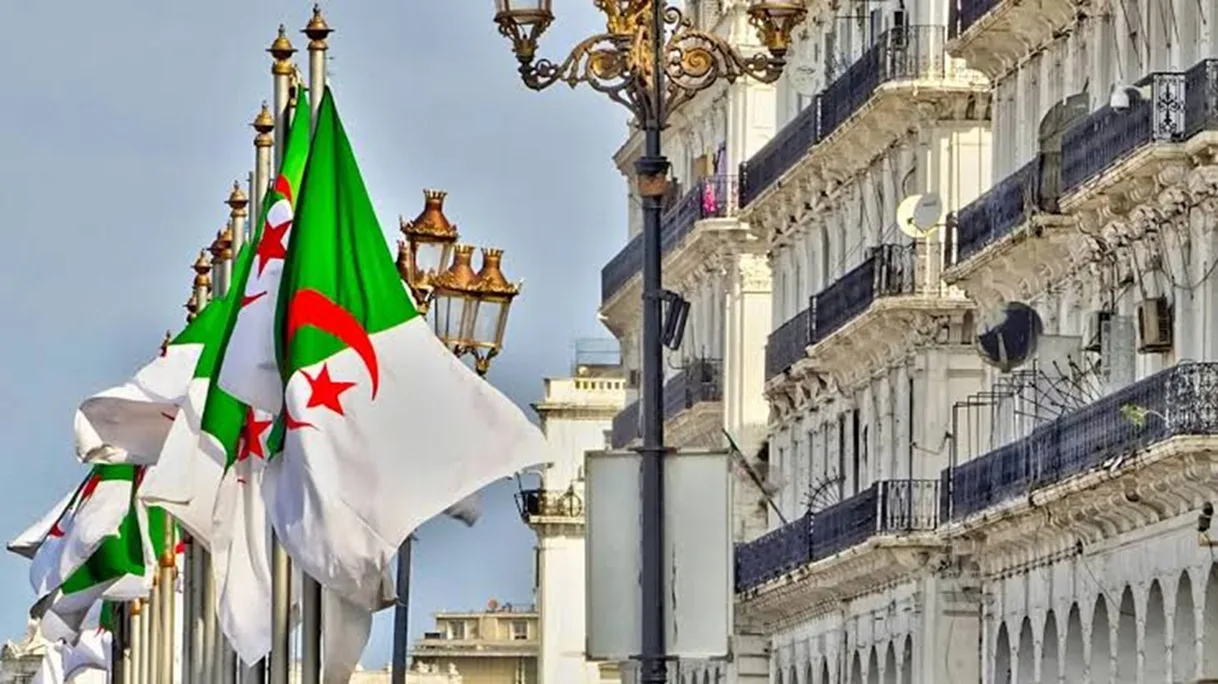
A glance at the map is enough to understand part of Algeria’s ambition. The country stretches across nearly 2.4 million square kilometres, making it the largest state in Africa. It commands a long Mediterranean coastline, reaches deep into the Sahara, shares borders with seven countries and lies only a few hundred kilometres from Europe. Geography is reinforced by substantial hydrocarbon reserves, a population approaching 50 million, one of the continent’s most heavily equipped militaries and a diplomatic tradition forged in the decolonisation struggles of the twentieth century.
On paper, the foundations of a regional power are all there.
Yet more than six decades after independence, Algeria remains defined by a fundamental contradiction. It has built a sovereign state, preserved an unusual degree of strategic autonomy and transformed its energy resources into instruments of stability and influence. What it has not yet achieved with the same effectiveness is the conversion of that potential into a sufficiently diversified economy, a private sector capable of taking over from the state as the main engine of expansion, and regional influence fully commensurate with its resources.
This is the Algerian equation. It is not the story of a country lacking assets. Almost the opposite: it is the story of a country with many of them, whose modern history can be read as a prolonged attempt to transform those assets into durable power.
Independence as a Political Foundation
Few countries have built their modern political identity around their birth as intensely as Algeria.
The war of independence from 1954 to 1962 was more than the founding event of a new state. It became a source of political legitimacy, diplomatic doctrine and a particular conception of sovereignty. Independent Algeria saw itself as a country that had wrested its own existence from a colonial power and therefore had to preserve its freedom of decision.
That memory explains much of the continuity in Algerian foreign policy. Algiers supported national liberation movements, defended the principle of self-determination, became an important voice within the Non-Aligned Movement and sought to maintain distance from the major alliance structures of the Cold War. That strategic culture survived the end of the bipolar world.
It also helps explain the distinctive position occupied by the state within Algeria itself. After 1962, the task was not simply to govern a newly independent territory. Institutions had to be built, infrastructure developed, education expanded, a national economy organised and sovereignty over natural resources established.
The nationalisation of hydrocarbons in 1971 symbolised this philosophy. Oil and, increasingly, natural gas would not merely be commodities. They would become material instruments of independence.
Sonatrach consequently grew into something larger than an energy company. It became one of the economic pillars of the Algerian state and the principal mechanism through which underground wealth could finance national development.
That choice produced considerable achievements. It also installed at the centre of the system a dependency Algeria is still trying to overcome.
Rent as a Social Contract
The expression “rentier economy” is used so frequently that it can obscure what it actually means.
In Algeria, oil and gas revenues have financed far more than the machinery of government. They have supported public-sector wages, social transfers, energy subsidies, housing, infrastructure, public investment and part of household purchasing power. When hydrocarbon prices rise, the state gains room for manoeuvre. When they fall, the structural weaknesses of the model become more visible.
The numbers still reflect that dependence. According to the International Monetary Fund, hydrocarbons accounted in 2023 for roughly 84% of Algeria’s exports of goods and services and 91% of merchandise exports alone. They generated around 60% of government revenues that year, with the share falling to approximately half in 2024.
The dependency is therefore twofold: external, because hydrocarbons dominate export earnings; and internal, because they remain fundamental to the fiscal capacity of the state.
Recent years have offered an almost perfect demonstration.
Following the pandemic, and especially Russia’s invasion of Ukraine in 2022, higher energy prices and Europe’s search for alternative suppliers suddenly increased Algeria’s strategic importance. The country possessed something relatively few producers could offer: existing infrastructure directly connected to the European market.
Algeria operates liquefied natural gas facilities at Arzew and Skikda and major pipelines capable of carrying gas directly across the Mediterranean. In 2024, according to Eurostat, Algeria supplied 19.3% of the European Union’s gaseous natural-gas imports and 10.7% of its LNG imports.
Europe was rediscovering a geographical reality that markets had sometimes pushed into the background: Algeria sits immediately south of one of the world’s largest energy-consuming regions.
But the improvement simultaneously exposed the old problem. The more hydrocarbons strengthen Algeria in the short term, the more they can postpone the transformation required for the long term.
An Economy That Is Beginning to Move
Reducing Algeria’s economy to hydrocarbons, however, has also become too simplistic.
A transformation is underway. It remains incomplete, but it is measurable.
The World Bank estimates that non-hydrocarbon exports tripled from 2017 to reach $5.1 billion in 2023. Fertilisers, steel products and cement have begun to broaden the country’s export base. Yet those exports still amounted to only around 2% of GDP: enough to indicate a direction, not enough to fundamentally alter the structure of the economy.
Recent growth tells a similar story. In 2024, production cuts under the OPEC+ framework weighed on the hydrocarbon sector, while non-hydrocarbon activity remained dynamic. The IMF estimated real growth at 3.6%, while the World Bank highlighted the strength of investment, consumption, services and non-extractive industry. The momentum outside hydrocarbons continued into 2025.
The paradox therefore becomes more subtle. Algeria is diversifying, but much of that diversification continues to be supported by public expenditure, which itself remains heavily dependent on energy revenues.
In other words, expanding non-hydrocarbon activity does not necessarily mean escaping the hydrocarbon model.
The real transition will occur when private investment, productivity, innovation, industrial exports and businesses independent of public procurement can sustain their own momentum.
Much of Algeria’s economic future will be decided there.
The Omnipresent State
The Algerian model has historically rested on a conviction: the state must remain the guarantor of economic sovereignty as much as political sovereignty.
This approach has protected strategic sectors and allowed the country to retain significant national control over its resources. But it has also produced an environment in which state-owned enterprises, public banks, regulation, foreign-exchange controls and administrative decisions occupy an unusually large space.
The IMF continues to highlight the close links between the state, public enterprises and public banks, while calling for greater private investment. In 2025, Algeria’s fiscal deficit remained high and, according to the preliminary conclusions of the IMF’s July 2026 mission, still represented 10.5% of GDP, while public debt reached 52.1% of GDP. The Fund nevertheless estimated that growth reached 3.9% in 2025 and could remain around 3.8% in 2026.
These are not the figures of an economy in collapse. They describe something more complex: a system still capable of generating growth while gradually consuming some of its margins of safety.
The distinction matters.
Algeria retains major energy resources, significant foreign-exchange reserves, a large domestic market and historically limited external debt. It therefore does not face the existential urgency confronting many other rent-dependent economies. That relative security gives it time.
But time can be used in two ways: to transform a model, or merely to extend its lifespan.
A Society Increasingly Difficult to Govern Through Rent
The other transformation is demographic and social.
Algeria had approximately 46.8 million inhabitants in 2024 according to the World Bank, compared with fewer than 12 million around the time of independence. The United Nations estimated its population at roughly 47.4 million in 2025.
This is no longer the Algeria that built the postcolonial state.
It is overwhelmingly urban, connected to the outside world, far better educated and increasingly composed of generations for whom the war of independence remains fundamental to national history but belongs to a past they did not experience.
The Hirak movement of 2019 was the most spectacular expression of this evolution.
It was not simply a rejection of the prospect of Abdelaziz Bouteflika serving a fifth presidential term. It reflected a deeper demand for political renewal, public accountability and a transformation of mechanisms of representation. Bouteflika’s resignation ended a twenty-year presidency, but it did not resolve the questions that had produced the mobilisation.
Abdelmadjid Tebboune, elected in 2019 and re-elected in 2024, has pursued economic and institutional reforms while preserving the major continuities of the Algerian state.
This may be where the equation becomes most delicate. The political system must preserve stability in a region where state collapse has produced devastating consequences, while responding to a society demanding greater economic mobility, administrative effectiveness and opportunity.
Algeria understands the price of instability exceptionally well. The civil conflict of the 1990s, the “Black Decade”, remains deeply embedded in collective memory. That experience helps explain the importance attached to order and continuity.
But stability lasts only when it can accommodate change rather than merely contain it.
The Military and the Permanence of the State
No reading of contemporary Algeria would be complete without the military.
The People’s National Army traces its institutional lineage to the National Liberation Army. That heritage gives it a distinctive historical place in the formation of the political system and in the national imagination. Its political influence has varied over time, but it has remained one of the central institutions of the state.
Its material power is also considerable.
Algerian military expenditure has increased sharply in recent years against a regional backdrop marked by instability in the Sahel, conflict in Libya, tensions with Morocco and a broader deterioration of the security environment. SIPRI estimated Algeria’s military expenditure at $18.3 billion in 2023 following an extraordinary 76% annual increase. North Africa as a whole accounted for more than $30 billion in military expenditure in 2024.
This capability gives Algeria genuine strategic depth. The sheer size of its Saharan territory creates enormous surveillance requirements. Libya and Tunisia lie to the east; Niger and Mali to the south; beyond them, the Sahel has become one of the most unstable regions in the international system.
Algeria cannot simply choose to disengage from it.
Yet its doctrine remains cautious. Algiers has historically emphasised state sovereignty, non-interference and political settlements over foreign military intervention. This culture has at times allowed Algeria to act as a mediator. It can also constrain its influence when regional crises develop according to dynamics that traditional diplomatic instruments struggle to control.
The Impossible Maghreb
To the west lies the other great constant of Algerian geopolitics: Morocco.
The two countries possess many of the characteristics that could have made them the twin pillars of an integrated Maghreb. They share a border of more than 1,500 kilometres, deep cultural affinities, potentially complementary economies and an objective interest in developing regional trade.
Instead, they have spent decades locked in a strategic rivalry extending far beyond their bilateral disputes.
At its centre lies Western Sahara. Algiers supports the Polisario Front and the principle of self-determination for the Sahrawi people. Rabat regards the territory as part of Morocco and proposes autonomy under Moroccan sovereignty. The dispute has become inseparable from the broader competition between the two states for influence across the Maghreb and Africa.
Their land border has been closed since 1994. Algeria severed diplomatic relations with Morocco in 2021. Maghreb integration, already weak, has consequently become almost paralysed.
For both Algeria and Morocco, the cost extends beyond diplomacy.
The Maghreb remains one of the least economically integrated regions in the world despite a geography that seems to demand the opposite. The absence of a genuine regional market reduces economies of scale, complicates the emergence of cross-border value chains and deprives North Africa of collective leverage in its relations with Europe, the Sahel and sub-Saharan Africa.
The Algerian-Moroccan rivalry is therefore a contest for power, but also a paradox: each country seeks greater regional influence within a Maghreb whose emergence as a collective power is obstructed by their confrontation.
Europe: Proximity Without Alignment
To the north, the relationship with Europe follows a different logic.
The European Union is one of Algeria’s principal trading partners, but the structure of those exchanges continues to reveal the asymmetry of the Algerian economy. European imports from Algeria are dominated by mineral products, while Europe exports machinery, equipment, chemicals and agricultural goods to the country.
The relationship is both indispensable and uncomfortable.
Europe needs Algerian energy. Algeria needs the European market. But Algiers has generally resisted allowing that interdependence to become strategic alignment.
The relationship with France illustrates the complexity even more clearly. Exceptional human, economic and cultural ties coexist with a colonial memory that periodically returns to the centre of bilateral politics. Few international relationships combine such intense social proximity with such persistent potential for political friction.
Algeria has therefore sought to multiply its partnerships.
Russia remains a historical partner, particularly in defence. China has become a major economic and infrastructure actor. Relations with Italy have strengthened around energy. The United States remains an important interlocutor on energy and security. Algiers simultaneously maintains its African and Arab diplomatic networks.
The underlying logic is an old one: never depend entirely on anyone.
Neither the West nor an Opposing Bloc
That preference for autonomy also explains Algeria’s broader international positioning.
The country maintains close relations with Moscow without becoming a Russian satellite. It deepens relations with Beijing without abandoning its European connections. It cooperates with Washington on selected issues while retaining independent positions on numerous international crises.
Algeria’s accession to the New Development Bank in May 2025 fits this strategy of diversification. Created by the BRICS countries, the institution provides Algiers with an additional channel for financing and cooperation with major emerging economies.
The objective is not necessarily to replace dependence on the West with dependence on the East. It is to increase the number of available options.
Such a strategy becomes particularly relevant as the international system fragments. A country that supplies energy to Europe, maintains a historic defence relationship with Russia, develops extensive economic ties with China, and is simultaneously African, Arab and Mediterranean theoretically possesses considerable capacity to operate across several geopolitical spaces at once.
The challenge is turning that position into influence.
The Sahara as a Territory of the Future
The Algerian map contains another promise.
The vast Sahara, long perceived primarily as a source of strategic depth and extractive wealth, could become one of the country’s principal economic assets in the twenty-first century.
Its solar potential is enormous. Existing energy infrastructure offers foundations for new industrial chains. Hydrogen, electricity interconnections, mineral resources, Saharan agriculture and transport corridors linking the Mediterranean to the Sahel could gradually alter the economic function of the territory.
But that transformation requires precisely what hydrocarbons have sometimes made less urgent: capital, technology, institutional efficiency, infrastructure, commercial integration and the ability to attract sustained investment.
It also requires Algeria to confront the climate constraint. Rising temperatures, water stress, drought and increasing pressure on agriculture and cities are becoming structural issues. The World Bank now places climate adaptation, water management and the energy transition among Algeria’s central long-term development challenges.
The desert that has long given Algeria strategic depth could therefore become one of the places where its next economic model is decided.
Transforming Power
Algeria is neither a thwarted power, nor a sleeping giant, nor a country condemned to hydrocarbon rent. Such formulas are attractive because they simplify something that is not simple.
The country has already undergone several extraordinary transformations.
It survived a devastating war of independence, built a state across an immense territory, endured a civil conflict, developed nationwide infrastructure, created a major energy industry, maintained diplomatic autonomy and preserved sovereign decision-making capacity in an exceptionally unstable regional environment.
These are real achievements.
But the twenty-first century demands another form of power.
Hydrocarbons can continue financing the state for a long time, but they cannot alone create all the jobs required by a population approaching 50 million. The military can protect the territory, but it cannot produce economic diversification. Sovereignty can preserve freedom of decision, but it cannot guarantee competitiveness. Geography can provide an exceptional position between Europe and Africa, but it does not automatically create the trade necessary to exploit it.
The central Algerian question is therefore probably no longer whether the country possesses the attributes of power.
It does.
The question is whether it can make them work together.
To transform rent into productive capital. To transform a large and increasingly educated population into an engine of innovation. To transform the Sahara into an economic space rather than simply territorial depth. To transform diplomatic autonomy into the capacity for initiative. And ultimately to transform stability, long regarded as an objective in itself, into the foundation for a deeper transformation.
Algeria still possesses something many countries no longer have: time, resources and several possible trajectories.
But historical equations do not remain open indefinitely.
Algeria’s is still waiting to be solved.
Main Sources
International Monetary Fund — Algeria: 2025 Article IV Consultation and the preliminary findings of the 2026 Article IV mission.
World Bank — Algeria Economic Update, 2025 editions; demographic data and analysis of economic diversification and climate challenges.
Eurostat and European Commission — EU energy-import statistics and EU–Algeria trade relations.
U.S. Energy Information Administration — Algeria’s natural-gas infrastructure, pipelines and LNG capacity.
Stockholm International Peace Research Institute — military expenditure data for Algeria and North Africa.
United Nations — demographic and territorial data for Algeria.
New Development Bank — Algeria’s accession to the institution in May 2025.
Atlas Limits Research Desk
Atlas Limits’ editorial and analytical desk.