Sometimes a diplomatic rupture merely acknowledges a separation that has already taken place.
On September 10, 2026, Algeria announced that it was severing diplomatic relations with the United Arab Emirates. According to Algerian state television, Algiers considered that it had “exhausted all means” of preserving the relationship. At the time of the announcement, no detailed official account of the reasons behind the decision had yet been released.
The wording matters almost as much as the decision itself. It presents the rupture not as the immediate consequence of a single incident, but as the culmination of a deterioration. For months, Algiers and Abu Dhabi had made increasingly little effort to conceal their estrangement. They have now stopped trying to manage it.
In February 2026, Algeria had already begun the process of terminating the bilateral air transport agreement signed with the Emirates in 2013. Several months earlier, in October 2025, President Abdelmadjid Tebboune had accused, without explicitly naming it, a Gulf state of interfering in Algeria’s internal affairs and seeking to destabilize the country. His remarks were widely interpreted as referring to the United Arab Emirates. These allegations remain those of the Algerian authorities: publicly available evidence does not allow them to be independently established as facts.
The sequence nevertheless traced a clear trajectory. The dispute had long since moved beyond ordinary diplomatic disagreement. The aviation agreement had been one of its first visible instruments. The rupture of September 10 changes its nature: what is now being dismantled is not merely a particular form of cooperation, but the political framework through which the two states could continue managing their disagreements.
To understand the significance of the rupture, however, it is necessary to look beyond the Algerian-Emirati relationship itself. Algiers and Abu Dhabi are not simply two capitals that have gradually drifted apart. They increasingly sit at the intersection of two strategic geographies that are beginning to overlap: the Maghreb and the Sahel on one side, the Gulf and its expanding networks of influence on the other.
For a long time, these spaces could be analyzed separately. Maghreb rivalries had their own history, borders, disputes and balance of power. The Gulf monarchies operated within another system, dominated by the security of the Arabian Peninsula, Iran, hydrocarbons and relations with the major powers. That separation has become increasingly difficult to sustain.
Gulf capital now flows through African infrastructure, ports, energy, telecommunications, mining and agriculture. Gulf diplomacy is present in the continent’s conflicts and mediation efforts. Its interests stretch across the Red Sea, the Horn of Africa, Sudan and Libya, and increasingly into the strategic depths of the Sahel. Geographic distances have not changed. Strategic distances have shortened considerably.
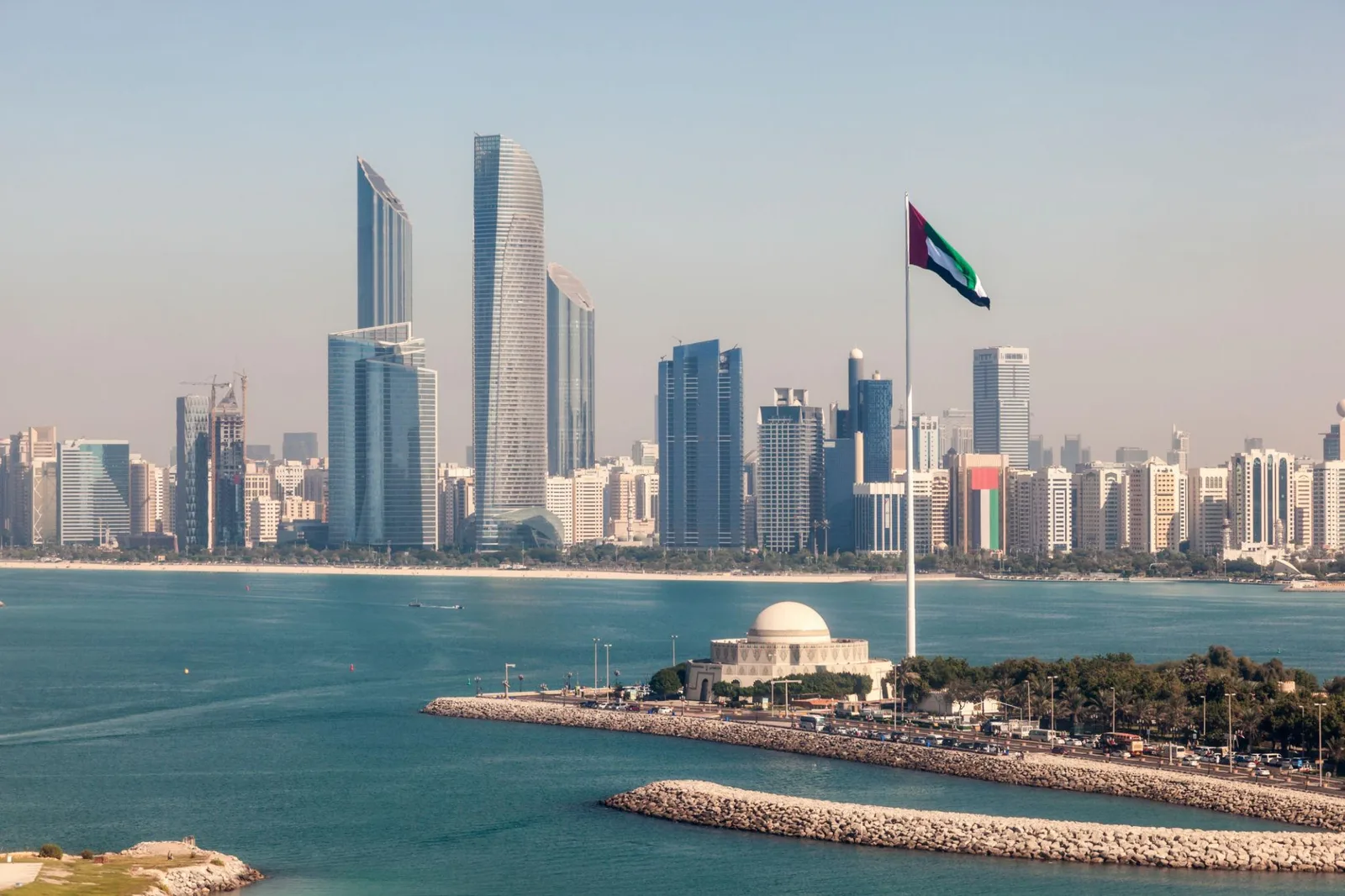
The United Arab Emirates has been one of the most active participants in this transformation. Over several decades, Abu Dhabi and Dubai have built a form of power that rests on much more than hydrocarbons. Capital, port infrastructure, logistics, aviation, technology, sovereign investment, military cooperation and political networks together form an architecture of influence that is difficult to classify through the traditional measures of power available to a state of comparable size.
That projection inevitably encounters other regional architectures.
In the Maghreb, the most significant is the one developing around Morocco. Rabat and Abu Dhabi maintain close political and economic relations, reinforced by Emirati investment and convergence on several regional issues. This does not mean that every Emirati initiative in North Africa is directed against Algeria. But viewed from Algiers, Abu Dhabi’s expanding influence is unfolding in an environment where the Algerian-Moroccan rivalry already constitutes the central determinant of regional security.
This is where the September 10 rupture acquires a broader significance.
Algeria severed diplomatic relations with Morocco in August 2021. It now adds the Emirates to the very small number of states with which it no longer maintains diplomatic relations. The two decisions are neither identical nor legally connected. They may nevertheless produce a cumulative geopolitical effect: the gradual consolidation of dividing lines that no longer stop at the borders of the Maghreb.
On one side stands an Algeria that continues to understand its security through its immense territorial depth, its Sahelian borders, its energy weight and a diplomatic tradition strongly attached to state sovereignty and suspicious of external intervention. On the other is a far less formal configuration in which Morocco and the Emirates are developing their own economic, diplomatic and security networks.
It would be excessive to describe these as two established blocs. No treaty organizes them as such, and international relations in both the Gulf and North Africa remain too fluid for such simple geometry. Algeria maintains important relations with other Arab monarchies. The Emirates themselves maintain partnerships with states whose interests can diverge considerably from their own. Contemporary alliances increasingly resemble networks rather than walls.
But some networks eventually become dense enough to create political frontiers.
The Sahel is probably where this evolution deserves the closest attention. Algeria has traditionally regarded the region as a direct extension of its national security. Its borders with Mali and Niger, its historical role in Malian mediation and its geography give it immediate interests in the region’s political evolution.
Yet the Sahel is no longer merely the strategic hinterland of North African states and former European powers. Russia, China, Turkey and several Gulf states are developing their own presence there, through very different mechanisms. At the same time, Morocco is deepening its economic and diplomatic relations with several Sahelian states and promoting their access to Atlantic infrastructure.
Regional competition is therefore changing scale. A rivalry once structured primarily around Algiers and Rabat can now extend through networks connecting Atlantic ports, Gulf capital, Sahelian corridors, logistics infrastructure and security partnerships.
The rupture with Abu Dhabi can be read within this transformation.
It may also create a paradox for Algiers. By severing relations, Algeria clarifies a situation that had become politically difficult to sustain. It removes the ambiguity of maintaining formal relations alongside increasingly serious accusations. Yet it simultaneously abandons one of the instruments through which that rivalry could still be contained: diplomatic dialogue itself.
The Emirates are not merely a political actor. They are one of the Arab world’s principal centers of capital, transport and investment. Their influence derives precisely from their ability to combine political relationships with economic circulation. Distancing Algeria from Abu Dhabi may therefore carry costs that cannot be measured solely by the closure of embassies.
At this stage, however, it would be premature to determine their scale. No general freeze on investments, assets or trade had been announced at the time of the rupture. The future of consular representation, visas, air links, businesses and financial flows will depend on the implementation measures adopted by the two governments.
This may ultimately be where the depth of the rupture can best be measured.
Diplomatic relations can be severed while substantial economic interests survive. They can also be the prelude to much broader decoupling. Between these extremes lies an entire spectrum in which states officially cease talking while continuing, directly or indirectly, to trade.
Another uncertainty concerns the other Gulf monarchies. Algeria’s decision targets the United Arab Emirates, not the Gulf Cooperation Council as a whole. At this stage, there is no basis for concluding that it will lead to a comparable deterioration with Saudi Arabia, Qatar, Oman, Kuwait or Bahrain. As recently as September 9, Algiers had expressed solidarity with Saudi Arabia following attacks that affected several cities in the kingdom.
This distinction will be essential. If the rupture remains strictly bilateral, it will point to a specific conflict with Abu Dhabi’s regional policy. If it begins to generate broader diplomatic alignments, its significance will change considerably.
It will also have to be observed within institutions where Algeria and the Emirates will necessarily continue to encounter one another. The Arab League is one. Energy and multilateral forums are others. In a world where states simultaneously belong to several overlapping architectures of cooperation, severing bilateral relations no longer means being able to avoid the other side.
That may be what makes this crisis particularly revealing.
Algeria and the Emirates share neither a border nor a direct territorial dispute. They are separated by thousands of kilometers, and their economies are not structurally interdependent. Yet their strategies now intersect often enough that distance can no longer insulate their relationship.
On September 10, 2026, Algiers turned that contradiction into a diplomatic rupture.
The decisions that follow will determine whether this represents the culmination of a crisis or the beginning of a deeper separation. But one development is already visible: the rivalries of the Maghreb no longer end in the Maghreb, and the ambitions of the Gulf no longer end in the Gulf.
Between them, the same strategic space is beginning to emerge.
Main Sources
Reuters, September 10, 2026 — announcement that Algeria had severed diplomatic relations with the United Arab Emirates, citing Algerian state television.
Reuters, February 2026 — Algeria’s move to terminate its bilateral air transport agreement with the United Arab Emirates.
Algeria Press Service and the Algerian Ministry of Foreign Affairs — official Algerian positions regarding regional crises and the principle of non-interference.
Algerian and Emirati institutional sources and official communications — to be updated as the formal terms and implementation measures of the diplomatic rupture are published.
Atlas Limits Research Desk
Atlas Limits’ editorial and analytical desk.