The decline in American technology stocks following the midterm elections has exposed a vulnerability that enthusiasm for artificial intelligence had long pushed into the background. Between massive capital expenditure, uncertainty over profitability and growing opposition to infrastructure development, financial markets are beginning to reassess the economic foundations of the digital revolution. The question is no longer simply how far AI can advance, but how much that progress can sustainably earn.
Wall Street had gradually become accustomed to treating artificial intelligence as an exception to traditional economic cycles. Companies supplying the processors, infrastructure and services required for its development benefited from exceptionally strong growth expectations. Expanding investment appeared to validate those projections, while rising valuations reinforced investor confidence.
The trading sessions following the American midterm elections of November 2026 put that conviction to the test.
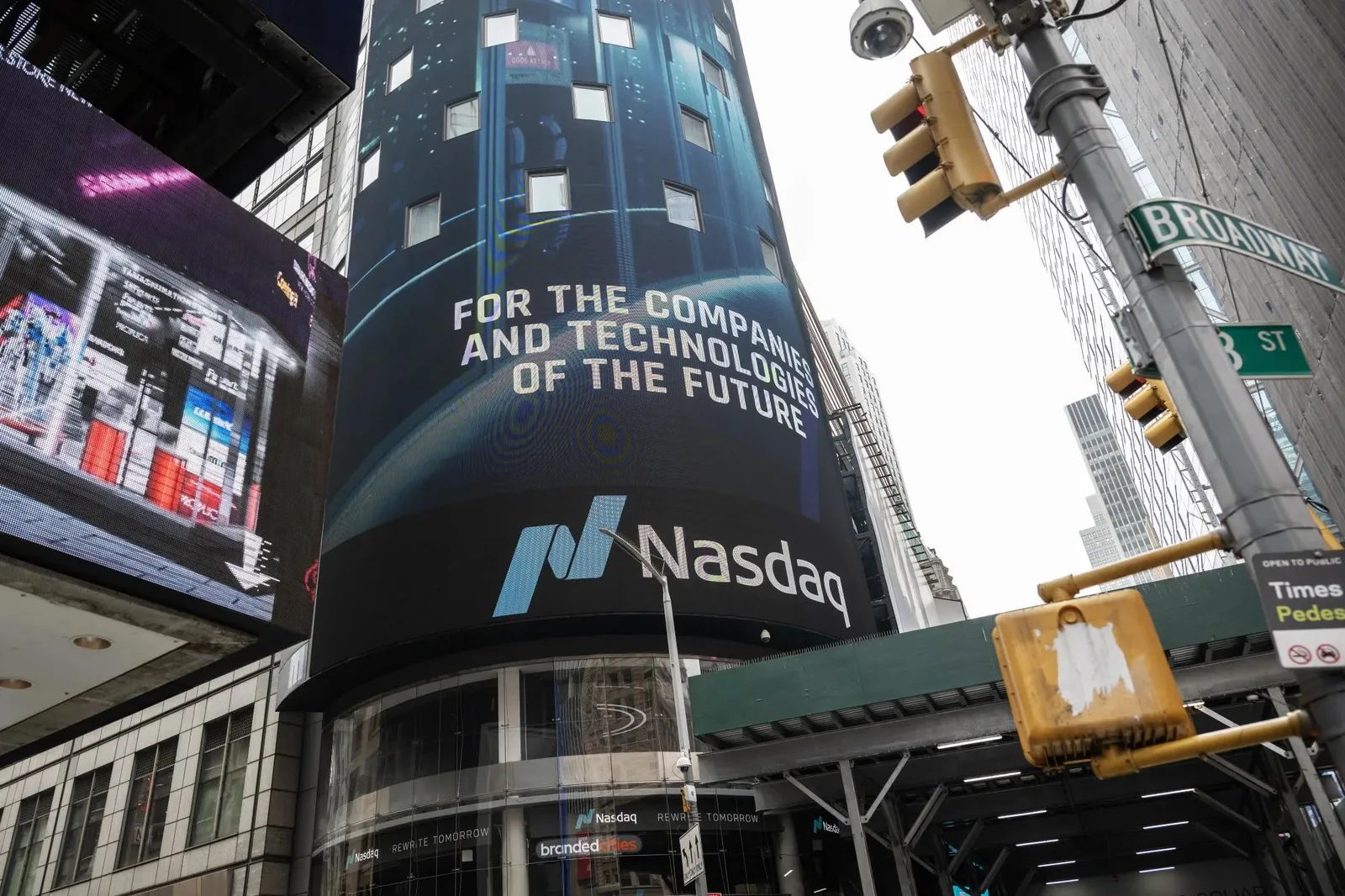
On November 5, the Nasdaq fell by as much as 5.3% during trading, according to figures reported by Le Monde. The index was then approximately 12% below its October peak, while the S&P 500 had lost nearly 6% from its previous high. Corrections were even more pronounced among several companies associated with the expansion of artificial intelligence.
Nvidia had declined by approximately 25% from its peak, Micron by 55%, while the semiconductor index had surrendered nearly one-third of its value. These movements, measured from different market highs, should not be confused with losses recorded during a single trading session. They nevertheless illustrate the scale of the reassessment affecting a sector that had attracted a substantial share of market optimism.
Democratic electoral victories and local restrictions targeting data centers reinforced the uncertainty. But these developments alone cannot explain the correction. Tensions were already visible in corporate earnings, capital expenditure expectations and valuation levels.
Markets have not suddenly discovered that artificial intelligence carries risks. They are beginning to change the price they are willing to pay to bear them.
Growth Becomes an Obligation
The first vulnerability lies in the expectations embedded in share prices.
When a company experiences rapid growth, investors may accept a high earnings multiple if they believe that expansion can continue. The more favorable the outlook, the greater the share of its valuation that depends on profits expected several years into the future.
This mechanism is particularly sensitive in the artificial intelligence industry.
Processor manufacturers benefit from demand generated by major digital platforms. Memory producers gain from the increasing capacity requirements of computing systems. Companies specializing in infrastructure and cloud services seek to capture part of the expenditure devoted to training and operating AI models.
Yet this growth chain rests on several successive assumptions.
Technology companies must continue investing. New data centers must be built and connected to electricity networks. Equipment must be delivered, installed and utilized. Artificial intelligence services must then generate sufficient revenue to justify the capital committed.
Each stage has its own constraints and timetable.
Even a moderate revision to expectations can produce a substantial correction when valuations already assume several years of exceptional growth.
A falling share price does not therefore necessarily mean that a company's business is contracting. It may simply reflect a transition from growth considered extraordinary to growth regarded as less exceptional.
The Semiconductor Cycle Returns
Semiconductors have historically been a cyclical industry. Demand depends on investment by equipment manufacturers, computing companies, telecommunications operators and consumers.
Periods of shortage support higher prices and margins. They also encourage the expansion of production capacity. When supply catches up with demand, prices may soften, inventories accumulate and earnings growth slow.
The rise of artificial intelligence had encouraged the belief that certain categories of components might permanently escape this pattern.
Demand for specialized processors, high-bandwidth memory and advanced manufacturing capacity appeared sufficiently strong to sustain prolonged expansion.
Yet even a major technological transformation does not eliminate industrial cycles.
Investment can be brought forward, customers may accumulate precautionary inventories, and manufacturers may expand capacity in anticipation of demand that will materialize only gradually.
Intel's results, interpreted by investors as a signal of weakening demand in certain categories, helped bring this cyclicality back into focus.
The different segments of the industry must nevertheless be distinguished. Slower sales of conventional processors do not establish an equivalent contraction in specialized artificial intelligence accelerators. Companies have different products, customers and production constraints.
Stock market corrections can nevertheless spread from one segment to another when investors simultaneously reduce their exposure to the broader technology supply chain.
The Investment Problem
The second vulnerability is financial.
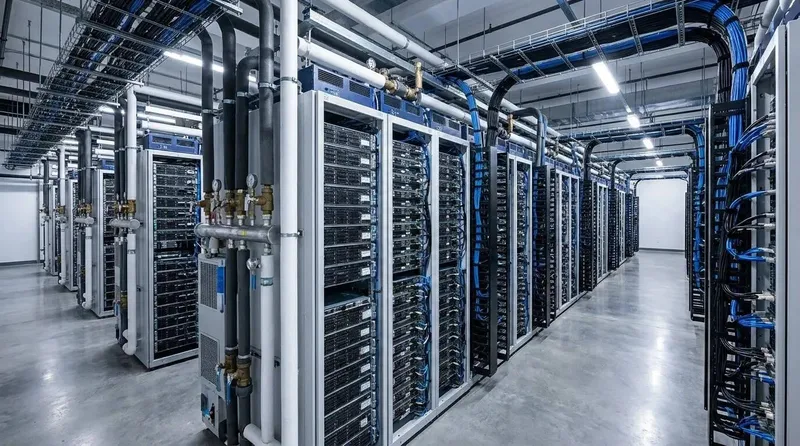
Major digital platforms are committing substantial capital to the infrastructure required for artificial intelligence. These expenditures include servers, processors, networks, buildings, electrical equipment and cooling systems.
A significant share of these investments is recorded as fixed assets and depreciated over several years. The initial cash outflow therefore does not immediately reduce accounting earnings by the full amount spent.
It does, however, consume liquidity and create lasting economic obligations.
For an investment to be profitable, the additional revenue and savings it generates over its useful life must compensate for its initial cost, operating expenses, replacement requirements and cost of capital.
Artificial intelligence complicates this equation because of the speed of technological change.
Processors may become less competitive before the end of their accounting depreciation periods. Software architectures may evolve. Models may become more efficient, reducing certain computing requirements, while lower costs may simultaneously encourage greater usage.
The latter possibility is important. Improved efficiency does not automatically reduce total infrastructure demand. It can make new services economically viable and support another phase of expansion.
Investors must therefore evaluate two opposing dynamics: the risk of overinvestment and the possibility that emerging applications will absorb additional capacity.
The uncertainty concerns less the general usefulness of artificial intelligence than the speed at which that usefulness can be converted into cash flow.
Elections Change the Parameters
The American elections of November 2026 add a political dimension to this reassessment.
Democratic gains and the success of several local initiatives restricting data centers demonstrate that the expansion of digital infrastructure no longer enjoys uniform political support.
Opposition focuses particularly on electricity consumption, water requirements, connection costs and the local consequences of new developments.
For investors, these developments can directly alter financial assumptions.
A delayed data center does not begin generating revenue on its originally scheduled date. A canceled project may reduce future orders for processors, memory and electrical equipment. Additional connection or cooling requirements can increase the total cost of an installation.
The consequences, however, are not identical for every participant.
A company that already owns authorized infrastructure may benefit from increased scarcity of available capacity. A new entrant, by contrast, may face additional obstacles to expansion.
Restrictions can therefore reduce the overall pace of development while strengthening the competitive position of certain established operators.
It would also be excessive to assume that Democratic electoral victories automatically imply a federal policy hostile to artificial intelligence. Positions differ across states, elected officials and policy objectives. Infrastructure regulation, industrial policy and support for research do not necessarily follow the same political logic.
What the elections reveal more clearly is the emergence of a political risk that financial models had sometimes treated as secondary.
A Value Chain with Diverging Interests
The artificial intelligence industry is frequently presented as a homogeneous sector. Yet it brings together companies whose economic interests may diverge.
Processor manufacturers benefit directly from rising equipment orders. Cloud providers seek to monetize installed capacity. Model developers require access to computing resources at competitive prices. Businesses using artificial intelligence, meanwhile, want effective services at the lowest possible cost.
A decline in computing prices may therefore hurt certain suppliers while benefiting users and application developers.
Similarly, improvements in model efficiency can reduce the computing cost of completing a given task. This may pressure the unit revenues of some providers while encouraging AI adoption in sectors that previously found it too expensive.
Economic value creation does not guarantee that the companies currently enjoying the highest valuations will capture that value.
The history of technological transformations provides numerous examples of this separation. Infrastructure can expand dramatically without delivering the expected returns to all its financiers. Conversely, companies that subsequently use that infrastructure may benefit from lower costs and broader markets.
Artificial intelligence could follow a comparable trajectory.
Debt and the Cost of Capital
The financial question becomes more sensitive when investments are financed through borrowing.
A company generating substantial cash flow can absorb a period of delayed profitability. A highly leveraged operator depends more heavily on its ability to refinance obligations, maintain utilization rates and meet contractual commitments.
Risks also vary according to contract structures.
A data center supported by a long-term lease with a creditworthy customer does not have the same risk profile as a facility built solely on expectations of future demand.
Even long-term contracts, however, do not eliminate every risk. They may concentrate exposure among a limited number of customers, while energy costs, equipment availability and replacement requirements continue to evolve.
Higher capital costs can also alter project profitability. When discount rates rise, the present value of future income declines, particularly for investments whose returns are expected over long periods.
Technology valuations are therefore sensitive to two sets of variables: industrial prospects and broader financial conditions.
A stock market correction may result from deterioration in both, without the entire movement being attributable to a particular political event.
Three Possible Trajectories
In the short term, volatility could remain elevated. Markets will seek to determine whether the slowdown observed in certain technology segments represents a temporary normalization or a more lasting revision of investment programs.
The first trajectory would involve an orderly adjustment. Companies would continue developing infrastructure, but at a more selective pace. Valuations would gradually move closer to realized earnings without fundamentally undermining the sector's growth.
The second would involve more pronounced overinvestment. Capacity built on overly optimistic assumptions could become temporarily underutilized. Computing service prices would then come under pressure, reducing margins and leading to project postponements.
The third trajectory would be more differentiated. Artificial intelligence adoption would continue to advance rapidly, but economic value would shift among different categories of companies. Some infrastructure suppliers could experience margin normalization, while software developers and industrial users captured an increasing share of productivity gains.
These scenarios are not mutually exclusive. They may occur successively or coexist across different market segments.
Over the medium term, the decisive indicators will be less spectacular than announcements of new models. Investors will need to monitor actual capital expenditure, capacity utilization, revenue generated by AI services, operating margins and free cash flow after investment.
They will also need to measure the evolution of energy and regulatory constraints, whose financial consequences are only beginning to enter market expectations.
Beyond Enthusiasm, Economics
The correction in artificial intelligence-related stocks does not demonstrate that the technology has failed.
An innovation can permanently transform the economy while generating excessive valuations, premature investment and periods of industrial consolidation.
The development of railways, electricity, telecommunications and the Internet has already shown that the historical importance of infrastructure does not guarantee profitability for everyone who finances its construction.
Artificial intelligence could experience a similar evolution. Its adoption may continue even as investors revise the earnings they expect from particular companies.
The real change occurs when markets stop confusing the growth of a technology with the profitability of all the capital committed to it.
For several years, artificial intelligence was evaluated primarily through what it promised to make possible. It is now entering a period in which investors, governments and communities are beginning to demand measurable results.
The technology has not necessarily reached its limits. But the capital financing its expansion is rediscovering its own.
Main Sources
- Le Monde, November 6, 2026, “On Wall Street, Democrats' midterm victory bursts the AI bubble,” analysis of the technology stock market correction.
- France 24, November 2026, reporting on the decline in AI-related stocks following the American elections.
- Associated Press, November 6, 2026, data center opposition and the political consequences of the American elections.
- Reuters, November 6, 2026, European mobilization against computing infrastructure.
- Corporate financial disclosures and earnings reports from semiconductor companies, including Intel, Nvidia and Micron.
- International Energy Agency, Energy and AI, analysis of the energy requirements of digital infrastructure.
Atlas Limits Research Desk
Atlas Limits’ editorial and analytical desk.