The prospect of a major telecommunications acquisition opens a new strategic possibility for SpaceX. Having built a global satellite infrastructure, the company could seek to bring space-based and terrestrial networks closer together. Behind this possibility lies a transformation of the communications industry, in which control over spectrum, infrastructure and customers could become as strategically important as mastery of satellite technology.
For decades, telecommunications operated through a relatively clear division of responsibilities. Terrestrial operators built their networks, acquired spectrum rights and maintained commercial relationships with subscribers. Satellite companies primarily served areas that were difficult to reach, specialized communications markets and institutional customers. The expansion of low Earth orbit constellations has begun to alter this arrangement. SpaceX could now accelerate that transformation by bringing both environments into a more integrated industrial structure.
The possibility of a major telecommunications acquisition, raised in discussions surrounding Elon Musk's ambitions and reported by MarketWatch, does not constitute an announced transaction. Nevertheless, it deserves examination because it corresponds to an economic logic already visible in Starlink's development: moving beyond satellite connectivity toward a broader position across the communications value chain.
From Satellites to Universal Connectivity
The first transformation concerns the nature of Starlink itself. Unlike traditional satellite systems, which rely on a limited number of spacecraft positioned at very high altitudes, SpaceX operates a constellation of satellites in low Earth orbit. This architecture reduces latency and makes it possible to provide broadband services capable of competing with certain terrestrial connections.
Its significance extends beyond remote regions. Starlink can also serve businesses, transportation networks, public administrations and critical infrastructure. By expanding its applications, SpaceX is gradually transforming the service into a connectivity platform whose potential markets extend well beyond rural Internet access.
The development of direct communications between satellites and mobile phones adds another dimension. Direct-to-cell technology makes it possible to envisage communications with compatible devices without specialized satellite terminals. Its performance remains constrained, however, by available frequencies, satellite capacity, propagation conditions and regulatory authorizations.
This does not mean that terrestrial cellular networks are about to disappear. Ground-based infrastructure retains considerable advantages in urban areas, particularly in capacity, density and cost per unit of data transmitted. But the possibility of complementing these networks from space changes the competitive environment.
Why Acquire a Telecommunications Operator?
A telecommunications acquisition could give SpaceX direct access to three particularly valuable assets: spectrum rights, an established subscriber base and an existing terrestrial network.
The first may be the most strategically important. Radio spectrum is a scarce resource allocated and regulated by national authorities. It determines an operator's ability to provide mobile services. Control over spectrum can create a lasting competitive advantage, although the associated rights cannot be freely transferred or used for any service without regulatory approval.
The second asset is commercial. Access to millions of subscribers would allow SpaceX to distribute satellite services at scale without relying exclusively on partnerships. The company could internalize a greater share of customer relationships, billing and distribution.
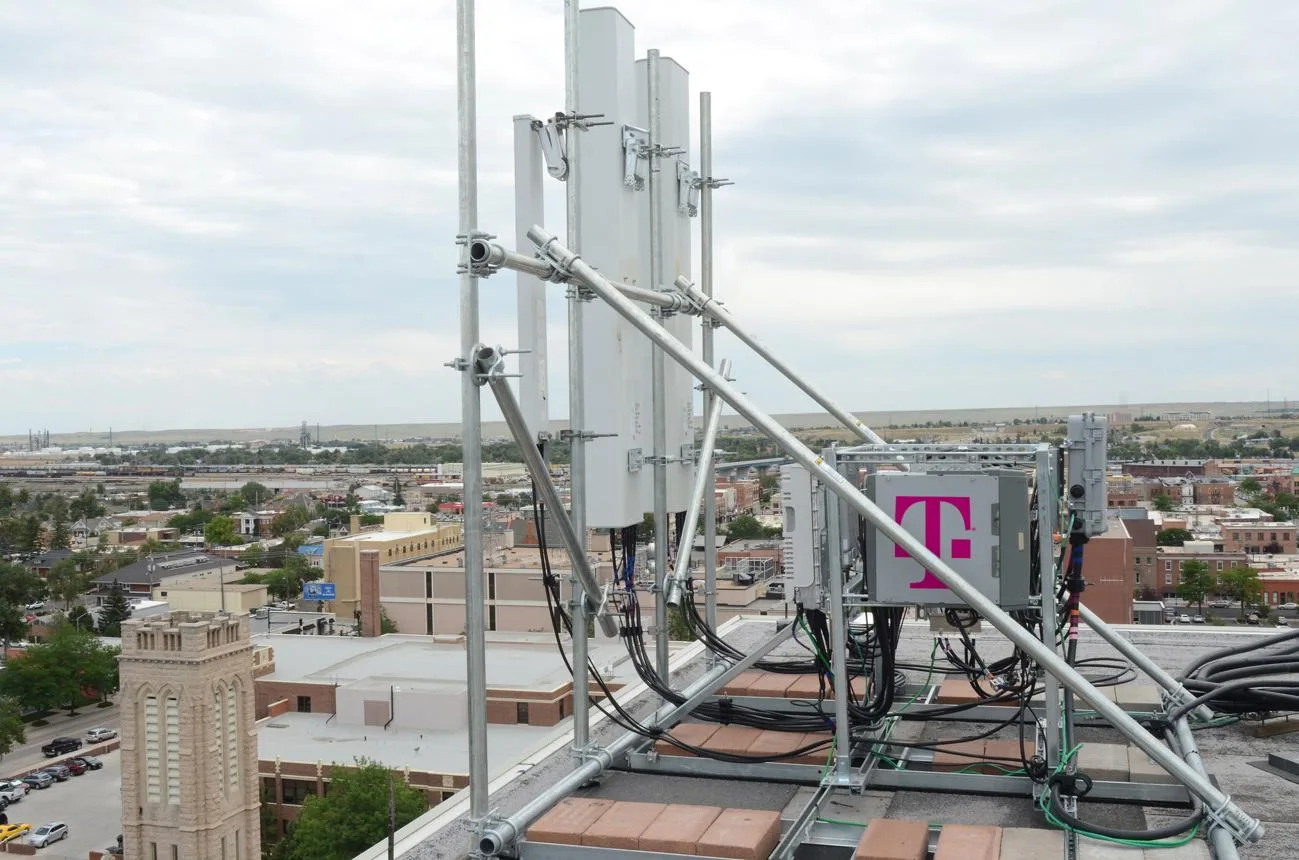
The third asset is industrial. Terrestrial networks include antennas, transmission systems, technical facilities, computing infrastructure and interconnections. Combining these assets with a satellite constellation could improve service continuity, particularly in regions exposed to natural disasters, electricity failures or network disruptions.
The economic attractiveness of such an operation would nevertheless depend on the acquisition price, any debt assumed, the investments required and the savings that could realistically be achieved. Vertical integration can create advantages, but it can also tie up substantial capital in infrastructure whose profitability remains heavily influenced by regulation.
The T-Mobile Question
Among the possibilities discussed in connection with SpaceX's ambitions, T-Mobile occupies a particular position. The American operator already maintains a partnership with Starlink involving direct satellite-to-mobile communications.
The industrial logic is clear. T-Mobile possesses a mobile network, spectrum rights and a substantial commercial customer base, while SpaceX provides orbital infrastructure. An ownership combination could theoretically deepen this complementarity.
It would also create considerable difficulties. T-Mobile's size would make any acquisition financially complex. A transaction would also face scrutiny from American authorities responsible for competition, telecommunications and, depending on its structure, national security.
Strategic coherence must therefore be distinguished from feasibility. An attractive industrial target is not necessarily financially accessible, nor would an acquisition automatically be acceptable to regulators.
Other arrangements remain possible, including minority investments, expanded commercial agreements, acquisitions of specific assets or technology partnerships. Industrial integration does not always require a complete merger.
Competition Enters a New Dimension
If SpaceX were to establish a significant position in terrestrial telecommunications, the consequences would extend beyond the American market.
Traditional operators would face a competitor capable of combining orbital infrastructure, launch capabilities and commercial distribution. Equipment manufacturers, satellite service providers and companies specializing in critical communications would also need to reassess their positions.
SpaceX's principal strength lies in its ability to control several stages of the industrial chain. The company develops its satellites, organizes their launches and operates the constellation. This integration can reduce certain costs and accelerate innovation cycles.
But it also concentrates functions. A single company could control an increasing share of the infrastructure required for connectivity, from orbital systems to relationships with end users.
Such a prospect would inevitably attract public scrutiny. Telecommunications is not an ordinary market. It constitutes essential infrastructure for economic activity, civil protection, public administration and defense.
Infrastructure Becomes Geopolitical
The international dimension represents another limitation to the idea of a truly universal network.
States retain sovereignty over spectrum allocation, service authorization and network operating conditions. A global satellite constellation does not automatically possess a global right to commercialize its services.
This reality is particularly important for countries that regard communications as a strategic sector. The arrival of a vertically integrated operator combining space-based and terrestrial capabilities could raise questions about data localization, lawful interception, network resilience and dependence on foreign suppliers.
Satellite connectivity can strengthen the autonomy of isolated territories, but it can also shift dependence toward a small number of companies capable of building and maintaining constellations.
The issue is therefore not simply whether SpaceX can provide better coverage. It is also who controls the infrastructure, under which rules and with what guarantees of continuity.
The Real Industrial Transformation
The possibility of a major acquisition ultimately reveals a development more significant than Elon Musk's individual ambitions.
For several decades, telecommunications was organized around geographically defined networks and operators subject to national regulatory frameworks. Low Earth orbit introduces infrastructure with global reach, although its operation remains conditional on state authorization.
The next stage could involve integrating these two architectures, creating operators capable of maintaining continuity between terrestrial and satellite networks.
SpaceX possesses several of the industrial capabilities necessary to participate in this transformation. That does not mean an acquisition is certain, or that complete integration would necessarily be economically optimal.
The essential question may no longer be whether satellites can compete with terrestrial operators. It may be whether tomorrow's telecommunications operators can still afford to remain exclusively terrestrial.
Main Sources
- MarketWatch, “Elon Musk opens the door for a big SpaceX telecom acquisition,” November 2026.
- SpaceX and Starlink, institutional documentation on satellite services and Direct to Cell.
- T-Mobile, corporate communications concerning its partnership with Starlink.
- Federal Communications Commission (FCC), regulations governing spectrum, satellite communications and mobile services.
- International Telecommunication Union (ITU), international framework for radio spectrum management.
Atlas Limits Research Desk
Atlas Limits’ editorial and analytical desk.