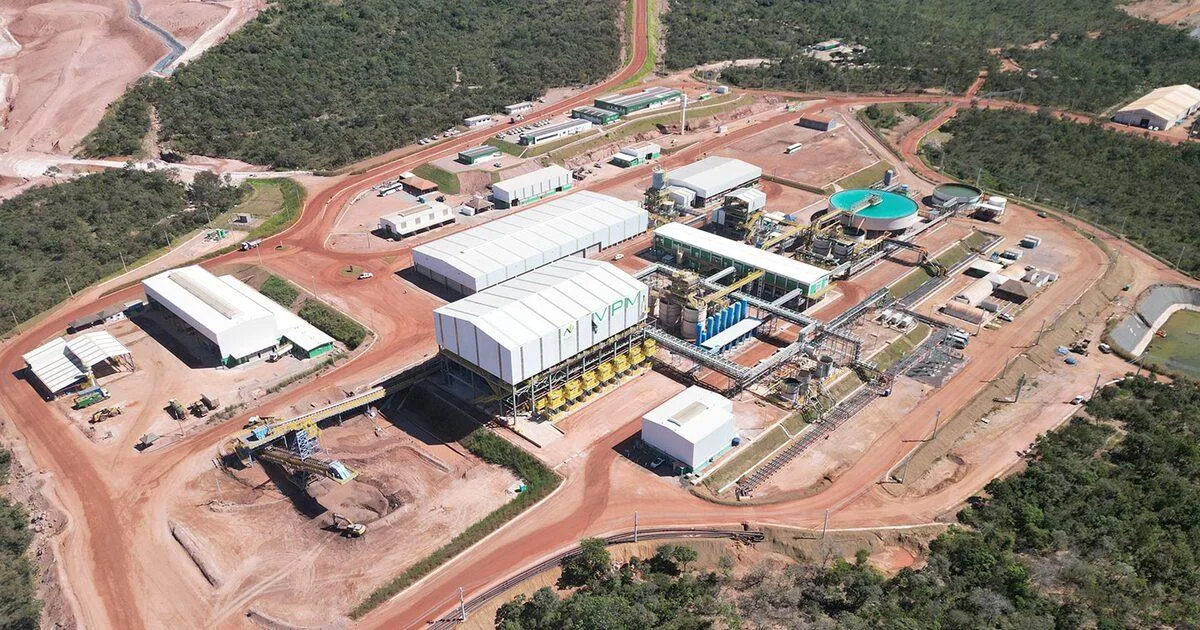
Brazil possesses one of the world's largest rare-earth reserves. It also faces a longstanding problem: a substantial share of the value generated from its natural resources is created beyond its borders. Mining feeds international industrial supply chains, while processing operations, specialized technologies and finished products frequently remain concentrated in other economies.
Luiz Inácio Lula da Silva's re-election and the decisions taken in Brasília in early November 2026 have brought this contradiction back to the center of Brazilian industrial policy. As Washington seeks to diversify strategic supplies and reduce dependence on China, Brazil's government intends to use international interest in its resources to secure more than simple access to foreign markets.
The issue is no longer merely selling minerals. It is determining who will control the industrial processes that transform them into technology.
Vast Reserves, Marginal Production
According to estimates published by the US Geological Survey in 2026, Brazil holds approximately 21 million tonnes of rare-earth reserves, compared with 44 million tonnes in China.
These figures place Brazil second worldwide in identified reserves. Yet its estimated mining production reached only 2,000 tonnes in 2025, compared with approximately 270,000 tonnes in China.
The disparity is considerable. It demonstrates that geological resources do not automatically translate into industrial power.
Rare earths comprise a group of elements used in permanent magnets, electric motors, wind turbines, electronic equipment and certain military systems. Their strategic importance derives both from their physical properties and from the technical and economic challenges involved in separating them.
Ore deposits generally contain several associated elements. Extraction must therefore be followed by concentration, chemical separation, purification and, depending on the intended application, conversion into metals, alloys or magnets.
Each stage requires specialized expertise, investment, equipment and environmental safeguards.
Much of the industry's economic and strategic power is concentrated precisely in these operations.
The China Problem
China dominates several essential segments of the global rare-earth supply chain. Its position reflects decades of investment, technological development, industrial support and integration between mining, refining and manufacturing.
Chinese restrictions on certain exports have reminded importing countries that industrial dependence can become an instrument of strategic negotiation.
The United States is consequently seeking alternative sources of supply, particularly among partners possessing substantial resources.
Brazil represents an especially attractive possibility. Its geology offers considerable potential, its economy already has a developed mining industry, and its domestic market could support certain industrial activities.
But this convergence of interests conceals a fundamental divergence.
Washington wants to secure supplies. Brasília wants to develop an industry.
The two objectives can be compatible if foreign investment genuinely contributes to building processing capacity within Brazil.
They can also conflict if external partners primarily seek purchasing rights over raw materials.
Brasília Changes the Rules
On November 5, 2026, Brazil's National Council for the Industrialization of Critical and Strategic Minerals approved a list of 27 priority minerals.
The initiative extends the national policy adopted in September, which provides for up to 7 billion reais in incentives, particularly for industrial processing.
Rare earths are among the minerals receiving high priority, alongside lithium, graphite, nickel, cobalt, copper, manganese, silicon and uranium.
The logic is significant.
The government is not simply seeking to increase extraction volumes. It wants to direct investment toward the stages that generate industrial margins, technical expertise and skilled employment.
This strategy requires a state capable of selecting priorities, coordinating financing and negotiating with investors.
It also carries risks. Subsidies may support projects that are insufficiently competitive, administrative procedures may delay decisions, and local-content requirements can become costly if they exceed the industry's actual capabilities.
Success will depend less on the number of announced projects than on their ability to achieve commercially viable production.
Autonomy Requires Partners
Brazil cannot instantly construct a complete rare-earth processing chain.
Separation technologies, magnet manufacturing and industrial process expertise require an accumulation of knowledge that capital alone cannot replace.
The government will therefore need partners capable of supplying equipment, technology, expertise and access to customers.
China possesses a substantial industrial lead. The United States is seeking to rebuild its own capabilities. Japan, Europe and Australia are also participating in supply-chain diversification.
This plurality could provide Brazil with greater negotiating leverage.
Rather than granting a dominant position to a single partner, Brasília could encourage competition among investors, provided it possesses a sufficiently coherent strategy to convert that competition into technological and industrial capabilities.
The difficulty lies in distinguishing productive investment from the mere securing of resources.
An announced factory does not necessarily constitute technology transfer. A financial stake does not guarantee industrial autonomy. And the presence of foreign companies is insufficient to create a national value chain if the most complex operations continue to take place elsewhere.
The Limits of Mining Power
Developing this industry will also require overcoming material obstacles.
Rare-earth extraction can involve complex chemical processes, substantial water consumption and the management of residues requiring rigorous environmental controls.
Projects also need electricity, roads, ports and suitable logistics infrastructure.
Profitability ultimately depends on volatile international markets. A rapid increase in supply can depress prices and undermine the most expensive investments.
Brazil must therefore avoid confusing the geopolitical importance of a resource with the automatic profitability of extracting it.
Industrial independence does not mean producing every component domestically. It means possessing sufficiently important capabilities to negotiate a place in global value chains without depending exclusively on decisions made by other powers.
A Third Industrial Path?
Brazil's strategy illustrates a broader transformation in international economic relations.
Countries rich in critical resources increasingly want to capture a greater share of the value created from their raw materials. They do not necessarily want to choose between supplying China and supplying the United States. They want to use that competition to develop their own capabilities.
The ambition recalls earlier industrialization policies, but it emerges in a different environment: technologies are more complex, production chains more specialized and geopolitical rivalries more intense.
Brazil has a genuine opportunity to change its position.
Its reserves give it considerable appeal. The size of its economy provides a domestic market. Competition among major powers could improve its negotiating position.
None of these advantages guarantees success.
The true measure of Brazil's strategy will not be the number of tonnes extracted, or even the volume of investment announced. It will be the country's ability to produce, process and commercialize materials and components whose value no longer depends solely on their presence underground.
Brazil possesses the resources. It still has to build the industrial power required to use them.
Main Sources
- US Geological Survey, Mineral Commodity Summaries 2026, Rare Earths chapter.
- Agência Brasil, reporting on investment priorities for critical minerals, November 6, 2026.
- Reuters, reporting on Lula's re-election and US access to Brazilian rare earths, November 5, 2026.
- Congressional Research Service, analysis of US-Brazil economic and strategic relations, October 2026.
Atlas Limits Research Desk
Atlas Limits’ editorial and analytical desk.