A global brand, two founders seeking to reclaim its independence, and a proposal that could turn employees into shareholders. Behind the struggle for Ben & Jerry’s lies a much broader question about the future of capitalism: can those who create a company's value also own its capital and influence its strategic direction?
On October 26, 2026, The Wall Street Journal reported that Ben Cohen and Jerry Greenfield, founders of the American ice cream brand, had been exploring a potential transaction to separate their company from its current owner, The Magnum Ice Cream Company.
The proposed structure involves an employee ownership arrangement that could transfer an economic stake in the business to its workforce while restoring the brand's independence.
Pete Stavros, a senior executive at private equity firm KKR and founder of Expanding ESOPs, has reportedly participated in the discussions in a personal capacity.
The transaction remains hypothetical. Magnum has explicitly stated that Ben & Jerry’s is not for sale.
Yet the proposal reveals a conflict extending far beyond the interests of the company's founders. It brings two competing visions of corporate ownership into focus: a global brand managed as part of a multinational portfolio, subject to profitability and industrial integration requirements, and an enterprise whose value also depends on its identity, social commitments and relationship with its employees.
A Company Sold in 2000, an Independence Now Contested
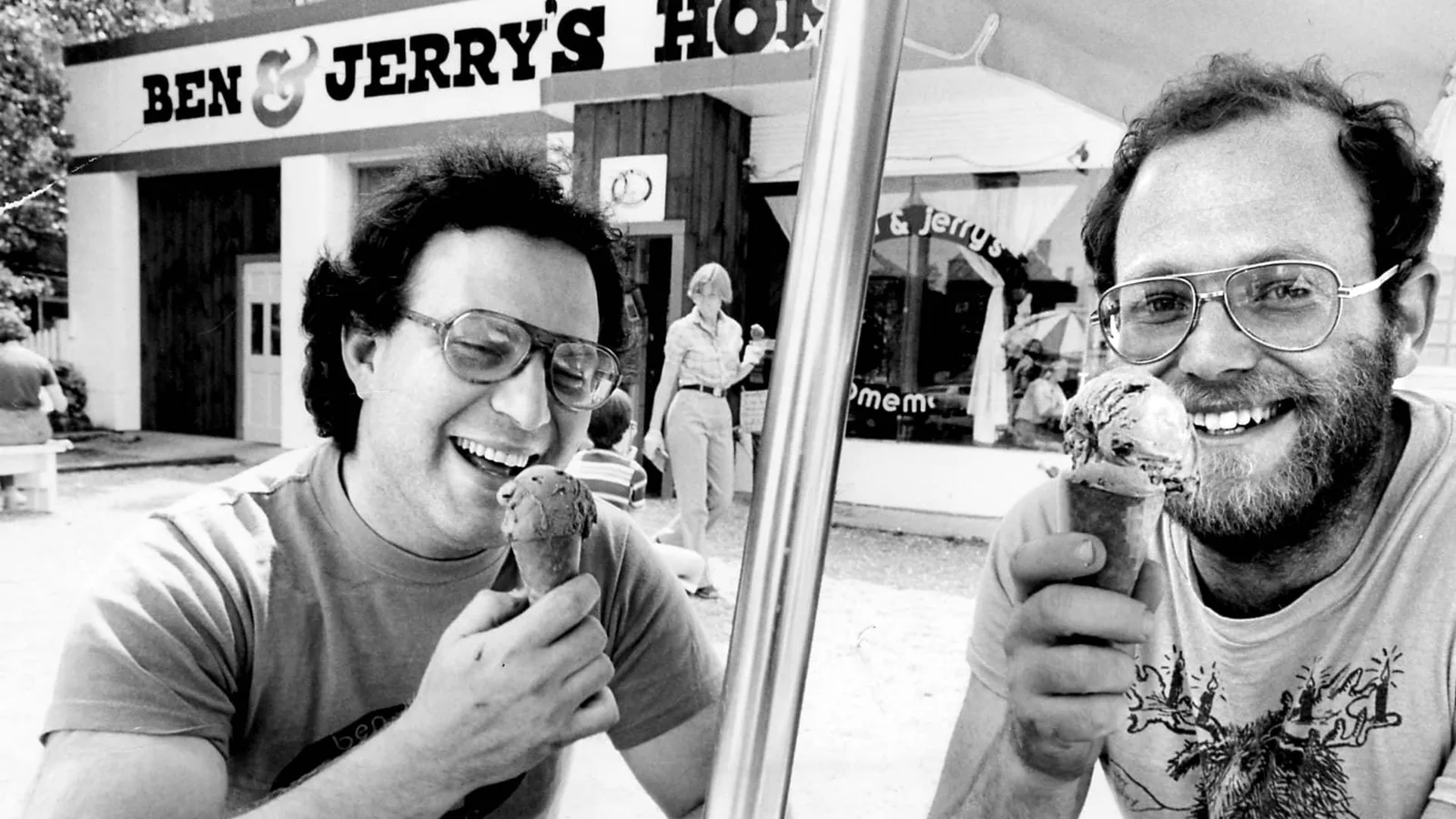
The story began in 1978, when Ben Cohen and Jerry Greenfield opened their first ice cream shop in Burlington, Vermont.
Their business gradually developed around an unusual proposition: combining a mass-market consumer product with explicit social, environmental and political commitments.
That identity became a defining characteristic of the brand.
In 2000, Unilever acquired Ben & Jerry’s for approximately $326 million.
The acquisition integrated the American company into a multinational corporation with extensive industrial, financial and distribution capabilities.
But the transaction included an unusual provision.
The founders negotiated the preservation of an independent board of directors, responsible in particular for protecting the company's social mission and brand integrity.
The arrangement was designed to reconcile two objectives that are often difficult to combine: benefiting from the economic strength of a global corporation while preserving autonomy over the values that define a business.
For years, this governance structure helped distinguish Ben & Jerry’s from conventional consumer brands.
Eventually, however, it became a source of conflict.
Beginning in 2021, disagreements over the company's public positions, particularly concerning the Israeli-Palestinian conflict, exposed the limitations of the arrangement.
The founders and the independent board subsequently accused Unilever, and later Magnum, of restricting the brand's freedom of expression and undermining protections established during the original acquisition.
The companies involved disputed those interpretations and defended their responsibilities as corporate owners.
The separation of Unilever's ice cream operations, which led to the establishment of The Magnum Ice Cream Company in 2025, did not resolve the underlying disagreements.
Ben & Jerry’s moved into a different corporate structure without regaining the independence sought by its founders.
In September 2025, Jerry Greenfield left the company he had helped establish nearly half a century earlier.
Ben Cohen continued publicly advocating for the brand's separation from its corporate owner.
The employee ownership proposal reported in October 2026 represents another stage in that confrontation.
Pete Stavros and the Possibility of Employee Capitalism
The proposed transaction centers on an American ownership mechanism known as an Employee Stock Ownership Plan, or ESOP.
An ESOP allows employees to hold an economic interest in their company, generally through a specialized trust structure.
Unlike a conventional bonus program or variable compensation arrangement, this model can give employees a stake in the underlying equity value of the business.
Depending on its design, employees may benefit from capital appreciation over several years.
In certain leveraged ESOP transactions, shares are acquired through borrowing, with future company cash flows contributing to the gradual repayment of the acquisition debt.
The structure also benefits from specific provisions under American tax law, which can make it attractive to sellers, investors and participating companies.
This is precisely the area in which Pete Stavros has become an influential advocate.
A senior executive at KKR, one of the world's largest private equity firms, Stavros has spent years promoting broader employee ownership.
His approach is based on a relatively straightforward economic principle: workers should not receive compensation solely for their labor but should also have opportunities to participate in the wealth created through enterprise ownership.
In a conventional corporate structure, employees contribute to production, distribution and commercial performance, while most capital appreciation accrues to shareholders.
Employee ownership seeks to alter that distribution.
Applied to Ben & Jerry’s, the concept could allow employees to participate in the ownership of an international brand while establishing a shareholder structure capable of supporting greater corporate independence.
However, a fundamental distinction remains.
Owning shares does not necessarily mean controlling strategic decisions.
The significance of any future ESOP would depend on the proportion of equity transferred, voting rights, board composition and agreements with other investors.
None of these parameters has been definitively disclosed.
A Potential Multibillion-Dollar Transaction
Financing represents the first major obstacle to implementing the proposal.
Ben & Jerry’s is no longer the independent company acquired by Unilever in 2000.
The brand now benefits from international distribution, extensive commercial infrastructure and industrial integration within a global ice cream group.
The Magnum Ice Cream Company also owns brands including Magnum, Cornetto, Breyers, Talenti and Klondike.
The group generated approximately €7.9 billion in revenue in 2025.
Ben & Jerry’s remains one of its important commercial assets, particularly in the American market.
Public estimates of the brand's potential valuation vary considerably.
In April 2026, Ben Cohen suggested a valuation of between $1.5 billion and $2 billion.
The Wall Street Journal has subsequently reported a potential valuation of approximately $3 billion.
These figures do not represent a binding offer or an agreed transaction price.
Nevertheless, they illustrate the scale of financing that could be required.
At an indicative valuation of $3 billion, an acquisition would represent more than nine times the price Unilever paid in 2000, without adjusting for inflation.
Such a transaction would likely require a combination of equity capital, external financing and potentially structured debt.
Employee ownership would not eliminate the need for financing.
Instead, it would primarily change who ultimately benefits from the company's equity and, depending on the structure, how that ownership is held.
The critical question would be whether Ben & Jerry’s future cash flows could support an acquisition without undermining industrial investment, commercial competitiveness or the company's social commitments.
Why Magnum Refuses to Sell
The Magnum Ice Cream Company's position is explicit.
Following the October 26 reports, the group stated that Ben & Jerry’s was not for sale and continued to perform successfully within its existing corporate structure.
Magnum argues that separating the brand would eliminate operational synergies, reduce the resources available to support its social mission and increase consumer prices.
These arguments reflect genuine industrial considerations.
A business integrated into a large corporation generally benefits from shared purchasing arrangements, manufacturing capacity, logistics, information systems, distribution networks and commercial negotiations.
Separating a brand can require rebuilding some of those functions.
It may also involve transitional service agreements with the former owner, additional capital expenditure and the restructuring of supply chains.
In the ice cream industry, where cold-chain logistics, storage infrastructure and distribution represent substantial operating costs, these constraints can be particularly significant.
For Magnum, selling Ben & Jerry’s would therefore involve more than a financial transaction.
It could mean losing a strategic asset, a globally recognized brand and part of the economies of scale associated with its portfolio.
Yet the company's resistance cannot be understood exclusively through industrial economics.
Ben & Jerry’s possesses a commercial identity extending beyond its products.
Its reputation rests partly on its entrepreneurial history, public commitments and distinctive relationship with consumers.
The question is whether corporate integration strengthens that value or whether persistent governance disputes gradually undermine it.
This is where the founders and the current owner fundamentally disagree.
A Brand's Value Extends Beyond Financial Performance
The Ben & Jerry’s dispute highlights an increasingly important challenge in managing intangible assets.
A global brand does not consist solely of factories, commercial contracts, recipes or distribution networks.
It also possesses reputational capital, consumer trust and cultural identity.
These characteristics influence purchasing decisions and can help sustain premium pricing relative to competing products.
For Ben & Jerry’s, social activism has historically been part of that value proposition.
It is not simply an additional activity attached to an otherwise conventional food company.
It is one of the characteristics around which the brand was built.
The founders therefore argue that restrictions on the company's public expression risk destroying part of the commercial value accumulated over several decades.
Magnum, by contrast, maintains that integration within the group provides the resources necessary to sustain growth and support the brand's social mission.
These competing positions reveal a potential contradiction.
A parent company may seek to limit controversy to protect financial performance, commercial relationships and international business interests.
But when a brand's identity depends partly on its willingness to take public positions, that caution can conflict with the expectations of some consumers.
Reputational risk management consequently becomes more complicated.
Avoiding controversy does not necessarily preserve brand value.
Conversely, complete autonomy does not protect a company from the commercial, regulatory or financial consequences of its public commitments.
The underlying issue is therefore the governance structure best equipped to balance these competing risks over time.
Can Employee Ownership Really Guarantee Independence?
The proposed model offers significant possibilities, but its limitations require careful examination.
An ESOP can allow employees collectively to hold a substantial economic interest in their company.
It does not, however, automatically guarantee democratic governance.
In many structures, shares are held by a trust on behalf of employees, with a trustee exercising certain shareholder rights.
Employee representation and participation in decision-making vary according to the arrangement.
A company can therefore be majority-owned for the economic benefit of its workforce without granting every employee direct authority over strategic decisions.
Moreover, an acquisition financed through borrowing can introduce new financial constraints.
Debt repayment requires sufficient cash generation.
A highly leveraged company may be forced to prioritize immediate profitability, limit investment or reduce operating costs.
Changing ownership does not eliminate the economic pressures confronting a business.
In some circumstances, it can also increase employees' exposure to risk when both their employment income and a significant portion of their accumulated wealth depend on the same company.
A successful employee ownership model therefore requires several conditions: a sustainable acquisition valuation, prudent financing, credible representation mechanisms and governance arrangements capable of protecting long-term objectives.
For Ben & Jerry’s, another issue would be decisive.
How would employee ownership interact with the independent board historically responsible for protecting the brand's social mission?
The independence sought by the founders could not be considered secured merely because employees received shares.
It would depend on the economic and voting rights embedded in the entire ownership structure.
A Broader Transformation of American Capitalism
The proposal emerges at a time when the distribution of corporate wealth remains a central economic question.
Over several decades, productivity growth, globalized value chains and the concentration of capital have transformed relationships between shareholders, executives and workers.
Large corporations now possess extraordinary capabilities to organize production and distribution internationally.
Yet the distribution of the gains generated by these activities remains contested.
Employee ownership offers one potential response.
It seeks to bring the economic interests of workers closer to those of capital owners.
Employees can participate in the appreciation of enterprise value rather than relying exclusively on wages and conventional benefits.
This approach does not necessarily represent a break with market capitalism.
It continues to operate through private ownership, competition, investment and profitability.
Its distinguishing characteristic is the expansion of the ownership base.
Employee ownership can therefore be understood as an evolution within capitalism rather than a replacement for it.
The Ben & Jerry’s proposal, however, adds another dimension.
The objective is not simply to distribute financial gains more broadly.
It is also to restore institutional and cultural autonomy.
Ownership becomes an instrument of governance rather than merely a mechanism for allocating wealth.
That distinction explains why the case could attract attention far beyond the food industry.
It has potential implications for businesses whose value depends heavily on reputation, communities, social commitments or founder identity.
The Private Equity Paradox
Pete Stavros's involvement adds a distinctive dimension to the proposed transaction.
KKR operates in an industry historically associated with leveraged acquisitions, corporate restructuring and the pursuit of substantial investment returns.
Yet one of its senior executives has become a prominent advocate for expanding employee ownership.
This development illustrates a possible evolution in private equity practices.
Operational performance can be improved not only through cost restructuring or asset reorganization but also by aligning employees' economic interests with those of investors.
Employee ownership can become a mechanism for retention, participation and long-term value creation.
However, Stavros's personal involvement must not be confused with an officially sponsored KKR transaction.
The information reported so far indicates that he has participated in discussions independently of his responsibilities at the firm.
No acquisition of Ben & Jerry’s by KKR has been announced.
The potential involvement of financial partners, financing arrangements and the ultimate capital structure remain undetermined.
This distinction is essential.
At present, the proposal is not a conventional private equity acquisition supported by an identified financing package.
It is an exploratory ownership restructuring whose implementation depends first on the current owner's willingness to sell.
Three Billion Dollars Would Not Be Enough to Buy Independence
Even if the founders succeeded in assembling the necessary capital, several challenges would remain.
The first would be legal.
Ben & Jerry’s belongs to Magnum, which controls any potential sale, subject to applicable corporate governance rules and legal obligations.
The second would be industrial.
An independent business would require sufficient manufacturing, distribution and commercial capabilities to operate at international scale.
The third would be financial.
The new ownership structure would need to support continued investment and preserve competitiveness.
The fourth would be institutional.
Governance mechanisms would have to protect the brand's social mission without creating an organization incapable of making difficult economic decisions.
Finally, any transaction would need to define the respective roles of the founders, employees, financial investors and independent board.
These questions demonstrate that corporate independence cannot be reduced to the removal of a parent company.
It requires control over the resources, decisions and economic conditions necessary for sustainable operations.
A brand can regain legal autonomy while remaining dependent on its former owner's industrial infrastructure.
It can also become employee-owned while continuing to face substantial financial constraints.
The real challenge would therefore be to establish independence that is economically sustainable.
A Corporate Governance Battle With Wider Implications
The outcome remains uncertain.
Magnum currently refuses to sell.
The founders are seeking to mobilize public support and demonstrate that an alternative ownership structure is possible.
Pete Stavros brings expertise that could make an employee ownership arrangement more credible.
But no sale agreement, definitive financing structure or transaction timetable has been announced.
It would therefore be premature to describe Ben & Jerry’s as a company on the verge of becoming employee-owned.
The significance of the case lies precisely in this unresolved confrontation.
It exposes the limitations of arrangements designed to protect a company's social mission when economic power remains concentrated in the hands of a controlling shareholder.
It also highlights the difficulties founders face when attempting to preserve a company's identity after selling it.
More fundamentally, it raises questions about the nature of corporate ownership itself.
A company can be understood as a financial asset, acquired, integrated, valued and potentially sold.
It can also be understood as a productive organization whose value depends on relationships among employees, consumers, managers and investors.
These perspectives are not necessarily incompatible.
But their balance depends on how capital ownership and decision-making authority are distributed.
For Ben & Jerry’s, the next challenge is therefore not simply persuading Magnum to consider a sale.
It is demonstrating that an international brand can preserve its commercial strength while operating under a different ownership structure.
The central question is not whether employees can own a company. It is whether that ownership can give them the means to protect what makes the business valuable without undermining its ability to prosper.
From this perspective, Ben & Jerry’s could become far more than a dispute between founders and a corporate owner.
It could serve as a test case for one of the defining questions of contemporary capitalism: who should own companies, who should govern them, and who should benefit from the wealth they create?
Main Sources
- The Wall Street Journal, October 26, 2026 — Ben & Jerry's Founders Have Been Exploring Deal With KKR Executive. Reporting on discussions involving Pete Stavros and the proposed employee ownership structure.
- Reuters, October 26, 2026 — Ben & Jerry's founders explore deal with KKR executive to separate ice cream brand from owner, WSJ reports. Reporting on the exploratory proposal and Magnum's response.
- Ben & Jerry's, How We're Structured. Corporate governance framework and the responsibilities of the independent board.
- Free Ben & Jerry's, September 2025 — Open letter to investors in The Magnum Ice Cream Company outlining the founders' position on brand independence.
- The Washington Post, April 14, 2026 — Reporting on Ben Cohen's campaign for independence and the estimated valuation of Ben & Jerry's.
Atlas Limits Research Desk
Atlas Limits’ editorial and analytical desk.