Saudi Arabia's plan to establish crude oil storage facilities in Singapore reflects a strategy extending far beyond the security of its exports. As geopolitical tensions expose Asia's dependence on Middle Eastern energy supplies, storage infrastructure is becoming an increasingly important instrument of energy security, commercial influence and geoeconomic power. 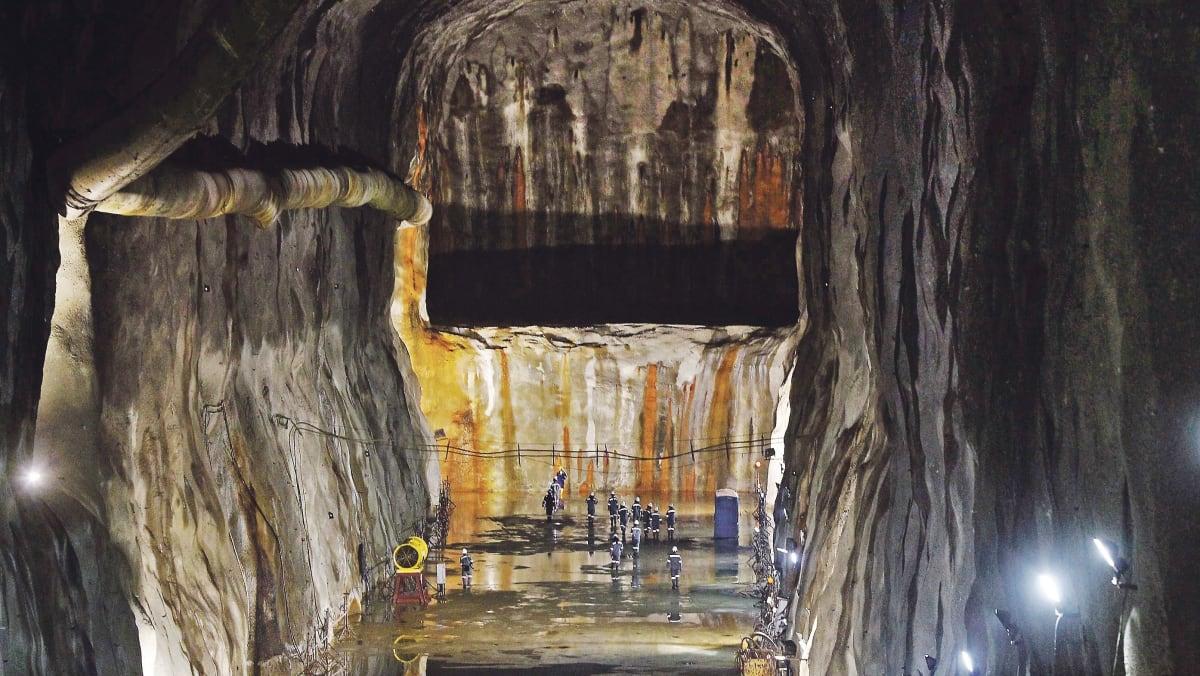
An Agreement at the Heart of Southeast Asia's Energy Network
Approximately 150 metres beneath Singapore's Jurong Island, an extensive network of rock caverns can accommodate millions of barrels of hydrocarbons near some of Asia's busiest maritime trade routes.
It is within this underground infrastructure that Saudi Arabia is considering positioning part of its crude oil supplies.
On October 26, 2026, Saudi Arabia and Singapore announced their intention to establish a crude oil storage arrangement in the city-state.
A memorandum of understanding was exchanged between Saudi Aramco, Singapore's Energy Market Authority and JTC Corporation, the government agency responsible for developing much of the country's industrial infrastructure.
The announcement was made during Singapore International Energy Week, one of the region's leading energy gatherings.
According to the authorities, storage operations could begin in the second half of 2027.
Singapore's Minister for Manpower and Minister-in-charge of Energy and Science & Technology, Tan See Leng, indicated that commercial negotiations were expected to be concluded in the coming months.
At this stage, the agreement represents an initial institutional and commercial commitment. The volumes involved, financial conditions and final operating arrangements have not been publicly disclosed.
Nevertheless, its strategic implications extend well beyond a conventional logistics agreement.
By selecting Singapore, Saudi Arabia is seeking to position its energy resources closer to the economies that constitute the core of its international demand.
For Singapore, the arrangement offers an additional opportunity to strengthen supply security at a time when major global oil transportation routes have become increasingly vulnerable.
The agreement illustrates a broader transformation in energy trade: an exporter's influence depends not only on its production capacity but also on its ability to position reserves near the markets that consume them.
Jurong Rock Caverns: A Strategic Infrastructure with Nine Million Barrels of Capacity
The proposed arrangement would rely on an existing facility particularly suited to Singapore's geographical constraints.
Jurong Rock Caverns is Southeast Asia's first commercial underground rock cavern storage facility for hydrocarbons.
Located beneath Jurong Island, the complex extends approximately 150 metres below ground level and 130 metres beneath the Banyan Basin.
Its total storage capacity is approximately 1.47 million cubic metres of liquid hydrocarbons, equivalent to around 9.2 million barrels.
This figure represents the capacity of the entire facility, not the volume that Saudi Aramco would necessarily store there.
The infrastructure offers several advantages.
First, underground storage allows substantial quantities of hydrocarbons to be accommodated without occupying Singapore's scarce industrial land.
According to JTC Corporation, the development saves approximately 60 hectares of surface land that can instead be allocated to other industrial activities.
Second, the caverns are integrated into Jurong Island, Singapore's principal petrochemical and energy hub.
The island hosts refineries, chemical production facilities, terminals and logistics infrastructure that play an essential role in regional supply chains.
Third, underground storage offers different physical protection and operational security characteristics from conventional above-ground tanks.
These advantages do not make the facilities invulnerable. Their operation remains dependent on the transportation, handling, monitoring and supply infrastructure connecting them to international markets.
The strategic value of Jurong Rock Caverns therefore lies not merely in its storage capacity but in its integration into a broader industrial and maritime system.
For Aramco, the facility could provide an additional operational base for distributing Saudi crude oil across Southeast Asia.
Asia Confronts Its Dependence on Middle Eastern Oil
The announcement comes amid a significant reassessment of Asian energy security.
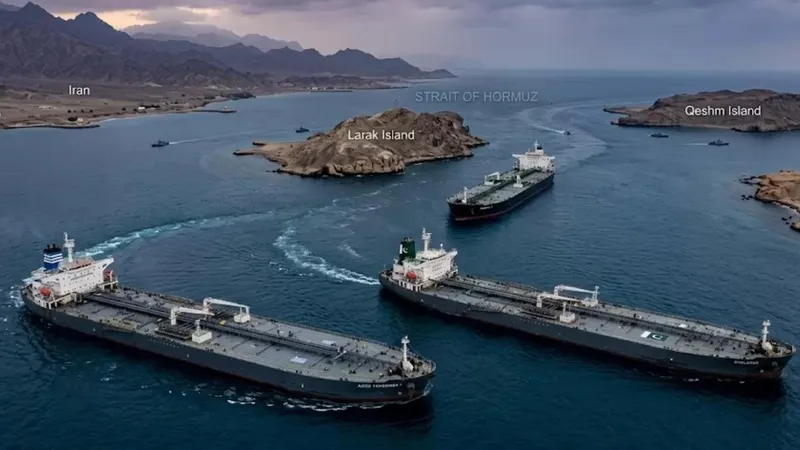
Disruptions to oil flows associated with the conflict involving the United States, Israel and Iran have highlighted the vulnerability of supplies passing through the Strait of Hormuz.
Located between Iran and Oman, the strait is one of the world's most important maritime chokepoints for hydrocarbons.
A prolonged disruption can simultaneously affect Gulf exporters, Asian importers, refineries and international petroleum product markets.
Before the disruptions of 2026, approximately two-thirds of Asia's imported oil supplies originated in the Middle East, according to figures reported by Reuters.
This geographical concentration represents a structural vulnerability.
Asia's major economies possess substantial industrial capabilities, but their domestic hydrocarbon production is generally insufficient to meet demand.
Japan and South Korea depend heavily on imported crude oil.
China and India maintain domestic production, yet their consumption requirements considerably exceed national output.
Southeast Asian economies present more diverse energy profiles, ranging from oil-producing countries to net importers and major refining centres.
These differences do not eliminate their shared exposure to disruptions in maritime transportation.
The vulnerability extends beyond the physical availability of crude oil.
A supply crisis can increase shipping costs, maritime insurance premiums, refining expenses and the financing requirements of importing companies.
Even when countries secure the necessary volumes, the economic cost of transporting those supplies can rise substantially.
This is precisely why reserves positioned near consuming markets are acquiring greater strategic importance.
They can reduce certain logistics delays, provide access to immediately available volumes and temporarily limit exposure to interruptions in maritime deliveries.
However, they cannot permanently replace regular supply flows.
An oil reserve is a buffer against disruption, not a continuing source of production.
For Riyadh, a New Dimension of Oil Power
Saudi Arabia possesses one of the world's largest crude oil production and export capacities.
For decades, its energy influence has been expressed primarily through its geological reserves, production infrastructure, export capabilities and role within OPEC.
But the organisation of international oil trade is evolving.
In a market where geopolitical and logistical risks can disrupt established routes, physical proximity to consumers offers an additional competitive advantage.
Positioning crude oil in importing countries' storage facilities allows producers to improve supply-chain flexibility.
Oil already stored in Asia can be mobilised without waiting for another tanker to arrive from the Gulf.
Such arrangements can facilitate commercial operations, improve delivery continuity and reinforce long-term relationships with industrial customers.
This does not mean Saudi Arabia is abandoning its traditional export model.
Rather, it is complementing its production capacity with a more advanced logistical presence in major consuming markets.
Saudi Energy Minister Prince Abdulaziz bin Salman has presented the positioning of supplies closer to major Asian markets as a means of strengthening both the flexibility of Saudi Arabia's supply network and Singapore's energy security.
The geographical location of inventories is therefore becoming part of the producer's commercial strategy.
Under this model, oil power is no longer measured exclusively by the number of barrels that can be extracted each day.
It increasingly depends on the ability to ensure their availability, transportation and delivery under adverse conditions. 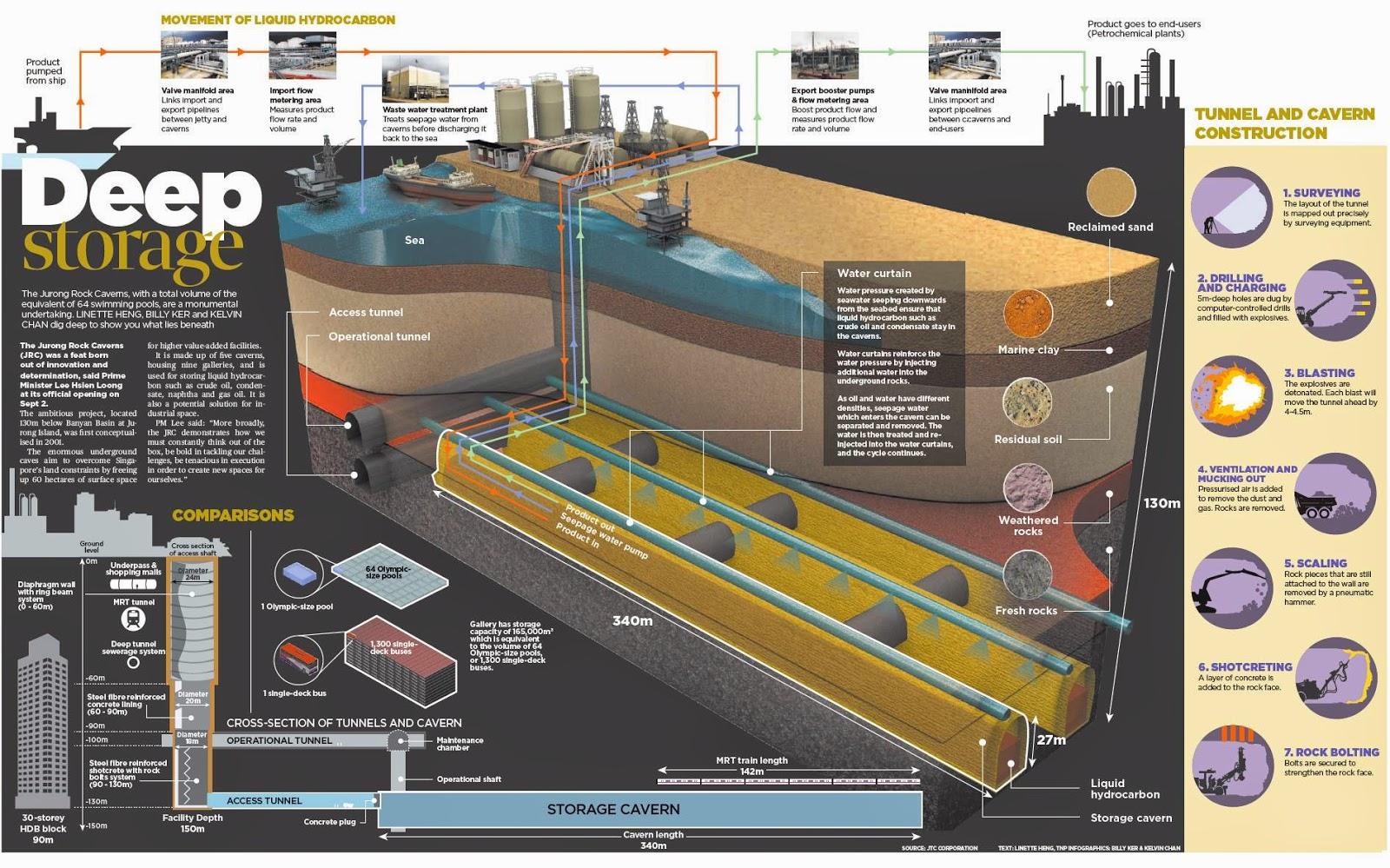
A Strategy Already Established in Japan and South Korea
The Singapore project is not an isolated initiative.
Saudi Aramco already maintains crude oil storage arrangements in Japan and South Korea.
These mechanisms combine commercial objectives with national energy security considerations.
The Saudi producer can position supplies close to its customers, while host-country authorities benefit from arrangements allowing priority access to stored crude during unexpected shortages.
This structure creates an alignment of interests.
For Aramco, overseas inventories strengthen its commercial presence and distribution flexibility.
For importing countries, they provide an additional resource that can be mobilised during supply emergencies.
The model's value lies precisely in this dual function.
Crude oil remains a commercial asset, but its location can also serve a national security objective.
Expanding this approach to Singapore could allow Saudi Arabia to complement its Asian storage network with a presence in one of Southeast Asia's most important energy centres.
However, the exact terms of the proposed agreement remain to be determined.
Authorities have not yet specified whether Singapore would receive access rights comparable to those established under the Japanese and South Korean arrangements.
This distinction matters.
Commercial oil inventories owned by a foreign company do not automatically constitute strategic reserves controlled by the host government.
Energy security therefore depends as much on contractual access rights as on the physical presence of hydrocarbons.
Singapore: Turning Geographical Constraints into Strategic Advantages
Singapore possesses limited domestic energy resources and depends heavily on external supplies.
This constraint has helped shape its economic model.
Rather than relying on substantial domestic hydrocarbon production, the city-state has developed extensive refining, storage, trading and maritime transportation infrastructure.
It now occupies a central position in regional energy supply chains.
Its competitive advantage combines a strategic maritime location, integrated industrial infrastructure, specialised financial and commercial services, and a relatively predictable institutional framework.
The proposed arrangement with Aramco fits this model.
It could reinforce Singapore's role as an energy intermediary between Middle Eastern producers and Asian consumers.
But it also addresses a more immediate national concern: continuity of supply.
On October 26, Singapore's government reiterated the measures already established to manage energy disruptions.
The country maintains fuel reserves, including gas and diesel.
Its electricity generation facilities are also required to maintain fuel-switching capabilities to mitigate the consequences of interruptions to particular supplies.
Such diversification is especially important in an electricity system where natural gas accounts for approximately 95% of generation.
The crude oil storage arrangement proposed with Aramco should therefore not be confused with fuel reserves that can be directly consumed by power plants.
Crude oil generally requires refining before it can be used as petroleum products.
Its contribution to energy security will depend partly on access arrangements and the availability of processing capacity.
The agreement would consequently form part of a broader framework designed to strengthen national energy resilience.
Oil Storage Is Becoming an Instrument of Economic Policy
One of the announcement's most important implications concerns the changing economic role of storage infrastructure.
Traditionally, oil storage facilities help manage production fluctuations, transportation constraints, refinery requirements and commercial imbalances.
They also serve a security function when governments establish strategic petroleum reserves.
But arrangements between foreign producers and consuming countries create a hybrid category.
The same infrastructure can support an exporting company's commercial strategy while contributing to an importing state's energy security.
This convergence is changing relationships between producers, infrastructure operators and markets.
For an importing country, hosting foreign-owned inventories can improve the local availability of crude oil without necessarily bearing the entire cost of acquiring and holding the volumes.
For an exporter, access to facilities located in consuming markets can strengthen commercial relationships and improve operational responsiveness.
However, these benefits depend on several critical factors.
Ownership of the crude, withdrawal rights, contractual obligations, emergency priority arrangements and cost allocation determine the arrangement's actual strategic value.
Without these details, it would be premature to describe the Aramco–Singapore project as a Saudi strategic reserve permanently available to Singaporean authorities.
The memorandum of understanding establishes a shared intention.
It does not yet determine the full extent of the parties' operational and financial commitments.
Regional Infrastructure in an Increasingly Fragmented Global Energy System
The initiative comes as several Asian countries seek to strengthen their ability to withstand energy shocks.
Japan, for example, has explored broader regional cooperation concerning petroleum reserves.
Such initiatives reflect a wider transformation.
For decades, energy globalisation prioritised trade efficiency, transportation fluidity and supply-chain optimisation.
Successive geopolitical tensions have gradually increased the importance attached to infrastructure redundancy, supplier diversification and the availability of emergency inventories.
This evolution does not signal the disappearance of international trade.
Instead, it reflects changing conditions under which global commerce operates.
Governments and companies are becoming more willing to bear additional logistics costs and maintain reserve capacity in exchange for reduced exposure to major disruptions.
Within this environment, infrastructure located near major consumption centres acquires additional strategic value.
Singapore benefits from an especially favourable position.
The city-state lies close to the Strait of Malacca, one of the principal maritime corridors connecting the Indian Ocean with East Asia.
It also possesses an industrial ecosystem capable of supporting complex storage, refining and distribution activities.
The potential arrival of additional Saudi crude inventories would strengthen its position within this regional architecture.
Nevertheless, it would not eliminate vulnerabilities associated with concentrated maritime traffic, import dependence and geopolitical risk.
Storage can improve an energy system's resilience without making it independent of its international supply chains.
A Commercial Arrangement Whose Terms Remain Open
Several essential parameters must still be determined before the project can become operational.
The first concerns volumes.
The approximately 9.2 million barrels representing Jurong Rock Caverns' total capacity must not be interpreted as a storage commitment by Saudi Aramco.
No specific volume allocated to the Saudi company has been officially announced.
The second concerns financial arrangements.
Potential investment amounts, storage charges, operating expenses and the allocation of economic commitments have not been disclosed.
The third concerns access rights.
Singapore's ability to mobilise stored crude during supply disruptions has been presented as an objective of the arrangement, but the precise conditions remain subject to negotiation.
The fourth concerns timing.
Authorities envisage operations beginning in the second half of 2027, without announcing a definitive commencement date.
Finally, the memorandum of understanding does not establish that all commercial and operational negotiations have been completed.
These uncertainties do not diminish the announcement's strategic significance.
They do, however, distinguish a proposed energy cooperation framework from a fully operational arrangement.
Control Over Inventories Is Becoming a New Dimension of Power
The Aramco–Singapore project illustrates a profound change in the geography of global energy.
For decades, assessments of oil power concentrated on the location of natural reserves, production capacity and control over export routes.
These factors remain fundamental.
But the growing risk of supply disruptions is increasing the importance of intermediate infrastructure: terminals, underground storage caverns, refineries, pipelines, port facilities and distribution networks.
The ability to produce a resource does not guarantee its immediate availability in the regions where it is needed.
Conversely, possessing strategic infrastructure does not automatically guarantee access to the commodities stored within it.
Energy security depends on the interaction between production, transportation, storage, processing and contractual access rights.
Saudi Arabia possesses considerable production power.
Singapore occupies an exceptional logistical and industrial position.
Their proposed partnership seeks to combine these advantages in an increasingly uncertain regional environment.
If negotiations succeed, the arrangement could simultaneously strengthen Aramco's commercial presence and Singapore's ability to respond to supply disruptions.
Beyond the bilateral agreement, the implications are broader.
As geopolitical tensions expose vulnerabilities in global energy routes, governments and corporations are seeking to secure not only access to resources but also their availability in the right place at the right time.
Energy power no longer lies solely in owning the oil. It increasingly depends on determining where that oil is stored, when it can be mobilised and who can access it during a crisis.
Main Sources
- Singapore Ministry of Trade and Industry, October 26, 2026. Singapore and the Kingdom of Saudi Arabia Announce Joint Intent to Establish a Crude Oil Storage Arrangement in Singapore. Official announcement confirming the memorandum of understanding, proposed location and indicative timeline.
- Saudi Press Agency, October 26, 2026. Official announcement concerning the proposed Saudi crude oil storage arrangement in Singapore and its strategic objectives.
- JTC Corporation, Singapore. Jurong Rock Caverns. Official technical documentation covering the facility's 1.47 million cubic metres of storage capacity, underground depth and industrial characteristics.
- Reuters, October 26, 2026. Saudi Arabia to Store Crude Oil in Singapore from Second Half of 2027. Reporting on the geopolitical context, ministerial statements and existing Saudi storage arrangements in Japan and South Korea.
- Energy Market Authority, Singapore, October 26, 2026. Five-Year Energy Infrastructure Plan to Meet Unprecedented Future Demand. Information on Singapore's dependence on natural gas and its energy resilience strategy.
Atlas Limits Research Desk
Atlas Limits’ editorial and analytical desk.