The oil crisis of 2026 has exposed a vulnerability deeper than the availability of crude: the global economy's ability to produce, transport and distribute the fuels on which its industries depend. As diesel exports contract and inventories decline, recovering oil production is no longer sufficient to restore balance. Refining capacity and logistics infrastructure are becoming the decisive factors in energy security.
In September 2026, crude oil exports from Gulf producers rebounded sharply. Led by Saudi Arabia, the region increased shipments by 4.4 million barrels per day, bringing total exports to 13.9 million barrels daily. Yet global diesel markets remained under severe pressure. Inventories continued to decline, international trade in refined fuels contracted, and industrial fuel prices reached exceptional levels.
This divergence is one of the most important findings of the International Energy Agency's Oil Market Report, published on October 14.
It reveals a fundamental transformation in the global energy crisis. The problem is no longer simply how much oil the world can produce, but whether the industrial and commercial system can convert that oil into usable fuels and deliver them where they are needed.
In September, global gasoil and diesel exports fell by approximately 700,000 barrels per day compared with the previous year. Combined losses from Russia and the Middle East reached 1.3 million barrels per day, partially offset by higher shipments from the United States and China. By the end of the month, observed global oil inventories stood 509 million barrels below their end-February levels.
Behind these figures lies a troubling contradiction.
The IEA expects global oil demand to decline by 2.6 million barrels per day in 2026, averaging 102.4 million barrels daily. Under normal market conditions, a contraction of this magnitude would be expected to ease supply pressures. Yet shortages of industrial fuels persist, and diesel markets could remain strained well into 2027.
The global oil market is discovering that weaker demand does not automatically eliminate scarcity when the infrastructure required to manufacture and distribute fuels has itself been disrupted.
Oil Is Available, but Fuels Are Scarce
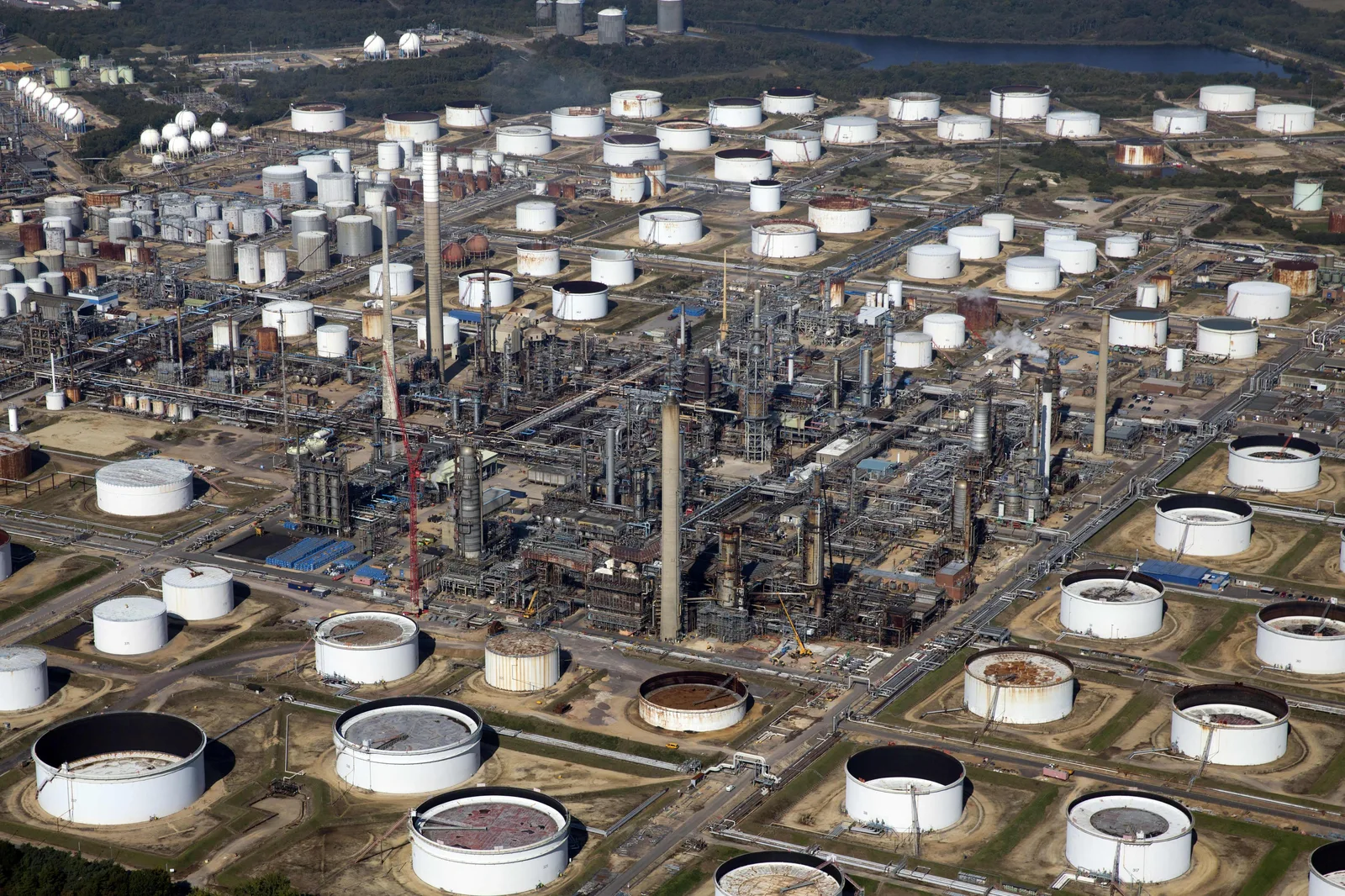
Crude oil cannot be used directly by most sectors of the modern economy. It must be transported to refineries, separated into different fractions, processed through specialized industrial units and distributed as gasoline, diesel, jet fuel or petrochemical feedstocks.
This industrial chain depends on complex technical balances.
Not all refineries have the same equipment, process the same grades of crude or produce the same proportions of fuels. A facility designed to process particular heavy or sulfur-rich crude oils cannot necessarily replace its usual feedstock with another grade without affecting output, efficiency or profitability.
The global availability of crude oil therefore guarantees neither sufficient diesel production nor the presence of that diesel in the regions where it is needed.
This distinction has become central in 2026.
According to the IEA, global gasoil production fell to 26.4 million barrels per day in the second quarter, 1.5 million below its level a year earlier. Output subsequently recovered to an estimated 27.2 million barrels per day in the third quarter but remained 1.7 million barrels below the corresponding period in 2025.
Disruptions to Middle Eastern crude flows reduced refinery activity in several Asian economies, including China, India and South Korea. Meanwhile, Ukrainian attacks on Russian energy infrastructure damaged refining capacity and constrained Moscow's exports of petroleum products.
Industrial decisions compounded these difficulties.
During the summer, strong demand for aviation fuel encouraged some refineries to prioritize jet fuel production over gasoil. At the same time, limited access to preferred crude grades reduced the efficiency of certain refining configurations.
Even when a refinery remains operational, it does not necessarily produce the fuel experiencing the greatest shortage.
The crisis is therefore not merely quantitative. It is technical, geographical and logistical.
Russia and the Middle East: Two Disruptions Reinforcing Each Other
The geography of international diesel trade explains much of the current imbalance.
The Middle East is a major exporter of refined petroleum products, while Russia remains an important supplier of gasoil to international markets. Both regions possess industrial infrastructure serving economies far beyond their borders.
Both systems are now experiencing serious disruptions.
In the Middle East, the recovery in crude exports has not been matched by an equivalent restoration of refined-product shipments. In September, regional petroleum-product exports reached approximately 1.9 million barrels per day, compared with 4.7 million before the war. Liquefied petroleum gas shipments also remained substantially below previous levels.
The difference between recovering crude flows and recovering refined-product exports illustrates the difficulty of restoring an entire energy supply chain.
A pipeline may help restore crude exports without repairing damaged refineries, restoring fuel storage capacity, reopening loading terminals or ensuring the security of maritime routes required for finished products.
Russia faces a different set of constraints.
Damage to its refineries directly reduces production capacity. Under these circumstances, easing administrative export restrictions cannot automatically generate additional supplies.
September's figures are particularly revealing.
Combined net gasoil exports from Russia and the Middle East fell by more than 60% year on year, to approximately 820,000 barrels per day.
The United States and China increased their exports by around 610,000 barrels per day compared with September 2025. But their contribution did not fully compensate for the losses elsewhere.
This illustrates a fundamental characteristic of global energy trade: alternative supplies exist, but they cannot necessarily be mobilized immediately or without additional costs.
An American refinery may increase diesel production without being able to supply an African or Asian market at once. Shipping capacity, fuel specifications, commercial contracts, insurance costs and port infrastructure all influence whether one supplier can effectively replace another.
The world can therefore possess spare capacity in some regions while facing acute shortages in others.
Maritime Freight Turns Scarcity Into an Economic Shock
Transportation has become an increasingly important component of energy prices.
Disruptions to Middle Eastern maritime routes have altered shipping patterns, extended some journeys and increased freight costs. Security risks affecting vessels, terminals and energy infrastructure have further complicated operations.
In September, the monthly average price of North Sea Dated crude increased by $26.17 per barrel to $116.89. At the time of the IEA report's publication, it was trading around $134, while certain North Sea crude grades had reached even higher levels.
But rising crude prices represent only part of the problem.
For an importing refinery, the effective cost of feedstock includes the purchase price of oil, transportation, insurance and the expenses associated with delivery.
When freight costs increase sharply, refining profitability can deteriorate even when finished fuels command exceptionally high prices.
The IEA notes that some European and Asian refining margins were compressed by soaring delivered crude costs, while American refineries benefiting from relatively cheaper feedstock enjoyed more favorable operating conditions.
This divergence is creating a new industrial hierarchy.
Refineries located near competitive resources, supported by reliable logistics and capable of producing fuels in high demand enjoy a growing advantage.
Conversely, facilities dependent on expensive imports may become less profitable precisely when their products are most urgently needed.
The resulting dynamics can become self-reinforcing.
If refineries reduce operations because processing crude is no longer sufficiently profitable, diesel availability may decline further, intensifying pressure on prices and inventories.
A shortage initially triggered by geopolitical disruption can therefore be amplified by the economics of refining itself.
Why Diesel Reaches the Heart of the Real Economy
Diesel occupies a distinctive position among petroleum products.
Gasoline is primarily associated with personal mobility. Jet fuel is closely linked to aviation. Diesel, by contrast, is embedded throughout the productive economy.
It powers a substantial share of road freight transportation, agricultural machinery, construction equipment, mining vehicles, backup electricity generators and numerous industrial operations. Gasoil and related middle distillates are also used in heating applications.
This diversity makes short-term demand relatively resistant to price changes.
A logistics company can optimize routes, reduce certain journeys or pass some additional costs on to customers. It cannot necessarily replace its truck fleet within months.
A farmer may postpone investment, but harvesting equipment must still operate during the agricultural season.
A mining company can reduce output, but doing so means sacrificing production and revenue.
Higher diesel prices therefore become a constraint on economic activity rather than simply an incentive to consume less.
IEA figures illustrate this rigidity.
Across OECD economies, diesel deliveries declined by only 2% year on year during the five months ending in July, while other gasoil uses contracted by 8%.
The difference reflects unequal capacity to adjust.
Some heating-related fuel purchases can be postponed or reduced. Energy requirements associated with freight transportation and industrial production are much more difficult to cut without broader economic consequences.
This explains why diesel can remain exceptionally expensive even when overall oil consumption is falling.
It also explains its role in transmitting inflation.
When transportation costs increase, agricultural products, construction materials, manufactured goods and imported merchandise can all become more expensive.
Companies may absorb part of the increase through lower margins, but their ability to do so depends on financial conditions and competitive pressures.
Economies dominated by road freight, dependent on long logistics chains and lacking effective protection against energy-price volatility may experience particularly severe consequences.
Diesel thus provides a direct transmission channel between geopolitical tensions, industrial costs and household purchasing power.
Import-Dependent Economies Face Structural Vulnerabilities
The crisis does not affect every region equally.
The United States possesses a substantial refining industry and considerable domestic oil production. This does not insulate it from international price movements, but it provides greater flexibility in responding to supply disruptions.
Europe faces a different situation.
Its diesel requirements remain significant, while part of its supply depends on international trade in refined petroleum products.
Global market tensions can therefore affect both the cost of imports and the profitability of domestic refineries.
Across Asia, the consequences vary considerably.
China operates an enormous refining system and can help stabilize some markets through exports. India also possesses significant refining capacity but remains exposed to changes in crude acquisition costs and disruptions to maritime oil routes.
For many African economies, vulnerability is concentrated further downstream.
Countries importing a substantial proportion of their refined fuels may face a combination of higher international prices, additional freight costs and pressure on foreign-exchange reserves.
When domestic currencies depreciate, the cost of energy imports rises further in local-currency terms.
This can affect public finances when governments subsidize fuels or attempt to limit retail prices.
It can also weaken trade balances, particularly in economies whose exports do not generate sufficient foreign currency to offset more expensive energy imports.
This dimension is essential to understanding why a diesel crisis can become a development crisis.
The issue extends beyond access to energy resources. It concerns a country's ability to keep transportation, agriculture and industry operating at economically sustainable costs.
Refining Regains Its Strategic Value
The current situation also helps explain developments in the financial performance and strategic priorities of major oil companies.
For several years, discussions about the industry's future have been dominated by the energy transition, the expansion of electric vehicles and the long-term trajectory of hydrocarbon demand.
These transformations remain significant.
But they do not eliminate the physical constraints governing today's energy supply.
The crisis of 2026 demonstrates that operational, well-located and technically capable refining assets can acquire exceptional strategic value.
Wholesale diesel prices exceeded $200 per barrel in Singapore in September and reached approximately $220 in Europe and the United States, according to the IEA.
At such levels, the price differential between refined fuels and crude oil can become extraordinarily wide.
However, a large price differential does not automatically guarantee stronger profitability.
In Europe, diesel-related gross price spreads narrowed from approximately $100 per barrel to around $60 in early October, partly because of rising feedstock costs.
This development reveals the industrial paradox at the center of the crisis.
Diesel scarcity increases the economic value of refineries capable of producing it, but rising crude acquisition and transportation costs can simultaneously undermine less competitive facilities.
Integrated energy companies operating across production, refining, logistics and marketing may enjoy a broader range of commercial options.
That does not mean every business segment becomes profitable or that integrated companies are immune to disruptions.
BP's recent refining performance belongs within this broader framework.
Improved margins in certain refining operations demonstrate that existing petroleum infrastructure retains substantial economic value even as the energy transition advances.
Strategic value no longer depends solely on ownership of oil reserves.
It also depends on the ability to transform those reserves into the products consumers require, in the right location and at the right time.
Inventories Are Losing Their Ability to Absorb Shocks
Inventories normally serve as the principal short-term stabilization mechanism in oil markets.
They allow temporary interruptions in production, logistics disruptions and seasonal changes in consumption to be absorbed without immediately triggering severe shortages.
But their effectiveness depends on their volume, location and composition.
By the end of September, observed global oil inventories had fallen by 509 million barrels since the end of February.
This represents a substantial contraction in the commercial stocks and other volumes monitored by the IEA, although the figure does not encompass every barrel held in storage worldwide.
The distribution of the decline is especially important.
In September, onshore inventories fell by 113 million barrels, while volumes of oil stored or transported at sea increased significantly.
Some oil therefore remained within the global system without being immediately available at the facilities where it could be refined or consumed.
This distinction between physical availability and operational availability is fundamental.
A barrel loaded onto a tanker is not equivalent to a barrel delivered to a refinery.
Similarly, crude oil held in storage cannot directly replace diesel already refined and ready for distribution.
OECD gasoil inventories had declined to 565 million barrels in July, approximately 5% below their pre-conflict level.
The reduction occurred during a period when inventories are normally replenished ahead of winter demand.
The market is consequently entering the colder season with diminished safety margins.
This increases its sensitivity to additional disruptions, including port closures, industrial accidents, extreme weather events and further attacks on energy infrastructure.
The central question is no longer simply whether the world produces enough oil over an entire year.
It is whether sufficient inventories of the appropriate products are available in the appropriate locations to absorb interruptions when they occur.
2027: A Recovery That May Not Be Enough
The IEA's outlook does not suggest that shortages will necessarily become permanent.
The agency anticipates a recovery in global oil production in 2027 following a substantial contraction in 2026.
Refinery crude throughput is also expected to increase, from an average of 81.7 million barrels per day in 2026 to a level 2.8 million barrels per day higher the following year.
This improvement should gradually help restore fuel availability.
But timing will be decisive.
The IEA expects the gasoil market could return to a surplus during the first quarter of 2027.
Such a rebalancing would not, however, immediately replenish inventories depleted during the crisis.
A more substantial recovery in stocks is not expected until the second half of the year.
The outlook depends heavily on the restoration of Middle Eastern refined-product exports.
A durable normalization of industrial infrastructure and maritime transportation could accelerate market stabilization.
Conversely, further disruptions or a slower recovery in refining capacity could prolong shortages.
Demand represents the other adjustment mechanism.
The IEA projects that global oil consumption will rebound by 2 million barrels per day in 2027 without fully returning to its 2025 level.
But if diesel supply remains insufficient, restoring equilibrium may require additional reductions in consumption.
Such an adjustment would carry significant economic costs.
Unlike lower demand resulting from efficiency improvements or technological substitution, consumption reductions driven by unaffordable prices can reflect weaker freight activity, declining industrial output and reduced production.
There is a fundamental difference between an economy consuming less diesel because it has become more efficient and an economy consuming less because it can no longer afford to maintain its operations.
Energy Security Is Acquiring a New Definition
The present crisis is forcing governments to reconsider traditional approaches to energy security.
For decades, public policy focused primarily on diversifying suppliers, building strategic reserves and guaranteeing access to crude oil resources.
These objectives remain indispensable, but they are no longer sufficient.
A country may possess long-term crude supply contracts while lacking adequate refining capacity.
It may operate refineries without reliable access to the crude grades required for optimal performance.
It may produce sufficient fuel domestically while struggling to transport it to industrial centers.
Energy security must therefore be understood as the continuity of an entire industrial chain, from extraction to final consumption.
This logic is already visible in the international response.
On October 2, G7 leaders called for an acceleration of oil deliveries scheduled under the collective action coordinated by the IEA in March, with particular priority given to diesel.
On October 11, IEA Executive Director Fatih Birol urged member countries to consider accelerating remaining planned releases and, if necessary, making additional diesel supplies available.
This represents an important signal.
Strategic reserves are no longer viewed exclusively as instruments for compensating for a general interruption in crude oil supply.
Their composition and ability to address shortages of specific refined products are becoming operational priorities.
Over the longer term, diversification of energy sources, electrification and efficiency improvements can reduce exposure to petroleum shocks.
But these transitions are advancing at different speeds across industries and countries.
Heavy road freight, mechanized agriculture, mining and certain industrial operations do not everywhere possess immediately deployable alternatives to diesel.
The energy transition and security of supply therefore cannot be treated as separate questions.
The former gradually transforms energy requirements, while the latter must ensure that the economy continues functioning throughout that transformation.
The Greater Danger: A Global Economy Running Out of Flexibility
Ultimately, the diesel crisis exposes a broader weakness in industrial globalization.
Supply chains have been organized around geographical specialization, concentrated production capacity and cost optimization.
This model generates considerable efficiency gains when international trade functions normally.
But it can become vulnerable when several strategic infrastructures are disrupted simultaneously.
Russia and the Middle East account for a substantial share of the current supply problems.
The United States and China can compensate for some missing volumes without immediately restoring balance.
European and Asian refineries face rising operating costs.
Import-dependent economies must absorb higher prices and freight expenses.
Inventories decline precisely when their role as a buffer becomes more important.
Each element reinforces the others.
Crude oil can begin circulating again without refined fuels recovering at the same pace.
Diesel prices can remain elevated even as total petroleum consumption declines.
Some refineries can experience improved margins while others reduce operations.
Inventories can exist on paper without being available in the necessary form, location or timeframe.
These overlapping imbalances demonstrate that the global energy market can no longer be understood through a single indicator.
The price of crude remains essential, but it does not measure available refining capacity, transportation costs, industrial fuel inventories or infrastructure resilience.
In 2026, diesel has become one of the clearest indicators of these constraints.
Its scarcity threatens far more than motorists or fuel distributors.
It affects the trucks transporting merchandise, the machinery cultivating farmland, the equipment extracting minerals and the industries sustaining the material foundations of economic activity.
The world's most serious vulnerability is therefore not simply the possibility of running out of oil.
It is the possibility of possessing oil without being able to transform and deliver it in the form the economy requires.
And as long as that capacity remains constrained, diesel may continue to impose its own limits on global growth, regardless of the broader trajectory of petroleum demand.
Main Sources
- International Energy Agency (IEA), Oil Market Report — October 2026, October 14, 2026. Oil supply and demand forecasts, refining activity, inventories, gasoil trade and petroleum prices. https://www.iea.org/reports/oil-market-report-october-2026
- IEA, IEA statement on responding to the global diesel market situation, October 11, 2026. https://www.iea.org/news/iea-statement-on-responding-to-the-global-diesel-market-situation
- IEA, Executive Director participates in G7 Leaders’ meeting on energy security and markets, October 2, 2026. https://www.iea.org/news/executive-director-participates-in-g7-leaders-meeting-on-energy-security-and-markets
- IEA, Global seaborne gasoil and diesel net exports, 2023–2026, published October 14, 2026, based on Kpler data. https://www.iea.org/data-and-statistics/charts/global-seaborne-gasoil-and-diesel-net-exports-2023-2026
- IEA, OECD total gasoil and diesel stocks, 2023–2026, published October 14, 2026. https://www.iea.org/data-and-statistics/charts/oecd-total-gasoil-and-diesel-stocks-2023-2026
Methodological note: September 2026 figures are partly provisional and subject to revision. Observed global inventories do not represent all oil stocks worldwide. The outlook for 2027 depends on the evolution of conflicts, infrastructure availability and maritime trade. This analysis draws on publicly available material from the IEA report; the full subscriber-only publication was not independently reviewed.
Atlas Limits Research Desk
Atlas Limits’ editorial and analytical desk.