Global trade continues to expand, but opportunities for industrialization are becoming increasingly concentrated. Between technological rivalries, economic security policies and the fragmentation of investment, emerging economies must find their place in a system where access to markets no longer guarantees access to wealth. UNCTAD's 2026 report highlights a fundamental transformation: development now depends as much on power relations as on economic advantages.
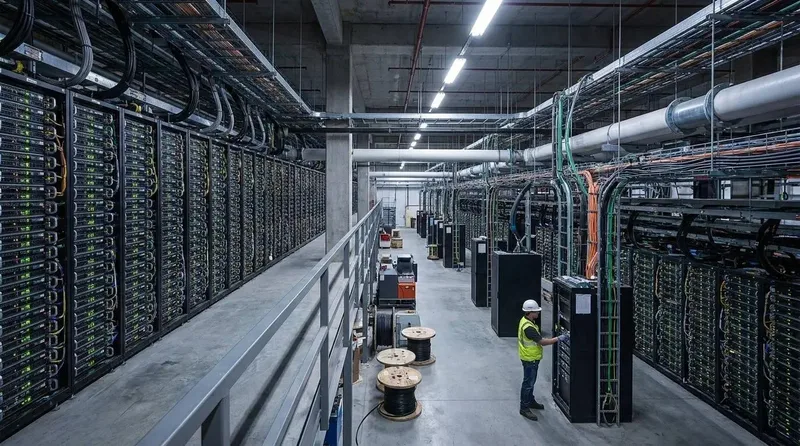
In October 2026, a single piece of industrial equipment can tell two radically different stories. A server designed for artificial intelligence incorporates semiconductors designed in one country, manufactured in another, assembled elsewhere and integrated into digital infrastructure distributed across several continents. Trade flows multiply, investment expands in selected industries and component exports reach considerable levels. Yet the wealth generated does not necessarily follow the same geographical path as the goods themselves.
In its Trade and Development Report 2026: The Geoeconomics of Development, published on October 9, the United Nations Conference on Trade and Development (UNCTAD) presents a particularly revealing example. In its analysis of an advanced AI server rack, after-tax profits account for 68% of the value added examined, while labor compensation represents less than 15%. This distribution concerns a specific industrial case and cannot be generalized to the entire digital economy. Nevertheless, it illustrates a decisive reality: participating in a global production chain does not necessarily mean controlling its most valuable sources of income.
This distinction is becoming central as the global economy enters another phase of restructuring. UNCTAD projects global growth of 2.6% in 2026, down from 2.9% in 2025, while international trade in goods and services is expected to expand by approximately 4% in volume terms. Trade is therefore continuing to grow faster than global output, but this expansion is accompanied by an increasing concentration of technological capabilities, strategic investment and profits.
The paradox does not mean that trade has ceased to contribute to development. Rather, it indicates that the relationship between trade openness, industrialization and economic convergence is becoming more complex. For several decades, integration into international value chains provided one of the principal routes through which emerging economies could transform their productive structures. That route remains open, but its conditions are increasingly shaped by the strategic interests of major powers.
The question is no longer simply how a country can export more. It is whether international trade can still be used to build an economy capable of producing, innovating, financing investment and retaining a growing share of the value it helps create.
When Trade Becomes an Instrument of Power
Industrial globalization rested on a relatively straightforward proposition: companies would distribute their activities according to costs, skills and comparative advantages, while countries hosting those activities could gradually develop their own productive capabilities.
This description never fully reflected reality. Governments have always protected certain industries, financed strategic infrastructure and sought to control essential technologies. But industrial policy and national security considerations now occupy a much more explicit position in the organization of international trade.
The United States uses restrictions on advanced technology exports, industrial support mechanisms and investment screening to preserve its position in strategic sectors. China mobilizes its domestic market, manufacturing capabilities and financial instruments to reduce technological dependencies and consolidate its presence across value chains. The European Union is seeking to protect its industries, secure supplies and develop capabilities in semiconductors, batteries, energy and critical technologies.
These strategies pursue economic objectives, but they also respond to concerns involving sovereignty, defense and national security. The location of a factory, the selection of a supplier or the authorization to export a component may now depend as much on diplomatic relations as on industrial competitiveness.
The transformation is measurable. According to UNCTAD, trade between China and the United States has declined by more than 20% since 2024, while East Asia has strengthened its commercial relationships with both economies. This development does not represent the disappearance of interdependence but rather its reorganization. Trade flows can shift toward intermediary countries without eliminating the technological, financial or industrial dependencies that originally supported them.
A company may relocate final assembly outside China while continuing to rely on Chinese suppliers for components. A country may increase exports to the United States without controlling the design of the products it ships. A new industrial facility may alter trade statistics without transferring decision-making centers, patents or research capabilities.
Geoeconomic fragmentation therefore does not necessarily produce sealed economic blocs. Instead, it creates a more selective form of globalization, in which some sectors remain deeply integrated while others face growing restrictions.
For developing economies, this transformation introduces an additional difficulty. Offering attractive conditions to investors is no longer sufficient. Countries must also remain compatible with the regulatory, technological and geopolitical requirements of the markets those investors intend to serve.
Asia Concentrates Growth, but Its Model Is Becoming Harder to Replicate
One of the report's most important conclusions concerns the geographical concentration of global growth. In 2026, Asia is expected to contribute 59% of global economic expansion. UNCTAD projects growth of 7.3% in India, 4.5% in China, 5.2% in Indonesia and 7.8% in Vietnam.
These performances confirm Asia's central position in the world economy. They also demonstrate that industrialization, trade integration and the development of substantial domestic markets continue to offer opportunities for economic advancement.
But they raise a historical question. Are the conditions that enabled several Asian economies to achieve industrial transformation still accessible to countries seeking to follow similar trajectories?
South Korea, Taiwan, China and, more recently, Vietnam benefited, through different institutional arrangements, from combinations of productive investment, education, public policy, technology transfers and access to external markets. Their companies gradually acquired the capabilities needed to move from assembly operations toward more complex industrial activities.
This progression required time, capital and institutions capable of supporting the accumulation of expertise. It also depended on an international environment in which many multinational companies were actively seeking new production locations.
Today's conditions are different. Automation reduces the relative importance of low labor costs in certain industries. Technological requirements are rising. Energy and digital infrastructure are becoming more capital-intensive. Restrictions on advanced equipment limit access to selected industrial capabilities.
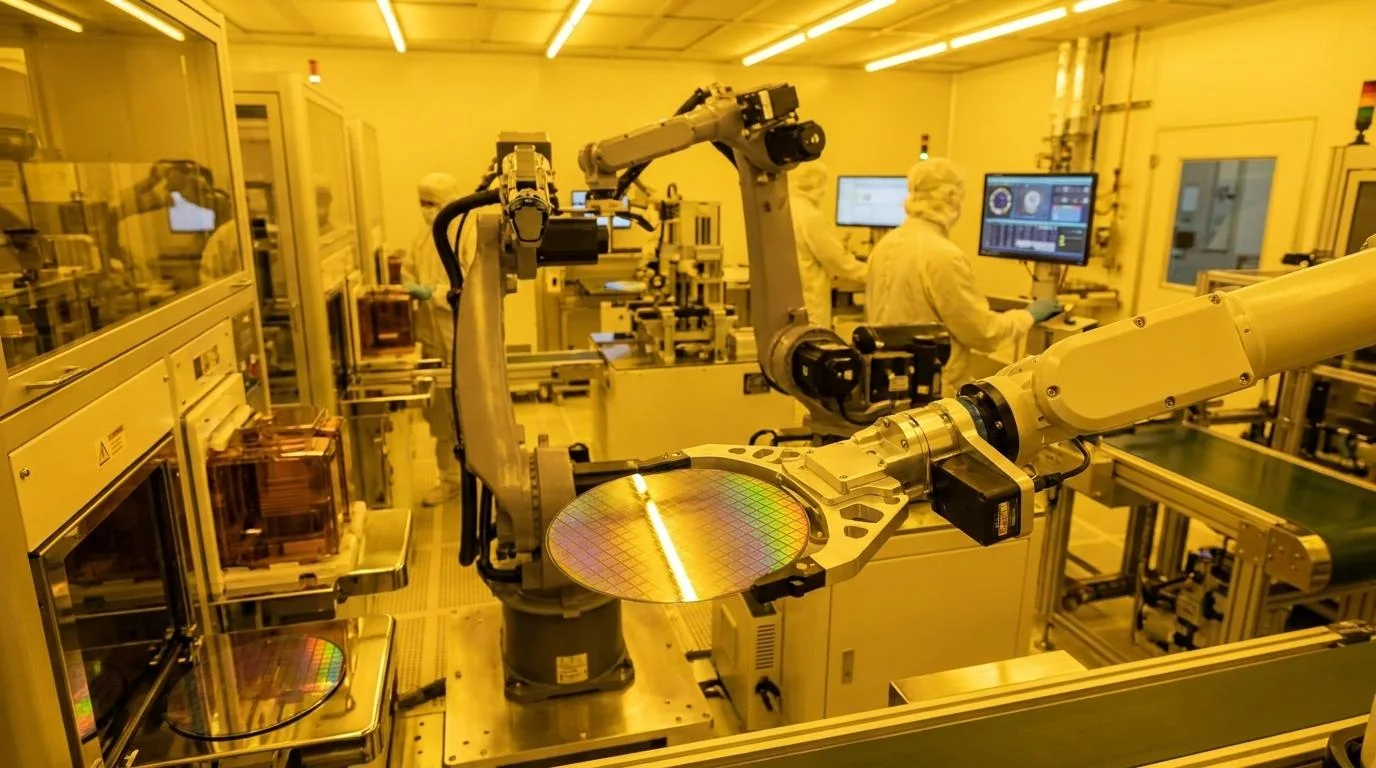
A country seeking to develop a semiconductor industry today cannot simply reproduce the early stages of Asian industrialization. It must secure specialized equipment, train highly qualified engineers, guarantee reliable electricity supplies, mobilize substantial financing and comply with restrictions imposed by countries controlling critical technologies.
UNCTAD observes that while several Asian economies continue converging toward advanced-economy income levels, convergence has stalled or weakened across much of the developing world since the mid-2010s.
The problem is not the complete disappearance of industrial opportunities. It is the narrowing of the pathways through which lower-income economies can develop independent technological and productive capabilities.
The New International Division of Value
Foreign direct investment provides a particularly useful measure of this transformation.
According to UNCTAD's data for 2020–2025, developed economies capture approximately 70% of the announced value of greenfield investment projects in high-value strategic sectors, including semiconductors, energy-transition technologies and artificial intelligence infrastructure.
Developing economies occupy a stronger position in critical raw materials and strategic minerals, accounting for approximately 60% of new foreign direct investment in that category.
This distribution reveals a fundamental asymmetry. Emerging economies often possess the physical resources essential to global industrial transformation, but the most lucrative activities remain concentrated in countries controlling technology, equipment, financing and final markets.
Africa provides a particularly significant example. The continent plays an essential role in cobalt extraction, especially through the Democratic Republic of the Congo. Yet according to an estimate highlighted by UNCTAD, Africa retains less than 1% of the value within the green supply chains examined in its analysis.
This figure should not be confused with Africa's share of global mineral production. It illustrates precisely the difference between possessing a resource and controlling the economic activities that determine its final value.
Extraction is a necessary stage, but chemical processing, active-material manufacturing, battery production, industrial integration and commercialization can generate revenues and technological capabilities elsewhere.
A country can therefore become indispensable to a global industry without becoming an industrial power itself.
This mechanism extends beyond critical minerals. It affects electronics, automotive components, energy equipment and certain digital activities. Across these industries, the geographical location of production does not necessarily correspond to the ownership of intellectual property, commercial margins or strategic decision-making.
The real economic hierarchy is therefore determined less by the volume of goods exported than by the ability to control essential functions within their production.
Middle Powers Face an Ambiguous Opportunity
Competition between major powers is not exclusively a constraint. It can also create opportunities for countries capable of positioning themselves between competing economic systems.
Vietnam offers one illustration. Its integration into Asian manufacturing networks and access to Western markets allow it to benefit from industrial diversification strategies. Yet this success remains closely linked to imported components, foreign investment and the commercial decisions of its principal trading partners.
Mexico presents a different configuration. Its proximity to the United States and integration into North American production networks provide considerable advantages for companies seeking to move certain operations closer to the American market. However, this position also exposes Mexico to changes in US trade policy and rules governing product origin.
India enjoys greater strategic flexibility because of its large domestic market, technological capabilities and industrial ambitions. It can attract foreign investment while seeking to develop its own companies and infrastructure. Nevertheless, energy, logistics and technological constraints continue to limit the speed of its transformation.
Indonesia is using its mineral resources, particularly nickel, to capture a greater share of industrial value domestically. Restrictions on raw mineral exports and policies encouraging local processing reflect this ambition. Their long-term effectiveness, however, depends on the country's ability to develop skills, suppliers and technologies beyond the initial stages of processing.
Turkey possesses a diversified manufacturing base and a geographical position that enables it to maintain economic relationships with several regional systems. This flexibility is an advantage, but it does not shield the country from financial imbalances or technological dependencies.
These trajectories demonstrate that middle powers are not necessarily condemned to choose a single economic camp. They can pursue multiple partnerships, develop sectoral specializations and benefit from competition among investors.
But this autonomy remains relative. It depends on the ability of governments to transform geopolitical opportunities into durable industrial advantages.
Morocco and the Question of Industrial Depth
Morocco illustrates another dimension of this restructuring. Its proximity to Europe, port infrastructure, automotive industry, aerospace capabilities and energy ambitions position it as an industrial platform connecting several economic regions.
The Tanger Med port complex, the automotive ecosystems around Tangier and Kenitra, and the development of energy infrastructure reflect a strategy built around integration into international value chains.
This integration represents a genuine transformation of the country's productive economy. It does not, however, automatically resolve the question of industrial depth.
The challenge is no longer simply to host export-oriented manufacturing facilities, but to develop domestic suppliers, engineering skills, design capabilities and companies able to participate in the most valuable segments of industrial production.
The energy transition and battery-related industries could expand these opportunities. But they also raise questions about technological control, the origin of investment capital, water and electricity availability, and the integration of local businesses.
Morocco's experience therefore illustrates a dilemma confronting many middle-income economies: foreign investment can accelerate industrialization, but its contribution to productive autonomy depends on what remains within the domestic economy after goods have been exported and profits distributed.
An effective industrial strategy cannot be assessed solely through the number of factories inaugurated or the value of announced investments. It must also examine domestic value added, skills development, supplier networks, innovation and the ability of national companies to enter new markets.
This distinction may become one of the principal criteria for evaluating industrial strategies in the years ahead.
Energy and Finance Are Redefining Development Opportunities
Geoeconomic restructuring is unfolding in an environment characterized by significant energy and financial constraints.
UNCTAD highlights the sharp increase in oil prices associated with the conflict in the Middle East, with Brent crude rising from approximately $70 to more than $110 per barrel in the weeks following the shock examined in its report.
For energy-importing economies, this increase represents more than a budgetary difficulty. It directly affects industrial competitiveness, transport costs, food prices and external financing requirements.
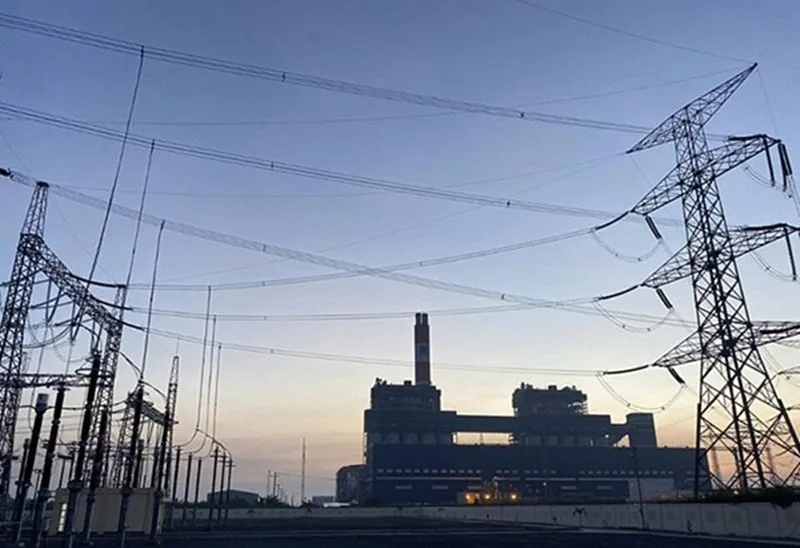
A country seeking to develop an export-oriented industrial sector must be able to provide companies with reliable, affordable energy. When energy costs rise sharply, industrial margins contract and investment projects become more difficult to finance.
The energy transition therefore acquires a geoeconomic dimension extending beyond climate objectives.
According to UNCTAD, new renewable energy installations have offered lower generation costs than the cheapest new fossil-fuel alternatives in more than 90% of the cases examined since 2024. This comparison concerns the generation costs of new capacity and does not imply that renewable-based electricity systems are universally cheaper once transmission networks, storage and flexibility requirements are included.
Nevertheless, it indicates that competitive domestic energy production can reduce exposure to imported fuels and strengthen a country's capacity to attract industrial activity.
But this transformation itself requires substantial capital. Financing conditions are becoming more difficult for many developing economies.
UNCTAD identifies increasing volatility in capital flows and projects another decline of nearly 7% in official development assistance in 2026, following two consecutive years of contraction.
The most vulnerable countries therefore face a contradiction: they need to invest more in energy, infrastructure, education and technological adaptation precisely when their fiscal space and financing opportunities are narrowing.
The cost of capital consequently becomes a major determinant of industrial hierarchy. Two countries possessing comparable resources can experience radically different development trajectories if one finances infrastructure on favorable terms while the other faces high interest rates, currency instability and restricted access to financial markets.
Development therefore depends not only on corporate competitiveness but also on the financial architecture within which companies operate.
Africa and the Risk of a New Peripheral Specialization
Africa occupies a distinctive position in this transformation. The continent possesses mineral resources, energy potential, expanding markets and a workforce expected to play an increasingly important role in the global economy.
Yet these advantages do not guarantee rapid industrialization.
Infrastructure remains unevenly developed, national markets are often fragmented and logistics costs constrain the competitiveness of many businesses. These difficulties are compounded by financing constraints and the concentration of technological capabilities in a limited number of countries.
The risk is the emergence of a new international specialization in which Africa supplies minerals, land, energy or selected assembly operations while design, financing and commercialization remain concentrated elsewhere.
Such a trajectory could increase exports without sufficiently transforming productive structures.
The African Continental Free Trade Area represents an attempt to overcome market fragmentation. Its strategic importance lies less in tariff reductions alone than in the possibility of developing regional value chains.
A component manufacturer located in one country could supply industrial companies operating in several neighboring economies. Shared logistics infrastructure could reduce transport costs. The gradual harmonization of standards could facilitate access to larger markets.
The Pan-African Payment and Settlement System addresses another structural difficulty: the cost and complexity of transactions between African currencies. UNCTAD highlights its ambition to connect 42 currencies through a mechanism designed to facilitate regional settlements. This ambition should not be mistaken for fully operational interoperability on that scale.
These initiatives will not immediately eliminate industrial disparities. They could nevertheless help create the conditions for regional productive specialization that depends less exclusively on external markets.
The challenge is to turn continental integration into an instrument of economic transformation rather than merely an expansion of commercial outlets.
Artificial Intelligence Could Reinforce Existing Hierarchies
Artificial intelligence adds another dimension to the development question.
It stimulates demand for semiconductors, servers, electrical equipment, cooling systems and digital infrastructure. It therefore supports selected international trade flows in an environment of slowing economic growth.
But the capabilities required to develop advanced AI systems remain highly concentrated.
The design of advanced accelerators, access to semiconductor manufacturing equipment, large-scale computing infrastructure, specialized software and financing capacity are dominated by a limited number of companies and economies.
For emerging countries, AI therefore presents two contradictory possibilities.
On one hand, it can improve productivity, facilitate access to certain skills, strengthen public services and allow domestic companies to reach new markets. It can also support the emergence of exportable digital services without requiring the same physical infrastructure as traditional manufacturing.
On the other hand, it can increase dependence on foreign providers of computing capacity, software and digital services. It can also shift a greater share of value added toward companies controlling models, platforms and infrastructure.
Digital development could consequently reproduce some of the asymmetries associated with traditional industrialization: user countries would consume technologies whose most significant revenues are captured elsewhere.
Technological sovereignty, however, does not necessarily require every country to manufacture all its own components or develop artificial intelligence models competing directly with the world's largest platforms.
For many middle-income economies, a more realistic objective is to build skills, data infrastructure, linguistic adaptation capabilities and industrial applications that enable the use of these technologies without excessive dependence on a single supplier.
Technological autonomy thus becomes a question of effective capacity rather than autarky.
The Return of Industrial Policy Does Not Guarantee Success
Against this background, industrial policy is regaining a central position in national economic strategies.
UNCTAD recommends better coordination between trade, financial and technological policies, stronger connections between foreign investors and domestic suppliers, and greater retention of domestic value added.
These recommendations address a genuine problem. But they do not guarantee successful outcomes.
Economic history demonstrates that industrial policies can encourage learning, innovation and the emergence of major domestic companies. It also shows that they can sustain uncompetitive activities, concentrate benefits among privileged groups and absorb considerable public resources.
Success depends in part on institutional quality, the performance requirements imposed on beneficiaries of public support and the ability to redirect investment when results fall short of objectives.
Local-content requirements, for example, can encourage the development of domestic suppliers. But when they exceed the economy's actual capabilities, they can increase costs, discourage investors or provoke trade disputes.
Subsidies can accelerate the emergence of strategic industries. They can also become permanent transfers of public resources to companies unable to survive without assistance.
Similarly, diversifying international partnerships can strengthen a government's bargaining position. It does not automatically produce industrial autonomy if projects continue to depend on the same technologies, markets or financing sources.
The decisive question is therefore productive learning.
A successful industrial policy must enable companies to master increasingly complex activities, develop their own capabilities and reduce selected critical dependencies. It should be evaluated through this transformation rather than through investment announcements alone.
Toward a Globalization of Negotiated Specializations
The current restructuring does not necessarily signal the end of globalization. It may instead encourage a different organization of international production, based on more selective forms of sectoral integration.
A country can develop industrial cooperation with Europe, import Asian equipment, attract American investment and maintain energy relationships with several suppliers. These interdependencies are not necessarily incompatible, even if technological restrictions and diplomatic tensions can limit certain combinations.
UNCTAD observes that the most dynamic emerging economies can serve as regional anchors connecting different commercial and financial systems.
This development could increase the influence of selected middle powers. But it also introduces growing differentiation between countries possessing negotiating capabilities and those dependent on a limited number of partners.
The former can encourage competition among investors, select industrial specializations and negotiate conditions favorable to the development of domestic companies. The latter risk becoming subject to strategic decisions made elsewhere.
Geoeconomics is therefore transforming commercial relationships into continuous negotiations over access to markets, technologies, resources and financing.
Within this system, diplomatic neutrality alone is insufficient to guarantee economic autonomy. A country may maintain good relations with several powers while remaining heavily dependent on one of them for exports, energy or digital infrastructure.
Conversely, a country engaged in close strategic partnerships may retain substantial room for maneuver if it possesses competitive companies, financial capabilities and technological expertise.
Autonomy is therefore measured less by the political distance a country maintains from major powers than by the actual diversity of economic options available to it.
Development Is Not Disappearing. It Is Becoming More Demanding.
UNCTAD's 2026 report reveals a profound transformation of the global economy. Trade continues to grow, investment circulates and new industrial activities emerge across developing economies. Yet the benefits of this expansion are distributed increasingly unevenly.
Countries capable of controlling technologies, financing infrastructure and developing domestic companies possess cumulative advantages. Those confined to extraction, assembly or low-value activities risk expanding their participation in international trade without achieving comparable economic convergence.
This does not mean that major powers have permanently closed the pathways to development. It means that economic advancement increasingly depends on national capabilities that are difficult to build and international conditions that emerging economies can influence only imperfectly.
Middle powers still possess room for maneuver. Supply-chain diversification, the energy transition, regional integration and technological diffusion can open new industrial trajectories. But these opportunities must be converted into skills, companies, infrastructure and innovation capabilities.
The fundamental distinction therefore no longer lies simply between countries integrated into globalization and those excluded from it. It lies between economies capable of transforming international integration into productive power and those that remain dependent on industrial, financial and technological decisions made abroad.
For several decades, development was frequently presented as a question of access: access to markets, capital, investment and technology. These conditions remain essential, but they are no longer sufficient.
In the new geoeconomy, development increasingly depends on the ability to negotiate that access, retain its benefits and gradually build the capabilities required to avoid complete dependence on it.
Global trade can continue expanding without development spreading at the same pace. The real question is no longer simply what position a country occupies within global value chains, but whether it possesses the means to change that position.
Main Sources
- UNCTAD, Trade and Development Report 2026: The Geoeconomics of Development, October 9, 2026. Full report and chapters.
- UNCTAD, Global growth slows to 2.6%, and gaps widen between developing regions, October 9, 2026. Official overview.
- UNCTAD, Trade and Development Report 2026, Chapter 2, “Selective fragmentation — The new geography of trade,” and Chapter 3, “Development in the age of geoeconomics,” accessible through the report's publication page.
- UNCTAD, Trade and Development Report 2026, official press materials, October 9, 2026.
Methodological note: The numerical estimates cited in this article are attributed to UNCTAD's October 2026 report and associated official communications. Country comparisons and strategic implications constitute separate editorial analysis. Sector-specific estimates should not be interpreted as averages applicable to entire national economies.
Atlas Limits Research Desk
Atlas Limits’ editorial and analytical desk.