The global economy is expected to grow by 3.1% in 2026, according to the International Monetary Fund. But behind this apparent resilience lies a deeper transformation: a shrinking number of economies account for most global growth, while technological investment and energy shocks redistribute economic advantages. Globalization is not disappearing. Its engines are becoming increasingly selective.
On October 13, 2026, as the International Monetary Fund and the World Bank hold their Annual Meetings in Bangkok, the latest global economic outlook presents a paradox. Despite conflicts, higher energy prices, trade tensions and mounting public debt, the world economy continues to expand. The IMF projects global GDP growth of 3.1% in 2026, following 3.5% in 2025, before accelerating to 3.4% in 2027.
These figures might suggest an international economy capable of absorbing successive disruptions without falling into recession. Yet another indicator reveals a far less reassuring reality: according to the IMF, just 32 economies now account for 95% of expected global growth, compared with 54 in its April projections.
Within a few months, the contribution to global economic expansion has become concentrated in a much smaller group of countries. This does not mean that other economies have stopped growing, or that only 32 countries now hold most of the world's wealth. It means that the overwhelming majority of additional global output is expected to originate from a limited number of economies, at a time when growth revisions are diverging sharply.
The development is particularly striking because this concentration coincides with the growing importance of artificial intelligence investment. Countries building digital infrastructure, manufacturing semiconductors or supplying the equipment required for data centers are benefiting from an exceptional investment cycle. Those outside these industrial networks continue, in many cases, to face higher energy costs, restrictive financial conditions and weaker external demand.
Two forces are therefore shaping the world economy simultaneously. The first supports investment, manufacturing and trade around artificial intelligence. The second raises production costs, erodes purchasing power and restricts governments' room for maneuver.
The result is not simply uneven growth. It is a gradual transformation of the geography of economic opportunity.
Global Growth Conceals Diverging National Trajectories
The relative stability of global forecasts conceals national developments moving in opposite directions. Since April, the IMF has downgraded growth prospects for approximately 47% of the economies covered by its estimates. Improvements elsewhere have nevertheless been sufficient to sustain the global aggregate.
This partly reflects the weight of large economies in calculating worldwide growth. A moderate acceleration in the United States or China can offset weaker performance across numerous smaller countries. The concentration identified by the IMF therefore reflects both the economic size of the countries involved and changes in their growth trajectories.
The United States is expected to expand by 2.3% in both 2026 and 2027. China is projected to maintain growth of approximately 4.5% in 2026, while India, with an expected expansion of 7%, remains among the fastest-growing major economies. The euro area is advancing much more slowly, at around 1.1%.
These differences cannot, however, be explained by artificial intelligence alone. Demographics, domestic consumption, public expenditure, industrial policies, exports and financial conditions remain decisive. India, in particular, illustrates the importance of domestic growth drivers that extend well beyond digital infrastructure.
What is changing is that the technological investment cycle provides additional support to certain economies precisely when others face a deteriorating external environment.
During previous periods of global expansion, rising international demand could spread across a wide range of producers through manufactured goods, commodities and foreign investment. The current cycle retains these mechanisms, but its most dynamic components depend on highly specialized equipment manufactured in a limited number of locations.
Global investment can therefore increase without generating comparable improvements in the economic prospects of all trading partners.
Artificial Intelligence Is Reshaping Industrial Geography
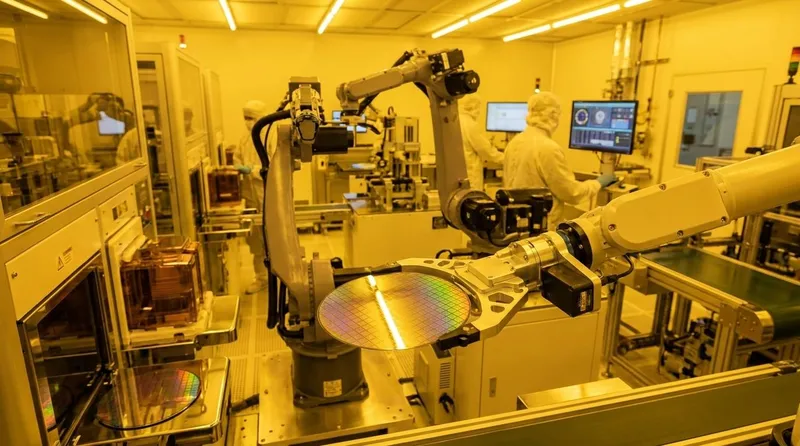
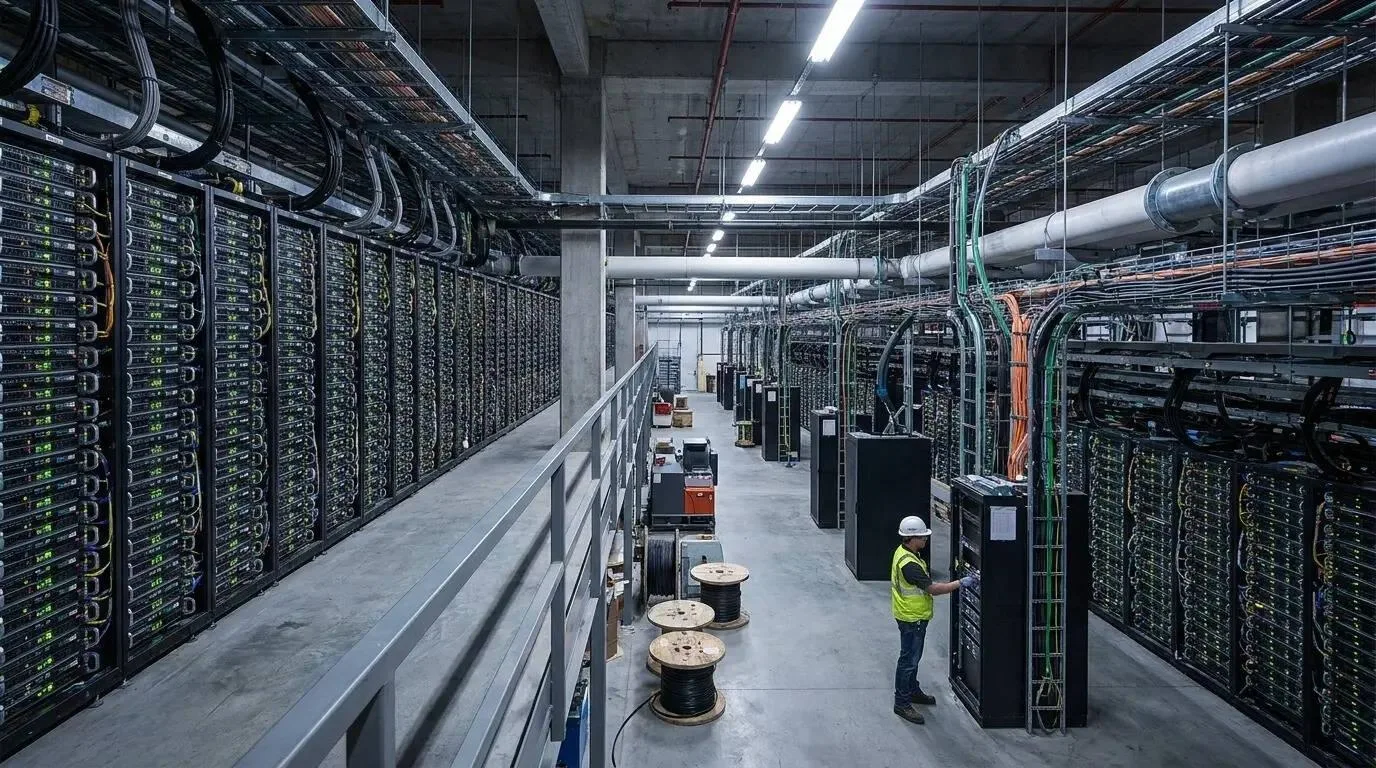
An artificial intelligence data center is not simply a building filled with servers. It is the final destination of an industrial supply chain involving processor designers, semiconductor foundries, memory manufacturers, electrical equipment suppliers, energy producers, cooling specialists and construction companies.
Every additional unit of computing capacity requires substantial physical investment before the corresponding digital applications can generate sustainable revenue.
This distinguishes the current cycle from several earlier waves of digitalization. Artificial intelligence is often presented as an intangible technology, yet its deployment depends on an exceptionally material industrial and energy infrastructure.
The United States occupies a central position in this system. It hosts several of the leading companies designing AI accelerators, developing advanced artificial intelligence models and operating digital platforms capable of financing massive investments. Its advantage rests as much on access to capital as on the depth of its technological markets.
China is pursuing a different trajectory. It possesses a vast domestic market, substantial manufacturing capacity and an industrial strategy designed to reduce dependence on foreign technologies. American export restrictions on advanced semiconductors constrain access to certain equipment, but they also encourage the development of domestic suppliers and the reorganization of Chinese supply chains.
Between these two poles, several Asian economies occupy critical industrial positions.
South Korea benefits from demand for the advanced memory required by AI accelerators. Taiwan retains an essential role in manufacturing the most sophisticated chips. Malaysia participates in various electronics activities, particularly assembly, testing and certain semiconductor supply-chain segments. Thailand and Mexico are also involved in manufacturing and integrating equipment destined for international technology markets.
The IMF identifies several of these economies among those whose prospects are supported by AI-related investment.
Their advantages do not necessarily derive from ownership of the final technologies. Instead, they reflect their integration into industrial segments that have become indispensable to the construction of new digital infrastructure.
This distinction matters. An economy can benefit from the artificial intelligence cycle without owning major language models, global digital platforms or domestic manufacturers of advanced processors. It can capture part of the value generated through manufacturing capacity, specialized labor, logistics infrastructure or industrial suppliers.
Conversely, a country can experience rapid growth in its digital market without participating significantly in the production of the equipment supporting that expansion.
The economic dividing line no longer runs exclusively between technologically advanced countries and everyone else. It increasingly runs through the value chains themselves.
Energy: The Other Side of the Technological Cycle
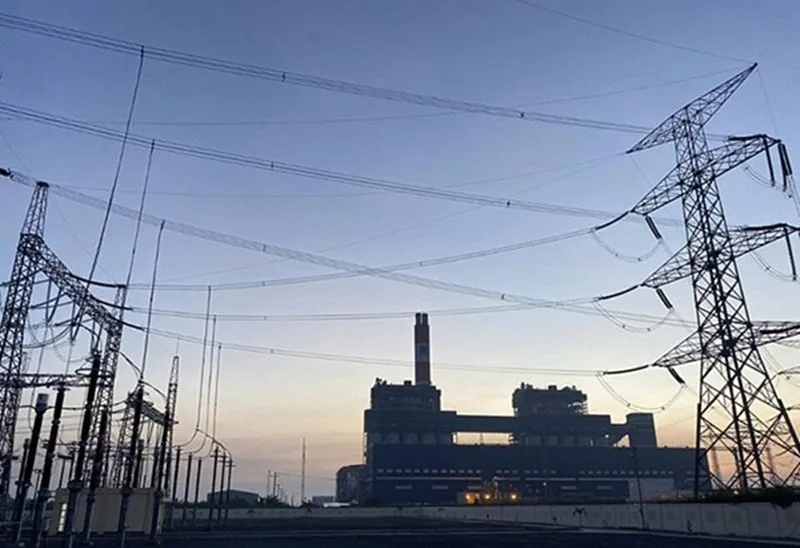
While artificial intelligence investment supports certain economies, rising energy costs exert pressure in the opposite direction across much of the world.
The IMF projects global inflation of 4.7% in 2026, easing to 4.1% in 2027. This trajectory reflects persistent price pressures despite slower economic activity compared with 2025.
Disruptions associated with conflict in the Middle East have increased energy costs and uncertainty surrounding supplies. Their consequences extend well beyond oil markets. They affect maritime transport, fertilizers, agriculture, industrial production and the public finances of energy-importing countries.
For an economy dependent on imported hydrocarbons, a sustained increase in energy prices simultaneously affects several variables. It raises the external import bill, fuels inflation, reduces household purchasing power and increases business costs.
If governments attempt to protect consumers through broad subsidies, the pressure shifts to public finances. If they allow prices to pass through fully, households and businesses absorb the shock directly. If monetary authorities tighten policy to contain inflation, investment financing can become more expensive.
These trade-offs are particularly difficult for countries with limited foreign-exchange reserves, elevated debt or export revenues insufficient to offset higher energy costs.
The contrast with economies integrated into technological supply chains becomes especially pronounced.
On one side, investment in computing infrastructure generates additional demand for semiconductors, electronic components and electrical equipment. On the other, energy importers outside these supply chains face higher costs without directly benefiting from the new wave of industrial demand.
The same global cycle therefore produces a positive impulse in some territories and a negative shock in others.
It would nevertheless be misleading to conclude that every energy producer benefits. Higher oil prices can improve export revenues, but military disruptions, transport restrictions and production interruptions can eliminate that advantage. Economies in the Middle East directly affected by conflict illustrate this vulnerability.
Security of supply is becoming as important as ownership of resources.
The Countries Building AI and Those Buying Its Services
The industrial concentration visible today could have consequences extending well beyond the immediate investment cycle.
Countries producing technological equipment initially benefit from orders for machinery, components and infrastructure. But they can also accumulate technical expertise, attract suppliers, expand electricity networks and strengthen research capabilities.
These learning effects may extend their initial advantages.
By contrast, economies that primarily adopt artificial intelligence through imported services could follow a different trajectory. They may obtain productivity gains in public administration, financial services, education, healthcare or manufacturing without necessarily developing a domestic production base for the underlying technologies.
This is not automatically a disadvantage. Economic history demonstrates that adopting foreign technologies can generate substantial benefits even when the countries using them do not manufacture the equipment involved.
But the distribution of those benefits depends on several conditions: the price of access to technology, the availability of skills, infrastructure quality, the ability of domestic firms to transform their operations and the possibility of retaining part of the value created.
An economy importing artificial intelligence services while possessing businesses capable of substantially improving productivity may benefit considerably from adoption.
Another economy, facing expensive electricity, weak connectivity and shortages of skilled workers, may pay for technological access without fully exploiting its potential.
The risk of divergence therefore extends beyond semiconductor production. It also concerns societies' ability to convert available technologies into productivity, skilled employment and income.
This distinction is particularly important for Africa, South Asia and parts of Latin America. Their economic trajectories differ considerably, but many countries must simultaneously finance energy infrastructure, develop skills and preserve external balances.
Their challenge is not necessarily to replicate the technological capabilities of the United States or China. It is to identify industrial, digital and energy segments in which economically viable participation can be established.
Globalization Is Becoming More Selective
The concentration of growth is occurring as governments intervene more actively in the organization of industrial supply chains.
Restrictions on advanced technology exports, semiconductor manufacturing subsidies, critical mineral security policies and energy sovereignty programs are gradually changing the conditions governing international investment.
The traditional economic logic based primarily on production costs and trade efficiency now coexists with national security requirements, industrial resilience and technological control.
This does not mean globalization is ending. Artificial intelligence infrastructure itself depends on extensive international interdependence. American companies require Asian manufacturing capacity, semiconductor producers depend on specialized machinery and materials, and data centers need energy and industrial resources distributed across multiple continents.
Globalization therefore remains indispensable to the functioning of the new technological cycle.
What is changing is how governments and companies select partners, secure supplies and allocate investments.
Economies already embedded in strategic supply chains enjoy cumulative advantages. They attract new orders because they possess the necessary expertise, suppliers and infrastructure. Those orders subsequently strengthen their capabilities and attractiveness.
For countries seeking to enter these networks, the barriers can become increasingly demanding. Building a competitive electronics industry requires investment, technical training, reliable electricity and logistical integration that not every government can finance at the same pace.
Yet today's concentration can also create opportunities. The search for alternative suppliers, geographical diversification of production capacity and growing demand for energy equipment open possibilities for economies historically outside the core of digital industries.
Mexico, Malaysia and Thailand illustrate different forms of participation in these changes.
The challenge for other countries is therefore not to join an indiscriminate global race for artificial intelligence, but to determine where their industrial, energy or human-capital advantages can secure a durable position.
The Risk of Growth Dependent on a Few Companies
Geographical concentration is accompanied by another vulnerability: the investment cycle's dependence on a limited number of major technology companies.
Spending on data centers, computing accelerators and electrical infrastructure largely reflects expectations of future revenue associated with artificial intelligence.
These investments immediately support suppliers, construction companies and equipment manufacturers. Their profitability, however, depends on whether AI applications ultimately generate enough economic value to justify the capital committed.
The gap between present expenditure and future revenue creates considerable uncertainty.
If productivity gains materialize rapidly and spread throughout the economy, the current cycle could mark the beginning of sustained expansion.
If revenue grows more slowly than expected, major companies may reduce spending, postpone projects or revise computing capacity plans.
The consequences would extend beyond financial markets. Memory manufacturers, equipment suppliers, construction businesses and exporting economies integrated into these supply chains could experience falling orders simultaneously.
The concentration currently supporting global growth could therefore become a transmission mechanism for a future slowdown.
The IMF identifies a reassessment of expected AI profitability among the risks to its economic outlook.
The question is not whether artificial intelligence represents an important innovation. It is whether the present pace of investment matches the speed at which its applications can generate measurable revenue and productivity gains.
A technology can profoundly transform the economy while passing through periods of overinvestment, consolidation and financial correction.
The Public Finance Dilemma
Industrial concentration is accompanied by an increasingly important fiscal constraint.
The IMF emphasizes the need to rebuild fiscal buffers after several years of successive shocks. Rising interest costs, defense requirements, social expenditure and investments needed for the energy transition restrict many governments' ability to respond to another crisis.
This recommendation nevertheless raises a difficult trade-off.
Countries already possessing advanced technological infrastructure can rely on their companies, financial markets and industrial capabilities to support investment. Those still needing to build electricity networks, modernize ports, train engineers or expand connectivity often require greater initial public investment.
Fiscal consolidation implemented too quickly can preserve certain financial balances while reducing the investments necessary for future growth.
Conversely, poorly managed additional borrowing can increase capital costs, weaken currencies and make those same investments harder to finance.
There is therefore no universal solution.
The quality of expenditure, its economic returns, debt structure and the ability to mobilize sustainable tax revenues become essential considerations.
The IMF recommends temporary, targeted assistance to protect vulnerable households from price increases rather than broad subsidies that can absorb substantial public resources.
This approach has an economic rationale: limiting the fiscal cost of support measures and avoiding indiscriminate subsidies. But implementation depends on governments' administrative capacity to identify beneficiaries, distribute transfers and effectively protect exposed populations.
Fiscal policy thus intersects with the concentration of growth. Countries possessing substantial financial and institutional resources can more easily absorb shocks while preparing for industrial transformation. Others must choose between immediate stabilization and long-term investment.
Three Possible Paths Toward the End of the Decade
The IMF's projections do not establish with certainty how the global economy will be organized in the coming years. They describe conditions based on information available as of October 1, 2026, in an environment where energy, geopolitical and technological assumptions can change rapidly.
One possible trajectory would see technological growth gradually spread. Artificial intelligence investment would generate productivity gains across an expanding range of sectors. Technology-importing economies could then benefit from applications without necessarily owning the initial industrial capabilities. Today's concentration of investment would precede a broader distribution of economic gains.
A second trajectory would extend the divergence observed in 2026. Countries already integrated into strategic industrial supply chains would continue attracting capital, while others would face persistently high energy and financing costs. Global growth would remain positive, but its benefits would become increasingly uneven.
A third trajectory would combine a correction in the technological investment cycle with renewed energy disruptions. Economies most exposed to digital infrastructure spending would lose a growth engine, while energy importers would continue facing elevated costs. The concentration of economic drivers would amplify the transmission of the shock.
These scenarios are not equally likely, and none should be treated as inevitable. They nevertheless demonstrate that global economic resilience increasingly depends on maintaining several balances simultaneously: the profitability of technological investment, energy availability, financial stability and the international diffusion of productivity gains.
The Real Divide in the World Economy
The most revealing figure in the IMF's October 2026 report may not be global growth of 3.1%. It may be the decline from 54 to 32 economies accounting for 95% of global expansion.
This indicator does not, by itself, prove that artificial intelligence is responsible for the concentration observed. Economic size, conflicts, price movements and differences in domestic growth also matter. But it reveals a world in which the resilience of the global aggregate conceals increasingly divergent national trajectories.
The distinction between developed and developing countries remains important, but it is no longer sufficient to describe this transformation.
Some emerging economies participate directly in the most sophisticated production networks. Others, despite substantial natural resources, remain vulnerable to logistical disruptions and conflict. Technologically advanced countries can experience weak growth, while less industrialized economies continue expanding rapidly through domestic demand.
The dividing line is shifting toward the ability to combine several resources: capital, energy, skills, infrastructure, institutions and access to strategic industrial supply chains.
Artificial intelligence reinforces this evolution because it concentrates initial expenditure in complex equipment and companies capable of mobilizing enormous amounts of capital. Energy deepens it because it is both an indispensable input for the new infrastructure and a source of vulnerability for importing economies.
Global growth is not stopping. Its structure is changing.
The central question for the coming years will be whether the gains generated by this new organization can spread beyond the territories currently attracting investment, or whether today's concentration will become a lasting feature of the international economy.
The global economy can continue expanding while leaving a growing number of countries increasingly distant from its principal engines.
And when growth depends on a narrower circle of producers, investors and technologies, its apparent resilience may also become its greatest vulnerability.
Principal Sources
- International Monetary Fund, World Economic Outlook: Resilience Under Strain, Urgent Choices, October 13, 2026. Chapter 1, macroeconomic projections and risk assessment. https://www.imf.org/en/publications/weo/issues/2026/10/13/world-economic-outlook-october-2026
- International Monetary Fund, World Economic Outlook, October 2026, Chapter 1 PDF. https://www.imf.org/-/media/files/publications/weo/2026/october/english/ch1.pdf
- International Monetary Fund, World Economic Outlook Database, October 2026, country and regional growth projections. https://www.imf.org/en/Publications/WEO/weo-database
- International Monetary Fund, World Economic Outlook press briefing, Bangkok, October 13, 2026. https://mediacenter.imf.org/news/imf-world-economic-output-press-briefing/s/85df82f1-2ffe-44b3-91c4-a7a0e01042ae
- Reuters, AI investment props up global growth, but war and debt threaten outlook, IMF says, October 13, 2026. https://www.reuters.com/world/china/imf-says-ai-investment-propping-up-global-growth-war-debt-threaten-outlook-2026-10-13/
Methodological note: Growth and inflation figures for 2026 and 2027 are IMF projections, not final annual outcomes. The discussion of industrial value chains, AI diffusion and long-term economic trajectories represents editorial analysis of the economic mechanisms described in the report.
Atlas Limits Research Desk
Atlas Limits’ editorial and analytical desk.