Facing the possibility of losing its emerging-market status in MSCI indices, Indonesia is accelerating reforms to its stock market. Beyond transparency requirements and corporate governance lies a deeper question: how much financial autonomy can a country retain when private index providers influence its access to international capital?
Jakarta Faces a Threat That Extends Beyond the Stock Market
In Jakarta, the debate is no longer simply about the performance of listed companies. It is increasingly about Indonesia's position within the international financial system.
On October 15, 2026, MSCI, one of the world's leading index providers, launched a consultation on the potential reclassification of Indonesia from an emerging market to a standalone market.
Such a move would remove Indonesia from one of the most widely followed categories in global equity investing and place it outside the main emerging- and frontier-market index frameworks.
No final decision has been made. Yet the potential consequences have already prompted a significant response from Indonesian financial authorities.
Following MSCI's announcement, the Jakarta stock market experienced substantial selling pressure, reflecting investor concerns about the country's future inclusion in major international benchmarks.
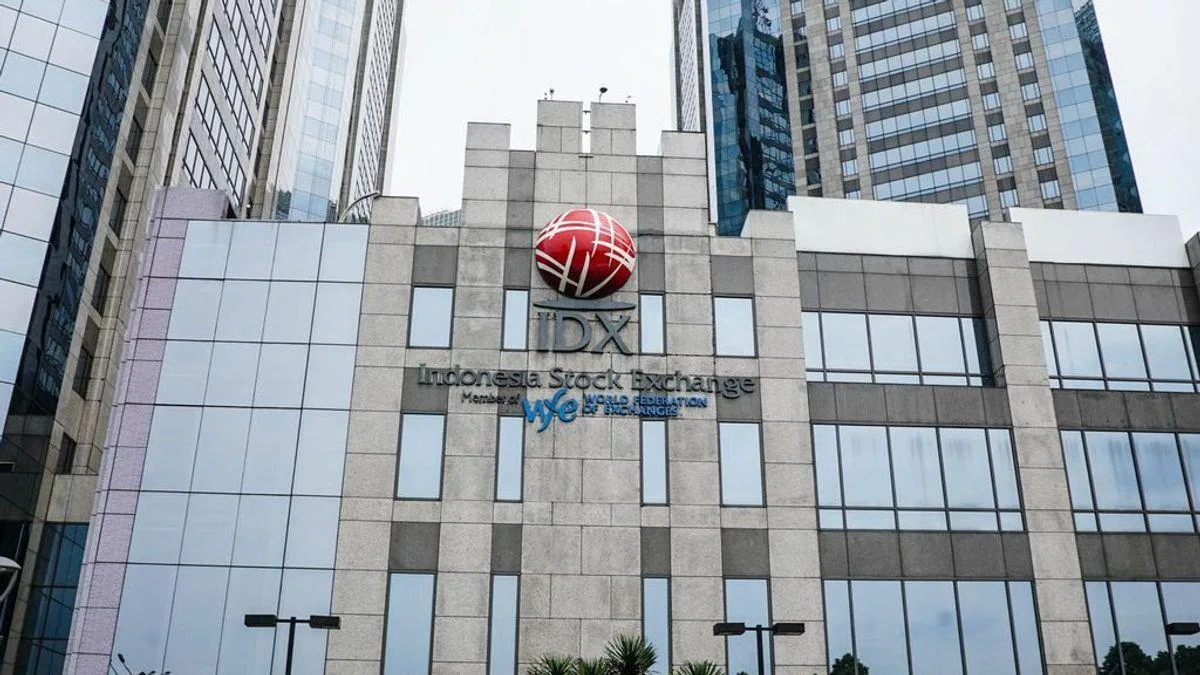
On October 26, the Indonesia Stock Exchange announced additional measures aimed at strengthening market surveillance, identifying suspicious trading activity and addressing excessive ownership concentration.
The sequence of events reveals a fundamental feature of modern financial globalization.
A country's ability to attract international capital no longer depends solely on economic growth, natural resources or industrial potential. It also depends on whether its financial institutions meet the transparency, liquidity and governance standards expected by global investors.
For Indonesia, Southeast Asia's largest economy, the implications extend far beyond its stock exchange.
The Quiet Power of Global Index Providers
MSCI is neither a central bank nor an international regulatory authority.
It cannot rewrite Indonesian legislation, impose government sanctions or legally compel Jakarta to implement financial reforms.
Its influence operates through a different mechanism: the construction of indices that shape investment decisions across the global asset-management industry.
Exchange-traded funds, index-tracking portfolios and institutional investors use these benchmarks to determine geographic allocations, measure investment performance and structure their exposure to financial markets.
When a country belongs to the emerging-market category, its listed companies can benefit from access to investment funds whose mandates explicitly include that asset class.
A change in classification can alter those investment channels.
If Indonesia were removed from the emerging-market universe, some funds could be required to reduce or eliminate their holdings, depending on the rules governing their portfolios.
Other investors could maintain their positions, particularly those operating active strategies or broader geographic mandates.
The result would not be a complete exclusion of Indonesia from international capital markets.
It would instead represent a potentially significant change in the mechanisms through which global savings reach Indonesian companies.
This distinction matters.
Index providers do not directly control international capital flows. However, their classifications can influence the investment behavior of institutions managing substantial financial resources.
That indirect influence gives private benchmark providers an increasingly important role in the global financial architecture.
A More Severe Threat Than Previously Expected
The October consultation represents another stage in a dispute that has developed throughout 2026.
Earlier in the year, MSCI had raised concerns about ownership transparency and the reliability of free-float calculations for certain Indonesian listed companies.
Free float refers to the proportion of a company's shares considered available for public trading, excluding strategic holdings and other shares that are not readily accessible to investors.
The distinction is particularly important for institutional investors.
A company may have a substantial market capitalization while only a limited proportion of its shares is genuinely available for trading.
Under such conditions, relatively small transactions can generate disproportionate price movements.
Concentrated ownership structures can also create opportunities for market practices that are difficult to identify when the ultimate beneficial owners of shares are insufficiently transparent.
MSCI identified several concerns, including limited visibility into ownership structures, possible coordinated trading and persistent questions about market accessibility.
In June 2026, Indonesia retained its emerging-market classification, although MSCI warned that insufficient progress could trigger a reassessment.
At that stage, a potential downgrade to frontier-market status was among the possible outcomes.
The October consultation introduced a more severe possibility.
MSCI indicated that a move to frontier-market status might not adequately reflect the concerns expressed by international investors.
It therefore proposed considering a direct reclassification to standalone-market status.
The difference is significant.
It suggests that the problem is no longer simply Indonesia's level of financial-market development.
It concerns the credibility of the market's operating framework and the effectiveness of mechanisms designed to protect investors.
Reforms Underway, but Confidence Remains Fragile
Indonesian authorities had already begun addressing these concerns before October.
The Financial Services Authority, known as Otoritas Jasa Keuangan or OJK, has been working with the Indonesia Stock Exchange and market infrastructure institutions to strengthen transparency and governance.
One of the central objectives is to progressively increase the minimum public free-float requirement for listed companies to 15%.
The measure is intended to increase the proportion of shares accessible to investors and reduce distortions associated with excessively concentrated ownership structures.
Authorities have also strengthened disclosure requirements for shareholders holding more than 1% of a company's equity.
Investor classifications have been expanded from nine categories to 39, allowing a more detailed assessment of ownership structures.
A framework for identifying companies with high shareholding concentration, known as HSC, has also been introduced.
These measures address several of the issues raised by MSCI.
But announcing reforms is not the same as demonstrating their effectiveness.
A disclosure requirement improves market transparency only when the information provided is sufficiently reliable.
A surveillance mechanism strengthens confidence only when it can identify irregular trading behavior and support effective enforcement.
International investors are therefore looking beyond regulatory commitments.
They want evidence that the reforms are producing lasting improvements in the way Indonesia's equity market operates.
October 26: Jakarta Strengthens Market Surveillance
The regulatory response intensified toward the end of October.
On October 26, the Indonesia Stock Exchange announced additional measures designed to address practices that could undermine market integrity.
The committee responsible for identifying companies with concentrated ownership is expected to include independent representatives, including academics and participants representing foreign investors.
The exchange also intends to strengthen investigations into suspected coordinated trading and introduce measures allowing accounts involved in suspicious activity to be frozen.
Beginning November 2, securities identified as having excessive ownership concentration are expected to face exclusion from Jakarta's main stock index under the announced framework.
These decisions address a structural problem: ensuring that market prices emerge from sufficiently open interaction between independent buyers and sellers.
The quality of a financial market cannot be measured solely by trading volumes or the number of listed companies.
It also depends on the diversity of market participants, the transparency of ownership structures and the ability of regulators to prevent practices that distort price formation.
For Jakarta, the challenge is now to demonstrate measurable results.
Financial Credibility Is Also Measured Through Enforcement
Indonesia's response extends beyond regulatory announcements.
According to OJK, authorities announced administrative sanctions totaling approximately 2.1 trillion Indonesian rupiah on October 16 in cases involving securities associated with DSSA, BREN and CUAN.
The regulator stated that the relevant investigations had begun before MSCI's latest announcement.
Across 2026, OJK reported sanctions involving more than 971 parties, with total fines amounting to approximately 2.5 trillion rupiah.
The authority also reported completing 41 investigations while continuing to process another 122 cases.
These figures demonstrate the scale of the enforcement activity reported by Indonesian regulators.
They do not, by themselves, establish that market integrity has permanently improved.
Regulatory effectiveness also depends on the quality of investigations, the enforcement of penalties, proportionality and the ability to prevent future violations.
Investors will therefore assess not only the volume of regulatory action but also its practical consequences.
OJK has indicated that it held 16 meetings or exchanges with MSCI between February and October 2026.
The intensity of this dialogue illustrates the strategic importance of the dispute.
Indonesia is not negotiating a conventional trade agreement.
It is attempting to convince a private international institution that its domestic financial market satisfies the conditions required to remain within major global investment benchmarks.
The Risk of International Capital Outflows
The central financial concern is the possibility of capital leaving Indonesian equities following a downgrade.
Emerging markets represent an important investment category for global asset managers.
Companies included in emerging-market benchmarks benefit from visibility among index-tracking funds and institutional investors specializing in those economies.
By the end of September 2026, Indonesia's weighting in the MSCI Emerging Markets Index had fallen to approximately 0.43%, compared with 1.16% at the beginning of the year, according to figures reported by Reuters.
The number of companies represented in the MSCI Indonesia Index had also declined from 18 at the beginning of the year to nine in October.
These developments illustrate the deterioration of Indonesia's representation within major international equity benchmarks.
A reclassification could intensify that trend.
Funds tracking the affected indices would need to adjust their portfolios to reflect changes in benchmark composition.
Active investors might also reassess regulatory risk, market liquidity and the practical conditions for entering or exiting positions.
However, the scale of any capital outflows would depend on several variables, including MSCI's final decision, the implementation timetable, index weightings and individual investment mandates.
It would therefore be premature to present a specific amount of capital flight as an inevitable outcome.
The risk is substantial, but a credible assessment must distinguish between mechanical adjustments by index-tracking funds and discretionary decisions by other investors.
Can a Major Economy Depend on a Private Classification?
Indonesia's situation exposes a paradox of financial globalization.
The country has a population exceeding 280 million, substantial natural resources and an expanding industrial base.
It occupies an important position in several international supply chains, particularly those involving nickel, batteries and raw materials required for electrification.
Its demographic and economic weight gives it considerable regional importance.
Yet these advantages do not automatically guarantee the attractiveness of its equity market.
International investors distinguish between a country's economic prospects and the quality of its financial institutions.
An economy can offer significant industrial opportunities while presenting substantial risks related to liquidity, corporate governance or minority-shareholder protection.
This distinction helps explain why multinational corporations may continue investing directly in a country even as portfolio managers reduce their exposure to its listed equities.
Foreign direct investment and portfolio investment operate according to different economic considerations.
Direct investment is often driven by long-term industrial strategies, infrastructure development, production facilities and commercial opportunities.
Portfolio investment is more sensitive to valuations, liquidity, market rules and the ability to reallocate capital efficiently.
MSCI's proposed reclassification primarily concerns the second category.
Its consequences, however, could eventually extend beyond the stock market.
Reduced access to international portfolio investors can weaken share liquidity, place pressure on valuations and complicate equity fundraising.
For some companies, these developments could increase the cost of equity capital and make expansion projects more difficult to finance.
The broader economic impact would nevertheless remain indirect and would depend on the magnitude and duration of the financial disruption.
Financial Sovereignty Meets Global Standards
The Indonesian government's response adds a political dimension to the dispute.
President Prabowo Subianto has challenged the pressure associated with MSCI's assessment, defending Indonesia's ability to determine its own economic trajectory.
The disagreement reflects a growing tension between two principles.
On one side, sovereign governments claim the authority to organize their financial markets according to national priorities.
On the other, international investors expect common standards of transparency, governance and legal protection before committing capital.
These objectives are not necessarily incompatible.
A government can strengthen market transparency while retaining control over its institutions and economic policies.
But Indonesia's experience demonstrates that regulatory sovereignty does not guarantee financial independence.
Jakarta remains free to establish its own rules.
MSCI remains free to determine the conditions under which Indonesian securities qualify for inclusion in its indices.
Investors remain free, within the constraints of their mandates, to determine their capital allocations.
The interaction between these different forms of autonomy creates a powerful economic constraint.
A country can refuse to align its financial regulations with international expectations, but it must then accept the possibility of reduced integration into global investment markets.
Alternatively, it can adapt its regulatory framework to international standards, potentially requiring substantial changes to domestic market structures.
The issue is therefore not simply a confrontation between sovereignty and globalization.
It concerns a government's ability to establish rules that simultaneously protect market integrity, support domestic companies and preserve access to international financing.
A New Hierarchy of Financial Power
Indonesia's case also illustrates a broader transformation in economic power.
Within the contemporary financial system, institutions that define eligibility criteria for international investment portfolios exercise considerable influence.
Their authority does not depend on owning companies or directly controlling productive resources.
It derives from establishing classifications, methodologies and standards that guide investment decisions.
Index providers are not the only participants in this architecture.
Credit-rating agencies, clearing institutions, central securities depositories, prudential regulators and major market infrastructure operators also influence the conditions under which capital moves internationally.
MSCI occupies a particularly important position because its geographic classifications help structure the investment universe of global asset managers.
A change in market status can therefore affect a country's international financial visibility without any government imposing sanctions.
This reality adds another dimension to the development strategies of emerging economies.
Building infrastructure, expanding industrial capacity and attracting productive investment are no longer sufficient on their own.
Countries must also maintain credible financial markets, reliable information systems and institutions capable of protecting the integrity of transactions.
The quality of financial governance has become a component of national competitiveness.
The Decisive Calendar of 2027
MSCI's consultation still gives Indonesian authorities an opportunity to demonstrate progress.
The consultation is scheduled to remain open until April 30, 2027.
MSCI expects to announce its final decision no later than June 30, 2027.
Several developments will be decisive before that deadline.
The progressive implementation of the 15% minimum free-float requirement will need to produce verifiable improvements.
New disclosure obligations will need to provide greater transparency regarding significant shareholders and ownership structures.
Market surveillance mechanisms will need to demonstrate their ability to identify irregular trading practices.
Above all, international investors will need to observe sufficiently durable improvements in trading conditions.
MSCI has already maintained certain restrictions on changes involving Indonesian securities within its indices.
The issue is therefore not exclusively a future threat.
Some limitations are already affecting Indonesia's position within the international benchmark system.
The 2027 decision will determine whether these problems can be resolved within the existing classification or whether the country faces a more fundamental change in its international market status.
Beyond Jakarta: A Lesson for Emerging Economies
Indonesia illustrates a contradiction confronting many developing economies.
These countries are seeking greater strategic autonomy, stronger industrial capabilities and more effective use of their domestic resources.
Yet their ability to finance this transformation often depends partly on international capital operating according to standards they do not determine independently.
Financial globalization does not eliminate national sovereignty.
It changes the conditions under which sovereignty can be exercised.
Governments retain regulatory authority, but the economic consequences of their decisions depend on an international environment shaped by public institutions, private companies and global investors.
Within this architecture, financial transparency becomes more than a technical requirement.
It becomes a condition of access to capital.
Liquidity becomes more than a characteristic of stock-market trading.
It influences the ability of companies to finance growth.
Regulatory credibility becomes more than a matter of compliance.
It contributes directly to economic power.
For Indonesia, the immediate challenge is to transform a crisis of confidence into structural reform.
That reform must be sufficiently credible to reassure international investors while remaining coherent enough to strengthen the domestic financial system over the long term.
The question raised by this dispute ultimately extends beyond MSCI's decision in June 2027.
In a global economy where capital moves according to rules shaped by multiple institutions, financial sovereignty can no longer be measured solely by a country's freedom to establish its own regulations. It must also be measured by its ability to build institutions credible enough for investors to commit capital over the long term.
Main Sources
- MSCI — October 15, 2026. MSCI Launches a Consultation on a Proposal to Reclassify Indonesia from Emerging Market to Standalone Market Status. Official announcement outlining the proposed reclassification and consultation timetable.
- Indonesia Financial Services Authority (OJK) — October 16, 2026. OJK Reaffirms Commitment to Advancing Indonesia's Capital Market Reform. Regulatory reform commitments and market-integrity measures.
- OJK — October 21, 2026. OJK Reaffirms its Commitment to Capital Market Reforms and Strengthening Global Investor Confidence. Details concerning enforcement activity, ownership transparency and engagement with MSCI.
- Reuters — October 26, 2026. Indonesia strengthens measures against stock manipulation after market rout triggered by MSCI. Reporting on additional market-surveillance measures and the response of Indonesian authorities.
- MSCI — June 23, 2026. MSCI Announces the Results of the MSCI 2026 Market Classification Review. Earlier assessment of Indonesia's market accessibility and regulatory challenges.
Atlas Limits Research Desk
Atlas Limits’ editorial and analytical desk.