Ukraine, Russia, Turkey, the Caucasus and Eastern Europe: beyond military confrontation, the Black Sea has become the center of a competition over energy, agricultural, industrial and digital flows. Its strategic importance lies not only in the territories surrounding it, but also in the economic systems it connects and the dependencies it creates.
The Black Sea possesses a geographical characteristic that explains much of its strategic importance: it is almost enclosed, yet connects several major continental regions. To the north, the Ukrainian and Russian plains extend into Eurasia’s great agricultural and industrial basins. To the east, the Caucasus forms a gateway to the Caspian Sea and Central Asia. To the west, Romanian and Bulgarian ports provide connections to the European market. To the south, the Turkish Straits open onto the Mediterranean and, beyond it, the world’s maritime trade routes.
This configuration makes the Black Sea far more than a regional maritime space. It is a system of circulation in which natural resources, inland infrastructure, ports, electricity networks, pipelines and commercial routes converge. A disruption affecting one component can generate consequences thousands of kilometers away.
Since Russia’s full-scale invasion of Ukraine in February 2022, this economic geography has undergone profound changes. Ports have become military targets, grain corridors instruments of food security, energy infrastructure strategic assets, and the Turkish Straits critical passages whose legal regime has acquired renewed importance.
Yet reducing the Black Sea to the Russia–Ukraine war would overlook a deeper transformation. The region is now shaped by several simultaneous developments: Europe’s search for new energy connections, Turkey’s ambition to organize trade between continents, the expansion of trans-Caucasian corridors, the restructuring of Ukrainian exports and Russia’s determination to preserve access to international markets.
The central question is therefore not simply who controls the Black Sea militarily. It is who will be able to guarantee circulation, finance infrastructure, organize dependencies and determine the conditions of access to markets.
An Enclosed Sea at the Heart of Continental Trade
The Black Sea covers approximately 436,000 square kilometers. Six countries have coastlines along its shores: Turkey, Bulgaria, Romania, Ukraine, Russia and Georgia. Its maritime outlet to the wider world runs through the Bosphorus, the Sea of Marmara and the Dardanelles, all under Turkish sovereignty.
This geography concentrates traffic through a limited number of passages. Unlike the Atlantic or the Mediterranean, the Black Sea offers little possibility of freely multiplying maritime routes. Major ports, straits, railway connections and inland waterways consequently play a disproportionate role in the functioning of the entire regional economy.
The 1936 Montreux Convention forms one of the foundations of this arrangement. It regulates the passage of merchant and military vessels through the Turkish Straits, establishing specific restrictions on warships, particularly those belonging to non-Black Sea powers. In wartime, its applicable provisions give Ankara a decisive role in managing naval movements.
Turkey therefore possesses influence that does not depend exclusively on the size of its fleet or its economic power. It derives from a geographical position institutionalized through international law.
At the opposite end of the basin, the Black Sea connects to an extensive network of rivers and inland waterways. The Danube links Central Europe to the western Black Sea coast, while Ukrainian and Russian river systems structure trade between inland production regions and maritime terminals.
This creates a fundamental interdependence: controlling a port has economic value only if the routes supplying it remain operational. A maritime facility may retain its loading capacity while losing much of its usefulness if the railways, grain silos, insurance arrangements or electricity networks supporting it are disrupted.
Geoeconomic power in the Black Sea is therefore measured less by possession of a coastline than by control over complete logistics chains.
Ukraine: Turning Maritime Access into Economic Resilience
The war has demonstrated the extent to which Ukraine’s economy depends on its maritime outlets. Before February 2022, ports on the Black Sea and the Sea of Azov were the principal gateways for Ukrainian exports of grain, vegetable oils, minerals and steel products.
The disruption of these routes immediately created a problem extending far beyond Ukraine’s borders. Wheat importers in the Middle East, North Africa and other regions faced increased uncertainty over supply availability, transportation costs and delivery schedules.
The Black Sea Grain Initiative, negotiated in 2022 under the auspices of the United Nations and Turkey, temporarily restored part of Ukraine’s exports. Its termination in July 2023, following Russia’s withdrawal, prompted Kyiv to develop an alternative maritime corridor relying particularly on navigation through the western part of the basin.
This adaptation represents one of the major economic transformations produced by the conflict. Ukraine demonstrated that substantial commercial exchanges could continue without conventional military control over the entire sea.
In March 2026, the Ukrainian government reported that its maritime corridor had handled nearly 179 million tonnes of cargo since September 2023, including 107 million tonnes of grain, with more than 7,000 vessels processed. These figures originate from Ukrainian authorities, but they illustrate the scale of the system.
The corridor does not, however, operate under ordinary commercial conditions. Attacks against port infrastructure, mine-related risks, air-defense requirements and insurance costs continue to affect its functioning.
Vulnerability is particularly evident around Odesa, Chornomorsk and Pivdennyi, whose facilities account for a substantial share of Ukrainian export capacity. Nearby, the Danube ports of Izmail and Reni provide complementary outlets, although they face constraints involving capacity, navigation and transshipment.
The European Union has supported this diversification through its Solidarity Lanes, mobilizing railway, road, river and port networks in neighboring countries. According to European data published in April 2026, approximately 237 million tonnes of grain, oilseeds and related products had been exported since May 2022 through land and river corridors and Ukrainian Black Sea ports, with the latter accounting for approximately 60% of the total.
This distribution illustrates a structural reality: alternative routes strengthen Ukrainian resilience but cannot entirely replace the economic advantages of large-scale maritime transportation.
Ukraine’s export capacity now depends on a combination of military operations, civilian infrastructure, European cooperation, maritime insurance and regional diplomacy. Freedom of navigation has become a direct component of economic sovereignty.
Russia: A Continental Power Dependent on Maritime Outlets
For Russia, the Black Sea provides an essential opening toward Mediterranean, African and Asian markets. It enables exports of grain, hydrocarbons and industrial products while connecting Russia’s southern regions to international trade networks.
Novorossiysk occupies a central position in this system. The port serves as a major outlet for Russian grain, petroleum products and oil transported through the country’s southern infrastructure. The nearby Caspian Pipeline Consortium terminal also plays an important role in delivering Kazakh crude oil to international markets.
This latter function reveals an often-overlooked interdependence. Russian Black Sea infrastructure does not exclusively serve the Russian economy. It also provides export routes for resources originating in other countries, particularly Kazakhstan.
Disruptions to these facilities can therefore affect companies, investors and governments that are not directly involved in the Russia–Ukraine conflict.
Russia also remains a major agricultural exporter. Its competitiveness in international wheat markets depends partly on its ability to transport substantial volumes to southern terminals and onward to Mediterranean and overseas customers.
This dependence has become more visible as Ukrainian attacks against certain Russian port and energy facilities have intensified.
According to Reuters reporting in August 2026, approximately 90% of Russian grain exports, representing 46.3 million tonnes during the relevant marketing year, had passed through Black Sea ports. Disruptions encouraged efforts to develop Baltic alternatives, although their capacities remain more limited.
Russia consequently faces a contradiction. Moscow seeks to maintain decisive military influence over the basin, yet its economy also requires the Black Sea to remain sufficiently accessible and predictable for exports to continue.
Maritime security is therefore not external to Russian economic power. It is one of its underlying conditions.
Crimea occupies a particular place in this equation. Russia’s control of the peninsula following its internationally unrecognized annexation in 2014 altered the regional military balance. Sevastopol has historically been a major base for Russia’s Black Sea Fleet, but Ukrainian attacks have demonstrated the vulnerability of large naval facilities to missiles, aerial drones and unmanned surface vessels.
This development challenges the assumption that possessing a naval base or peninsula is sufficient to guarantee maritime dominance. Military control has become more mobile, technologically intensive and dependent on the ability to monitor approaches and protect infrastructure.
Turkey: The Power of the Straits and the Economics of Intermediation
Turkey occupies a distinctive position: it is simultaneously a NATO member, an economic partner of Russia, a supporter of Ukraine’s territorial integrity and the guardian of the straits connecting the Black Sea to the Mediterranean.
This combination of relationships gives Ankara an intermediary role that other coastal states do not possess.
Turkey is not simply seeking to exercise military influence over the basin. It aims to preserve a regional system in which its geography, infrastructure and diplomatic relationships provide it with a central function.
The straits are the first instrument of this position. Their importance lies not only in the number of vessels passing through them, but in the absence of an equivalent alternative maritime route directly connecting the Black Sea to the world’s oceans.
Turkey also possesses substantial industrial and port infrastructure along its maritime and continental frontiers. The ports of the Marmara region, facilities along the Black Sea coast and inland connections across Anatolia form a network linking Europe, the Caucasus, the Middle East and the Mediterranean.
Its energy role reinforces this centrality. The Blue Stream and TurkStream gas pipelines connect Russia to Turkey beneath the Black Sea, while Turkish gas infrastructure is linked to other supply sources, including Azerbaijan.
This configuration gives Ankara an important place in discussions about European energy diversification without eliminating its own interdependencies with Moscow.
Turkish diplomacy has also played a direct role in negotiations over Ukrainian grain exports. In October 2026, Turkish Foreign Minister Hakan Fidan again expressed concern over intensifying maritime attacks and the risks facing commercial vessels.
Turkey’s approach therefore rests on a delicate balance: preserving economic access to the basin, preventing uncontrolled naval escalation and maintaining operational relations with several antagonistic actors.
This position also has limitations. Ankara cannot independently guarantee the security of every commercial route, and its intermediary role depends on the willingness of the belligerents to negotiate. Geography provides lasting influence, but not unlimited capacity to determine the behavior of other powers.
Romania: The Emerging Western Hub of the Black Sea
On the western side of the basin, Romania is undergoing a strategic transformation driven by three factors: its membership in the European Union and NATO, its port infrastructure and its offshore energy potential.
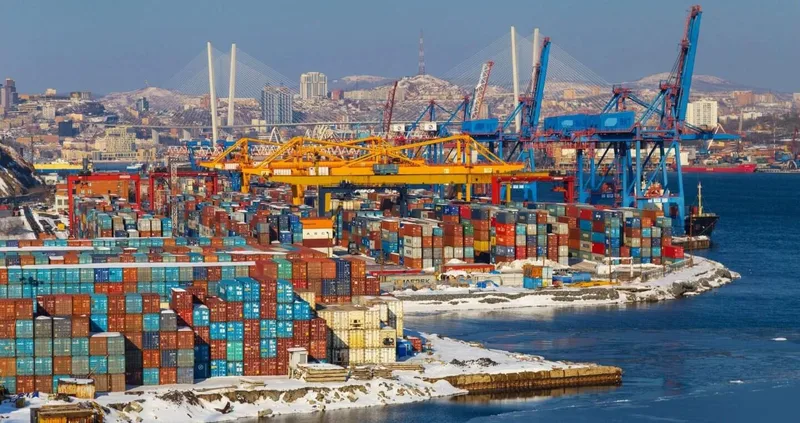
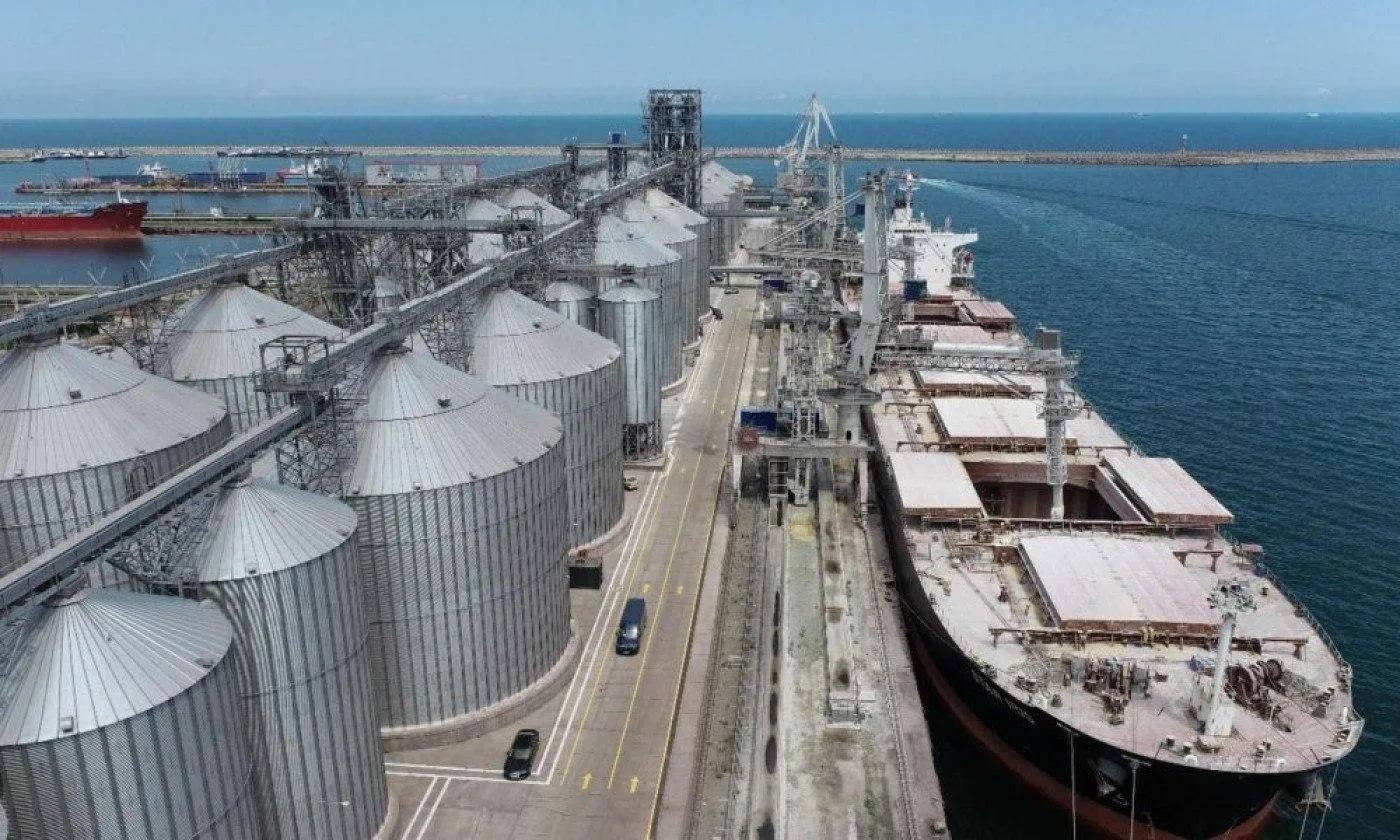
The port of Constanța is one of the principal connections between the Black Sea, the Danube and European transportation networks. Its facilities handle grain, hydrocarbons, containers and various industrial commodities.
The war in Ukraine has strengthened its logistics role. Part of Ukraine’s exports has been redirected toward Romanian and Danube networks, highlighting the importance of transshipment capacity, dredging, railway infrastructure and road connections.
Yet the implications extend beyond the handling of Ukrainian cargo.
Romania could become a point of convergence between several systems: the European single market, Eastern European agricultural exports, offshore energy resources and future transportation corridors toward the Caucasus.
The Neptun Deep gas project illustrates this development. Developed by OMV Petrom and Romgaz, it involves estimated resources of approximately 100 billion cubic meters, with projected plateau production of around 8 billion cubic meters annually and first deliveries expected in 2027, according to official Romanian documentation.
At this scale, the project will not independently transform Europe’s gas balance. It could nevertheless strengthen supply security in Romania and neighboring markets, particularly in Central and Southeastern Europe.
Neptun Deep’s strategic value therefore lies not only in the volume of gas extracted. It also reflects its location, its potential to reduce certain dependencies and its integration into regional energy networks.
Romania is simultaneously acquiring greater military importance. Protecting offshore infrastructure, port approaches and commercial routes is becoming inseparable from air and maritime surveillance along NATO’s eastern flank.
This overlap between commercial, energy and military functions is characteristic of the Black Sea’s transformation.
Georgia: A Small Coastline Serving a Continental Corridor
Georgia possesses a relatively limited coastline, but its geographical position gives it an importance extending far beyond the size of its economy.
Situated between the Black Sea and the Caucasus, it constitutes one of the principal gateways connecting European markets to Azerbaijan, the Caspian Sea and, beyond them, Central Asia.
The ports of Poti and Batumi contribute to this function. They form part of a broader network of railway, road and energy connections crossing the South Caucasus.
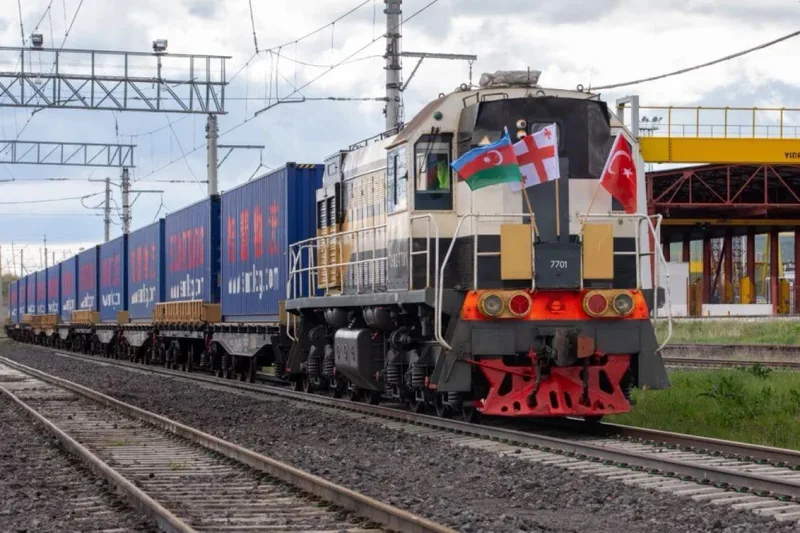
The development of the Trans-Caspian International Transport Route, commonly known as the Middle Corridor, reinforces the value of this geography. The route connects China and Central Asia to Europe through the Caspian Sea, Azerbaijan and Georgia, before continuing across the Black Sea or through Turkey.
Its strategic importance lies in route diversification. It provides additional options for operators seeking to reduce their dependence on corridors running exclusively through Russian territory.
However, this alternative faces significant constraints. Cargo must cross several borders, sometimes change transportation modes and rely on port and railway capacities distributed across multiple jurisdictions.
The corridor cannot become fully competitive through political determination alone. It requires coordinated investment, more efficient customs procedures, reliable services and sufficient capacity throughout the logistics chain.
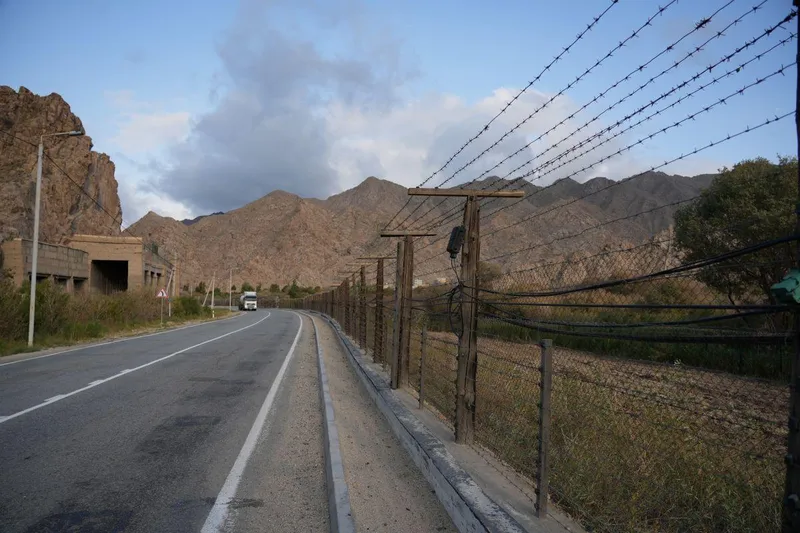
Georgia also faces a particular territorial vulnerability. The separatist regions of Abkhazia and South Ossetia, supported by Russia, continue to affect its security and relations with Moscow. Abkhazia itself possesses a coastline on the Black Sea.
The development of Georgian connectivity therefore takes place in an environment where economic interests and territorial disputes remain closely connected.
For Tbilisi, the Black Sea is simultaneously an opening toward Europe, an instrument of economic development and an area of geopolitical exposure.
Energy, Electricity and Cables: The Black Sea’s Second Geography
Subsea infrastructure represents a less visible but increasingly important dimension of the regional economy.
Gas pipelines, future electricity interconnectors, telecommunications cables and offshore installations are gradually transforming the seabed into an area of strategic investment.
Blue Stream and TurkStream have already demonstrated that the Black Sea can be used to establish direct energy relationships between Russia and Turkey, bypassing certain traditional transit territories.
Other projects follow a different logic: connecting resources from the Caucasus and the Caspian region to European markets without relying on Russian networks.
The proposed electricity interconnection between Georgia and Romania reflects this approach. Supported under the European Union’s Global Gateway initiative, it envisages a subsea connection capable of transporting electricity from the South Caucasus to the European Union.
A joint company bringing together electricity transmission system operators from Georgia, Azerbaijan, Romania and Hungary has been established to develop the corridor. The project remains subject to technical studies, investment decisions and financing arrangements. It is not yet an operational infrastructure.
Its strategic significance is substantial. Such a connection could diversify electricity supplies available in Europe while creating new outlets for renewable energy capacity in the Caucasus and potentially the Caspian region.
It could also contribute to the emergence of a more integrated energy space between Eastern Europe and the South Caucasus.
Yet the multiplication of subsea connections creates new vulnerabilities.
An electricity or telecommunications cable can be disrupted by a maritime accident, a natural event or hostile activity. Repairs require specialized equipment, potentially lengthy operations and secure access to the affected area.
Infrastructure protection therefore no longer concerns only ports and oil terminals. It must extend to the physical networks that enable economies to function.
The European Commission incorporated this dimension into its Black Sea strategy presented in May 2025. Its proposals include a regional maritime security mechanism combining surveillance, information exchange, offshore infrastructure protection and monitoring of subsea installations.
The issue extends beyond protecting individual assets. It concerns investor confidence in the possibility of building and operating infrastructure over the long term in a basin exposed to military tensions.
The Black Sea is consequently becoming an area where data security, electricity security and commercial security belong to the same geoeconomic system.
Militarization: From Naval Control to Protecting Economic Flows
The military transformation of the Black Sea cannot be understood independently of these economic interdependencies.
For decades, the naval balance was primarily assessed through fleets, bases, air capabilities and coastal missile systems.
The war in Ukraine has profoundly altered this perspective.
Unmanned surface vessels, aerial drones, precision missiles and distributed surveillance systems have demonstrated that expensive ships and infrastructure can be threatened by significantly less costly technologies.
The consequences extend beyond the destruction of military equipment. They also affect how civilian operators evaluate risk.
A commercial vessel does not need to be directly attacked for its activities to suffer. Higher insurance premiums, a temporary port closure or uncertainty over the security of a route can be sufficient to alter shipping decisions.
Events in October 2026 illustrate the expansion of these risks. On October 13, two commercial vessels were reportedly struck by drone attacks off Bulgaria, one of which sank. Ukrainian and European authorities attributed responsibility to Russia, while Moscow denied involvement. Responsibility remained disputed in the initial reporting.
These incidents illustrate why the security of commercial routes can no longer be treated as an issue confined strictly to immediate combat zones.
Turkey, Romania and Bulgaria had already established a joint naval mine-countermeasures group in 2024 to improve navigation security. In July 2026, the three countries agreed to expand cooperation to the protection of critical infrastructure, including energy and subsea installations.
This development is revealing. Military capabilities are increasingly being deployed to protect the material conditions of economic activity.
Securing a gas terminal, offshore platform or navigation corridor is becoming a strategic mission comparable to monitoring a national border.
For NATO, the basin presents an additional difficulty. Three coastal states belong to the Alliance, but the Montreux Convention regulates the passage of warships belonging to non-Black Sea powers. The regional posture therefore depends heavily on the capabilities of Turkey, Romania and Bulgaria, alongside available air, space and land-based assets.
Militarization does not necessarily produce complete maritime control by a single power. It can also create a prolonged situation of contestation in which several actors possess the ability to disrupt activity without being able to guarantee freedom of navigation independently.
It is precisely this uncertainty that weighs on the regional economy.
The European Union: Connecting the Danube, the Caucasus and Central Asia
The European Union’s Black Sea strategy marks a change in how Brussels approaches the region.
Long considered primarily through neighborhood policies, enlargement and energy security, the basin is now presented as a connectivity space linking the European Union, the South Caucasus and Central Asia.
The European Commission estimates that Black Sea coastal states excluding Russia collectively represent nearly 174 million inhabitants and approximately €2 trillion in gross domestic product, based on the data used in its May 2025 communication. It also places EU trade with the region at approximately €310 billion.
These figures demonstrate that the Black Sea is not a marginal economic periphery.
The Union seeks to strengthen several complementary networks: trans-European transport corridors, Danube connections, energy infrastructure and digital links.
The objective is twofold. Brussels aims to strengthen the resilience of Ukraine’s neighboring states while creating additional routes toward resources and markets beyond the Caspian Sea.
This strategy nevertheless faces several obstacles.
The first is financial. Railway, port and subsea projects require substantial investment, with profitability dependent on future trade volumes that may remain uncertain.
The second is institutional. A corridor crossing several countries cannot operate efficiently without harmonized procedures, customs coordination and contractual reliability.
The third is security-related. Infrastructure cannot attract private capital sustainably if its operation remains exposed to frequent interruptions.
Finally, European strategy depends on the political decisions of partners pursuing their own interests. Turkey, Georgia, Azerbaijan and Central Asian countries do not necessarily approach their relationships with Russia, China or the European Union in the same way.
The geoeconomic integration of the Black Sea therefore cannot result from a simple extension of European networks. It will require arrangements between actors whose priorities sometimes diverge.
The Internal Frontier: A Space That Connects as Much as It Divides
The concept of Eurasia’s internal frontier captures the central paradox of the Black Sea.
A frontier traditionally separates two political or economic spaces. The Black Sea, by contrast, simultaneously performs functions of separation and connection.
It separates competing security systems, territories at war and different frameworks of international relations. Yet it also connects economies dependent on its ports, straits and energy networks.
This dual function explains why military rivalries do not eliminate economic interdependence.
Russia needs commercial outlets. Ukraine needs export routes. Turkey benefits from maritime circulation. Romania seeks to expand its port and energy functions. Georgia aims to capitalize on its transit position. The European Union wants to diversify its connections with the Caucasus and Central Asia.
These interests are not identical, but they all depend, to varying degrees, on the existence of a usable maritime space.
The region therefore cannot be analyzed exclusively through confrontation between military powers.
It is also structured by competition between different models of connectivity: networks inherited from the Soviet era, Russian–Turkish energy infrastructure, European corridors, Trans-Caspian routes and the logistics systems developed by Ukraine since 2022.
Each of these networks creates particular dependencies. Each also offers opportunities for diversification.
Competition consequently concerns the ability to make certain routes safer, cheaper and more predictable than their alternatives.
Three Possible Trajectories for the Next Decade
One possible trajectory is prolonged fragmentation. The war or its consequences would continue imposing high costs on navigation. Trade would persist but become distributed across a larger number of routes, some less efficient than others. Investment would concentrate in areas perceived as safer, particularly around European and Turkish infrastructure.
A second trajectory involves partial stabilization. Without resolving every territorial and political dispute, arrangements could gradually secure certain commercial corridors. Agricultural exports, energy infrastructure and connectivity projects would benefit from greater predictability. Such an evolution would not necessarily end strategic rivalry, but it could allow a more organized coexistence between political confrontation and economic circulation.
A third trajectory would see the region move toward selective integration. European, Turkish and Trans-Caucasian networks would develop alongside Russian infrastructure without forming a completely unified economic space. Governments and businesses would seek to multiply connections to prevent any single route, supplier or jurisdiction from being able to interrupt their activities.
These trajectories are not mutually exclusive. Military fragmentation could coexist with new energy interconnections, while certain commercial corridors might expand even in the absence of a comprehensive political settlement.
Developments will depend particularly on the security of Ukrainian ports, the situation in Crimea, the stability of the straits, the realization of Romanian offshore projects and the Caucasus’s ability to become a more competitive transit region.
Another factor will be decisive: the cost of risk. As long as insurers, shipping companies, banks and investors incorporate substantial uncertainty into their decisions, the region will remain economically fragmented, even where physical infrastructure theoretically permits circulation.
Conclusion: Power Is Measured by the Ability to Keep Trade Moving
On maps, the Black Sea often appears as a boundary between Europe and Asia, NATO and Russia, Ukrainian territories and Russian military positions.
This representation is incomplete.
The basin is, in reality, one of Eurasia’s internal connecting structures. It links the agricultural plains of Eastern Europe to global markets, Caspian resources to European consumers, Caucasian industrial networks to Mediterranean ports, and energy infrastructure to emerging connectivity requirements.
The war has made these interdependencies more visible by demonstrating what happens when they are interrupted.
It has also accelerated their transformation. Ukraine has developed new maritime capabilities. Russia is seeking to protect and diversify its export outlets. Turkey is consolidating its intermediary function. Romania is strengthening its position within European networks. Georgia is seeking to become a continental gateway. The European Union is investing in a regional vision combining security, transportation, energy and data.
None of these developments eliminates strategic rivalry. Instead, they demonstrate that regional power can no longer be reduced to military control of the sea.
The central competition concerns the ability to maintain economic flows in an environment where multiple actors now possess the means to interrupt them.
The Black Sea is not merely a frontier to defend. It is a continental infrastructure system to organize, finance and secure. Its future will depend as much on decisions made in ports, energy companies and financial institutions as on military balances of power.
That is what makes it one of the most important internal frontiers of contemporary Eurasia.
Main Sources
- European Commission — Strategic Approach of the European Union to the Black Sea Region, May 2025: https://eur-lex.europa.eu/legal-content/EN/TXT/?uri=CELEX%3A52025JC0135
- European Commission — Solidarity Lanes, March 2026 figures: https://transport.ec.europa.eu/news-events/news/solidarity-lanes-latest-figures-march-2026-2026-04-24_en
- Government of Ukraine — Port activity and maritime corridor, March 2026: https://www.kmu.gov.ua/en/news/minrozvytku-ukrainski-porty-z-pochatku-roku-obrobyly-ponad-15-mln-tonn-vantazhiv
- Government of Romania — Energy planning and Neptun Deep project: https://legislatie.just.ro/Public/FormaPrintabila/00000G34M0Z8U17H0HB2P6ORF5ZYAL1I
- European Commission — Black Sea Submarine Electricity Cable: https://international-partnerships.ec.europa.eu/policies/global-gateway/black-sea-connectivity-submarine-electricity-cable_en
- Turkish Ministry of National Defence — Trilateral Black Sea mine-countermeasures cooperation: https://www.msb.gov.tr/SlaytHaber/b7810cfbf7ea40edb0423cd8cc0b1597
- Reuters — Reporting from August and October 2026 on Russian grain exports, maritime security and attacks affecting commercial shipping.
Atlas Limits Research Desk
Atlas Limits’ editorial and analytical desk.