Morocco–Spain: What Each Can Gain, What Neither Will Concede
In Ceuta, Felipe VI reaffirmed the territorial boundaries of Spain’s partnership with Rabat. Mohammed VI had earlier challenged the terms of their migration cooperation. Behind this exchange lies a much broader negotiation over border security, the future of Western Sahara, access to European markets, industrial competition and the regional balance of power. Shared interests make a rupture costly, but they no longer suffice to guarantee trust.
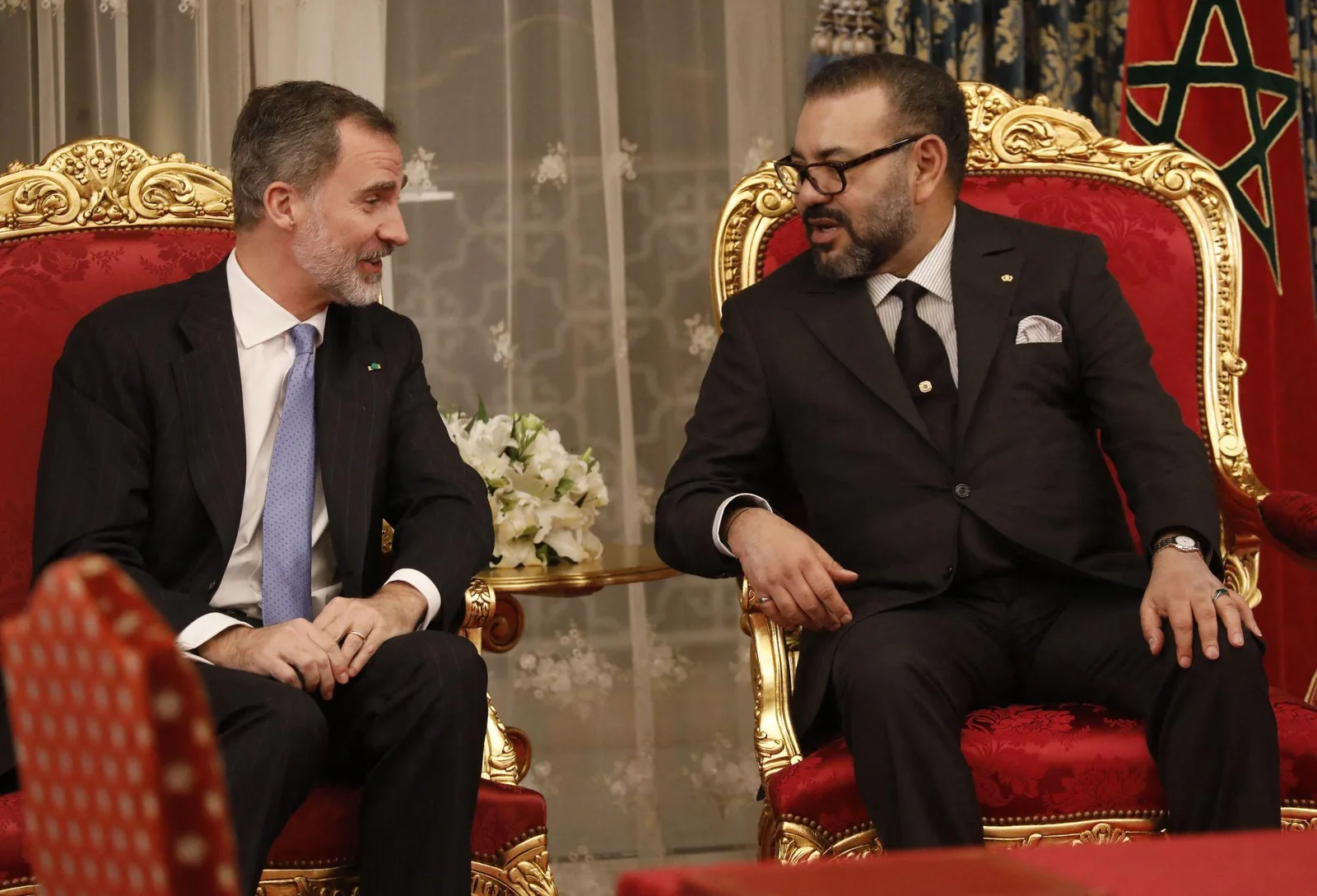
On October 13, 2026, at Ceuta’s Parador hotel, Felipe VI delivered a solemn statement of Spain’s position: Ceuta and Melilla belong to Spain, their sovereignty is not negotiable, and their borders concern the European Union as a whole. In the same address, he advocated maintaining good relations with Morocco, provided they rested on trust, mutual respect and good faith. The combination matters: Madrid wants cooperation to continue while defining the boundaries within which it must operate.
Four days earlier, addressing Morocco’s parliament, Mohammed VI had offered a different assessment. The existing model of migration cooperation had, he argued, reached its limits. He singled out Spanish legal provisions and judicial decisions that he considers incompatible with effective returns. He also announced a new approach linking shared development, competitiveness and regional stability. These criticisms express Rabat’s position; they do not, in themselves, establish that Spanish law is inadequate.
The two interventions bring the disagreement into sharper focus. Spain is demanding predictability at its border. Morocco wants its cooperation recognised as a sovereign choice, with costs, conditions and reciprocal benefits. Each wants to preserve the advantages of the partnership without allowing the other to dictate its terms.
The central assessment of this article is that cooperation will become more difficult and increasingly negotiated issue by issue, but will endure. The forecasts below primarily cover the next twelve to twenty-four months, with a longer horizon for territorial questions. They describe plausible trajectories based on information available on October 13, 2026, rather than decisions already taken.
The rapprochement of 2022 made this coexistence possible without resolving all its contradictions. Spain described Morocco’s autonomy initiative for Western Sahara as the most serious, realistic and credible basis for resolving the dispute. The two governments simultaneously began normalising their relations and cross-border exchanges. That arrangement offered the prospect of stability, but did not amount to a comprehensive settlement of territorial disputes.
Here lies a lasting source of misunderstanding. From Spain’s perspective, such a sensitive change on Western Sahara should have produced a more reliable relationship. From Morocco’s perspective, Spanish support for autonomy could not mean that Madrid had obtained an unlimited guarantee of migration control or Moroccan recognition of its position on Ceuta and Melilla. None of the public documents reviewed supports reducing the partnership to such a mechanical exchange.
For Madrid, the priorities are first territorial and political. A government can negotiate surveillance resources, return procedures or commercial access. It would find it far more difficult to present Ceuta and Melilla’s place within Spain as negotiable. Their residents, institutions and participation in Spanish political life give the issue a direct domestic dimension. A territorial concession would be much more than a foreign-policy adjustment.
Rabat operates with a different hierarchy of priorities. Western Sahara occupies a central place in its diplomatic strategy. Morocco’s position on Ceuta and Melilla remains a dispute with Spain, but bringing it to the forefront carries a cost: it could jeopardise European support useful to the first dossier. The restraint observed during the royal visit can therefore be read as a management of priorities. El País reported no diplomatic reprisals comparable to those of 2007 and a reinforced security presence in Fnideq. That documents an immediate effort to contain tensions, without demonstrating any Moroccan abandonment of its claims.
The territorial forecast is consequently relatively firm: preserving the status quo in Ceuta and Melilla appears far more likely than negotiations over sovereignty. Spain has few political incentives to open such talks; Morocco would have much to lose by trying to force them through a major crisis. Competition is more likely to continue shifting towards the cities’ economic surroundings, access routes, border procedures and role in regional trade.
This evolution can produce different outcomes depending on the measure used. Madrid can retain full territorial control while Rabat reduces the enclaves’ economic role in northern Morocco. Conversely, the development of Moroccan infrastructure does not guarantee prosperity for every border community. A more tightly regulated frontier can strengthen public revenues and the formal economy while weakening households that depended on daily crossings.
Migration is where the necessity of cooperation most directly collides with perceptions of sovereignty. For Spain, the task is to prevent arrivals that local capacity cannot absorb. For Morocco, it also involves avoiding confinement to the role of policing Europe’s borders. Sustainable cooperation therefore requires clarity on responsibilities, funding, opportunities for regular mobility and readmission arrangements.
The causes of a crisis must also be distinguished from its political exploitation. The scale of a border crossing does not, by itself, prove that a government ordered it. Operational lapses, overwhelmed resources, local decisions, smuggling networks and political intent are different explanations. Conflating them makes it harder to identify what needs fixing and turns every negotiation into an argument over motives.
Returns likewise cannot be reduced to a joint decision by the two governments. Identification, nationality, age, individual circumstances and avenues of appeal affect implementation. Felipe VI himself qualified his call for returns by insisting on lawful procedures and guarantees of dignity and humanity. That qualification limits interpretations presenting his speech as an announcement of indiscriminate expulsions.
The most plausible outcome on this dossier is an operational renegotiation: better coordinated procedures, consular cooperation, additional resources and more precise commitments. A fully settled arrangement appears less likely, because neither country controls every cause of migration or every judicial decision. The principal risk remains another crisis occurring before these mechanisms have delivered results.
Spain’s appeal to Europe seeks precisely to reduce that bilateral vulnerability. Making Ceuta a shared responsibility provides a basis for seeking resources and political support beyond Madrid. It also raises the diplomatic cost of confrontation for Rabat. But a royal speech does not create a new European military guarantee, and the issue should not be confused with the application of the North Atlantic Treaty: Articles 5 and 6 have their own conditions, including geographical provisions, while Article 4 provides for consultations when a member considers itself threatened.
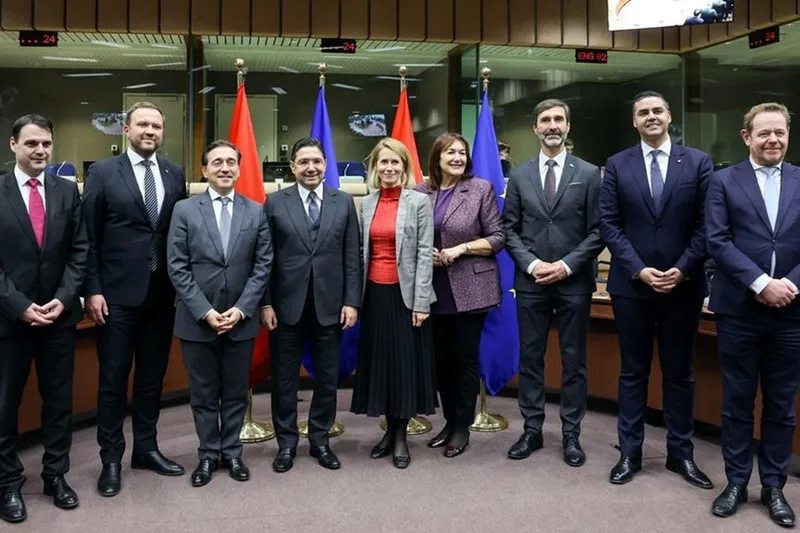
Brussels also has interests of its own. The Union wants to protect its borders while preserving close cooperation with Morocco. The January 29, 2026 EU–Morocco Association Council communiqué reaffirms a partnership covering trade, investment, migration, security and the energy transition. Bringing Europe further into the dispute therefore does not necessarily mean alignment with the toughest response: it can also increase pressure for an accommodation.
Western Sahara is where the distinction between political support, negotiation and legal outcomes becomes decisive. Spain’s position can no longer be described solely through the lens of its March 2022 shift. In their joint declaration of December 4, 2025, the two governments reaffirmed that framework and welcomed Security Council Resolution 2797, which places Morocco’s autonomy proposal at the basis of negotiations. The text links this direction to the pursuit of a just, lasting and mutually acceptable solution.
The European framework has also evolved. In January 2026, the Union welcomed the resolution and the prospect of genuine autonomy, while explicitly retaining references to the self-determination of the people of Western Sahara and a mutually acceptable settlement. For Rabat, this is a diplomatic advantage. It does not mean that all the conditions for a settlement have been fulfilled.
Three outcomes must therefore be distinguished: securing support for autonomy; obtaining national recognitions of sovereignty; and achieving an international settlement of the conflict. They can reinforce one another, but they are not interchangeable. A majority of partners favouring Morocco’s proposal does not automatically produce acceptance by the Polisario Front, agreement from Algeria or the conclusion of the UN process.
Reporting published by El País on October 12 illustrates this gap. The newspaper reported that UN discussions continued to address the conditions for consulting the Sahrawi people and the impossibility of simply imposing autonomy. It also described a dialogue process that remained stalled. These points should be attributed to that reporting; they do not prejudge the content of the Security Council’s next decision.
The most likely trajectory for Western Sahara is therefore continued consolidation of Morocco’s diplomatic position, accompanied by much harder negotiations over its practical implementation. Continued Spanish support for autonomy appears more likely than a complete return to its pre-2022 position. Further, explicitly worded Spanish recognition of sovereignty, however, cannot be treated as assured. Preserving diplomatic room for manoeuvre still has value for Madrid.
Over the medium term, the decisive question may concern the substance of autonomy more than its principle: the powers of local institutions, judicial guarantees, financial resources, political representation, fundamental rights and arrangements for the participation of the populations concerned, including those living outside the territory. These are negotiating questions, not a description of an existing agreement. The more central Morocco’s proposal becomes to the discussions, the more its credibility will depend on precise answers.
A rapid final settlement remains less likely than partial progress. A comprehensive agreement would require convergence among actors that share neither the same objectives nor the same interpretation of self-determination. Near-term independence also appears unlikely given the current diplomatic direction. Between these two outcomes, a prolonged period of Moroccan consolidation and continuing opposition remains possible.
That helps explain why an explicit bargain exchanging Western Sahara for Ceuta and Melilla appears improbable. Madrid cannot settle the first dossier alone, and Rabat cannot independently bring about a transformation of the second. The two questions intersect in political calculations, but each has its own actors, constraints and procedures. The most realistic accommodation consists of preventing them from obstructing one another, rather than claiming to resolve them together.
Economic ties encourage that separation without eliminating tensions. According to figures reported by EFE and reproduced by Le360, bilateral goods trade reached €22.757 billion in 2025. In the first half of 2026, Spanish exports to Morocco amounted to approximately €6.42 billion, against €5.80 billion in the opposite direction. Automotive manufacturing and textiles illustrate an integration in which businesses have a direct interest in uninterrupted supply chains.
This interdependence does not make the vulnerabilities identical. Morocco needs reliable access to European markets and an attractive investment environment. Spanish companies need their Moroccan suppliers, operations and customers. Yet a state’s capacity to withstand disruption and a company’s ability to replace a partner are different things. A crisis can remain manageable nationally while proving extremely costly to particular sectors or regions.
The central trade forecast remains growth accompanied by localised friction. Longer inspections, delayed authorisations and administrative uncertainty are more plausible than a general embargo. Ceuta and Melilla remain especially exposed to such changes. Their position also has an important peculiarity: they lie outside the EU customs territory. Political membership of the Union therefore does not imply the same commercial regime as mainland Spain.
Port competition adds another dimension. Tanger Med handled 11.1 million twenty-foot equivalent units in 2025, according to its operator. Infrastructure on this scale enables Morocco to build its own industrial and logistics networks. For Spain, its southern neighbour is thus both a production partner and a competitor for trade flows.
Over the longer term, the location of value creation matters more than trade balances alone. Both countries will seek to attract factories, engineering activities, logistics platforms and energy investments. Proximity facilitates shared production, but also makes some projects direct competitors. Growing trade cooperation can therefore coexist with stronger industrial rivalry.
Agriculture and fisheries introduce a constraint that governments cannot remove through a communiqué. The Court of Justice of the European Union’s judgments of October 4, 2024 upheld the annulment of decisions approving EU–Morocco agreements applied to Western Sahara, notably because the required consent of the territory’s people had not been obtained. The Court also clarified requirements concerning product origin.
The Union subsequently moved to adapt the trade framework. A Council decision of October 2, 2025 authorised the signing and provisional application of a new agreement amending the relevant protocols. That institutional response does not justify treating every legal difficulty as definitively resolved. It instead shows that trade, diplomacy and litigation operate on different timetables.
The likely outcome is a succession of arrangements accompanied by traceability requirements, safeguards and the risk of legal challenges. Spain can politically support its relationship with Rabat; it cannot single-handedly guarantee the validity of a European agreement. For Moroccan and Spanish businesses alike, legal certainty will remain as important as good relations between governments.
Energy reveals another interdependence, involving three actors. Since 2022, reverse flows through the Maghreb–Europe pipeline have enabled Morocco to receive gas regasified at Spanish terminals. Meanwhile, Algeria supplied 35% of Spain’s gas in 2025, according to Enagás. Madrid therefore has to preserve useful energy relationships with two rival neighbours.
The most probable outcome is continuity of supply accompanied by diversification efforts. Morocco has an interest in developing its own supply options; Spain has an interest in preserving multiple suppliers and its role as a gateway for gas. Abruptly weaponising these dependencies would create a lasting incentive to reduce them. Even when energy leverage exists, repeatedly threatening to use it can diminish its value.
Maritime boundaries are another dossier likely to endure. Spain and Morocco have provided for delimitation work along the Atlantic seaboard, a matter of direct interest to the Canary Islands. The stakes concern jurisdiction, economic uses of the sea and resources. The existence of a working group does not mean a final agreement has been secured.
Limited technical progress appears more likely here than a dramatic settlement. The sensitivity of Western Sahara can complicate discussions concerning adjacent maritime areas. It would also be premature to turn every prospect of seabed resources into immediately exploitable wealth: delimitation, commercial viability and environmental conditions remain separate questions.
Security, meanwhile, creates incentives to preserve channels of cooperation even when the political climate deteriorates. Combating criminal networks and preventing cross-border threats form part of the EU–Morocco partnership. Their value is reciprocal. Continued technical cooperation therefore appears more plausible than a general suspension, although political trust necessarily affects the quality of exchanges.
Spain’s domestic political calendar nevertheless heightens short-term risks. Pedro Sánchez has announced a general election for November 29, 2026. During a campaign, a concession can be portrayed as weakness and a border incident become a national political argument. That narrows the space for public compromises even when administrations continue working behind the scenes.
A change of government could harden the language towards Rabat, strengthen demands for reciprocity and alter certain priorities. It would not remove geography or economic interests. On Western Sahara, revised wording or a stronger emphasis on the UN framework seems easier to envisage than a complete reversal. That forecast would nevertheless depend on the coalition emerging from the election and, above all, on whether another crisis occurred before it took office.
Morocco, too, must turn external successes into domestic results. The October 9 speech emphasises youth employment, public services and regional inequalities. A stable relationship with Spain serves those objectives through investment, trade and mobility. A prolonged escalation might deliver an immediate symbolic benefit while complicating the economic priorities Rabat itself has identified.
Joint organisation of the 2030 World Cup with Portugal further raises the cost of a rupture. FIFA appointed the three countries as hosts in December 2024. Preparing the tournament requires coordination on transport, security, hospitality and infrastructure. It does not erase rivalries, but gives administrations and businesses a tangible interest in preventing them from spreading across every dossier.
Three trajectories consequently emerge. The most plausible is transactional stabilisation: the partnership survives, migration negotiations become more demanding, Spain maintains its support for autonomy, and the northern territorial status quo endures. A second would involve recurring but contained crises, with incidents, commercial delays and political escalation gradually eroding trust. A broad rupture appears less likely; it would become more credible following a serious incident, a sustained coercive measure or an explicit repudiation of a central commitment.
The most useful indicators will be actions: the substance of Morocco’s new migration proposal, the regular functioning of commercial crossings, effective cooperation on returns, the wording of the next Western Sahara resolution and the commitments of the Spanish government formed after the election. The visit to Melilla scheduled for October 14 is an immediate test of political restraint; it will not, on its own, determine the relationship’s future.
Morocco can still gain diplomatic recognition on Western Sahara, greater industrial capacity and more negotiating influence with Europe. Spain can strengthen European solidarity around its borders, secure more predictable cooperation and retain the benefits of an economy increasingly connected to its neighbour. None of these outcomes necessarily requires the other side’s defeat. All, however, require both states to accept a limit: their partner has constraints of its own and cannot independently guarantee all their objectives.
The most likely future is therefore not a grand bargain simultaneously settling borders, Western Sahara, migration and trade. It looks more like a succession of partial compromises, periodically disrupted by crises. The partnership’s strength will be measured by its ability to survive those disagreements without indiscriminately imposing their costs on border communities, migrants and the economies of both shores. Between Morocco and Spain, diplomatic maturity will begin when cooperation is no longer confused with the disappearance of disputes.
Principal sources
— Spanish Royal Household, Felipe VI’s address in Ceuta, October 13, 2026. — Official Moroccan portal Maroc.ma, Mohammed VI’s address to parliament, October 9, 2026. — La Moncloa, documents concerning the April 7, 2022 rapprochement and the Spain–Morocco joint declaration of December 4, 2025. — Council of the European Union, EU–Morocco Association Council communiqué, January 29, 2026; Decision 2025/2022 of October 2, 2025. — United Nations, Security Council Resolution 2797, October 31, 2025. — Court of Justice of the European Union, judgments of October 4, 2024 concerning EU–Morocco agreements and the origin of products from Western Sahara. — El País, reporting of October 12–13, 2026 on Western Sahara negotiations and Morocco’s response to the royal visit. — EFE, trade figures reproduced by Le360, August 24, 2026; Enagás, Spanish gas system report for 2025; Tanger Med, 2025 port results. — La Moncloa, election announcement of October 5, 2026; FIFA, appointment of the 2030 World Cup hosts.
Atlas Limits Research Desk
Atlas Limits’ editorial and analytical desk.