Following the migration crisis in Ceuta, Rabat is preparing a new cooperation proposal with the European Union. Behind border controls lies a much broader negotiation involving European funding, territorial sovereignty, security, trade and diplomatic leverage. For Morocco and Brussels alike, migration is no longer simply a matter of surveillance. It has become a central component of their strategic interdependence.
The border separating Morocco from the Spanish enclave of Ceuta stretches only a few kilometres. Yet it now concentrates some of the deepest contradictions in the relationship between Europe and its southern neighbourhood. It is a territorial, migratory, economic and political frontier. It separates two jurisdictions, two levels of development and two competing interpretations of sovereignty. Since the events of July 30, 2026, it has also become the starting point for a possible redefinition of relations between Rabat and Brussels.
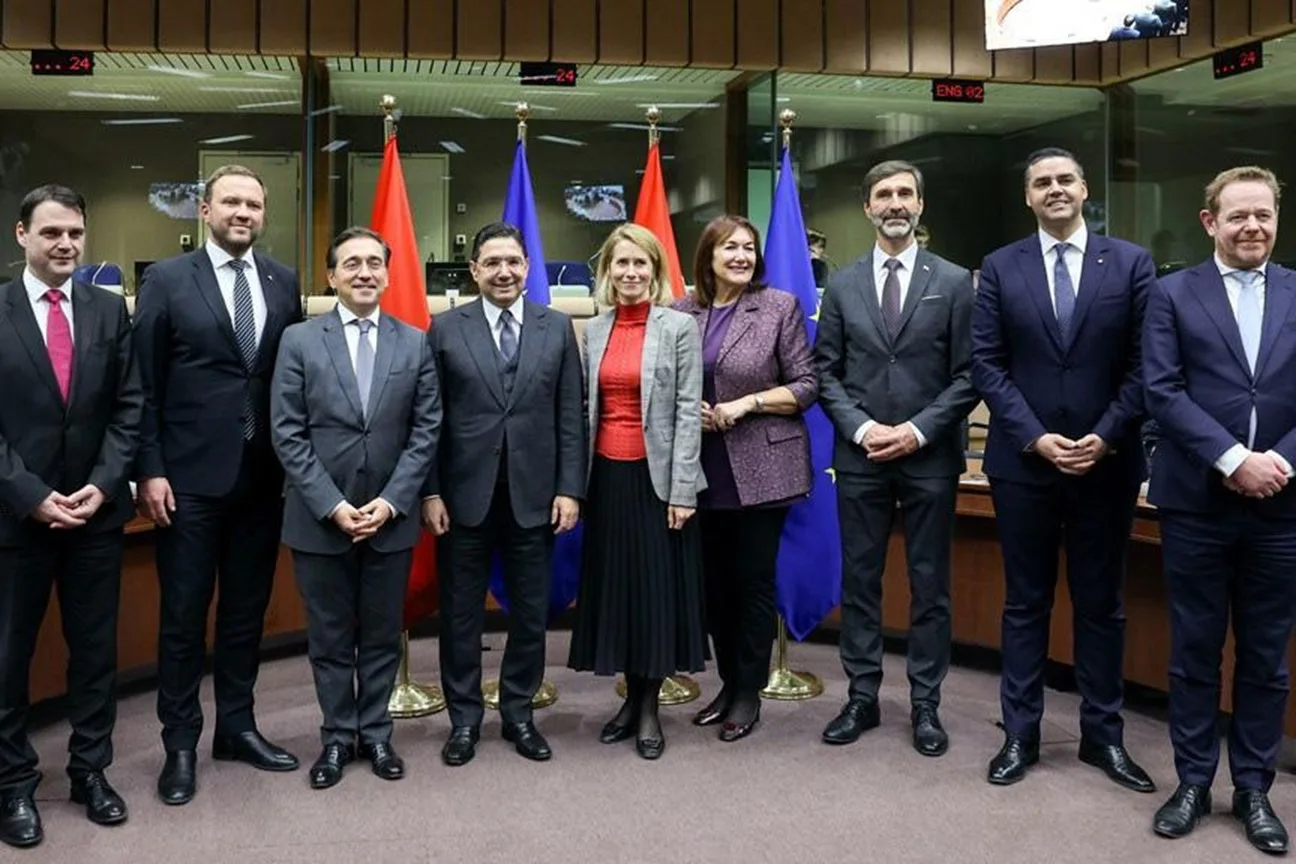
According to Bloomberg, Morocco intends to propose a new migration-control agreement with the European Union following an unprecedented wave of irregular crossings that triggered a major crisis between Rabat and Madrid. The announcement comes as the European Commission is already working on a broader strategic partnership with the kingdom, potentially to be concluded before the end of the year.
The significance of this initiative extends far beyond migration management. By seeking to negotiate directly with European institutions, Rabat could attempt to reshape a relationship long dominated by bilateral arrangements with Spain. Morocco would no longer present itself merely as an operational partner helping to secure Europe's borders, but as an indispensable actor in the stability of a geographical space whose southern security depends partly on its cooperation.
This development raises a fundamental question: how far can a country outside the European Union convert its geographical position and security cooperation into economic and diplomatic bargaining power?
Ceuta: The Crisis That Changed the Scale of the Problem
On July 30, 2026, an extraordinary wave of irregular crossings overwhelmed border-control arrangements around Ceuta. According to an analysis published on October 8 by the European Parliamentary Research Service, approximately 80,000 people crossed the border from Morocco. The document reported at least 141 deaths, while also referring to other estimates issued during the first days of the crisis.
Initial figures had been lower. Several European media outlets reported between 60,000 and 72,000 crossings, illustrating the difficulty of counting such a massive movement concentrated within an exceptionally short period. Many of those who entered Ceuta subsequently returned to Moroccan territory, either voluntarily or through return procedures.
But the significance of the crisis cannot be measured solely by the number of crossings. It exposed the vulnerability of an external European Union border whose security depends, in practice, on close cooperation with a third country.
It also transformed a local crisis into a continental problem.
Twenty-two European governments called for a coordinated response. Several member states raised concerns about controls within the Schengen area, while Spain requested additional support from European institutions. Pedro Sánchez's government faced pressure from two directions: European partners concerned about the consequences of irregular arrivals, and a domestic political environment already strained by debates over immigration, housing and reception capacity.
The precise circumstances that enabled such a movement remain under examination. Moroccan authorities have pointed to disinformation and smuggling networks. Madrid, meanwhile, has rejected allegations directly attributing responsibility for the incident to Morocco.
This distinction matters. The crisis demonstrates a structural vulnerability in border management; it does not, by itself, establish that Rabat deliberately instrumentalised migration flows.
Nevertheless, it shows that Moroccan cooperation is one of the practical conditions for stability along this frontier.
An Interdependence Long Organised Around Madrid
Migration cooperation between Morocco and Spain has deep diplomatic roots. The 1991 Treaty of Friendship, Good Neighbourliness and Cooperation, followed by the 1992 readmission agreement, gradually established an institutional framework combining security, border management and the return of people without legal residence status.
This framework has evolved through successive crises, political rapprochements and territorial disagreements. The relationship has never been exclusively about migration. It encompasses substantial trade flows, industrial investment, energy interconnections, maritime questions and regional security.
Spain remains one of Morocco's leading trading partners. Value chains connecting the two economies, particularly in automotive manufacturing, textiles, agrifood and logistics, have gradually created an industrial interdependence extending beyond traditional diplomatic relations.
Yet economic integration has not eliminated political disagreements.
Ceuta and Melilla remain under Spanish sovereignty, while Morocco has historically challenged their status. Madrid regards them as integral parts of its national territory. Rabat places them within a different historical interpretation of Spain's presence on the North African coast.
These opposing positions have not prevented daily cooperation. They have, however, introduced a permanent vulnerability: a diplomatic crisis can rapidly affect borders, trade and security arrangements.
A new agreement negotiated with Brussels could alter this balance.
By making the European Union more directly involved in financing, coordinating and evaluating migration cooperation, Rabat could reduce the political dependence of this issue on its bilateral relationship with Madrid.
That would not mean Spain was being sidelined. It retains essential sovereign responsibilities over its borders and remains a central participant in European decision-making. But the negotiating framework could become broader, more institutionalised and potentially more conducive to economic compensation extending beyond immediate surveillance requirements.
The Economic Price of Europe's Border
Financing is likely to become one of the most consequential aspects of any future agreement.
On its own territory, Morocco performs several functions that contribute to protecting Europe's external border: land and maritime surveillance, deployment of security forces, action against trafficking networks, identification procedures, police cooperation and rescue operations.
These responsibilities carry financial, human and operational costs. They require equipment, infrastructure, intelligence capabilities, transport resources and recurring expenditure.
Yet the benefits of these operations are not exclusively Moroccan.
A reduction in irregular crossings can limit the costs of reception, administrative processing and crisis management borne by European countries. It can also reduce certain forms of domestic political pressure within the Union.
Sharing these costs is therefore a legitimate subject for negotiation, regardless of disagreements over the respective responsibilities of each party.
On August 20, Euronews reported that the European Commission was considering increasing financial support for Morocco as part of the strategic partnership under preparation. Discussions reportedly included border management and migration cooperation.
The comparison with Egypt is instructive. In March 2024, the European Union announced a strategic and comprehensive partnership with Cairo, accompanied by a financial and investment package worth up to €7.4 billion. That amount covered several areas, including macrofinancial assistance, investment and migration cooperation. It was not simply a border-control budget.
For Rabat, a comparable framework could offer an opportunity to negotiate a package extending beyond security subsidies.
However, European precedents must be distinguished from commitments actually made to Morocco. No equivalent financial amount can currently be regarded as secured in the negotiations.
The issue would not merely be the volume of funding. Its structure, duration, predictability and conditions of use could prove equally decisive.
One-off support can finance equipment. A multiyear mechanism can help stabilise public policy. A partnership incorporating productive investment, training and professional mobility can address some of the economic drivers of migration.
The real negotiation will therefore concern how responsibilities and benefits are distributed.
Rabat Seeks to Broaden the Negotiating Framework
For several years, Morocco has advocated an approach to migration based on shared responsibility. This doctrine holds that border control alone cannot provide a sustainable response to population movements.
Following the Ceuta crisis, Morocco's Interior Ministry reaffirmed the need for cooperation based on effective solidarity and burden-sharing.
This position has an obvious diplomatic dimension. It allows the kingdom to present migration as a common challenge requiring reciprocal commitments rather than a unilateral obligation to police its borders.
It also reflects geographical realities.
Morocco is simultaneously a country of origin, transit and destination for migrants. Its proximity to Europe, connections with sub-Saharan Africa and growing integration into international economic networks place it at the intersection of several demographic dynamics.
Migration routes are influenced by factors that Rabat cannot fully control: political instability, income disparities, armed conflicts, climate change, criminal networks and European admission policies.
Under these circumstances, sustainable cooperation cannot depend exclusively on interception.
Morocco could therefore seek to link European financing more closely to territorial development, vocational training, employment and legal mobility programmes.
Talent partnerships, already envisaged within European cooperation frameworks with third countries, offer one possible avenue. They could organise certain forms of professional mobility according to European labour-market needs and Moroccan training capacities.
But this approach has contradictions of its own.
The emigration of skilled workers can generate remittances and professional opportunities while worsening skills shortages in certain sectors of the country of origin. A balanced mobility policy must therefore consider its effects on Morocco's domestic labour market.
Rabat's strategic interest would be to negotiate not only opportunities for departure, but also mechanisms for training, skills circulation and industrial cooperation.
Migration would then become one component of a structured economic relationship rather than an exclusively security-related issue.
Brussels Wants to Institutionalise Its Dependence
The European Union is not negotiating from a position of passivity.
The Ceuta crisis has strengthened the arguments of member states favouring tighter controls at external borders and greater European intervention capabilities.
The EU Pact on Migration and Asylum, which entered into application in June 2026, establishes new procedures for screening, processing asylum applications and organising solidarity among member states. It also increases the importance of cooperation with third countries.
On September 29, the European Commission presented a five-point plan intended to improve prevention and responses to large-scale irregular arrivals.
This initiative reflects a broader shift: the Union is seeking to reduce the risks associated with its operational dependence on neighbouring countries.
Its objective is twofold.
First, Brussels wants to strengthen its own surveillance, coordination and crisis-response capabilities. Second, it seeks more predictable commitments from external partners regarding border controls, action against smugglers and readmission.
Spain's request for a permanent Frontex presence in Ceuta illustrates this approach. The request, acknowledged by the Commission in early September, was still under assessment at that stage.
Greater involvement by European agencies could alter surveillance and coordination mechanisms. It would also raise questions about jurisdiction, legal responsibility and cooperation with Moroccan authorities.
For Brussels, the main advantage of a reinforced partnership would be reduced uncertainty.
For Rabat, the risk would be that part of its negotiating flexibility became constrained by more demanding operational commitments.
The balance of power therefore depends not only on Morocco's capacity to contribute to migration control. It also reflects the financial, commercial, technological and regulatory resources available to the European Union.
The relationship is asymmetric, but that asymmetry operates in several directions.
Western Sahara: A Major Diplomatic Variable
Western Sahara represents another important dimension of the strategic context.
According to information obtained by Euronews from European officials, disagreements surrounding the territory contributed to delays in discussions over the broader Morocco–EU partnership before negotiations resumed in January 2026.
The issue carries particular weight because it affects diplomacy, trade agreements, European court decisions and bilateral relations with several member states.
Morocco considers Western Sahara an integral part of its territory and advocates an autonomy plan under Moroccan sovereignty. The territory's international status remains disputed and is subject to a United Nations-led political process.
The European Union must navigate national positions that are not always identical, alongside the constraints of its own legal order.
Under these circumstances, a new migration partnership could improve the broader political climate without automatically resolving disagreements over Western Sahara.
It would be excessive to suggest that a border-control agreement would necessarily produce European concessions concerning the territory's status. No public evidence establishes such a bargain.
However, expanding cooperation across multiple policy areas can increase the political cost of deteriorating relations.
As trade, investment, security and migration become more interconnected, Moroccan and European institutions acquire stronger incentives to preserve a functioning dialogue.
This interdependence can encourage stability. It can also complicate negotiations when disagreements emerge in sensitive areas.
Ceuta and Melilla: Territories at the Centre of a Rivalry Beyond Migration
The events of July have also returned Ceuta and Melilla to the centre of Spanish political debate.
The announced visit of King Felipe VI and Queen Letizia to Ceuta on October 13 and 14 comes against this backdrop. It carries particular symbolic significance in a city where Spanish sovereignty is a politically sensitive issue.
In early October, Spanish authorities dismantled a migrant encampment on a Ceuta beach ahead of the royal visit. Reuters reported that several thousand people remained in the enclave following the summer crisis.
These operations illustrate the lasting consequences of an event whose most dramatic phase lasted only a few days.
They also demonstrate that stabilising a border involves more than preventing new crossings. It requires managing people already present, protection applications, accommodation conditions, return procedures and tensions with local communities.
The political dimension is especially important because Spain is experiencing intense polarisation over immigration.
Conservative and nationalist political movements use border security to challenge government policy. Spanish authorities must simultaneously preserve cooperation with Rabat and respond to demands for tougher measures from parts of the electorate.
In this environment, direct negotiations between Morocco and Brussels could be interpreted in two ways in Madrid.
They could provide a broader European distribution of financial and security responsibilities, serving Spanish interests.
But they could also generate concerns if Madrid believed it was losing influence over the terms of cooperation directly affecting its borders.
Spain's reaction will therefore depend less on the principle of a European agreement than on its institutional architecture and the responsibilities assigned to each partner.
The Limits of Diplomacy Built Around Migration Control
Turning border cooperation into a bargaining instrument offers advantages, but it also creates risks.
For Morocco, the first danger would be allowing its strategic importance to become defined primarily by its capacity to prevent migrants from reaching Europe.
Such diplomatic specialisation could increase financial dependence on European security programmes without generating lasting economic gains.
It could also intensify pressure on Moroccan authorities to accept readmission or surveillance obligations whose political and social costs would be difficult to manage.
For the European Union, the opposite risk is the growing externalisation of migration management without sufficient oversight of implementation.
Human rights organisations have long criticised arrangements that transfer certain border-control functions to third countries. They highlight risks involving interceptions, expulsions, reception conditions and effective access to international protection procedures.
These concerns are not peripheral. They affect the legal and political legitimacy of migration partnerships.
A sustainable agreement would therefore need monitoring mechanisms, clearly defined responsibilities and safeguards protecting fundamental rights.
It would also need to avoid conflating three distinct realities: irregular migration, asylum seeking and organised crime.
Combating smuggling networks is a security objective. Protecting people fleeing persecution is a legal obligation. Economic mobility policies respond to demographic and productive needs.
A framework addressing all three exclusively through border closure would risk displacing migration routes rather than resolving structural problems.
A Negotiation Over Morocco's Place in Europe's Strategic Architecture
The proposed agreement comes at a time when the European Union is gradually redefining its relationship with neighbouring regions.
Energy security, industrial diversification, transport infrastructure, supply chains and migration are becoming interconnected components of its external policy.
Morocco occupies a distinctive position within this transformation.
Its geographical proximity to Europe, integration into European industrial supply chains, port infrastructure and relationships across Africa make it an important economic and logistical partner.
This position provides Rabat with arguments for pursuing a more ambitious partnership than traditional border-control assistance programmes.
The central question is whether Morocco can convert its geographical importance into structural advantages: productive investment, market access, technological cooperation, skills development and predictable financial commitments.
An increase in subsidies for surveillance equipment would represent a limited outcome.
An agreement connecting security, mobility, industrial development and economic cooperation would constitute a more substantial transformation.
But that would require balanced obligations, measurable commitments and economic benefits extending beyond political declarations.
Negotiations will also need to clarify Spain's role, the powers of European institutions, financing mechanisms and implementation conditions.
At this stage, the Moroccan proposal reported by Bloomberg remains an initiative under preparation. Its detailed provisions, timetable and potential concessions have not been publicly established.
It would therefore be premature to describe it as an accomplished diplomatic success or an already effective shift in the balance of power.
Its direction is nevertheless significant.
Morocco appears determined to incorporate migration into a broader negotiation over its relationship with Europe, precisely as Brussels seeks to strengthen control over its external borders.
The two partners pursue different objectives, but their strategies rest on the same reality: neither can achieve all its goals independently.
Europe possesses capital, market access and institutional power. Morocco possesses a geographical position, operational capabilities and regional diplomatic reach that European financial resources cannot entirely replace.
This complementarity does not guarantee an equitable relationship. It defines the terrain on which such a relationship must be negotiated.
The Ceuta crisis demonstrated how a border stretching only a few kilometres could generate political consequences across an entire continent. The proposed pact could now determine whether this shared vulnerability becomes the foundation of lasting cooperation or another mechanism of mutual dependence.
The border is no longer simply a line to be monitored. It is becoming one of the places where Morocco's position within Europe's economic and security order is negotiated.
Main Sources
- Bloomberg, October 9, 2026. Report on Morocco's proposed new migration-control agreement with the European Union.
- European Parliamentary Research Service (EPRS), Ceuta migrant crisis: What it means for Spain and the rest of the EU, October 8, 2026.
- European Commission, Staying the course on migration reform, October 2, 2026.
- European Commission, institutional briefings and statements on migration cooperation with Morocco, August–September 2026.
- Euronews, EU to boost funding for Morocco’s migration management after Ceuta crisis, August 20, 2026.
- Reuters, Spanish police clear migrant camp on Ceuta beach ahead of royal visit, October 4, 2026.
- UK House of Commons, Ceuta: Migrant crossings and European reaction, August 13, 2026.
- Agence Europe, analysis of European disagreements following the Ceuta crisis, August 25, 2026.
Atlas Limits Research Desk
Atlas Limits’ editorial and analytical desk.