The Black Sea has become one of the world's most dangerous maritime environments. Behind attacks on vessels, drifting mines and the militarization of port infrastructure lies a deeper transformation: major shipping routes are no longer merely instruments of globalization but increasingly contested spaces of strategic confrontation. From Ukraine to Turkey, the consequences extend far beyond the battlefield, raising fundamental questions about the ability of international trade to function in a world increasingly fragmented by geopolitical conflict.
From Commercial Corridor to Maritime Battlefield
For decades, the Black Sea served as one of the most important economic gateways connecting Eastern Europe, Russia, the Caucasus and Central Asia to international markets.
Its ports played a central role in exporting grain, hydrocarbons, steel products and other commodities.
Odesa, Novorossiysk, Constanța and the region's wider port infrastructure formed an interconnected logistics network linking continental economies to global shipping routes.
Russia's full-scale invasion of Ukraine in February 2022 fundamentally transformed this maritime environment.
The conflict did not remain confined to land.
It progressively extended to ports, energy infrastructure, grain terminals and commercial shipping lanes.
In October 2026, the Financial Times described the Black Sea as the world's deadliest shipping route.
The precise significance of that characterization depends on the period examined, the geographical scope and the methodology used to measure maritime fatalities.
Nevertheless, the underlying development is unmistakable: commercial navigation in the Black Sea is directly exposed to the consequences of a high-intensity military conflict.
The traditional distinction between combat zones and economic infrastructure has become increasingly difficult to maintain.
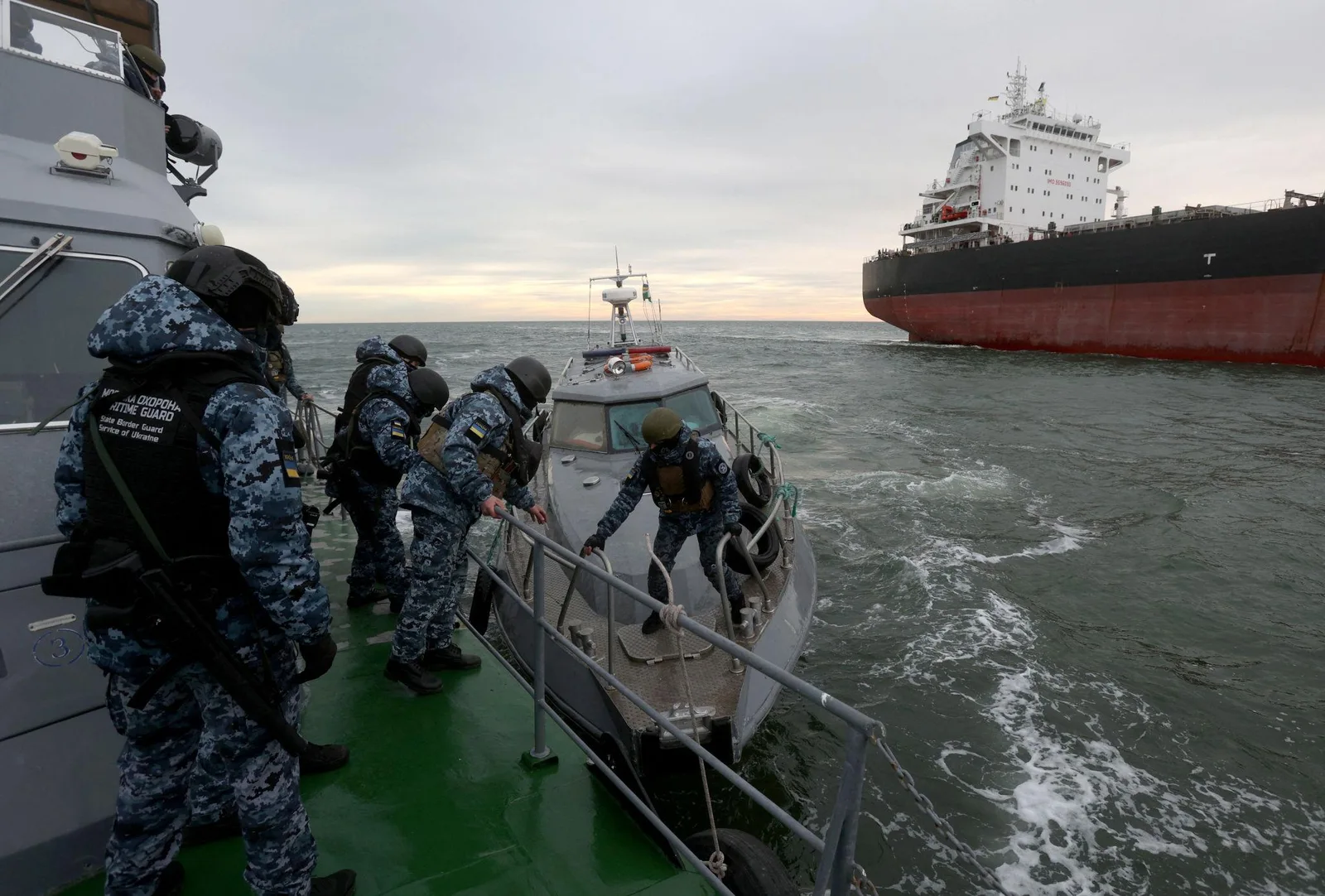
Merchant vessels can now face military threats without participating in hostilities.
This represents a profound challenge to the operating assumptions of international maritime trade.
The Erosion of Maritime Neutrality
International shipping depends on a fundamental condition: the ability to move goods between territories without every commercial voyage becoming directly exposed to military confrontation.
That condition has never been absolute.
The two world wars, conflicts in the Persian Gulf and repeated attacks on merchant shipping have demonstrated the vulnerability of maritime trade.
Yet the Black Sea presents a particularly complex configuration.
It is simultaneously an active military theater, an essential export corridor for several economies and a relatively enclosed maritime basin whose international access depends on the Turkish Straits.
The threats are multidimensional.
Drifting naval mines can endanger vessels operating far from immediate combat zones.
Missiles and maritime drones can threaten port facilities and ships in or near operational areas.
Attacks on energy infrastructure and logistics terminals can interrupt commercial activity without directly destroying merchant vessels.
Uncertainty over military operations also forces shipping companies to incorporate difficult-to-predict risks into their operational decisions.
Maritime security therefore no longer depends exclusively on protecting individual ships.
It increasingly requires anticipating conflict developments, assessing geographical exposure and maintaining the resilience of critical logistics infrastructure.
The Black Sea illustrates a broader transformation: geopolitics is becoming a permanent variable in international transportation.
Ukraine's Struggle to Preserve Access to Global Markets
For Ukraine, the Black Sea represents far more than a maritime frontier.
It is a critical component of the country's integration into the global economy.
Before the 2022 invasion, Ukrainian seaports handled the overwhelming majority of the country's grain exports transported by sea.
The initial blockade and subsequent disruptions generated immediate economic consequences.
Export capacity declined, logistics costs increased and Ukrainian producers encountered growing difficulties accessing international markets.
The Black Sea Grain Initiative, negotiated in July 2022 under the auspices of the United Nations and Turkey, temporarily restored part of these flows.
Russia withdrew from the agreement in July 2023.
Ukraine subsequently developed an alternative maritime corridor, primarily along the western Black Sea, using routes close to Romanian and Bulgarian waters.
This adaptation demonstrated that a country could maintain substantial international trade despite persistent military pressure.
But it also revealed the limits of economic resilience.
Ports, grain terminals, cargo-handling equipment and railway connections remain vulnerable components of the export chain.
Every interruption can affect available volumes, delivery schedules and producers' revenues.
The strategic stakes are therefore twofold.
For Kyiv, preserving maritime access means protecting an essential source of economic income.
For Moscow, pressure on Ukrainian maritime infrastructure and export capabilities forms part of a broader strategic confrontation, although responsibility for individual incidents must be established through evidence rather than assumption.
The Black Sea has consequently become a theater in which the continuity of commercial activity carries direct strategic significance.
Global Food Security Under Maritime Pressure
The consequences extend well beyond Ukraine.
Russia and Ukraine occupy important positions in international markets for wheat, barley, corn and sunflower oil.
Disruptions to their exports can affect supply conditions across numerous importing economies.
North Africa, the Middle East and several African countries are particularly sensitive to changes in grain availability and international prices.
For these economies, food security depends not only on domestic agricultural production but also on the reliability of international logistics networks.
Higher shipping costs can increase import prices.
Export interruptions can force buyers to seek alternative suppliers.
Rising insurance premiums can make transactions more expensive even when commodities remain physically available.
However, these effects are neither automatic nor uniform.
Their magnitude depends on global inventories, harvests in competing producing regions, trade policies, exchange rates and the capacity of importing countries to diversify procurement.
The Black Sea conflict does not independently determine global food prices.
It nevertheless introduces a persistent source of uncertainty into markets already sensitive to climate conditions, energy costs and political decisions.
This vulnerability demonstrates that food security and maritime security are increasingly inseparable.
The Invisible Cost of War: Insurance, Finance and Freight
One of the most consequential effects of maritime militarization occurs beyond the immediate battlefield.
It concerns the economic pricing of risk.
When a commercial corridor becomes dangerous, shipowners, insurers, charterers and financial institutions must reassess their exposure.
War-risk insurance can impose substantial additional costs.
Premiums vary according to the area of operation, duration of exposure, vessel characteristics, cargo and the evolution of security incidents.
Insurers may restrict coverage or revise policy conditions.
Shipowners may demand higher compensation for accepting certain destinations.
Charterers must account for potential delays, damage and operational interruptions.
Banks financing international trade may also strengthen documentation requirements and risk assessments.
These adjustments increase the economic cost of trade even when no attack occurs.
The existence of a credible threat can be sufficient to alter commercial behavior.
A shipping route may remain technically open while becoming economically less attractive.
This is one of the defining mechanisms of contemporary economic fragmentation: infrastructure remains available, goods continue to exist, but security conditions make their movement more expensive and uncertain.
War effectively operates as an indirect tax on international commerce.
The resulting costs are distributed across shipping companies, exporters, importers, insurers and ultimately, in some cases, consumers.
Turkey and the Strategic Geography of Maritime Access
Turkey's geographical position gives it exceptional importance in the Black Sea's regional balance.
The Bosphorus and Dardanelles form the principal maritime connection between the Black Sea and the Mediterranean.
Their legal regime is governed by the 1936 Montreux Convention.
The convention establishes different rules for merchant vessels and warships while granting Turkey specific powers under defined wartime circumstances.
Since 2022, Ankara has applied the convention's provisions governing the passage of warships belonging to belligerent states, subject to the treaty's exceptions.
This position illustrates the complexity of Turkey's regional role.
As a NATO member, Turkey maintains important economic and diplomatic relations with Russia.
It has also participated in mediation efforts concerning Ukrainian grain exports.
At the same time, Ankara must protect its maritime approaches, preserve commercial interests and prevent uncontrolled escalation in its immediate strategic environment.
The Black Sea therefore demonstrates a distinctive form of geopolitical influence.
Control over a strategic maritime passage does not necessarily imply control over an entire region.
It does, however, provide leverage over access conditions, military balances and opportunities for diplomatic de-escalation.
In an increasingly contested international environment, this function could reinforce Turkey's long-term diplomatic importance.
Russia: Naval Power and Infrastructure Vulnerability
Russia maintains substantial military and economic interests in the Black Sea.
The region contains strategic port infrastructure, energy facilities and essential export routes.
Novorossiysk, in particular, plays an important role in petroleum exports and commercial shipping.
Russia's Black Sea Fleet has historically been a major instrument of regional military power.
Yet the conflict has also exposed the vulnerabilities of conventional naval forces confronting emerging technologies.
Ukrainian attacks involving maritime drones and missiles have forced Russia to adapt its protective arrangements, vessel movements and operational deployments.
These developments carry implications extending far beyond the Black Sea.
Relatively inexpensive systems, when combined with intelligence, surveillance and targeting capabilities, can impose significant operational constraints on much more expensive naval platforms.
It would nevertheless be premature to conclude that conventional fleets have become obsolete.
The conflict instead demonstrates that their effectiveness increasingly depends on integrated defenses, persistent surveillance and protection against autonomous and remotely operated systems.
Russia retains significant military capabilities in the region.
But traditional naval superiority no longer automatically guarantees freedom of maneuver.
This represents an important lesson for maritime powers worldwide.
From the Black Sea to the Red Sea: A Global Geography of Risk
The Black Sea crisis forms part of a wider transformation in international maritime security.
Over recent years, several strategic shipping corridors have faced military tensions, attacks on vessels or escalating geopolitical competition.
The Red Sea and Bab el-Mandeb Strait have experienced major disruptions linked to Houthi attacks on commercial navigation.
The Persian Gulf and Strait of Hormuz remain exposed to regional tensions.
In East Asia, disputes surrounding Taiwan and the South China Sea raise questions about the future security of some of the world's busiest trade routes.
These situations differ significantly in their causes, participants and operational characteristics.
They should not be treated as manifestations of a single global conflict.
Nevertheless, they reveal a common trend: the security of maritime trade can no longer be assumed to be stable.
International companies increasingly need to incorporate disruption scenarios that were once primarily the concern of military planners and diplomatic institutions.
This development is encouraging several adjustments.
Logistics operators are evaluating alternative routes.
Governments are investing in ports, railways and energy infrastructure.
Companies are reassessing the geographical concentration of suppliers.
Insurers and investors are assigning greater importance to the geopolitical exposure of physical assets.
Globalization is not necessarily disappearing.
Its architecture is becoming more complex, more expensive and increasingly influenced by strategic competition.
The Paradox of Commercial Resilience
The Black Sea also illustrates an important paradox.
Despite the war, commercial exchanges have not entirely stopped.
Shipping corridors have been reorganized.
Operators have developed new procedures.
Ukrainian authorities have sought to secure alternative routes.
Businesses have adapted supply chains and logistics arrangements.
This capacity for adjustment demonstrates the resilience of international commerce.
But resilience should not be confused with normality.
Trade continuity may be achieved only through additional expenditure, greater risks for crews and persistent operational uncertainty.
The survival of commercial flows does not necessarily indicate the restoration of secure conditions.
It may instead reflect the emergence of an economic system operating under permanent military pressure.
The central question becomes one of sustainability.
How long can commercial operators absorb elevated security risks?
At what point do insurance, financing and transportation capacity become insufficient?
And to what extent can governments compensate for deteriorating maritime security without transforming commercial corridors into quasi-military systems?
These questions extend beyond the Black Sea.
They concern the future operating model of global maritime trade.
Toward the Permanent Militarization of Commercial Infrastructure?
The war is accelerating a transformation already visible in other regions: economic infrastructure is increasingly treated as a strategic asset.
Ports are no longer merely logistics platforms.
They are essential gateways for imports, exports and industrial supply chains.
Energy terminals contribute directly to national economic security.
Grain corridors can influence social and political stability thousands of kilometers away.
Submarine communications cables, offshore installations and digital infrastructure add further dimensions to these interdependencies.
Against this background, protecting commercial activity is becoming an increasingly important component of national security policy.
Investment in maritime surveillance, drone detection, mine countermeasures and port protection could assume greater strategic importance.
Cooperation between civilian authorities, naval forces and private operators is also becoming more consequential.
Yet this militarization creates its own risks.
The more deeply commercial infrastructure becomes integrated into national strategic systems, the more it may be perceived as a potential target during international confrontation.
Efforts to protect economic networks can therefore reinforce the geopolitical significance of the very infrastructure they are intended to secure.
This creates a difficult strategic dilemma.
States must defend essential trade infrastructure without unnecessarily increasing its exposure to military escalation.
A New Frontier for Global Trade
The Black Sea ultimately reveals a central contradiction within the international economy.
Globalization developed through expanding trade, optimizing logistics costs and enabling relatively predictable flows of goods.
The multiplication of geopolitical confrontations is reintroducing territorial and military constraints into that system.
Distances are no longer measured exclusively in nautical miles.
They are increasingly measured through risk exposure, insurance costs, defensive capabilities and political uncertainty.
A shorter shipping route may become economically disadvantageous.
An efficient port may lose part of its competitiveness because of its strategic vulnerability.
A resource-rich exporting country may possess abundant commodities without being able to guarantee reliable access to international markets.
The geography of global commerce is consequently being reshaped by security considerations.
This does not mean that international trade is destined for permanent contraction.
It means that the conditions governing its operation are changing.
Reliability, diversification and resilience are gaining importance alongside traditional measures of efficiency.
The lowest-cost route is no longer necessarily the most commercially rational route.
For governments and businesses, the challenge is increasingly to optimize not only the movement of goods but also the ability of supply chains to withstand geopolitical disruption.
Conclusion — When War Redefines the Boundaries of Commerce
The Black Sea has become more than an exceptionally dangerous military theater.
It is now one of the clearest examples of the geopolitical transformation of global trade.
The conflict demonstrates that commercial infrastructure can become an instrument of strategic pressure, that shipping corridors can continue operating under persistent military threat and that the continuity of international exchanges increasingly depends on security capabilities.
The consequences affect Ukrainian exporters, Russian infrastructure, Turkish strategic interests, international shipping companies and economies dependent on imported food.
But the implications extend far beyond the region.
As geopolitical tensions increasingly affect strategic maritime corridors, the fundamental question is no longer simply how goods can be transported at the lowest possible cost.
It is how their movement can be guaranteed within an international system where commercial spaces are becoming increasingly difficult to separate from military confrontation.
The Black Sea suggests that the next frontier of globalization may not be defined by the ability to open new trade routes, but by the capacity to keep existing ones sufficiently secure for commerce to continue.
Atlas Limits — Geopolitical and Economic Analysis
Editorial verification note: The Financial Times' October 2026 characterization of the Black Sea as the world's deadliest shipping route should be assessed against comparable maritime casualty data, including the relevant period, geographical boundaries and definition of fatalities. Recent developments and incident attribution should be independently verified before publication.
Reference sources for publication verification: Financial Times, October 25, 2026; International Maritime Organization (IMO); United Nations Trade and Development (UNCTAD); Food and Agriculture Organization (FAO); United Nations documentation on the Black Sea Grain Initiative; 1936 Montreux Convention; official Ukrainian and Turkish maritime corridor data.
Atlas Limits Research Desk
Atlas Limits’ editorial and analytical desk.