Two maritime regions, two military confrontations, and one shared vulnerability: the world's major commercial shipping routes. The intensification of attacks in the Black Sea and renewed military tensions between Washington and Tehran reveal a profound transformation in the balance of power. Disrupting the movement of goods, energy, and raw materials can now generate strategic consequences far beyond the immediate theater of operations.
The Sea as a New Arena of Confrontation
For much of modern history, maritime power was measured by the size of naval fleets, the number of warships deployed, and the ability to control vast oceanic spaces. States capable of projecting naval forces, protecting supply routes, and denying adversaries access to strategic waters enjoyed a considerable advantage.
That conception of maritime power has not disappeared. It is, however, increasingly challenged by a new reality: relatively inexpensive military systems can now threaten infrastructure, vessels, and commercial routes whose economic value far exceeds the cost of the weapons used against them.
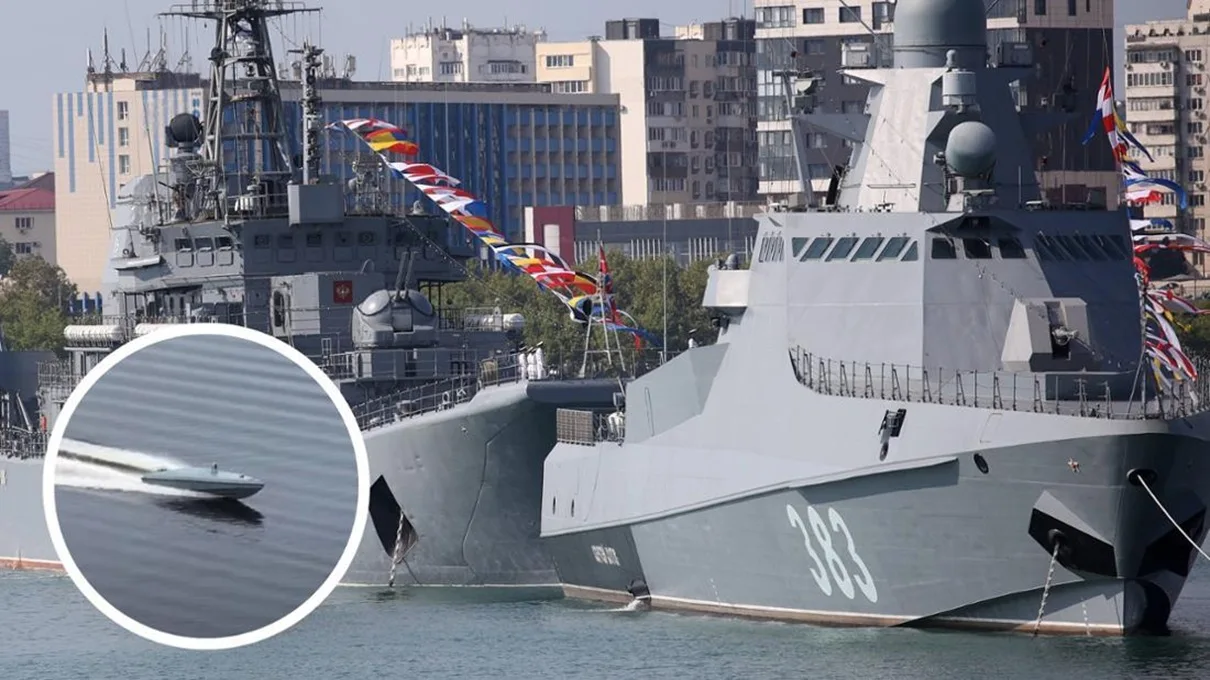
The war in Ukraine has accelerated this transformation. Without a fleet comparable to Russia's, Ukraine has developed maritime strike capabilities based on unmanned surface vessels, missiles, and intelligence operations. These capabilities have enabled Kyiv to contest Russian naval operations in parts of the Black Sea, strike military installations, and alter the operational conditions of several naval bases.
In the Persian Gulf, the strategic environment is different, but the underlying question is similar. Iran does not possess conventional military capabilities equivalent to those of the United States. Nevertheless, it maintains asymmetric capabilities that could significantly complicate navigation through particularly sensitive maritime areas, especially around the Strait of Hormuz.
Both situations demonstrate that military superiority alone no longer guarantees the security of international trade. A power may retain a decisive conventional advantage while remaining exposed to major economic disruption. 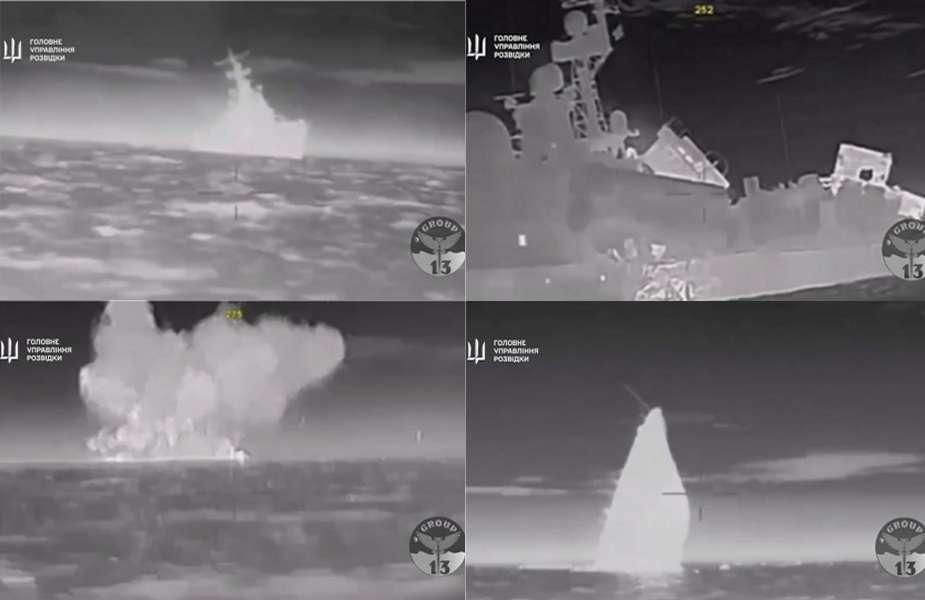
The Black Sea: A Permanent Contest Over Access
The Black Sea occupies a distinctive position in Europe's economic and military geography.
It connects Ukrainian and Russian agricultural production areas to international markets, serves as an export corridor for hydrocarbons, and hosts essential port infrastructure. It is also a strategic meeting point between Russia, Ukraine, Turkey, and three NATO members: Romania, Bulgaria, and Turkey.
Since Russia's full-scale invasion of Ukraine in February 2022, this maritime space has undergone a fundamental transformation.
The destruction or damage of Russian naval vessels, attacks against Ukrainian port facilities, and operations targeting energy infrastructure have turned the Black Sea into a theater where military and economic objectives increasingly overlap.
Russia seeks to preserve its naval capabilities, protect strategic installations, and maintain pressure on Ukrainian infrastructure. Ukraine aims to restrict Russian freedom of action while preserving commercial access essential to its economy.
What distinguishes this confrontation is the absence of uncontested maritime dominance.
Russia retains significant naval, air, and coastal capabilities. Ukraine has nevertheless demonstrated that possessing a relatively limited conventional fleet does not necessarily mean accepting maritime powerlessness.
The development of naval drones has fundamentally altered the economics of warfare. Autonomous or remotely operated systems can threaten vessels costing vastly more than the weapons deployed against them, forcing opposing forces to strengthen defensive arrangements, modify deployments, and sometimes relocate units away from particularly exposed areas.
The consequences extend beyond tactical operations.
When a maritime area becomes persistently dangerous, commercial operators must incorporate military risk into their decisions. Insurers reassess coverage, shipping companies adjust routes, and exporters face additional uncertainty.
Maritime security consequently becomes a direct component of economic competitiveness.
Iran and the Vulnerability of the Strait of Hormuz
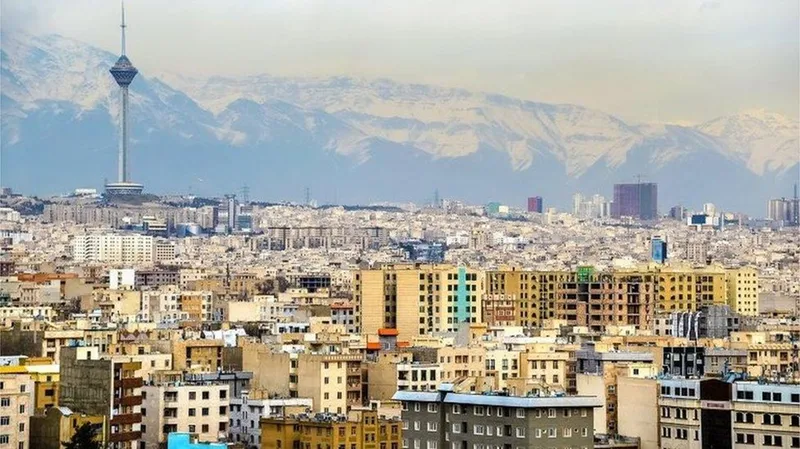
Thousands of kilometers from the Black Sea, the Strait of Hormuz represents another form of strategic concentration.
Located between Iran and Oman, it constitutes one of the most important maritime passages in the global energy economy. A substantial share of the Gulf's oil exports passes through the strait, alongside significant volumes of liquefied natural gas.
This geography gives the waterway an importance extending far beyond relations between Washington and Tehran.
Gulf producers depend on uninterrupted exports to finance their economies. Major importing countries, particularly in Asia, require reliable deliveries to sustain industrial production, transportation systems, and electricity generation.
A prolonged disruption could therefore simultaneously affect producer revenues and consumer energy costs.
Within this environment, Iran possesses a range of military capabilities suited to a strategy of maritime disruption: anti-ship missiles, drones, fast attack craft, naval mines, and coastal installations.
These capabilities would not necessarily allow Tehran to maintain a prolonged closure of the strait against a large-scale military intervention. They could, however, make commercial operations more dangerous and impose additional costs on their protection.
It is precisely this disruptive potential that gives the strait its strategic significance.
Against this background, any resumption of American strikes against Iranian installations, if independently confirmed, must be assessed beyond its immediate military objective.
A limited operation may seek to neutralize a threat, restore deterrence, or demonstrate Washington's resolve. Yet it may also initiate a sequence of retaliation whose consequences extend beyond the facilities initially targeted.
The danger does not lie exclusively in direct military confrontation. It also concerns the indirect effects of escalation on commercial routes, energy infrastructure, and market expectations.
Two Distinct Conflicts, One Economic Logic
It would be misleading to portray tensions in the Black Sea and the Persian Gulf as components of a single coordinated military operation.
Their political objectives, participants, and strategic balances differ considerably.
In the Black Sea, the confrontation forms part of a major territorial war between Russia and Ukraine. In the Gulf, tensions between the United States and Iran belong to a broader regional confrontation shaped by nuclear disputes, security arrangements, and the American military presence.
Nevertheless, both maritime regions share an essential characteristic: their economic importance gives military operations consequences disproportionate to their immediate scale.
An attack against a merchant vessel can generate effects extending far beyond the value of the ship or its cargo.
It may alter perceptions of risk across an entire maritime corridor, increase insurance premiums, and encourage other operators to suspend activities temporarily.
Such consequences can spread without requiring the destruction of large numbers of vessels.
This dynamic introduces a fundamental distinction between military control of a maritime area and its economic accessibility.
A state may lack the capacity to conquer a maritime region while retaining sufficient means to disrupt its use.
Conversely, a power may possess overwhelming military superiority without being able to guarantee permanently risk-free commercial navigation.
The sea thus becomes an environment in which disruption can sometimes produce strategic results without a decisive military victory.
Global Trade Confronts Multiple Points of Disruption
The vulnerability of maritime routes extends well beyond the Black Sea and the Strait of Hormuz.
The Red Sea, the Bab el-Mandeb Strait, the Suez Canal, and several strategic passages in Asia represent additional concentration points for international trade.
These corridors are not interchangeable.
Disruption in the Black Sea particularly affects agricultural trade and certain energy exports. A crisis around Hormuz exposes oil and gas markets more directly. Difficulties in the Red Sea and around Suez can force vessels traveling between Asia and Europe to follow considerably longer routes.
The problem becomes more serious when several of these areas experience instability simultaneously.
Companies can generally absorb a localized disruption by adjusting inventories, contracts, or shipping routes. However, the multiplication of risks progressively reduces their ability to adapt.
Maritime diversions generate additional fuel, personnel, and vessel operating costs. Higher insurance premiums make commercial transactions more expensive. Less predictable delivery schedules complicate supply-chain management.
These effects are subsequently transmitted to prices, corporate margins, and sometimes investment decisions.
Globalized trade rests on an assumption that is rarely explicitly stated: major maritime routes must remain sufficiently secure for goods to circulate at predictable costs.
When that assumption weakens, businesses begin prioritizing resilience over purely financial optimization.
Precautionary inventories increase, suppliers are diversified, and alternative routes become more attractive, even when they are more expensive.
Maritime security consequently ceases to be a peripheral concern. It becomes one of the determining factors in the organization of global industry.
The Limits of Military Superiority
The proliferation of asymmetric attacks also presents a challenge for major naval powers.
For several decades, power projection has relied on highly sophisticated military platforms: aircraft carriers, destroyers, submarines, and integrated surveillance systems.
These assets remain indispensable for conducting complex operations, protecting deployed forces, and maintaining a military presence over considerable distances.
Nevertheless, they increasingly confront a changing relationship between the cost of attack and the cost of defense.
A relatively inexpensive drone can force a warship to employ interception systems costing considerably more. Repeated attacks may also deplete ammunition stocks, place sustained pressure on crews, and require continuous surveillance.
The question therefore extends beyond the ability to neutralize an individual threat. It concerns whether such protection can be maintained over time at an acceptable cost.
This economic asymmetry does not mean that drones will replace conventional fleets.
Rather, it suggests that maritime power is becoming more complex. It increasingly depends on combining conventional capabilities, autonomous systems, intelligence, electronic warfare, and infrastructure protection.
States capable of integrating these different dimensions will enjoy a growing advantage.
Others may discover that possessing sophisticated military equipment is insufficient to guarantee freedom of navigation.
Turkey, the Gulf Monarchies, and Major Importing Powers
The transformation of maritime security is simultaneously strengthening the strategic importance of states located near critical passages.
In the Black Sea, Turkey occupies a decisive position.
Its control over the Bosporus and Dardanelles, governed by the 1936 Montreux Convention, gives Ankara particular responsibilities regarding the movement of military vessels between the Black Sea and the Mediterranean.
Turkey must reconcile its NATO commitments, relations with Moscow, support for certain Ukrainian interests, and determination to preserve diplomatic flexibility.
This position allows Ankara to play an important role in managing tensions, although it does not give Turkey the capacity to eliminate every maritime threat.
In the Gulf, the Arab monarchies face a different dilemma.
Their prosperity remains closely linked to uninterrupted energy exports, while their strategic environment depends partly on relations between Washington and Tehran.
Saudi Arabia and the United Arab Emirates have developed infrastructure allowing them to bypass the Strait of Hormuz to a limited extent. These alternatives strengthen resilience but cannot replace the region's entire maritime export capacity, particularly for liquefied natural gas.
Major Asian economies are monitoring these developments closely.
China, India, Japan, and South Korea depend, to varying degrees, on stable energy supplies from the Gulf.
A prolonged crisis could force them to draw more heavily on reserves, diversify suppliers, or accept higher import costs.
Commercial interdependence thus creates a paradox: geographically limited conflicts can generate global economic consequences, including for countries that do not participate directly in military operations.
Maritime Insurance as an Early Indicator of Instability
One of the least visible consequences of this transformation concerns the insurance industry.
Marine insurers play a central role in international trade. Without appropriate coverage, certain commercial operations become financially difficult or even impossible.
When a maritime area presents elevated military risks, insurance conditions can be revised rapidly.
Premiums rise, some guarantees become restricted, and operators may need additional coverage to transit areas considered dangerous.
This development transforms perceptions of risk into immediate economic costs.
A vessel does not need to be attacked to suffer the consequences of a conflict. It is enough for its planned route to cross an area where the probability of an incident is considered sufficiently high.
Insurance decisions therefore provide an important indicator of deteriorating maritime security.
They also reveal the limitations of an exclusively military approach.
Even when a naval coalition announces protective measures, commercial operators may maintain a cautious assessment of the risks. The presence of warships does not automatically restore previous economic conditions.
Commercial confidence may take longer to recover than military security itself.
Toward a Fragmentation of Global Maritime Space?
The multiplication of tensions around major commercial corridors could encourage a lasting transformation in the organization of international maritime trade.
Since the second half of the twentieth century, global trade expansion has relied on relatively free movement of goods and the capacity of major naval powers to secure critical passages.
This system has never been free from conflict. Nevertheless, it has supported an extraordinary expansion of international exchanges and the geographical specialization of production networks.
Today, several developments are weakening that equilibrium.
Rivalries between major powers are intensifying, long-range strike capabilities are spreading, and autonomous technologies are enabling a growing number of actors to threaten infrastructure that was previously difficult to reach.
At the same time, governments are seeking to reduce dependence on individual maritime corridors.
The construction of pipelines, development of alternative ports, diversification of suppliers, and accumulation of strategic reserves reflect a growing determination to limit exposure to disruption.
It would nevertheless be premature to announce the end of maritime globalization.
Shipping retains considerable economic advantages, particularly for bulk commodities and energy flows. Alternative routes are frequently longer, more expensive, or insufficient in capacity.
The most likely transformation is therefore not the disappearance of international trade but its reorganization around stronger security requirements.
Governments and companies may accept structurally higher costs to reduce vulnerability.
Such a development would have profound implications for international prices, port investment, and industrial policy.
A New Geography of Power
Tensions in the Black Sea and around Iran ultimately illustrate a fundamental evolution in international power relations.
Power is no longer defined exclusively by the ability to conquer territory, destroy an opposing fleet, or establish conventional military superiority.
It is increasingly measured by the capacity to protect economic infrastructure, maintain commercial exchanges, and preserve the confidence of market participants.
In this emerging environment, states capable of disrupting maritime routes possess instruments of pressure that can exceed their traditional military weight.
Yet these capabilities also have limitations.
Prolonged disruption can damage the economies of those responsible, provoke military responses, and accelerate the search for alternative routes. A strategy that proves effective in the short term may therefore gradually undermine the strategic importance of the very corridor it seeks to control.
The Black Sea and the Strait of Hormuz are not identical manifestations of a single conflict. Rather, they reveal two expressions of a common transformation: maritime circulation is becoming a central element of confrontation between powers.
The future of these regions will depend as much on military decisions as on the ability of governments to contain escalation and preserve the economic conditions necessary for navigation.
The essential question is no longer simply which power possesses the means to dominate a sea.
It is increasingly who can ensure that ships will continue to sail through it.
Principal Sources and Institutional References
- International Maritime Organization (IMO) — Maritime safety, protection of seafarers, and the consequences of armed conflicts for international shipping.
- United Nations Conference on Trade and Development (UNCTAD) — Review of Maritime Transport, analyses of shipping disruptions, maritime trade, and transportation costs.
- International Energy Agency (IEA) — Oil market reports, energy supply security, and international energy flows.
- U.S. Energy Information Administration (EIA) — World Oil Transit Chokepoints, data concerning the Strait of Hormuz and other strategic energy passages.
- 1936 Montreux Convention — Legal framework governing the Turkish Straits.
- United Nations Convention on the Law of the Sea (UNCLOS) — Maritime jurisdiction, freedom of navigation, and coastal state rights.
- Lloyd's List and marine insurance market data — Commercial risk assessments and navigation conditions in conflict-affected regions.
Editorial note: Specific military developments reported for November 3, 2026, including alleged renewed U.S. strikes against Iranian targets and recent maritime incidents in the Black Sea, require independent documentary verification before being presented as confirmed events. This analysis therefore distinguishes established structural developments from recent incidents whose details remain to be verified.
Atlas Limits Research Desk
Atlas Limits’ editorial and analytical desk.