Hours before a potentially decisive vote on MINURSO's future, the United States and Russia are advancing competing draft resolutions. Washington seeks to reshape the United Nations mission in line with the diplomatic shift toward Morocco's autonomy proposal, while Moscow favors preserving the existing framework. Behind an apparently institutional disagreement lies a far more consequential question: is the Security Council prepared to transform the international architecture of the Western Sahara dispute before a political settlement has been reached?
In New York, the Western Sahara dispute has entered a diplomatic phase that goes well beyond the customary negotiations over renewing a United Nations mission.
For the first time in the October 2026 diplomatic sequence, two competing draft resolutions are expected to come before the Security Council: one sponsored by the United States, the other introduced by Russia.
Both envisage extending the UN presence until October 31, 2027. Yet they do not necessarily attach the same meaning to that continuity.
Washington proposes renaming the United Nations Mission for the Referendum in Western Sahara, known as MINURSO, by removing the reference to the referendum. Moscow advocates a more conventional renewal of the existing mandate.
At first glance, the difference might appear to concern little more than institutional terminology.
In reality, it touches the identity of an operation established in 1991 to accompany a settlement that never materialized.
For thirty-five years, MINURSO has embodied a persistent contradiction. Its name preserves the promise of a referendum that was never held, while its actual activities have increasingly centered on military monitoring, incident prevention, and maintaining an international presence in a region where the conflict remains unresolved.
The United States now seeks to reflect within the mission's institutional structure the political shift initiated by Security Council Resolution 2797 in October 2025.
Russia, by introducing a competing text, has signaled that it is unwilling to necessarily endorse that transformation according to Washington's preferred timetable and terms.
At the time of writing, the outcome of the anticipated vote has not been officially confirmed. Nevertheless, the confrontation between the two proposals is itself a substantial diplomatic development.
It reveals that Western Sahara is no longer solely a dispute between Morocco and the Polisario Front. It has also become a debate among major powers over how the United Nations should adapt its institutions to a changing political balance.
The Referendum That Survived in a Mission's Name
MINURSO was established in April 1991 under the settlement plan accepted by Morocco and the Polisario Front.
The objective was to support a ceasefire and organize a referendum to determine the territory's future.
The ceasefire entered into force in September 1991.
The referendum never took place.
Disagreements over voter identification, eligibility criteria, and the political conditions surrounding the consultation progressively paralyzed the process. Successive mediation initiatives failed to resolve the fundamental differences between the parties.
The mission nevertheless remained on the ground.
Its existence gradually acquired a significance different from the one that had justified its establishment. It continued to provide an international presence, monitor military activities, and contribute to limiting the risks of escalation.
Since November 2020, following the breakdown of the ceasefire after the Guerguerat crisis, that security function has become even more important.
MINURSO does not guarantee peace. It helps observe and contain certain risks in an environment where hostilities have resumed and the parties' positions remain deeply opposed.
That is why its future cannot be reduced to a simple administrative adjustment.
Removing the word "referendum" from the mission's name would amount to an institutional acknowledgment of the widening gap between its historical purpose and the political orientations now favored by part of the Security Council.
But such a change would not, by itself, settle the question of self-determination or alter the territory's international legal status.
A mission's name can be changed by a Council decision.
The conflict it monitors does not disappear as a result.
The Turning Point of October 2025
The current diplomatic confrontation has its immediate origins in Resolution 2797, adopted on October 31, 2025.
That resolution extended MINURSO's mandate for another year while giving Morocco's autonomy proposal a central place in the political process.
Since 2007, Morocco has advocated a settlement based on autonomy under its sovereignty.
The initiative envisages regional institutions exercising their own powers, while certain fundamental responsibilities would remain with the central government.
Resolution 2797 gave this approach renewed momentum.
It called for negotiations on the basis of Morocco's proposal while retaining the objective of a mutually acceptable political solution providing for self-determination.
This development was widely favorable to Rabat.
It formed part of a longer diplomatic trend, marked by the United States' recognition of Moroccan sovereignty in December 2020, Spain's support for the autonomy plan in 2022, France's position announced in 2024, and stronger British backing for an autonomy-based settlement in 2025.
These positions are not legally identical.
Nevertheless, they reflect growing diplomatic convergence around Morocco's initiative.
Resolution 2797 did not, however, constitute formal recognition of Moroccan sovereignty over the territory by the United Nations.
Nor did it amount to an agreement between Morocco and the Polisario Front.
It changed the political starting point of negotiations without determining their final outcome.
The question in October 2026 is therefore what should happen next.
Should the Council simply extend the existing mission, or begin adapting its institutional architecture to a settlement increasingly associated with autonomy?
That is where the American and Russian approaches diverge.
Washington Wants to Embed Political Change in UN Institutions
Throughout October, the United States worked on a draft resolution whose successive versions revealed considerable institutional ambition.
The initial text, dated October 20 according to documents reproduced by several media outlets, envisaged a rapid transformation of MINURSO, including a substantial reduction in personnel and the eventual replacement of its peacekeeping component with a special political mission.
This approach closely linked the transformation of the UN presence to a political orientation favoring autonomy under Moroccan sovereignty.
But consultations prompted Washington to revise its proposal.
Subsequent versions reportedly softened several provisions, particularly deadlines requiring a rapid reduction in personnel and the automatic transformation of the peacekeeping structure.
The idea of a one-year extension was retained.
The proposed change of name, however, remains central to the American draft in the latest negotiating phase.
According to Security Council Report, the text Washington intends to submit to a vote would rename MINURSO the "United Nations Mission in Western Sahara," or MINUSO.
Removing the word "referendum" would not constitute legal recognition of sovereignty.
It could nevertheless carry considerable political significance.
It would indicate that the Council was prepared to explicitly separate the identity of its mission from the referendum mechanism that originally justified its creation.
For Morocco, such a development would extend the favorable diplomatic momentum surrounding its autonomy plan.
It would bring the UN's institutional structure closer to the political framework Rabat has advocated for nearly two decades.
But the significance of the change would depend on the text actually adopted.
A new designation would not necessarily alter all the mission's operational responsibilities. Only the precise provisions of the resolution could establish the real extent of any institutional transformation.
The distinction matters.
A symbolic reorientation may precede an institutional reorganization without being equivalent to one.
Why Moscow Has Introduced a Competing Draft
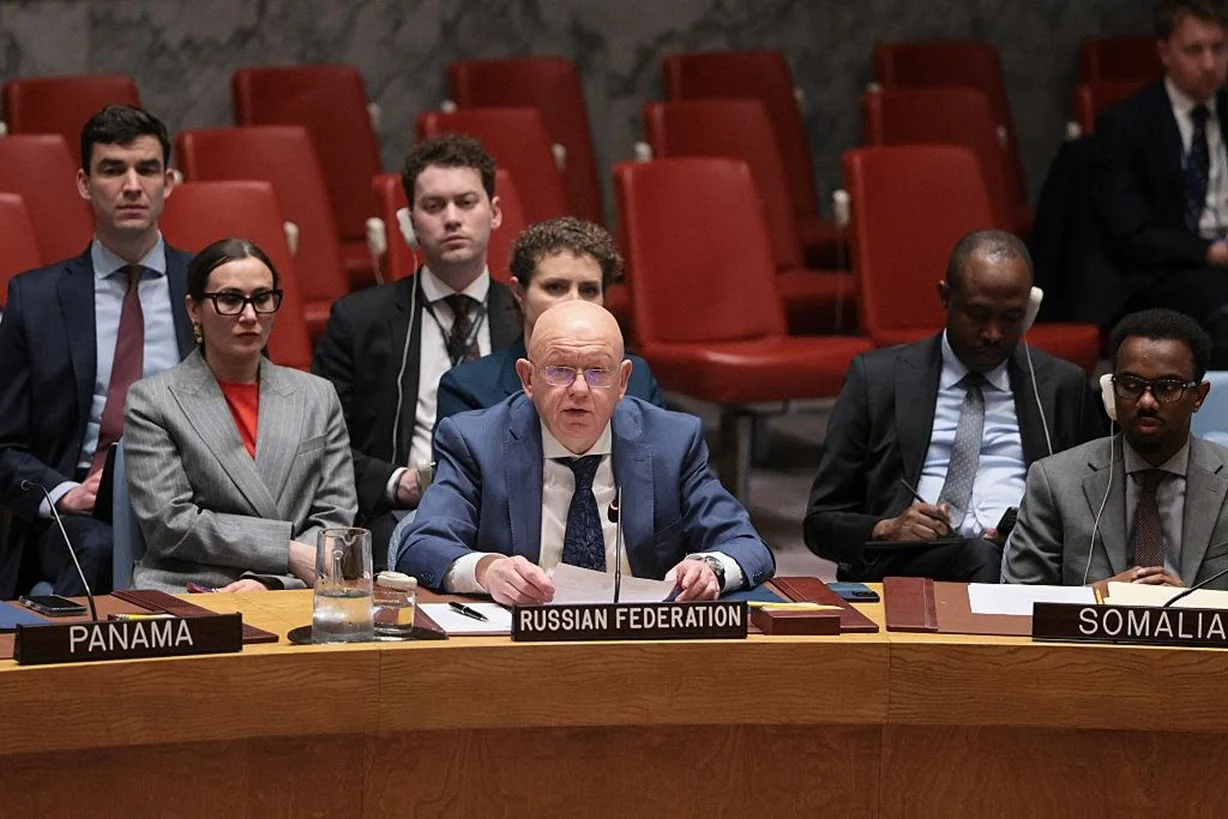
The announcement of a Russian draft constitutes the principal new development in this final day of negotiations.
According to Security Council Report, Russia introduced a text on October 30 proposing a straightforward extension of MINURSO's mandate until October 31, 2027.
The initiative follows reservations expressed by Moscow and Beijing, among others, concerning the direction of the American proposal.
Russia's position does not necessarily imply opposition to every possible evolution of the political process.
More precisely, it reflects reluctance to see the Council rapidly transform the mission's institutional framework around a settlement that has not yet been accepted by the parties.
Moscow may also consider that the language of the American draft unduly narrows the range of negotiating outcomes or alters the balance of the Council's role in resolving the dispute.
However, this strategic interpretation must be distinguished from Russia's officially stated motivations.
The full content of diplomatic exchanges is not public, and Moscow's intentions cannot be established solely from its decision to submit an alternative text.
The significance of the initiative is nevertheless clear.
By introducing a competing draft, Russia is seeking to offer the Council another option beyond Washington's proposed transformation.
The choice no longer concerns only technical amendments to a single resolution.
It now involves two distinct institutional approaches: changing the mission in line with the evolving political framework, or preserving its current configuration while awaiting further progress in negotiations.
This divergence also belongs to a broader international context.
Russia and China have frequently adopted cautious positions toward American diplomatic initiatives that seek to reshape institutional arrangements in sensitive international disputes.
Western Sahara is not necessarily a strategic priority comparable to other international crises for either power.
It nevertheless provides an arena in which differing conceptions of the Security Council's role, sovereignty, self-determination, and negotiated conflict resolution can emerge.
The Russian counterproposal thus demonstrates that the compromise reached in 2025 did not eliminate disagreements among permanent Council members.
It shifted them toward implementation.
Two Drafts, but the Same Deadline
One point deserves particular attention.
Both reported drafts envisage extending the mission until October 31, 2027.
This is therefore not a confrontation between those seeking the immediate disappearance of the UN presence and those defending its continuation.
Both the United States and Russia envisage maintaining an international presence.
Their disagreement concerns its institutional identity, political orientation, and the conditions governing its future evolution.
This partial convergence matters.
It suggests that, despite their differences, the major powers continue to recognize the usefulness of an international presence in Western Sahara.
Since hostilities resumed in 2020, security risks cannot be ignored.
MINURSO remains one of the few international mechanisms maintaining a permanent operational presence in the area.
An excessively rapid transformation, without adequate guarantees, could weaken monitoring and conflict-prevention mechanisms.
Conversely, indefinitely extending a mission without adapting its mandate to changes in the political process could perpetuate an institutional contradiction that has become increasingly difficult to justify.
The two proposals therefore respond to the same underlying difficulty, but according to different timelines.
Washington seeks to accelerate adaptation.
Moscow favors continuity.
The question is which approach can command a majority in the Council, and at what diplomatic cost.
Morocco at the Center of a New Balance of Power
For Rabat, this confrontation comes at a particularly favorable moment.
Morocco administers most of Western Sahara, where it has expanded infrastructure, investment, and economic connections with the rest of the Kingdom.
Diplomatically, its autonomy initiative has progressively gained the support of several Western partners.
Resolution 2797 consolidated that progress by giving Morocco's proposal a central place in Security Council-backed negotiations.
The American draft of October 2026 seeks to extend that momentum.
Renaming MINURSO could represent another step away from the original referendum-based institutional framework.
But it would be excessive to portray the expected vote as a definitive decision on sovereignty.
Even if the American text were adopted, its precise provisions concerning self-determination, political negotiations, the mission's responsibilities, and the obligations imposed on the parties would require close examination.
A resolution favoring autonomy does not automatically constitute a political agreement.
Likewise, changing the mission does not itself resolve the institutional, legal, and human questions associated with a possible autonomous status.
Morocco currently enjoys a substantial diplomatic advantage.
The challenge is now to convert that advantage into a settlement that is sufficiently precise, implementable, and durable.
This is a more demanding stage than securing political support.
It requires defining the powers of potential autonomous institutions, constitutional guarantees, representation mechanisms, and the conditions under which affected populations would participate.
It also requires identifying security arrangements capable of supporting a possible transition.
The favorable diplomatic shift toward Rabat does not eliminate these questions.
It makes them more urgent.
The Polisario Front and Algeria Confront a New Equation
The Polisario Front continues to advocate a settlement based on self-determination, including the possibility of independence.
It argues that a solution restricted exclusively to autonomy under Moroccan sovereignty would predetermine the outcome of negotiations.
Algeria supports that position and remains an essential actor in the process, particularly through its political backing for the Polisario and its hosting of Sahrawi refugees in the Tindouf camps.
Discussions held in 2026 with the participation of Morocco, the Polisario Front, Algeria, and Mauritania demonstrated that diplomatic channels could be reactivated.
But no decisive convergence has been officially announced.
The new framework favoring autonomy therefore places the Polisario in a strategic dilemma.
Rejecting all negotiations based on the proposal could increase its diplomatic isolation.
Accepting negotiations within a framework perceived as excluding independence could, conversely, be regarded as a major concession on its fundamental claim.
Algeria faces a comparable equation.
It must defend its position on self-determination while taking account of changes in Security Council language that increasingly favor the Moroccan plan.
The Russian draft may provide a diplomatic expression for some reservations about this evolution.
But it does not necessarily mean that Moscow endorses every Algerian or Polisario position.
The distinction between opposing an American text and supporting a particular political settlement must be preserved.
The American Vote, Then the Russian Alternative
According to information published on October 30 by Security Council Report, the Council is expected to consider the American draft first, followed by the Russian proposal, subject to the applicable procedures and the actual conduct of the meeting.
This sequence could be decisive.
Adoption of the American text would ordinarily make consideration of a competing resolution pursuing the same mandate-renewal objective unnecessary.
Conversely, its rejection or failure to secure adoption could open the way for an alternative.
Voting conditions are governed by the United Nations Charter.
To adopt a substantive resolution, the Council must secure at least nine affirmative votes among its fifteen members, without a negative vote from any permanent member.
Abstentions by permanent members do not, by themselves, prevent adoption.
This rule gives the five permanent members — the United States, Russia, China, France, and the United Kingdom — particular influence over the outcome.
The precedent of 2025 demonstrates that a resolution can be adopted despite significant abstentions.
But the introduction of a Russian counterproposal changes the political context.
It creates an explicit alternative capable of influencing the positions of other members and the final diplomatic calculations.
It would nevertheless be premature to predict the result solely from this initiative.
Submitting a competing draft does not automatically mean that a veto will be exercised.
Nor does it guarantee that the Russian alternative will secure the votes required for adoption.
The only decisive result will be the one officially recorded by the Security Council.
What the Vote Will Not Resolve
Whatever the outcome of the meeting, several fundamental questions will remain.
Western Sahara remains on the United Nations list of Non-Self-Governing Territories.
Morocco administers most of the territory, but the political dispute has not been resolved through an agreement between the parties.
The Polisario Front continues to claim independence.
Algeria remains involved in the dispute.
Hostilities resumed in 2020 have not been replaced by a new, broadly accepted ceasefire agreement.
Questions concerning refugees, their registration, representation, and future remain unresolved.
The institutional content of any autonomy arrangement would still need to be defined.
And the relationship between sovereignty, autonomy, and self-determination would continue to require a political settlement.
A new resolution could profoundly change the diplomatic framework.
It would not make these difficulties disappear merely through its adoption.
That is why the importance of the vote must be assessed without confusing three distinct levels: the Council's political preference, institutional decisions concerning the mission, and the definitive settlement of the conflict.
These levels are connected.
They are not identical.
A Confrontation That Reveals How the Dispute Has Changed
For decades, discussions surrounding MINURSO focused primarily on extending a mandate and managing a stalled political process.
That situation has changed.
Morocco's autonomy plan now occupies a central position in negotiations encouraged by the Security Council.
The United States is seeking to reflect that orientation in the very structure of the UN presence.
Russia proposes preserving the existing framework.
Neither power necessarily disputes the need for an international presence.
They differ over the speed and meaning of its adaptation.
This confrontation illustrates a deeper transformation of the dispute.
Western Sahara is no longer solely a question of a settlement repeatedly postponed.
It is also becoming a question of the international institutions expected to accompany a solution whose political contours are becoming clearer, even as its practical arrangements and acceptance remain uncertain.
For Morocco, the moment represents an important diplomatic opportunity.
For the Polisario Front and Algeria, it constitutes a test of strategic repositioning.
For the United Nations, it raises a major institutional challenge: how can a mission inherited from an unfinished political process be adapted without compromising the stabilization functions it continues to perform?
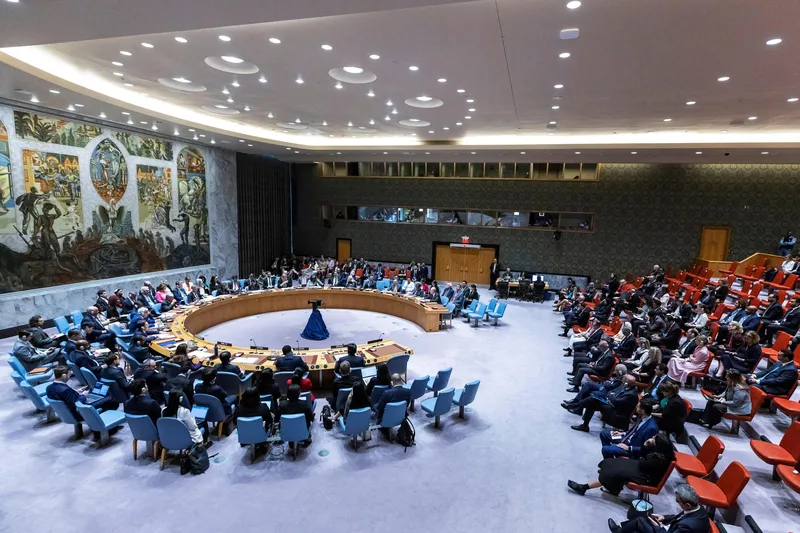
In New York, the representatives of the fifteen Security Council members must now make their decision.
The outcome will indicate whether the momentum established in 2025 can be extended through institutional transformation, or whether disagreements among major powers will require a more cautious evolution.
It will not, by itself, determine Western Sahara's definitive status.
But it could decide how the United Nations understands its future role in the conflict.
For thirty-five years, MINURSO has carried in its name the promise of a referendum that was never held. Tonight, the Security Council must decide whether that reference still belongs to the mission's future — or whether it is becoming, institutionally, a chapter of its past.
Atlas Limits Research Desk
Atlas Limits’ editorial and analytical desk.