When Botswana gained independence on September 30, 1966, it displayed few of the characteristics usually associated with a future economic success story. Formerly the British protectorate of Bechuanaland, it had limited infrastructure, a small population, an embryonic industrial sector, and insufficient fiscal resources to finance the needs of a modern state. Its economy depended primarily on cattle farming, a handful of commercial activities, and income earned by workers employed beyond its borders, particularly in South Africa.
Six decades later, the country occupies a distinctive place in Africa's economic history. It has undergone a profound transformation of its infrastructure, institutions, and financial capabilities. It has developed public services, invested in education and healthcare, accumulated reserves, and maintained a degree of political continuity long considered exceptional in its regional environment.
This trajectory is generally associated with the discovery and exploitation of diamonds. Yet natural resources alone do not explain prosperity. Many countries possess considerable mineral wealth without achieving comparable results. Botswana's distinctive achievement lies in the way the state organized resource extraction, negotiated the distribution of revenues with international companies, and used part of those proceeds to establish the foundations of national development.
That success, however, contains a fundamental limitation. Botswana has managed its mineral wealth more effectively than many other extractive economies, without sufficiently reducing its dependence on that wealth. Diamonds financed the country's modernization, but they remain essential to its exports, public finances, and external economic balances.
Changes in the global diamond market, including shifting consumer preferences, competition from laboratory-grown stones, and fluctuations in international demand, have exposed this vulnerability with renewed intensity.
Botswana therefore faces a question extending far beyond its own future: what happens to a development model when the resource that made it possible can no longer guarantee its continuity?
A Vast Territory, a Fragile Economy
Botswana covers approximately 582,000 square kilometers, a territory larger than that of several major European economies, yet has a population of roughly 2.5 million. This low population density is one of its defining characteristics.
Much of the country is occupied by the Kalahari, a vast semi-arid region whose natural conditions constrain agriculture and complicate infrastructure development. Access to water, the distances separating population centers, and the absence of direct access to the sea impose lasting constraints on economic organization.
At independence, these difficulties were particularly severe. The country had few paved roads, a limited education system, and a national administration still under construction. Its economy depended heavily on cattle farming, whose commercial opportunities were themselves tied to external markets.
Being landlocked reinforced this dependence. International trade had to pass through neighboring countries, primarily South Africa, which was both a major trading partner and the dominant regional economic power.
Yet these geographical constraints did not mean that the country lacked opportunities. Its territory contained significant mineral resources, whose exploitation would fundamentally alter its national trajectory.
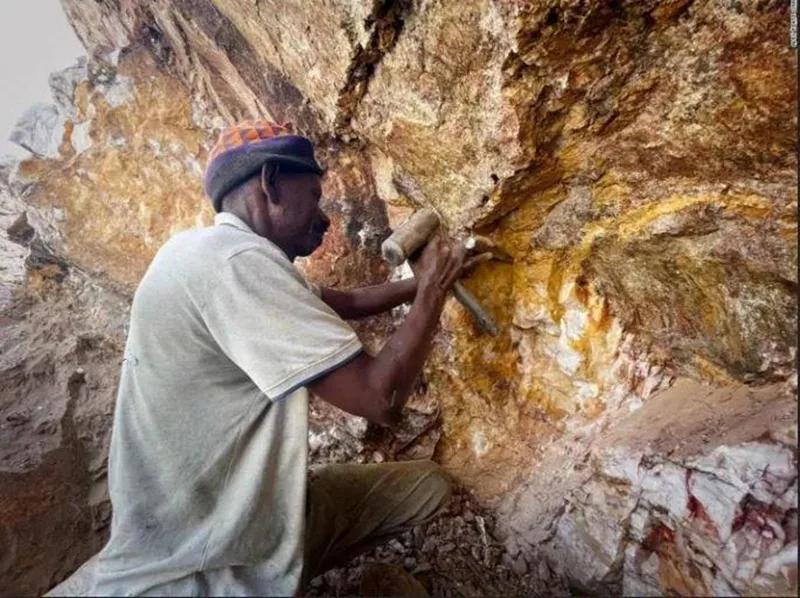
The discovery of diamond deposits in the late 1960s opened an entirely new prospect. The Orapa deposit, discovered in 1967, began production in 1971. Other deposits, particularly Jwaneng, subsequently strengthened Botswana's position among the world's leading diamond producers by value.
The timing was decisive. Major discoveries occurred while the newly independent state was still consolidating its institutions. The authorities therefore had a rare opportunity to establish, at a relatively early stage, the relationship between public power, mining companies, and the revenues generated by extraction.
The challenge was not simply to extract a resource. It was to determine who would own the wealth produced and how that wealth would be used.
Seretse Khama and the Construction of a National Compromise
Botswana's first president, Seretse Khama, played a central role in this transformation.
His government inherited a country with limited administrative and financial resources, but one that benefited from certain institutional structures inherited from the colonial period and from local political traditions. State consolidation took place in a difficult regional environment, marked by South African apartheid, white-minority rule in Rhodesia, and liberation struggles across Southern Africa.
Botswana's authorities sought to preserve national sovereignty without provoking an economic rupture with neighboring countries on which they depended for much of their trade.
Domestically, the government adopted a relatively pragmatic approach. It welcomed foreign investment while seeking to strengthen the state's ability to negotiate and collect revenues from natural resources.
One important institutional decision involved organizing mineral rights within a national framework rather than allowing individual territories or local authorities to retain the benefits of extraction separately.
This centralization enabled mining revenues to finance national development.
It also helped limit the risk of political fragmentation directly driven by the geographical distribution of mineral deposits.
The arrangement did not eliminate inequality or social tensions. It nevertheless gave the state a capacity for territorial redistribution and investment that would prove decisive.
Botswana thus embarked on a trajectory in which private and international resource extraction coexisted with substantial public participation and relatively disciplined fiscal management.
This architecture did not result from an absence of state intervention. On the contrary, it depended on the state's ability to define rules, negotiate contracts, and use revenues to finance collective objectives.
Debswana: The Heart of the Diamond Model
The relationship between Botswana and De Beers is one of the fundamental elements of its economic history.
The international diamond group possessed the technical expertise, commercial networks, and financial capacity needed to develop major deposits. Botswana controlled the resources and sought to secure a substantial share of the value they could generate.
The partnership gradually took the form of a joint venture, Debswana, owned equally by the Botswana government and De Beers.
This structure allowed the state to participate directly in the financial results of mining operations, in addition to receiving tax revenues and other forms of resource income.
The Jwaneng mine became one of the most important assets in the global diamond industry. Its production contributed substantially to the country's export earnings and public finances over several decades.
The model offered several advantages.
The state benefited from the expertise and market access of an experienced international operator without relinquishing a significant ownership stake in the mining company. The private partner, in turn, benefited from a relatively stable institutional environment and a long-term contractual relationship.
This cooperation helped establish Botswana as a major player in the global diamond industry.
But it also created profound interdependence.
The country's prosperity depended not only on extraction volumes and the quality of its deposits, but also on marketing arrangements, international prices, De Beers' industrial strategies, and changes in global demand.
Botswana gradually sought to strengthen its control over the value chain, particularly by developing local sorting, sales, and processing activities.
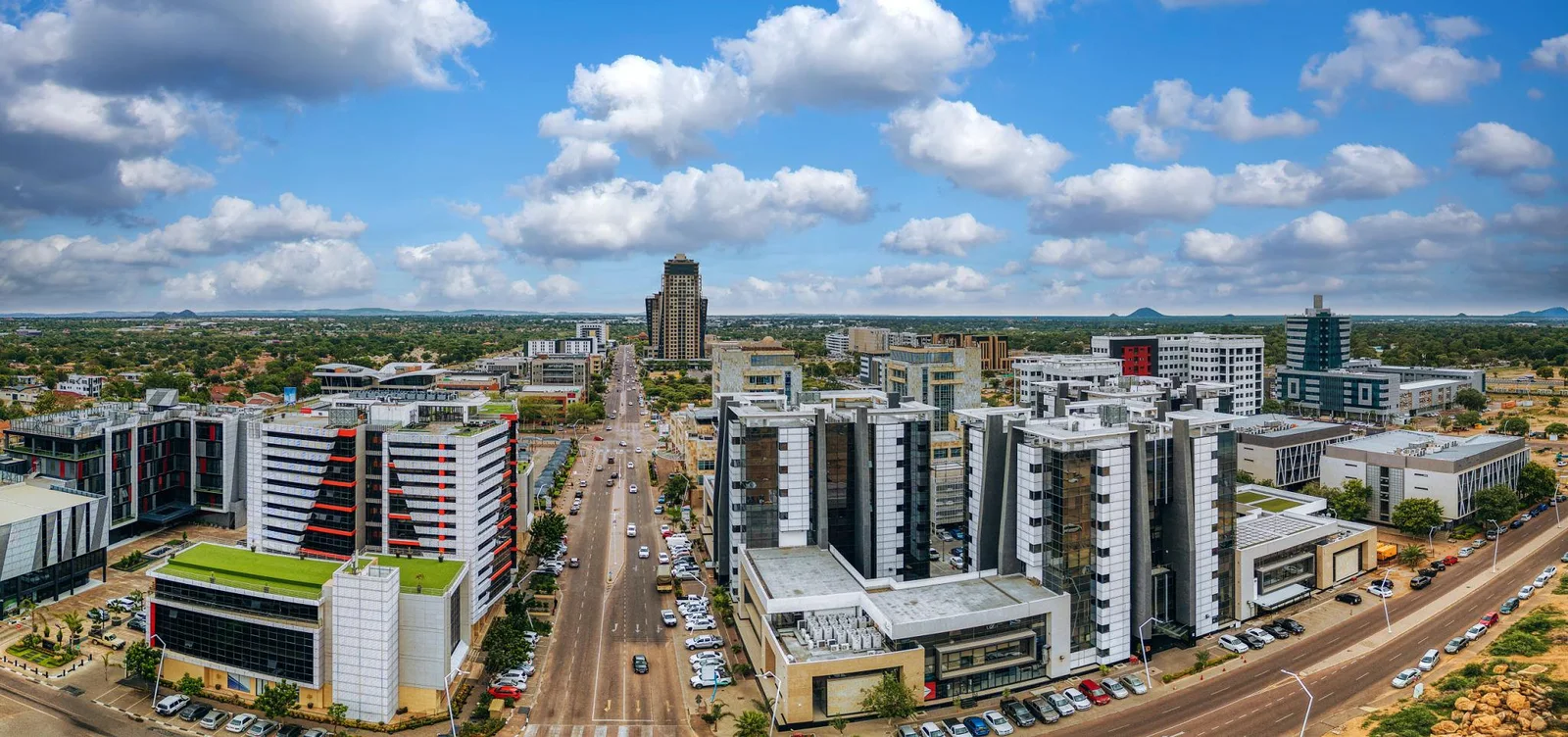
The relocation of important De Beers commercial functions to Gaborone marked a significant step in this strategy.
The objective was no longer simply to produce diamonds, but to attract some of the commercial and professional activities associated with their international distribution.
This development reflected a broader ambition: transforming a country of extraction into a center of diamond-related economic activity.
Yet capturing a larger share of the value chain does not eliminate dependence on the final market. It can even increase national exposure to an industry's difficulties when several stages of production and commercialization are concentrated within the same territory.
Mining Revenues as an Instrument of Development
One of Botswana's principal historical achievements lies in its use of diamond revenues to finance public investment.
As mining income increased, the state acquired resources that enabled it to expand infrastructure, develop administrative services, and improve access to education and healthcare.
Roads, supply networks, public facilities, and institutional capabilities improved substantially compared with the situation at independence.
This transformation supported rapid economic growth over several decades.
Botswana gradually became an upper-middle-income country, having initially ranked among the world's least developed economies.
The contrast with certain other resource-rich countries is significant.
Extractive revenues can fuel unproductive expenditure, patronage networks, political conflict, or unsustainable debt accumulation. In Botswana, a substantial share of those revenues was directed toward building public assets and developing national capabilities.
This does not mean that every expenditure was efficient or that corruption was absent. The country nevertheless benefited for many years from a reputation for relatively prudent public management and administrative stability.
That reputation itself became an economic advantage.
Institutional predictability facilitates long-term investment, particularly in mining, where projects require substantial capital and extended operating horizons.
Botswana thus established a favorable cycle: natural resources financed the state, the state invested in infrastructure and institutions, and that stability facilitated continued mining investment.
The problem emerges when this cycle, effective in managing resource income, fails to generate enough new activities capable of gradually replacing it.
The Pula Fund: Saving an Exhaustible Resource
Botswana also sought to convert part of its mining income into financial wealth.
The Pula Fund, established in 1994 and managed within the Bank of Botswana's foreign-reserve framework, became one of the instruments of this strategy.
Its underlying principle responds to a fundamental economic reality: diamonds are an exhaustible resource, while the economic and social needs of the population extend far beyond the operating life of mineral deposits.
Part of the wealth generated by exports must therefore be preserved in financial assets capable of supporting future generations and contributing to macroeconomic stability.
This approach shares certain similarities with Norway's sovereign wealth fund, but the two arrangements should not be confused.
Norway's Government Pension Fund Global operates within a specific institutional, fiscal, and asset-management framework, with a scale and level of public reporting that differ substantially from Botswana's arrangements.
The Pula Fund forms part of Botswana's foreign-reserve architecture and serves purposes related to macroeconomic management, wealth preservation, and liquidity.
It helps protect the economy against certain shocks, but it cannot, by itself, neutralize the consequences of a prolonged decline in mining revenues.
The distinction between a temporary fluctuation and a structural transformation is essential.
When an industry experiences a cyclical slowdown, accumulated reserves can help finance public expenditure and prevent excessively abrupt adjustments.
If global demand or prices deteriorate over the long term, however, financial assets do not automatically replace the future income that has been lost.
Accumulated wealth can buy time. It does not, by itself, create a new productive base.
This limitation lies at the heart of Botswana's contemporary difficulties.
The Paradox of Good Management
Botswana is often presented as an exception to the “resource curse,” a situation in which abundant raw materials can coexist with weak institutions, conflict, or insufficient economic diversification.
The country has indeed avoided several of the most dramatic failures associated with extractive economies.
Yet that achievement has sometimes concealed a contradiction.
Sound management of mining revenues can substantially improve living standards without sufficiently transforming the structure of production.
Diamonds generate considerable economic value, but their extraction is relatively capital-intensive. It does not necessarily create employment in proportion to the revenues it produces.
The state can redistribute this wealth through public-sector wages, services, infrastructure, and contracts, but these mechanisms do not always produce a diversified and competitive private sector.
Botswana therefore experienced remarkable historical growth while continuing to face high unemployment and significant inequality.
This situation illustrates the fundamental difference between rising national income and the transformation of productive employment.
An economy can become considerably wealthier without creating enough economic activity for its entire workforce.
Fiscal dependence reinforces the problem.
When mining revenues finance a substantial share of public expenditure, favorable periods can support the expansion of services and public employment. But downturns subsequently force difficult choices between maintaining benefits, financing investment, and preserving fiscal stability.
The success of a resource-based model can therefore delay necessary structural changes.
As long as revenues remain abundant, the urgency of developing alternative economic engines appears less immediate. When market conditions deteriorate, diversification becomes indispensable, but it cannot be achieved within a few years.
Botswana illustrates this difficulty with particular clarity: managing existing wealth effectively is not the same as building the next sources of wealth.
Diamonds in a Changing Market
The vulnerability of Botswana's economic model has intensified as the global diamond market has changed.
For many years, natural diamonds occupied a distinctive position in jewelry and luxury markets.
Their geological scarcity, symbolic value, and the commercial strategies of major industry participants helped sustain substantial international demand.
Several developments are now altering that balance.
The first concerns laboratory-grown diamonds.
These stones possess physical and chemical characteristics very similar to those of natural diamonds, while being produced through industrial processes.
Their expansion has fundamentally changed certain market segments, particularly through substantial price declines and greater availability.
It would be excessive to suggest that laboratory-grown diamonds are automatically replacing all natural diamonds. The two markets retain differences in positioning, pricing, consumer perceptions, and clientele.
Nevertheless, competition is challenging part of the value traditionally associated with the scarcity of natural stones.
The second transformation concerns demand.
Diamonds remain closely linked to discretionary household spending and luxury consumption. Their market is therefore sensitive to economic slowdowns, changes in consumer behavior, and financial conditions.
Weakness in major consumer markets can quickly affect producers.
The third development concerns inventories and the organization of the industry.
When sales slow, companies may accumulate stocks, reduce purchases of rough stones, and adjust production levels.
These decisions affect the revenues of producing countries even when their mining capacity remains intact.
Botswana is therefore experiencing the consequences of a transformation it does not directly control.
The quality of its institutions cannot prevent international consumers from changing their preferences, nor can it stop technology from creating new forms of competition.
This is precisely what distinguishes the current risk from certain previous crises.
The country is not merely facing a price fluctuation. It must consider the possibility of a lasting change in the economic conditions of its dominant industry.
De Beers and the Struggle for Value
The relationship with De Beers remains strategic, but it is evolving in a less favorable environment.
For several years, Botswana has sought a larger share of diamond commercialization and the expansion of economic activities carried out within its territory.
Negotiations over sales agreements and mining licenses have therefore addressed questions extending beyond the immediate distribution of revenues.
The issues include determining what proportion of production can be marketed through Botswana-linked entities, which activities should be developed locally, and how mining profits can support other sectors.
The logic behind this strategy is understandable.
A country supplying a significant share of the world's natural diamonds wants greater influence over commercial channels and the revenues associated with them.
Yet these negotiations are taking place while the industry itself is changing.
The value of gaining greater access to diamonds depends on the ability to sell them under favorable conditions. Greater commercial autonomy can improve margins and local expertise, but it also transfers additional risks to national operators.
Botswana must therefore balance two objectives.
The first is to capture a larger share of the value generated by its established industry.
The second is to use that industry as an instrument of transition toward an economy less dependent on diamonds.
These objectives are not incompatible. They can, however, come into tension when investments required to maintain mining competitiveness absorb resources that could otherwise be directed toward different sectors.
The question is no longer simply how much Botswana earns from diamonds.
It is how much of that wealth can still be converted into economic capabilities independent of diamonds.
The 2024 Election: A Historic Political Transition
Botswana's economic evolution has been accompanied by a major political transformation.
In October 2024, the general election ended nearly six decades of dominance by the Botswana Democratic Party, which had governed the country since independence.
The victory of the Umbrella for Democratic Change brought Duma Boko to the presidency.
This transfer of power was historic.
It demonstrated that the political continuity characterizing Botswana for generations could give way to a change of government through the ballot box.
In a region marked by diverse democratic trajectories, the transition reinforced Botswana's significance as a case study in institutional development.
It did not, however, mean that economic difficulties could be resolved simply by changing governments.
The new leadership inherited an economy heavily dependent on diamonds, substantial social expectations, and increasingly difficult fiscal constraints.
The political legitimacy produced by the election created an opportunity for a change in direction, but also intensified pressure to deliver results quickly.
Yet the necessary transformations are structural.
Developing new industries, improving skills, attracting productive investment, and creating sustainable employment require years, sometimes decades.
The election therefore opened a new political chapter without eliminating the fundamental constraints of the economic model.
It also raised an institutional question: can Botswana preserve the management qualities that supported its historical success while changing its priorities sufficiently to respond to a different global economy?
Administrative continuity and the capacity for reform must now advance together.
Diversification Is Harder Than It Appears
Economic diversification has long been an official objective in Botswana.
Yet results remain limited relative to the continuing importance of diamonds in exports and public revenues.
This difficulty cannot be explained solely by a lack of political will.
The country faces several structural constraints.
Its domestic market is small. Its population is dispersed across a vast territory. Its landlocked position increases certain logistical costs. Water and energy requirements limit the attractiveness of some industrial activities.
It also faces competition from regional and international economies with larger markets, more developed industrial networks, or lower production costs.
Large-scale manufacturing industrialization therefore does not necessarily offer a simple solution.
Botswana must identify activities compatible with its particular advantages.
Agro-industry and cattle-related production have a historical foundation, but their development depends on market access, sanitary standards, water availability, and productivity improvements.
Financial and professional services could benefit from the country's institutional stability, but expansion requires specialized skills and deeper international integration.
Digital technologies offer opportunities in services, administration, and certain exportable activities. They are not, however, an automatic solution to unemployment and require suitable infrastructure, training, and entrepreneurial conditions.
Renewable energy, particularly solar power, offers substantial potential given the country's climatic conditions. Its development could strengthen energy security and reduce costs, but requires investment in networks, storage, and financing capacity.
Diversification therefore cannot be reduced to a list of promising sectors.
It requires the simultaneous transformation of infrastructure, skills, financing institutions, and competitive conditions.
The real challenge is to develop businesses capable of producing sustainably for external markets without relying primarily on public procurement or redistributed mining income.
Tourism: Another Form of Natural Wealth
Botswana possesses an economic advantage distinct from its mineral resources: an exceptional natural heritage.
The Okavango Delta, a UNESCO World Heritage Site, is one of Africa's most remarkable ecosystems.
Together with Chobe National Park and other protected areas, it supports an international tourism industry built around landscapes, biodiversity, and wildlife observation.
In several regions, Botswana has historically favored a relatively selective tourism strategy, emphasizing high-value stays rather than mass tourism.
This approach seeks to reconcile economic revenues with environmental preservation.
It can generate substantial income while limiting certain pressures on ecosystems.
Yet it also has social limitations.
High-end tourism does not necessarily create enough jobs to meet national employment needs. Some of the value may be captured by international operators, while local communities do not always benefit proportionately from the revenues generated.
Tourism also remains sensitive to health crises, economic downturns, and disruptions to international transport.
Environmental conservation itself raises complex questions concerning land use, relations between communities and wildlife, and the distribution of economic benefits.
Botswana must therefore avoid reproducing, in tourism, excessive dependence on an activity based on a natural resource.
The distinction is important: ecosystems can be preserved and renewed under certain conditions, unlike mineral deposits. But their economic value still depends on international markets and fragile ecological balances.
Tourism can become a more important pillar of diversification without providing a sufficient solution on its own.
Water, Energy, and the Invisible Constraints
Botswana's economic transformation also depends on resources less visible than diamonds.
Water is among the most important constraints.
In a largely semi-arid country, the needs of households, agriculture, industry, and mining compete with one another.
Climate change may intensify this pressure by altering temperatures, rainfall patterns, and the frequency of certain extreme events.
Industrial development must therefore be assessed in terms of water consumption and compatibility with local supply capacity.
Energy presents another challenge.
Botswana possesses coal resources, but its electricity system has experienced production difficulties and a need for imports. Security of supply and grid reliability are essential conditions for attracting industrial companies.
The country's solar potential offers an opportunity for transformation.
However, producing renewable electricity is not enough to establish a competitive industrial sector. Reliable networks, storage or flexibility capacity, financing mechanisms, and industrial customers capable of supporting investment are also necessary.
Landlocked geography completes this set of constraints.
Botswana depends on regional corridors to reach ports and major markets. Improving railway, road, and customs infrastructure can reduce certain costs, but requires sustained cooperation with neighboring countries.
These factors demonstrate that economic diversification does not depend solely on sectoral choices.
It rests on the availability of essential infrastructure, often expensive to build and maintain for a relatively small population.
The geography that diamond revenues helped Botswana partially overcome remains an economic reality.
South Africa: An Indispensable Partner, a Permanent Dependence
The relationship with South Africa is central to Botswana's economy.
The two countries maintain deep commercial, logistical, financial, and historical ties.
South Africa is a major supplier of goods, a partner in regional infrastructure, and an essential route to international markets.
Botswana also belongs to the Southern African Customs Union, whose revenue-sharing arrangements constitute an important component of public finances for several member states.
This integration offers considerable advantages.
It facilitates trade, provides access to a larger economic area, and enables Botswana to benefit from regional infrastructure that a small domestic market would struggle to develop independently.
But it also creates dependencies.
South African logistical, energy, or economic difficulties can spread to Botswana. Trade decisions made at the regional level influence its businesses, prices, and public revenues.
Diversification must therefore be conceived within a regional framework.
Botswana cannot realistically seek to produce domestically every good it consumes. Its development will instead depend on its ability to identify specialized activities and integrate them effectively into Southern African and wider markets.
This strategy requires pragmatic economic cooperation with South Africa, alongside diversification of export destinations and commercial corridors.
The objective is not to eliminate interdependence, which would be unrealistic.
It is to prevent interdependence from becoming dependence without alternatives.
Inequality, Employment, and the Social Contract
Botswana's macroeconomic success contrasts with the persistence of substantial social difficulties.
The country continues to face high unemployment, particularly among young people, as well as significant income and wealth inequality.
These problems reveal the limitations of growth historically concentrated in a capital-intensive sector.
Diamonds can generate considerable public revenues without directly creating large numbers of jobs.
Public expenditure subsequently supports activity in other sectors, but its effectiveness depends on the economy's ability to develop autonomous production.
Employment therefore becomes the central question.
An economy cannot sustainably rely on redistribution financed by resource income whose future is increasingly uncertain.
It must create activities capable of employing a population whose aspirations rise alongside educational attainment and improved living conditions.
Botswana has also confronted major public-health challenges, particularly the HIV epidemic, which profoundly affected its society and economic capabilities.
Public-health policies and improved access to treatment have enabled substantial progress, but this history demonstrates that national income indicators alone are insufficient measures of human development.
The quality of public services, access to employment, living conditions, and households' ability to build a secure future remain essential dimensions.
Botswana's economic transition must therefore also be a social transition.
Diversification that improved exports without generating sufficient employment would risk leaving many of the tensions undermining the social contract unresolved.
The Productivity Challenge
Beyond sectoral diversification, Botswana must confront a productivity challenge.
Mineral wealth has financed infrastructure and services, but it has not automatically created a dense network of exporting businesses outside mining.
Yet sustainable prosperity depends on the ability of workers and companies to produce greater value from the resources available.
This transformation requires appropriate skills, effective competition, accessible financing, and an administration capable of supporting investment without systematically replacing private initiative.
The public sector can play a decisive role.
It must provide infrastructure, education, regulatory stability, and certain strategic investments.
But an economy in which public procurement remains the principal driver of many activities risks preserving an indirect dependence on mining revenues.
The question is therefore how to use state capacity to encourage the emergence of businesses capable of operating without permanent support.
This transition may involve difficult choices.
Some historically protected activities will need to improve their competitiveness. Support mechanisms will need to be evaluated against their results. Training policies will need to correspond more closely to businesses' actual requirements.
Diversification does not simply mean creating new sectors.
It requires changing the mechanisms through which an economy selects, finances, and develops productive activities.
Institutional Stability Is No Longer Enough
For several decades, the relative quality of Botswana's institutions was one of its principal advantages.
Political continuity, administrative predictability, and relatively prudent management of mining revenues helped the country avoid certain crises that affected other extractive economies.
But institutions that succeed in managing resource income are not necessarily those best equipped to promote industrial transformation.
Managing a dominant mining sector requires expertise in negotiation, regulation, taxation, and public investment.
Diversification demands additional capabilities: market development, support for innovation, stronger competition, the formation of new businesses, and rapid adaptation to technological change.
Botswana must therefore evolve its institutional model without losing the qualities that contributed to its success.
This transformation also requires reconsidering the role of the state.
A stable and disciplined administration remains indispensable. But stability can become insufficient when accompanied by rigidity, delays, or limited capacity to experiment with new economic policies.
Future success will depend less on simply preserving existing structures than on their ability to learn and reform.
The political transition of 2024 may offer an opportunity for renewal, provided institutional changes genuinely improve the country's economic capabilities.
Democracy, transparency, and administrative quality do not automatically guarantee growth.
They can, however, create conditions in which mistakes are identified, policies corrected, and public decisions subjected to more rigorous evaluation.
A Revealing Comparison with Norway
Comparing Botswana with Norway helps clarify the conditions under which natural-resource wealth can be transformed.
Both countries benefited from substantial extractive resources. Both sought to preserve part of those revenues and use them to finance development.
Their trajectories, however, differ profoundly.
Before the expansion of its petroleum industry, Norway already possessed an industrialized economy, developed public institutions, high levels of education, and a diversified productive base.
Oil enriched an economy whose essential capabilities were already in place.
In Botswana, diamonds played a much more foundational role.
They financed infrastructure construction, the expansion of public services, and the consolidation of the state in a country that initially possessed extremely limited resources.
This distinction is decisive.
When natural-resource income is added to a diversified economy, it can strengthen national wealth without becoming the sole foundation of prosperity.
When it finances much of the initial transformation, it risks becoming indispensable to the functioning of the model itself.
The comparison also illustrates the limitations of an approach focused exclusively on sovereign wealth funds.
Saving part of extractive revenues matters, but the size of accumulated assets depends on available income, immediate development needs, and fiscal choices.
Botswana could not simply reproduce Norway's strategy under such different economic conditions.
It had to finance state-building, infrastructure, and the social needs of a population that was initially far poorer.
The real lesson therefore does not lie in copying a model.
It lies in understanding how institutions, productive structures, and available resources determine the possibilities for accumulating national wealth.
Wealth Beyond Diamonds
Botswana is not facing the immediate disappearance of its diamond industry. Its deposits, infrastructure, and commercial expertise remain important assets.
But the assumption that abundant diamond revenues will continue to sustain long-term growth has become increasingly uncertain.
This development requires a reconsideration of the relationship between national wealth, public expenditure, and domestic production.
The country will need to preserve its financial capacity as far as possible while investing in the conditions for effective diversification.
The task will be difficult.
Reducing expenditure may weaken economic activity and public services. Maintaining large deficits over an extended period may deplete reserves. Raising taxes on an insufficiently diversified private economy may discourage investment.
None of these options offers a satisfactory solution in isolation.
The response will depend on improving the quality of public spending, selecting productive investments, and creating an environment in which businesses can develop beyond markets financed by the state.
Diamond resources must be regarded not merely as a source of income, but as capital for transition.
Their historical function was to finance the country's modernization.
Their future function should be to accelerate the emergence of activities capable of sustaining prosperity as their contribution declines.
This transformation also requires a change in collective expectations.
Development can no longer be measured primarily through mining revenues, public expenditure, or national income growth.
It must be assessed through job creation, productivity, export diversification, and households' ability to improve their living conditions sustainably.
The Real Legacy
Botswana's history remains an important success.
Within a few decades, a country possessing extremely limited resources built infrastructure, developed its institutions, and transformed mineral wealth into economic and social progress.
That trajectory deserves recognition without idealization.
Diamonds made much possible. They did not eliminate inequality, resolve unemployment, or create an economy sufficiently independent of their revenues.
Botswana demonstrated that natural-resource wealth could be managed with relative discipline and used to advance national development.
It must now demonstrate that a country can move beyond the model that made its success possible.
The challenge is particularly demanding because institutions, businesses, and economic expectations have been organized around a dominant industry for generations.
Changing direction does not simply mean identifying new resources or announcing priority sectors.
It requires transforming the skills, incentives, investments, and productive structures that determine how an economy creates wealth.
Botswana possesses important advantages for undertaking this transition: substantial institutional experience, exceptional natural heritage, a strategic regional position, and public capabilities built over several decades.
But these advantages will deliver results only if they support the emergence of a more productive, more diversified economy capable of creating more jobs.
The country's historical success rested on one question: how could diamonds be used to build a nation?
Its future now depends on a more demanding one: how can that nation prosper without remaining permanently dependent on diamonds?
Botswana has learned how to turn a natural resource into national wealth. It must now turn that wealth into an economy capable of outlasting the resource itself.
Atlas Limits Research Desk
Atlas Limits’ editorial and analytical desk.