Algeria's decision to deploy military forces to Niger marks a potentially historic shift in Algiers' security doctrine. Behind this development lies a much broader transformation: the redistribution of power between North Africa and the Sahel, competition over energy and mineral resources, the emergence of new strategic corridors, and the growing ambitions of African regional powers. Between an energy-rich Algeria seeking to extend its influence and a resource-rich but economically fragile Niger attempting to redefine its sovereignty, the emerging partnership reveals both substantial opportunities and profound structural contradictions.
A Military Decision With Implications Far Beyond Bilateral Relations
On October 25, 2026, Algeria's Parliament authorized the deployment of units from the Algerian People's National Army to Niger. The following day, the Algerian presidency confirmed plans to send military personnel to protect the two countries' energy and economic interests.
The proposed deployment reportedly includes Madama, in northern Niger near the Libyan border. Previously used by French forces during Operation Barkhane, the installation occupies a strategically significant position along routes connecting Libya's Fezzan region with the wider Sahel.
The decision represents a potentially major development in Algeria's modern military history.
Since independence in 1962, Algeria has largely built its defense doctrine around territorial sovereignty, non-interference and reluctance to maintain a permanent military presence abroad. Its participation in the 1973 Arab–Israeli War remains one of the most significant historical precedents for external military engagement.
The constitutional revision adopted in 2020 established a framework allowing military deployments beyond Algeria's borders, subject to parliamentary authorization.
The October 2026 decision gives practical significance to that constitutional evolution.
However, authorization to deploy forces should not be confused with confirmation that a permanent military base has already been established.
As of October 27, the precise number of personnel, operational timetable, duration and legal arrangements governing the proposed deployment had not been fully disclosed.
These distinctions matter. A security detachment protecting infrastructure, a military liaison mission, a rapid-response force and a permanent overseas base have very different strategic implications.
Nevertheless, the political significance is already substantial.
Algeria is explicitly contemplating the direct protection of economic interests beyond its national borders.
This development suggests an evolution in how the Algerian state defines its strategic interests and the geographical boundaries of national security.
It also comes at a time when the regional security architecture is undergoing profound change.
French and American military withdrawals, the consolidation of military-led governments, the expansion of armed insurgencies and competition among external powers have transformed the Sahel's geopolitical environment.
Niger is emerging as one of the countries where Algeria's future regional role could be determined.
Understanding the significance of this rapprochement requires a broader examination of the two countries' economic structures, military capabilities, political systems, natural resources and international relationships.
I. Two Vast Countries, Two Profoundly Unequal Economic Powers
Algeria: A Regional Power With Considerable Resources
Covering approximately 2.38 million square kilometers, Algeria is Africa's largest country by land area.
Its population stands at approximately 47 million, while nominal gross domestic product is broadly estimated at $270–290 billion, depending on the year, source and methodology.
Algeria possesses a substantial domestic market, a relatively consolidated state administration, developed energy infrastructure, considerable military capabilities and direct access to the Mediterranean.
Yet its economy remains heavily concentrated around hydrocarbons.
Oil and natural gas account for the overwhelming majority of merchandise export earnings and a substantial share of government revenue.
This structure gives the Algerian state significant financial resources when international energy markets are favorable.
It also exposes the country to fluctuations in commodity prices, production levels and domestic energy consumption.
Algeria is therefore simultaneously a major energy power and an economy facing a persistent diversification challenge.
Manufacturing, agriculture, services and infrastructure have developed over time, but the transition toward a competitive, diversified export economy remains incomplete.
Hydrocarbon revenues help finance public infrastructure, military procurement, imports and social expenditure.
They do not automatically generate an internationally competitive productive system.
This contradiction has direct consequences for Algeria's foreign policy.
To reduce its economic vulnerability and expand its commercial opportunities, Algeria needs additional markets, productive investments and transport connections.
Sub-Saharan Africa represents a potentially important area for economic expansion.
However, accessing these markets requires overcoming a major geographical obstacle: the Sahara.
Niger: An Economically Fragile State at the Center of a Strategic Region
Niger presents a radically different profile.
Its territory covers approximately 1.27 million square kilometers, while its population, approaching 28 million, is growing particularly rapidly.
Nominal GDP remains in the approximate range of $20–25 billion.
Average economic output per person is therefore substantially lower than in Algeria.
Niger's economy remains heavily dependent on agriculture, livestock, informal activities and the extraction of natural resources.
The country faces major infrastructure deficits in transportation, electricity, healthcare, education and industrial processing.
Its landlocked geography creates an additional structural constraint.
Without direct access to the sea, Niger depends on transit corridors crossing neighboring countries to import capital goods, export commodities and participate in international trade.
Diplomatic disputes, border closures or security disruptions along these corridors can generate disproportionate economic consequences.
Yet Niger's economic weakness should not be mistaken for strategic irrelevance.
The country occupies a critical geographical position connecting North Africa, Libya, the central Sahara, the Lake Chad Basin and West Africa.
Its territory serves as a potential transit area for trade, energy infrastructure, migration and cross-border networks.
It also possesses internationally significant mineral and petroleum resources.
Niger therefore illustrates a defining characteristic of many resource-rich developing economies: the international strategic value of its geography and natural endowments considerably exceeds the wealth currently generated within its borders.
Structural Asymmetry Does Not Eliminate Interdependence
Measured by nominal GDP, Algeria's economy is approximately twelve times larger than Niger's.
Its advantages are even greater in conventional military capabilities, industrial infrastructure, public financing and technological capacity.
However, international power is not determined by economic size alone.
A relatively poor country can possess substantial bargaining power when it controls territory, resources or transport routes essential to stronger partners.
Niger cannot compete with Algeria in conventional military terms.
But Algeria cannot establish a durable economic and security presence across the Sahel without cooperation from the states controlling the territories south of its borders.
This creates a relationship of unequal but potentially reciprocal dependence.
Algeria possesses capital, military capabilities, infrastructure and access to international markets.
Niger possesses natural resources, transit territory and a central position within the Sahel's emerging geopolitical architecture.
The fundamental question is whether these complementary assets can support durable economic integration or whether the relationship will remain concentrated around security cooperation and raw-material extraction.
II. Energy: The Material Foundation of Algerian Power
Natural Gas as an Economic and Diplomatic Instrument
Algeria's international influence rests heavily on its energy industry.
The country possesses significant natural gas and oil reserves, extensive production experience and infrastructure connecting its resources to international markets.
Sonatrach occupies a central position in this system.
The state-owned company is more than an industrial enterprise. It is a major instrument of public financing, economic policy and international influence.
Algeria's gas transportation networks, liquefied natural gas terminals and commercial relationships with European buyers give the country strategic importance beyond the overall size of its economy.
Geographical proximity to Europe provides an additional advantage.
As European governments seek to diversify their energy supplies, Algeria remains an important supplier.
However, this position faces several limitations.
Domestic gas consumption is increasing alongside population growth, urbanization and industrial demand.
Maintaining or expanding exports requires investment in exploration, production, infrastructure and energy efficiency.
Europe's longer-term energy transition could also change the structure of demand.
Algeria must therefore preserve its current energy revenues while preparing for an economic model less dependent on those revenues.
This tension between present strength and future transformation is one of the central contradictions of Algeria's development.
Oil Revenues and Structural Vulnerability
Hydrocarbon exports provide the Algerian state with substantial fiscal capacity.
They support public expenditure, infrastructure development, imports and strategic investment.
But dependence on energy revenue creates permanent exposure to international market cycles.
When oil and gas prices rise, the government's financial room for maneuver expands.
When prices decline, difficult trade-offs emerge between social expenditure, investment, subsidies and military procurement.
A significant part of Algeria's financial power therefore depends on variables outside its direct control.
This helps explain the strategic importance attached to industrial diversification and commercial expansion into African markets.
A successful increase in non-hydrocarbon exports could strengthen economic resilience.
Yet a foreign economic strategy centered primarily on new oil and gas projects could also reinforce the existing concentration.
The partnership with Niger embodies this ambiguity.
It could open new markets and transportation corridors.
It could also extend the geographical reach of Algeria's hydrocarbon-centered economic model without fundamentally transforming it.
III. Niger: Uranium, Oil, Gold and the Paradox of Economic Sovereignty
Uranium: A Resource of International Strategic Importance
Uranium is among Niger's best-known strategic resources.
Deposits concentrated particularly around Arlit have historically contributed to international nuclear fuel supply chains.
Their exploitation supported a long-standing economic relationship with France, notably through Orano and its predecessor companies.
That relationship became increasingly contentious after the July 2023 military coup.
Niger's new authorities sought to redefine the ownership, control and operating conditions of strategic mining assets.
This policy forms part of a broader demand for economic sovereignty.
However, legal ownership of a natural resource does not automatically translate into industrial capacity.
Mining requires substantial capital investment, specialized technologies, skilled labor, transport infrastructure and commercial agreements.
Uranium production also involves specific safety, regulatory and marketing requirements.
A government can regain control of a mining asset without immediately possessing the resources required to sustain or expand production.
Conversely, foreign operators can extract valuable resources while leaving an insufficient share of economic benefits in the producing country.
The fundamental issue is therefore not simply national ownership versus foreign exploitation.
It concerns value distribution, technology transfer, taxation, infrastructure investment and the ability of the domestic economy to benefit from mining activity.
Niger's Oil Industry: New Revenue, New Dependencies
Petroleum development represents an important transformation of Niger's economy.
The Agadem Basin and associated export infrastructure have created opportunities to increase hydrocarbon revenues.
The pipeline connecting Niger to Benin is particularly significant.
It provides a route to international markets without relying exclusively on road transportation.
However, it also creates dependence on a specific transit corridor, vulnerable infrastructure and the political relationship with a neighboring state.
Diplomatic tensions can disrupt exports even when production capacity remains available.
Infrastructure security therefore becomes a direct component of economic policy.
For Niger, the challenge is to transform petroleum revenues into productive investment rather than allowing a rent-based economy to develop around the state and a limited number of operators.
Hydrocarbon dependence is consequently a potential risk for Niamey as well as Algiers.
International experience demonstrates that rapid growth in commodity exports can coexist with weak industrial diversification, governance problems and persistent inequality.
Niger must avoid reproducing the structural weaknesses found in many extractive economies.
Gold and Other Mineral Resources
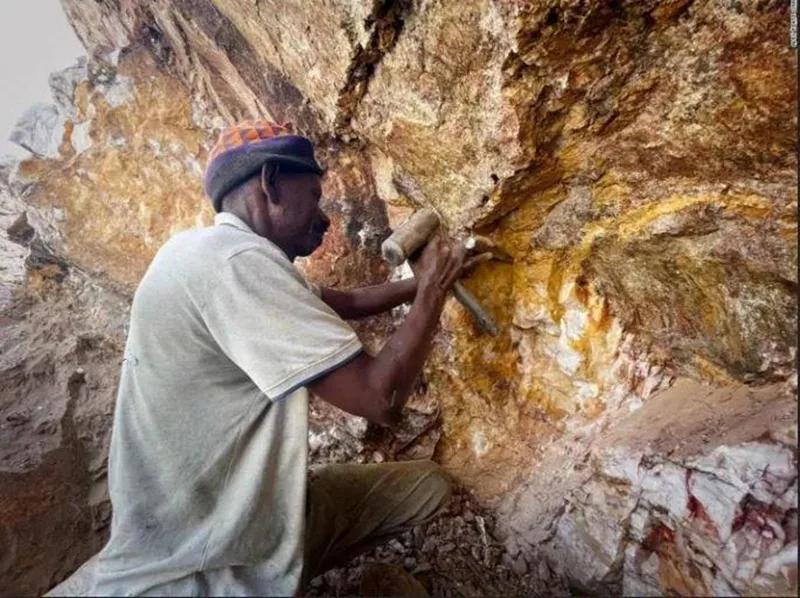
Niger also possesses gold deposits and additional mineral potential.
Some gold production occurs through artisanal or informal operations, complicating production monitoring, taxation and formal economic integration.
These activities can provide income to local communities.
They can also become connected to smuggling networks and poorly regulated cross-border economies.
Mining development raises environmental and social questions involving water consumption, waste management, labor conditions and revenue distribution.
Resource exploitation is therefore not simply a financing challenge.
It also requires effective regulation, territorial administration and economic negotiation.
Institutional weakness can prevent natural-resource wealth from becoming broad-based prosperity.
IV. Military Power: Algeria's Overwhelming Advantage and Its Limits
One of Africa's Major Conventional Armed Forces
Algeria maintains a military establishment designed to defend an immense territory and deter significant conventional threats.
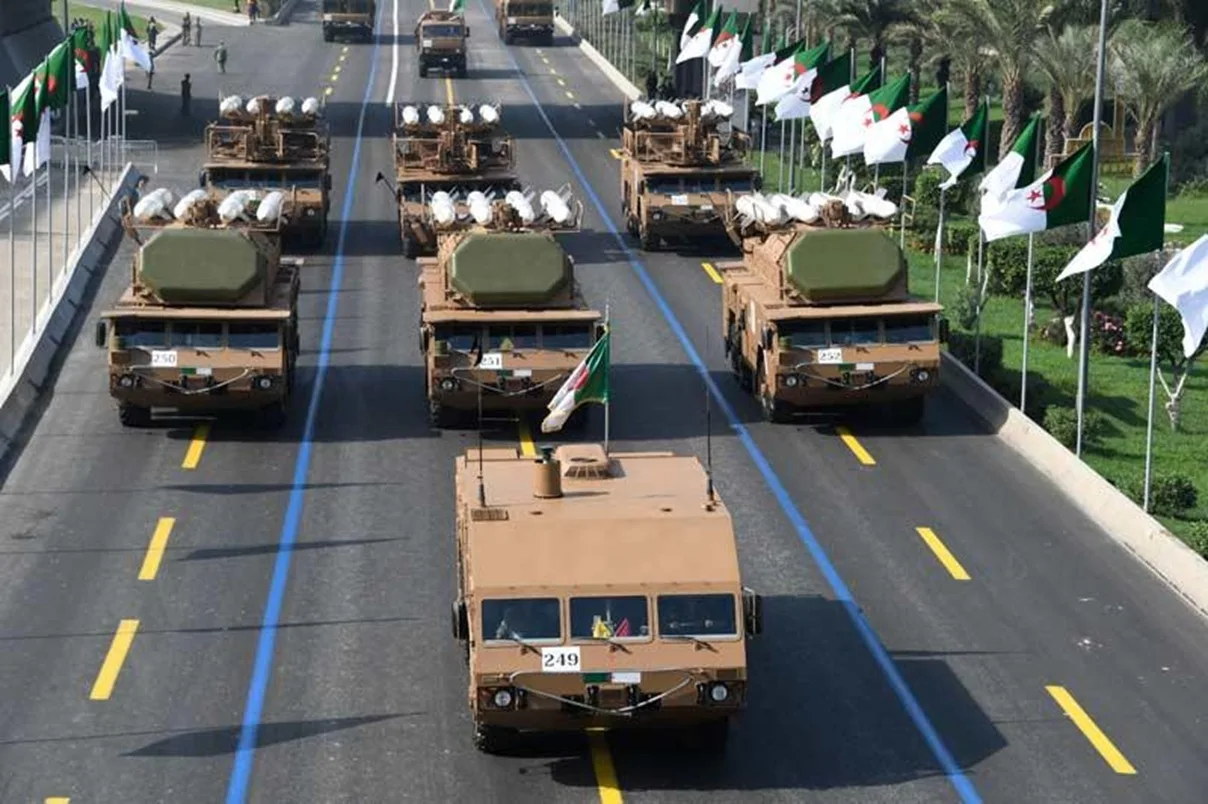
Its armed forces include mechanized ground units, combat aircraft, air-defense systems, naval capabilities and surveillance infrastructure.
The military has benefited from sustained investment over several decades.
Russia has historically been one of Algeria's most important arms suppliers, although Algiers maintains defense relationships with other partners.
Algerian military power combines equipment, training, infrastructure and institutional experience.
However, three concepts must be distinguished: military expenditure, conventional capability and operational effectiveness.
A large defense budget facilitates equipment procurement but does not guarantee permanent operational readiness.
A sophisticated air force may provide considerable advantages in conventional warfare without being equally suited to every form of irregular conflict.
A well-equipped army can protect strategic installations without necessarily possessing the political instruments required to stabilize foreign territory.
These distinctions are particularly important in the Sahel.
Niger: An Army Facing a Dispersed and Persistent Insurgency
Niger's armed forces possess substantially fewer resources.
They nevertheless confront threats that differ fundamentally from those for which large conventional armies are primarily organized.
Armed groups operating in the Sahel exploit mobility, local knowledge, porous borders and social tensions.
Their operational structures are frequently decentralized.
Countering them requires intelligence, mobile units, cooperation with local communities and a sustained state presence.
Superior equipment alone is insufficient.
Niger faces violence involving organizations affiliated with Islamic State and Al-Qaeda in different parts of its territory.
These conflicts form part of a wider regional security crisis affecting Mali, Burkina Faso and neighboring areas.
Their human consequences are severe.
Population displacement, destruction of livelihoods, disruption of agriculture, school closures and reduced access to essential services undermine economic development.
Security is therefore a necessary condition for economic recovery.
Yet the absence of development can itself contribute to instability.
This relationship makes exclusively military solutions inadequate.
Madama: A Strategic Position With Multiple Functions
Madama occupies an important location in the security geography of the central Sahara.
Situated in northern Niger near the Libyan border, it provides access to an area crossed by routes connecting Fezzan with the wider Sahel.
Its previous use by French forces demonstrates its operational relevance.
For Algeria, a presence at Madama could provide several advantages.
It could improve situational awareness of cross-border movements, strengthen cooperation with Nigerien forces and establish a logistical foothold in a strategically important area.
It could also contribute indirectly to protecting economic interests in northern Niger.
However, establishing a presence at Madama would not amount to controlling the Sahara.
Distances are immense, transit routes are numerous and surveillance capabilities inevitably remain limited.
A military installation can be an important operational asset without providing comprehensive control over regional movements.
Its strategic value will depend on personnel, equipment, intelligence capabilities, legal arrangements and coordination with Nigerien authorities.
The central question is therefore not simply whether Algerian soldiers will be stationed at Madama.
It is what mission they will perform, for how long and within what broader strategic framework.
V. A Historic Evolution in Algeria's Security Doctrine
The significance of the October 2026 decision extends beyond operational military considerations.
Since independence, Algerian foreign policy has been shaped by principles closely connected to the country's anti-colonial history.
Sovereignty, non-interference, opposition to foreign intervention and support for self-determination have occupied prominent positions in its diplomatic identity.
This orientation has never prevented Algeria from exercising regional influence.
Algiers has participated in mediation efforts, supported political partners, developed military cooperation and played an important diplomatic role.
Nevertheless, it has generally favored political and indirect security instruments over a permanent military presence beyond its borders.
The 2020 constitutional revision created a framework for change.
The proposed deployment to Niger is a particularly significant expression of that evolution.
It may signal a transition from a doctrine primarily focused on territorial defense toward a broader understanding of national security that includes strategic interests abroad.
Under such an approach, an energy facility, commercial corridor or overseas investment may be considered sufficiently important to justify direct military protection.
This pattern is familiar in the history of regional powers.
As a state's economic interests expand beyond its borders, the question of protecting those interests becomes increasingly important.
However, this logic carries the risk of expanding commitments.
A mission initially limited to protecting infrastructure can broaden in response to new threats.
A temporary deployment can become prolonged if security conditions fail to improve.
Bilateral cooperation can create responsibilities in conflicts the intervening state did not originally intend to enter.
Algeria's decision therefore opens new strategic possibilities while introducing a new category of risks.
VI. Algeria and Niger: From Diplomatic Tension to Strategic Rapprochement
The 2023 Coup as a Political Turning Point
On July 26, 2023, Nigerien President Mohamed Bazoum was overthrown by military officers led by General Abdourahamane Tiani.
The event profoundly altered Niger's international relationships.
Algeria condemned the unconstitutional change of government.
However, it also opposed external military intervention to restore the ousted administration.
This position reflected two concerns.
Algiers wanted to defend constitutional stability while avoiding a regional military operation that could trigger additional instability near its southern borders.
It therefore favored a negotiated political solution.
But the consolidation of military rule in Niamey and the transformation of regional alliances gradually required diplomatic adaptation.
The Alliance of Sahel States
Niger strengthened relations with Mali and Burkina Faso, both governed by military-led authorities.
The three countries established the Alliance of Sahel States, subsequently developing it into a confederation.
Their cooperation accompanied a broader break with several existing regional and Western security arrangements.
France withdrew its military forces from Niger in 2023.
The United States completed its withdrawal in 2024.
The Sahelian authorities sought alternative security partnerships, notably with Russia.
This transformation altered Algeria's strategic environment.
Algiers could no longer assume that Western military powers would maintain a substantial regional security presence indefinitely.
It also had to engage with military governments increasingly determined to assert their autonomy.
The Diplomatic Crisis of 2025
Relations between Algeria and the Alliance of Sahel States deteriorated significantly in 2025.
Algeria's destruction of a Malian drone triggered a diplomatic confrontation.
Niger joined its Sahelian partners in their response, including through the recall of its ambassador.
The episode demonstrated that political solidarity within the alliance could conflict with the bilateral interests of individual members.
It also revealed the limits of Algerian influence in a region where military governments were increasingly asserting their sovereignty.
The Rapprochement of 2026
Relations improved markedly during 2026.
High-level political exchanges intensified.
General Tiani's visit to Algiers in February helped restore dialogue.
Economic and energy cooperation returned to the center of bilateral discussions.
Military initiatives subsequently accompanied the rapprochement, including equipment assistance and defense consultations.
The military cooperation agreement signed in October preceded Algeria's parliamentary authorization for deployment.
These developments suggest that the Madama decision was not an isolated measure.
It formed part of a broader diplomatic and security realignment.
However, the speed of the rapprochement does not guarantee permanence.
Algerian and Nigerien interests currently converge on several issues.
They may diverge over relations with Mali, Libya or external powers.
VII. The Trans-Saharan Gas Pipeline: A Project That Could Reshape Regional Energy Relations
The Trans-Saharan Gas Pipeline is among the most ambitious economic projects linking Algeria, Niger and Nigeria.
Its objective is to transport Nigerian natural gas across Niger to Algeria, where existing infrastructure could connect it to international markets, particularly Europe.
The proposed route extends over several thousand kilometers.
For Nigeria, the project would provide another means of monetizing its substantial gas resources.
For Niger, it could generate transit revenue, investment, employment and opportunities for domestic energy development.
For Algeria, it could reinforce the country's role as a regional gas transportation and export hub.
However, the project faces substantial economic obstacles.
Financing depends on expected profitability, long-term supply contracts, purchasing commitments and security along the route.
Global gas markets are also evolving.
Liquefied natural gas provides alternative transportation and marketing options.
European energy-transition policies could affect future demand.
Investors must therefore assess profitability over several decades rather than relying solely on present market conditions.
Security represents an additional challenge.
A pipeline crossing areas affected by instability requires continuous monitoring, maintenance and cooperation among multiple governments.
Infrastructure protection could consequently become a central element of Algeria–Niger military cooperation.
Nevertheless, political agreements and preparatory work should not be confused with a fully financed project or a final investment decision.
The Trans-Saharan Gas Pipeline illustrates both the potential of regional integration and the difficulty of translating strategic ambition into commercially viable infrastructure.
VIII. Sonatrach in Niger: When Foreign Investment Becomes a National Security Issue
Beyond the pipeline, Sonatrach has pursued petroleum exploration interests in Niger, including around the Kafra area.
This creates a more direct connection between Algerian economic activity and security policy.
A state-owned company operating in an unstable environment may face attacks on facilities, logistical disruptions, supply difficulties, kidnapping risks and regulatory uncertainty.
Protecting investments becomes a foreign-policy concern.
However, military protection is only one component of risk management.
A petroleum project's viability also depends on geology, production costs, available infrastructure and market access.
Military forces may reduce certain security risks without making an otherwise uneconomic project profitable.
They may also increase total project costs if permanent protection becomes necessary.
The relationship among Sonatrach, the Algerian state and Nigerien authorities therefore deserves close examination.
It raises a fundamental question for emerging regional powers: how far should a government commit public resources to protecting the overseas investments of strategically important national companies?
This issue extends well beyond Algeria.
It concerns every economy seeking to transform domestic state-owned enterprises into international actors while retaining substantial political control over their activities.
IX. Libya: The Third Geographical Actor in the Equation
Madama's location makes Libya particularly important to the Algeria–Niger relationship.
Since the fall of Muammar Gaddafi in 2011, Libya's political and military fragmentation has profoundly affected the central Sahara.
Southern Libya forms a transit area connecting the Mediterranean, Niger, Chad and Algeria.
Weak territorial control has facilitated armed networks, trafficking and poorly regulated cross-border economies.
For Algeria, Libyan instability represents a direct threat to the security of its eastern and southern borders.
For Niger, it creates similar vulnerabilities.
Movements of weapons, combatants and illicit goods can affect security in northern Niger.
Madama therefore occupies a useful position for monitoring movements between Fezzan and the Sahel.
But Libya's importance extends beyond border security.
The country remains divided among competing political authorities and networks of influence.
Turkey, Egypt, the United Arab Emirates, Russia and European powers have developed relationships with different Libyan actors.
Algeria has traditionally sought to prevent Libya's fragmentation or domination by external actors from undermining its own security.
A presence in Niger could strengthen Algeria's ability to monitor this environment.
It could also be interpreted by regional actors as an extension of Algerian strategic reach.
Nevertheless, possible geopolitical consequences must be distinguished from officially stated objectives.
Protecting economic interests and cooperating with Niger are the publicly identified justifications.
A broader plan to alter the balance of power among Libyan factions cannot be established from the deployment announcement alone.
X. France: The Retreat of a Historic Security Architecture
The transformation of the Sahel cannot be understood without examining France's military withdrawal.
For decades, France maintained a substantial military presence in several African countries.
Operation Barkhane, launched in 2014, sought to combat jihadist organizations across the Sahel.
It relied on military bases, aircraft, special forces and cooperation with partner armies.
However, worsening insecurity, political tensions and increasing opposition to French military involvement gradually undermined the operation.
Successive coups in Mali, Burkina Faso and Niger accelerated the dismantling of the French security architecture.
French forces withdrew from Niger in 2023.
This did not eliminate French economic or diplomatic influence in Africa.
It did, however, mark a major change in the region's military organization.
Madama carries symbolic significance in this context.
The prospect of an African regional power establishing a presence at a former French military installation illustrates the changing strategic landscape.
Yet it would be misleading to describe this as the straightforward replacement of one power by another.
Algeria has different objectives, capabilities and historical relationships with Niger.
Its geographical proximity and direct border interests give its involvement a distinct logic.
Nevertheless, it could encounter some of the same difficulties faced by previous external interventions: complex local conflicts, fragile political partners and the challenge of translating military operations into lasting stability.
The departure of Western forces has not removed the structural constraints of the Sahel.
XI. Russia: Military Partner, Sahelian Actor and Strategic Variable
Russia maintains long-standing military relations with Algeria.
A substantial proportion of Algeria's military equipment is of Soviet or Russian origin.
This relationship remains an important element of Algerian defense policy.
At the same time, Moscow has expanded security cooperation with several Sahelian military governments following their rupture with Western partners.
This creates an unusual regional configuration.
Algeria and certain Sahelian governments may maintain military relationships with Russia while pursuing different regional objectives.
Shared arms suppliers do not guarantee political alignment.
Algiers seeks to preserve strategic autonomy and avoid exclusive dependence.
Niamey seeks to diversify its security support and strengthen its armed forces.
Moscow has an interest in expanding its African relationships, but its resources and priorities are also constrained by commitments elsewhere.
The Algeria–Niger rapprochement should therefore not automatically be interpreted as the formation of a Russian-aligned geopolitical bloc.
It may instead reflect the determination of two African states to develop bilateral cooperation without relying entirely on an external power.
The practical reality will depend on the content of military agreements, equipment arrangements and operational responsibilities.
XII. China: Economic Influence Through Infrastructure and Energy
China occupies a different position in the regional balance.
Its influence rests primarily on trade, infrastructure, financing, energy and investment.
In Niger, Chinese companies have played an important role in petroleum development and associated infrastructure.
In Algeria, China has participated in numerous construction, infrastructure and economic cooperation projects.
This involvement offers both countries access to financing and industrial capabilities.
However, it also raises questions about technological, financial and industrial dependence.
A country's ability to negotiate favorable investment terms depends on institutional capacity, technical expertise and competition among potential partners.
A project financed and constructed by a foreign company can produce substantial benefits.
Its contribution to domestic development nevertheless depends on skills transfer, employment, local procurement and the integration of national businesses.
For Niger, the challenge is to use foreign capital to build lasting productive capabilities.
For Algeria, it is to strengthen its industrial base without replacing energy dependence with technological dependence.
China therefore represents both an opportunity and a strategic constraint.
XIII. The United States and Europe: Influence Without the Same Military Footprint
The American military withdrawal from Niger in 2024 marked another major transformation in the region's security architecture.
The United States had developed facilities supporting surveillance and intelligence operations.
Its departure reduced its direct military presence.
However, Washington retains interests in regional stability, counterterrorism and the international balance of power in Africa.
The European Union also has significant interests involving security, migration, energy, infrastructure and development.
Algeria remains an important energy partner for several European countries.
Niger occupies a central position in Sahelian migration and security dynamics.
Closer relations between Algiers and Niamey could therefore influence both countries' relationships with European partners.
Improved regional stability would support investment and commercial activity.
However, expanding military cooperation may also raise questions concerning governance, political accountability and the durability of security arrangements.
Western partners must increasingly engage with governments seeking to negotiate international relationships from a more explicitly sovereignty-centered position.
This does not necessarily imply an economic break with the West.
It reflects a diversification of partnerships and a transformation in the terms of cooperation.
XIV. Morocco and Algeria: Competing Visions for the Sahel's Economic Integration
The rivalry between Morocco and Algeria forms another dimension of the regional environment.
The two countries pursue different strategies for economic engagement with sub-Saharan Africa.
Morocco relies on Atlantic connectivity, port infrastructure, financial services, investment networks and the international expansion of its companies.
Algeria possesses direct land borders with several Sahelian countries, substantial energy resources and significant military capabilities.
These advantages support different infrastructure strategies.
Morocco's Strategy: Connecting the Sahel to the Atlantic
Morocco has promoted an initiative intended to facilitate Atlantic Ocean access for landlocked Sahelian states.
The approach seeks to capitalize on port infrastructure, logistics corridors and economic relationships with West Africa.
For a country such as Niger, access to competitive seaports is economically significant.
Multiple export routes can reduce transportation costs, strengthen supply security and limit dependence on a single transit country.
However, new corridors require substantial investment in roads, customs facilities and security.
Geography alone does not guarantee commercial viability.
Algeria's Strategy: Developing Trans-Saharan Connections
Algeria emphasizes land-based and energy infrastructure connecting its territory with sub-Saharan economies.
The Trans-Saharan Gas Pipeline, road projects and commercial exchanges with neighboring countries form part of this approach.
Algeria's advantage lies in its territorial continuity with the Sahel.
But long distances, desert conditions, logistical constraints and insecurity remain major obstacles.
Algeria must therefore translate geographical proximity into actual economic competitiveness.
Niger's Interest Lies in Diversification
For Niamey, Moroccan and Algerian initiatives are not necessarily mutually exclusive.
A landlocked country can benefit from competing transport corridors.
Diversification improves bargaining power and reduces vulnerability to diplomatic disputes.
Niger's national interest may therefore involve maintaining economic relationships with several North African partners even when those partners are geopolitical rivals.
Closer military cooperation with Algeria does not automatically mean abandoning opportunities for economic cooperation with Morocco.
The distinction between security partnerships and commercial diversification is essential.
Niger's interests do not necessarily coincide with the rivalries of its partners.
XV. The Sahel's Security Crisis Reflects Deeper Structural Weaknesses
Instability in the Sahel is often analyzed primarily through the lens of terrorism.
This dimension is central, but it does not fully explain the persistence of violence.
The conflicts involve a combination of weak state presence, poverty, land disputes, community tensions, informal economies, arms trafficking and competition over resources.
In some areas, armed groups exploit the absence of public services and unresolved local grievances to establish influence.
Military operations can reduce their capabilities.
They do not necessarily eliminate the conditions that enable recruitment and territorial penetration.
Economic development does not automatically guarantee peace either.
Investments concentrated in extractive industries can increase local inequality when communities receive few benefits.
Infrastructure may become a target when perceived as serving central governments or foreign operators rather than local populations.
Lasting stabilization therefore requires a combination of security, economic and institutional measures.
It depends on stronger local administration, access to essential services and opportunities for legitimate economic activity.
For Algeria, this reality places an important limit on any strategy centered primarily on military projection.
The security of Algerian investments in Niger will also depend on the Nigerien state's ability to govern the territories where those investments are located.
XVI. Political Systems: Algerian Institutional Continuity and Nigerien Military Rule
Algeria and Niger have fundamentally different political systems.
Algeria possesses long-established state institutions, a relatively structured administration and considerable institutional continuity.
President Abdelmadjid Tebboune leads a political system in which the military establishment retains significant influence.
The system combines civilian institutions, electoral mechanisms and a security apparatus occupying a central position in political decision-making.
Niger's situation is different.
Since the 2023 coup, political power has been exercised by military authorities led by General Abdourahamane Tiani.
The transition has substantially altered domestic institutions and international relationships.
The consolidation of military rule does not necessarily imply the stabilization of the country's territory.
The authorities must simultaneously confront security, economic and social challenges.
Cooperation between Algeria and Niger may be facilitated by direct relationships between their military establishments.
However, partnerships built primarily around current leaders carry continuity risks.
Political transitions, internal rivalries or institutional crises can rapidly change government priorities.
For the relationship to become durable, it must extend beyond agreements among political and military officials.
It must generate economic interests, infrastructure and institutional mechanisms capable of surviving changes in leadership.
XVII. Demography: The Long-Term Transformation of Regional Power
Demography is one of the most important structural differences between Algeria and Niger.
Algeria has undergone a relatively advanced demographic transition.
Its population remains young, but fertility has declined substantially compared with previous decades.
Niger continues to experience much faster population growth.
This can create considerable economic potential if accompanied by investment in education, healthcare and employment.
But it also increases pressure on available resources.
Population growth raises demand for food, energy, water, housing and public services.
It requires the construction of schools, hospitals and infrastructure.
Above all, it demands sufficient job creation to absorb new generations entering the labor market.
In an economy dominated by agriculture and characterized by limited industrialization, this represents an immense challenge.
Climate pressures and rainfall variability can intensify existing difficulties.
Petroleum and mining development may provide additional public revenue, but these sectors generally create fewer jobs per unit of investment than labor-intensive manufacturing and many services.
Niger must therefore build a diversification strategy capable of converting demographic expansion into productive capacity.
Over the long term, population growth could alter aspects of the regional balance.
But a larger population does not automatically produce greater power.
The outcome depends on productivity, human capital, infrastructure and institutional capacity.
XVIII. Water, Climate and Agriculture: The Overlooked Dimensions of Security
Relations between Algeria and Niger are also shaped by environmental constraints.
Both countries contain vast arid and semi-arid territories.
Water availability is a major strategic concern.
In Algeria, agricultural, industrial and urban demand places growing pressure on water resources.
Desalination helps address some needs in coastal areas but cannot resolve every constraint affecting the country's interior.
In Niger, agriculture remains highly sensitive to rainfall patterns and water availability.
Droughts, floods and seasonal variability can affect food production and rural incomes.
Climate change acts as a multiplier of existing vulnerabilities, although it cannot alone explain political violence.
Competition over land and grazing resources can contribute to local tensions.
A durable regional partnership should therefore include water management, agricultural adaptation and climate resilience.
Investment in irrigation, rural infrastructure, storage and meteorological information systems can produce economic and security benefits.
These areas attract less attention than military deployments or gas pipelines.
Yet they may prove more important for long-term stability.
XIX. Trade and Infrastructure: Integration Remains More Potential Than Reality
Geographical proximity has not produced economic integration between Algeria and Niger on a scale proportionate to their strategic relationship.
Trade remains constrained by distance, logistics costs, administrative procedures and insecurity.
Developing trans-Saharan roads and logistics platforms could improve this situation.
However, infrastructure does not automatically create markets.
A commercial corridor requires sufficient trade volumes, businesses capable of producing and distributing goods, efficient customs procedures and acceptable security conditions.
Algeria could expand exports of manufactured products, construction materials, pharmaceuticals, processed food and services.
Niger could benefit from improved access to capital goods and additional commercial outlets.
But the relationship should avoid reproducing a model in which one country exports mainly processed products while the other remains limited to raw materials.
Durable economic integration requires productive capacity on both sides of the border.
That means investment in training, local processing, enterprises and logistics services.
The success of the partnership should therefore be measured less by the number of agreements signed than by actual increases in trade, productive investment and employment.
XX. The Economic Cost of Overseas Military Deployment
Deploying military forces abroad involves costs that are often underestimated.
It requires transportation, infrastructure, equipment, fuel, communications, medical support and a continuous logistical supply chain.
In desert environments, distance and climatic conditions increase these demands.
Costs also depend on the mission.
A limited detachment protecting a specific installation may be relatively manageable.
A regional surveillance or mobile intervention mission requires substantially greater resources.
A prolonged deployment in a hostile environment can produce steadily increasing expenditure.
For Algeria, these costs must be evaluated against expected benefits.
Protecting an energy investment may justify security expenditure when potential losses are significant.
However, the economic benefits must be sufficient to offset costs and risks.
There is also an opportunity cost.
Resources committed to an overseas mission cannot simultaneously be allocated to other public priorities.
This question is particularly important for an economy dependent on energy revenue.
The sustainability of military projection depends not only on immediate budgetary capacity but also on the duration of the commitment and the stability of the revenues financing it.
XXI. The Risk of New Dependence for Niger
For Niger, closer relations with Algeria offer important opportunities.
They could strengthen security capabilities, attract investment and diversify international partnerships.
But they also carry the risk of dependence.
When an economically fragile state receives substantial military assistance from a more powerful partner, the relationship can gradually become asymmetrical in new ways.
Protecting strategic infrastructure may give the external partner influence over economic decisions.
Financing and equipment arrangements can create technical dependencies.
Security cooperation may become politically sensitive if it is perceived as essential to the survival of the government.
Niger will therefore need to preserve its decision-making autonomy.
That autonomy will depend on transparent agreements, diversified partnerships and stronger domestic institutions.
Successful cooperation should increase Nigerien national capabilities rather than permanently substitute for them.
The essential criterion will be whether Niamey can eventually perform more economic and security functions independently.
XXII. The Risk of Strategic Overextension for Algeria
Algeria must also consider the risks of external engagement.
The first is military.
A deployment in an unstable environment may expose personnel to attacks or cross-border incidents.
The second is political.
Changes in Niger's leadership or relations among Sahelian governments could alter the conditions of cooperation.
The third is economic.
Energy investments may be delayed or become less profitable than expected.
The fourth is diplomatic.
An external military presence may raise concerns among neighboring states, particularly in a region characterized by sovereignty disputes and strategic rivalry.
The fifth risk concerns duration.
A mission presented as limited may become difficult to terminate if the interests it protects remain vulnerable.
Algeria will therefore need clearly defined objectives, success criteria and potential exit arrangements.
The ability to limit an engagement is itself an essential component of strategic power.
XXIII. Three Possible Futures for the Algeria–Niger Partnership
Scenario One: A Durable Economic and Security Partnership
Under this scenario, military cooperation contributes to improved security in strategically important areas.
Energy projects advance, transport infrastructure develops and commercial exchanges expand.
Algeria consolidates its influence in the Sahel while opening new economic opportunities.
Niger benefits from investment, revenue and stronger domestic capabilities.
This would be the most favorable outcome for both countries.
However, it requires difficult conditions to be met: political stability, available financing, institutional coordination and sustained improvements in security.
Scenario Two: Military Cooperation Without Economic Transformation
The partnership could develop primarily around infrastructure protection and security assistance.
Major economic projects would remain delayed by financial and operational constraints.
Algeria would gain a more substantial regional presence, but commercial benefits would remain limited.
Niger would strengthen certain military capabilities without significantly transforming its economy.
This outcome could produce tactical gains while leaving underlying structural vulnerabilities largely unchanged.
Scenario Three: Fragmentation and Strategic Overextension
Worsening insecurity, political tensions or economic difficulties could undermine the rapprochement.
Energy projects would be delayed.
Military commitments would become more expensive.
Regional rivalries and competition among external actors would complicate cooperation.
Algeria could find itself assuming growing external responsibilities without obtaining the expected benefits.
Niger could experience deteriorating economic prospects despite an increasing number of international partnerships.
These scenarios are not forecasts.
They identify the variables likely to determine the partnership's trajectory: security, governance, financing, institutional stability and economic profitability.
XXIV. What the Rapprochement Reveals About the Changing Nature of Power in Africa
Beyond Algeria and Niger, current developments illustrate a broader transformation in African power relations.
For decades, international influence on the continent was frequently analyzed primarily through relationships between African states and external powers.
Former colonial powers, the United States, Russia and China occupied central positions in this interpretation.
But African regional dynamics are becoming increasingly important in their own right.
States possessing financial resources, strategic enterprises, military capabilities or infrastructure are seeking to expand their influence within their regions.
Algeria, Morocco, Egypt, Nigeria, South Africa, Ethiopia and other actors pursue different strategies of economic and diplomatic projection.
This does not mean that external influence is disappearing.
It means that African international relations can no longer be understood exclusively as competition among outside powers.
African states possess their own ambitions, rivalries, constraints and instruments of power.
The Algeria–Niger rapprochement reflects this transformation.
It demonstrates how a regional power may seek to protect investments beyond its borders.
It also shows how an economically fragile country can use geography and natural resources to attract partners and strengthen its bargaining position.
Above all, it illustrates that material power does not guarantee durable influence or development.
Military capabilities can protect territory.
Investment can extract resources.
Diplomatic agreements can create opportunities.
Economic transformation requires more: effective institutions, technical skills, infrastructure, productive capacity and sufficient stability for wealth to accumulate over decades.
Conclusion — Algeria Has the Instruments of Power; Niger Holds Part of the Key to Its Sahelian Ambitions
The rapprochement between Algeria and Niger represents a significant strategic development in the Sahel in 2026.
Algeria's decision to authorize a military deployment to Niger marks a potentially historic evolution in its security doctrine.
It reflects Algiers' intention to protect economic interests more directly and preserve its influence in a profoundly changing regional environment.
But the decision cannot be understood in isolation.
It forms part of a broader competition over energy resources, infrastructure, commercial corridors and emerging African alliances.
Algeria possesses substantial advantages: a relatively large economy, developed military capabilities, an established energy industry and strategic access to Mediterranean markets.
Niger possesses mineral and petroleum resources, a rapidly growing population and an essential geographical position between North Africa and sub-Saharan Africa.
Their complementarity is genuine.
So are their vulnerabilities.
Algeria remains dependent on hydrocarbons and must convert financial strength into productive diversification.
Niger must transform natural resources into infrastructure, skills and lasting improvements in living standards.
Both countries must navigate an unstable security environment, regional rivalries and institutional constraints.
The proposed deployment to Madama could strengthen military cooperation and improve protection of selected strategic interests.
It will not, by itself, guarantee construction of the Trans-Saharan Gas Pipeline, stabilization of the Sahel or transformation of Niger's economy.
The partnership's success will depend on whether the two countries can move beyond protecting resources toward building genuine productive integration.
This is where the distinction between presence and power becomes fundamental.
An army can occupy a strategic position without exercising lasting control over its surroundings.
A state can possess enormous natural resources without developing a prosperous economy.
A company can invest abroad without creating durable political influence.
And two governments can sign numerous agreements without transforming the economic structures that constrain their development.
The future of Algeria–Niger relations will therefore depend less on the visibility of the military deployment than on the economic and institutional results that follow.
Algeria possesses the material capabilities to shape the future of the Sahel. Niger controls part of the territory, resources and corridors essential to that ambition. But the true measure of their combined power will be their ability to transform strategic complementarity into lasting development, rather than another system of dependency and resource control.
Atlas Limits — Editorial and Source Notes
Analysis dated October 27, 2026.
Principal reference sources:
- Reuters, October 25, 2026: Algerian parliamentary authorization for military deployment to Niger.
- Reuters, October 26, 2026: Presidential confirmation and protection of energy and economic interests.
- Associated Press, October 2026: Algeria's evolving military doctrine and the regional security context.
- World Bank: Macroeconomic, demographic and development data for Algeria and Niger.
- International Monetary Fund: Economic outlooks and structural vulnerabilities.
- Sonatrach and official institutional communications: Energy cooperation and petroleum interests in Niger.
- Public documentation on the Trans-Saharan Gas Pipeline and Niger's petroleum infrastructure.
Editorial clarification: Algeria's political authorization for deployment is distinct from confirmation that a permanent military base has been fully established. Personnel numbers, operational duration and final stationing arrangements had not been comprehensively documented as of October 27, 2026. The scenarios presented are analytical possibilities, not confirmed future developments.
Atlas Limits Research Desk
Atlas Limits’ editorial and analytical desk.