An American draft resolution submitted to the United Nations Security Council could mark a decisive turning point in the Western Sahara dispute. By proposing to establish autonomy under Moroccan sovereignty as the only feasible political outcome and to transform the UN mission on the ground, Washington is seeking to reshape both the terms of a settlement and the international machinery responsible for supporting it. Behind this initiative lies a larger question: is the Security Council prepared to move beyond the framework established in 1991 and begin constructing a negotiated political arrangement within Moroccan sovereignty?
A turning point takes shape in New York
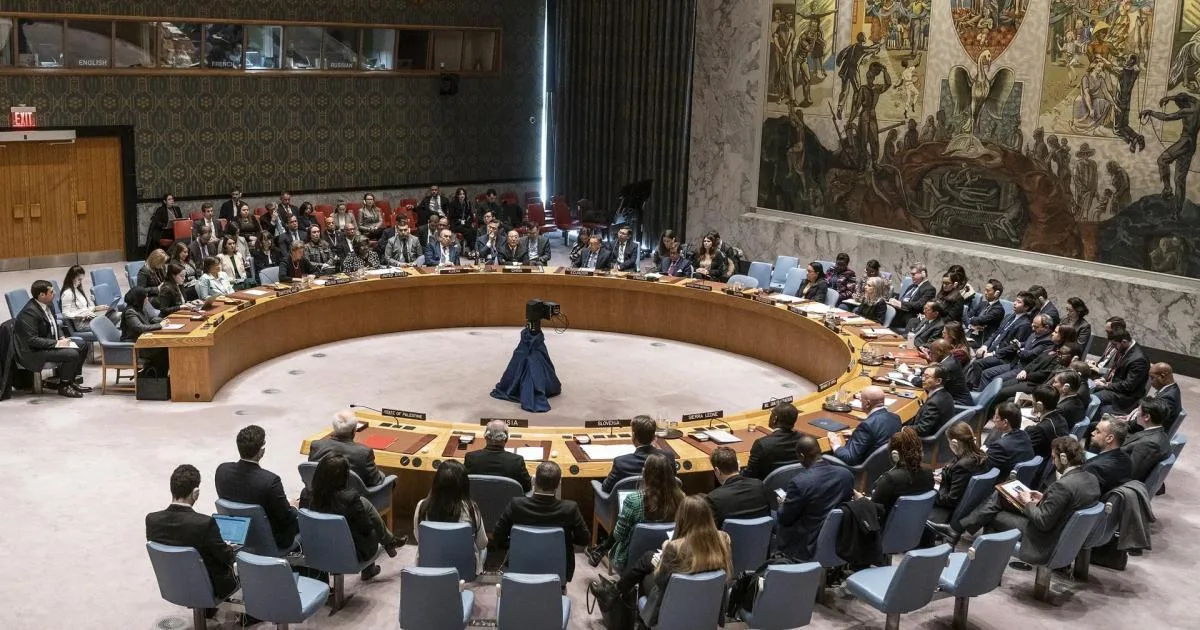
On October 22, 2026, members of the United Nations Security Council were presented with an American draft whose potential consequences extend far beyond the routine renewal of a peacekeeping mandate. Dated October 20 and circulated as a Western Sahara — Zero Draft, the document proposes to redefine the political solution to the dispute, rename the United Nations mission deployed in the territory, and establish a timetable for its institutional transformation.
For thirty-five years, the United Nations Mission for the Referendum in Western Sahara, known as MINURSO, has embodied the continuity of a political process whose original objective was never achieved. Established in April 1991 under Security Council Resolution 690, the mission was intended to oversee a ceasefire and prepare a referendum on self-determination. That referendum never took place, as disagreements over voter eligibility and the conditions of the ballot progressively undermined the process.
Yet the mission remained in place, surviving shifts in regional power, successive diplomatic initiatives, changing international priorities, and the breakdown of the ceasefire declared by the Polisario Front in November 2020.
Washington is now proposing something more consequential than another extension of this arrangement.
According to the draft reproduced by the press and authenticated by the Moroccan publication Le Desk, MINURSO would be renamed MINUSO, removing the reference to the referendum. Its peacekeeping mandate would end on April 30, 2027, with a special political mission succeeding it from May 1 through October 31, 2027.
The significance of this proposal extends beyond a change of acronym. It reflects an American effort to align the United Nations' institutional presence with a political framework centered on autonomy under Moroccan sovereignty.
The document remains a negotiating draft, not an adopted Security Council resolution. Nevertheless, its language reveals a substantial evolution in American diplomacy: Washington is no longer merely promoting a preferred settlement. It is proposing to reorganize the international process around that settlement.
From 1991 to 2025: the gradual transformation of the political framework
Understanding the significance of this initiative requires revisiting the dispute's historical trajectory.
Spain's withdrawal in 1975, Morocco's Green March, and the Madrid Accords opened a period of territorial realignment and armed confrontation. Morocco progressively established its administration over most of Western Sahara, while the Polisario Front, supported principally by Algeria, pursued independence for the territory.
Mauritania, initially involved in the territorial arrangements of 1975, withdrew from the conflict in 1979. Morocco subsequently extended its control over the area previously administered by Nouakchott.
The 1991 ceasefire was intended to transform this military confrontation into a political settlement. Disagreements over voter identification, the status of different population groups, and the choices to be presented in a referendum gradually made the original plan impossible to implement.
In April 2007, Morocco submitted an autonomy initiative proposing regional self-government within the framework of Moroccan sovereignty and territorial integrity. The Polisario Front maintained its own proposal based on self-determination, including the possibility of independence.
Security Council Resolution 1754, adopted that year, initiated a new phase of negotiations. Without legally establishing a definitive outcome, it shifted diplomatic attention toward a negotiated political compromise.
That movement strengthened over subsequent years. Successive resolutions increasingly emphasized a realistic, pragmatic, durable, and mutually acceptable political solution, without eliminating the fundamental disagreements between the parties.
On October 31, 2025, Resolution 2797 marked another significant step. Adopted with eleven votes in favor, none against, and three abstentions, it explicitly placed Morocco's autonomy proposal at the center of the negotiating framework. It also recognized that genuine autonomy could represent the most feasible outcome, while retaining the objective of a mutually acceptable political solution providing for the self-determination of the people of Western Sahara.
That balance was essential.
The Council gave Morocco's initiative a central position but did not eliminate the requirements of negotiation, political consent, and consistency with the United Nations Charter.
The American draft of October 2026 would go further. Rather than presenting autonomy as the most practicable option, it would seek to establish autonomy under Moroccan sovereignty as the only feasible political outcome.
The distinction is fundamental: it is the difference between diplomatic preference and an attempt to define the boundaries of the final settlement. 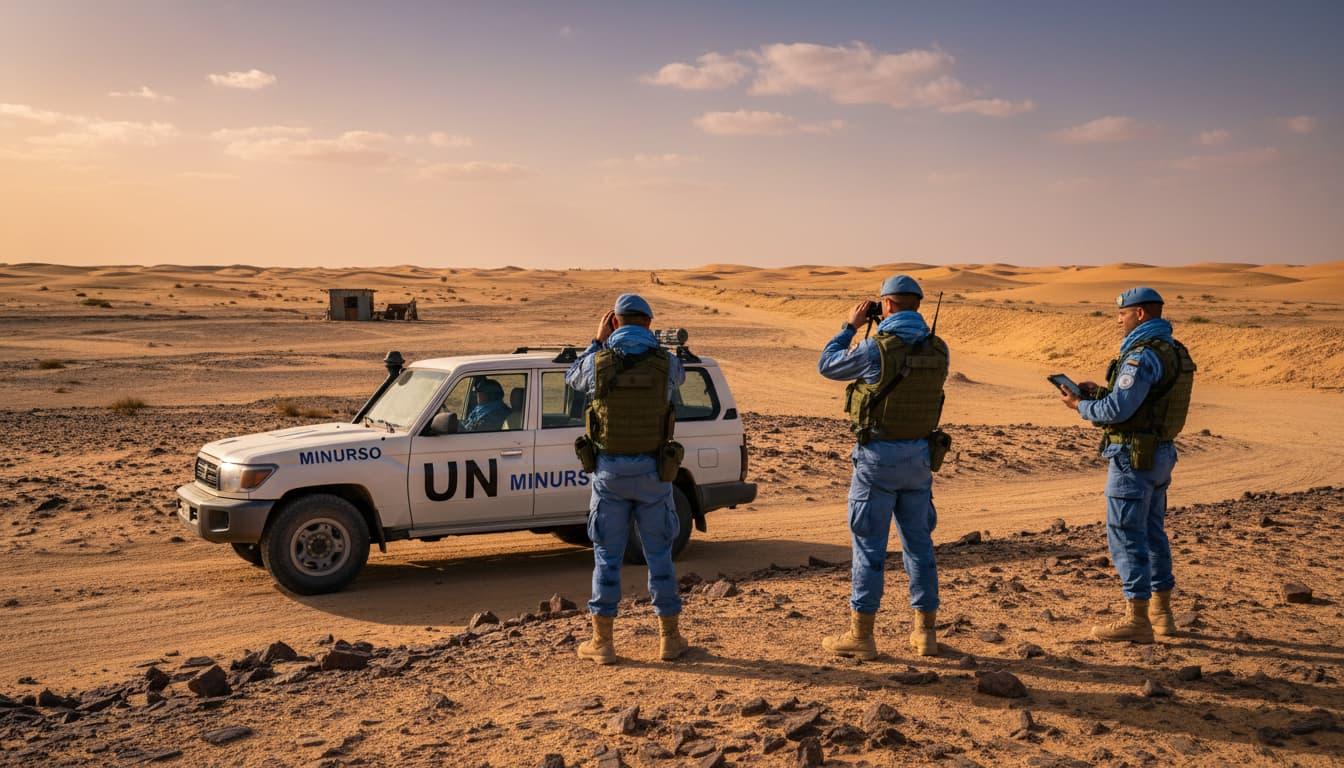
Autonomy under Moroccan sovereignty as the exclusive political horizon
The most consequential provision concerns the framework for future negotiations.
According to the draft reproduced by the press, Washington proposes explicitly affirming that autonomy under Moroccan sovereignty constitutes the only feasible solution. An updated Moroccan autonomy proposal would become the exclusive basis for political discussions.
Such a formulation would profoundly change the nature of the process.
Under the traditional United Nations framework, negotiations sought a mutually acceptable solution while preserving different interpretations of self-determination. The proposed American approach would seek to settle the broad territorial framework while leaving the institutional arrangements of autonomy open to negotiation.
Discussions could then concentrate on the distribution of powers, constitutional guarantees, democratic representation, natural-resource governance, security, judicial authority, taxation, and international mechanisms supporting implementation.
For Rabat, such a development would represent an exceptional diplomatic achievement.
For nearly two decades, Morocco has argued that advanced autonomy offers a means of reconciling the preservation of its sovereignty with meaningful local political authority.
Its strategic objective would now be to transform that position into an internationally endorsed negotiating framework and, eventually, a durable institutional arrangement.
Yet politically recognized autonomy and effectively implemented autonomy are not the same thing.
The former may emerge from an international resolution and a diplomatic agreement. The latter requires precise legal guarantees, transferred powers, representative institutions, and mechanisms for resolving disputes between central and regional authorities.
An autonomy arrangement limited to a declaration of principle would not resolve the institutional questions accumulated over decades.
The decisive issue would therefore become its substance.
Which powers would be exercised locally? Which responsibilities would remain exclusively under Moroccan national institutions? How would regional authorities be elected or appointed? What constitutional guarantees would protect the arrangement against unilateral alteration?
These questions would determine whether autonomy becomes a viable political settlement or remains a diplomatic formula.
The planned end of an architecture inherited from the referendum
The second major innovation concerns MINURSO itself.
Since 1991, the mission has been the most visible institutional expression of the United Nations' involvement in Western Sahara. Its original structure was designed around a ceasefire and a referendum on the territory's political future.
Over time, its operational responsibilities increasingly focused on monitoring military developments, maintaining communication with the parties, and reporting to the United Nations Secretariat.
The American draft proposes withdrawing at least 50% of uniformed personnel by January 31, 2027, accompanied by the consolidation or closure of certain facilities and a broader reorganization of resources.
The existing peacekeeping mandate would terminate on April 30, 2027. A special political mission would then operate for an initial six-month period, ending on October 31.
The Secretary-General would be requested to submit detailed proposals concerning the new mission's structure, functions, staffing, and resources by December 15, 2026.
These provisions establish an unusually compressed transition schedule.
A reduction of this magnitude in the international military presence would nevertheless raise significant operational questions.
Monitoring security developments, managing incidents near Morocco's defensive positions, observing movements in areas east and south of the berm, and maintaining communication between the parties would all require reassessment.
The breakdown of the ceasefire announced in 2020 makes these considerations particularly sensitive.
Institutional transformation would not automatically eliminate security risks.
Nor would the reduction of peacekeeping personnel necessarily mean the disappearance of the United Nations from the territory. A special political mission could retain responsibilities related to diplomatic liaison, mediation, reporting, and the implementation of a negotiated settlement.
The actual significance of the reform would therefore depend on its final mandate, resources, and the cooperation of the parties.
Removing the word referendum from the mission's name would carry considerable symbolic weight. The deeper transformation, however, would concern the mission's purpose: moving from the prolonged management of an unfinished referendum process toward supporting a negotiated institutional settlement.
Washington assumes a more direct role
The initiative confirms the United States' distinctive position in the Western Sahara file.
Washington traditionally serves as the penholder for Security Council resolutions concerning the territory. This responsibility gives American diplomacy a central role in preparing drafts, circulating proposals, and negotiating compromises among Council members.
It does not, however, give the United States the power to impose a resolution unilaterally.
American influence rests on several factors: permanent membership of the Security Council, diplomatic weight, strategic relations with Morocco, and the ability to engage other regional actors.
In December 2020, President Donald Trump's administration recognized Moroccan sovereignty over Western Sahara. That decision marked a major change in American policy, although it did not by itself alter the territory's status within the United Nations system.
The October 2026 initiative follows that recognition but pursues a different objective.
It is no longer simply a national American position. Washington is seeking to incorporate the political implications of that position into a Security Council resolution, thereby shaping the multilateral framework governing the dispute.
The distinction matters.
Bilateral recognition changes relations between states. A Security Council resolution can, depending on its wording and legal effect, transform the mandate of an international operation and establish a collective framework for negotiations.
Washington also appears determined to shorten a diplomatic process that has produced neither a definitive settlement nor broader regional normalization after decades of international involvement.
The approach favors an institutional solution considered practicable over the indefinite preservation of political alternatives that have proved difficult to implement.
Yet it also carries a risk.
An accelerated international timetable could collide with the absence of consent from actors directly involved in the dispute.
The success of this strategy would depend less on the strength of the initial draft than on its ability to produce an agreement capable of being implemented.
The Polisario Front confronts a challenge to its historical strategy
The Polisario Front reacted immediately.
In a letter addressed to the Security Council presidency on October 22, its United Nations representative, Sidi Mohamed Omar, rejected the American draft and warned that adoption without substantial amendments could lead the movement to withdraw from the entire peace process.
The warning remains conditional. It does not mean that the Polisario Front has already withdrawn from United Nations diplomatic mechanisms.
It nevertheless reveals the depth of the disagreement.
Since its establishment, the movement has based its political legitimacy on the demand for self-determination, which it associates with the possibility of independence.
A resolution defining autonomy under Moroccan sovereignty as the only feasible outcome would considerably narrow the diplomatic space within which that objective could be pursued.
The Polisario Front would face a difficult choice.
Participating in negotiations exclusively focused on autonomy would mean engaging within a framework far removed from its historical objective.
Refusing to participate could, conversely, reduce its influence over the terms of a potential settlement and deepen its diplomatic isolation.
The movement could also seek amendments preserving references to self-determination, international guarantees, the participation of the population, and the conditions under which consent would be established.
The situation of refugees in the Tindouf camps becomes particularly relevant in this context.
The American draft includes a request concerning their registration by the United Nations High Commissioner for Refugees.
Such an operation could improve statistical knowledge of the populations concerned, strengthen humanitarian assistance, and provide information useful to a future settlement.
It would nevertheless require cooperation with Algerian authorities and safeguards concerning personal data, humanitarian protection, and the rights of registered individuals.
Humanitarian registration alone cannot determine political representation or settle the modalities of self-determination.
Algeria at the center of the regional equation
The proposed transformation of the United Nations process would also have direct consequences for Algeria.
For decades, Algiers has supported the Polisario Front politically and diplomatically, hosted refugee camps around Tindouf, and defended an interpretation of the dispute centered on decolonization and self-determination.
Morocco, meanwhile, considers Algeria a central actor in the conflict because of its support for the Polisario Front and its regional influence.
These opposing positions have helped make Western Sahara a defining issue in the strategic rivalry between the Maghreb's two largest powers.
Diplomatic relations between Rabat and Algiers have been severed since August 2021. Their land border has remained closed since 1994, while political and security tensions continue to obstruct regional integration.
The economic cost of this division extends far beyond the territorial dispute.
Despite the complementarity of its markets, energy resources, potential infrastructure networks, and proximity to Europe, the Maghreb remains one of the world's least economically integrated regions.
A durable settlement could create opportunities for trade, transportation, energy cooperation, and regional security.
But a diplomatic outcome favorable to Morocco would not necessarily normalize relations with Algeria.
Algiers could interpret a narrower negotiating framework as a challenge to principles it has defended for decades.
Its response could involve diplomatic engagement with Security Council members, African institutions, continued cooperation with the Polisario Front, and legal arguments concerning self-determination.
The issue is therefore not simply whether the Council adopts new language.
It is whether that language can contribute to regional stabilization or instead trigger another phase of diplomatic confrontation.
Paris, London, Moscow and Beijing: the Security Council test
The fate of the American initiative will depend heavily on negotiations among the Security Council's permanent members.
France now explicitly supports Moroccan sovereignty over Western Sahara and considers the territory's future to lie within that framework. This position strengthens diplomatic convergence among Paris, Washington, and Rabat.
The United Kingdom has also expressed support for Morocco's autonomy plan as a credible and pragmatic basis for a settlement.
Spain, the former administering power, made a significant diplomatic shift in 2022 by describing the Moroccan autonomy initiative as the most serious, credible, and realistic basis for resolving the dispute.
Together, these developments have progressively altered the diplomatic environment surrounding Western Sahara.
They do not, however, guarantee that the American draft will be adopted in its original form.
Russia and China each possess veto power. Their positions will be especially important if the text is seen as excessively restricting political options or imposing institutional transformation before a negotiated agreement has been reached.
In October 2025, Moscow and Beijing abstained on Resolution 2797, allowing its adoption without endorsing every aspect of its political orientation.
That distinction could again prove decisive.
An abstention would allow Washington to secure a resolution, provided it obtained the required number of affirmative votes. A veto would prevent adoption.
Negotiations could therefore focus on the draft's most sensitive provisions: the exclusive character of autonomy, references to self-determination, the timetable for restructuring the mission, and the requirement for a mutually acceptable settlement.
The final text, if adopted, could differ substantially from the initial proposal.
Security Council diplomacy frequently operates through precisely this sequence of revisions, compromises, and carefully negotiated language.
International law and the changing political framework
The legal dimension remains essential.
Western Sahara continues to appear on the United Nations list of Non-Self-Governing Territories. Its international status cannot be considered definitively settled solely because several states recognize Moroccan sovereignty.
In its October 1975 advisory opinion, the International Court of Justice acknowledged the existence of certain legal ties of allegiance between the Sultan of Morocco and some tribes of the territory. It did not establish territorial sovereignty ties capable of displacing the application of the principle of self-determination.
Since then, Morocco has consolidated its administration and infrastructure across most of Western Sahara, while the United Nations has maintained the dispute on its political and legal agenda.
Autonomy under Moroccan sovereignty could constitute a form of self-determination within a negotiated settlement.
But the conditions of its international legitimacy would depend on the terms of the agreement, the guarantees afforded to the population, and the process through which the settlement was accepted.
The distinction between claimed sovereignty, effective territorial control, diplomatic recognition, and an internationally agreed settlement therefore remains indispensable.
The American draft could alter the Security Council's preferred political approach. It would not automatically resolve every legal dimension of the dispute.
The strength of the proposed arrangement would depend on its ability to reconcile Moroccan sovereignty, meaningful institutional autonomy, and the principles of the United Nations Charter.
Western Sahara as an economic and strategic territory
Behind the diplomatic negotiations lies a territory whose economic and strategic importance has grown considerably.
Western Sahara occupies a significant stretch of the Atlantic coastline, close to maritime routes linking Europe, West Africa, and the Americas.
It possesses fisheries resources, considerable renewable-energy potential, and a geographical position central to Morocco's ambitions for deeper economic engagement with sub-Saharan Africa.
Over recent years, Rabat has invested in roads, ports, energy infrastructure, urban development, and communications networks across the territory.
The Dakhla Atlantic Port project illustrates this strategy.
Designed as a maritime and logistics platform intended to strengthen commercial connections with West Africa, it forms part of a broader Moroccan effort to develop an Atlantic economic corridor.
Solar and wind-energy projects also contribute to this transformation, benefiting from favorable natural conditions and growing international demand for renewable power.
Yet the economic development of the territory remains connected to legal and political questions, particularly regarding the consent of the population concerned and the application of international trade agreements.
European judicial decisions have repeatedly emphasized the distinction between Western Sahara and Morocco when assessing the territorial application of certain agreements.
An internationally accepted political settlement could reduce some of these uncertainties, improve investment visibility, and facilitate long-term infrastructure planning.
It would not necessarily eliminate every question concerning natural resources, their governance, and the representation of the population.
The economic significance of a settlement would therefore extend beyond protecting existing investments.
It would concern the possibility of transforming Western Sahara into a commercial, energy, and logistics interface connecting Morocco, West Africa, and the wider Atlantic economy.
The 2027 timetable: acceleration and uncertainty
One of the most striking aspects of the American draft is the precision of its proposed timetable.
At least half of the mission's uniformed personnel would be withdrawn by January 31, 2027. The peacekeeping component would end on April 30. A special political mission would operate from May 1 through October 31.
This schedule reflects a determination to break with the succession of mandate renewals that has characterized the management of the dispute.
It could create new diplomatic pressure on the parties by linking the transformation of the international presence to progress in negotiations.
But it also contains a potential contradiction.
The Security Council can reorganize a mission according to a relatively short institutional timetable. Negotiating a durable political status, defining autonomous powers, establishing guarantees, and constructing an implementation mechanism generally require much longer.
Institutional reform could therefore move faster than the political conditions necessary for its success.
The Secretary-General and his Personal Envoy would face a delicate transition involving security requirements, diplomatic negotiations, and the conflicting expectations of regional actors.
There is also a distinction between a timetable established in a resolution and its effective implementation.
The Council could subsequently adjust deadlines in response to negotiations and developments on the ground.
The year 2027 might therefore become the beginning of a major institutional transition without necessarily bringing a definitive settlement.
A possible diplomatic victory, a settlement still to be built
For Morocco, the adoption of a resolution incorporating the principal American provisions would represent a diplomatic success of exceptional significance.
Rabat would obtain not only confirmation of the central role of its autonomy initiative, but also a transformation of the United Nations architecture consistent with that political direction.
Replacing a mission historically associated with a referendum with a political mission designed to support a negotiated settlement could establish a new diplomatic paradigm.
It would nevertheless be premature to equate such a development with the definitive closure of the dispute.
A Security Council resolution can redefine the parameters of negotiation. It cannot guarantee the participation of the parties, regional stability, or the implementation of a complex institutional arrangement.
Morocco would still need to specify an autonomy framework sufficiently substantial to be politically credible, legally coherent, and administratively viable.
Local institutions would be central to that challenge.
A durable arrangement would need to clarify legislative and executive powers, budgetary resources, democratic accountability, political participation, and constitutional guarantees.
The distribution of responsibilities between central authorities and autonomous institutions would also need to be explicit enough to prevent future disagreements from reproducing the deadlocks of the existing process.
The challenge would therefore extend beyond obtaining international support for a proposal.
It would involve transforming that proposal into a functioning political system.
That transition from diplomacy to institutional design would ultimately distinguish a durable settlement from a largely declaratory achievement.
The deeper turning point
The Western Sahara dispute has long been characterized by a gap between diplomatic principles, territorial realities, and the practical possibilities of settlement.
Morocco has consolidated its control and administration over most of the territory. The Polisario Front has maintained its demand for independence. Algeria has continued supporting the movement. The United Nations has preserved a mission originally designed for a referendum that was never organized.
For more than three decades, these realities have coexisted without producing a definitive political solution.
The American initiative of October 2026 seeks to narrow that gap.
It proposes aligning the negotiating framework and the international institutional presence with a defined political outcome: autonomy under Moroccan sovereignty.
Its adoption, even in amended form, could constitute one of the most consequential transformations of the United Nations process since the 1991 ceasefire.
Yet the Security Council has not made its decision. Negotiations may substantially alter the draft, and political resistance remains significant.
The expected vote before October 31 will therefore be decisive, not necessarily because it would settle the conflict, but because it could determine the framework within which negotiations unfold in the years ahead.
The central question is no longer simply whether Morocco's autonomy plan can serve as the basis for a settlement. Resolution 2797 has already established that orientation.
It is now whether the United Nations is prepared to reorganize its own presence around that perspective and make autonomy the exclusive framework for political negotiations.
If that happens, Western Sahara will enter a new chapter in its diplomatic history.
After thirty-five years devoted to preserving an unfinished referendum process, the United Nations could begin preparing the institutional foundations of a settlement that remains to be negotiated.
The transformation would be profound. It would not mean that the conflict had ended, but that the international community had chosen to stop seeking its resolution within the same political framework.
Principal Sources
- United Nations Security Council — Resolution 2797 (2025), S/RES/2797, adopted October 31, 2025. Official text concerning MINURSO's mandate and the negotiating framework.
- Le Desk — Reporting published October 22, 2026, concerning the American draft dated October 20 and the proposed conversion of MINURSO into a political mission. The publication states that it authenticated the document's provenance.
- Polisario Front — Letter from Sidi Mohamed Omar to the President of the United Nations Security Council, October 22, 2026, addressing the American draft and its potential consequences for the peace process.
- International Court of Justice — Western Sahara, Advisory Opinion, October 16, 1975. Historical legal foundations of the dispute.
- United Nations Security Council — Resolution 690 (1991), establishing MINURSO and the original settlement framework.
Atlas Limits Research Desk
Atlas Limits’ editorial and analytical desk.