For more than a decade, Rolls-Royce has left much of the market for single-aisle aircraft engines to its competitors. The British engineering group concentrated its activities on widebody aircraft, military programmes and specialised propulsion systems, gradually withdrawing from the largest segment of commercial aviation by aircraft volume. That absence may now be coming to an end. In London, the British government is negotiating financial support of up to £200 million to help develop a new engine for the next generation of short- and medium-haul aircraft. Behind this still-unconfirmed subsidy lies a much larger industrial ambition, potentially worth around £3 billion: restoring Rolls-Royce to a market from which it has been largely absent.
According to reports published on October 23 by Reuters and the Financial Times, negotiations between the engine manufacturer and British authorities are approaching an agreement. A deal could be announced as early as next week. The proposed funding would support UltraFan 30, a version of the UltraFan architecture designed for future narrowbody aircraft. No final commitment has yet been confirmed. The £200 million represents the upper limit of a potential public contribution, not funding already awarded.
The distinction matters. Rolls-Royce is not simply preparing another product launch. It is attempting to regain a position in one of the world's most concentrated, capital-intensive and technologically demanding industries. Britain, meanwhile, must decide how far it is prepared to support that return. 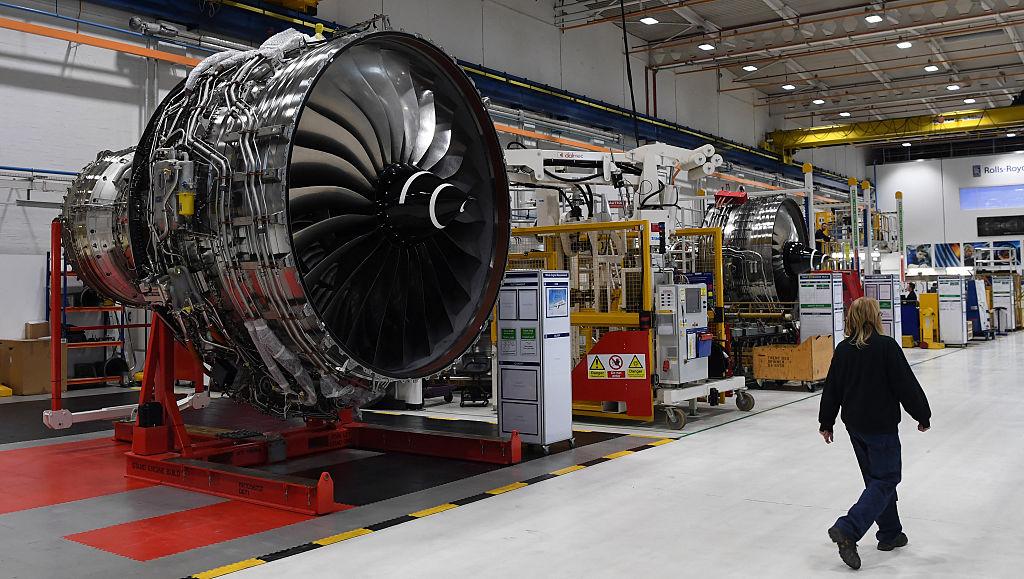
The Market Rolls-Royce Left Behind
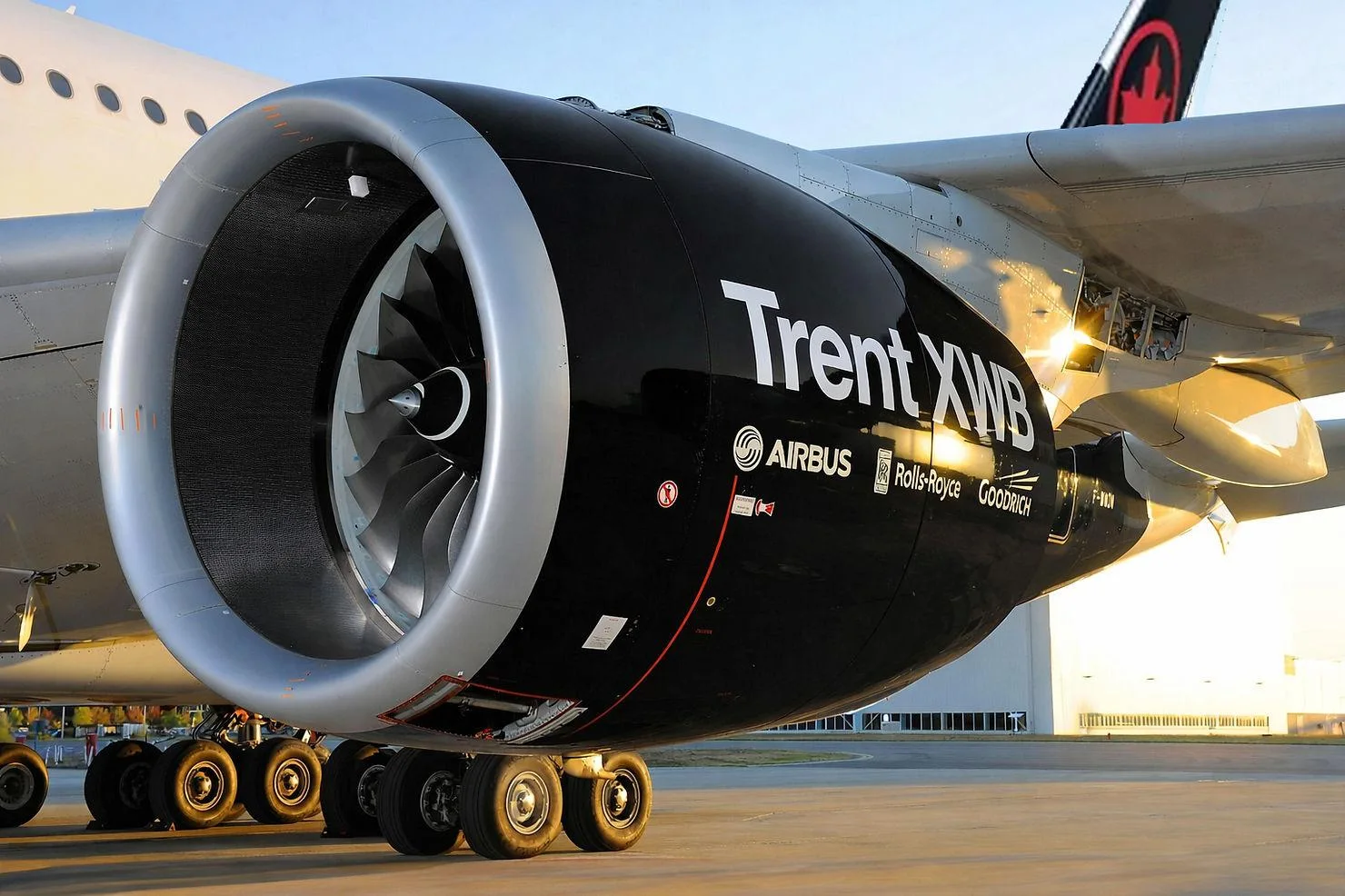
Rolls-Royce remains one of the world's leading commercial aircraft engine manufacturers, but its presence no longer extends across the entire market. Its Trent engines power major long-haul aircraft produced by Airbus and Boeing. On modern narrowbody aircraft, however, the company no longer offers a directly competitive engine programme.
This position emerged from decades of industrial consolidation. Rolls-Royce had participated in International Aero Engines, the consortium behind the V2500 engine family, before selling its stake to Pratt & Whitney in 2012. The transaction allowed the company to concentrate resources on large engines, but it also removed its direct exposure to the aircraft segment that dominates commercial aviation in unit terms.
Today, two industrial groups control most of this market. CFM International, a 50-50 joint venture between GE Aerospace and Safran, supplies the LEAP engine family used on the Airbus A320neo and Boeing 737 MAX. Pratt & Whitney, part of RTX, manufactures the PW1000G geared turbofan family, which powers aircraft including the A320neo, A220 and certain regional jets.
This concentration extends beyond the number of manufacturers. An aircraft engine creates a commercial relationship lasting several decades. Maintenance contracts, replacement parts, overhauls, availability agreements and successive upgrades generate revenue long after the original aircraft enters service. The economic value of an engine programme is therefore built across an entire operating life, sometimes extending thirty years or more.
By withdrawing from narrowbody engines, Rolls-Royce relinquished access to a substantial installed base and the associated aftermarket revenues. Returning would require rebuilding a competitive technological offering, restoring commercial credibility and establishing an industrial system capable of supporting production volumes far greater than those typically associated with widebody engines.
Three Billion Pounds to Cross a Technological Frontier
UltraFan 30 represents an attempt to overcome that barrier. It builds on the broader UltraFan programme, developed to improve the fuel efficiency of future aircraft propulsion systems.
The architecture incorporates a power gearbox that allows the turbine and fan to operate at speeds better suited to their respective requirements. It also draws on composite materials, advanced manufacturing technologies and thermodynamic improvements designed to reduce fuel consumption.
Rolls-Royce has already achieved an important milestone through ground testing of its large UltraFan demonstrator. Adapting that architecture to an engine delivering approximately 30,000 pounds of thrust, however, presents a different set of engineering challenges. Reducing an engine's dimensions is not a straightforward exercise in scaling down existing components. Thermal, aerodynamic, acoustic and mechanical constraints change, while the demands of reliability remain exceptionally high.
The proposed development effort, associated with potential industrial investment of approximately £3 billion, should therefore be understood as a programme of technological maturation and industrial preparation rather than the complete financing of a certified commercial engine already selected by an aircraft manufacturer.
That distinction shapes the timetable. A demonstrator can validate an architecture, establish performance characteristics and reduce technical uncertainty. It cannot guarantee certification, integration into a commercial aircraft or the creation of an order book.
Rolls-Royce's first challenge will consequently be technological. Its second will be commercial.
Two Hundred Million Pounds and a Question of Sovereignty
Measured against a potential £3 billion industrial programme, the proposed £200 million British contribution would represent approximately 6.7% of the total. The amount may appear relatively modest, but its strategic significance could be considerably greater than its immediate financial weight.
In aerospace, decisions about industrial location are made long before production begins. Research centres, testing facilities, engineering capabilities and specialised supplier networks become difficult to relocate once major programmes are underway. Supporting the earliest development stages can therefore influence the geographical distribution of investment for years to come.
British funding could be channelled through mechanisms associated with the Aerospace Technology Institute, a central institution supporting aerospace research and development in the United Kingdom. Such arrangements allow the government to share part of the technological risk without financing the entire programme.
The issue is particularly sensitive because Rolls-Royce had previously raised the possibility of locating certain development or production activities in Germany or the United States if British industrial support proved insufficiently competitive.
That possibility turns a financial negotiation into a strategic decision. Britain is not merely seeking to protect existing jobs. It is attempting to prevent technology developed by one of its leading industrial companies from generating most of its future economic benefits elsewhere.
The programme could involve laboratories, testing infrastructure, advanced metallurgy, composite materials, design software, precision engineering and specialised supply chains. Its industrial value therefore extends far beyond the engine itself.
A relatively limited public contribution can, under these circumstances, influence substantially larger private investments. Whether that influence produces lasting domestic benefits will depend on the commitments attached to any eventual agreement.
Europe as a Second Funding Pillar
The British dimension of the project should not obscure its wider European framework.
On March 17, 2026, Rolls-Royce announced €64 million in European funding under the UNIFIED consortium, bringing together industrial and scientific partners from six countries. The programme is intended to advance technologies associated with UltraFan 30, with ground testing targeted for 2028.
The European funding and the British support currently under discussion belong to separate arrangements. Their precise budgetary relationship has not been publicly established, and it would be premature to combine them into a single financing package covering identical expenditure.
Together, however, they illustrate a structural reality: breakthrough aerospace programmes increasingly extend beyond the resources and interests of any single national economy.
Developing an engine requires expertise distributed across countries, specialised suppliers and research institutions whose investments often precede commercial returns by many years. Sharing technological risk becomes an important condition of competitiveness, particularly when new systems require extensive validation before generating revenue.
For London, the challenge is to preserve a national industrial centre of gravity while allowing Rolls-Royce to draw on the European expertise necessary to advance the programme. For the company, the objective is to establish cooperation broad enough to accelerate development without surrendering control over its essential technologies.
This tension between international cooperation and industrial sovereignty increasingly shapes the global aerospace industry.
The Next Generation of Airbus and Boeing Aircraft
Rolls-Royce's decisive deadline will not be the announcement of a subsidy. It will come when aircraft manufacturers begin selecting propulsion technologies for their next generation of narrowbody aircraft.
Airbus and Boeing currently operate aircraft families that form the backbone of global commercial aviation. The A320neo and 737 MAX are based on designs that have undergone extensive modernisation but whose origins reach back several decades. Their eventual replacement will require enormous investment in airframes, propulsion systems and supporting technologies.
Engine manufacturers must prepare well ahead of those decisions. An architecture introduced too late may be excluded regardless of its theoretical performance. Conversely, an engine that is technically mature but insufficiently competitive in fuel consumption, maintenance requirements or operating costs may lose to an established alternative.
CFM International is already advancing its RISE technology programme, which includes an open-fan architecture. Pratt & Whitney continues developing geared propulsion technologies and improvements in engine efficiency. Both companies benefit from extensive narrowbody experience, established relationships with aircraft manufacturers and a worldwide customer base.
Rolls-Royce must therefore offer more than an additional engine option. It will need to demonstrate that its architecture delivers advantages significant enough to justify the integration of another supplier into future aircraft programmes.
The competition will be determined by several factors: fuel consumption, emissions, noise, weight, reliability, maintenance costs, operational availability and manufacturing capacity. Energy efficiency will remain central because fuel represents a major component of airline operating expenditure.
Technological progress cannot, however, be assessed solely through the performance claims of experimental demonstrators. Those gains must eventually be confirmed under operational and economic conditions comparable to those faced by competing engines.
Timing introduces another uncertainty. Decisions concerning future aircraft generations could begin taking shape before the end of the decade, but this would not imply immediate entry into service. Several additional years of development, testing and certification would be required between the selection of an engine architecture and its commercial operation.
The Challenge of Scale and Capital
The least visible obstacle to Rolls-Royce's return may ultimately be industrial rather than technological.
Narrowbody engines are manufactured in substantial volumes. Production systems must support aircraft manufacturers' delivery schedules, absorb fluctuations in demand and maintain exceptionally high quality standards across thousands of critical components.
A returning manufacturer must therefore finance much more than engine design. It must organise procurement, secure manufacturing capacity, train specialised personnel, establish spare-parts inventories, develop maintenance infrastructure and guarantee worldwide support for several decades.
This capital intensity helps explain the relative stability of the industry. Barriers to entry are not based exclusively on patents or technical performance. They also reflect accumulated experience, airline confidence and the financial ability to withstand the early years of a major engine programme.
Engine sales are frequently embedded in complex commercial arrangements in which future maintenance and service revenues play a central role. Commercial success consequently depends as much on the economics of the installed fleet as on the initial selling price.
For Rolls-Royce, returning to narrowbody propulsion could establish a new source of recurring revenue and reduce its relative dependence on widebody aircraft. It would also introduce substantial capital requirements and additional execution risk.
The company's improved financial position provides an advantage. It does not eliminate the possibility of cost overruns, extended development schedules or aircraft manufacturers choosing to remain with established suppliers.
The central financial question is therefore the return on invested capital. A programme can succeed technologically without achieving the production volumes required for economic profitability.
A Changing Geography of Industrial Competition
The Rolls-Royce negotiations reflect a broader transformation in industrial capitalism. Major economies are increasingly involved in financing technologies considered strategically important, particularly when development periods are long and initial risks are substantial.
Aerospace brings together several of these characteristics. It requires scarce expertise, expensive infrastructure, internationally distributed supply chains and technologies whose applications can extend beyond civil aviation.
For Britain, maintaining an independent capability to design and develop advanced aircraft engines carries significance beyond the financial performance of a listed company. It concerns the depth of the national industrial base, the country's technological attractiveness and its position within global value chains.
For Rolls-Royce, the calculation is different but complementary. The company must identify locations offering favourable conditions for technological development while retaining the flexibility to establish partnerships and organise production internationally.
These interests can converge, but they are not automatically identical. A public subsidy can influence the location of a programme without guaranteeing that every manufacturing stage, intellectual property right or future revenue stream will remain within the financing country.
The quality of any agreement will therefore depend partly on its conditions: the nature of the work supported, development milestones, industrial commitments, allocation of risk and oversight of public expenditure.
At present, no change in Rolls-Royce's ownership or corporate control has been announced. The structure of potential future industrial partnerships and any specific intellectual property arrangements remain to be determined.
The Bet on a Generation
The proposed British funding could mark a turning point, but it remains an early step. Negotiations must be concluded, commitments formalised and technologies validated before a credible commercial programme can emerge.
The £200 million under discussion in London will not, by itself, create a new global competitor. It could nevertheless help initiate a sequence of investments and industrial decisions whose consequences would extend across several decades.
That is precisely what makes the issue strategic. Britain is seeking to preserve its position in tomorrow's aerospace technologies. Rolls-Royce is attempting to recover a market it left just as narrowbody aircraft were consolidating their role as the principal source of growth in commercial aviation. Aircraft manufacturers, meanwhile, will eventually have to determine which propulsion architectures can meet the economic and environmental requirements of their next generation of aircraft.
The real question is therefore not whether London will grant Rolls-Royce £200 million. It is whether that contribution can help transform a research programme into an industrial business capable of challenging the two established engine manufacturers that dominate the market today.
In aerospace, competitive positions are built over decades and can sometimes be lost through a single strategic decision. Rolls-Royce has already experienced that reality. Its ambition now is to reverse the course of that history.
Main Sources
- Reuters — “Rolls-Royce nears government subsidy deal to develop new engine in UK,” October 23, 2026.
- Financial Times — “Rolls-Royce nears taxpayer subsidy deal to develop new engine in UK,” October 23, 2026.
- Rolls-Royce — Official announcement concerning European funding for UltraFan 30 and the UNIFIED consortium, March 17, 2026.
- Rolls-Royce — UltraFan programme technical and industrial documentation.
- Airbus and Boeing — Commercial aircraft market forecasts and industrial outlook publications.
Atlas Limits Research Desk
Atlas Limits’ editorial and analytical desk.