From fuel transported across borders to gold exported through regional trading networks, Sudan’s war depends on an economy extending far beyond its national territory. A deadly attack on a market near the border with South Sudan reveals a deeper reality: commercial networks, logistical infrastructure and the economic interests of neighbouring countries have become integral to the dynamics of the conflict.
The Amiet market, in the disputed Abyei region, was not an ordinary battlefield. Located near the border between Sudan and South Sudan, it was a commercial crossroads where traders, transporters, displaced populations and goods from several regions converged. A drone attack, reported by Reuters on 23 October 2026, reportedly killed more than 150 people. According to information gathered by the news agency, fuel storage facilities and a truck suspected of transporting fuel intended for the Rapid Support Forces were among the presumed targets. Responsibility for the attack and the precise destination of the shipments nevertheless remain disputed.
The episode illuminates a dimension frequently relegated to the background in analyses of Sudan’s war. Since April 2023, the conflict between the regular army, commanded by Abdel Fattah al-Burhan, and the Rapid Support Forces (RSF), led by General Mohamed Hamdan Dagalo, commonly known as Hemedti, has unfolded not only along military front lines. It has also continued through markets, mines, refuelling stations, transport networks and financial channels connecting Sudan to its neighbours.
The war is destroying part of the national economy while encouraging the expansion of other activities. Some commercial exchanges sustain civilian populations. Others generate revenue for armed groups or facilitate their supplies. Between these realities lies an economic environment that is difficult to regulate, where the same infrastructure can serve civilian trade, humanitarian assistance and military operations.
Fuel as a strategic resource
Modern warfare depends as much on the availability of fuel as on weapons. Military vehicles, logistical convoys, generators and parts of the communications infrastructure require continuous supplies. In a country as vast as Sudan, covering approximately 1.9 million square kilometres, this dependence assumes a particular geographical significance.
The forces involved must maintain their ability to move across considerable distances, often through territories where infrastructure has been damaged and traditional commercial routes disrupted.
The investigation published by Reuters on 23 October describes Amiet as a transit point within a fuel supply network potentially benefiting the Rapid Support Forces. According to several diplomats and analysts interviewed, petroleum products imported into South Sudan reportedly pass through Abyei before being transferred into Sudan in smaller shipments.
Sources also raised allegations of possible facilitation by South Sudanese officials. These claims, however, do not constitute judicial findings and cannot establish collective responsibility on the part of the authorities in Juba. Reuters reported that the South Sudanese government had not responded to requests for comment concerning the allegations.
The mechanism described illustrates a fundamental characteristic of wartime economies: goods do not necessarily follow an identifiable military supply chain. They may circulate through ordinary markets, change transporters, be divided into smaller consignments or be resold before reaching their final destination.
Control over a commercial corridor can therefore become as important as possession of a military position. It enables armed actors to secure supplies, collect taxes and regulate exchanges between territories.
This reality is not confined to Sudan’s southern border. Research by Chatham House on Sudan’s wartime economy also describes fuel-smuggling routes extending from Libya into Darfur. Earlier United Nations investigations indicated that such flows may have supplied different parties to the conflict.
Gold at the centre of war financing
Fuel keeps military operations functioning. Gold helps finance them.
Since South Sudan’s independence in 2011 deprived Khartoum of a substantial share of its petroleum resources, gold has gradually assumed a central position in Sudanese exports. Its importance has increased further as the war has disrupted the national economy.
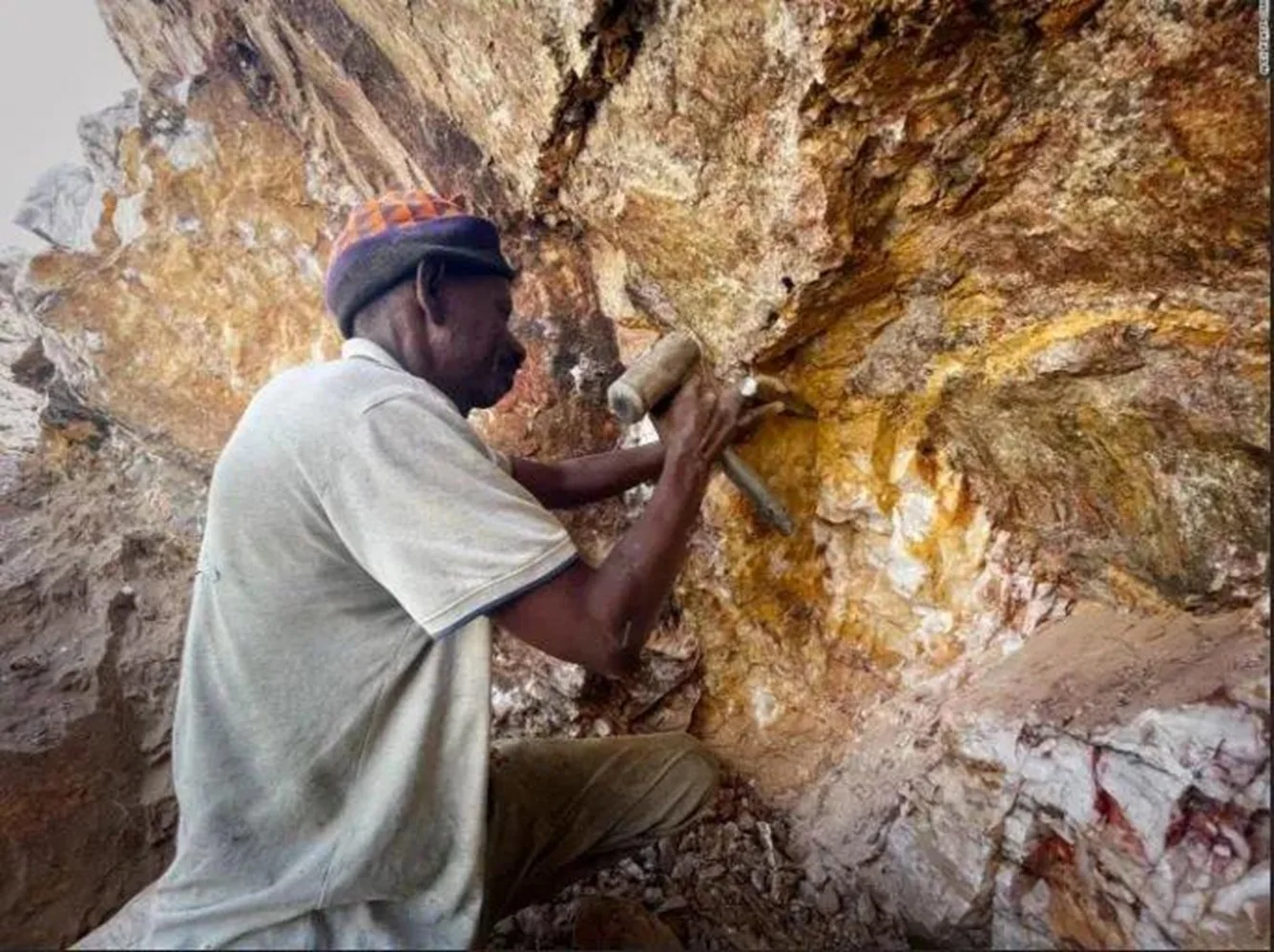
According to an Associated Press investigation published in 2026, Sudanese gold production reportedly reached approximately 70 tonnes in 2025. A substantial proportion of production escapes official channels, making it particularly difficult to determine the revenues actually captured by state authorities and armed networks.
In a study published in March 2025 and updated in 2026, Chatham House identifies gold trading as one of the principal sources of financing for both major parties to the conflict. Revenues arise through different mechanisms: exploitation or control of mining sites, taxation of transport, levies on transactions and official or clandestine exports.
The geography of these exchanges extends beyond Sudan. Egypt, Chad, Libya, Eritrea and South Sudan feature in analyses of regional trading routes, while the United Arab Emirates occupies a major position among the commercial destinations for Sudanese gold.
It is nevertheless essential to distinguish between an export destination, the involvement of private intermediaries and the potential responsibility of a government for supporting a belligerent. The presence of Sudanese gold in a foreign market does not, in itself, demonstrate that the state concerned participates in the war effort.
The economic implications are considerable. Gold revenues can be converted into foreign currency, used to purchase fuel, pay combatants, finance intermediary networks or acquire equipment. The precious metal thus becomes a means of transforming territorial wealth into military capability.
This phenomenon helps explain why the destruction of the formal economy does not necessarily exhaust the resources available to belligerents. Certain activities may become more profitable as administrative oversight weakens and clandestine trading networks expand.
Borders transformed into wartime economic spaces
Sudan shares borders with seven countries: Egypt, Libya, Chad, the Central African Republic, South Sudan, Ethiopia and Eritrea.
This geographical position gives it exceptional strategic importance between North Africa, the Sahel, the Horn of Africa and the Nile Basin. It also makes any attempt to isolate the conflict economically particularly complex.
To the west, Darfur’s commercial routes connect with trading networks in Chad and Libya. To the north, exchanges with Egypt provide an important outlet for certain commodities and an essential supply corridor. To the south, relations with South Sudan combine local trade with petroleum infrastructure of national importance.
These corridors did not emerge with the war. They are the product of decades of pastoral mobility, cross-border commerce, migration and relationships between communities established on either side of national boundaries.
The conflict has nevertheless transformed their operation. The disappearance of certain forms of state oversight encourages the emergence of new intermediaries. Armed groups can impose levies on merchandise, control crossing points or organise their own supply networks.
The same route may therefore carry food to an isolated civilian population while, at other times, facilitating the movement of resources intended for combatants.
This overlap explains the difficulties confronting sanctions policies and commercial controls. A general closure of borders could destroy the livelihoods of already vulnerable populations without necessarily preventing actors possessing military and financial resources from maintaining their supply networks.
South Sudan: Between petroleum dependence and strategic vulnerability
South Sudan illustrates the contradictions of this regional economy particularly clearly.
Independent since 2011, the country possesses substantial petroleum resources but depends on infrastructure crossing Sudanese territory to transport much of its production to international markets.
According to Chatham House, oil revenues have accounted for approximately 90% of South Sudan’s government income. Disruptions to infrastructure and exports caused by the war in Sudan therefore have direct consequences for Juba’s public finances.
This dependence creates a paradoxical relationship. South Sudan suffers the economic consequences of the conflict while remaining connected to territories controlled by its different protagonists.
South Sudanese authorities must preserve petroleum infrastructure, contain security risks along their border and manage the arrival of displaced populations. They must also maintain commercial exchanges essential to border communities.
Against this background, allegations concerning fuel supply networks passing through Abyei acquire particular diplomatic sensitivity.
The attack on Amiet demonstrates how borders can become extensions of the battlefield. When commercial infrastructure is suspected of contributing to the supply of an armed group, it may become exposed to military operations, even when situated in an area frequented by civilians.
Such circumstances do not release any actor from its obligations under international humanitarian law. The presumed presence of goods intended for military use does not automatically transform an entire market into a legitimate military objective.
A regional economy surviving national collapse
The war has profoundly disrupted Sudan’s finances and productive capacity.
On 21 October 2026, Reuters reported that the Sudanese pound had reached 10,000 to the US dollar on the parallel market, compared with approximately 600 before the conflict began in April 2023. This represents a depreciation of roughly 94% in its dollar-denominated value over the period.
The currency collapse reflects the contraction of productive activity, shortages of foreign exchange, disruptions to exports and pressure generated by import requirements.
It does not, however, mean that economic exchanges have disappeared. Part of the activity has shifted towards informal networks, border markets and transactions conducted in foreign currencies.
This transition is fragmenting Sudan’s economic space. Territories no longer necessarily depend on the same decision-making centres, commercial routes or taxation mechanisms.
In certain regions, access to a neighbouring country may become economically more important than relations with the national capital. Political borders remain, but economic centres of gravity shift.
The consequences also affect civilian commodities. In July 2026, the Office of the United Nations High Commissioner for Human Rights published an analysis of the wartime economy and the gum arabic supply chain. The report describes how territorial fragmentation redirected certain flows towards Port Sudan and others towards cross-border routes, creating risks that the true origin of products could be concealed.
This development demonstrates that war does more than divert military resources. It reconfigures commercial value chains connecting Sudanese producers to international markets.
The human cost of a militarised economy
The consequences of this transformation extend far beyond lost government revenues and commercial imbalances.
According to the United Nations, more than 14 million people had been displaced by the war as of September 2026, either within Sudan or beyond its borders. Infrastructure destruction, forced displacement and food insecurity have generated a humanitarian crisis of exceptional magnitude.
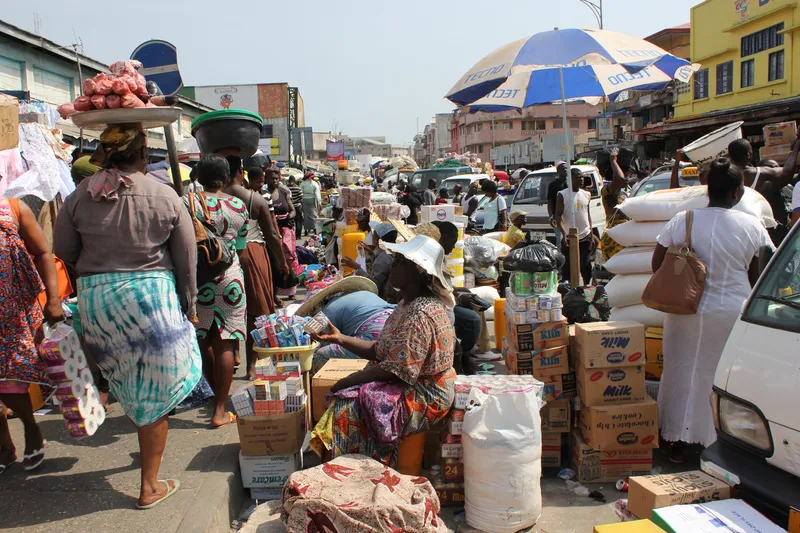
Border markets play an essential role in the survival of these populations. They provide opportunities to purchase food, obtain fuel, find employment and maintain economic relationships when public institutions have ceased to function.
Their militarisation creates additional vulnerabilities. Traders may face levies imposed by armed actors. Transporters risk crossing contested territories. Consumers bear rising prices caused by shortages, transportation costs and multiple layers of taxation.
The attack on Amiet concentrates these contradictions. A market can simultaneously provide an economic refuge for displaced populations and serve as a transit point suspected of being used by military supply networks.
Conflating these two functions would erase the distinction between civilian needs and combatant activities.
The war has consequently produced an economy in which the most vulnerable populations depend on networks they do not control and whose risks they bear directly.
The limits of an exclusively military response
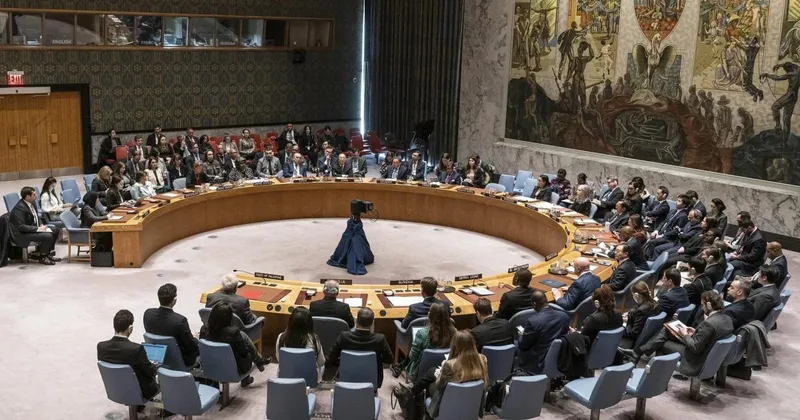
Diplomatic initiatives concerning Sudan generally focus on ceasefires, negotiations between the parties, sanctions and mechanisms for protecting civilians.
These instruments remain indispensable. Yet they are insufficient to explain the economic resilience of the belligerents.
As long as armed groups can generate revenue from natural resources, access foreign currency through commercial networks and maintain supplies across several countries, their operational capabilities will not depend exclusively on control of major cities or military installations.
International investigations have progressively highlighted this regional dimension. In September 2026, a United Nations fact-finding mission indicated that it had reasonable grounds to believe a transnational network involving individuals and entities located in countries including the United Arab Emirates, Chad, Libya and Somalia was involved in supplying the Rapid Support Forces.
This conclusion concerns networks and actors identified within the investigation. It should not be interpreted as automatically attributing responsibility to every state mentioned.
The effectiveness of an international response therefore depends on the ability to identify intermediaries, economic beneficiaries, financial channels and material flows associated with military operations.
A policy limited to general sanctions could redirect exchanges towards alternative routes without eliminating the economic incentives sustaining them.
Conversely, resource traceability mechanisms, scrutiny of suspicious transactions and customs cooperation could help reduce certain forms of military financing, provided that essential civilian trade is preserved.
The distinction between cross-border commerce and military support is decisive. It determines both the credibility of investigations and the proportionality of the responses adopted.
A Sudanese war, a regional system
Sudan’s conflict originated in a struggle for power within the national military and security establishment. It has gradually developed into a crisis whose economic and logistical foundations extend beyond the country’s borders.
Fuel routes, gold trading networks, petroleum infrastructure, transit markets and financing channels now constitute part of its architecture.
This cross-border economy does not form a single, centralised or perfectly coordinated system. It brings together actors with different, sometimes contradictory interests: traders, producers, transporters, local authorities, armed groups, financial intermediaries and foreign companies.
Some profit from the war. Others are simply attempting to continue their activities or survive the collapse of the state.
It is precisely this diversity that makes the phenomenon difficult to confront. Economic networks do not disappear when institutions are destroyed. They reorganise around opportunities for profit, necessities of survival and territorial balances of power.
The tragedy at Amiet therefore reveals more than the geographical expansion of violence. It demonstrates how an internal conflict can transform regional commercial spaces into strategic infrastructure, exposing neighbouring countries to risks they can no longer entirely control.
Ending the fighting in Sudan will first require a political and security settlement. But lasting peace will also demand an understanding and transformation of the economic mechanisms that currently allow the war to reproduce itself.
For when the resources, revenues and supplies sustaining a conflict cross several borders, war is no longer contained by the geography of its battlefields.
Principal Sources
- Reuters, 23 October 2026 — Drone strike on market town exposes reach of trade fuelling Sudan war.
- Reuters, 21 October 2026 — Sudan's currency tumbles to new low as war hammers economy.
- Chatham House, March 2025, updated 2026 — Gold and the war in Sudan: How regional solutions can support an end to conflict.
- Office of the United Nations High Commissioner for Human Rights, 15 July 2026 — Report on the wartime economy and gum arabic supply chains.
- Independent International Fact-Finding Mission for the Sudan, September 2026 — Findings concerning external support, logistical networks and violations of international humanitarian law.
Atlas Limits Research Desk
Atlas Limits’ editorial and analytical desk.