Brazil’s presidential runoff represents far more than a contest between two political movements. The confrontation between President Luiz Inácio Lula da Silva and Senator Flávio Bolsonaro could influence Washington’s position in Latin America, China’s economic expansion, the future of BRICS, regional integration, and the control of resources essential to the global economy. Beyond the electoral outcome lies a fundamental question: can Latin America’s largest economy preserve its strategic autonomy in an increasingly fragmented international order?
A Presidential Election With Global Consequences
Brazil held the second round of its presidential election on Sunday, October 25, 2026, following one of the most closely contested political campaigns in its recent history.
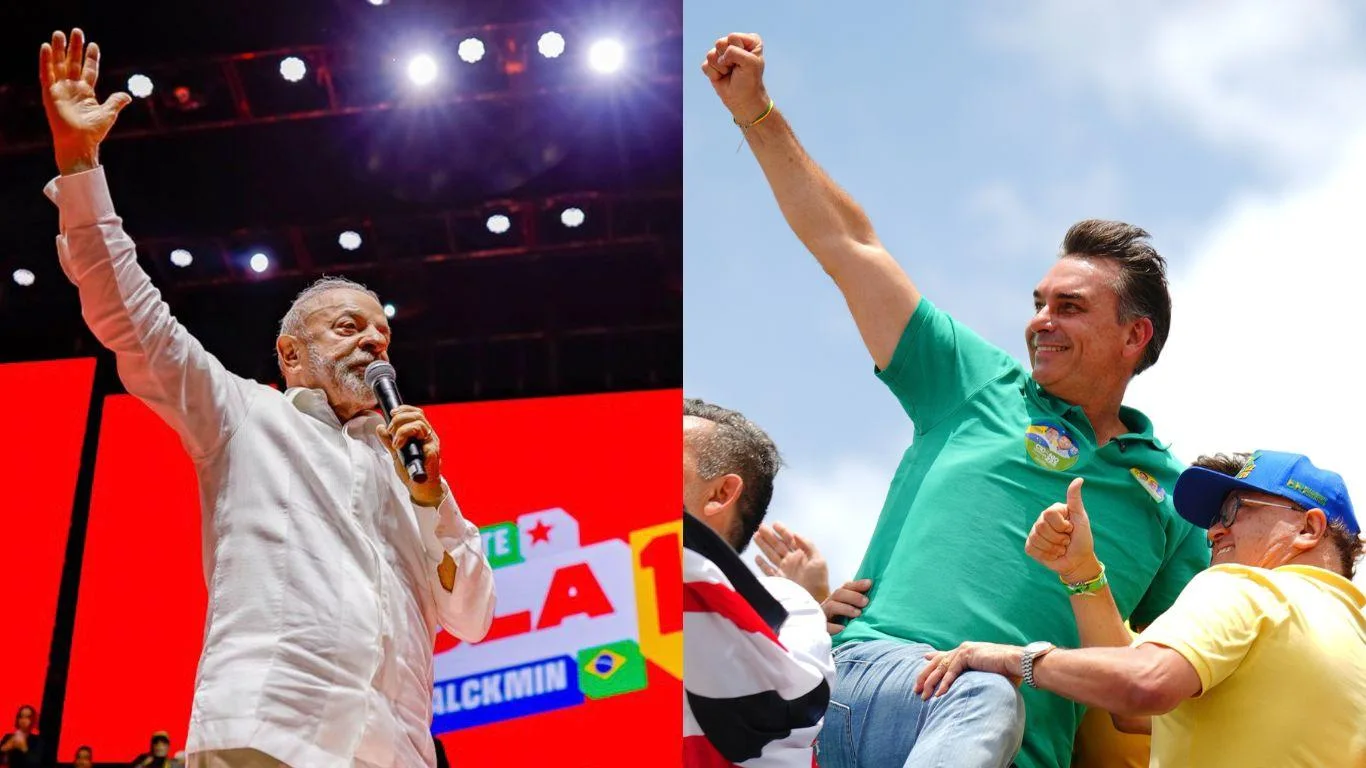
Incumbent President Luiz Inácio Lula da Silva, the historic leader of Brazil’s political left, faced Senator Flávio Bolsonaro, son of former President Jair Bolsonaro and a prominent representative of the country’s conservative movement.
The confrontation reflected two competing visions of Brazil’s economic development, institutional governance, and international positioning.
The first round, held on October 4, had placed Flávio Bolsonaro ahead of Lula, highlighting the continued electoral strength of Brazilian conservatism despite the political and legal difficulties surrounding the former president.
The runoff unfolded against a backdrop of intense polarization, with disagreements extending across fiscal policy, public security, social protection, environmental regulation, democratic institutions, and foreign relations.
On election night, polling institute Datafolha projected a victory for Lula.
According to partial results reported by Reuters, with slightly more than 78% of ballots counted, Lula held 51.21% of the vote against 48.79% for Flávio Bolsonaro.
The projection suggested that the incumbent president was heading toward a fourth, nonconsecutive presidential term.
At the time of that report, however, Brazil’s Superior Electoral Court had not yet formally certified the result.
The distinction matters: a statistical projection, even from an established polling organization, is not equivalent to an officially certified electoral outcome.
Regardless of the final institutional confirmation, the election has already exposed a central political reality.
Brazil remains divided between two competing national projects whose consequences extend well beyond its borders.
Brazil: A Power Whose Decisions Shape Global Markets
Brazil’s strategic importance derives from an unusual combination of economic scale, territorial resources, industrial capacity, and diplomatic influence.
With a population exceeding 200 million, a vast domestic market, and substantial natural resources, Brazil occupies a central position in the global economy.
It is Latin America’s largest economy and one of the Southern Hemisphere’s most important industrial, agricultural, and financial centers.
Its agricultural sector gives it considerable influence over international food security.
Brazil ranks among the world’s leading exporters of soybeans, beef, sugar, coffee, and other agricultural commodities.
It also plays a decisive role in global iron ore supplies.
Its offshore petroleum resources, particularly in the Atlantic pre-salt basins, reinforce its importance in international energy markets.
Beyond these sectors, Brazil possesses significant mineral reserves, extensive renewable energy potential, and a central role in the preservation of the Amazon rainforest.
This productive diversity gives the country influence extending far beyond that of a conventional regional power.
Brazilian economic decisions can affect commodity prices, international investment flows, industrial supply chains, and the procurement strategies of major economies.
The presidential election therefore carries consequences for governments, multinational corporations, commodity traders, and institutional investors across several continents.
The next administration must determine how these resources can strengthen Brazil’s position in a global economy increasingly shaped by technological rivalry, trade restrictions, and national industrial policies.
The challenge is not simply to expand economic activity.
It is to convert Brazil’s structural advantages into sustainable productivity growth and greater strategic independence.
Washington and Brasília: Competing Visions of the American Partnership
One of the election’s most significant geopolitical implications concerns Brazil’s relationship with the United States.
Since Donald Trump’s return to the White House, Washington has pursued an international strategy placing considerable emphasis on trade leverage, political alliances, and the security of strategic supply chains.
Latin America occupies an important position within this framework.
The United States seeks to maintain its diplomatic and economic influence in a region where China has substantially expanded its commercial presence.
A Flávio Bolsonaro presidency could have encouraged closer political relations with Washington.
The senator belongs to a political movement historically associated with American conservatism and shares several ideological positions with the broader movement surrounding Trump.
However, ideological proximity would not necessarily translate into complete economic alignment.
Relations between Brazil and the United States involve complex questions concerning agriculture, manufacturing, tariffs, investment, and natural resources.
Even an administration politically sympathetic to Washington would need to protect the interests of Brazilian exporters and domestic industries.
A renewed Lula presidency would likely preserve a different diplomatic approach.
Lula has consistently advocated a multipolar international system in which emerging economies retain meaningful negotiating autonomy.
This position does not imply abandoning relations with the United States.
Washington remains a major commercial, financial, and technological partner for Brazil.
Instead, it reflects a preference for diversified partnerships rather than exclusive geopolitical alignment.
The underlying issue is whether a major emerging economy can preserve its freedom of action while the United States seeks to consolidate its regional influence.
Brazil’s size gives it significant negotiating leverage.
But economic interdependence also places limits on the independence of its foreign policy.
China: An Indispensable Economic Partner
The relationship with Beijing represents one of the most structurally important economic questions facing Brazil’s next government.
China has become Brazil’s largest trading partner.
The relationship is supported by Brazilian exports of agricultural products, iron ore, petroleum, and other commodities.
In return, Brazil imports Chinese machinery, industrial equipment, electronics, and an expanding range of manufactured technologies.
This commercial relationship creates both opportunities and vulnerabilities.
Brazil benefits from Chinese demand for its natural resources, which supports export revenues, investment, and employment across several sectors.
At the same time, Chinese industrial competition presents challenges for Brazilian manufacturers.
The expansion of electric vehicles, batteries, renewable energy technologies, and digital infrastructure has added a new dimension to this relationship.
For Chinese companies, Brazil is simultaneously a consumer market, a potential manufacturing platform, and a strategic supplier of raw materials.
For Brasília, China represents an important source of investment and an export destination that would be difficult to replace in the short term.
A political rapprochement with Washington would therefore be unlikely to eliminate Brazil’s economic dependence on Chinese demand.
The more consequential question concerns the structure of that dependence.
Brazil must determine whether it can move beyond a trading relationship largely characterized by commodity exports and manufactured imports.
Achieving this would require greater domestic processing capacity, technology transfer, industrial investment, and workforce development.
The objective should not simply be to increase exports to China.
It should be to ensure that a larger proportion of the value generated by international production networks remains within Brazil.
The same principle applies to relations with the United States and the European Union.
Brazil’s long-term economic sovereignty will depend partly on its ability to capture more value from the resources and markets it already controls.
BRICS and the Search for a More Distributed International Order
The election also has implications for the future of BRICS.
Brazil was one of the organization’s founding members, alongside Russia, India, and China, with South Africa joining subsequently.
The group’s expansion has increased its geopolitical visibility while also highlighting the considerable differences among its members.
BRICS countries do not share identical political systems, strategic alliances, or economic priorities.
Nevertheless, they have expressed a common interest in reforming aspects of international economic governance and increasing the representation of emerging economies.
Under Lula, Brazil has supported changes to global financial institutions and advocated a stronger voice for developing countries.
This approach reflects a longstanding tradition in Brazilian diplomacy.
Rather than accepting permanent alignment with a single geopolitical center, Brasília has generally sought to diversify its international relationships.
Debates over the use of national currencies in certain cross-border transactions form part of this broader discussion.
However, such initiatives should not be confused with the creation of a unified BRICS currency.
Expanding local-currency settlement arrangements is fundamentally different from establishing a common monetary system.
The economic and institutional differences among BRICS members remain substantial.
For Brazil, the organization primarily provides an additional platform for diplomatic negotiation, commercial diversification, and international influence.
A renewed Lula administration would likely maintain this approach.
A Flávio Bolsonaro government might have reconsidered some diplomatic priorities, although the commercial interests supporting Brazil’s participation would remain significant.
The central issue is therefore not simply whether Brazil belongs to BRICS.
It is how effectively the country can use its membership to expand its strategic options.
Mercosur and the Future of South American Integration
Brazil’s political direction also has important consequences for Mercosur.
The South American trading bloc remains a major institutional framework for regional economic cooperation, despite persistent structural difficulties.
Brazil occupies a dominant position within the bloc because of the size of its economy and industrial base.
Its relationships with Argentina, Paraguay, and Uruguay directly influence the prospects for commercial integration across the Southern Cone.
Regional integration extends beyond tariff reductions.
It also involves transportation infrastructure, energy interconnections, industrial supply chains, regulatory coordination, and investment flows.
These dimensions have become increasingly important as governments and multinational corporations reconsider the geographical organization of production.
Brazil possesses the industrial capacity to support regional value chains in automotive manufacturing, agribusiness, chemicals, machinery, and energy technologies.
However, several obstacles remain.
Differences in national economic policies, fiscal constraints, inadequate logistics, and political disagreements have limited deeper integration.
The next Brazilian administration will need to determine how much political and economic capital it is willing to invest in regional cooperation.
An approach favoring bilateral trade agreements and market liberalization could alter Mercosur’s existing framework.
A more integration-oriented strategy would seek to strengthen collective development mechanisms.
Neither approach guarantees success.
The effectiveness of regional cooperation will ultimately depend on whether participating economies can identify and implement mutually beneficial projects.
For Brazil, the broader objective should be to transform its regional economic weight into productive integration rather than political influence alone.
The Amazon: Sovereignty, Economic Development, and Climate Responsibility
Environmental policy remains one of the most important areas of disagreement between Brazil’s competing political movements.
The Amazon rainforest plays a critical role in biodiversity conservation, climate regulation, and regional hydrological systems.
It is also a territory where agricultural, mining, energy, infrastructure, and land-use interests intersect.
Environmental policy therefore cannot be separated from economic strategy.
Under Lula, the Brazilian government has sought to strengthen efforts against deforestation and restore the country’s international credibility in climate negotiations.
However, this approach has also exposed tensions between environmental commitments and certain resource-development projects.
Petroleum exploration, transportation infrastructure, and extractive activities illustrate the complexity of these trade-offs.
The political movement associated with Jair Bolsonaro has historically favored greater economic exploitation of certain Amazonian territories and a reduction in some environmental restrictions.
Flávio Bolsonaro’s specific policy commitments must nevertheless be evaluated independently rather than inferred automatically from every decision taken during his father’s presidency.
For Brazil’s international partners, environmental policy has direct commercial implications.
Traceability requirements, sustainability standards, and regulations concerning products associated with deforestation increasingly influence market access.
Brazilian agricultural and industrial exporters must therefore adapt to regulatory expectations established beyond their national borders.
Environmental performance is becoming a component of international competitiveness.
The next administration’s ability to reconcile economic development, territorial sovereignty, and environmental obligations will influence Brazil’s investment attractiveness and commercial relationships.
The strategic challenge is to demonstrate that conservation and economic modernization need not be mutually exclusive.
An Economy Facing Difficult Structural Choices
Brazil’s international influence should not obscure its domestic economic challenges.
Despite its substantial resources, the country continues to face structural constraints that limit long-term growth.
Productivity remains insufficient across important segments of the economy.
Infrastructure quality varies considerably between regions.
Tax complexity, despite reform efforts, continues to affect investment decisions.
Education, workforce development, and industrial modernization require sustained attention.
These challenges coexist with fiscal pressures and the need to preserve confidence in public finances.
The next administration must balance several objectives that can be difficult to reconcile.
It must support household consumption, finance social programs, encourage private investment, maintain fiscal credibility, and strengthen industrial competitiveness.
Lula generally favors an approach that assigns a substantial role to public institutions, redistribution, and state-supported development.
The Bolsonaro political movement has traditionally emphasized private enterprise, deregulation, and reduced intervention in selected economic activities.
However, these broad ideological differences do not fully determine the policies that can actually be implemented.
Congressional negotiations, budgetary constraints, monetary conditions, and international financial markets will shape the next government’s room for maneuver.
The fundamental question is whether the chosen policies can deliver measurable improvements in productivity and investment.
Brazil must expand its productive capacity without undermining macroeconomic stability.
It must also avoid allowing its considerable commodity wealth to discourage the development of more sophisticated industries.
This is a recurring challenge among resource-rich economies.
Commodity abundance can generate export revenues and fiscal resources while leaving a country dependent on imported machinery, advanced technologies, and high-value manufactured products.
Overcoming this imbalance requires investment in innovation, education, infrastructure, and industrial capabilities.
The political debate may determine the instruments used.
But the underlying economic challenge will remain the same.
Financial Markets and the Political Risk Premium
The presidential election also represents a significant event for international investors.
Brazilian financial assets are sensitive to expectations concerning fiscal policy, monetary stability, institutional governance, and economic growth.
The Brazilian real, sovereign bonds, and equities may respond to changes in perceptions of political risk.
However, an electoral victory does not mechanically determine market performance.
Financial reactions depend on what investors have already priced in, the composition of the incoming administration, and the credibility of its initial economic decisions.
Markets will closely examine fiscal commitments, economic appointments, and the relationship between the executive branch and Congress.
The governance of major state-controlled companies will also attract attention.
Petrobras occupies a particularly important position in this assessment.
Decisions concerning capital expenditure, fuel pricing, dividends, and investment priorities can affect both the company’s valuation and the broader energy sector.
Infrastructure concessions, electricity regulation, industrial incentives, and public-private partnerships will also influence investment expectations.
Multinational companies will evaluate the predictability of the regulatory environment and the durability of contractual commitments.
For international capital, the decisive question is not simply which political movement controls the presidency.
It is whether Brazil can provide the institutional stability necessary to support long-term investment.
Political Polarization and the Challenge of Governability
The election has revealed a profound division within Brazilian society.
Disagreements extend across social values, economic redistribution, public security, the role of government, and the interpretation of democratic institutions.
These differences also have geographical and socioeconomic dimensions.
Regional voting patterns reflect unequal historical development trajectories and different productive structures.
Income disparities, access to public services, and employment opportunities contribute to political preferences.
Nevertheless, it would be misleading to treat individual regions as politically homogeneous.
Major metropolitan areas, industrial centers, agricultural territories, and rural communities contain significant internal divisions.
This polarization creates a fundamental challenge for the next president.
A government elected by a narrow majority must exercise authority in a country where a substantial share of the electorate supports a competing political project.
Electoral legitimacy does not automatically eliminate political conflict.
It establishes the institutional responsibility to govern within democratic rules while seeking workable compromises.
Congress will play a decisive role.
Brazil’s political system traditionally requires complex parliamentary coalitions.
This can limit abrupt policy changes, but it can also slow structural reforms.
The next administration’s ability to assemble stable legislative majorities will therefore be a critical indicator of its governing capacity.
Institutional stability should not be viewed merely as a political objective.
It is also an economic asset.
Persistent uncertainty can discourage investment, weaken confidence, and reduce the effectiveness of public policy.
Latin America at a Strategic Crossroads
Brazil’s election comes during a broader period of political and economic transformation across Latin America.
Several countries are experiencing ideological realignments, persistent social tensions, and renewed debates over their development models.
The region faces shared challenges involving productivity, organized crime, inequality, infrastructure deficits, and dependence on primary commodity exports.
Yet it also possesses substantial strategic advantages.
Critical minerals, agricultural capacity, energy reserves, and renewable resources could allow Latin America to play a larger role in emerging global value chains.
Transforming these resources into sustainable economic power requires investment, institutional coordination, and coherent industrial strategies.
Brazil is uniquely positioned to contribute to this transformation.
Its domestic market, industrial base, and diplomatic influence provide a capacity for regional leadership that few neighboring countries can match.
However, economic scale does not automatically translate into accepted political leadership.
Latin American governments pursue their own national interests and maintain different relationships with global powers.
Brazil’s ability to promote regional cooperation will therefore depend on its capacity to offer concrete economic benefits.
A strategy based primarily on ideological affinity would remain vulnerable to electoral changes.
Cooperation built around infrastructure, energy, trade, and productive investment could offer greater continuity.
This distinction will be important in determining whether Brazil can translate its national influence into lasting regional integration.
Three Strategic Scenarios for Brazil’s Political Future
The election’s implications can be assessed through three broad scenarios.
Scenario One: Diplomatic Continuity With Economic Adjustments
A confirmed Lula victory would likely preserve the principal directions of Brazil’s foreign policy.
The country would probably continue advocating multipolar diplomacy, participating actively in BRICS, and maintaining strong commercial relations with China.
Relations with Washington would remain important but could involve disagreements over trade and geopolitical priorities.
Domestically, fiscal and parliamentary constraints could require economic compromises.
This scenario would offer a degree of institutional continuity without eliminating uncertainty surrounding growth and public finances.
Scenario Two: A Political Reorientation Toward Washington
A Flávio Bolsonaro victory would have opened the possibility of closer diplomatic alignment with the United States.
Such a shift could have affected Brazil’s international partnerships, environmental policy, and selected economic regulations.
However, commercial interdependence with China and the interests of major Brazilian exporters would have constrained the scope for a fundamental rupture.
The central challenge would have been to reconcile stronger political ties with Washington and continued access to Asian markets.
Scenario Three: Governance Constrained by Persistent Polarization
Regardless of the winner, a narrow electoral margin and continuing political confrontation could complicate the implementation of reforms.
Institutional tensions, parliamentary disagreements, or fiscal disputes could weaken the government’s capacity to act.
Under this scenario, political uncertainty would become a potential constraint on economic growth.
Investors might postpone decisions while international partners reassessed the reliability of Brazilian policy commitments.
This is not a prediction.
It illustrates why institutional stability matters as much as the ideological orientation of the presidency.
The Fundamental Challenge: Converting Resources Into Lasting Power
Beyond the election result, Brazil faces a question that will define its long-term international position.
How can an economy possessing immense natural resources, a substantial domestic market, and recognized diplomatic influence convert these advantages into sustainable development and strategic autonomy?
The answer does not depend exclusively on the political contest between Lula and Bolsonaro.
It depends on Brazil’s ability to strengthen its institutions, modernize infrastructure, improve productivity, and develop higher-value industrial capabilities.
It also depends on maintaining diversified economic relationships in a world increasingly shaped by competition between major powers.
Brazil possesses an important strategic advantage.
It is not necessarily required to choose exclusively between Washington and Beijing.
Its economic scale, natural resources, and diversified international relationships provide the foundations for an independent diplomatic position.
However, autonomy cannot rest on diplomatic declarations alone.
It requires competitive domestic industries, macroeconomic stability, technological capabilities, and the capacity to mobilize productive investment.
Without these foundations, diplomatic diversification may conceal new forms of economic dependence.
With them, Brazil could strengthen its position among the world’s major emerging powers.
The decisive issue is therefore not simply the direction of foreign policy.
It is the economic capacity supporting that policy.
Conclusion — A National Election With Continental Consequences
Brazil’s presidential runoff on October 25, 2026, represents far more than a domestic political contest.
It comes at a moment when the international economic order is being reshaped by trade rivalry, technological competition, geopolitical fragmentation, and the search for new centers of influence.
The projection of a Lula victory suggests the possible continuation of a Brazilian international strategy based on diversified partnerships and greater diplomatic autonomy.
At the same time, Flávio Bolsonaro’s strong electoral performance demonstrates the continuing influence of a conservative political movement advocating a different national direction.
The next presidential term will therefore confront two simultaneous challenges.
The first is domestic: governing a deeply divided society while implementing the economic transformations required for sustainable growth.
The second is international: protecting Brazil’s interests in a global system where major powers increasingly seek to organize economic and political relationships around their own strategic priorities.
The fundamental question is not simply which candidate will govern Brazil. It is whether Latin America’s largest economy can transform its economic weight, natural resources, and diplomatic independence into lasting strategic power.
In a world undergoing profound geopolitical realignment, Brazil is more than a major market or a supplier of commodities.
It is one of the countries where the capacity of emerging powers to influence the future rules of the international system will be tested.
That is what makes this presidential election a global geopolitical event.
Principal Sources
- Reuters, October 25, 2026 — Brazil's Lula to defeat Bolsonaro, pollster Datafolha projects.
- Reuters, October 25, 2026 — Coverage of Brazil’s presidential runoff and preliminary election results.
- Reuters, October 22, 2026 — Flavio Bolsonaro and Lula about even ahead of Brazil runoff, Datafolha poll shows.
- Associated Press, October 25, 2026 — Reporting on Brazil’s presidential election and political polarization.
- Tribunal Superior Eleitoral (TSE) — Official electoral data and vote counting.
- International Monetary Fund — Brazil’s macroeconomic indicators and economic outlook.
- World Bank — Brazil’s economic development and structural indicators.
- UN Comtrade — International merchandise trade statistics.
Editorial note: Electoral projections and partial results reflect the information available at the time of the initial report. The final outcome should be updated following official certification by Brazil’s Superior Electoral Court.
Atlas Limits — Independent Global Analysis
Atlas Limits Research Desk
Atlas Limits’ editorial and analytical desk.