Is capitalism experiencing an existential crisis, or is it simply reaching the limits of the mechanisms that have sustained its expansion? The distinction is fundamental. For decades, market economies have demonstrated a remarkable capacity to mobilize capital, organize production, and accelerate innovation. Yet this efficiency now coexists with an accumulation of economic, social, industrial, and environmental vulnerabilities. The paradox is only apparent: a system can generate satisfactory financial returns while progressively weakening the conditions required for its own stability.
The question, therefore, is not merely whether capitalism works, but what it measures, what it rewards, and what it excludes from its calculations.
For several decades, economic globalization developed around a relatively coherent logic. Companies sought the lowest production costs, investors pursued the highest returns, and governments competed to establish the most favorable conditions for capital accumulation. International specialization, industrial outsourcing, and financialization generated substantial productivity gains. They also contributed to the integration of emerging economies into global trade and improvements in living standards for hundreds of millions of people.
But this architecture rested on several implicit assumptions: the continuity of international trade, the availability of energy, the relative stability of geopolitical relations, and the ability to transfer part of economic costs to society or the environment.
These assumptions are becoming progressively less reliable.
The multiplication of trade tensions, the fragmentation of supply chains, energy constraints, climate risks, and the resurgence of industrial policies are exposing the limitations of an economic organization primarily designed to maximize immediate efficiency.
A supply chain concentrated around a handful of suppliers can reduce production costs for years. Yet it becomes a source of vulnerability when conflict, natural disaster, or political intervention interrupts supplies. A company can improve profitability by minimizing inventories, reserve capacity, and precautionary investment. But when this strategy becomes widespread, the entire system loses part of its ability to absorb shocks.
The problem lies in this divergence between individual optimization and collective resilience.
Decisions that appear rational at the level of an individual company do not necessarily produce optimal outcomes at the level of an entire economy. This divergence represents one of the fundamental contradictions of contemporary capitalism.
It is not, however, a new phenomenon. Economic theory has long recognized the existence of externalities, information asymmetries, coordination failures, and behaviors capable of generating collective costs greater than private benefits. What is changing today is the scale of these phenomena and their growing interdependence.
Financial markets may value a company on the basis of its expected future cash flows without adequately incorporating the costs its activities impose on public infrastructure, natural resources, or social stability. Industrial production may appear competitive because part of its environmental costs is not borne by the producer. A workforce reduction strategy may immediately improve margins while weakening productive capabilities and accumulated expertise over the longer term.
These are not necessarily calculation errors. They are calculations performed within an incomplete framework.
This distinction helps explain why certain economies simultaneously exhibit highly profitable corporations, dynamic financial markets, and deteriorating indicators of social cohesion or economic security.
The profitability of capital is not, by itself, a sufficient measure of a society's performance.
Financialization can reinforce this divergence. When investment decisions are dominated by relatively short-term return objectives, expenditures whose benefits materialize over several decades may be disadvantaged. Infrastructure, education, fundamental research, preventive healthcare, and climate adaptation require time horizons that frequently exceed those governing ordinary financial decisions.
This does not mean markets are incapable of financing long-term investment. Pension funds, institutional investors, bond markets, and industrial corporations already mobilize capital over several decades. Their ability to do so, however, depends on regulatory frameworks, incentives, financing costs, and the predictability of future revenues.
The central issue therefore concerns how risks and returns are distributed over time.
An economy may systematically underinvest in resilience when the benefits of prevention are diffuse, uncertain, or difficult to monetize, while the costs of investment are immediate and clearly identifiable.
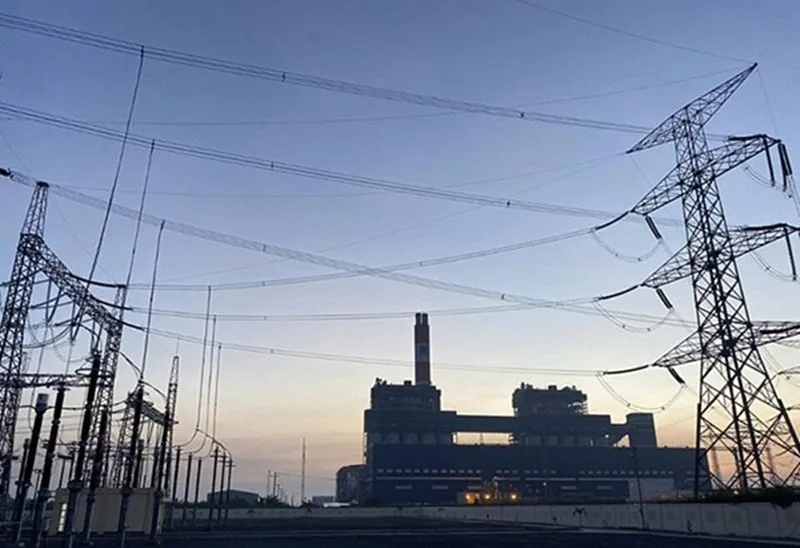
This asymmetry becomes particularly visible in strategic infrastructure. Building additional electricity generation capacity, diversifying suppliers of critical components, maintaining energy reserves, or developing domestic industrial capabilities may appear expensive under a framework focused on immediate returns. Yet the absence of these capabilities can generate considerable economic losses when disruptions occur.
Resilience possesses a value that becomes fully visible only when a system is confronted with a crisis.
The ongoing transformation of the global economy increasingly reflects this realization.
The United States is using tariffs, industrial subsidies, and technological restrictions to reduce selected strategic dependencies. The European Union is developing instruments designed to secure supplies, protect certain industrial capabilities, and support the energy transition. China continues pursuing industrial and technological integration policies aimed at controlling essential segments of its value chains.
These approaches differ substantially in their instruments and political objectives. Nevertheless, they reveal a common evolution: economic performance is no longer assessed exclusively through prices, trade volumes, and financial returns. Supply security, technological control, industrial capacity, and strategic autonomy are becoming central variables.
Capitalism is consequently entering a phase in which economic efficiency must increasingly accommodate the requirements of sovereignty and security.
This transformation, however, generates contradictions of its own.
Industrial reshoring can improve supply security while increasing costs. Subsidies can support productive investment but also favor companies best positioned to capture public resources. Protectionism can preserve domestic capabilities while reducing competition and imposing additional costs on consumers.
Resilience is not free. Nor does it automatically guarantee prosperity.
The difficulty lies in determining how much an economy should be willing to pay to reduce vulnerability, which risks justify government intervention, and which activities should remain exposed to international competition.
The social dimension introduces another fundamental consideration.
An economic system can generate substantial growth without ensuring that its benefits are sufficiently widely distributed. When productivity gains become concentrated among particular companies, regions, or categories of capital owners, improvements in macroeconomic indicators may coexist with stagnating purchasing power for parts of the population.
Inequality, however, does not follow a uniform trajectory. Its evolution depends on countries, historical periods, fiscal policies, labor-market institutions, and the distinction between income and wealth. It cannot therefore be reduced to a mechanical consequence of market economics.
Nevertheless, persistent inequality can become a major economic and political constraint.
A society in which an increasing share of the population believes that the benefits of growth are beyond its reach risks experiencing declining institutional trust, weakening support for economic policies, and diminishing confidence in competitive market mechanisms.
Social stability must therefore be understood not as a consideration external to economics, but as one of the conditions necessary for its sustainable functioning.
Climate change pushes this logic even further.
For decades, a significant proportion of environmental damage was insufficiently incorporated into production and consumption decisions. The prices of many goods do not fully reflect the costs associated with emissions, ecosystem degradation, or the depletion of natural resources.
The consequence is well established: when collective costs are not properly internalized, price signals can encourage decisions that are individually profitable but collectively destructive.
Carbon pricing mechanisms, environmental standards, transparency requirements, and public investment seek precisely to correct this divergence.
Their effectiveness, however, depends on their design, implementation, and international coordination. Excessively fragmented regulation may relocate emissions rather than reduce them. A poorly financed transition can intensify inequality. Environmental industrial policy can become an instrument of geopolitical competition as much as a mechanism for decarbonization.
Correcting market failures does not eliminate trade-offs. It makes them more explicit.
This leads to the central question confronting contemporary capitalism: how can an economic system generate wealth while preserving the material, social, and institutional conditions necessary for its continued existence?
The answer probably lies neither in abandoning market mechanisms nor in extending them indiscriminately to every dimension of economic life.
It requires redefining the rules that shape the behavior of economic actors.
Taxation, competition law, accounting standards, financial regulation, corporate governance, industrial policy, and social protection mechanisms directly influence capital allocation decisions.
These instruments determine what becomes profitable, what remains costly, what is encouraged, and what is discouraged.
In other words, markets never evolve independently of the institutional frameworks within which they operate.
The distinction between markets and regulation is therefore less meaningful than the distinction between different regulatory architectures.
A capitalist system that primarily rewards immediate value extraction will not produce the same behavior as one in which competition, innovation, and investment are accompanied by incentives to preserve productive capacity, natural resources, and collective stability.
Yet another mistake must be avoided: assuming that government intervention necessarily improves resource allocation. States can also misjudge risks, privilege particular interests, sustain inefficient activities, or transfer excessive costs to future generations.
Systemic performance therefore requires discipline that applies equally to corporations and public authorities.
It implies measuring economic outcomes beyond financial profitability alone, without abandoning the requirements of productivity, competition, and fiscal responsibility.
Gross domestic product growth, corporate earnings, and stock-market performance remain essential indicators. But they are insufficient to assess an economy's ability to withstand shocks, renew its productive infrastructure, maintain essential services, or preserve social cohesion.
Economic performance must also be examined through the quality of human capital, industrial diversification, energy security, fiscal sustainability, innovation capacity, and exposure to systemic risks.
These dimensions cannot all be aggregated into a single indicator. They can nevertheless complement traditional economic evaluation tools and improve the quality of decision-making.
The transformation underway does not necessarily represent a departure from capitalism. It may instead signal a redefinition of the criteria governing its operation.
Efficiency remains indispensable, but it can no longer be pursued independently of robustness. Profitability remains necessary, but it must be assessed in relation to the risks it entails. Trade openness retains its advantages, but these must be weighed against the consequences of certain strategic dependencies.
It would nevertheless be premature to describe this transformation as a linear transition toward a more sustainable economic model. Geopolitical tensions may increase military expenditure at the expense of other investments. Sovereignty-oriented policies may fragment markets. Competitiveness pressures may delay environmental commitments. Fiscal constraints may limit governments' ability to finance necessary adjustments.
Contemporary capitalism is not automatically moving toward a new equilibrium. It is entering a period of competition between different conceptions of economic performance.
Some prioritize freedom of capital allocation and competitive discipline. Others assign greater importance to national security, industrial planning, or social protection. Most major economies now combine these approaches in varying proportions.
The decisive question will be which institutions succeed in reconciling wealth creation, innovation, stability, and adaptability without permanently sacrificing one of these dimensions to the others.
Capitalism is not necessarily in crisis because it has stopped functioning. It is confronting the consequences of optimization mechanisms that, when they disregard certain interdependencies, can transform individual gains into collective vulnerabilities.
This diagnosis does not absolve the system of its contradictions, nor does it guarantee that a few regulatory adjustments will resolve them. Some tensions arise from correctable market failures; others reflect deeper conflicts between capital accumulation, wealth distribution, environmental limits, and political power.
But it allows the debate to move beyond its conventional boundaries.
The challenge is no longer simply to produce more value. It is to determine which forms of value deserve to be created, how they should be measured, who benefits from them, and what risks their creation imposes on the future.
The next transformation of capitalism may therefore take place less in the ownership of capital than in the rules that determine its profitability. An economy capable of maximizing returns without preserving the conditions necessary for its continuity is not necessarily inefficient. It is inadequately governed.
Atlas Limits Research Desk
Atlas Limits’ editorial and analytical desk.