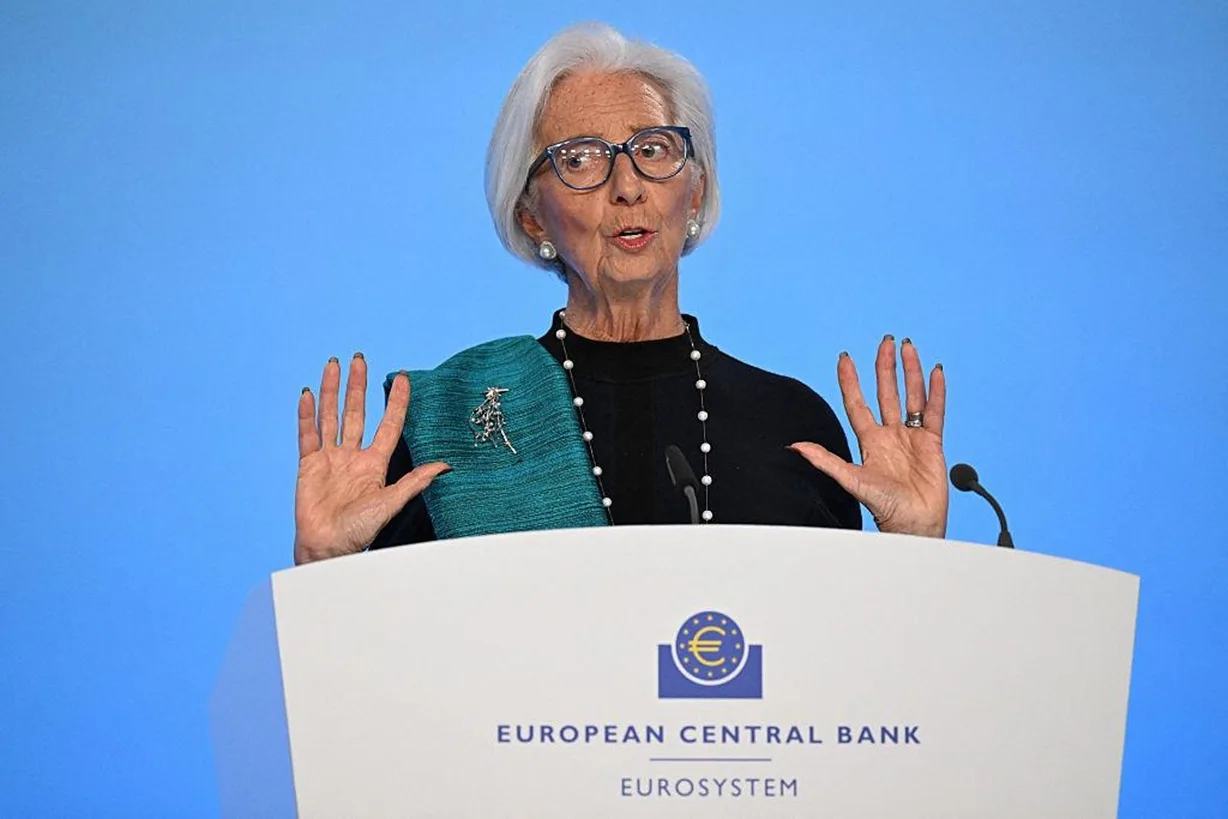
Christine Lagarde's departure from the European Central Bank is no longer hypothetical. On October 29, 2026, the institution officially announced that its president would leave office on February 7, 2027, several months before the scheduled expiration of her mandate.
The decision opens an exceptionally sensitive succession process. Europe must renew a substantial part of the leadership of its monetary institution while its economy continues to face conflicting constraints: preserving price stability, financing industrial transformation, containing financial fragmentation and responding to an increasingly unstable geopolitical environment.
The question therefore extends beyond the choice of an individual. It concerns how the euro area intends to exercise monetary sovereignty in a profoundly transformed global economy.
A Succession Becomes a Political Timetable
Christine Lagarde's mandate was originally scheduled to end in October 2027. Her early departure requires European governments to accelerate negotiations.
On November 9, euro-area finance ministers discussed the succession, although no definitive recommendation was expected at that stage. The process must accommodate the positions of major European capitals and the institutional timetable.
Two figures are among the leading candidates mentioned: Klaas Knot, former governor of the Dutch central bank, and Pablo Hernández de Cos, former governor of the Bank of Spain and general manager of the Bank for International Settlements.
Their emergence reflects the search for a combination of monetary credibility, institutional experience and political balance.
But the negotiations concern more than the presidency.
Isabel Schnabel's scheduled departure from the Executive Board in January 2027 and the end of chief economist Philip Lane's mandate in May create two additional major vacancies.
Governments therefore have a rare opportunity to reshape several components of the ECB's executive leadership simultaneously.
Monetary Independence and Political Negotiation
The European Central Bank is independent in the exercise of its mandate. Its leaders must not receive instructions from national governments.
Yet their appointment necessarily results from a political process.
Euro-area finance ministers participate in the recommendation, the European Parliament and the ECB are consulted, and the European Council makes the appointment under the procedures established by the treaties.
This architecture seeks to reconcile two requirements: protecting monetary policy from national political pressure while ensuring institutional legitimacy for those who conduct it.
The negotiations acquire particular significance when several positions become available simultaneously.
Large economies want to maintain influential representation. Medium-sized countries seek to prevent an excessive concentration of power. Governments must also consider candidates' economic orientations and professional backgrounds.
The outcome may therefore reflect a broader distribution of responsibilities rather than an isolated competition for the presidency.
It would nevertheless be misleading to reduce the ECB to an allocation of positions among states. Monetary policy decisions are made by the Governing Council, which includes the Executive Board and the governors of the euro area's national central banks.
The president exercises considerable influence over discussions, communication and the construction of compromises, but does not determine interest rates alone.
The Stability Dilemma
The ECB's primary mandate remains price stability.
That objective becomes more difficult when inflationary pressures originate from supply disruptions rather than excessive demand.
A sustained increase in energy prices can raise inflation while reducing consumption and industrial activity. Monetary tightening may contain secondary inflationary effects, but it cannot produce additional oil or build new energy infrastructure.
Conversely, an excessively accommodative policy may encourage price increases to spread and undermine the institution's credibility.
The next leadership will therefore have to distinguish temporary shocks from lasting structural changes.
The energy transition, defense investment, demographic aging and the reorganization of supply chains can alter production costs, financing requirements and fiscal balances.
Monetary policy cannot directly resolve these problems. But it must account for their consequences for inflation, growth and financial stability.
An Incomplete Monetary Union
The ECB conducts a common monetary policy within a union that lacks a federal budget comparable to that of the United States.
National economies differ in their debt levels, productive structures and sensitivity to interest rates.
A single monetary decision can consequently produce asymmetric effects.
Countries with strong public finances may finance investment under relatively favorable conditions. Others remain more sensitive to changes in sovereign risk premiums.
This fragmentation represents a structural difficulty for the euro area.
The ECB possesses instruments designed to preserve the transmission of monetary policy, but it cannot permanently replace governments in organizing fiscal solidarity or financial-market integration.
The renewal of its leadership thus comes at a time when Europe continues to demand more from its central bank without completing the economic institutions that should accompany it.
The Euro in Global Competition
The succession also takes place against a background of monetary and financial rivalry.
The dollar retains a dominant position in international reserves, trade transactions and financial markets. The euro remains an important alternative, but its international development depends on the depth of European capital markets, the availability of safe assets and the institutional coherence of the Union.
The ECB can contribute to that credibility through monetary stability and the operation of payment infrastructure.
It cannot, however, create a capital markets union on its own or resolve fiscal divergences between member states.
The digital euro introduces another dimension. Technological changes in payments, the expansion of private-sector providers and concerns about financial sovereignty require European authorities to reconsider control over monetary infrastructure.
The next president will have to guide these transformations without compromising confidence in the currency.
The Real Stakes of the Succession
It would be premature to attribute a precisely defined future policy to any candidate.
National traditions and previous public positions may illuminate certain preferences, but actual decisions will depend on economic conditions, incoming data and compromises within the Governing Council.
Above all, the next leadership will inherit an institution whose responsibilities have expanded through successive crises.
Since the sovereign debt crisis, the ECB has become an essential actor in European financial stability. It has had to respond to the pandemic, the return of inflation and geopolitical tensions while defending its independence.
Its next president will have to preserve that credibility in an environment where political demands are likely to multiply.
Christine Lagarde's succession will not, by itself, determine the future of the euro. It will nevertheless reveal how European governments balance national interests against the need for a strong monetary institution.
Europe is choosing a central bank president. It is also, indirectly, negotiating its understanding of stability.
Main Sources
- European Central Bank, official announcement concerning Christine Lagarde's departure, October 29, 2026.
- Reuters, November 4 and 9, 2026, reporting on European negotiations over ECB appointments.
- Treaty on the Functioning of the European Union, Article 283.
- European Central Bank, institutional documentation concerning the Governing Council and price stability mandate.
Atlas Limits Research Desk
Atlas Limits’ editorial and analytical desk.