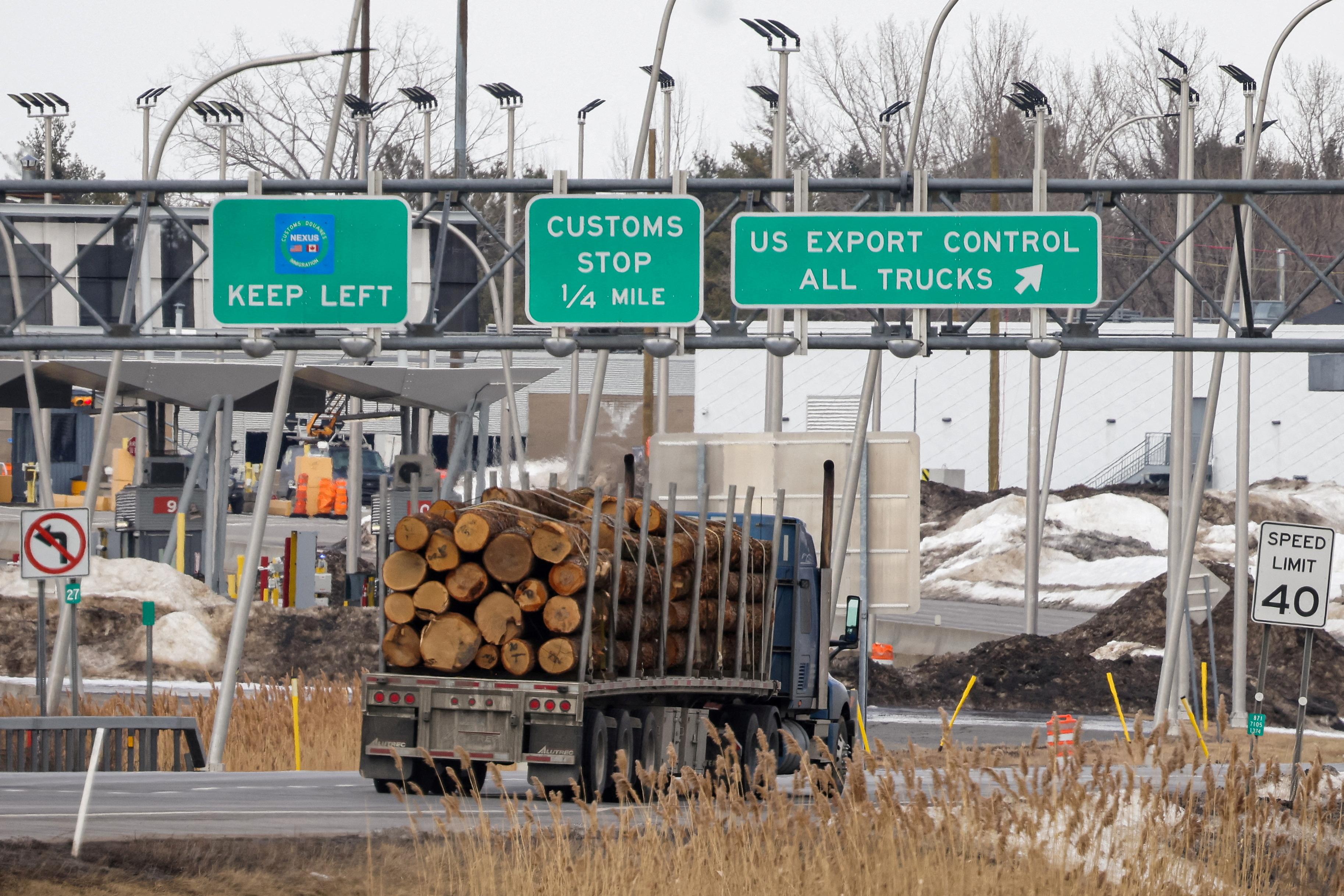
The European Union is no longer protecting only its steel industry. It is beginning to protect the components without which its electrification strategy cannot function.
On September 18, the European Commission introduced provisional safeguard measures on imports of grain-oriented electrical steel, or GOES, a specialized form of electrical steel used primarily in transformers. The measures will take effect on September 25 and will combine import quotas with minimum import prices. Within the quotas, those thresholds will range from €2,800 to €3,400 per tonne depending on the product, rising to €3,500 per tonne for volumes exceeding the quotas.
At first glance, the move might appear to be another episode in Europe’s long effort to defend its steel industry. It is more significant than that.
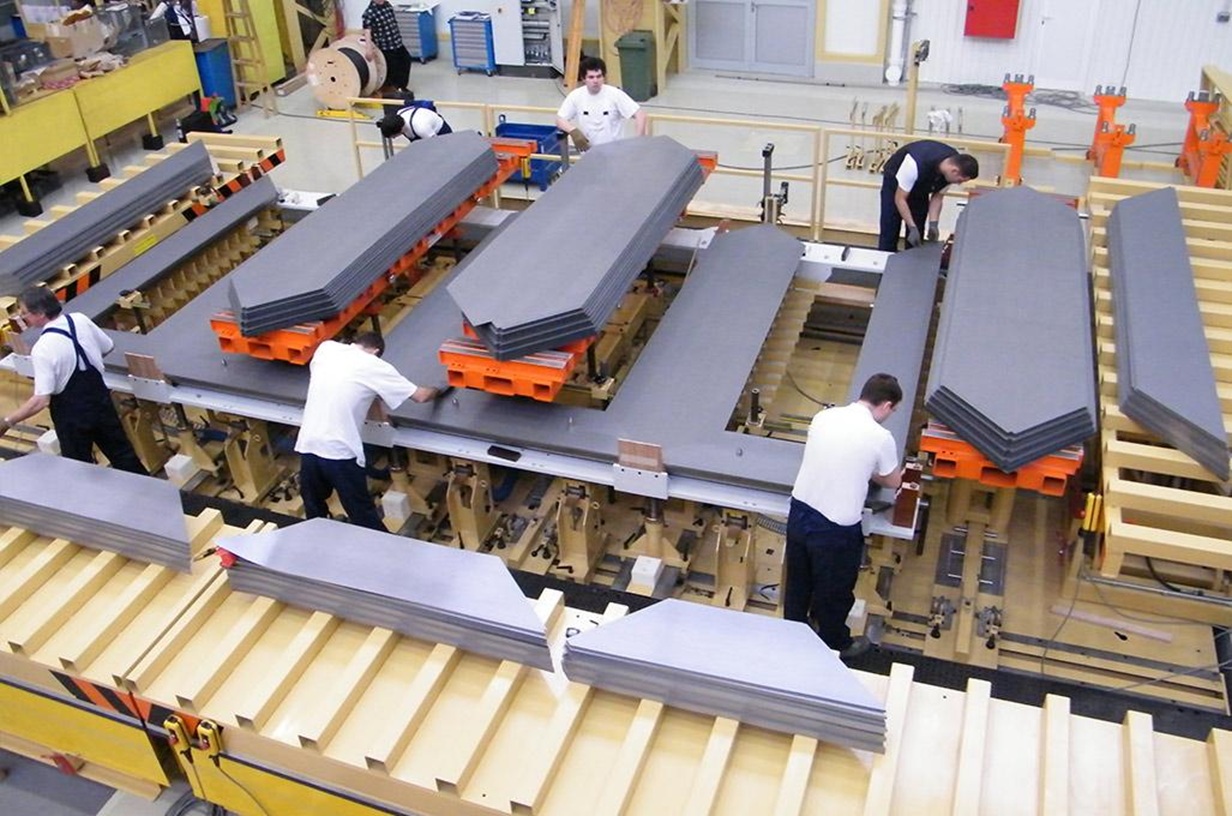
The measures do not cover only GOES sheets in their rolled form. They also extend to laminations and cores made from that steel and, crucially, to certain cores already incorporated into transformers. The Commission is therefore pushing trade protection much deeper into the industrial value chain.
The objective is no longer simply to prevent the disappearance of a steelmaking capacity. It is to preserve in Europe the materials and components required by the electricity infrastructure itself.
An unusual kind of steel
GOES is manufactured so that the crystalline structure of the steel is oriented in a preferred direction. This reduces magnetic losses when alternating current passes through a transformer core.
In practice, fractions of a millimetre of highly specialized steel can affect the efficiency of machines weighing tens or even hundreds of tonnes.
Transformers installed across transmission networks, substations, wind farms and distribution systems rely on these magnetic cores to change voltage levels as electricity moves from generation to consumption. The Commission therefore considers GOES critical to the security of European energy infrastructure.
That changes the nature of the trade debate.
Europe plans to invest heavily in its power grids to absorb more renewable generation, expand cross-border interconnections and electrify a growing share of industry, transport and heating. But those investments depend on more than transmission lines and generating capacity.
They also require transformers.
And transformers require GOES.
A European industry reduced to a handful of producers
When the Commission launched its safeguard investigation on March 27, it pointed to exceptional import pressure, especially from China, in a market distorted by global overcapacity. The investigation covered GOES sheets as well as laminations and cores used in transformers.
By then, the European industrial position had already deteriorated sharply.
Thyssenkrupp Electrical Steel had announced production reductions at its plants in Gelsenkirchen, Germany, and Isbergues, France. The French site, already operating at roughly half capacity from January, was expected to stop production entirely between June and September.
According to the company, European GOES imports had tripled since 2022 and increased by a further roughly 50% in 2025. Thyssenkrupp estimated that imports had come to represent more than half of the European market. Around 1,200 jobs were directly affected across its French and German operations.
Together with Poland’s Stalprodukt, Thyssenkrupp Electrical Steel is among the last major producers still operating in the European Union, while Baowu in China, POSCO in South Korea and Nippon Steel in Japan are among the major international suppliers to the European market.
China alone accounted for more than half of the EU imports covered by the measures in 2025, according to Reuters.
The issue is therefore no longer theoretical. An industry that is essential to the expansion of Europe’s power system risks disappearing precisely as demand for grid equipment is expected to rise.
The old trade barriers had become increasingly ineffective
Europe is not discovering tensions in the GOES market today.
Since 2015, anti-dumping measures have already applied to certain imports from China, Japan, South Korea, Russia and the United States.
But their effectiveness had gradually eroded.
The system relied in part on minimum import prices. Market prices eventually moved above those thresholds. The instruments remained in force legally but no longer provided meaningful economic protection.
The Commission acknowledged as much when it opened its investigation, noting that the existing minimum prices no longer provided sufficient support to European producers.
The new measures raise those thresholds sharply and add import quotas.
But their most important change lies elsewhere.
Brussels is progressively closing the industrial routes that could be used to circumvent protection.
Protecting only GOES sheets could have encouraged manufacturers to process the steel outside the Union and then import laminations, transformer cores or more advanced assemblies directly. By including those products — and even certain cores already integrated into transformers — the EU is pushing the trade barrier further downstream.
Protection no longer follows only the material.
It follows the value chain.
The transformer paradox
The policy nevertheless creates a contradiction.
To accelerate electrification, Europe needs a large number of transformers, quickly and at the lowest possible cost.
Restricting low-cost imports of electrical steel and transformer components may therefore increase costs for European manufacturers and, at least temporarily, reduce the availability of certain equipment.
The Commission had explicitly said in March that it would examine the interests of European transformer manufacturers before imposing safeguards.
But allowing domestic producers to disappear would create a different risk.
Dependence would no longer concern only solar panels, batteries, certain digital equipment or critical raw materials. It would reach a component located at the core of the electricity grid itself.
The dilemma has become familiar across European industrial policy: buy more cheaply today, or preserve a productive capability that may be needed tomorrow.
In the case of GOES, the Commission has clearly shifted the balance toward the second option.
From competition policy to dependency management
The decision forms part of a broader transformation in European trade policy.
For decades, the availability of a product on the global market was often enough to consider a supply chain secure. The country of origin mattered relatively little as long as multiple suppliers could provide sufficient volumes at competitive prices.
Pandemic disruptions, trade tensions, the war in Ukraine and the growing fragmentation of global commerce have changed that logic.
The question is increasingly becoming: what happens if European production capacity disappears altogether?
That question is particularly sensitive in the case of GOES because Europe’s own electrification strategy is increasing the strategic value of the product it could cease to manufacture.
The more power networks Europe builds, the more transformers it needs.
The more transformers it needs, the more dependent it becomes on the specialized magnetic steel inside them.
The energy transition can therefore create new industrial dependencies even as it is designed to reduce older ones.
A European measure, with China in the background
Legally, the measures announced on September 18 are not a sanction directed exclusively at Beijing.
They are general safeguard measures introduced in response to a rise in imports. The European investigation is being conducted on an erga omnes basis, meaning that it applies across all covered origins.
But the impact will inevitably be asymmetric.
Asian suppliers dominate the import market, and China now occupies an especially large position in foreign supply. The Commission had already highlighted in March the pressure associated in particular with Chinese exports and broader global overcapacity.
The protection of GOES therefore becomes another example of a trend extending well beyond steel: Europe is beginning to treat certain industrial capabilities as strategic infrastructure.
What can still be produced domestically is becoming almost as important as what the continent plans to build.
Protection will not be enough
The measures remain provisional.
For them to become definitive, they will require the support of a qualified majority of EU member states in the safeguard committee, meaning at least 15 countries representing 65% of the Union’s population. The investigation is normally expected to conclude within nine months, with the possibility of an extension to eleven months in exceptional circumstances.
But the real test begins before that vote.
Minimum prices and quotas can prevent an industry from disappearing. They do not guarantee that it will invest.
Producing more GOES in Europe will require plant modernization, higher metallurgical performance, secure volumes and enough long-term visibility to justify new capital expenditure.
Trade protection can therefore create time.
It cannot, by itself, create an industry.
That is what makes the September 18 decision important. Brussels is no longer merely asking how to defend a sector threatened by imports. It is beginning to define which parts of an electrified economy must still be producible within Europe.
After semiconductors, batteries and critical raw materials, industrial policy is moving further down the supply chain, to an almost invisible product: a sheet of magnetic steel placed inside a transformer.
Without it, the grid does not work.
Main sources
- European Commission — Commission imposes provisional safeguard measures on imports of grain-oriented electrical steel, September 18, 2026.
- European Commission — Commission initiates safeguard investigation into imports of grain-oriented electrical steel, March 27, 2026.
- World Trade Organization — notification of the opening of the EU safeguard investigation, March 27, 2026.
- Reuters — European provisional safeguards on GOES, September 18, 2026.
- thyssenkrupp Steel Europe — data on imports, European capacity and the Isbergues site, March 26, 2026.
Atlas Limits Research Desk
Atlas Limits’ editorial and analytical desk.