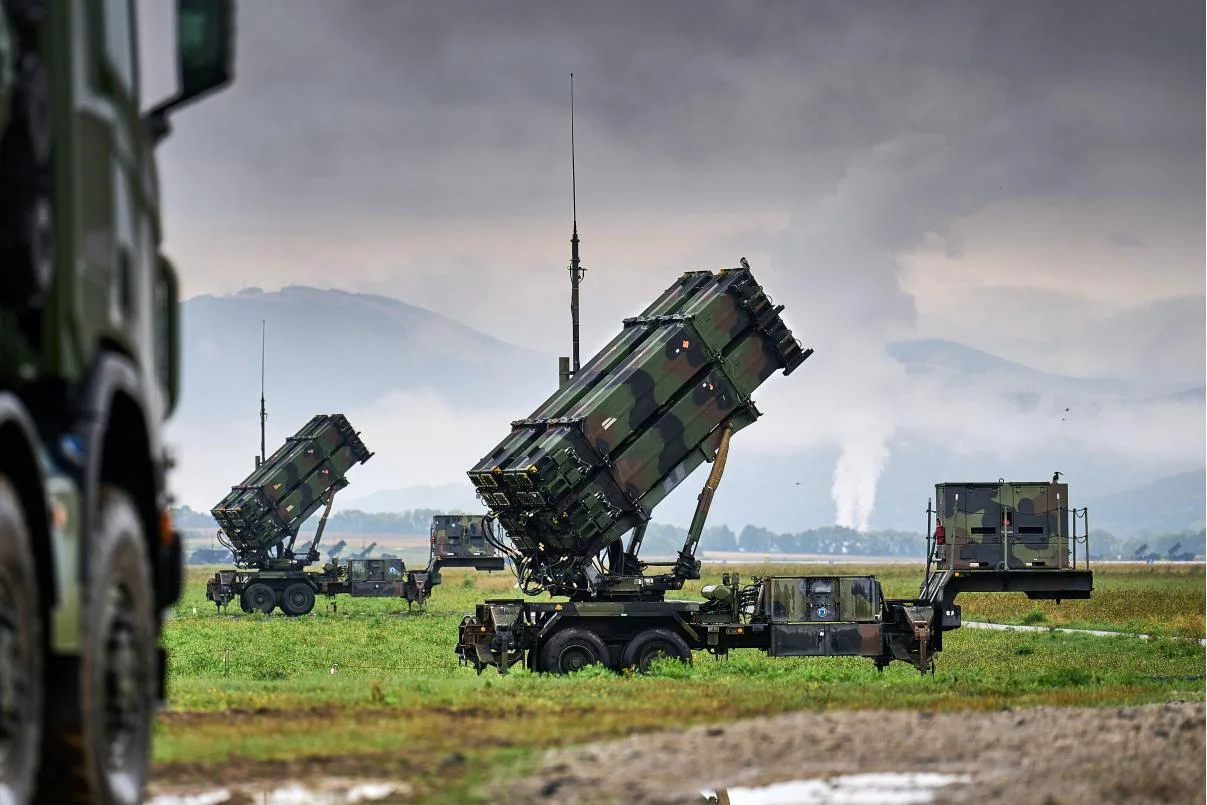
Europe is financing weapons whose ultimate destination it does not fully control. As Ukraine seeks to strengthen its air defense capabilities, dozens of Patriot interceptors remain reportedly pending US authorization. European governments have the necessary financial resources, and some already possess the equipment concerned, yet its transfer remains subject to decisions made in Washington. This situation reveals a fundamental distinction between ownership of military equipment and the strategic sovereignty it is intended to confer.
Since Russia launched its full-scale invasion of Ukraine in February 2022, European countries have embarked on a transformation of their defense policies on a scale unprecedented since the end of the Cold War. Military budgets are expanding, industrial orders are multiplying, and European institutions are developing new financing instruments. Yet this financial mobilization is not necessarily accompanied by an equivalent increase in the continent’s strategic autonomy.
The Patriot system encapsulates this contradiction. Developed and manufactured by the American defense industry, it constitutes a major component of the air defense capabilities of several European countries. Its acquisition strengthens their operational capabilities while integrating them into a legal, industrial and technological ecosystem whose principal centers of decision-making remain in the United States.
Ownership Without Full Control
The international arms trade operates under rules fundamentally different from those governing ordinary industrial goods. When a country acquires American military equipment, it generally accepts obligations concerning its use, final destination and potential re-export.
The Arms Export Control Act and the International Traffic in Arms Regulations, commonly known as ITAR, form the principal foundations of this regulatory architecture. Depending on contractual conditions and applicable export regimes, transferring American military equipment or technology to a third country may require prior authorization from US authorities.
A European government can therefore fully finance the acquisition of a weapons system, assume ownership, deploy it on its territory and still lack complete freedom to transfer it to another country.
This mechanism is not uniquely American. European countries operate their own military export control frameworks. The difference lies in the extent of American technological and industrial penetration across European armed forces, which gives Washington’s decisions implications extending far beyond bilateral commercial relationships.
The war in Ukraine makes this asymmetry particularly visible. When military requirements become urgent, administrative delays, industrial allocation decisions and political considerations in the supplying country can directly affect European governments’ ability to fulfill their own commitments.
European Capital, American Industrial Capacity
The Prioritised Ukraine Requirements List, or PURL, established within NATO, illustrates the evolving financial architecture of military assistance to Kyiv. Ukraine’s partners mobilize their budgetary resources to finance the acquisition of American military equipment corresponding to priority requirements identified by Ukrainian authorities.
This arrangement maintains access to military capabilities that European industries cannot always provide in the required volumes or within the necessary timeframes. However, it also separates three essential functions of military power: financing, production and authorization.
European governments assume part of the financial burden, American companies provide the equipment, and US authorities retain their regulatory prerogatives over the exports concerned.
This architecture extends beyond the financing of the war in Ukraine. It forms part of a broader transformation of the European defense market. According to the Stockholm International Peace Research Institute, the United States accounted for 64% of major arms imports by European NATO members between 2020 and 2024, compared with 52% between 2015 and 2019.
During this period, rising European military expenditure was therefore accompanied by an increase in the American share of these countries’ arms imports.
For American defense companies, this dynamic represents a durable commercial opportunity. RTX, which manufactures the Patriot system, and Lockheed Martin, which produces PAC-3 interceptors, benefit from demand that extends beyond initial equipment deliveries. It also encompasses stock replenishment, modernization, maintenance, training and associated technical services.
The acquisition of a complex military system generally commits its operator for several decades. The initial expenditure thus establishes a cycle of industrial and technological relationships whose duration extends well beyond that of the governments responsible for the original investment decision.
The Technological Lock-In
Contemporary military dependence is no longer determined exclusively by the physical availability of equipment. It also encompasses embedded software, electronic components, communication interfaces, certifications, technical data and intellectual property rights.
A modern air defense system constitutes an integrated architecture whose performance depends on coordination between radars, command centers, communication systems and interceptors. Control over each of these components determines the ability to maintain, modernize or adapt the system as a whole.
Domestic production alone does not necessarily establish full autonomy. A factory located on European territory may assemble American military equipment while remaining dependent on licenses, imported components or technology transfer authorizations.
The contract announced in January 2024 by the NATO Support and Procurement Agency for the supply of up to 1,000 Patriot missiles, valued at approximately $5.5 billion, illustrates this ambiguity. The program includes an expansion of European industrial capacity through COMLOG, a joint venture between RTX and MBDA Deutschland.
This industrial presence strengthens European production capabilities and reduces certain logistical risks. It does not, however, imply that all technological rights and regulatory prerogatives associated with the system are transferred to European stakeholders.
Industrial sovereignty cannot therefore be measured solely by the number of factories built or jobs created. It also depends on the ability to control design, modify equipment, secure supply chains and determine the ultimate destination of military assets.
The Contradictions of Rearmament
In March 2025, the European Commission presented a financial architecture potentially capable of mobilizing up to €800 billion for European defense. Among the proposed instruments was SAFE, with a lending capacity of €150 billion intended to support investment and joint procurement.
The scale of these figures reflects a profound shift in European budgetary priorities. It does not guarantee, however, that the expenditure will translate entirely into autonomous industrial capabilities.
European governments face two competing time horizons. The first is defined by immediate security requirements, which demand the rapid acquisition of available, proven systems compatible with existing NATO infrastructure. The second is defined by industrial sovereignty, which requires sustained investment in research, development, manufacturing capacity and the qualification of new technologies.
Purchasing American equipment often addresses the first requirement. Developing European alternatives responds more directly to the second.
The continent nevertheless possesses substantial industrial expertise. The Franco-Italian SAMP/T system, developed by Eurosam around MBDA and Thales, represents a European alternative in air defense. Germany’s Diehl Defence develops the IRIS-T family of systems, while other programs draw on the capabilities of Leonardo, Saab and several additional European manufacturers.
These capabilities cannot immediately substitute for the entire range of American systems. Differences in performance, operational missions, production volumes and system integration require a gradual transition.
The fragmentation of national procurement represents an additional obstacle. By multiplying competing programs and specifications tailored to individual armed forces, European countries restrict the economies of scale necessary to establish industrial supply chains capable of competing sustainably with those of the United States.
Dependence as an Instrument of Power
American influence over European defense does not derive exclusively from Washington’s diplomatic commitments or its position within NATO. It also rests on a material and regulatory infrastructure developed over several decades.
Military equipment, technical standards, maintenance networks, licenses and authorization procedures constitute mechanisms through which industrial relationships acquire geopolitical significance.
This interdependence offers considerable benefits to European allies, particularly in terms of interoperability, access to advanced technologies and the pooling of military capabilities. It nevertheless remains asymmetric when one partner exercises substantially greater control over the conditions governing the production, transfer and replenishment of military equipment.
The difficulties encountered in supplying Ukraine with military equipment do not, in themselves, demonstrate an American intention to systematically restrict European action. Production constraints, the requirements of US armed forces and regulatory procedures may also explain certain delays.
They do, however, reveal the existence of an external decision-making authority that rising European military budgets alone cannot neutralize.
Europe can become a better-equipped military power without becoming a more autonomous one. It can multiply procurement contracts, strengthen its arsenals and devote an increasing share of its national wealth to defense while reinforcing dependencies inherited from the postwar strategic architecture.
As the hundreds of billions of euros announced are converted into industrial contracts, the decisive question will no longer concern merely how much Europe spends on rearmament, but where the decision-making power generated by that investment will ultimately reside.
Europe is now financing the instruments of its own security. What remains uncertain is the extent to which it will control the conditions under which that security can be exercised.
Atlas Limits Research Desk
Atlas Limits’ editorial and analytical desk.