France is entering a period in which the contradictions of its economic and political model are becoming increasingly difficult to contain. With public debt approaching 120% of GDP, growth virtually at a standstill, a fragmented Parliament and a presidential election only months away, the country faces decisions that its political leaders can no longer translate into durable compromises. Behind the budgetary confrontations lies a more fundamental question: what happens to a state when its accumulated commitments progressively exceed its capacity to finance them, while the institutions responsible for making decisions lose their ability to build majorities?
A Powerful State Confronting Its Own Limits
France lacks neither institutions, economic resources nor administrative expertise. It remains one of Europe's leading economies, with a diversified industrial base, extensive infrastructure, global diplomatic capabilities and a state whose role in organizing society remains exceptionally broad. Yet these advantages are no longer sufficient to guarantee the stability of its political system.
The French paradox lies precisely in the coexistence of considerable institutional power and the growing weakness of the political conditions required to exercise it. The state retains substantial authority to regulate, tax, redistribute and invest, but almost every significant decision now encounters resistance extending well beyond conventional parliamentary opposition.
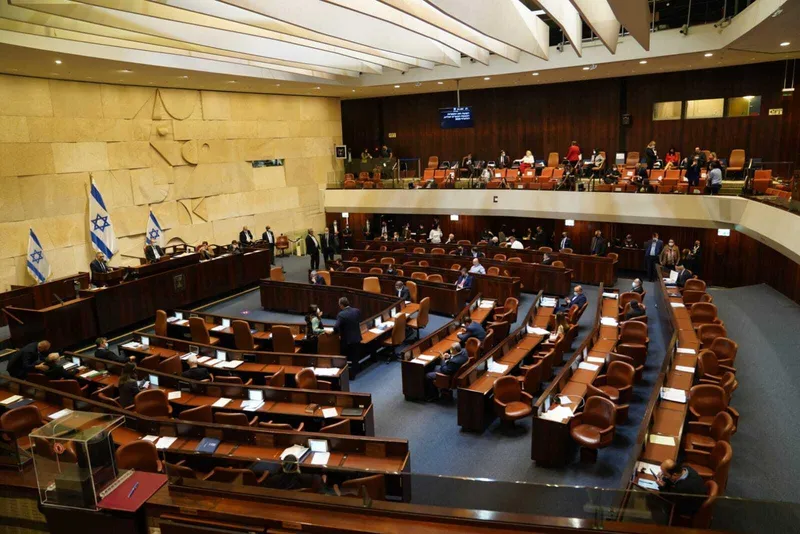
On November 4, 2026, the National Assembly unanimously rejected the first part of the draft 2027 Finance Bill, covering government revenue. Not a single deputy voted in favor of the text as amended during parliamentary deliberations, while 458 voted against it. This outcome does not mean that all political parties share the same approach to taxation. Rather, it reveals how successive amendments, adopted through shifting majorities, had produced a package that no political force was ultimately willing to endorse.
The government's original proposal must now be transmitted to the Senate, without the Assembly having examined the expenditure section. The constitutional process continues, but the vote illustrates a fundamental difficulty: institutions can still move legislation forward without necessarily generating the political agreement needed to provide it with lasting legitimacy.
This distinction matters. A democracy can remain legally functional while becoming politically incapable of resolving its contradictions. France has not reached the point of institutional breakdown. Nevertheless, its ability to transform competing interests into collective decisions is progressively deteriorating.
Debt, or the Accumulation of Deferred Choices
France's fiscal position gives this crisis a particularly concrete dimension.
At the end of the second quarter of 2026, French public debt stood at €3,595.5 billion, equivalent to 119% of gross domestic product. It had increased by €59.6 billion in three months, following a €75.8 billion rise in the preceding quarter. Net public debt represented 111.4% of GDP.
These figures do not, by themselves, indicate imminent insolvency. France continues to benefit from deep financial markets, a substantial tax base and membership in the euro area. But they demonstrate an accumulation of obligations whose financing is becoming progressively more restrictive.
The public deficit is expected to reach approximately 5.4% of GDP in 2026, compared with an initial target of 5%. Prime Minister Sébastien Lecornu's government hopes to reduce it to 5% in 2027, 3.9% in 2028 and 2.8% in 2029. This trajectory contains a major political complication: most of the adjustment is scheduled after the 2027 presidential election, during years when the current leadership may no longer possess the authority to implement it.
This approach is hardly new. Successive governments have frequently constructed fiscal trajectories around future improvements in growth, anticipated spending restraint or reforms expected to generate savings several years later. The problem arises when those deadlines arrive without the promised adjustments having materialized.
In September, the Finance Ministry estimated that approximately €54 billion in measures would need to be identified to meet the 2027 budget target relative to the baseline evolution of public finances. This figure does not consist entirely of new spending cuts. A substantial share would offset the expected increase in expenditure, while a smaller portion would represent a genuine adjustment compared with the previous year.
The distinction is essential. A budget can appear restrictive because it limits spending growth while still increasing expenditure in nominal terms. Conversely, keeping nominal spending unchanged can amount to a real reduction in resources when prices rise.
On November 4, the government announced €3.8 billion in cancelled appropriations for 2026, alongside €3.7 billion in additional spending. The immediate net effect therefore remains limited. Above all, the operation illustrates the difficulty of creating substantial fiscal room without touching the most politically sensitive commitments.
French debt is therefore more than a financial indicator. It is the accounting record of decisions taken at different moments in history, whose costs continue to constrain present choices.
An Economy No Longer Generating the Growth Required
France's fiscal difficulties would be less acute if its economy were expanding rapidly enough to increase tax revenues organically and reduce the relative weight of public debt.
Recent economic developments, however, point in the opposite direction.
According to INSEE's preliminary estimates, gross domestic product contracted by 0.1% in the third quarter of 2026, following stagnation in the second quarter and a 0.2% decline in the first. The statistical growth carry-over for the year stood at just 0.2% at the end of the third quarter.
These figures describe an economy that has been virtually motionless since the beginning of the year. They are not sufficient to establish a prolonged recession, but they reveal weak activity that complicates any strategy of fiscal consolidation.
Unemployment stood at 8.3% in the second quarter. Annual inflation was estimated at 3.4% in October, while the household confidence indicator had fallen to 80 points, substantially below its long-term average.
The combination is unfavorable. Weak growth limits income expansion and public revenue. Inflation continues to affect households' essential expenditure. Unemployment sustains demand for social protection, while businesses become more reluctant to invest when demand prospects are uncertain.
It would nevertheless be misleading to portray the entire French productive economy as uniformly deteriorating. In October, the business climate indicator for manufacturing stood at 105 points, above its long-term average, while construction reached only 95 points and retail trade 93 points.
This divergence reveals a fragmented economy in which some sectors retain relatively favorable prospects while others are more directly exposed to weak consumption, financing costs or regulatory uncertainty.
The problem therefore extends beyond insufficient demand. France must simultaneously improve productivity, modernize parts of its industrial base, accelerate technological adoption and strengthen its investment capacity. Yet these transformations require capital, skills, infrastructure and predictability, precisely the conditions that political instability tends to undermine.
The Social Model Confronts Demographic Constraints
One of France's principal difficulties lies in the structure of its collective commitments.
Its social model rests on an extensive system of pensions, healthcare, benefits, public services and transfers that provides substantial income redistribution and helps mitigate the social consequences of economic crises.
These arrangements are central to the French social contract. Their cost cannot therefore be treated merely as an accounting variable that can be reduced without wider consequences.
Nevertheless, they face demographic changes that are progressively transforming their financing conditions.
Population aging increases healthcare needs and pension expenditure. It also changes the relationship between people in employment and those receiving benefits financed, directly or indirectly, through labor income and compulsory contributions.
This development does not automatically produce a crisis. Its consequences depend on employment, productivity, effective retirement ages, population health and financing choices. But it requires adjustments that governments cannot postpone indefinitely.
The available options are particularly constrained because France already has a high level of compulsory taxation by international standards. Additional revenue can help stabilize public finances, but poorly designed tax increases risk undermining investment, employment or competitiveness. Reducing benefits or public services can improve certain fiscal balances, but may also transfer costs to households and deepen territorial inequalities.
Other possibilities exist: improving spending efficiency, reorganizing public administration, reducing certain tax exemptions, increasing employment and raising productivity. Yet these measures rarely produce immediate results on the scale required by public financing needs.
The contradiction is therefore not necessarily that France spends too much in every area. It is that the commitments embedded in its system have become increasingly difficult to prioritize.
Every expenditure has beneficiaries, justifications and defenders. Every proposed saving encounters a coalition of interests capable of highlighting its consequences. Under these conditions, budgetary arbitration ceases to be a purely technical exercise and becomes a negotiation over the distribution of sacrifices.
Political Fragmentation Turns Compromise Into a Liability
The Constitution of the Fifth Republic was designed to ensure executive stability and avoid some of the difficulties experienced under previous parliamentary systems. For several decades, the combination of presidential elections and relatively coherent parliamentary majorities gave governments substantial capacity to act.
That configuration has progressively weakened.
The fragmentation of the National Assembly has produced political blocs with profoundly different economic programs, institutional visions and electoral constituencies. None possesses a sufficient majority to impose its orientation on a lasting basis.
The government must therefore seek temporary agreements or use constitutional mechanisms to overcome certain legislative obstacles. But these instruments do not resolve the underlying question: a measure adopted without sufficient consensus may remain legally valid while generating political and social opposition.
The approaching 2027 presidential election intensifies this difficulty. Political parties have little incentive to share responsibility for unpopular decisions with a weakened executive. Budgetary compromises may be interpreted by their voters as concessions, while opposition forces seek to preserve their ability to present themselves as alternatives.
The result is a transformation of parliamentary behavior. Political parties may find it more advantageous to prevent legislation from passing than to participate in shaping it, even when they acknowledge the existence of the problems it seeks to address.
The rejection of the revenue section of the 2027 budget offers a particularly clear illustration. Unanimity in rejection does not reflect unanimity of purpose. It represents the temporary convergence of otherwise incompatible disagreements.
This mechanism could extend beyond the budget. Energy policy, administrative reform, immigration, pensions, corporate taxation and military spending all require decisions extending over several years. Yet the prospect of a rapid change in government reduces the credibility of commitments and encourages political actors to prioritize immediate gains.
A crisis of governability emerges when democratic competition can no longer generate the compromises necessary for the sustained exercise of power.
A Society Where Sacrifices Are No Longer Seen as Fair
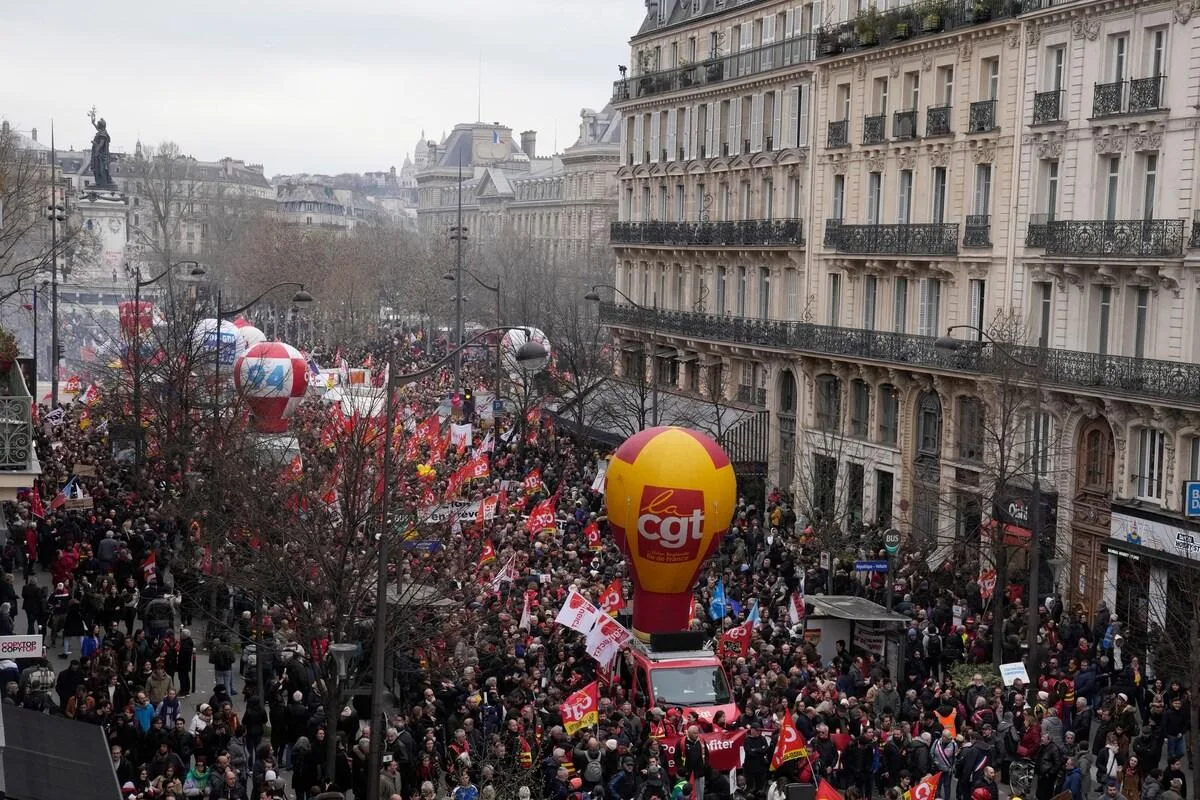
France's difficulties cannot be understood without considering the social and territorial dimensions of political distrust.
The effects of economic policies are not distributed evenly. Homeowners, workers in stable employment, pensioners, self-employed professionals and young people entering the labor market do not face the same constraints. Major metropolitan areas concentrate a substantial share of skilled employment and high-value-added activity, while certain industrial, rural and suburban territories face greater difficulties accessing employment, transport and public services.
These differences generate conflicting perceptions of government action.
For some citizens, the state collects substantial taxes without guaranteeing sufficiently effective public services. For others, public institutions represent the last line of defense against insecurity and inequality. The same reforms can therefore be presented either as essential to fiscal sustainability or as an erosion of collective protection.
The political difficulty arises from the absence of a broadly shared understanding of what constitutes a fair contribution.
A reform may be economically coherent yet fail if citizens believe its costs are distributed inequitably. Conversely, a popular short-term measure may aggravate the imbalances it is intended to alleviate.
Distrust of institutions feeds on this tension. When governments announce fiscal consolidation objectives they repeatedly fail to achieve, their credibility weakens. When citizens observe that the restrictions demanded of them do not produce visible improvements, their willingness to accept further sacrifices declines.
The result is a difficult cycle to interrupt: insufficient results undermine confidence, declining confidence complicates reform, and the absence of reform perpetuates the underlying imbalances.
French Sovereignty Is Becoming More Expensive
Domestic constraints are compounded by a transformation of the international environment.
France must strengthen its defense capabilities in a Europe facing a prolonged deterioration in its security environment. It must also modernize its energy infrastructure, adapt its economy to climate change and participate in global competition involving semiconductors, artificial intelligence, industrial technologies and strategic supply chains.
These ambitions are not independent of one another. They frequently compete for the same financial resources, technical expertise and industrial capacity.
European rearmament requires investment in equipment, ammunition, infrastructure and production capabilities. The energy transition requires financing electricity grids, generation capacity, building renovation and transport transformation. Digital sovereignty demands investment in computing capacity, data infrastructure, cybersecurity and advanced technologies.
Yet the benefits of these expenditures often materialize over the long term, while their budgetary costs are immediate.
The French government must therefore choose between priorities that can all legitimately be described as strategic. Cutting investment could compromise future competitiveness and security. Financing everything through additional borrowing could intensify fiscal constraints. Covering the costs through higher taxation could weaken parts of the productive economy.
Membership in the European Union and the euro area adds another dimension. It provides France with an integrated market, a common currency and institutional stabilization mechanisms, but also requires budgetary coordination and adherence to collective rules.
Sovereignty can therefore no longer be measured solely by the capacity to make national decisions. It increasingly depends on the material ability to finance and implement those decisions without creating excessive external dependencies.
France remains a major power. But the economic cost of exercising that power is rising faster than some of its fiscal room for maneuver.
Financial Risk: Gradual Deterioration Rather Than Inevitable Collapse
Rising debt and weak growth regularly invite comparisons with previous European sovereign debt crises. Such comparisons require caution.
France is not in the same position as Greece in the early 2010s. Its economy is more diversified, its sovereign debt market is deep, and it belongs to a monetary union equipped with substantial institutions and stabilization instruments.
That does not mean the French state's financing conditions are independent of investor confidence.
Financial markets assess a borrower's future capacity to meet its obligations. They consider debt trajectories, growth prospects, institutional stability and the credibility of fiscal policy.
A sustained deterioration in these factors can increase the risk premium demanded on newly issued government bonds. Higher borrowing costs do not immediately affect the entire outstanding debt stock, because existing securities retain their terms until maturity. But they progressively increase interest expenditure as debt is refinanced and new borrowing takes place.
This mechanism can become cumulative. Higher interest costs increase public expenditure, making deficit reduction more difficult. If nominal growth remains insufficient, the debt ratio may continue to rise despite certain fiscal adjustments.
Debt dynamics depend particularly on three variables: the primary fiscal balance, meaning the budget excluding interest payments; the average financing cost of public debt; and the nominal growth rate of the economy.
A country can stabilize a high debt ratio when growth and fiscal balances sufficiently offset interest costs. Conversely, even a lower debt burden can become problematic if economic activity contracts persistently and financing needs increase.
The French danger therefore does not necessarily lie in a sudden collapse. It may instead take the form of a progressive narrowing of policy choices, with each budget allocating more resources to financing past commitments and less to future investment.
It is a crisis that can advance without a spectacular event.
Three Possible Paths After 2027
The 2027 presidential election will be a major political turning point, but it will not, by itself, resolve France's contradictions.
The first possible path is negotiated stabilization. A new majority, or a sufficiently coherent coalition, could establish a credible medium-term fiscal framework, distribute adjustments over several years and connect financial consolidation with a strategy for economic growth. This approach would require distinguishing operating expenditure, social transfers and productive investment rather than treating all public spending as economically equivalent.
A second path would extend the current situation. Fragile governments could continue adopting budgets based on minimal compromise, combining temporary adjustments, postponed deadlines and repeatedly revised multiyear objectives. Institutional continuity would be preserved, but structural imbalances would remain largely unresolved. Such an outcome could deepen distrust and progressively weaken public investment capacity.
A third path would involve political rupture. A majority emerging from a profound political realignment could seek to change fiscal, social, European or institutional policies rapidly. Such a development could enable more decisive choices, but its effectiveness would depend on their economic coherence, legal feasibility and the new government's ability to maintain confidence among financial and social actors.
None of these trajectories is predetermined.
France's ability to recover stronger growth, changes in European monetary conditions, the energy environment and the decisions of international partners will also influence the outcome. An improvement in economic conditions could facilitate adjustment. A new external shock could instead accelerate deterioration.
Whatever the electoral result, however, accumulated commitments will not disappear with a change of government.
The Real Challenge: Recovering the Capacity to Choose
France still possesses the means to avoid prolonged deterioration. Its economy retains significant scientific, industrial and technological expertise. Its public administration has considerable experience. Its membership in the European Union provides an economic and institutional framework that few individual powers could reproduce independently.
The difficulty is therefore not that France lacks resources. It is that its political leaders have multiplied objectives presented as simultaneously indispensable without establishing a sufficiently stable hierarchy among them.
Social protection must be preserved, but its financing must be secured. Taxation must remain competitive, but revenues must increase. Public services must be strengthened, but expenditure must be controlled. Defense must receive additional resources without undermining civilian investment. Debt must decline, but growth must not be suffocated.
Each of these propositions can be defended individually. Their coexistence nevertheless creates a resource-allocation problem that no government can escape.
A genuine recovery would not simply consist of producing a budget that meets an annual numerical target. It would require rebuilding a collective capacity to define priorities, explain their costs and accept that certain objectives cannot be achieved immediately.
That demands more than a change of political leadership or an isolated institutional reform. It requires sufficient continuity for decisions to produce results, transparency to evaluate those results and a distribution of burdens considered acceptable by a sufficiently broad section of society.
France has long compensated for its contradictions through growth, borrowing, redistribution and the strength of its administrative machinery. These mechanisms continue to function, but their capacity to absorb an indefinite accumulation of new commitments is diminishing.
The French crisis is not yet that of a state incapable of acting. It is that of a country increasingly unable to determine what it must do first, what it can still afford and what it must stop promising.
As political deadlines approach, the question is no longer simply how France should be governed. It is whether the country can restore coherence between its ambitions, resources and decisions.
Perhaps this is where the true frontier of French power now lies: not in the breadth of what the state can announce, but in its ability to choose what it can actually accomplish.
Principal Sources
- INSEE, Quarterly Maastricht Debt of General Government — Second Quarter 2026, September 29, 2026.
- INSEE, Economic Dashboard, October 30, 2026: GDP, inflation, unemployment, household confidence and business climate indicators.
- French Treasury (Direction générale du Trésor), France Economic Flash — GDP Declines Slightly in the Third Quarter, October 30, 2026.
- LCP – National Assembly, 2027 Budget: National Assembly Unanimously Rejects Revenue Section, November 4, 2026.
- Le Monde, 2026 Budget: Government Attempts a Final Spending Adjustment to Prevent a Major Overrun, November 4, 2026.
- Le Monde, 2027 Budget: Deficit Slippage as Sébastien Lecornu Targets 5% in 2027, September 17, 2026.
- Le Monde, 2027 Budget: Sébastien Lecornu Maintains Objective of a Deficit Below 3% of GDP in 2029, October 14, 2026.
Methodological note: Economic statistics reflect the latest available releases as of November 6, 2026. Fiscal projections are distinguished from observed outcomes. Political scenarios and institutional implications presented in this article constitute Atlas Limits' independent analysis rather than definitive forecasts.
Atlas Limits Research Desk
Atlas Limits’ editorial and analytical desk.