The American midterm elections of November 3, 2026, have altered Washington's political balance in ways that cannot be fully explained by parliamentary seat counts alone. Two years after Donald Trump's return to the White House, Democrats have regained control of the House of Representatives and the Senate. They have also won several gubernatorial elections and made advances in territories where Republican dominance had appeared firmly established.
The result represents more than a change in congressional majorities. It marks the end of a political configuration in which the presidency and both chambers of Congress were controlled by the same party. It introduces a new period of institutional confrontation at a time when the United States must simultaneously manage domestic economic pressures, a prolonged war with Iran, substantial international commitments, and the budgetary consequences of its industrial and military ambitions.
The central question is therefore no longer simply how many seats Republicans have lost. It is how an administration that had concentrated much of the federal government's political leverage now finds itself confronting, halfway through its term, the limits of its own electoral coalition.
A Defeat Beyond the Traditional Electoral Map
American midterm elections frequently work against the president's party. The country's institutional history offers numerous examples. But that historical pattern alone cannot explain the electoral geography of 2026.
Democrats have captured Senate seats previously held by Republicans in Texas, Kansas, Iowa, South Carolina, North Carolina, Ohio, and Maine. They have also retained contested seats in Michigan and Georgia. In the House of Representatives, their gains have extended beyond traditionally competitive districts into territories where Republicans had previously enjoyed substantial electoral advantages.
The significance of these results is particularly evident in Texas. James Talarico won the Senate election against Republican Ken Paxton, ending several decades without a Democratic victory in a federal Senate election in the state. At the same time, Gina Hinojosa defeated Greg Abbott in the gubernatorial race.
These two results do not, by themselves, establish that Texas has undergone a permanent transformation into a Democratic stronghold. Elections also depend on candidates, turnout, and national circumstances. They nevertheless demonstrate that a state's political balance cannot be regarded as permanently settled, even when decades of results appear to have consolidated it.
Kansas and South Carolina offer another illustration of this development. In states historically favorable to Republicans, Democratic Senate victories indicate that the president's party suffered setbacks beyond suburban constituencies and the traditionally contested swing states.
According to a Reuters analysis of preliminary results, Republicans lost ground relative to Donald Trump's 2024 performance in approximately 99% of the roughly 2,100 counties for which sufficiently advanced data were available on the morning of November 4. Such a comparison requires caution: it concerns different elections, with different electorates and turnout rates. Nevertheless, it reveals the geographical breadth of the Republican decline.
The election therefore produced more than an accumulation of local victories. It exposed a national movement whose manifestations varied across states but whose overall direction was consistent.
The Cost of Living and the Return of Material Constraints
One of the central lessons of these elections concerns the renewed importance of economic concerns in voting behavior.
For several years, American political life has been structured by conflicts over immigration, institutions, national identity, individual rights, and cultural change. These issues have not disappeared. But electoral surveys conducted around the 2026 vote indicate that the cost of living occupied a decisive place among voters' concerns.
The centrality of the economy cannot be reduced to changes in an inflation index.
For households, economic conditions are first experienced through the expenses they must actually bear: housing, food, insurance, healthcare, transportation, debt repayments, and energy. Even when the rate of price increases slows, the price levels already reached can continue to weigh heavily on household budgets.
There is therefore a fundamental difference between an improvement in a macroeconomic indicator and the perception that living conditions have improved.
This distinction helps explain why administrations can encounter political difficulties even when they emphasize economic results they consider favorable. Voters do not cast their ballots on the basis of an abstract statistical average. They also assess their ability to preserve their standard of living and the credibility of the political promises made to them.
Donald Trump had built an important part of his return to power on the promise of restoring American prosperity, protecting domestic workers, and reestablishing a measure of economic control. The 2026 election shows that this promise remains subject to demands for tangible results.
It would nevertheless be excessive to attribute the entire Democratic shift to a single economic variable. Concerns about corruption, the exercise of power, and foreign policy decisions also played a role. Electoral motivations are multiple, sometimes contradictory, and opinion surveys cannot mechanically establish the cause of each individual vote.
What emerges more clearly is that material concerns provided common ground for voters whose political and cultural preferences may remain profoundly different.
Iran: When Foreign Policy Returns to the Ballot Box
The war with Iran constitutes one of the defining features of these midterm elections.
In American political debate, foreign military interventions are often presented through their strategic objectives: national security, regional balance, alliance credibility, the protection of economic interests, or the prevention of future threats.
But war also produces domestic consequences. It mobilizes budgetary resources, exposes military personnel to risk, affects economic expectations, and can disrupt energy markets.
The relationship between foreign conflict and the cost of living becomes particularly sensitive when fuel prices rise. In the United States, where automobile mobility occupies a central place in everyday life and economic organization, gasoline prices possess immediate political visibility.
Following the election, Donald Trump acknowledged that the war with Iran and high gasoline prices had contributed to Republican electoral difficulties. Vice President JD Vance also emphasized the conflict's role in the results.
These statements are politically significant, although they do not constitute a comprehensive demonstration of the causes of the defeat. They nevertheless show that Republican leaders themselves recognize a connection between their international decisions and voters' domestic concerns.
This development introduces a strategic tension for the presidency.
An administration may consider a military operation essential to national security while confronting a public that questions its costs, duration, or outcomes. The two dimensions are not necessarily incompatible strategically, but they can become difficult to reconcile politically.
The 2026 election therefore highlights a fundamental limit of American power: the ability to conduct an ambitious foreign policy also depends on the strength of domestic support.
The importance of this factor extends beyond the Iranian conflict. It also concerns American commitments in the Middle East, European security, relations with China, and future decisions about the balance between military expenditure and domestic economic priorities.
Congress Becomes a Center of Power Again
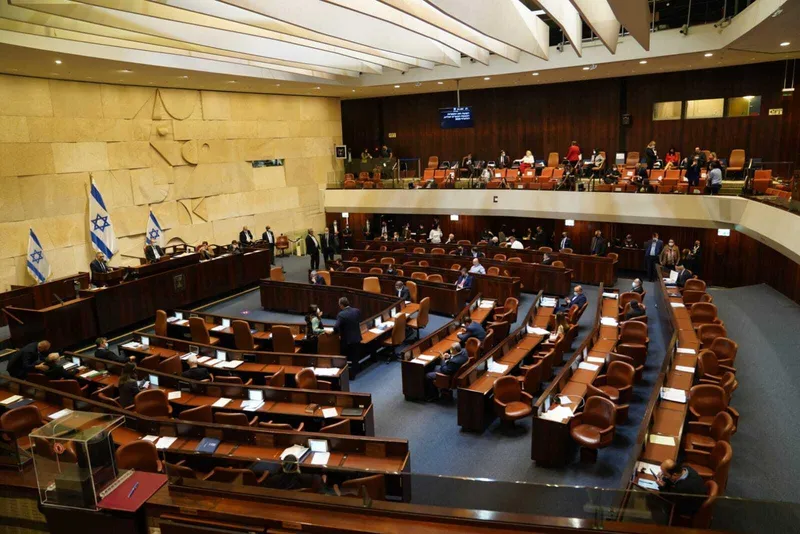
The most immediate institutional consequence of the elections is the Democratic takeover of both chambers of Congress.
When the new Congress convenes on January 3, 2027, Donald Trump will have to deal with opposition majorities in the legislature. This situation does not remove the president's constitutional prerogatives, but it fundamentally changes the conditions under which he can govern.
The House of Representatives plays an essential role in passing legislation, overseeing the administration, and making budgetary decisions. The Senate also participates in legislation but possesses specific responsibilities regarding presidential appointments and treaty ratification.
The change of majority in the Senate is therefore particularly significant. Judicial and administrative nominations requiring Senate confirmation will no longer proceed within the same political environment. Democrats will have additional means to examine nominees, delay certain procedures, or reject appointments.
In the House, congressional committees will be able to investigate executive actions, request documents, hold hearings, and exercise more extensive oversight over the use of public resources.
Democratic leaders have already announced their intention to focus on living costs, healthcare policy, and investigations involving the administration.
But controlling Congress does not mean controlling the entire federal government.
The president retains the power to veto legislation passed by both chambers. Overriding that veto requires a two-thirds majority in each chamber, a threshold considerably higher than the one needed to pass ordinary legislation.
The Senate also operates under procedural rules that can require 60 votes to end debate on many legislative measures. A congressional majority therefore does not automatically translate into the ability to enact an entire political program.
This institutional structure can encourage negotiation, but it can also produce prolonged deadlock.
American government is thus entering a phase in which each institution will possess substantial means of limiting the other's actions without necessarily being able to impose its own agenda independently.
A Budgetary Confrontation With International Consequences
The economic implications of this institutional change could extend far beyond American borders.
The United States must simultaneously finance its military commitments, industrial programs, infrastructure, social expenditure, and the servicing of a substantial federal debt. These obligations exist within a broader environment of trade tensions and international technological competition.
Congress, however, holds essential authority over federal appropriations and tax legislation.
A Democratic majority may seek to modify spending priorities, challenge certain fiscal policies, or attach conditions to the financing of federal programs. The administration may, in turn, defend its existing commitments, mobilize the executive powers available to it, and use the presidential veto.
The risk is not simply political disagreement. It is the possibility of repeated confrontations over federal financing.
Budget negotiations can produce partial government shutdowns when the necessary appropriations legislation is not passed on time. Debates over the federal debt ceiling, when action becomes necessary, represent another potential source of institutional and financial tension.
For international markets, the central issue is less the existence of divided government than its capacity to produce predictable decisions.
US Treasury securities occupy a central position in the global financial system. Washington's budgetary decisions influence interest-rate expectations, international capital flows, and financing conditions for governments and companies around the world.
Nevertheless, an opposition-controlled Congress does not mechanically produce a financial crisis. Periods of divided government have sometimes generated significant budget compromises and legislative agreements. The outcome will depend on negotiations, economic constraints, and the strategies adopted by both parties.
The election therefore opens a period of institutional uncertainty whose economic consequences remain to be determined.
American Industry Between Two Political Logics
The elections also come at a time when industrial policy occupies a central place in American national strategy.
Semiconductors, artificial intelligence, energy infrastructure, defense, critical minerals, and manufacturing reshoring have become subjects of political attention that extend far beyond traditional divisions between government intervention and free markets.
Republicans and Democrats do not advocate the same instruments or priorities, but both parties recognize, in different ways, the strategic importance of America's industrial base.
The new Congress could alter financing conditions, tax incentives, and oversight mechanisms for certain programs. It could also intensify debates over the consequences of tariffs, the costs borne by businesses and households, and the actual effectiveness of reshoring policies.
An essential institutional distinction remains: Congress possesses constitutional authority over foreign commerce, but several statutes have delegated substantial powers to the president in the application of tariff measures. The scope of any congressional intervention would therefore depend on the legislation involved and lawmakers' ability to assemble the necessary majorities.
For businesses, the change of majority does not necessarily mean abandoning existing industrial objectives. It could, however, modify the instruments used to pursue them, the conditions imposed on beneficiaries, and the balance between public support, competition, and fiscal discipline.
Continuity in America's strategic ambitions could therefore coexist with greater instability in the political mechanisms through which they are implemented.
The States: A Second Geography of Power
An interpretation of the midterm elections would be incomplete if it focused exclusively on Congress.
Gubernatorial elections and local contests also help determine how federal policies are implemented, challenged, or supplemented across American territory.
States possess considerable authority in areas such as education, infrastructure, public safety, certain economic regulations, and election administration.
The Democratic victory in the Texas gubernatorial election has, in this respect, an institutional significance distinct from the Senate seat won in the same state.
A governor cannot freely nullify a valid federal law. Governors can nevertheless exercise their states' constitutional and statutory powers, shape local policies, participate in legal challenges, and influence relations between federal authorities and state administrations.
This territorial dimension is particularly important in a country whose political divisions are also geographical, economic, and demographic.
Changes in state-level political balances could influence debates over immigration, energy, the environment, education policy, and individual rights.
They could also alter the political conditions under which the 2028 presidential election will be prepared.
A Democratic Victory That Does Not Resolve Every Contradiction
The Democratic takeover of Congress provides the party with a considerably stronger institutional position. It does not, however, guarantee a unified political program or a durable electoral coalition.
The Democratic Party brings together different perspectives on taxation, public expenditure, trade policy, social issues, and international military commitments.
Candidates elected in traditionally conservative states do not necessarily represent the same political preferences as those elected in major progressive metropolitan areas.
This diversity can be an electoral advantage, allowing the party to appeal to different constituencies. It can also complicate the definition of shared legislative priorities.
Democratic leaders will have to balance several objectives: addressing the economic concerns that dominated the election, overseeing the administration, maintaining parliamentary unity, and developing a political proposition that extends beyond opposition to the president.
The possibility of impeachment proceedings could also intensify political tensions. The Constitution allows the House to impeach a president by a simple majority, but conviction and removal from office require a two-thirds majority in the Senate. Democratic control of both chambers therefore does not make removal automatic, or even institutionally achievable without substantially broader support.
Electoral victory thus creates political opportunities while imposing new responsibilities.
For Republicans, the challenge will be different. They will need to examine the reasons for their losses, determine the role of the presidential agenda in their future strategy, and manage disagreements among the party's different factions.
The election results do not establish that the American electorate has permanently abandoned the political orientations that brought Donald Trump to victory in 2024. They do indicate, however, that the coalition assembled around his presidency was not reproduced with the same effectiveness in 2026.
The World Confronts a Constrained Presidency
For America's partners and competitors, the new institutional configuration introduces an additional challenge: distinguishing what the presidential administration can decide independently from what requires congressional approval.
American diplomacy remains directed by the executive branch. The president retains important powers in international relations, diplomatic negotiations, and command of the armed forces.
But Congress participates in financing operations, overseeing arms sales under applicable procedures, shaping certain sanctions, determining trade policy, and approving treaties.
European allies will therefore have to follow both White House policy and congressional decisions, particularly regarding military expenditure, NATO, and security commitments.
For Middle Eastern countries, the Iranian question will remain central to this new relationship between presidential strategy, congressional oversight, and the financing of military operations.
China, meanwhile, will observe Washington's ability to maintain a coherent policy on advanced technologies, sensitive exports, and strategic supply chains.
Across these issues, divided government does not necessarily imply a systematic weakening of the American position. Some objectives enjoy support from both parties. Others may become more difficult to implement.
The challenge for foreign partners will therefore be to identify which policies reflect a durable institutional consensus and which depend on political balances that have now changed.
2028 Begins Before 2027
Midterm elections do not determine the next president of the United States. Yet they profoundly influence the conditions under which the following presidential election takes shape.
The 2026 vote has revealed changes in electoral behavior, given national visibility to new political figures, and altered the territorial distribution of power.
It also constitutes a test for both major political parties.
Democrats will need to demonstrate that their success can translate into identifiable congressional action and a credible response to economic concerns. Republicans will need to determine how to preserve their electoral base while responding to losses in territories that had previously favored them.
None of these questions, however, has a definitive answer.
Midterm elections do not mechanically predict the outcome of the next presidential contest. Candidates, economic conditions, international events, and electoral coalitions can change considerably over two years.
The November 3 election therefore represents less a reliable forecast of 2028 than a transformation of the political conditions under which that election will be prepared.
The Limits of Power
The American institutional system rests on a permanent tension between the ability to act and the necessity of sharing power. The presidency concentrates considerable authority, but it does not, by itself, constitute the federal government.
The 2026 elections have brought that distinction back into focus.
Donald Trump retains the White House, his executive prerogatives, and substantial capacity to shape national and international policy. But he has lost the congressional majorities that facilitated the adoption of his program and limited the opposition's oversight capabilities.
Democrats, meanwhile, have regained powerful instruments of institutional influence without acquiring unrestricted freedom to govern.
America is therefore entering neither a presidential transition nor a suspension of executive authority. It is returning to a configuration in which institutions must negotiate, scrutinize one another, and sometimes confront each other.
The historical significance of this election will not be measured solely by the number of seats won or lost. It will depend on how the new balance affects public finances, industrial policy, military commitments, and the country's ability to maintain a coherent strategic direction.
American voters have changed the distribution of power without changing the occupant of the presidency. That distinction, fundamental to the functioning of American democracy, will shape much of the country's political life over the next two years.
The question is no longer whether the president still possesses power. It is what he can now accomplish without controlling Congress.
Main Sources
- Associated Press, November 4, 2026: midterm election results, Democratic control of Congress, and institutional implications.
- Reuters, November 4, 2026: national results, Senate seat changes, and geographical analysis of voting patterns.
- Reuters, November 4, 2026: county-level electoral comparisons with the 2024 presidential election.
- The Texas Tribune, November 3–4, 2026: Texas Senate and gubernatorial election results.
- Le Monde, November 4, 2026: election results by state and congressional district.
- Constitution of the United States, Articles I and II: congressional powers, presidential authority, veto procedures, and institutional checks and balances.
Editorial note: This analysis reflects information available as of November 5, 2026. Congressional majorities are established according to available election projections, while some vote counts and official certifications remain pending. The institutional and economic consequences discussed are analytical assessments, not decisions already enacted.
Atlas Limits Research Desk
Atlas Limits’ editorial and analytical desk.