Israelis have voted, but a government remains to be built. Following the parliamentary elections of October 27, 2026, Benjamin Netanyahu remains the leader of the country's largest party, while his opponents, together with Arab political parties, hold enough seats to contemplate an alternative parliamentary majority. Yet no clear governing coalition has emerged. The election has disrupted the outgoing political balance without resolving the question of who will succeed it.
This contradiction captures much of Israel's current predicament. After years marked by the October 7, 2023 attacks, the wars in Gaza and Lebanon, regional confrontations, social mobilization and institutional controversies, voters have substantially reshaped the composition of the Knesset. But the divisions running through Israeli society continue to restrict the possibilities for coalition-building.
The new parliamentary term therefore opens with a question more fundamental than whether Benjamin Netanyahu remains in office: can Israel produce a political majority capable of governing sustainably without resolving the contradictions that fragment its party system?
An Election Without a Governing Majority
The October 27 results give Benjamin Netanyahu's Likud 27 seats, leaving it as the largest party in the Knesset. Gadi Eisenkot's Yashar comes second with 21 seats, followed by B'Yachad, led by Naftali Bennett, with 12.
The remaining seats are distributed among the Joint List, with 11 representatives; the Democrats and Ra'am, with eight each; and Yisrael Beiteinu, United Torah Judaism and Otzma Yehudit, with seven each. Shas and Religious Zionism secure six seats apiece.
Overall, the parties supporting Netanyahu account for 53 seats, compared with 48 for the Jewish opposition parties organized around Eisenkot. The two principal parties representing Israel's Arab electorate hold a combined 19 seats.
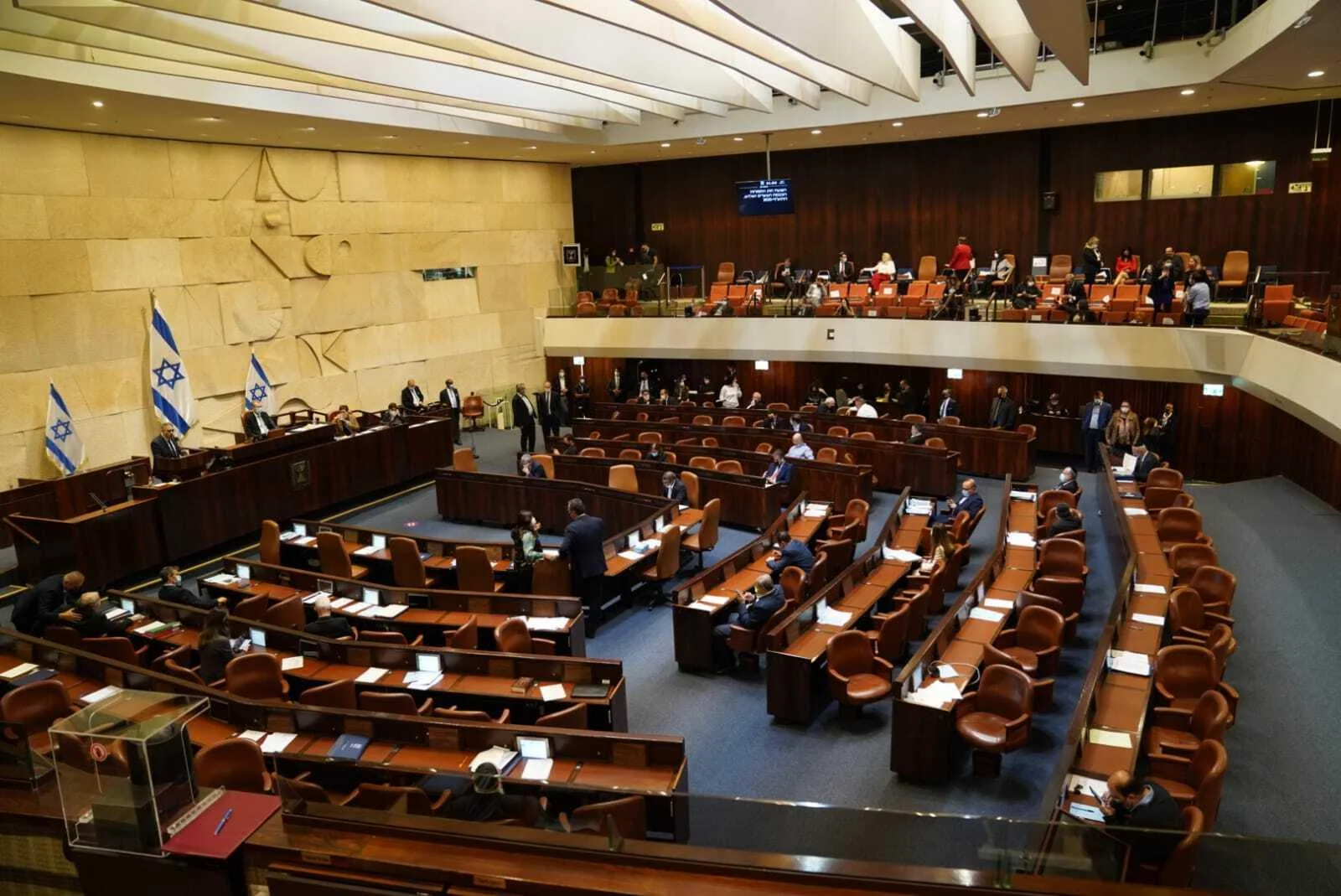
In a 120-member parliament, an absolute majority requires 61 seats. Neither of the two declared governing blocs reaches that threshold.
Turnout, approaching 78%, is another significant feature of the election. It reflects substantial electoral mobilization in a society deeply divided over national security, political accountability and the future of its institutions.
The results, published by the Central Elections Committee on October 30, must still undergo the final verification procedures before their scheduled submission to President Isaac Herzog on November 4.
Parliamentary fragmentation is not new to Israel. Its nationwide proportional representation system, with an electoral threshold of 3.25%, encourages the representation of diverse political, religious and communal interests. For decades, no major party has been able to govern without coalition partners.
But the 2026 election introduces an additional difficulty. The challenge is no longer simply to bring several parties together around a common program. It is also to overcome political incompatibilities that have hardened during years of war and institutional confrontation.
Netanyahu: The Largest Party, but a Weakened Coalition
Benjamin Netanyahu retains an important position within Israel's political system. His party remains the country's largest, and his bloc is still bigger than the one assembled around Gadi Eisenkot when only declared governing alliances are considered.
Nevertheless, the result represents a substantial parliamentary setback for the outgoing coalition. The parties that collectively held 68 seats in the previous Knesset now control only 53.
The difference is politically decisive. Netanyahu can no longer rely on an existing majority to continue governing. He must persuade new partners to join him or secure forms of parliamentary support extending beyond his traditional alliances.
The difficulty lies partly in the composition of his own bloc. Likud governed alongside ultra-Orthodox parties and nationalist formations to its right, notably Itamar Ben-Gvir's Otzma Yehudit and Bezalel Smotrich's Religious Zionism. These partners have defended particularly assertive positions on security, the Palestinian territories, religious affairs and the institutional organization of the state.
Expanding this coalition would therefore require compromises on issues that have contributed directly to political polarization.
On November 2, Netanyahu proposed establishing a broader national government under his leadership. That initiative does not, however, mean his opponents are prepared to participate. Several opposition parties have explicitly refused to join a government he would continue to lead.
These parliamentary difficulties are compounded by controversies surrounding the integrity of the election. Netanyahu and some of his allies have raised allegations of irregularities and foreign interference. The Central Elections Committee has nevertheless stated that the election was conducted lawfully and that no evidence had established systematic interference with the integrity of the vote.
Political allegations, official investigations and established facts must be distinguished.
The prime minister remains in office during the transition. But his continued exercise of executive authority does not establish whether he will be able to form the next government.
Eisenkot: An Alternative Confronting Its Own Contradictions
Gadi Eisenkot's rise is one of the election's most significant developments.
A former chief of staff of the Israel Defense Forces, he has emerged as a central opposition figure at the head of Yashar. His political positioning emphasizes national security, government accountability and institutional reform.
His trajectory has an important distinguishing feature. Eisenkot does not represent a wholesale departure from Israel's established security priorities. Rather, he proposes a different approach to governing, allocating responsibility and rebuilding trust between the government, the military and state institutions.
His principal difficulty lies in the diversity of the parties that might support his accession to power.
The opposition includes centrist, liberal, social-democratic and nationalist currents. It brings together politicians who share the objective of replacing Netanyahu but differ over religion, Palestinian policy, relations between state institutions and the place of Arab citizens within the political system.
Naftali Bennett, himself a former prime minister, has expressed support for an attempt to form a government led by Eisenkot. But such convergence is not enough to establish a majority.
The opposition bloc's 48 seats leave it 13 short of the required threshold. Even complete agreement among these parties would therefore be insufficient to form a majority government on its own.
The question then becomes the role of the 19 Arab lawmakers.
The Growing Parliamentary Weight of Arab Parties
The performance of Arab parties is one of the election's most important developments.
The Joint List wins 11 seats, while Ra'am, led by Mansour Abbas, secures eight. Together, these parties hold 19 seats, a historic level of parliamentary representation for Israel's Arab citizens.
Their gains change the balance of power in the Knesset. Added to the Jewish opposition's 48 seats, they bring to 67 the number of lawmakers belonging to parties outside Netanyahu's supporting bloc.
Yet this arithmetic majority does not amount to a political coalition.
Differences between the Arab parties themselves, their leaders' positions on the Palestinian question and objections expressed by several Jewish opposition politicians constrain the possibilities for an agreement.
Avigdor Lieberman, in particular, opposes a governing arrangement dependent on Arab parties. His position illustrates the tension between the desire to replace Netanyahu and competing conceptions of the state's political identity.
Previous experience nevertheless demonstrates that Arab participation in, or support for, a governing coalition is no longer purely theoretical. Ra'am participated in the coalition led by Naftali Bennett and Yair Lapid in 2021.
The circumstances of 2026 are different, however. The consequences of the war in Gaza, tensions between communities and debates over citizenship have profoundly changed the political conditions under which such cooperation might be considered.
Arab representation thus occupies a paradoxical position: it is numerically decisive, yet its integration into government formation remains one of the most contested questions in Israeli politics.
Beyond the immediate negotiations, this situation raises a lasting question about the functioning of Israeli parliamentary democracy and the place of Arab citizens within the country's national political arrangements.
October 7 and the Regional Wars at the Center of the Debate
The election cannot be understood independently of the events that have transformed Israel since October 2023.
The Hamas-led attacks of October 7, the subsequent war in the Gaza Strip, fighting with Hezbollah in Lebanon and military tensions with Iran have placed security questions at the center of political life.
These events have also raised questions about the responsibilities of political and military authorities, intelligence failures, government strategy and the human consequences of military operations.
Netanyahu's opponents have called for a comprehensive investigation into the failures preceding the October 7 attacks. His supporters have placed greater emphasis on decisions taken during the conflicts and the need to maintain a firm security posture.
These competing interpretations influence coalition negotiations.
For Eisenkot, a former senior military commander, credibility on national security is central to his political positioning. He seeks to demonstrate that a change of government would not necessarily weaken Israel's strategic posture.
This also explains why a change of prime minister would not, by itself, establish that Israel's foreign policy was about to undergo a fundamental transformation.
Differences among Israeli leaders often concern methods, accountability and priorities as much as underlying security objectives.
The Palestinian question nevertheless remains a major dividing line. Gaza's future, the territory's governance, conditions in the West Bank, Israeli settlements and the prospects for a political settlement continue to divide parties, while the positions of several formations constrain the possibility of a rapid revival of the peace process.
The consequences of these policies extend beyond Israel. They directly affect Palestinians, neighboring states, Western partners and regional diplomatic arrangements.
The State, the Judiciary and the Religious Question
The regional wars have sometimes pushed institutional disputes into the background, but those conflicts have not disappeared.
Before October 7, 2023, the judicial reform proposals advanced by Netanyahu's government triggered extensive demonstrations. The debates concerned the powers of the Supreme Court, judicial oversight of government decisions and the balance between state institutions.
These controversies continue to shape relations between political parties.
Netanyahu's corruption trial is another element of this institutional context. The legal proceedings against him, in which he denies the allegations, sustain disagreements over political accountability, judicial independence and the exercise of executive power.
These tensions are compounded by the question of military service for ultra-Orthodox men.
In a country where conscription plays a central role in social organization and national security, exemptions granted to certain population groups have become particularly controversial.
Ultra-Orthodox parties seek to preserve specific arrangements associated with religious study. Several opposition parties instead demand a broader distribution of military or civilian service obligations.
The issue extends beyond religion. It concerns the allocation of collective responsibilities, the military's personnel requirements, public finances and competing understandings of equality before national obligations.
For a future coalition, it could become as consequential as disagreements over Gaza or judicial reform.
A government capable of assembling a majority around the single objective of replacing Netanyahu could quickly encounter these contradictions once confronted with concrete policy decisions.
An Economy Facing the Costs of Uncertainty
The economic consequences of the election also deserve attention.
Israel's economy possesses significant structural strengths, particularly in advanced technology, software, cybersecurity, high-value services and parts of the defense industry. It also benefits from extensive international financial and commercial relationships.
But years of conflict have intensified several constraints: elevated military expenditure, prolonged reserve mobilization, sectoral disruption, fiscal pressure and uncertainty surrounding investment.
Against this background, the formation of the next government will influence important economic decisions.
Budgetary choices will have to reconcile defense spending, reconstruction requirements, social commitments and fiscal sustainability. Debates over conscription could also affect economic activity and labor-force participation.
Parliamentary fragmentation complicates these decisions. Coalition partners may condition their support on specific budgetary commitments, particularly in religious education, social transfers or infrastructure.
It would nevertheless be excessive to infer a predetermined deterioration in economic conditions from the election results alone. The effects will depend on the duration of negotiations, the policies ultimately adopted and, above all, developments in the security environment.
The central issue is institutional predictability. A durable coalition can facilitate budgetary decisions and long-term commitments, while successive fragile governments may complicate their implementation.
Washington and the Regional Balance
The formation of Israel's next government will also be closely watched by the United States.
The relationship between Washington and Israel rests on military, technological, diplomatic and political foundations that extend beyond individual leaders. It remains a structural component of regional security.
Nevertheless, the composition of the governing coalition can influence the management of bilateral disagreements, military operations, negotiations concerning Gaza and prospects for normalization with certain Arab states.
For Gulf countries, Egypt and Jordan, the decisions of the next Israeli government will have direct implications for security, borders, mediation and regional stability.
The Palestinian question remains particularly sensitive in this context. Existing diplomatic relations between Israel and several Arab countries have not eliminated disagreements over the Palestinian territories, Jerusalem's status or the conditions for a political settlement.
Iran is another major factor. Whatever coalition emerges from the election, questions concerning Iranian military capabilities, Tehran-aligned regional networks and the risks of escalation will continue to influence Israeli security doctrine.
The election may therefore change the interlocutors and methods of Israeli diplomacy without necessarily transforming the full range of strategic constraints facing the country.
Government Formation: An Open Institutional Process
The next institutional step is the scheduled submission of the election results to President Isaac Herzog on November 4, followed by consultations with representatives of the elected parties.
The president must designate a member of parliament to attempt to form the next government. This decision does not automatically follow the ranking of parties. It depends in part on recommendations from parliamentary groups and the prospects for assembling a coalition.
The designated candidate initially receives 28 days, with a possible extension of 14 days.
If that attempt fails, additional procedures may be initiated under Israel's institutional rules. Failure throughout the process could eventually lead to another election.
The inauguration of the 26th Knesset is scheduled for November 10.
During this period, Netanyahu continues to serve as caretaker prime minister. The duration of this arrangement will depend on the parties' ability to reach a parliamentary agreement.
The political timetable could therefore extend over several weeks, or longer if the initial negotiations fail.
The Possible Paths Out of the Impasse
Four principal configurations help explain the institutional possibilities opened by the election.
The first would be the formation of a government led by Gadi Eisenkot. Such an arrangement would require agreement among opposition parties and a solution to the question of Arab parliamentary support. It could involve a broad coalition or more limited parliamentary arrangements. Disagreements over security, conscription and the state's identity would nevertheless present substantial obstacles.
The second configuration would be Netanyahu's continuation at the head of an expanded coalition. This would require parties that have so far refused to govern under his leadership to reconsider their positions, or a change in the agreements between parties. It would also demand compromises among partners whose positions are sometimes difficult to reconcile.
A third possibility would be a minority government relying on shifting parliamentary support. Such an arrangement could allow certain decisions to proceed without guaranteeing a stable majority for the government's entire program. Its survival would depend on confidence votes, budget legislation and compromises negotiated on an issue-by-issue basis.
Finally, an inability to form a government could result in another dissolution and a return to the polls in 2027. This possibility would continue the pattern of electoral instability observed since 2019, but it cannot presently be treated as an established outcome.
None of these scenarios can be regarded as settled as of November 2. Their realization will depend on decisions taken by party leaders and the commitments they are prepared to formalize over the coming weeks.
Conclusion — Power Beyond the Ballot Box
The October 27, 2026 elections have substantially altered Israel's parliamentary balance without producing an immediate governing solution.
Benjamin Netanyahu retains the Knesset's largest party but no longer commands the majority that supported his government. Gadi Eisenkot represents an organized parliamentary alternative, yet his allies do not independently hold enough seats to govern. Arab parties possess unprecedented parliamentary weight, even as their participation in governing arrangements remains among the most contested questions in Israeli politics.
The situation therefore cannot be reduced to a contest between two leaders. It exposes the limitations of a system in which arithmetic majorities do not necessarily translate into political majorities.
The coming weeks will show whether parties can move beyond their mutual refusals to reach an agreement, or whether disagreements over security, the judiciary, religion and political representation once again prevent the formation of a durable government.
Foreign policy prospects will also depend on these compromises. A change in coalition could alter diplomatic methods, institutional priorities and certain regional decisions without removing the security constraints inherited from previous years.
Over the longer term, three questions will remain central: the ability of institutions to function despite party fragmentation, the place of different components of society within political representation, and the conditions under which a security strategy can coexist with lasting regional stability.
The election has redistributed bargaining power. It has not yet redistributed the power to govern.
Israel is consequently entering a phase in which the challenge will not simply be to assemble 61 lawmakers, but to determine what such a majority would actually be capable of doing once formed.
Main Sources
- Israel Central Elections Committee — Results of the October 27, 2026 parliamentary elections, published October 30.
- Congressional Research Service — Israel: 2026 Elections and Government Formation, October 30, 2026.
- Associated Press — Election results and coalition prospects, October 28, 2026.
- Reuters — Government formation and post-election negotiations, October 28, 2026.
- The Times of Israel — Detailed results, parliamentary blocs and institutional timetable, October 29–30, 2026.
- The Jerusalem Post — Statements by political leaders and coalition negotiations, November 2, 2026.
- Al Jazeera — Government formation procedures and parliamentary scenarios, November 1, 2026.
Atlas Limits Research Desk
Atlas Limits’ editorial and analytical desk.