Germany’s consideration of joining the Global Combat Air Programme marks a potentially significant development in the restructuring of Europe’s defence industry. Following the breakdown of Franco-German cooperation on a next-generation fighter aircraft, Berlin is exploring an industrial partnership with Britain, Italy and Japan. Beyond the diplomatic implications, the discussions raise fundamental questions about technological sovereignty, intellectual property, industrial governance and the distribution of power among the world's leading aerospace manufacturers.
Berlin Signals a Potential Strategic Realignment
On October 28, 2026, German Chancellor Friedrich Merz confirmed during a visit to Tokyo that his government was examining the possibility of participating in the Global Combat Air Programme (GCAP).
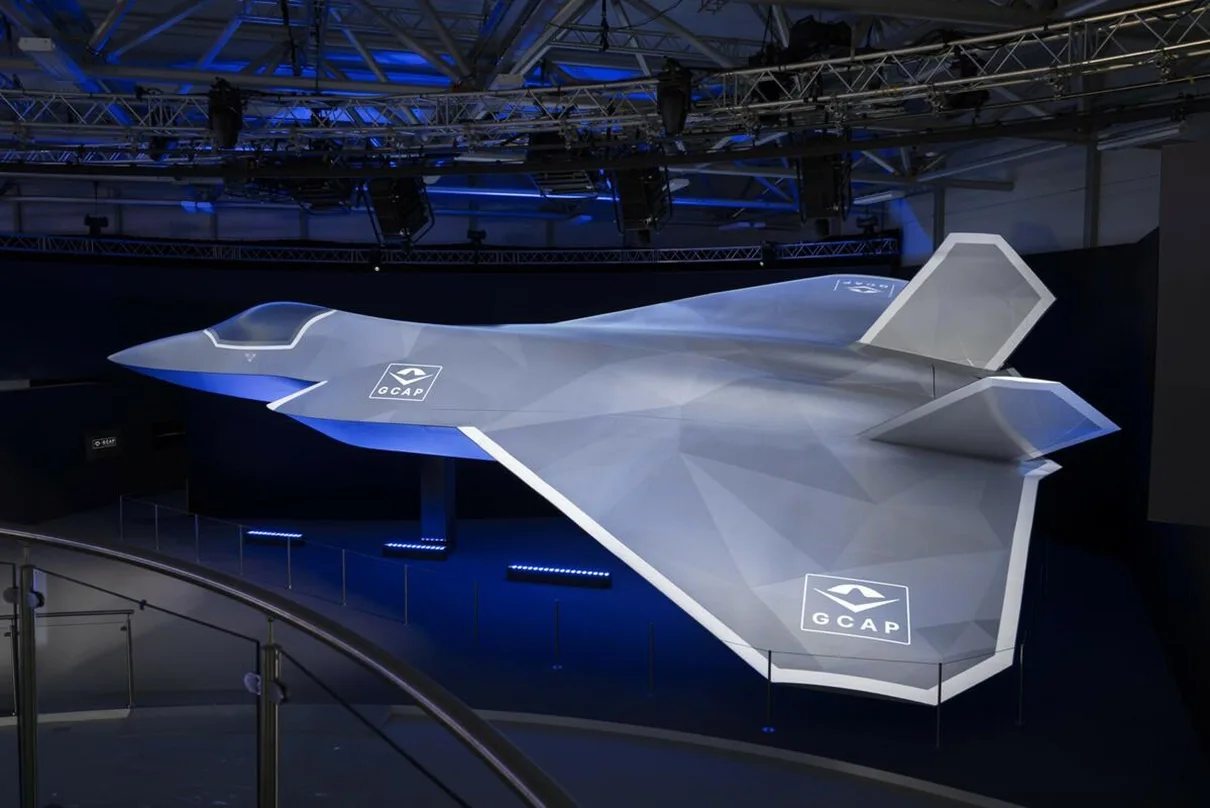
Launched in December 2022 by the United Kingdom, Italy and Japan, GCAP aims to develop a next-generation combat aircraft and associated technologies, with an initial operational capability targeted for 2035.
Merz's statement followed discussions with Japanese Prime Minister Sanae Takaichi, during which the two governments addressed industrial cooperation, critical technologies and regional security.
The German chancellor indicated that the defence ministers of Germany and Japan would further examine the possibility of cooperation within the programme.
However, Berlin has announced neither a formal application to join GCAP nor any financial commitment or industrial agreement.
This distinction is essential.
Germany is not entering an established consortium. It is assessing whether participation could be compatible with its strategic and industrial interests.
Merz also acknowledged that the existing partners had already made substantial progress in allocating industrial responsibilities.
He cautioned that Germany might not be able to reach a decision in early 2027, a timetable reportedly favoured by Tokyo.
These remarks reveal one of the central challenges facing any potential expansion: integrating another major industrial power into a programme whose technological, contractual and organisational foundations have already been negotiated.
The Breakdown of FCAS Reshapes Europe's Defence Landscape
Germany's interest in GCAP cannot be separated from the crisis surrounding the Future Combat Air System (FCAS).
Launched in 2017 by France and Germany and subsequently expanded to include Spain, FCAS was intended to become one of Europe's most ambitious collaborative defence programmes.
Its architecture extended beyond a conventional fighter aircraft.
The project envisaged a Next Generation Fighter, unmanned platforms, secure communications networks and a digital combat environment connecting multiple military assets.
The objective was to develop an integrated air combat system capable of operating in increasingly complex technological and operational environments.
Yet the programme became progressively constrained by major industrial disagreements.
At the centre of the dispute were Dassault Aviation, responsible for leading the fighter aircraft component, and Airbus Defence and Space, representing significant German and Spanish industrial interests.
The disagreements concerned design authority, the allocation of engineering responsibilities, intellectual property rights and access to technologies developed by the participating companies.
These issues extended far beyond contractual negotiations.
In military aerospace, control over an aircraft's architecture determines much of an industrial group's ability to upgrade its capabilities, integrate new systems, manage development costs and preserve operational independence.
The dispute therefore concerned the effective distribution of industrial authority.
In June 2026, Franco-German cooperation on the common fighter aircraft component broke down, undermining the central pillar of the programme.
That development did not necessarily constitute the formal termination of every technology, infrastructure project or cooperation mechanism associated with FCAS.
It nevertheless fundamentally altered the industrial outlook for its participants.
For Germany, the question is now how to maintain advanced aerospace capabilities and secure access to next-generation combat technologies without reproducing the governance disputes that undermined cooperation with France.
GCAP: An Established Consortium Built Around Three Industrial Powers
The Global Combat Air Programme has one defining characteristic: it is no longer merely a diplomatic initiative awaiting an industrial structure.
Since its launch, the three founding countries have progressively established the institutional and industrial arrangements required to develop the future combat system.
The United Kingdom relies primarily on BAE Systems, one of the world's leading defence contractors.
Italy is represented by Leonardo, whose capabilities include military aerospace, electronics, sensors and mission systems.
Japan contributes the expertise of Mitsubishi Heavy Industries and its broader national defence industrial base.
Together, the three countries bring substantial experience in designing, integrating and manufacturing advanced military aerospace systems.
The programme also incorporates a dedicated industrial structure, Edgewing, established to coordinate the design and development of the future aircraft.
Its organisational framework is intended to provide the industrial authority required to manage a complex multinational programme.
For the founding partners, this architecture is designed to address problems that have repeatedly affected international defence projects: fragmented decision-making, overlapping responsibilities, divergent specifications and disputes over technological ownership.
However, the existence of an established structure also creates a potential obstacle to expansion.
Germany would not be negotiating the rules of a consortium from the beginning.
It would have to secure a position within an organisation whose principal responsibilities have already been distributed.
Any German participation would therefore raise fundamental questions.
Would Berlin obtain meaningful influence over technological decisions?
Could German companies secure responsibility for strategically important design activities?
What share of development and production would be allocated to Airbus and its industrial partners?
Under what conditions could technologies developed within the programme be modified, deployed or exported?
The answers would determine the industrial value of German participation more directly than formal membership alone.
Airbus Seeks Industrial Authority, Not Simply a Place in the Programme
The discussions acquired an additional dimension following information published by the Financial Times on October 25 and subsequently reported by Reuters on October 26.
According to those reports, representatives of Airbus and BAE Systems were preparing to explore possible cooperation within GCAP.
The potential discussions would not necessarily be limited to the combat aircraft itself.
They could also address collaborative autonomous platforms and the digital infrastructure required to connect aircraft, drones, sensors and command systems.
These capabilities are central to the architecture of future air combat systems.
Airbus indicated that it remained open to industrial partnerships, while emphasising the importance of substantial and equitable participation by German, Spanish and European industries in development, production and operational use.
This position highlights the central issue.
For Airbus, joining an international programme without securing meaningful technological responsibilities could substantially reduce the industrial benefits of participation.
A role concentrated primarily on assembly or component manufacturing would not provide the same strategic advantages as responsibility for mission systems, platform integration or overall system architecture.
The implications extend to the preservation of industrial capabilities.
Next-generation military aerospace programmes typically span several decades.
They determine research and development investment, supply-chain organisation, engineering expertise and the long-term technological trajectory of participating companies.
For Airbus, obtaining design authority is therefore also a question of industrial continuity.
It involves preserving capabilities that might otherwise become increasingly concentrated among companies controlling the programme's technological architecture.
The reported contacts with BAE Systems do not, however, constitute an industrial agreement or guarantee any particular allocation of responsibilities.
They represent the beginning of a potential negotiation whose outcome remains uncertain.
Germany's Strategic Paradox: Seeking Cooperation After a Dispute Over Industrial Control
The current situation presents a strategic paradox.
Germany is exploring participation in another multinational consortium after the breakdown of a European programme affected by disagreements over industrial governance.
Yet some of the difficulties that undermined FCAS could reappear within GCAP.
The number of participating countries could increase.
Industrial interests would be distributed across several European and Asian economies.
Operational requirements could also differ between the armed forces involved.
The United Kingdom seeks to maintain a leading national capability in combat aviation.
Italy aims to preserve and expand its aerospace and defence electronics expertise.
Japan requires a future aircraft adapted to its regional security environment and fleet replacement requirements.
Germany would need guarantees concerning its industrial participation and access to critical technologies.
These objectives are not necessarily incompatible.
They nevertheless require governance arrangements capable of resolving disagreements without producing prolonged development delays.
The timetable adds another layer of complexity.
GCAP is targeting operational introduction in 2035, particularly to address Japan's requirement to replace its F-2 fighter aircraft.
A substantial redistribution of industrial responsibilities could require additional technical, contractual and financial negotiations.
It could also affect established decision-making arrangements.
The arrival of a partner with Germany's industrial capabilities would therefore represent more than a diplomatic enlargement.
It could alter the internal balance of the programme.
Intellectual Property at the Centre of Technological Sovereignty
One of the most sensitive issues concerns intellectual property.
In next-generation air combat programmes, critical technologies extend far beyond aircraft structures and aerodynamic performance.
They include mission software, electronic warfare systems, communications architectures, data-processing capabilities, advanced sensors and interfaces connecting multiple platforms.
Control over these technologies determines whether a country can independently upgrade its equipment without relying systematically on external authorisation.
It also influences export opportunities.
A country may contribute financially to a programme while retaining limited autonomy over technical modifications or international sales.
The distinction between economic participation and technological control is therefore fundamental.
It explains why intellectual property arrangements occupy such a prominent position in multinational defence programmes.
In the case of GCAP, the potential integration of Airbus would raise several complex questions.
Which technologies would remain under the exclusive control of the founding partners?
What technical knowledge could be shared with additional participants?
How would rights over jointly developed innovations be allocated?
What mechanisms would protect commercially and militarily sensitive information?
How would disputes between companies operating under different national legal systems be resolved?
These questions do not necessarily represent insurmountable obstacles.
They determine, however, the actual depth of industrial cooperation.
A consortium can share development costs without distributing technological control equally.
That distinction will be central to any negotiations involving Germany.
Japan Emerges as a Central Player in Europe's Aerospace Equation
Japan's position is one of GCAP's most distinctive features.
Historically, major European combat aircraft programmes have primarily relied on arrangements between European governments and manufacturers.
GCAP introduces a transcontinental industrial architecture in which Japan is a founding partner rather than an external customer.
This development reflects changing defence requirements and industrial policies.
For Tokyo, the development of a next-generation fighter responds to military modernisation needs, the preservation of domestic industrial capabilities and an increasingly demanding regional security environment.
Japan's timetable is particularly important.
The progressive replacement of its F-2 aircraft creates significant development and operational constraints.
Tokyo is therefore likely to scrutinise the implications of admitting another partner for the programme's organisation and schedule.
At the same time, German participation could offer potential advantages.
Germany would contribute an additional industrial base, technological expertise and potentially greater financial resources.
It could also strengthen cooperation between European and Japanese defence industries.
This possibility forms part of a broader rapprochement between Europe and Japan in economic security, strategic supply chains and critical technologies.
GCAP could consequently become an instrument of industrial cooperation extending beyond military aviation.
It would help establish long-term technological interdependencies between several major industrial economies.
Financing: Sharing Development Costs Without Multiplying Governance Risks
Developing a next-generation combat aircraft requires substantial and sustained investment.
Expenditure covers fundamental research, technology demonstrators, flight testing, software development, onboard systems, industrial infrastructure and production capabilities.
These investments extend over many years before the first operational deliveries.
Expanding a consortium can distribute development costs across a broader financial base.
It may also increase potential production volumes, reduce certain unit costs and provide manufacturers with greater visibility over future investment.
From this perspective, German participation could offer advantages to the existing partners.
However, those benefits are not automatic.
Adding another country can generate additional expenditure associated with adapting specifications, reallocating industrial responsibilities and modifying governance arrangements.
Expected financial savings must therefore be weighed against the costs of coordination.
This tension is a structural feature of major multinational defence programmes.
As the number of partners increases, the available funding base may expand.
Yet industrial, political and operational requirements can become more difficult to reconcile.
The effectiveness of a consortium consequently depends less on the number of participating countries than on the coherence of their contributions, responsibilities and strategic objectives.
As of October 28, 2026, Germany has announced no financial commitment to GCAP.
It would therefore be premature to assign a budgetary value to its potential participation.
Dassault Aviation and France Face a Changing Industrial Environment
Germany's possible rapprochement with GCAP could also reshape the strategic environment surrounding Dassault Aviation.
The French manufacturer occupies a distinctive position within Europe's defence industry.
Its experience developing the Rafale provides it with integrated capabilities in combat aircraft design, manufacturing and technological evolution.
These capabilities form an important component of France's defence industrial autonomy.
The breakdown of cooperation with Airbus on the FCAS fighter component does not mean that Dassault has lost its technological or industrial capabilities.
It does, however, raise questions about the framework through which France could finance and develop its next generation of combat systems.
Several theoretical options remain available.
France could pursue a more nationally centred development strategy involving its domestic aerospace manufacturers and technological partners.
It could seek new international partnerships compatible with its sovereignty requirements.
It could also maintain selected European cooperation arrangements covering autonomous systems, communications or digital technologies independently of a common fighter aircraft.
None of these trajectories should be considered definitively established on the basis of current GCAP discussions alone.
The fundamental challenge is preserving comprehensive industrial authority while absorbing the rising costs of advanced military technologies.
This equation is particularly sensitive for France, whose defence policy places substantial emphasis on independent decision-making, freedom of operational use and national control over strategic capabilities.
Potential German participation in GCAP could therefore accentuate the distinction between two approaches to European defence industrial development.
The first would prioritise extensive multinational cooperation based on shared investment and distributed responsibilities.
The second would seek to preserve more integrated national control over critical technologies, potentially at the cost of greater financial exposure.
These approaches are not necessarily mutually exclusive.
They nevertheless reflect different choices concerning sovereignty, financing and industrial cooperation.
The Swedish Alternative Shows Berlin Has Not Made Its Choice
GCAP is not the only option under consideration in Germany.
Reports published in October also pointed to exploratory thinking around cooperation involving Germany, Sweden and Spain.
Such an arrangement could potentially bring Airbus together with Saab, the Swedish aerospace and defence group with extensive experience in combat aircraft development.
This scenario would follow a different industrial logic from GCAP.
It could allow participating countries to negotiate governance principles and the allocation of responsibilities from the initial stages of a new programme.
However, it would also involve distinct challenges.
Establishing another consortium would require agreement on technical architecture, development schedules, financial commitments and industrial organisation.
It could also demand substantial initial investment before reaching a level of maturity comparable to GCAP.
Germany's decision therefore cannot be reduced to a simple choice between European and international cooperation.
It concerns several potential industrial configurations, each involving a different distribution of risks, costs and responsibilities.
GCAP offers the advantage of an already established programme.
A new European partnership might provide greater flexibility in determining industrial governance arrangements.
Berlin will have to assess these considerations.
Merz's confirmation in Tokyo represents an important political development, but it does not establish that Germany has reached a final decision.
A Restructuring That Extends Beyond Aerospace
The strategic importance of the GCAP discussions lies in their potential consequences for Europe's wider defence industrial base.
Combat aircraft programmes support industrial ecosystems extending far beyond aircraft manufacturers.
They involve companies specialising in propulsion, advanced materials, electronics, communications, embedded systems, cybersecurity and critical software.
They also shape relationships between major contractors and extensive networks of suppliers.
Changes in alliances between governments can therefore produce lasting shifts in industrial investment.
Research centres may be reorganised.
Certain capabilities may become concentrated in new technological hubs.
Suppliers may need to adapt their production capacity and commercial relationships.
Governments may also reconsider their innovation policies and approaches to protecting sensitive technologies.
From this perspective, German integration into GCAP would not simply represent a military procurement decision.
It could contribute to redefining relationships among some of Europe's largest aerospace companies.
Airbus, BAE Systems and Leonardo already have extensive experience cooperating through the Eurofighter Typhoon programme.
A new partnership involving these companies could extend existing industrial interdependencies.
GCAP would nevertheless introduce an additional dimension through Japan's central participation.
This structure could strengthen technological relationships between Europe and Asia while altering traditional balances within the European aerospace industry.
It could also create new forms of competition between industrial groupings, depending on decisions taken by France, Germany, Spain and other potential partners.
Towards a New Industrial Geography of Air Power
The transformation of combat aircraft programmes illustrates a broader evolution in strategic industries.
Development costs are increasing.
Technologies are becoming more interconnected.
Military systems increasingly depend on the integration of software, data, sensors and autonomous platforms.
In this environment, industrial power no longer depends exclusively on the ability to manufacture a high-performance aircraft.
It also depends on control over technological architectures and the capacity to organise durable cooperation between companies, governments and institutions.
Consortia are consequently becoming instruments through which industrial power is structured and distributed.
Their governance determines the allocation of investment, expertise and technological rights.
Their composition shapes strategic dependencies between countries.
Their decisions can influence research and production trajectories for decades.
Germany's potential rapprochement with GCAP illustrates this transformation.
The question is not simply which aircraft will equip the German armed forces after their current fleets.
It is also which industrial ecosystem Germany intends to support and what position it seeks within the development of future defence technologies.
The same question arises, in different forms, for France, Britain, Italy, Japan and Spain.
A Political Opening, Not Yet a New Alliance
As of October 28, 2026, three developments stand out.
The German government is officially examining participation in GCAP.
Britain has publicly expressed openness to that possibility.
Airbus is exploring the conditions under which it could secure a meaningful industrial role.
None of these developments constitutes formal German membership.
No financing agreement, redistribution of governance responsibilities or additional industrial workshare arrangement has been announced.
The next discussions will have to determine whether the interests of the participating countries and companies can be reconciled without undermining existing commitments.
The 2035 timetable, intellectual property rights, industrial workshare and operational requirements will be decisive considerations.
France will meanwhile have to clarify its own industrial direction following the breakdown of cooperation on the FCAS fighter aircraft.
Europe may therefore be entering a period of significant realignment in military aerospace partnerships, even though the final configuration of these relationships remains uncertain.
The central question is no longer simply which countries will jointly build the next generation of combat aircraft. It is who will control the technologies, industrial decisions and future development capabilities of these systems over the coming decades.
Because in the defence industry, participation in a programme does not necessarily mean control over its technologies.
And sharing development costs does not always mean sharing power.
Atlas Limits Research Desk
Atlas Limits’ editorial and analytical desk.