Faced with the risk of military confrontation, persistent strategic rivalries, and growing uncertainty surrounding external security guarantees, Middle Eastern states are expanding their diplomatic initiatives. From Saudi Arabia and Iran to Turkey, Pakistan, Oman, and Qatar, a new approach to regional consultation is taking shape. Beyond managing immediate crises, these efforts raise a more fundamental question: can regional powers gradually establish the conditions for their own collective security?
A Region Seeking to Move Beyond Permanent Crisis Management
The Middle East is undergoing a profound transformation in its strategic environment. For decades, regional military balances have depended on a combination of American security guarantees, bilateral alliances, national defense capabilities, and competing spheres of influence.
This arrangement has never amounted to a comprehensive collective security architecture. Instead, it has produced overlapping military arrangements, strategic partnerships, and deterrence mechanisms, often designed to counter one another.
Successive conflicts have exposed the limitations of this system. Energy facilities, maritime routes, military installations, civilian infrastructure, and major economic centers remain vulnerable to escalations that can rapidly extend beyond national borders.
Against this backdrop, several governments are seeking to strengthen political and military consultation mechanisms to reduce the possibility that a localized incident could develop into a wider regional confrontation.
The objective is not necessarily to replace existing alliances. It is, first and foremost, to establish channels of communication capable of functioning even between governments whose strategic interests remain fundamentally different.
This shift reflects a broader realization: military superiority, external security guarantees, and deterrence capabilities do not always prevent crises.
Security also depends on the ability of potential adversaries to communicate, identify their respective red lines, and contain the consequences of their disagreements.
From Tehran to the Gulf: Consultation as a Strategic Instrument
Regional consultations reported in late October 2026 illustrate this emerging approach.
Discussions involving Iran, Saudi Arabia, Turkey, and Pakistan have taken place against a backdrop of tensions surrounding the Strait of Hormuz, concerns over the security of energy infrastructure, and the risk of confrontations involving both state and non-state actors.
The political significance of these exchanges should not, however, be confused with the establishment of an alliance.
A diplomatic meeting, even one involving several major powers, does not constitute a collective defense treaty or an operational conflict-prevention mechanism.
It may nevertheless represent an initial step toward more institutionalized arrangements.
The distinction matters.
Occasional dialogue allows governments to communicate their positions. A permanent mechanism would enable them to maintain communication during crises, transmit warnings, and potentially coordinate measures aimed at preventing escalation.
It is precisely within this intermediate space that part of the Middle East's security transformation could unfold.
The countries involved do not need to share a common political vision to recognize their mutual interest in preventing a regional war.
They can maintain military rivalries, ideological differences, and distinct international alliances while seeking to reduce the likelihood of direct confrontation.
Such an approach does not eliminate conflict. It seeks to reduce its probability and, when conflict occurs, limit its expansion.
Saudi Arabia: Protecting Economic Transformation Through Stability
For Saudi Arabia, security carries particularly important economic implications.
The kingdom is pursuing a transformation intended to diversify its sources of growth, attract international investment, and develop new industries, infrastructure, and service sectors.
These ambitions depend on one essential condition: a predictable regional environment.
Industrial investments, logistics platforms, tourism infrastructure, and large-scale urban development projects require relatively stable financing and operating conditions over extended periods.
A prolonged military crisis can undermine these projects through several channels: higher insurance premiums, disrupted supply chains, energy-market volatility, revised investment decisions, and increased capital costs.
Saudi Arabia's approach to de-escalation must therefore be understood through the growing interdependence between national security and economic development.
The restoration of diplomatic relations between Riyadh and Tehran, announced in March 2023 following Chinese mediation, had already demonstrated that reducing tensions could serve pragmatic interests without requiring complete strategic convergence.
For Riyadh, dialogue with Iran does not mean abandoning military partnerships with the United States or other powers.
Rather, it provides an additional instrument for managing risk.
The kingdom is seeking to preserve several options simultaneously: maintaining credible defense capabilities, strengthening international partnerships, and preventing regional rivalries from undermining its economic objectives.
This approach illustrates an increasingly important feature of Middle Eastern strategies: diversifying partnerships does not necessarily require breaking with traditional alliances.
Iran: Deterrence, Regional Recognition, and Economic Constraints
For Iran, regional consultation mechanisms may serve different objectives, some of which overlap with those of its neighbors.
Tehran has long sought recognition of its role in shaping security arrangements across the Gulf.
Iranian authorities have repeatedly argued that regional security should primarily be organized by neighboring states rather than depend on military arrangements established by outside powers.
This position reflects a conception of security centered on regional sovereignty and reduced foreign military involvement.
It nevertheless faces substantial obstacles.
Concerns surrounding Iran's nuclear program, ballistic missile capabilities, and relationships with armed groups remain major sources of distrust among several regional governments.
Gulf states may therefore consider dialogue with Tehran necessary without accepting Iran's preferred model of collective security.
For Iran, participation in regional consultations could also help reduce diplomatic isolation and mitigate the economic consequences of prolonged confrontation.
A genuine security architecture, however, would require verifiable commitments, particularly regarding the prevention of cross-border attacks, protection of maritime navigation, and management of military incidents.
The challenge is to transform declarations of principle into sufficiently precise mutual obligations capable of producing tangible results.
Turkey: A Military Power Expanding Its Diplomatic Role
Turkey occupies a distinctive position in this evolving regional landscape.
As a NATO member, it possesses a substantial defense industry, operational experience across several theaters, and diplomatic relationships with actors whose interests frequently diverge.
Ankara maintains economic and strategic ties with Gulf monarchies while preserving channels of communication with Iran.
This configuration allows Turkey to participate in different initiatives without belonging exclusively to a single regional alignment.
Turkey is also seeking to expand defense exports, industrial cooperation, and its influence within the security arrangements of its broader geographical environment.
These objectives can reinforce one another.
Military cooperation can generate lasting industrial relationships, while diplomatic consultations can facilitate access to new partnerships.
There is, however, a significant difference between expanding bilateral cooperation and establishing a multilateral security framework.
Turkey's relations with regional actors remain shaped by disagreements over several issues, including Syria and the broader political balance of the Middle East.
Ankara may therefore contribute to de-escalation mechanisms without necessarily becoming the guarantor of a unified regional system.
Pakistan: Beyond the Arab World, but Central to Regional Security
Pakistan adds another dimension to these initiatives.
A nuclear-armed state with substantial military capabilities and longstanding relations with Saudi Arabia, Pakistan occupies a distinctive position in the security environment connecting South Asia and the Middle East.
Its relationship with Iran is also important because of their shared border, cross-border security challenges, and economic interests.
Islamabad consequently maintains diplomatic channels with several regional actors.
This position may facilitate consultations, particularly when tensions require communication between governments with limited direct relations.
Pakistan's potential role should not, however, be interpreted as evidence of an automatically applicable nuclear or military guarantee for Gulf states.
Such commitments would require explicit provisions establishing their legal and operational scope.
Islamabad's strategic relevance lies primarily in its ability to maintain multiple partnerships and participate in diplomatic arrangements.
Its involvement also reflects the expanding geographical scope of Middle Eastern security.
Stability in the Gulf concerns not only Arab states and Iran. It directly affects South Asian economies, energy supplies, and strategic interests.
Oman: Toward a Non-Aggression Pact Among Eight Gulf States?
Alongside the consultations involving Tehran, Oman has advocated a more inclusive approach to regional security.
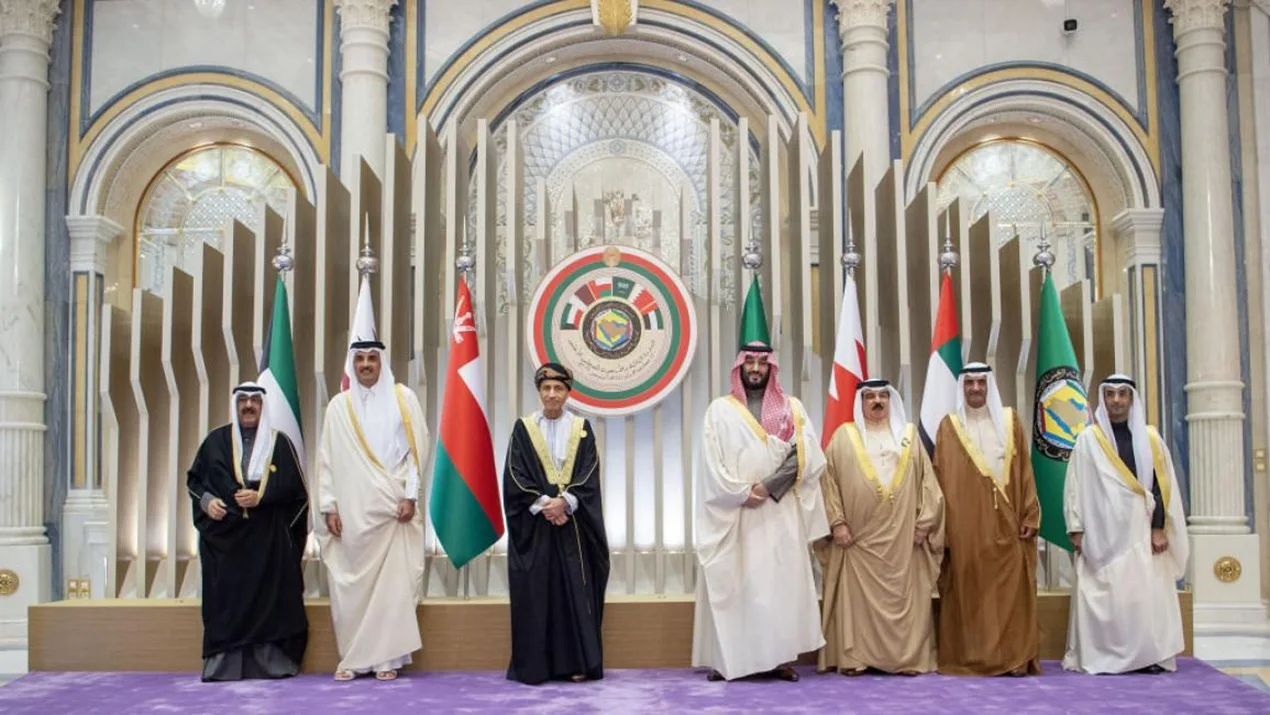
On October 26, 2026, Omani Foreign Minister Badr Albusaidi called for a security framework bringing together the six members of the Gulf Cooperation Council—Saudi Arabia, the United Arab Emirates, Qatar, Kuwait, Bahrain, and Oman—alongside Iran and Iraq.
Speaking at the University of Cambridge, the minister advocated a non-aggression pact among these eight countries, arguing that a regional arrangement excluding Iran would remain structurally vulnerable.
The initiative represents a diplomatic proposal rather than an agreement that has already been negotiated or signed.
Oman's approach is particularly significant because it rests on a different conception of security.
Instead of constructing a coalition against a designated adversary, Muscat proposes bringing states that might otherwise confront one another into a common framework of commitments.
Such an arrangement could eventually address several areas: non-aggression, maritime security, military incident prevention, and permanent consultation channels.
Its effectiveness would nevertheless depend on the precision of the obligations accepted by participating governments.
A non-aggression pact without verification procedures, mechanisms for addressing violations, or commitments concerning non-state armed actors could remain largely declaratory.
Oman, however, possesses considerable diplomatic experience.
The sultanate has repeatedly facilitated communication between Iran and the United States while maintaining relations with the Gulf monarchies.
This ability to engage competing actors allows Muscat to propose a regional framework that does not require existing rivalries to disappear before negotiations can begin.
The Mecca Pact: Collective Security Takes on a Military Dimension
Another important development concerns the defense agreement announced in August 2026 between Saudi Arabia, Turkey, and Pakistan.
Presented as the Mecca Pact, the agreement reportedly provides that an armed attack against one signatory would be considered an attack against all three partners.
It also reportedly includes provisions covering military cooperation, intelligence, arms production, and technology transfers.
On October 27, a Turkish parliamentary committee was reported to have approved the agreement, allowing it to proceed toward consideration by the full assembly. Turkey's ratification process had therefore not yet been completed at that stage.
This arrangement follows a different logic from Oman's proposal.
It is a defense mechanism among partners, whereas the Omani initiative seeks to bring together states that continue to have major disagreements.
The two approaches are not necessarily incompatible.
A regional architecture could theoretically combine defense alliances involving selected countries with broader non-aggression commitments.
Their coexistence nevertheless raises a fundamental question: how can governments ensure that a collective defense commitment does not automatically transform a bilateral confrontation into a conflict involving several states?
The issue becomes particularly sensitive when participating countries possess substantial military capabilities and divergent interests across external theaters.
The value of a defense pact therefore depends not only on the combined military strength of its members but also on the definition of the circumstances under which military assistance may be activated.
The Strait of Hormuz: Where Regional Security Meets the Global Economy
The Strait of Hormuz is one of the clearest examples of the intersection between military and economic security.
Connecting the Persian Gulf to the Gulf of Oman and the Indian Ocean, the waterway plays a central role in global oil and liquefied natural gas exports.
The confrontation triggered by American and Israeli strikes against Iran in February 2026 severely disrupted maritime conditions in the area.
Despite the April ceasefire, Washington and Tehran continued to disagree over the control of maritime traffic. Navigation restrictions, American measures targeting Iranian ports, and persistent military tensions contributed to instability in energy markets.
The Strait of Hormuz presents a distinctive strategic challenge: no single coastal state can independently control all the economic consequences of a prolonged disruption.
Exporting countries risk losing revenues, importing economies face supply difficulties, and shipping companies must account for additional operational and insurance risks.
These effects subsequently spread to financial markets, energy-intensive industries, and international supply chains.
This interdependence creates a shared interest in stability, even when governments remain deeply divided over political and military issues.
A regional consultation mechanism could therefore begin with relatively limited objectives: preventing naval incidents, establishing emergency communication channels, clarifying navigation procedures, and facilitating the management of situations that might trigger escalation.
Such measures would not resolve fundamental strategic disagreements.
They could nevertheless reduce the possibility that a miscalculation, maritime interception, or military incident develops into a broader confrontation.
The United States: An External Power That Remains Indispensable
The emergence of regional initiatives does not mean that the United States is about to disappear from the Middle East's security equation.
Washington retains major military partnerships, power-projection capabilities, and strategic interests throughout the region.
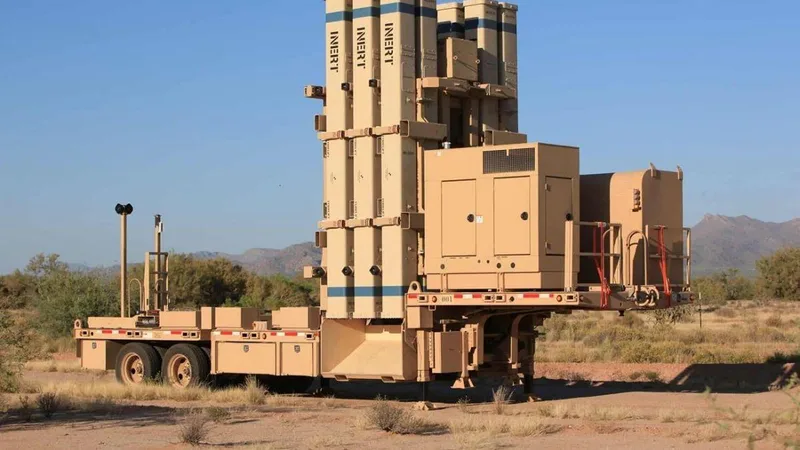
To varying degrees, Gulf states continue to depend on American weapons systems, intelligence capabilities, missile-defense arrangements, and military cooperation.
These dependencies cannot be eliminated simply by establishing diplomatic consultation mechanisms.
However, the crises of 2026 have raised renewed questions about the consequences of American military involvement.
External security guarantees can help deter attacks. Yet the participation of outside powers in regional confrontations can also increase the number of actors involved and complicate efforts to reach a settlement.
For Gulf governments, the challenge is therefore to balance military protection with diplomatic autonomy.
A more autonomous regional strategy could allow them to maintain external alliances while developing direct procedures for managing tensions with neighboring states.
This would nevertheless require major actors to distinguish collective security from their broader geopolitical rivalries.
Disagreements between Washington and Tehran remain particularly significant.
According to reports published on October 27, Iran has linked the resumption of negotiations over its nuclear program to the removal of certain American measures, including restrictions affecting its ports and oil exports. Washington, meanwhile, has sought reductions in Iranian uranium enrichment.
These disagreements demonstrate that regional consultations cannot be assessed independently of negotiations between the United States and Iran.
Middle Eastern security is increasingly shaped by several overlapping levels of engagement, none of which can fully replace the others.
Israel, Lebanon, Palestine, and Yemen: The Conflicts Complicating Regional Security
The principal difficulty facing any regional security framework lies in the number of existing conflicts and their interdependence.
The Israeli-Iranian confrontation, tensions in Lebanon, the Palestinian question, and the war in Yemen involve different political configurations.
Yet they can generate interconnected military consequences.
An operation in one territory may provoke retaliation elsewhere. An attack on an energy facility can alter the strategic calculations of governments not directly involved in the hostilities.
The Tehran consultations reportedly addressed developments in Palestine and Lebanon, alongside Israeli military activities in the region.
Yemen represents a particularly concrete challenge.
Attacks claimed by the Houthis against Saudi facilities, including oil infrastructure, illustrate the difficulty of containing a conflict when non-state armed actors possess long-range strike capabilities.
Tensions between Saudi Arabia and the Houthis reportedly intensified during October despite diplomatic efforts to prevent another expansion of regional hostilities.
The problem therefore extends beyond relations between governments.
An agreement among states does not necessarily end the operations of armed groups possessing their own command structures, political objectives, and military capabilities.
Any credible regional security architecture would need to address this challenge.
It would also have to determine whether non-aggression commitments cover only attacks conducted directly by national armed forces or extend to certain forms of support provided to external actors.
This distinction could become one of the principal obstacles in future negotiations.
From Diplomatic Consultation to Operational Conflict Prevention
The effectiveness of a security architecture is measured not by the number of meetings it organizes but by its ability to influence the behavior of participating states during crises.
Governments may repeatedly express their commitment to peace while maintaining incompatible military doctrines, mobilization arrangements, and strategic objectives.
To produce lasting results, a consultation mechanism would gradually need to acquire several operational functions.
The first would be permanent communication.
Direct channels between political and military authorities could enable governments to exchange information rapidly during maritime, aerial, or border incidents.
The second would involve preventing misinterpretation.
Certain military activities may be perceived as preparations for an attack even when they serve other purposes. Notification procedures could reduce these risks.
The third would concern coordinated crisis management.
When an incident occurs, participating states should be able to initiate consultations before military decisions become irreversible.
The fourth would involve protecting critical infrastructure.
Oil facilities, ports, electricity networks, telecommunications cables, and water supply systems represent assets whose destruction could produce consequences extending far beyond immediate military objectives.
Finally, a regional framework could establish procedures for investigating incidents and resolving disputes.
These mechanisms would require sustained political commitment and reciprocal obligations.
They would also need to confront a central difficulty: some governments may regard military transparency as a vulnerability rather than a security guarantee.
Institutionalizing dialogue would therefore depend on the ability of participating states to establish a minimum level of trust without first resolving every underlying disagreement.
The Economic Dimension: Security Becomes a Condition of Competitiveness
The transformation of Middle Eastern security strategies must also be understood in the context of the region's economic restructuring.
Gulf monarchies are seeking to strengthen their position within global value chains.
They are investing in logistics infrastructure, manufacturing, digital technologies, artificial intelligence, data centers, tourism, and financial services.
These sectors share an essential characteristic: their development depends on operational continuity.
An oil installation can sometimes be repaired after an attack. But a prolonged perception of instability can influence investment decisions, insurance conditions, and business location strategies for years.
Security is therefore becoming an increasingly important component of territorial competitiveness.
Countries capable of providing a relatively predictable environment may attract more capital and develop long-term infrastructure.
Conversely, a region exposed to repeated military disruptions risks facing a persistent risk premium.
This dynamic also affects energy-importing countries.
Asian economies, particularly China, India, Japan, and South Korea, have major interests in the stability of Gulf maritime routes.
The consequences of a crisis therefore extend far beyond the Middle East.
They influence production costs, international trade, and monetary and fiscal decisions across numerous economies.
A regional security architecture could consequently generate economic benefits beyond its direct participants.
Those benefits, however, would depend on the actual effectiveness of the commitments adopted.
A New Regional Diplomacy, but Not Yet a New Security Order
The quadrilateral meeting held in Tehran on October 26 reportedly concluded with a commitment to continue consultations among Iran, Saudi Arabia, Turkey, and Pakistan.
The information released does not establish the creation of a permanent institution, a joint military command, or a collective security treaty bringing together the four countries.
This distinction is essential when assessing the significance of current developments.
Three separate dynamics are emerging.
Some states are strengthening mutual defense commitments, as illustrated by the reported provisions of the Mecca Pact.
Others are restoring or expanding consultation channels between rival powers to reduce the risk of confrontation.
Meanwhile, diplomatic actors such as Oman are proposing more inclusive non-aggression frameworks capable of bringing together governments that share neither the same alliances nor the same perceptions of threats.
These approaches may complement one another, but they may also create contradictions.
A defense pact can strengthen deterrence while increasing the risk that a conflict expands. A non-aggression agreement can facilitate de-escalation without necessarily providing sufficient guarantees against violations.
Building a regional security architecture would therefore require reconciling two objectives: preserving states' ability to defend themselves while reducing the likelihood that defensive actions escalate into broader confrontation.
Israel's potential participation would also represent a major issue for any architecture claiming to cover the Middle East as a whole.
The initiatives currently under discussion primarily concern the Gulf and selected regional partners. They do not yet constitute an inclusive security framework encompassing the entire region.
Military Power Alone Can No Longer Guarantee Security
The diplomatic initiatives emerging in October 2026 reveal a shift in how several Middle Eastern powers approach their security.
Military deterrence remains central. External alliances continue to matter. Geopolitical rivalries and armed conflicts still shape regional power relations.
Yet the governments involved increasingly appear to recognize that accumulating military capabilities does not, by itself, guarantee control over crises.
Energy, financial, industrial, and logistical interdependence has transformed the consequences of confrontation.
A conflict can simultaneously undermine a country's military capabilities, export revenues, investments, infrastructure, and commercial relationships.
In this environment, consultation becomes an instrument of power in its own right.
It helps preserve strategic flexibility, avoid miscalculations, and maintain opportunities for negotiation when tensions intensify.
The Middle East has not yet established a collective security system comparable to an integrated regional organization.
The Tehran discussions, the Mecca Pact, and Oman's proposals are not components of a single negotiated agreement. They represent different responses to the same fundamental challenge: how can security be organized in a region whose powers are deeply interconnected yet profoundly divided?
The decisive transformation may not involve the disappearance of rivalries.
It may instead emerge from the establishment of mechanisms allowing governments to manage those rivalries without systematically resorting to military confrontation.
The strategic challenge therefore extends beyond preventing another war. It concerns the ability of regional powers to transform their interdependence into a security system sufficiently credible to withstand future crises.
Atlas Limits Research Desk
Atlas Limits’ editorial and analytical desk.