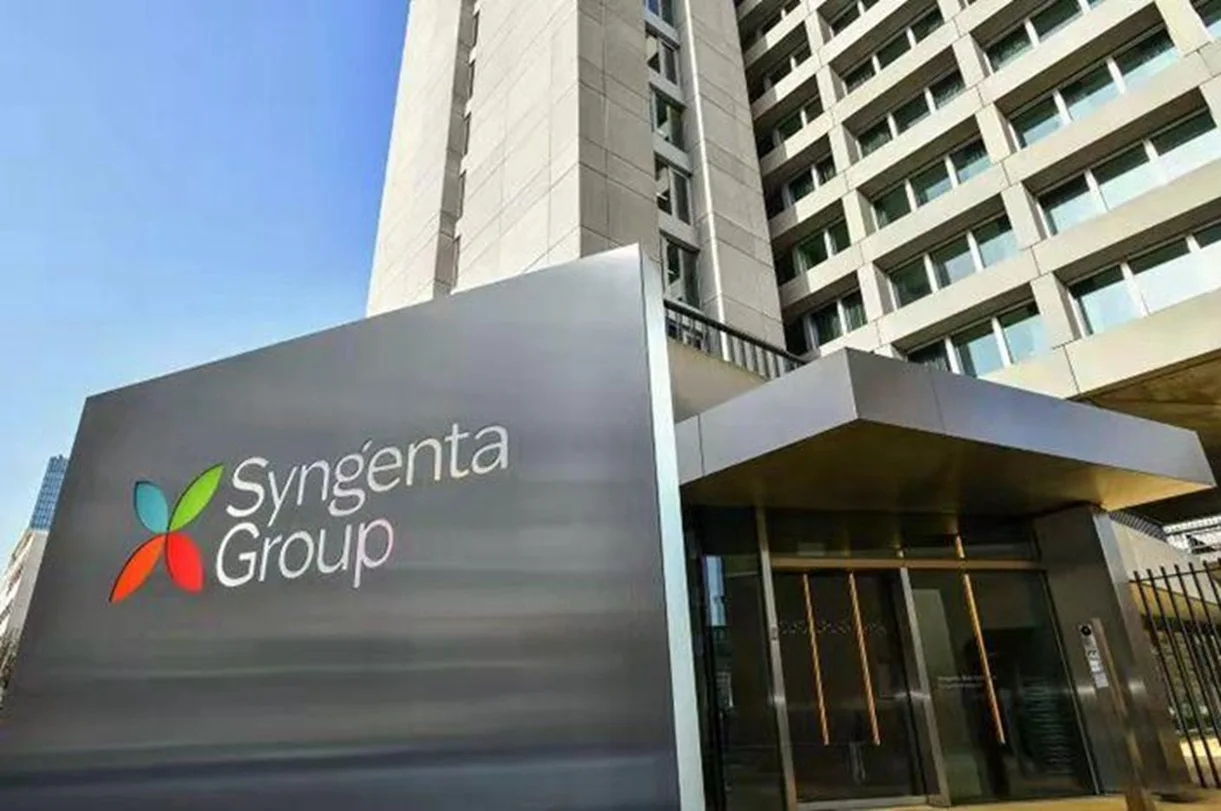
In Basel, Switzerland, one of the world's largest agricultural technology companies is preparing for a potential return to public markets. Nearly a decade after its acquisition by Chinese state-owned interests, Syngenta could seek a listing in Hong Kong at a valuation ranging from $66 billion to $88 billion. The transaction, which could raise as much as $10 billion, extends far beyond a conventional stock market offering. It brings together the financial value of seeds, biotechnology and crop protection with the growing strategic importance of food security in the global economy.
On October 27, 2026, Reuters reported that banks preparing Syngenta's initial public offering were presenting the company to investors using valuation multiples of approximately 15 to 20 times earnings before interest, taxes, depreciation and amortization.
Applied to Syngenta's reported 2025 EBITDA of $4.4 billion, those multiples imply an indicative valuation of between $66 billion and $88 billion.
The company, controlled by Chinese state-owned conglomerate Sinochem Holdings, has reportedly filed confidential listing documents. Preliminary discussions with investors are underway in Asia, while the offering could also be marketed to major institutional investors in Europe.
A transaction before the end of 2026 remains possible, although early 2027, particularly January, has emerged as a potential window.
No final offer price or valuation has been announced. The figures under discussion represent indicative expectations rather than an established market capitalization.
That distinction matters. The valuation shareholders seek and the price investors are ultimately willing to pay can differ substantially, particularly when a company combines mature industrial operations with ambitious expectations for technological growth.
From a Swiss Acquisition to a Strategic Chinese Industrial Asset
Syngenta's recent history illustrates a significant transformation in the geography of global industrial ownership.
In 2017, Chinese state-owned ChemChina completed its approximately $43 billion acquisition of the Swiss agricultural technology company, in what was then one of the largest overseas acquisitions ever undertaken by a Chinese enterprise.
ChemChina's operations subsequently became part of the broader Sinochem Holdings structure.
The acquisition was not simply an investment in a profitable chemicals business. It gave Chinese state-owned capital control over a global portfolio of agricultural technologies, intellectual property, research capabilities and commercial networks.
Syngenta operates across seeds, herbicides, insecticides, fungicides, biological crop protection products and digital agricultural solutions.
With operations spanning more than 90 countries and a workforce exceeding 50,000 employees, the company occupies an important position in international agricultural value chains.
Its corporate structure is distinctive.
Syngenta retains its historical headquarters in Switzerland. Its commercial activities are global. Its research and development capabilities are distributed across multiple regions. Yet its ultimate ownership rests with a Chinese state-owned group.
This arrangement combines international industrial capabilities with a controlling shareholder capable of pursuing long-term strategic objectives.
It also exposes the company to the geopolitical tensions surrounding Chinese investments, technology regulation and cross-border economic relationships.
The proposed IPO would not necessarily alter this structure.
According to available reports, Sinochem is considering floating approximately 10% to 20% of Syngenta's equity.
If implemented on those terms, the Chinese shareholder would retain a substantial majority position.
The transaction would therefore provide access to outside capital without requiring the controlling shareholder to relinquish strategic ownership.
Nearly a decade after the acquisition, Sinochem would be seeking public-market recognition of the value accumulated within one of its most important international industrial holdings.
Repositioning Agricultural Technology in the Eyes of Investors
The central question surrounding Syngenta's IPO is not simply how much the company is worth.
It is how investors should classify its business.
Historically, a significant proportion of Syngenta's operations has belonged to the agricultural chemicals industry.
This sector has characteristics familiar to industrial investors: substantial manufacturing assets, demanding regulatory requirements, high research expenditure and exposure to agricultural commodity cycles.
The proposed valuation, however, suggests an effort to emphasize Syngenta's technological capabilities rather than treating the company exclusively as a conventional chemicals producer.
That distinction can have significant consequences for valuation.
A traditional industrial chemicals company is generally assessed through its operating margins, capital intensity, cash generation, competitive positioning and exposure to cyclical demand.
A company perceived as possessing differentiated technologies, valuable intellectual property and research platforms capable of supporting long-term growth may command higher valuation multiples.
For Syngenta, this investment narrative rests on identifiable industrial capabilities.
The development of crop varieties resistant to diseases and pests, improvements in agricultural yields, biological crop protection and digital technologies designed to optimize agricultural inputs all represent areas where research can create competitive advantages.
Yet scientific innovation does not automatically translate into higher profitability.
Agricultural technologies frequently require lengthy development periods, complex regulatory approvals and extensive field testing.
Their commercial adoption also depends on farmers' financial conditions.
A new product must do more than demonstrate technical superiority. It must deliver sufficient economic benefits to justify its price, satisfy regulatory requirements and achieve commercial scale.
The relationship between innovation, adoption and profitability will therefore be central to the investment case.
The indicative valuation of 15 to 20 times EBITDA represents an ambitious proposition.
It requires investors to recognize growth opportunities and asset quality beyond those traditionally associated with cyclical agricultural chemicals businesses.
Another consideration is the relationship between historical performance and future expectations.
The indicative valuation can be calculated using Syngenta's 2025 EBITDA of approximately $4.4 billion, while discussions with investors may also emphasize expected earnings performance in 2026.
The company's actual financial trajectory, debt position and future cash generation could materially influence the final valuation.
Raising Capital Without Surrendering Control
The proposed listing also reflects financial considerations.
Syngenta reportedly intends to use proceeds to reduce indebtedness and support investment in seeds and crop protection technologies.
These objectives illustrate a structural challenge facing major industrial companies.
Research and development require sustained financial commitments. New products can take years to develop, test and obtain regulatory approval across different jurisdictions.
At the same time, significant debt can restrict investment capacity, increase sensitivity to interest rates and reduce financial flexibility.
An equity offering can help address these constraints by introducing permanent capital into the financing structure.
However, the precise design of the transaction will matter.
If Syngenta issues new shares, the proceeds can flow directly into the company, strengthening its balance sheet and potentially supporting debt reduction.
If Sinochem sells existing shares, the proceeds would ordinarily accrue to the selling shareholder rather than Syngenta itself, unless additional financial arrangements are implemented.
The final allocation between newly issued shares and existing shares will therefore determine how much capital actually becomes available to the operating business.
The proposed valuation must also be distinguished from the amount raised.
The $66 billion to $88 billion range represents an indicative valuation of the entire company.
The potential $5 billion to $10 billion offering represents the amount of capital that could be mobilized through the transaction.
These figures describe different financial concepts.
For illustration, selling 10% of a company valued at $66 billion would represent $6.6 billion, while selling 20% of a company valued at $88 billion would imply $17.6 billion.
The eventual offering size will depend on the agreed valuation, the proportion of equity placed with investors and the structure of the transaction.
For Sinochem, the strategic implications are substantial.
A successful IPO could establish a publicly observable valuation for an asset acquired nearly ten years earlier, increase financial flexibility and preserve the shareholder's exposure to Syngenta's future growth.
Rather than representing a complete withdrawal from agricultural technology, the operation would amount to a partial monetization of a strategically important industrial investment.
Hong Kong as a Financial Bridge Between China and Global Capital
The choice of Hong Kong is another important dimension of the transaction.
Syngenta previously explored a listing in Shanghai before withdrawing that initiative in 2024.
The shift toward Hong Kong reflects an adjustment in financing strategy.
Hong Kong combines access to international institutional investors with deep financial connections to mainland China.
Its capital markets provide a platform through which Chinese-controlled businesses can raise international funds while remaining within a financial environment closely integrated with China's economy.
This intermediary position has become increasingly significant as economic relations between China and Western powers have grown more complex.
For Syngenta, whose commercial and scientific activities remain internationally distributed, Hong Kong could offer a balance between global investor access and the requirements associated with Chinese state ownership.
Market conditions also appear relevant.
According to Hong Kong Exchanges and Clearing figures reported by Reuters, 118 companies raised approximately HK$388 billion, equivalent to around $49.5 billion, through new listings during the first nine months of 2026.
That represented an increase of approximately 106% compared with the corresponding period a year earlier.
The recovery in listing activity has strengthened Hong Kong's position as a destination for large equity offerings.
Nevertheless, favorable market conditions do not guarantee a successful transaction.
Investor sentiment can change quickly, particularly when valuations already incorporate substantial expectations for future growth.
Corrections in technology-related equities and delays affecting other planned offerings demonstrate the importance of market timing.
For Hong Kong, a multibillion-dollar Syngenta IPO would represent an opportunity to reinforce its role as a global financing center for major industrial companies, extending beyond its established exposure to digital technology and consumer businesses.
Agricultural Technology as an Instrument of Economic Power
The strategic significance of Syngenta becomes clearer when its activities are considered within the broader transformation of global agriculture.
Food security depends on numerous interconnected factors: agricultural land, water availability, climatic conditions, energy, fertilizers, logistics infrastructure and the stability of international trade.
It also depends on technologies that are less visible to consumers.
Seed genetics, crop resistance to disease, pest management and the optimization of agricultural yields all influence productivity.
These capabilities represent economic assets whose strategic value may increase as agricultural production faces growing constraints.
Climate change is reinforcing this dynamic.
Droughts, extreme temperatures and changing patterns of plant disease are forcing agricultural producers to adapt their methods.
Technologies capable of maintaining productivity under increasingly difficult conditions may become more valuable.
At the same time, rising production costs strengthen the economic case for solutions that allow farmers to use inputs more efficiently.
Improved seeds, targeted crop protection, biological products and precision agriculture platforms are all part of this transformation.
In this environment, owning agricultural technologies means more than controlling a portfolio of commercial products.
It can provide a durable position within value chains on which farmers, distributors and national food systems depend.
Such dependence should not be overstated.
Farmers can choose among suppliers, regulatory authorities control market access and agricultural markets remain highly diverse.
Nevertheless, the concentration of certain research capabilities, intellectual property portfolios and distribution networks among a limited number of multinational companies raises questions about competition, technological access and economic sovereignty.
Syngenta competes with major groups including Bayer, BASF and Corteva in an industry where intellectual property, research infrastructure and international distribution create significant barriers to entry.
Competition therefore extends beyond existing products.
It also concerns the ability to develop, protect and commercialize the technologies that may shape agricultural productivity in the coming decades.
For China, controlling a company of Syngenta's scale carries implications beyond immediate financial returns.
Ownership provides a position within an international ecosystem of scientific expertise, industrial capabilities and commercial relationships associated with agricultural production.
This does not mean Syngenta's international activities can simply be redirected according to national priorities.
The company remains subject to the laws of the countries in which it operates, contractual obligations and the commercial realities of its markets.
Its ownership structure nevertheless remains an important dimension of its geoeconomic position.
The Challenge of Justifying a Strategic Premium
The proposed IPO comes at a time when investors are reassessing the role of industrial companies within global portfolios.
Following years in which digital technology, artificial intelligence and computing infrastructure attracted substantial investment, businesses linked to fundamental economic needs also offer distinct investment characteristics.
Agriculture is one such sector.
Demand for food is structurally persistent, even though the earnings of companies supplying agricultural inputs can fluctuate considerably.
This distinction is fundamental.
The enduring need for food does not imply stable profits for agricultural chemicals producers.
Farmers' purchasing decisions depend on crop prices, operating margins, weather conditions and access to financing.
Inventory adjustments by distributors can also produce significant variations in sales volumes.
Syngenta must therefore convince investors on two interconnected fronts.
The first concerns the resilience of its existing operations, their capacity to generate cash and the credibility of its debt reduction strategy.
The second concerns the future value of investments in seeds, biotechnology and advanced agricultural solutions.
A premium valuation will be sustainable only if investors believe these two dimensions reinforce one another.
The company must also demonstrate its ability to remain competitive in an environment where environmental requirements, regulatory restrictions and technological developments can rapidly alter the commercial value of existing products.
The appointment of Hengde Qin as chief executive, effective in August 2026, comes during this period of transition.
His experience within the group and familiarity with its operations may help guide the organizational and strategic decisions associated with the listing.
Ultimately, however, the success of the IPO will depend on investor confidence in Syngenta's financial performance, governance and long-term industrial strategy.
Putting a Market Value on Industrial Power
If the IPO proceeds within the indicative valuation range, it will mark an important stage in Syngenta's history and in the evolution of Chinese overseas industrial investments.
The 2017 acquisition enabled Chinese state-owned capital to gain control of a major international agricultural technology company.
A potential listing in 2027 would seek to translate part of that industrial position into publicly recognized financial value.
Between these two moments, Syngenta's underlying role has remained broadly consistent.
It continues to develop and supply technologies and products intended to support agricultural production.
What has changed is the global environment in which that role is assessed.
Climate pressures, trade tensions, food security concerns, productivity requirements and technological competition have made agricultural capabilities increasingly visible as strategic assets.
The question facing investors is therefore not simply whether Syngenta deserves a valuation of $66 billion, $75 billion or $88 billion.
It is how much of that value can be justified by established industrial earnings, and how much depends on expectations that the technologies required to sustain agricultural production will become more valuable in the future.
That distinction will shape the outcome of the proposed IPO.
It also points toward a broader transformation in industrial capitalism.
The value of a company increasingly depends not only on what it produces today, but on whether it controls technologies, capabilities and infrastructure on which other economic actors may become more dependent tomorrow.
In Syngenta's case, the prospective Hong Kong listing would put a market price on precisely that intersection between financial performance, technological ownership and the strategic foundations of global food production.
Atlas Limits Research Desk
Atlas Limits’ editorial and analytical desk.