The Bank of Korea has warned that a slowdown in US artificial intelligence investment could leave South Korea’s semiconductor exports $50 billion to $100 billion below earlier projections for 2027. Beyond the immediate economic implications, the scenario exposes a deeper vulnerability: one of the world’s leading industrial powers increasingly depends on investment decisions made by a small group of foreign technology companies.
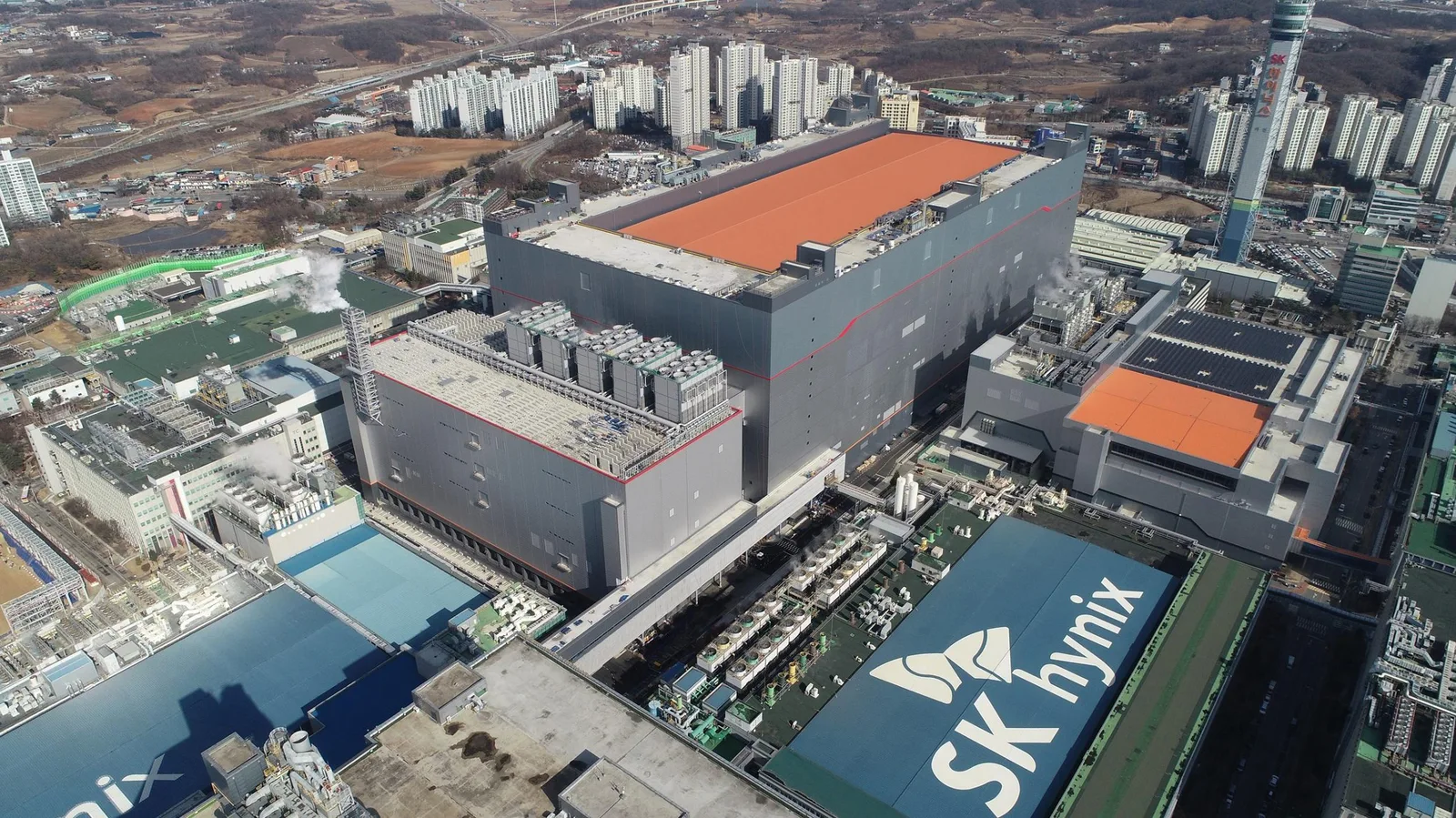
In Seoul, the performance of the semiconductor industry has become one of the most important indicators of national economic prosperity. Memory chips manufactured by Samsung Electronics and SK Hynix power servers, computers, smartphones and, increasingly, the enormous computing infrastructures required by artificial intelligence.
Every new wave of investment in American data centers influences the order books of South Korean manufacturers, their production capacity and the country's broader economic outlook.
For years, this relationship has been a source of competitive strength. It could also become a significant source of instability.
On October 27, 2026, the Bank of Korea outlined, in a written response to lawmaker Ahn Do-geol, the potential consequences of a slowdown in artificial intelligence spending by major US technology companies.
Under the adverse scenario examined, South Korean semiconductor exports could fall $50 billion to $100 billion short of previous projections for 2027. Such a development could reduce the country's gross domestic product growth by approximately 0.4 percentage points.
The simulation incorporates, among other assumptions, a 10% decline in the unit prices of Korean semiconductors.
These figures do not represent losses already incurred, nor do they constitute the central forecast of the Bank of Korea. They describe a conditional scenario designed to measure the economy's exposure to a possible reversal in global demand.
Yet the significance of the warning extends well beyond the headline numbers.
It reveals a fundamental transformation in the distribution of economic power: industrial leadership no longer necessarily guarantees control over the economic conditions on which that leadership depends.
An Industrial Power at the Center of the Artificial Intelligence Economy
South Korea has occupied a central position in global electronics manufacturing for decades.
Its industrial development has been built on a combination of public policy, private investment, technological expertise and integration into international markets.
Samsung Electronics and SK Hynix embody this transformation. Both companies rank among the world's leading memory manufacturers, supplying components essential to modern computing systems.
The emergence of generative artificial intelligence has given this specialization an entirely new dimension.
Advanced AI models require computing accelerators capable of processing enormous quantities of information simultaneously. Their performance depends not only on processor capabilities but also on the speed at which data can move between computing units and memory systems.
High-bandwidth memory, commonly known as HBM, has become a critical component of this architecture.
By enabling data to reach specialized processors at significantly higher speeds than conventional memory solutions, HBM helps overcome one of the major bottlenecks in advanced AI computing.
SK Hynix has established a particularly strong position in this market, while Samsung has been working to strengthen its competitiveness in the most advanced generations of memory technology.
This development has changed the structure of global semiconductor demand.
Historically, the memory industry was heavily influenced by sales of personal computers, smartphones and consumer electronics.
Today, an increasingly important share of demand for advanced memory comes from infrastructure used to train and operate artificial intelligence models.
South Korean manufacturers therefore benefit from a market characterized by considerable technological complexity, substantial capital requirements and strong incentives for innovation.
But this evolution also introduces a new concentration of economic demand.
The expansion of the industry increasingly depends on investment decisions made by a relatively small number of companies capable of financing the world's most powerful data centers.
The country manufacturing the strategic components does not necessarily control the pace at which those infrastructures are built.
The Growing Dependence on American Technology Investment
Amazon, Google, Microsoft, Meta and Oracle occupy central positions in the global expansion of artificial intelligence infrastructure.
Their capital expenditure programs finance data center construction, specialized computing accelerators, networking equipment, storage systems and the electrical infrastructure required to operate these facilities.
The Bank of Korea's assessment highlights the rapid expansion of investment associated with artificial intelligence and the economic risks that could emerge if this expansion slows.
The underlying issue is whether these investments will generate sufficient revenue to justify their continuation.
Building a modern data center requires substantial upfront expenditure.
Its profitability subsequently depends on utilization rates, the prices charged for computing services, energy costs, equipment replacement cycles and the actual demand generated by businesses and consumers.
Artificial intelligence remains an industry undergoing rapid transformation.
Applications are expanding, but many business models have yet to reach maturity.
Infrastructure providers must therefore anticipate future demand whose scale, composition and profitability remain uncertain.
This uncertainty does not mean current investments are necessarily excessive.
It means their expansion cannot be considered independent of financial constraints.
If major American technology companies decided to slow the construction of new infrastructure, the consequences would spread through global supply chains.
Orders for computing accelerators could grow more slowly. Additional demand for high-bandwidth memory could be revised downward. Component manufacturers would face less favorable expectations for future sales.
A slowdown would not necessarily trigger an immediate contraction in every category of orders.
Existing contracts, delivery schedules and equipment replacement requirements could partially absorb the shock.
However, semiconductor markets are particularly sensitive to changes in expectations.
Even a reduction in anticipated growth can influence production decisions, pricing strategies and investment programs.
This transmission mechanism lies at the center of the risks identified by the Bank of Korea.
When Falling Prices Become a Macroeconomic Threat
The memory industry has historically been characterized by pronounced economic cycles.
When demand grows faster than available production capacity, prices rise and manufacturers can experience substantial improvements in profitability.
Conversely, when supply exceeds demand, prices can fall sharply.
This mechanism is particularly important for an export-oriented economy.
A company may maintain high production volumes while recording declining revenue if selling prices fall.
At the national level, this translates into lower export earnings even when the physical quantity of goods shipped remains substantial.
The assumption of a 10% decline in semiconductor unit prices illustrates this vulnerability.
South Korea could continue manufacturing technologically advanced components while generating less export revenue than previously anticipated.
The consequences would extend beyond the semiconductor producers themselves.
Lower export earnings could affect corporate profits, investment decisions, orders placed with suppliers and tax revenues associated with industrial activity.
Equipment manufacturers, specialized materials producers, logistics companies and subcontractors could also experience weaker demand.
As these adjustments spread, their consequences could reach the broader economy.
Household consumption, private investment and employment prospects might be indirectly affected, depending on the duration of the slowdown and the ability of companies to adapt.
External trade represents another transmission channel.
A significant reduction in semiconductor export revenues could weaken South Korea's current account position relative to previous expectations.
Such a deterioration would not automatically constitute a financial crisis.
South Korea possesses sophisticated financial institutions, internationally competitive companies and a diversified economic base.
Nevertheless, it would illustrate the sensitivity of its external economic balances to developments in a highly concentrated industrial sector.
The central question is therefore not simply how many chips South Korea can manufacture.
It is also the prices at which those chips can be sold and how much of the resulting economic value remains within the national economy.
The Contradiction of Strategic Industrial Specialization
The rise of artificial intelligence has increased the strategic importance of advanced memory manufacturers.
Their products cannot easily be replaced.
Manufacturing them requires enormous capital expenditure, technological expertise accumulated over decades and exceptionally precise industrial processes.
These barriers to entry provide established companies with significant competitive advantages.
Yet the same specialization that protects their market positions can also increase their exposure to sector-specific downturns.
A company producing an indispensable technology is not necessarily protected against declining demand.
This distinction is fundamental.
Scarcity strengthens a supplier's bargaining power when demand is robust.
It does not guarantee that customers will continue investing at the same pace indefinitely.
South Korea therefore faces a structural contradiction: the more indispensable its semiconductor industry becomes to the expansion of artificial intelligence, the more part of its economic trajectory depends on the continuation of that expansion.
This dependence is not exclusively commercial.
It is also financial, because manufacturers must commit enormous amounts of capital before future market conditions become clear.
It is technological, because successive generations of advanced memory require continuous research and development.
And it is geopolitical, because semiconductor production and commercialization are increasingly shaped by industrial policies, export restrictions and the economic security strategies of major powers.
South Korea must therefore preserve its technological leadership, finance industrial expansion and limit the risks associated with excessive concentration of demand.
These objectives are complementary in principle, but they can become difficult to reconcile during periods of market uncertainty.
Chinese Competition Introduces a Second Source of Uncertainty
The potential slowdown in American demand is not the only transformation confronting South Korea's semiconductor industry.
China continues developing its domestic memory manufacturing capabilities, particularly through ChangXin Memory Technologies, commonly known as CXMT.
Beijing's broader objective is to reduce its dependence on foreign suppliers in industries considered essential to technological sovereignty.
American restrictions on access to certain advanced semiconductor manufacturing technologies complicate this effort.
They have not eliminated China's investment in research, production capacity and domestic industrial substitution.
Over time, Chinese competition could exert additional pressure on conventional memory markets.
This creates a particularly difficult strategic dilemma for South Korean manufacturers.
On one side, advanced memory products used in artificial intelligence offer attractive growth opportunities and potentially stronger margins.
On the other, reducing their relative commitment to conventional memory segments could create additional opportunities for emerging competitors.
A strategy focused primarily on the most sophisticated technologies could preserve a technological advantage while increasing dependence on a concentrated customer base.
Conversely, maintaining substantial production capacity in mass-market memory would require competing in segments potentially exposed to greater pricing pressure.
This tension reflects a familiar industrial dilemma.
Companies must decide how to allocate resources between defending established markets and pursuing emerging technologies.
What makes semiconductors distinctive is that these decisions increasingly take place in an environment where commercial calculations and geopolitical priorities are difficult to separate.
A National Economy Exposed to Decisions Made Abroad
The Bank of Korea's warning ultimately raises a question extending far beyond semiconductor prices.
It concerns the ability of a national economy to control its development when its most successful industries operate within global value chains influenced by a limited number of powerful actors.
South Korea possesses exceptional industrial capabilities.
Its companies compete at the highest technological level and manufacture components essential to the global digital economy.
Yet a substantial share of incremental demand originates from decisions made in the United States, within the boardrooms of corporations whose priorities are determined primarily by their own financial and strategic objectives.
These companies can accelerate investment, postpone projects, modify computing architectures or favor alternative technologies.
Each decision can influence the economic outlook of suppliers located thousands of kilometers away.
This is not a one-sided dependency.
American technology companies also rely on reliable manufacturing capacity and advanced technologies that South Korean producers have developed over decades.
The relationship is therefore characterized by genuine industrial interdependence.
But interdependence does not necessarily imply an equal distribution of economic power.
The supplier controls the manufacturing process and possesses specialized expertise.
The customer retains considerable influence over purchasing volumes, delivery schedules and future investment requirements.
When demand becomes sufficiently concentrated, the decisions of a small number of buyers can produce macroeconomic consequences for entire manufacturing economies.
Similar dynamics affect Taiwan, Japanese semiconductor equipment producers, European industrial technology companies and economies involved in developing the energy infrastructure required by data centers.
Artificial intelligence is creating new forms of global interdependence while concentrating certain strategic decisions within a relatively small group of corporations.
Industrial strength remains essential.
But industrial strength alone does not guarantee economic autonomy.
Diversification Without Sacrificing Industrial Leadership
For South Korea, the appropriate response is not necessarily to reduce its commitment to semiconductors.
Such a strategy could weaken precisely the capabilities that constitute one of its most important competitive advantages.
The challenge is to strengthen the economy's ability to absorb industrial cycles.
This requires preserving the technological competitiveness of Samsung and SK Hynix while developing additional sources of growth and preventing national economic performance from becoming excessively dependent on a limited number of products and customers.
Diversification can take several forms.
Industrial diversification involves expanding complementary activities in semiconductor equipment, specialized materials, advanced components and manufacturing technologies.
Commercial diversification involves developing additional markets and applications.
Technological diversification may include strengthening domestic capabilities in computing systems, software, advanced architectures and services associated with digital infrastructure.
None of these approaches would eliminate global economic cycles.
They could, however, reduce the sensitivity of the national economy to a single category of investment.
Production capacity presents an especially difficult challenge.
Manufacturers must invest enough to meet potentially enormous demand without creating excess capacity that could subsequently undermine prices.
Insufficient investment could lead to lost market share.
Excessive investment could weaken profitability during the next downturn.
Managing this balance will be one of the principal determinants of the semiconductor industry's future financial performance.
Artificial Intelligence: A Growth Engine That Concentrates Economic Risk
The Bank of Korea's warning does not imply that the expansion of artificial intelligence is approaching its end.
Computing requirements continue to evolve, applications are becoming more diverse and existing infrastructure may require substantial upgrades.
Demand for advanced memory could therefore remain strong even if investment growth becomes less consistent.
However, technological prospects and financial prospects should not be confused.
A technology can transform the global economy while experiencing periods of excessive investment, consolidation and valuation corrections.
Industrial history provides numerous examples of this distinction.
The expansion of railways, telecommunications networks and the internet created infrastructure that fundamentally transformed economic activity.
Yet these transformations did not prevent severe financial cycles among the companies financing and constructing those systems.
Artificial intelligence could follow a trajectory in which long-term economic usefulness coexists with substantial short- and medium-term adjustments in capital expenditure.
For component suppliers, this distinction is critical.
They must finance today's production capacity to serve tomorrow's demand, even though the precise scale of that demand remains difficult to determine.
For the economies hosting these industries, the challenge is broader.
They must transform the benefits of a technological expansion into economic capabilities sufficiently resilient to withstand a potential reversal.
The $50 billion to $100 billion scenario presented by the Bank of Korea should therefore be understood less as a prediction of catastrophe than as a warning about the limits of concentrated growth.
South Korea does not suffer from a shortage of technological expertise, industrial capacity or internationally competitive companies.
It faces a more complex question: how can an economy preserve stability when one of its principal growth engines depends on financial decisions made beyond its borders?
The answer will help determine the country's industrial future.
It may also offer important lessons for other economies seeking to make artificial intelligence, semiconductors and digital infrastructure central pillars of their future prosperity.
The next phase of global technological competition will not be determined solely by the ability to manufacture the most advanced components.
It will also depend on the capacity of governments and corporations to withstand the economic fluctuations of the markets they help make indispensable.
South Korea controls an essential part of the physical infrastructure supporting global artificial intelligence. The emerging risk is that this strategic position does not, by itself, give the country control over the economic cycle on which its prosperity increasingly depends.
Sources and Editorial Notes
Reuters — October 27, 2026. Reporting on the Bank of Korea's assessment of the potential impact of slower artificial intelligence investment on South Korean semiconductor exports.
Bank of Korea — October 2026. Economic risk assessment communicated in a written response to South Korean lawmaker Ahn Do-geol, as reported by Reuters.
Reuters Breakingviews — October 27, 2026. Analysis of Chinese competition and the strategic challenges facing South Korean memory manufacturers.
Editorial clarification: The $50 billion to $100 billion figure represents a conditional shortfall relative to projected semiconductor exports for 2027, not realized losses or the Bank of Korea's baseline forecast. The broader discussion of industrial dependence, economic concentration and geopolitical consequences constitutes independent editorial analysis.
Atlas Limits Research Desk
Atlas Limits’ editorial and analytical desk.