Across the Appalachian Basin, stretching through Pennsylvania, Ohio, and West Virginia, a major transformation is unfolding in the American energy industry. The vast natural gas reserves that helped drive the shale revolution are becoming the foundation of a new industrial structure, one in which production capacity alone is no longer sufficient. Companies must also be able to transport, market, and guarantee energy supplies to customers whose requirements increasingly extend over several decades.
Against this backdrop, EQT Corporation announced on October 26, 2026, a definitive agreement to acquire Range Resources in an all-stock transaction valuing the target company at approximately $13 billion.
The combined company would have an enterprise value exceeding $50 billion, including debt, and would become the largest natural gas producer in the United States based on the production volumes announced by the companies.
Beyond the financial dimensions of the transaction lies a deeper industrial transformation. The American natural gas industry, long organized around expanding production and intensively developing shale formations, is increasingly seeking to build companies capable of controlling a greater share of the energy value chain.
This shift comes as three major sources of demand converge: expanding liquefied natural gas exports, rising electricity requirements, and the rapid development of digital infrastructure, particularly data centers supporting artificial intelligence.
The central question is therefore no longer simply how much natural gas the United States can extract, but which companies will be capable of converting that abundance into long-term contracts, industrial profitability, and influence over energy markets.
An Acquisition That Changes the Industry's Scale
Under the agreement, Range Resources shareholders will receive 0.987 EQT shares for each Range Resources share they own.
Based on EQT's share price before the announcement, the exchange ratio implies a valuation of approximately $54.91 per Range Resources share, representing a premium of nearly 21% over the company's previous closing price.
Following completion, existing EQT shareholders would own approximately 73% of the combined company, while Range Resources shareholders would hold the remaining 27%.
The company would continue to be led by EQT's management team under Chief Executive Officer Toby Rice, with two Range Resources representatives joining the board of directors. Its headquarters would remain in Canonsburg, Pennsylvania.
Completion is expected during the first quarter of 2027, subject to regulatory approvals and shareholder votes at both companies.
The distinction between the acquisition value and the valuation of the combined company is important.
The approximately $13 billion figure represents the value attributed to Range Resources in the transaction. The enterprise value exceeding $50 billion refers to the estimated value of the combined business, including its financial debt.
From an industrial perspective, the scale is substantial.
The combined company would produce more than 9 billion cubic feet equivalent of natural gas per day, control approximately 3 million net acres of production assets, and possess a resource inventory capable of supporting more than thirty years of development, according to estimates presented by the companies.
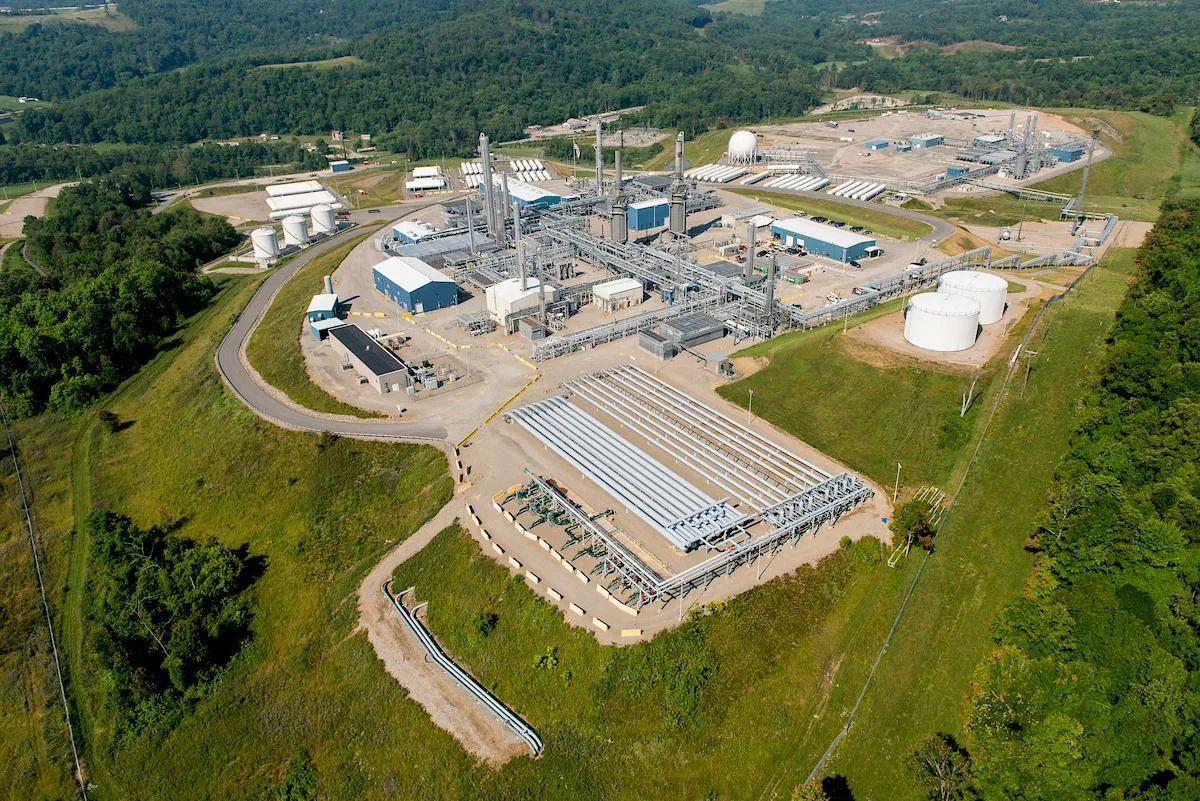
It would also operate more than 3,700 miles, or nearly 6,000 kilometers, of midstream gathering and transportation infrastructure.
These figures would place the company ahead of Expand Energy, another major American gas producer formed through the merger of Chesapeake Energy and Southwestern Energy in 2024.
Yet the significance of the acquisition extends beyond industrial rankings.
EQT and Range Resources own geographically complementary assets in the Appalachian Basin. Combining them could allow drilling programs to be coordinated, infrastructure to be rationalized, and certain expenditures to be reduced.
This geographical concentration offers potential operational advantages, but it also increases the combined company's exposure to risks affecting the same producing region.
American Natural Gas Enters a New Demand Economy
For much of the shale revolution, the American natural gas market was primarily shaped by supply.
Advances in horizontal drilling and hydraulic fracturing made previously inaccessible resources commercially viable. Rapidly expanding production transformed the United States' energy balance, contributing to relatively low domestic gas prices and supporting the development of new industrial activities.
However, this abundance also created its own contradictions.
When production increased faster than transportation capacity or consumption, producers faced downward pressure on prices. Regions possessing the largest resources were not necessarily those where gas could be sold under the most favorable conditions.
The Appalachian Basin provides a particularly revealing example.
The Marcellus and Utica formations contain some of the country's most significant natural gas resources. Their productivity represents a major competitive advantage, but their distance from certain markets and transportation constraints have repeatedly limited the value producers could capture.
The industry is now entering a different phase.
Electricity demand from data centers, the electrification of certain industrial activities, expanding liquefied natural gas exports, and broader industrial consumption are creating new commercial opportunities.
According to Energy Information Administration projections cited around the announcement, American natural gas consumption could increase from 91.9 billion cubic feet per day in 2025 to 94.3 billion in 2027.
At the national level, this increase may appear relatively modest.
Its significance becomes clearer when considered alongside the concentrated electricity requirements of new digital and industrial facilities, some of which require energy supply commitments extending over many years.
For natural gas producers, the possibility of negotiating long-term contracts with large customers changes the economics of investment.
Production can increasingly be planned around contracted demand rather than relying exclusively on expectations about future commodity prices.
The EQT–Range Resources transaction is intended to strengthen precisely this capability.
Artificial Intelligence Is Transforming the Strategic Value of Gas
The expansion of data centers represents one of the most significant changes in the outlook for American electricity demand.
Training and operating artificial intelligence models require substantial computing capacity, which in turn creates considerable and continuous electricity requirements.
The development of these facilities therefore depends not only on the availability of advanced processors, suitable land, or investment capital.
It also depends on access to sufficient, reliable, and economically competitive electricity.
In several American regions, lengthy grid connection procedures and constraints on electricity infrastructure development complicate the construction of new facilities.
Natural gas has consequently emerged as one possible solution for supplying dedicated power plants or expanding existing generation capacity.
It is not a universal answer.
Gas turbines, pipeline connections, environmental permits, and emissions-control equipment create their own industrial constraints.
Nevertheless, the availability of domestic natural gas and the ability to develop dispatchable power generation give it an important role in energy supply strategies.
For EQT, acquiring Range Resources would create a resource portfolio large enough to support potential supply commitments extending over several decades.
This possibility changes the relationship between natural gas producers and technology companies.
Historically, major digital companies primarily purchased electricity from utilities or entered into power purchase agreements with energy generators.
The expansion of data centers is now creating opportunities for more direct relationships between natural gas producers, electricity infrastructure developers, and digital operators.
A producer possessing extensive reserves, transportation infrastructure, and commercial capabilities can potentially become a long-term partner in the development of major industrial complexes.
This evolution brings together two sectors that were previously connected mainly through electricity markets: hydrocarbon production and computing infrastructure.
It also reveals a fundamental contradiction in the contemporary technological transition.
An industry associated with innovation, software, and the dematerialization of economic activity increasingly depends on physical infrastructure requiring enormous quantities of energy, some of which may continue to come from fossil fuels.
Artificial intelligence alone will not determine the future of American natural gas.
It is nevertheless contributing to a reassessment of long-term demand expectations, which increasingly influence major investment decisions across the energy industry.
Controlling Infrastructure Means Controlling Value
One of the most structurally important aspects of the transaction concerns the infrastructure connecting production wells to final markets.
In the natural gas industry, possessing substantial reserves does not guarantee that gas can reach customers when needed or be sold at favorable prices.
Gathering systems, processing facilities, pipelines, and commercial capabilities play a decisive role in producer profitability.
EQT had already moved toward greater integration through its acquisition of Equitrans Midstream in 2024, a transaction valued at approximately $5.5 billion.
That acquisition strengthened the company's vertical integration and increased its control over infrastructure essential to transporting its production.
The integration of Range Resources would extend this strategy.
Rather than relying exclusively on external service providers, the combined company would possess a more integrated structure connecting underground resources, production operations, gathering networks, transportation systems, and commercial activities.
The implications are both economic and strategic.
Appalachian producers have sometimes been forced to sell natural gas at substantial discounts to the Henry Hub benchmark because of transportation limitations.
Greater control over infrastructure can help reduce some of these constraints, although it cannot eliminate them entirely.
The combined company would still need access to major consumption markets in the southern and eastern United States, as well as to facilities capable of exporting liquefied natural gas.
Vertical integration therefore does not automatically guarantee higher realized prices.
Its principal advantage lies in providing greater flexibility to organize flows, select commercial outlets, and negotiate with buyers.
In this industry, power is no longer measured exclusively by the quantity of resources a company possesses.
It increasingly depends on the ability to determine where, when, and under what conditions those resources reach the market.
A Financial Strategy Built Around Economies of Scale
EQT presents the transaction as a significant source of operational and financial improvements.
Management expects approximately $325 million in recurring annual synergies within two years of completion.
Over a longer period, additional opportunities involving infrastructure optimization, development programs, and commercial activities could increase total potential annual synergies to more than $600 million.
These figures remain management targets rather than savings already achieved.
The company also estimates that the combination could reduce its unlevered free cash flow breakeven price to below $2 per million British thermal units, according to EQT's methodology.
Such a cost structure could provide an advantage in an industry characterized by considerable commodity price volatility.
Management further projects approximately $20 billion in cumulative free cash flow over five years, based on forward market prices prevailing when the transaction was announced.
However, this projection remains sensitive to commodity price assumptions, required capital expenditures, and the actual realization of expected synergies.
The all-stock structure of the acquisition is particularly significant.
It allows EQT to avoid financing the entire purchase through additional borrowing or an immediate cash payment.
In exchange, existing shareholders face dilution, while former Range Resources shareholders would participate in the future financial performance of the combined company.
This structure reflects a long-term industrial consolidation strategy.
It also means that investors will share the risks associated with future developments in natural gas markets.
The initial stock market reaction illustrated these different perspectives.
Range Resources shares rose substantially following the announcement, while EQT shares declined.
For shareholders of the acquired company, the transaction premium represents an immediately identifiable benefit.
For EQT shareholders, value creation will depend more heavily on management's ability to deliver the promised operational and financial improvements.
Consolidation Is Changing the Logic of American Shale
The EQT–Range Resources transaction forms part of a broader consolidation movement across the American hydrocarbon industry.
After decades characterized by the emergence of independent producers and extensive investment in shale basins, the sector has increasingly emphasized financial discipline.
Companies must now respond to stronger investor expectations concerning profitability, cost control, and cash generation.
This evolution favors operators capable of developing large resource portfolios, sharing infrastructure, and spreading fixed costs across greater production volumes.
The merger between Chesapeake Energy and Southwestern Energy, completed in 2024 and resulting in the creation of Expand Energy, had already demonstrated this trend.
In February 2026, Devon Energy and Coterra Energy also announced a merger intended to create another major American hydrocarbon producer.
These transactions do not all pursue identical objectives.
Some seek to diversify production portfolios between oil and natural gas.
Others aim to concentrate assets in the most competitive basins or improve infrastructure efficiency.
The EQT–Range Resources transaction is distinguished by the combination of substantial geographical concentration and a strategy of vertical integration.
Rather than expanding into numerous producing regions, EQT is seeking to reinforce its position in a territory whose geological characteristics, logistical constraints, and commercial opportunities it already understands.
This approach can generate substantial economies of scale.
It can also increase exposure to common regional risks, including regulatory constraints, difficulties in constructing pipelines, and persistent price differences between markets.
Industrial consolidation does not eliminate sector risks.
It changes how those risks are distributed and managed.
LNG Exports Give the Transaction an International Dimension
EQT's strategy cannot be understood solely through American domestic consumption.
The United States now occupies a central position in global liquefied natural gas markets.
The expansion of liquefaction capacity along the American coastline has progressively connected domestic producing basins with European and Asian energy markets.
This transformation has fundamentally altered the economic geography of American natural gas.
A producer operating in Pennsylvania can now be indirectly exposed to demand conditions in Europe or Asia, provided that sufficient transportation capacity and commercial arrangements exist to reach export facilities.
For EQT, the strategic objective includes converting part of its production into long-term supply commitments for international customers.
The scale of the combined company could strengthen its commercial credibility among buyers seeking substantial volumes and reliable long-term deliveries.
However, competition remains intense.
Producers operating in Texas and Louisiana often benefit from greater geographical proximity to major LNG export terminals along the Gulf Coast.
Appalachian producers must therefore compensate for transportation constraints through geological productivity, operational efficiency, and competitive commercial arrangements.
The international value of natural gas reserves consequently depends on more than their abundance.
It also depends on the infrastructure connecting them to global markets.
This gives the acquisition a broader geoeconomic dimension.
By strengthening the production and commercial capabilities of a major American operator, the transaction contributes to the organization of energy supplies potentially available to the United States' international trading partners.
It does not, however, guarantee an automatic increase in exports or direct influence over global prices.
Those outcomes will depend on liquefaction capacity, pipeline investment, contractual arrangements, and international demand.
The Limits of a Strategy Based on Rising Demand
The industrial logic of the transaction rests on several assumptions that must be distinguished from established results.
The first concerns the future growth of natural gas consumption.
Increasing electricity requirements from data centers represent an important factor, but the scale of that demand will depend on the actual pace of digital infrastructure construction, improvements in energy efficiency, and the technologies used to generate electricity.
Renewable energy, storage systems, nuclear power, and electricity grid modernization could also change the future composition of power generation.
The second uncertainty concerns prices.
A large producer can reduce its unit costs without necessarily controlling prices in a broadly competitive commodity market.
Excessive supply growth, an economic slowdown, or weaker international demand could reduce revenues.
The third limitation concerns geographical concentration.
The Appalachian Basin possesses enormous resources, but further development remains dependent on transportation infrastructure and the ability to obtain approval for new projects.
Permitting procedures, local opposition, and environmental constraints can delay investments necessary to move additional gas to market.
Finally, the acquisition itself has not yet been completed.
Regulatory authorities must examine the transaction, while shareholders of both companies must approve it.
The combined company's future position therefore remains conditional until the transaction formally closes.
These uncertainties do not invalidate the industrial rationale behind the merger.
They demonstrate that the anticipated benefits of consolidation should not be confused with benefits already realized.
From Resource Ownership to Control Over Energy Markets
EQT's acquisition of Range Resources illustrates a fundamental transformation in the American energy economy.
The shale revolution initially demonstrated how technological innovation could convert vast geological resources into commercially viable production.
The industry's next phase appears to be shifting the center of economic power.
Competitiveness no longer depends exclusively on extracting natural gas at low cost.
It increasingly requires extensive reserves, integrated infrastructure, financial resilience, and the ability to establish long-term commercial relationships.
The EQT–Range Resources transaction brings these dimensions together.
It seeks to create a company capable of connecting the natural gas abundance of the Appalachian Basin with the requirements of electricity networks, industrial consumers, data centers, and international markets.
The operation therefore illustrates a broader transformation in the relationship between natural resources and economic power.
Owning a resource provides an initial advantage.
Controlling the infrastructure, capital, and contracts required to organize its development increasingly determines how much economic value can ultimately be captured.
In a global economy where energy requirements are evolving under the combined influence of digitalization, industrial restructuring, and geopolitical tensions, this distinction is becoming decisive.
The proposed merger does not guarantee that EQT will permanently dominate the American natural gas market.
It nevertheless demonstrates how major producers are preparing for an environment in which security of supply, commercial flexibility, and control over energy value chains are becoming as important as production volumes.
The real significance of the transaction therefore extends beyond the creation of another large gas producer.
It concerns the way the United States is organizing the conversion of its natural resources into industrial, technological, and commercial power.
As the digital economy increases its physical energy requirements, the boundaries separating energy companies, electricity infrastructure, and technology industries are becoming less distinct.
In this emerging configuration, producers capable of connecting these three sectors over the long term could occupy an increasingly important position.
Whether that ambition translates into durable economic value will depend on the realization of projected demand growth, the development of sufficient infrastructure, and the distribution of the resulting benefits among investors, businesses, and consumers.
The American natural gas industry has already demonstrated its capacity to produce energy on an extraordinary scale.
Its next challenge is to determine who will control the systems through which that energy becomes economic power.
Atlas Limits Research Desk
Atlas Limits’ editorial and analytical desk.