An acquisition proposal reportedly worth up to $8 billion places the Canadian group at the centre of a new contest for control of the convenience retail industry. Behind the negotiations surrounding Cumberland Farms lie competing strategies of industrial consolidation, private equity exits and entrepreneurial wealth realisation.
On October 24, 2026, a report from London brought one of the Western world's major convenience retail networks back into the spotlight of the mergers and acquisitions market. According to Britain's The Times, as reported by Reuters, Alimentation Couche-Tard has proposed acquiring Cumberland Farms, the company formerly known as EG Group, for between $7.5 billion and $8 billion. The Canadian company, which owns the Circle K brand, would thereby seek to integrate a commercial network built over two decades by British brothers Mohsin and Zuber Issa, with the backing of investment firm TDR Capital.
No agreement has been announced. The precise terms of the reported proposal, its financial structure and the conditions of any potential transaction remain unknown. Yet the approach comes at a particularly significant moment: Cumberland Farms has been considering a US stock market listing, while Couche-Tard is already pursuing another major acquisition in Europe. The potential transaction therefore brings several competing approaches to valuing the same assets into direct confrontation, from public equity markets and private investors to industrial integration.
What is at stake extends far beyond the ownership of several thousand petrol stations. Convenience retail, long regarded as an essentially local business, has become an arena of international consolidation in which network scale, logistics capabilities, commercial data and access to financing increasingly determine competitive advantage.
An Empire Built Through Acquisitions
The history of EG Group began in the United Kingdom, far from the world's major financial centres. In 2001, Mohsin and Zuber Issa developed their fuel retail business from an initial petrol station in northwestern England. Their strategy rested on a commercial insight: petrol stations could become considerably more than places to refuel. Their locations, regular customer traffic and existing infrastructure offered opportunities to develop food retail, restaurants and recurring consumer services.
The model gradually expanded. With the support of TDR Capital, the two entrepreneurs pursued successive acquisitions of established networks, first in the United Kingdom and subsequently across international markets. Rather than building every outlet themselves, they acquired existing portfolios, reorganised their operations and sought to increase the revenue generated by each location.
This strategy followed a familiar pattern of consolidation, applied to a particularly fragmented industry. Petrol stations, convenience stores and foodservice networks possess real estate assets, supply agreements and established customer bases whose aggregation can generate economies of scale. Successive acquisitions can also strengthen bargaining power with suppliers and spread technological investments across a growing number of outlets.
Debt financing, however, was a central component of this expansion. When acquisitions are financed through borrowing, their profitability depends not only on operating performance but also on the cost of capital and the ability to generate sufficient cash flow to service outstanding debt.
The rise in interest rates beginning in 2022 changed that equation for many companies developed through leveraged acquisitions. Commercial assets continued generating revenue, but refinancing became more expensive and valuations had to reflect higher required returns.
EG Group subsequently undertook asset disposals and a reorganisation of its portfolio. In March 2026, the company adopted the Cumberland Farms name, reflecting, among other developments, the growing importance of its American operations. The change marked a significant evolution: a business founded in Britain was now presenting itself through a historically American brand, illustrating the geographical shift in its commercial centre of gravity.
Eight Billion Dollars, but What Is the Business Worth?
The proposal attributed to Couche-Tard reportedly ranges from $7.5 billion to $8 billion. That figure must be compared cautiously with the valuation ambitions surrounding Cumberland Farms.
The company had reportedly considered a US initial public offering targeting a valuation of approximately $9 billion. On a purely arithmetic basis, an offer between $7.5 billion and $8 billion would represent a discount of approximately 11% to 17% against that reference. Such a comparison, however, is insufficient to determine whether the proposal is financially less attractive.
An indicative stock market valuation, an acquisition price for equity and an enterprise value incorporating debt are not necessarily interchangeable. Shareholders must also consider transaction expenses, potential conditions precedent, payment schedules and execution risk. An initial public offering may provide a higher valuation while allowing existing owners to retain part of their holdings. A complete sale, by contrast, may deliver immediate liquidity and transfer operational risks to the acquiring company.
The difference with the approximately $16 billion discussed during an earlier approach by Couche-Tard in 2022 appears even more dramatic. Yet it would be misleading to conclude automatically that the group's economic value has been halved. Since that period, the asset portfolio, debt structure and market conditions have changed. The underlying perimeters are therefore not necessarily comparable.
This distinction is fundamental in private equity transactions. The headline value of a company does not directly correspond to the wealth its shareholders can realise through a sale. Once net debt, contractual preferences, transaction costs and previous distributions are taken into account, the proceeds actually available to investors may differ substantially from the announced figure.
For the Issa brothers and TDR Capital, the question is therefore not simply how much Cumberland Farms is worth. It is which exit structure would most effectively convert a long-standing entrepreneurial and financial investment into available capital.
A Defining Moment for Private Equity
The reported ownership structure, with TDR Capital holding 50% and the Issa brothers each owning 25%, places the potential negotiations at the intersection of several interests.
For the founders, a sale could represent another stage in the transformation of entrepreneurial wealth accumulated through commercial assets. For TDR Capital, it could provide a major exit from an investment supported over many years. Yet the objectives of the different shareholders are not necessarily identical.
An entrepreneur may prioritise retaining industrial influence, preserving a residual shareholding or ensuring continuity for a company closely associated with his identity. An investment fund must also consider its obligations to its own investors, the duration of its holdings and the returns achieved on committed capital.
These differences become particularly visible when several liquidity options coexist.
A sale to Couche-Tard would offer relatively direct industrial integration if completed. An acquisition by a financial investor such as Stonepeak, also reported to have expressed interest, could preserve private ownership, potentially alongside a new financing structure. An initial public offering would open the company's capital to public investors while allowing existing shareholders to organise a gradual exit.
These alternatives would produce neither the same financial proceeds nor the same prospects for control. They would also distribute risk differently.
Timing adds another dimension. A US listing targeting an ambitious valuation may require waiting for more favourable market conditions. An immediately available industrial offer may become attractive even if its nominal price falls below earlier expectations. Conversely, accepting a substantial discount could deprive shareholders of part of the value they hope to recover following restructuring efforts.
The Cumberland Farms situation therefore illustrates a broader transformation in private equity exits. An initial public offering is no longer necessarily the natural destination for large platforms developed through acquisitions. Industrial groups operating international networks can become direct competitors to public markets, potentially assigning value to synergies that financial investors cannot realise independently.
Couche-Tard Confronts Its Own Expansion
The Canadian group's interest in Cumberland Farms forms part of an already ambitious international growth strategy.
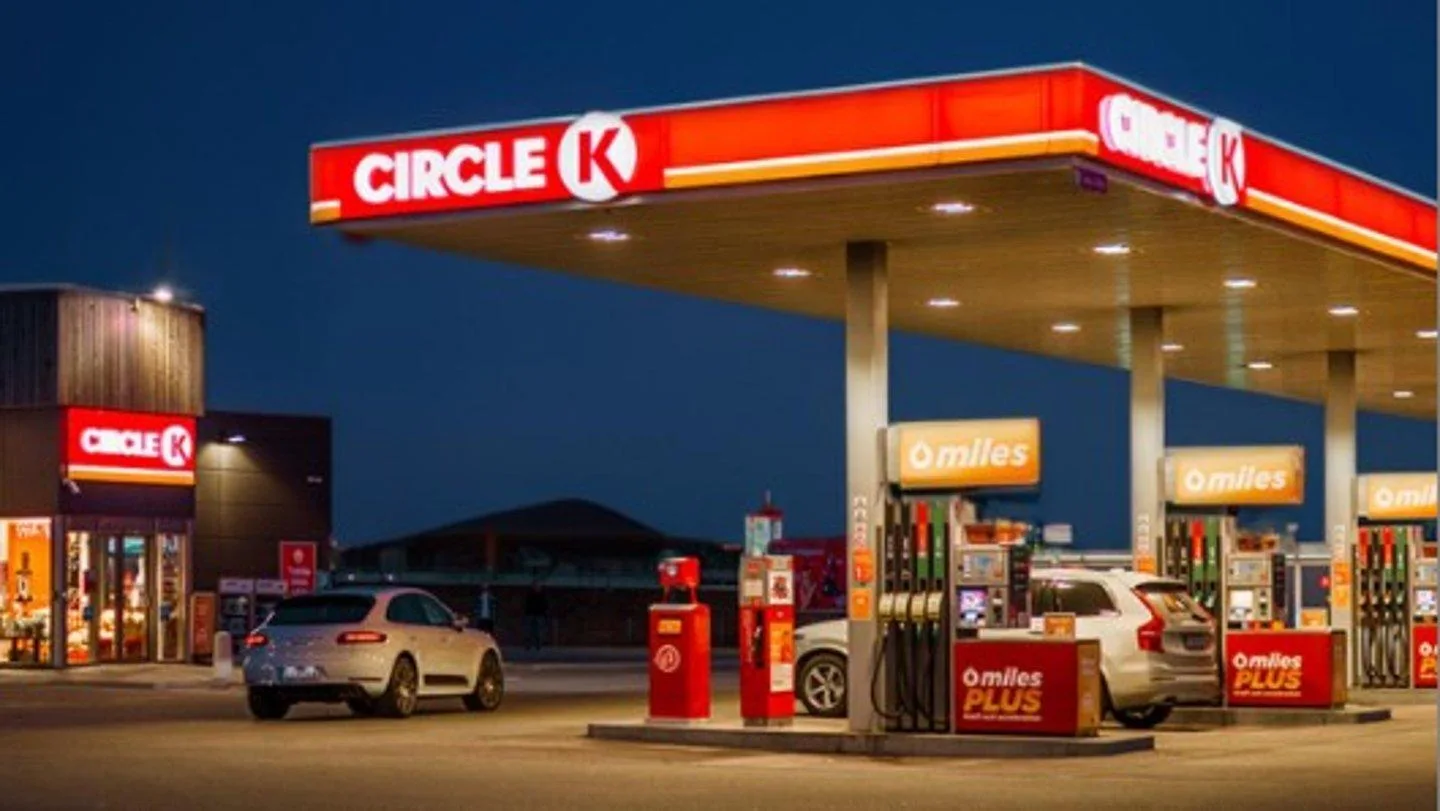
Alimentation Couche-Tard has established itself among the world's leading convenience retail and fuel distribution operators through successive acquisitions, particularly around Circle K. Its business model combines a substantial presence in fuel retail with food distribution, beverages, quick-service restaurants and mobility-related services.
In July 2026, the company announced an agreement aimed at acquiring control of Polish retailer Żabka Group, through an offer valuing the entirety of its equity at approximately $8.6 billion. Żabka operates more than 13,000 stores in Poland and Romania and represents a substantially different platform from traditional petrol station networks.
The strategic appeal is considerable. Żabka's stores, frequently located in densely populated urban areas, rely on compact formats, high customer visit frequency and extensive integration of digital tools. The company reported approximately 4.3 million daily transactions and around 11.7 million users across its digital channels.
By combining Circle K's international capabilities with Żabka's urban convenience retail model, Couche-Tard would seek to extend its reach beyond automotive infrastructure. A potential acquisition of Cumberland Farms would add another dimension: strengthening its American networks and integrating assets already positioned across several convenience consumption segments.
Combining the announced valuation for Żabka with the reported valuation for Cumberland Farms produces a total of approximately $16.1 billion to $16.6 billion. This figure, however, represents neither a confirmed aggregate purchase price nor an estimate of Couche-Tard's definitive cash outlays. The Polish transaction is structured around a public tender offer whose outcome depends partly on the number of shares tendered, while the financial perimeter of the American proposal remains unknown.
These distinctions do not diminish the scale of the challenge. For an industrial group, the success of an acquisition strategy depends on transforming substantial investments into sustainable operating gains without weakening its balance sheet.
Debt as the Ultimate Arbiter
Financing could become one of the principal obstacles to a potential Cumberland Farms acquisition.
For Żabka, Couche-Tard announced fully committed credit facilities involving, among others, J.P. Morgan, National Bank of Canada and Scotiabank. The company estimated that the transaction would increase its net debt-to-adjusted EBITDA ratio to approximately three times upon completion, followed by progressive deleveraging.
That trajectory was based on the parameters of the Polish acquisition. It did not incorporate another potential multibillion-dollar transaction in the United States.
If Couche-Tard were to finance a Cumberland Farms acquisition entirely through additional borrowing, its financing requirements would increase mechanically. The eventual outcome would nevertheless depend on the actual purchase price, assumed debt, available cash, potential asset disposals and the operating contribution of the acquired business.
No financing structure specifically associated with the reported proposal has been disclosed.
The challenge can be illustrated by the figures released when the Żabka transaction was announced. Couche-Tard presented combined pro forma revenue of approximately $83.9 billion and adjusted EBITDA approaching $7.8 billion before synergies. It also anticipated approximately $250 million in potential synergies by the third year following completion.
These figures demonstrate the industrial scale that the combined operations could achieve, but they do not represent immediately available liquidity. EBITDA must still cover capital expenditure, interest payments, taxes and working capital requirements.
An additional acquisition would therefore require a reassessment of the deleveraging trajectory, banking commitments and the company's ability to preserve its credit quality. It could also force Couche-Tard to prioritise investments, postpone certain expenditures or dispose of assets considered non-strategic.
The issue is not simply access to financing. Its cost matters equally. As borrowing costs rise, the synergies required to justify an acquisition become more substantial. A transaction that makes industrial sense can lose part of its financial appeal if financing expenses absorb an excessive proportion of future cash flows.
Convenience Retail Enters a New Era of Scale
The consolidation strategy underlying this potential transaction reveals a deeper transformation in global retail.
For decades, petrol stations were organised primarily around fuel sales. Their additional commercial activities provided secondary revenue streams dependent on vehicle traffic. In many markets, this relationship has gradually changed. Foodservice, beverages, grocery products and everyday consumer services now represent essential components of profitability.
This evolution changes the economic value of retail networks. A petrol station is no longer merely an energy distribution facility. It becomes a commercial location with a recurring customer base, logistics infrastructure, transaction data and the capacity to accommodate additional services.
For a company such as Couche-Tard, acquiring an established network provides immediate access to locations, purchasing volumes and territorial coverage that would otherwise take years to develop.
Economies of scale can emerge in procurement, information systems, logistics contracts, loyalty programmes and relationships with major food and beverage brands. Consolidation nevertheless has its limits. Consumer behaviour differs across the United States, the United Kingdom and continental Europe. Franchise networks cannot be managed in precisely the same way as company-owned stores, while commercial, labour and environmental regulations vary considerably.
Integrating an international business therefore involves more than merging information systems or centralising purchasing operations. It requires preserving the local characteristics that often explain the profitability of acquired brands.
Greater concentration could also attract scrutiny from competition authorities, particularly in the United States. Where two networks operate nearby locations, their combination may alter competitive conditions in local markets, both for fuel distribution and certain convenience retail activities. Targeted divestitures could consequently become necessary, depending on the geographical overlaps identified.
No regulatory review relating to this potential acquisition has been publicly announced.
Electrification Redefines the Value of Retail Networks
Another uncertainty runs through the entire industry: the transformation of mobility.
The gradual electrification of vehicle fleets could permanently alter fuel distribution volumes, travel habits and the services expected from traditional petrol stations. The transition is progressing at different speeds across countries, but it requires major operators to reconsider the long-term value of their infrastructure.
A station equipped with fast-charging facilities may retain an important commercial function and even develop additional activities during charging periods. Yet this model requires electrical investments, suitable grid connections and an operating structure different from that of a conventional fuel distribution site.
At the same time, the expansion of urban convenience retail reduces the dependence of major groups on automotive traffic alone. This is precisely what makes networks such as Circle K, Cumberland Farms and Żabka strategically complementary, at least in principle.
Diversification can therefore be understood as a response to structural risk. The more revenue comes from food consumption, services and everyday purchases, the less profitability depends exclusively on fuel volumes.
This transformation does not guarantee acquisition success. Food retail margins remain subject to intense competition, while labour, property and energy costs can weigh on store profitability. The value of a network consequently depends on its ability to adapt its offering, not simply on the number of outlets it controls.
Three Forms of Capital, One Company
The Cumberland Farms situation ultimately brings together three forces that shape much of contemporary capitalism.
The first is entrepreneurial capital. The Issa brothers built an international group from a relatively modest initial business, using acquisitions as an instrument of growth. Their trajectory illustrates how a traditional industry can be transformed into a global commercial platform.
The second is financial capital. TDR Capital supported this expansion through the mechanisms of private equity: equity investment, debt financing, asset reorganisation and the pursuit of a valuation capable of delivering a profitable exit. The success of this model is measured less by the company's ultimate size than by the return actually generated on invested capital.
The third is industrial capital. Couche-Tard could regard Cumberland Farms not as a portfolio to be resold, but as a permanent component of its global organisation. The value sought would then derive from economies of scale, productivity improvements and additional revenue generated by integrating the networks.
These three forms of capital can succeed one another during a company's development. An entrepreneur establishes a business, a financial investor accelerates its expansion, and an industrial group eventually incorporates it into a larger organisation. Yet this sequence is never automatic. It depends on valuations, financing conditions, competition and the moment at which owners decide to sell their holdings.
The possibility of an initial public offering introduces a fourth dimension: public equity markets, which can distribute ownership among numerous investors and provide an observable valuation reference.
In Cumberland Farms' case, these different forms of capital are competing directly. The final price, should a transaction materialise, would depend as much on their respective constraints as on the company's underlying performance.
A Consolidation Still Far from Certain
At this stage, there is no basis for treating the acquisition of Cumberland Farms as a completed transaction. The proposal attributed to Couche-Tard has not resulted in a confirmed agreement, its financing remains unknown, and shareholders potentially retain several alternatives.
A US stock market listing remains an option, even if its timetable could be postponed. Reported interest from financial investors also leaves open the possibility of a new private ownership structure. Couche-Tard's ability to pursue several major acquisitions simultaneously will have to be assessed against its financial commitments and industrial priorities.
Yet the situation already reveals a significant evolution. Large retail networks are no longer valued solely according to their stores, petrol stations or current revenue. They are increasingly assessed according to their potential to become the infrastructure of a more integrated distribution system combining mobility, food retail, logistics, technology and services.
The central significance of the reported proposal therefore lies not merely in the $8 billion figure. It concerns the way companies created by entrepreneurs, developed with private equity backing and pursued by industrial groups change ownership as markets become more concentrated.
Cumberland Farms could enter the stock market, acquire a new financial shareholder or become part of a global industrial group. Whatever the outcome, the decision would determine far more than a valuation. It would establish the next stage in the development of a commercial empire whose history has been built precisely on acquiring other businesses.
And in an industry where every petrol station, every store and every location retains a profoundly local dimension, the struggle for ownership has become global.
Main Sources
- Reuters, October 24, 2026 — Report on Couche-Tard's proposed acquisition of Cumberland Farms, citing The Times.
- The Times, October 24, 2026 — Reporting on the proposed Cumberland Farms takeover and alternative strategic options.
- Alimentation Couche-Tard, July 31, 2026 — Agreement to Acquire Controlling Stake in Żabka Group and Launches Voluntary Tender Offer.
- CSP Daily News, March 20, 2026 — EG Group Rebrands to Cumberland Farms.
- Reuters, July 31, 2026 — Reporting on Couche-Tard's proposed acquisition of Poland's Żabka Group.
Atlas Limits Research Desk
Atlas Limits’ editorial and analytical desk.