In New York on September 22, three signatures brought an extraordinary dispute to a close without requiring any of the parties to accept the humiliation that had once seemed almost inevitable. Donald Trump had wanted Greenland. Mette Frederiksen had answered that it was not for sale. Jens-Frederik Nielsen had insisted that Greenlanders themselves would decide their future. Months later, no flag has changed, no border has moved, and the Kingdom of Denmark retains its sovereignty. Yet the American position on the island has changed considerably.
The agreement signed by the United States, Denmark and Greenland does not fulfil the territorial ambition once articulated by Donald Trump. It transforms it. Washington gains an expanded military presence, two new defence areas at Narsarsuaq and Mestersvig alongside Pituffik, deeper integration of Greenland into the North American defence architecture, and safeguards designed to prevent actors considered hostile from establishing positions in sensitive infrastructure or investments. The agreement has no expiration date.
Greenland remains Greenlandic. But its geography is becoming more deeply American.
This may be how the most spectacular phase of a confrontation that began almost as a real-estate proposition comes to an end: through strategic architecture. Donald Trump did not obtain ownership of the territory. The United States nevertheless secured a substantial part of what possessing that territory was supposed to provide: military depth, surveillance of North America's Arctic flank, lasting access to critical facilities, and a greater ability to prevent its principal competitors from establishing themselves there.
The distinction is considerable in law. On a strategic map, it is less so.
An Old Presence, a New Balance
America is not discovering Greenland.
During the Second World War, while Denmark was occupied by Germany, the United States had already understood what geography made obvious: the immense island between North America and Europe formed a natural forward position in the North Atlantic. In 1951, Washington and Copenhagen institutionalised that presence through a defence agreement granting extensive rights to American forces.
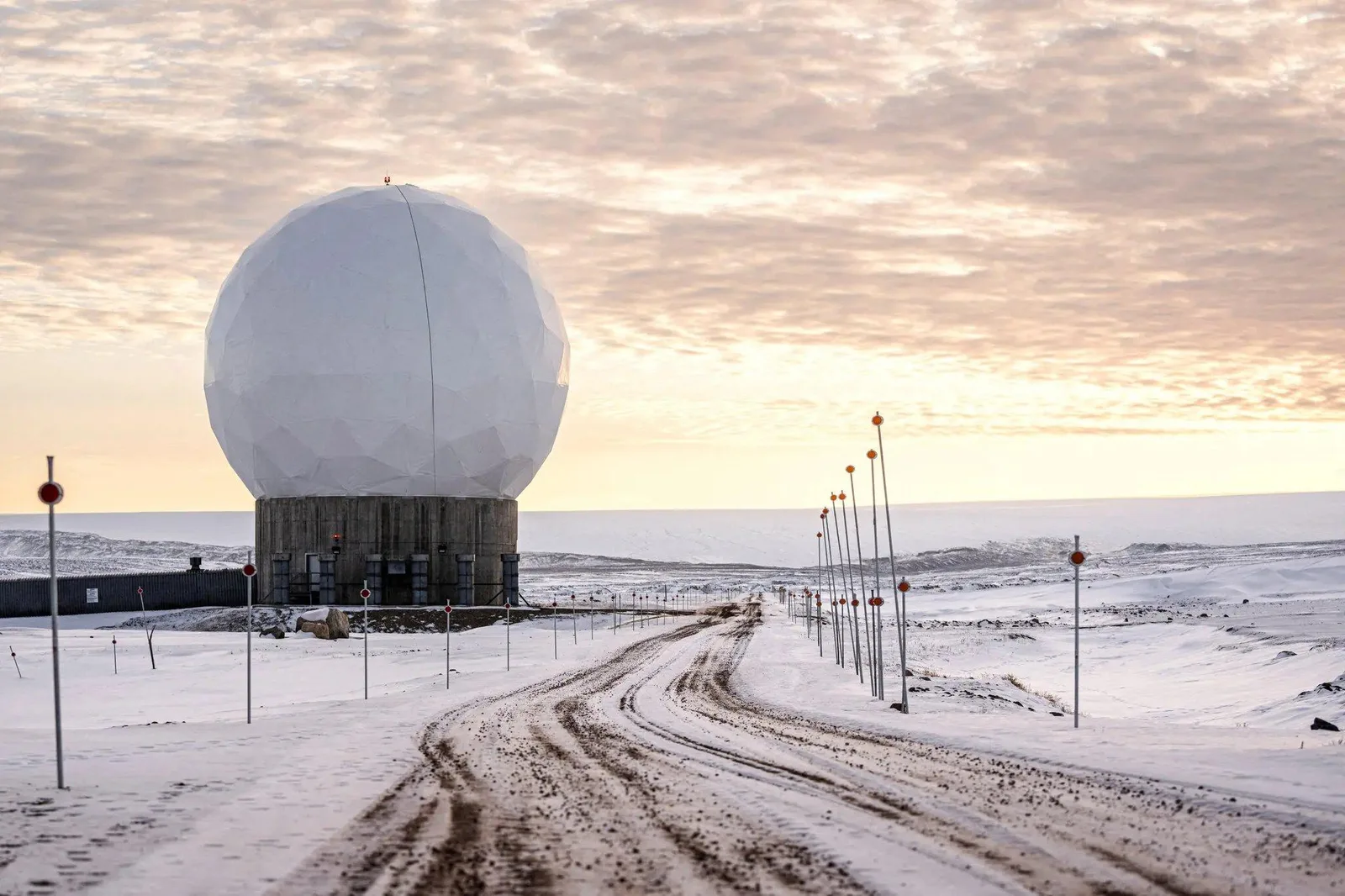
At the height of the Cold War, the United States operated numerous facilities across Greenland. Its footprint subsequently contracted, eventually concentrating primarily around Pituffik Space Base, formerly Thule Air Base. Yet the site never lost its strategic importance. Its location allows the United States to monitor the Arctic, detect certain missile launches and support space operations.
The September 2026 agreement therefore does not establish an American presence where none existed. It reverses the post-Cold War contraction.
Narsarsuaq, in southern Greenland, itself has a long history of American military activity. Mestersvig, on the eastern coast, provides another layer of geographic depth. Together with Pituffik in the northwest, the American presence is gradually ceasing to resemble a remnant of the previous strategic order and is becoming a network designed for the emerging one.
That distinction matters.
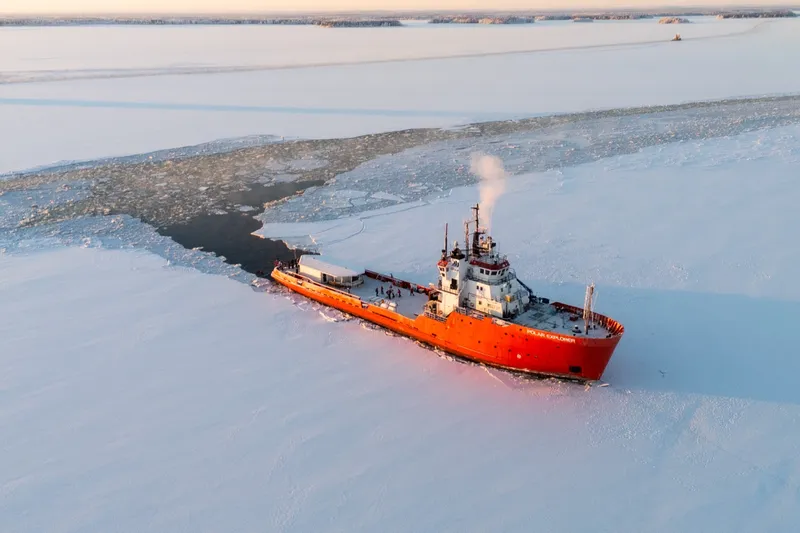
For three decades, the Arctic was often presented as one of the last regions where cooperation might remain insulated from great-power rivalry. Climate change, increasingly accessible maritime routes, renewed military competition with Russia and growing Western concerns about China have altered that perception. The ice is not merely retreating. It is also losing the role it once played as a strategic barrier.
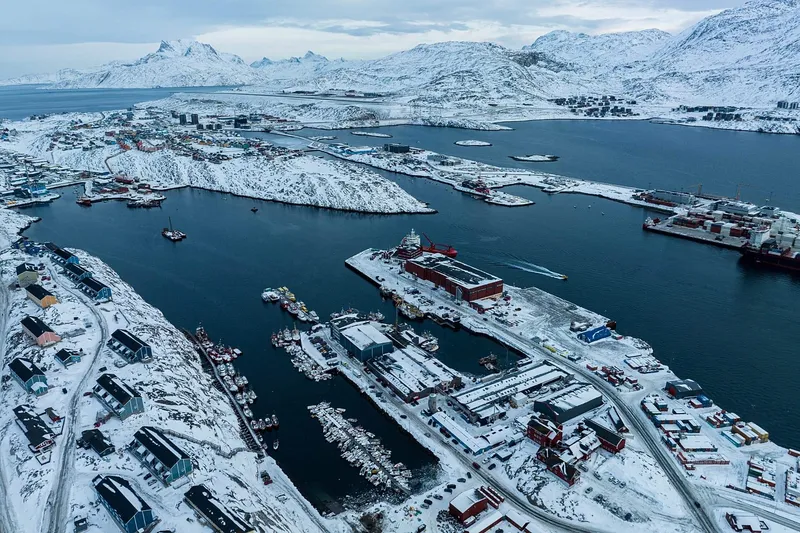
Greenland now stands near the centre of that transformation.
North America's Northern Frontier
From Washington, Greenland is not truly peripheral. It belongs to the geography of continental defence.
The shortest trajectories between some Russian launch areas and North America cross the Arctic. Detection systems located in Greenland therefore carry particular importance for missile warning and space surveillance. The American Golden Dome missile-defence project adds another dimension to this geography, although Copenhagen has stressed that the system's precise configuration in Greenland has yet to be determined.
That technical uncertainty does not alter the political logic. As Washington seeks to construct a broader detection and interception architecture around American territory, Greenland ceases to be merely a forward position. It potentially becomes one component of the defence of the continental United States itself.
Trump had expressed the point far more bluntly when he described the island as indispensable to American security.
His language caused a crisis because it deliberately blurred two separate questions: needing a territory and needing to own it. The September agreement provides a much more conventional answer to that contradiction. The United States can obtain much of Greenland's strategic value without changing its sovereignty.
American history is familiar with this formula. A power does not necessarily need to annex a territory to integrate it into its security architecture.
Three Signatures, Three Interpretations
This is also why the agreement can simultaneously be presented as an achievement in Washington, Copenhagen and Nuuk.
The White House emphasises the permanence of the American presence and describes the arrangement as providing lasting protection for US security interests in Greenland. Donald Trump himself has used considerably broader language, speaking of comprehensive and permanent American security control.
Denmark reads the same document differently.
Mette Frederiksen stresses that the agreement reaffirms the sovereignty of the Kingdom, territorial integrity and NATO's central role. She has also emphasised that consultation mechanisms between the three parties remain in force. An expanded American presence would therefore constitute not a transfer of sovereignty but the deepening of a military alliance that has existed since 1951.
Nuuk adds a third dimension.
Jens-Frederik Nielsen has stressed that Greenland is now itself a party to the agreement, that its right to self-determination is explicitly recognised and that both its territory and way of life must be respected. After months during which Greenlanders sometimes appeared reduced to the object of a negotiation between Washington and Copenhagen, that political recognition is not insignificant.
The three interpretations are not necessarily incompatible.
They reveal instead the nature of the compromise: Washington obtains greater strategic capacity; Copenhagen retains legal sovereignty; Nuuk receives a reaffirmation of its right to determine its own future.
Each side therefore preserves something it can regard as essential.
Sovereignty No Longer Tells the Whole Story of Power
The Greenland case nevertheless raises a deeper question.
For centuries, territorial power was measured largely through possession. A border indicated relatively clearly where the authority of one state began and another ended. That understanding remains fundamental to international law. It explains why sovereignty occupied such a central place in the confrontation triggered by Donald Trump.
But contemporary strategic systems operate across several layers.
A territory can politically belong to one state, depend militarily on another, trade primarily with a third, and host infrastructure whose function extends far beyond its own national space. Bases, satellites, submarine cables, radars, ports, critical minerals and digital networks construct a geography that no longer corresponds perfectly to political borders.
Greenland now provides an unusually clear illustration.
Its sovereignty has not changed. Its strategic function is changing rapidly.
The agreement also provides mechanisms to restrict certain foreign investments when they concern critical infrastructure and create security risks. Copenhagen has specified that investments originating from European Union and NATO members and their partners would remain possible. Behind the legal language, however, lies a familiar logic of contemporary competition: security no longer ends at the perimeter of a military installation.
A port can become strategic. So can a mine. So can a submarine cable.
Control of territory can therefore begin long before the gates of a military base.
China: Absent, but Present
Beijing did not need a seat at the table in New York to be present in Washington's calculations.
For several years, the United States has viewed with concern the possibility of Chinese companies establishing positions in Arctic infrastructure, telecommunications or mineral resources. China has itself described the country as a “near-Arctic state” and has sought to develop an economic and scientific presence in the region.
Greenland also possesses significant mineral resources, including materials considered critical to Western industrial supply chains.
It would nevertheless be reductive to interpret the agreement simply as an operation to secure rare earths. Greenland's primary value remains geographic. Its resources reinforce that value; they do not create it.
What Washington seeks above all to prevent is the emergence of a competing strategic foothold in an area it increasingly regards as directly connected to the security of the North American continent.
The logic resembles the one progressively shaping other regions of the world: civilian infrastructure becomes an object of national security, foreign investment is filtered according to its origin, and supply chains are reorganised according to geopolitical criteria.
The Arctic is entering this economy of blocs.
Russia and the Return of the Map
Russia, by contrast, is already there.
It possesses the world's longest Arctic coastline, substantial military infrastructure across its northern territories and a Northern Fleet centred on the Kola Peninsula. For Moscow, the Arctic is neither a peripheral region nor a new frontier. It has long constituted a central strategic space.
The war in Ukraine and the deterioration of relations between Russia and the West have nevertheless dismantled much of the institutional framework that once allowed Arctic cooperation to remain partially separated from geopolitical rivalry.
Finland's and Sweden's accession to NATO has also transformed the map. Almost the entire European Arctic outside Russia now belongs to the Atlantic Alliance. Greenland completes that geography on its western flank.
The agreement signed in New York should therefore not be read in isolation. It forms part of a gradual consolidation of NATO's northern perimeter, stretching from Scandinavia to North America.
The old Cold War map is not returning exactly.
Another is being drawn across much of the same geography.
The Price of Compromise
For Denmark and Greenland, the agreement resolves a contradiction that had become increasingly difficult to sustain.
Rejecting any expansion of the American presence would have been difficult while Copenhagen itself acknowledged the need to strengthen Arctic defence. Accepting the logic of an American acquisition was politically and legally impossible. Between the two lay the space for compromise: more America without less formal sovereignty.
For Washington, the outcome offers another advantage. Annexation, a coerced acquisition or even a prolonged territorial negotiation would have created a profound crisis inside NATO in pursuit of military benefits that existing agreements already made largely obtainable by other means.
The solution is less spectacular than a map showing an American Greenland.
It is probably more functional.
The United States will not have to administer a population that did not ask to become American, nor absorb the diplomatic consequences of changing a border between allies. It does, however, obtain an expanded presence on the island and a framework through which Greenland can be integrated more deeply into its security architecture.
That is the peculiar conclusion of the episode.
A maximalist territorial demand ultimately produced a compromise resembling the more traditional instruments of American power rather than territorial expansion: bases, alliances, access, interoperability and the control of strategic vulnerabilities.
Owning Less, Controlling More
Much remains to be observed.
The precise nature of the American deployment, Greenland's potential role in Golden Dome, the investments required for the new facilities, the practical implementation of restrictions on foreign actors and, above all, the acceptance of the arrangement within Greenlandic society will determine the agreement's ultimate significance.
Greenland's political question has not disappeared. Its right to self-determination has instead been explicitly reaffirmed, and the debate over eventual independence from Denmark will continue to belong to Greenlanders themselves.
But September 22, 2026 already marks something else.
For months, the debate had been framed in the oldest language of power: who owns this land?
The New York agreement shifts the question.
In a world where missile defence depends on distant radars, civilian infrastructure becomes strategic, minerals enter the realm of national security and major powers seek less to conquer every territory than to prevent their rivals from gaining access to it, ownership is no longer the only measure of control.
Greenland remains outside the United States.
Yet it is moving deeper into its geography.
Main Sources
— Government of Denmark / Statsministeriet, statements by Mette Frederiksen and Jens-Frederik Nielsen following the agreement between Greenland, Denmark and the United States, September 22, 2026. — The White House, President Trump Inks Historic Arctic Security Agreement, September 22, 2026. — Reuters, Trump, Greenland, Denmark sign deal in bid to end Arctic standoff, September 22, 2026. — Reuters, reporting on the expansion of the US military presence at Narsarsuaq and Mestersvig, September 2026. — 1951 United States–Denmark Defence Agreement and subsequent US–Danish defence cooperation framework for Greenland.
Atlas Limits Research Desk
Atlas Limits’ editorial and analytical desk.