From an ancient celebration of the dead to a global entertainment industry, Halloween has survived centuries of religious, geographical, and cultural transformation. Behind the illuminated pumpkins, costumes, and horror films lies a profoundly human question: why do we feel compelled to give a face to the things we fear? 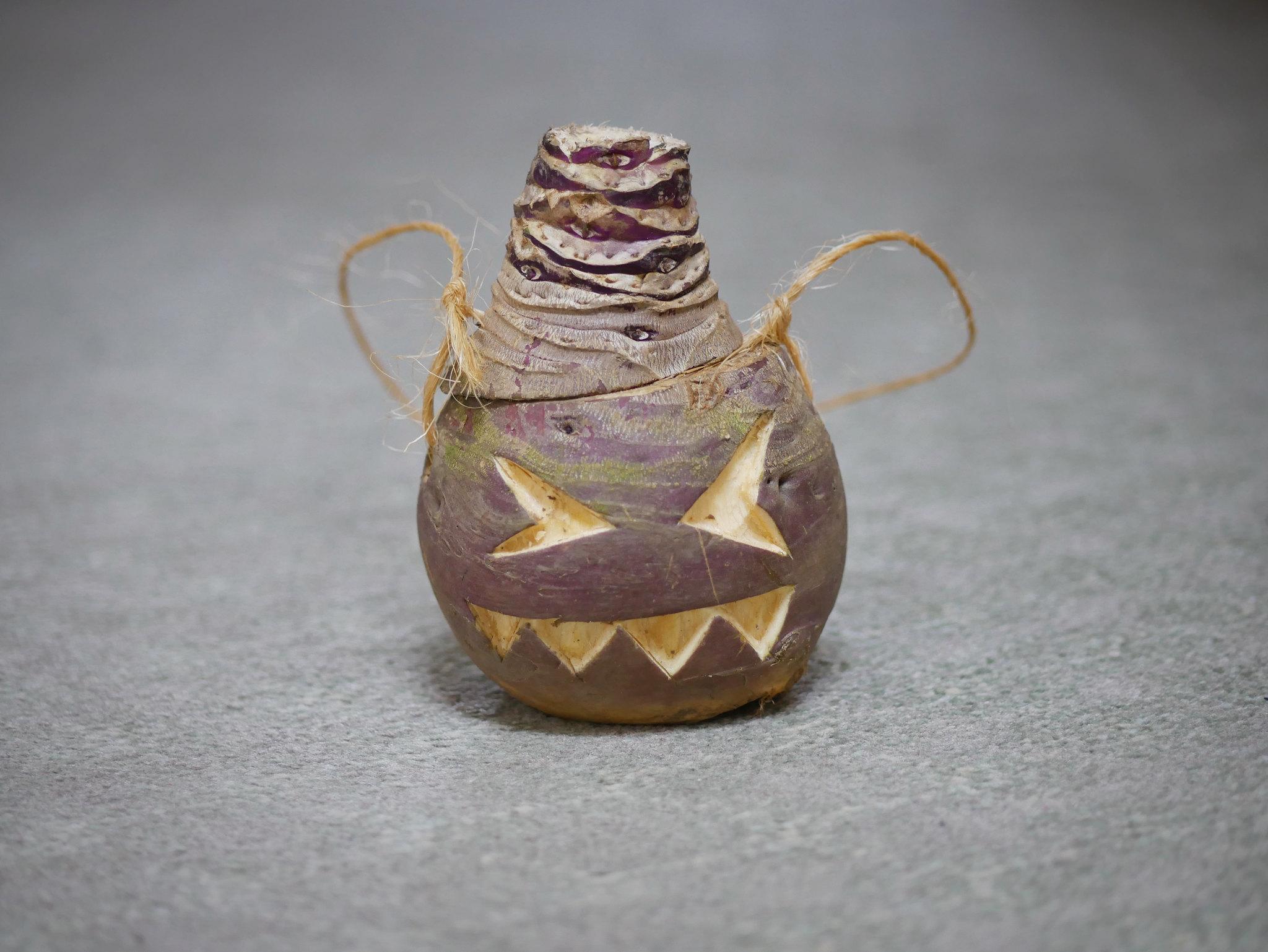
A Night When Boundaries Disappear
Every year, as darkness falls on October 31, millions of people participate in a peculiar ritual. Houses become covered in cobwebs, skeletons appear in gardens, children disguise themselves as supernatural creatures, and adults spend considerable sums transforming familiar surroundings into scenes of terror.
Death, usually kept at a comfortable distance from everyday conversation, becomes a decorative object. Monsters once portrayed as threats become entertaining characters. Fear itself turns into an invitation to celebrate.
This reversal may be Halloween's most distinctive characteristic. In societies increasingly devoted to protecting human life, anticipating risks, and extending the boundaries of mortality, an entire evening is dedicated to the voluntary staging of everything that escapes human control.
The explanation lies neither exclusively in commerce nor in entertainment. It reaches much further into the past, to a time when seasonal transitions, darkness, and the loss of loved ones occupied a central place in the collective imagination.
Halloween was not invented by Hollywood. Cinema simply learned to exploit a symbolic language that human societies had developed long before the motion picture existed.
Samhain: When Winter Announced the Unknown
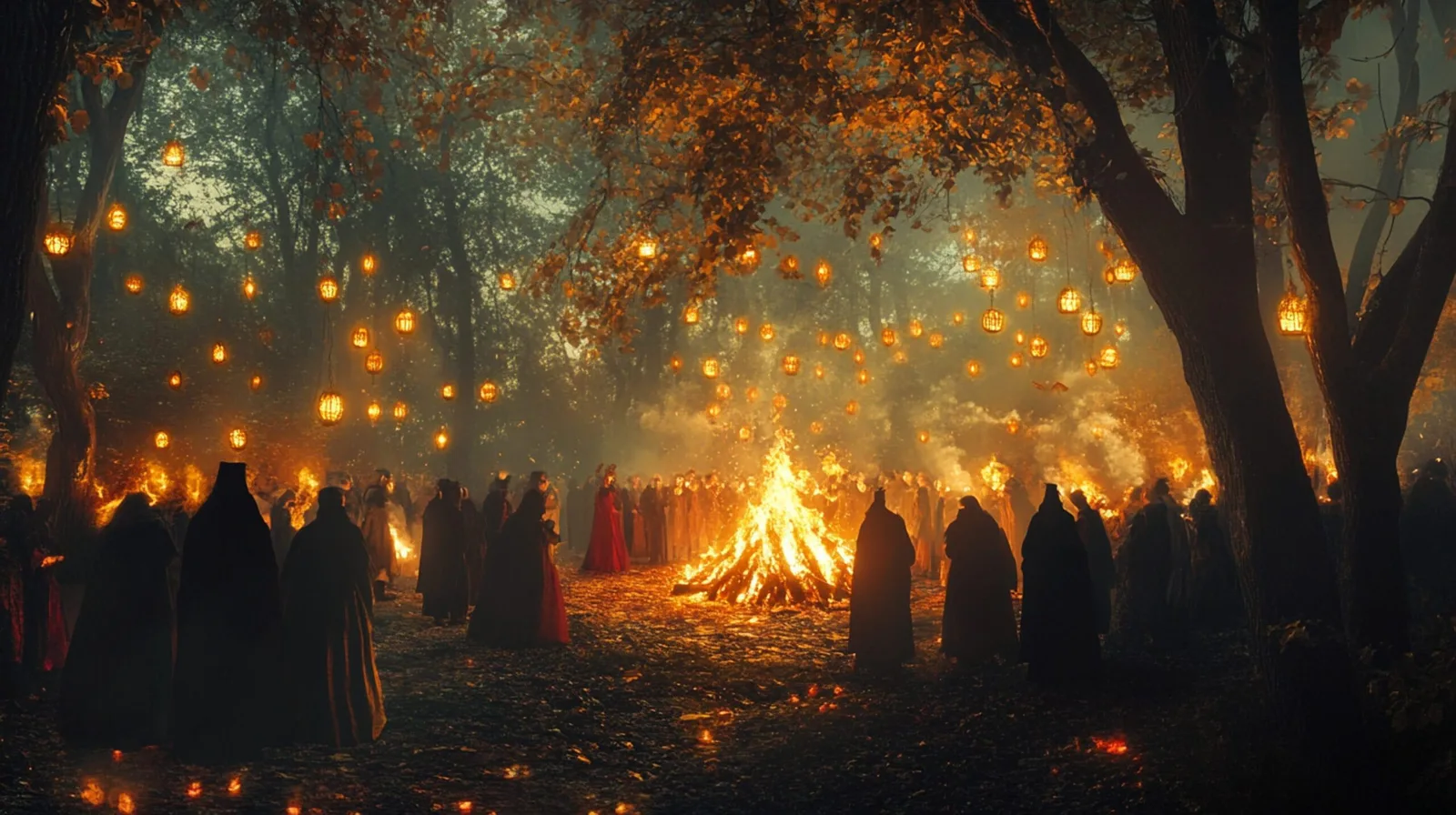
The origins of Halloween are commonly associated with Samhain, a festival observed in certain Celtic societies, particularly in Ireland, marking the transition from the lighter half of the year to the darker season.
In ancient agricultural communities, this period represented considerably more than a change of calendar. It signaled the end of the harvest, the shortening of daylight hours, and the beginning of a season in which food reserves, weather conditions, and the survival of livestock became major concerns.
The arrival of winter therefore carried material as well as spiritual significance.
Folkloric traditions associated with Samhain describe a period during which the boundary separating the living from the dead became more permeable. Stories involving supernatural presences, offerings, and gatherings around fires form part of this cultural inheritance.
Historical caution is nevertheless necessary. The surviving evidence concerning pre-Christian Celtic rituals is fragmentary, and not every modern Halloween custom can be traced directly to Samhain. Some familiar interpretations emerged through much later folkloric reconstruction.
This uncertainty does not diminish the symbolic significance of the seasonal transition. For communities whose survival depended on natural cycles, the approaching darkness provided an opportunity to confront their vulnerability.
Darkness was not merely the absence of light. It represented everything that could neither be anticipated nor controlled.
Across the centuries, Halloween would preserve this relationship with the unknown while gradually moving away from much of its original religious setting.
Christianity and the Transformation of Ritual
The expansion of Christianity across Europe did not immediately eliminate local traditions. Instead, it contributed to reshaping calendars, ceremonies, and the meanings attached to popular celebrations.
All Saints' Day, observed on November 1 in Western Christianity, and the commemoration of the faithful departed on November 2 established a religious sequence devoted to sanctity, remembrance, and death.
The evening preceding All Saints' Day became known in English as All Hallows' Eve, an expression from which the word Halloween eventually developed.
It would be misleading, however, to describe this evolution as a perfectly coordinated replacement of a pagan festival by a Christian celebration. The historical processes were more complicated, with traditions overlapping and developing differently across regions.
Nevertheless, the interaction helped produce a remarkable cultural continuity. Older questions concerning death, spirits, and the passage between worlds acquired new expressions within Christian and popular practices.
During the medieval period and afterward, some British communities developed customs such as souling, in which people requested food in exchange for prayers for the dead. Other traditions involving disguises and performances, commonly associated with guising, developed particularly in Scotland and Ireland.
These practices were not yet the familiar candy-collecting rounds of modern American children. They nevertheless demonstrate how visiting households, wearing disguises, and participating in ritual exchanges gradually became associated with this time of year.
The celebration was changing without entirely losing its social purpose: bringing the living together around a shared representation of the invisible.
America Turns Folklore Into Popular Culture
Halloween's decisive transformation took place across the Atlantic.
During the nineteenth century, Irish and Scottish migration helped introduce North America to traditions associated with autumn, costumes, communal gatherings, and supernatural storytelling.
These customs encountered an environment profoundly different from that of rural Europe.
Urbanization, the expansion of the middle classes, changing family structures, and eventually the development of American suburbs encouraged new forms of celebration.
Throughout the twentieth century, Halloween gradually became a community and family occasion. Parades, costume parties, and activities organized for children became increasingly widespread.
The practice of trick-or-treating, in which children visit homes requesting candy, became especially established in the United States during the decades following the Second World War.
This represented a substantial cultural transformation. A festival once associated with the possible presence of the dead became an event centered on childhood, neighborhood relationships, and consumption.
The carved pumpkin illustrates this adaptation particularly well.
Traditional lanterns, made from vegetables such as turnips in parts of the British Isles, found a new material in North America: the pumpkin, larger and generally easier to carve.
The jack-o'-lantern consequently became one of the most recognizable symbols of American popular culture.
This transformation did not necessarily mean that tradition had disappeared. Rather, it demonstrated the ability of cultural practices to survive by adapting to new social environments.
America did not create Halloween out of nothing. It supplied the cultural, commercial, and media infrastructure that would eventually turn the celebration into an international phenomenon.
Cinema Gives Fear a Face
If history explains Halloween's persistence, cinema helps explain its extraordinary aesthetic power.
From the early decades of the twentieth century, fantasy and horror films developed a visual vocabulary that would become inseparable from the celebration: dark castles, threatening silhouettes, vampires, ghosts, monsters, and creatures operating beyond the ordinary laws of nature.
German Expressionist cinema, particularly Robert Wiene's The Cabinet of Dr. Caligari in 1920 and F. W. Murnau's Nosferatu in 1922, helped transform anxiety into an artistic language.
Distorted sets, exaggerated shadows, and unsettling movements conveyed a sense of unease that extended far beyond the simple appearance of a monster.
Fear became a way of representing the world.
Hollywood subsequently developed its own iconic figures, notably through Dracula and Frankenstein, both released in 1931.
The vampire and the artificially created being became major figures in popular culture, reaching audiences far beyond the literary works from which they originated.
During the second half of the twentieth century, horror gradually changed its setting. It moved away from isolated castles and entered ordinary homes, small towns, and familiar neighborhoods.
Alfred Hitchcock's Psycho in 1960, George A. Romero's Night of the Living Dead in 1968, William Friedkin's The Exorcist in 1973, and John Carpenter's Halloween in 1978 each reflected aspects of this transformation.
Carpenter's film occupies a particularly important position.
By placing a threatening figure in an American residential neighborhood on Halloween night, it transformed a familiar celebration into a setting for terror.
Horror no longer required a distant castle. It could emerge from behind the door of an entirely ordinary house.
This evolution reflected a deeper cultural transformation: danger was no longer located exclusively in a supernatural world outside society. It could also arise from society's own contradictions, violence, and anxieties.
Horror cinema thus became an indirect observatory of collective fears.
Monsters Change With Society
Every era has its monsters, but their meanings evolve alongside contemporary concerns.
The vampire can embody contamination, transgression, or fascination with immortality. The zombie can represent social collapse, contagion, and the disappearance of individuality. The artificially created monster raises questions about scientific responsibility and the unforeseen consequences of human invention.
These interpretations are neither universal nor exclusive. They nevertheless demonstrate how fantastic narratives can express anxieties that are difficult to articulate directly.
In the digital age, horror increasingly explores surveillance, virtual identities, artificial intelligence, and technologies escaping human control.
Monsters therefore do not disappear as societies modernize. They simply change form.
Where some ancient communities imagined supernatural beings emerging from forests, contemporary societies may envision threats arising from laboratories, computer networks, or systems of their own creation.
Fear persists, but its vocabulary evolves with knowledge and power.
This adaptability helps explain Halloween's endurance across generations.
The celebration possesses a traditional repertoire stable enough to remain recognizable, yet flexible enough to accommodate new characters and anxieties.
Why Do We Enjoy Being Afraid?
Halloween's popularity rests on a psychological paradox.
In everyday life, fear is generally an experience people seek to avoid. It signals danger, focuses attention, and prepares the body to respond.
Yet millions willingly pay to watch frightening films, enter haunted attractions, or participate in experiences specifically designed to produce anxiety.
The fundamental difference lies in the context.
When danger is fictional or sufficiently controlled, fear can become a source of stimulation, curiosity, and even pleasure. Viewers know, at least in principle, that they can stop watching a film or leave an attraction.
This distance allows people to explore intense emotions without facing the consequences of an actual threat.
Horror also manipulates uncertainty. It forces audiences to anticipate an event they dread while simultaneously wanting to discover what will happen.
Suspense becomes a distinctive form of participation in storytelling.
Halloween adds a collective dimension to this individual experience.
Costumes, decorations, and shared rituals transform fear into a social language.
People do not merely observe monsters. They can become monsters, imitate them, ridicule them, or invite them into a celebration.
Disguise also allows for a temporary suspension of ordinary identities. For a few hours, individuals can adopt appearances incompatible with their usual social roles.
This freedom helps explain why Halloween extends far beyond childhood.
The celebration offers an unusual experience: a socially permitted transgression in which the strange becomes normal and the macabre becomes playful.
Fear Becomes an Industry
The ability to transform anxiety into collective entertainment has naturally attracted cultural and commercial industries.
Halloween is no longer confined to a single evening. In some markets, celebrations now extend across several weeks, accompanied by advertising campaigns, seasonal collections, temporary attractions, and specialized audiovisual programming.
In the United States, the National Retail Federation estimates that consumer spending associated with Halloween could reach $13.5 billion in 2026, compared with a forecast of $13.1 billion in 2025.
Projected spending categories for 2026 include approximately $4.4 billion on costumes, $4.3 billion on decorations, $4.1 billion on candy, and around $800 million on greeting cards.
These figures reflect consumer spending intentions collected through surveys, rather than finalized retail sales. They concern the American market and should not be interpreted as an estimate of Halloween's entire global economic value.
Their scale is nevertheless revealing.
A celebration rooted in communal and religious traditions has become an important commercial occasion for retailers, confectionery manufacturers, decoration suppliers, and costume producers.
The entertainment industry contributes to this economy through films, streaming platforms, theme parks, video games, and immersive attractions.
Intellectual property plays a central role.
Characters originating in films, television series, and cultural franchises can be commercialized through costumes, merchandise, and themed experiences.
Consumers are no longer purchasing merely an object. They are buying the opportunity to temporarily embody a character belonging to a larger narrative universe.
Halloween therefore illustrates a broader transformation of contemporary economies: commercial value increasingly emerges from experiences, identities, and collective imagination.
Even fear can become an economic resource when it is organized, dramatized, and made socially desirable.
A Global Celebration, but Not a Universal One
Halloween's international expansion is closely connected to the global circulation of American popular culture.
Films, television series, international brands, social media, and digital platforms have made its symbols immediately recognizable across much of the world.
A carved pumpkin, a witch's silhouette, or a ghost costume rarely requires an explanation to be associated with October 31.
Yet global recognition does not mean that Halloween is celebrated everywhere with equal enthusiasm, or that it carries a universal cultural meaning.
In some countries, it functions primarily as an occasion for consumption and entertainment. Elsewhere, it remains marginal or encounters cultural and religious reservations.
It is also important not to confuse Halloween with other traditions commemorating the dead.
In Mexico, Día de Muertos, observed around November 1 and 2, possesses its own historical origins, practices, and meanings.
Altars, offerings, and family commemorations express a distinctive relationship with the memory of deceased relatives.
Calendar proximity and certain visual similarities do not make these celebrations interchangeable.
This diversity demonstrates that death is a widely shared human concern, but societies develop different cultural responses to give it meaning.
Halloween's globalization consequently reveals both the influence of American cultural industries and the capacity of symbols to circulate beyond their original settings.
A celebration can become global without becoming culturally identical everywhere.
When Commerce Reinvents Tradition
The commercialization of Halloween raises a question extending far beyond the celebration itself: what remains of a tradition when it becomes a product?
At first glance, the contrast appears striking.
Rituals once associated with seasonal change, remembrance of the dead, and supernatural beliefs have gradually given way to costume purchases, retail promotions, and mass-produced decorations.
Yet it would be simplistic to oppose an allegedly authentic ancient tradition to a commercial modernity that has supposedly corrupted it.
Popular celebrations have always evolved through economic and social change. They have incorporated new objects, practices, and forms of participation.
The more important question is what happens when the market becomes one of the principal organizers of collective experience.
In Halloween's case, consumption does not merely accompany the celebration. It helps define its visual codes, renew its characters, and extend its duration.
Cinema trends, audiovisual productions, celebrities, and viral phenomena increasingly influence costume choices and decorations.
The celebration becomes a space in which individuals display their cultural references, personal tastes, and sometimes social positioning.
Digital networks amplify this phenomenon.
Costumes are no longer intended solely for people attending a party. They can be photographed, distributed, and judged before a much larger audience.
Halloween thus acquires a second existence within the attention economy.
This development can encourage creativity and participation, but it also promotes accelerated consumption of seasonal products, sometimes manufactured for extremely limited use.
Halloween consequently concentrates several contradictions of contemporary culture: attachment to tradition, the desire for originality, the search for shared experiences, and the proliferation of disposable objects.
Death Becomes Familiar for One Night
Despite these transformations, something continues to resist commercial logic.
Halloween's fundamental symbols remain remarkably stable.
Ghosts, skeletons, graveyards, shadows, and nocturnal creatures still occupy the center of the celebration.
All these images refer, directly or indirectly, to concerns that modernity has never eliminated.
Scientific progress has radically transformed our understanding of the world. Medicine has extended life expectancy. Technology allows societies to anticipate certain risks and control an increasing share of their surroundings.
Yet none of these achievements has removed the fundamental uncertainty of human existence.
Death remains a boundary, and the unknown retains its influence over the imagination.
Halloween offers a particular way of approaching this reality.
Unlike funerary ceremonies, which generally express mourning and remembrance, the celebration transforms symbols of mortality into objects of play.
A skeleton can become amusing. A ghost can be represented by a simple white sheet. A tombstone can be made from cardboard to decorate a garden.
This apparent trivialization does not necessarily mean that death has lost its significance.
It may also represent an attempt to make it less intimidating.
By giving visible form to what escapes human understanding, societies create a certain distance from their own anxieties.
Humor and celebration become cultural instruments through which people familiarize themselves with the inevitable.
What Halloween Reveals
Halloween's history is one of remarkable transformations.
A celebration associated with seasonal transitions and supernatural beliefs entered a Christian calendar, crossed the Atlantic through European migration, evolved into an American family holiday, and eventually became an international cultural phenomenon.
Cinema supplied its aesthetic language. Commercial industries expanded its economic significance. Digital networks now provide new spaces for its representation.
Yet its endurance cannot be explained solely by the influence of the companies that commercialize it.
Halloween continues to resonate because it touches an ancient dimension of human experience: the need to tell stories about what we do not understand, represent what we fear, and collectively confront emotions that remain difficult to control.
Modern societies have replaced many superstitions with scientific knowledge. They have illuminated streets, mapped territories, and reduced some of the dangers that once populated the nocturnal imagination.
They have nevertheless never stopped inventing monsters.
Every October 31, behind decorated storefronts, horror films, and extravagant costumes, a ritual far older than the industry surrounding it is symbolically repeated.
For one night, the living invite the dead to return among them, then transform that impossible encounter into a celebration.
Halloween may not teach humanity how to overcome fear. It reminds us that we have always known how to turn fear into a story.
Principal Sources
- Smithsonian Magazine — The Celtic Origins of Trick-or-Treating, 2024. Historical examination of Celtic traditions, disguises, and their transmission to North America.
- HISTORY — History of Halloween, updated October 27, 2026. Overview of the celebration's origins, religious transformations, and popular traditions.
- HISTORY — How Trick-or-Treating Became a Halloween Tradition, updated October 27, 2026. Development of medieval customs and modern American practices.
- National Retail Federation — Halloween Data and Trends, 2026 consumer survey conducted with Prosper Insights & Analytics among 7,889 American consumers.
- National Retail Federation — Consumer Survey Finds Halloween Spending to Reach Record $13.1 Billion, September 18, 2025.
- Encyclopaedia Britannica — Historical reference entries on Halloween, Samhain, and the history of horror cinema.
Methodological note: Historical evidence is distinguished from cultural and psychological interpretation. Economic figures represent projected consumer spending intentions in the United States, not audited retail sales.
Atlas Limits Research Desk
Atlas Limits’ editorial and analytical desk.