For decades, international financial surveillance was built around an implicit distinction: advanced economies represented the stable center of the global system, while emerging and developing countries were regarded as its principal sources of vulnerability. Sovereign debt crises, external imbalances, and sudden capital movements were generally examined through their consequences for economies on the periphery. This geography of financial risk never fully reflected reality, but it profoundly shaped the priorities of international financial institutions.
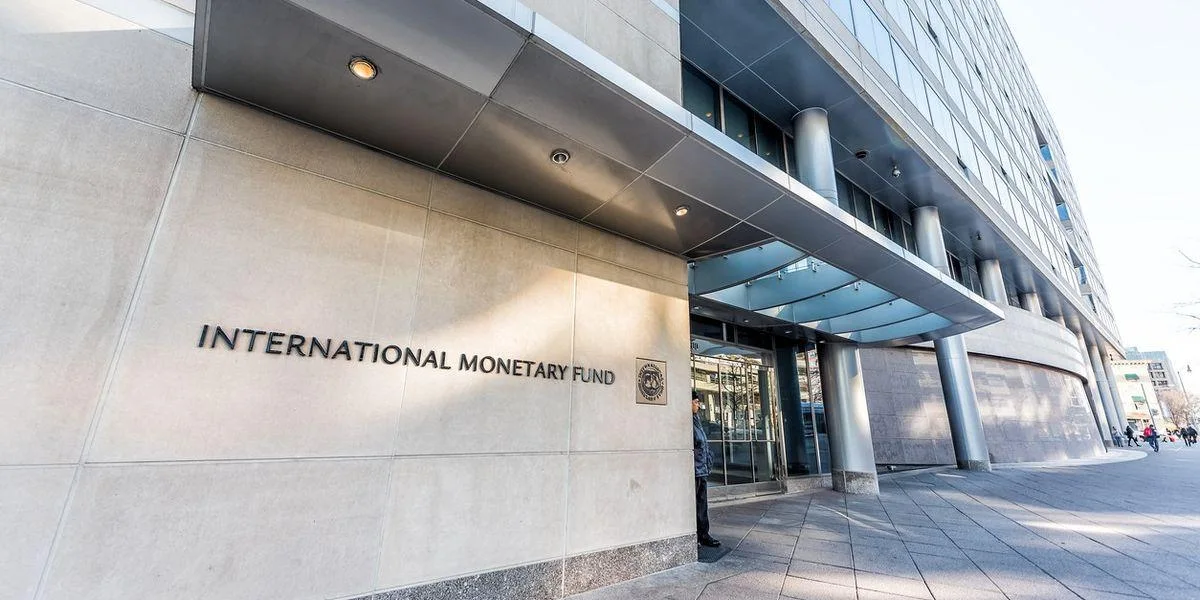
At the October 2026 meetings of the International Monetary Fund, China sought to challenge that hierarchy. According to statements attributed to People's Bank of China Governor Pan Gongsheng, Beijing wants the IMF to strengthen its surveillance of fiscal risks in major advanced economies and devote greater attention to international capital movements. The significance of this intervention extends beyond a technical recommendation. It raises a fundamental question about the distribution of responsibility in a financial system where decisions made in Washington, European capitals, and major financial centers can destabilize economies thousands of kilometers away.
The issue raised by Beijing is therefore not simply the level of Western indebtedness. It concerns whether international institutions can examine the vulnerabilities of the world's leading financial powers with the same rigor applied to economies dependent on their currencies, bond markets, and capital flows.
When the Financial Center Becomes a Source of Instability
The 2008 financial crisis had already undermined the assumption that advanced economies possessed regulatory mechanisms strong enough to prevent the accumulation of systemic risks. Originating at the heart of the American banking and housing systems, the crisis rapidly spread across global markets, triggering a contraction in international trade, liquidity shortages, and a lasting deterioration in public finances.
The subsequent European sovereign debt crisis demonstrated that developed economies could also lose part of their financing capacity, experience fragmentation within their banking systems, and become dependent on exceptional institutional interventions. More recently, the banking turmoil of 2023, particularly in the United States and Switzerland, showed that the combination of high interest rates, unrealized losses on bond portfolios, and rapid deposit withdrawals could undermine institutions operating under substantial regulatory supervision.
These episodes gradually transformed the understanding of financial risk. Vulnerability does not depend exclusively on institutional quality or economic development. It also emerges from interconnected balance sheets, concentrated funding structures, collective investor behavior, and the ability of monetary authorities to contain liquidity crises.
Within this architecture, advanced economies occupy a distinctive position. Their sovereign bonds serve as benchmark assets for banks, investment funds, insurance companies, and central banks. Their currencies are used to settle international transactions and finance a substantial share of global economic activity. Their monetary policy decisions directly influence borrowing costs in countries that have no role in making those decisions.
Instability in these markets therefore rarely remains domestic. It spreads through interest rates, exchange rates, asset prices, and refinancing conditions.
Public Debt Enters a New Dimension
The accumulation of public debt in advanced economies is one of the principal elements of this transformation. In the United States, gross federal debt now stands well above $38 trillion. Across several major European economies, public debt remains elevated, while demographic aging, defense expenditure, energy investment, and infrastructure modernization place additional pressure on government budgets.
These situations, however, are not equivalent. The United States operates the world's largest sovereign bond market and issues the dominant international reserve currency. Eurozone countries function within a monetary union whose institutional mechanisms and fiscal constraints differ considerably. Japan retains a distinctive public financing structure, characterized by a substantial domestic investor base.
It would therefore be misleading to treat the public debt-to-GDP ratio as a sufficient measure of sovereign risk. Bond maturities, interest burdens, currency denomination, creditor composition, growth prospects, and monetary credibility collectively determine a government's ability to finance its obligations sustainably.
Difficulties emerge when several of these factors deteriorate simultaneously. Persistently higher bond yields gradually increase refinancing costs. Weak economic growth reduces expected tax revenues. Additional borrowing requirements may increase the supply of sovereign securities precisely when investors demand higher compensation for holding them.
The danger is not necessarily sovereign default. In major advanced economies, financial stress may instead take the form of prolonged bond-market volatility, reduced private-sector credit, or fiscal adjustments that weaken global growth.
It is precisely this capacity to transmit instability that turns the public finances of major powers into a matter of international financial stability.
Nonbank Finance Magnifies Interdependence
Monitoring national budgets is not enough to understand contemporary financial vulnerabilities. A growing share of financial intermediation now takes place outside the traditional banking system, through investment funds, hedge funds, private credit vehicles, and specialized financing structures.
The IMF's October 2026 Global Financial Stability Report highlights the expansion of hedge fund positions. Their gross assets reached approximately $13 trillion in early 2026, compared with around $4 trillion in 2013. These figures do not represent investors' net capital. They reflect the scale of financial exposures and must be interpreted in light of leverage, derivatives, and the strategies employed.
This distinction is essential. An institution may have relatively limited capital while controlling substantial positions through borrowed financing. When multiple institutions pursue similar strategies, adverse price movements can trigger margin calls, forced asset sales, and a simultaneous contraction in market liquidity.
Sovereign bond markets, normally considered among the safest segments of the financial system, are not immune to these mechanisms. Certain trading strategies exploit small price differences between securities and derivatives, relying on large transaction volumes and significant leverage. Their profitability depends as much on stable financing conditions as on the underlying fundamentals of public debt.
Disruption in these markets can therefore spread rapidly to the banks financing leveraged positions, the funds holding sovereign securities, and the companies whose cost of capital is linked to government bond yields.
China's intervention intersects with a concern already present in IMF research: the stability of advanced economies can no longer be assessed solely through their banking systems and public finances. It requires an understanding of the interaction between sovereign debt, nonbank financial institutions, and global liquidity.
Capital Flows Expose a Persistent Asymmetry
The second dimension of China's intervention concerns international capital flows. Their behavior illustrates one of the fundamental asymmetries of the global monetary system.
When a major central bank raises interest rates, the consequences extend beyond its jurisdiction. International investors reassess their portfolios, yield differentials change, and capital may move toward assets offering more attractive returns or greater perceived safety.
For emerging economies, these movements can produce currency depreciation, higher external debt-servicing costs, and reduced access to international financing. Countries whose companies or governments have borrowed in dollars are particularly exposed when their domestic currencies weaken.
Their central banks then face difficult trade-offs. Defending the currency through higher interest rates may slow domestic economic activity. Accepting substantial depreciation may fuel imported inflation and weaken the balance sheets of borrowers indebted in foreign currencies. Drawing on foreign exchange reserves can sometimes contain the pressure, but that strategy also has limits.
Yet the original source of these imbalances does not always lie in the economies experiencing their most severe consequences.
This is where Beijing's request acquires an institutional dimension. China is implicitly encouraging the IMF to examine more closely the international consequences of policies pursued by major monetary powers, rather than concentrating its recommendations on the adjustments required in capital-receiving countries.
This approach does not absolve emerging economies of responsibility. Institutional strength, debt composition, and the quality of domestic economic policy remain decisive. It does, however, underline that a comprehensive analysis of financial crises must consider both internal weaknesses and shocks originating in the world's major financial centers.
Beijing Is Also Defending Its Own Interests
China's intervention cannot be separated from its economic and institutional rivalry with Washington.
Beijing has a direct interest in the stability of international financial markets. Its economy remains deeply connected to global trade, its institutions hold foreign-currency assets, and international financing conditions affect Chinese companies and their commercial partners.
A disorderly increase in US Treasury yields, a sharp appreciation of the dollar, or a sudden contraction in global liquidity could weaken China's economic outlook even without a domestic financial crisis.
Beijing is also seeking greater influence within the institutions established under the postwar international economic order. The representation of emerging economies at the IMF, the distribution of voting rights, and the governance of international financial mechanisms have long been subjects of negotiation among major powers.
Calling for greater scrutiny of advanced economies allows China to defend the principle of universal institutional oversight while challenging a historical hierarchy in which Western powers have exercised decisive influence over the standards of economic discipline.
Yet this position contains an important contradiction. China itself faces substantial vulnerabilities, particularly in real estate, local government finances, financing vehicles associated with regional authorities, and certain segments of its banking system. Balance-sheet transparency, the assessment of contingent liabilities, and international capital movements also present challenges for Chinese regulators.
Truly symmetrical surveillance would therefore have to apply to Beijing just as rigorously as to Washington, Brussels, or Tokyo.
The credibility of China's proposal depends on this reciprocity. Strengthening oversight exclusively of Western economies would amount to a political redistribution of institutional scrutiny rather than a general improvement in financial crisis prevention.
The IMF Confronts Its Own Limitations
The International Monetary Fund already possesses mechanisms for monitoring advanced economies. Regular consultations under Article IV of its Articles of Agreement, financial sector assessments, and multilateral surveillance reports allow the institution to examine the fiscal, monetary, and financial policies of its member states.
The problem is therefore not the absence of surveillance, but the practical influence of its findings and its ability to shape decisions made by major powers.
When a country depends on an IMF financing program, institutional recommendations may be accompanied by specific economic conditions. Governments with deep access to international capital markets and substantial monetary capabilities generally do not face the same constraints. They retain considerable autonomy in responding to institutional warnings.
This difference creates an asymmetry between the IMF's ability to identify risks and its power to secure corrective action.
Stronger surveillance could improve transparency around financial exposures, deepen contagion analysis, and make the international consequences of fiscal and monetary decisions more visible. It would not, however, guarantee that the governments concerned would change their policies.
The central question becomes whether an institution capable of producing universal assessments can exercise meaningful influence when its practical instruments remain profoundly unequal.
A New Geography of Global Financial Risk
China's initiative comes at a time when the traditional boundaries between financial security, industrial policy, and geopolitical competition are becoming increasingly blurred.
Major powers must simultaneously finance energy transitions, modernize infrastructure, support strategic industries, and respond to rising military expenditure. These priorities require substantial fiscal resources at a time when financing conditions no longer enjoy the stability associated with the prolonged era of exceptionally low interest rates.
Financial markets are also experiencing new forms of sectoral concentration, particularly around digital infrastructure, artificial intelligence, and related industrial supply chains. The growth prospects of these activities may justify significant investment, but they also create interdependencies between equity valuations, private financing, energy availability, and technological expectations.
Global financial risk can therefore no longer be understood solely as the possibility of a banking crisis or sovereign default. It increasingly lies in the interaction of vulnerabilities capable of reinforcing one another.
A major correction in asset markets can weaken risk appetite. Rising sovereign yields can destabilize highly leveraged intermediaries. A contraction in liquidity can trigger capital outflows from emerging economies. Trade disputes or geopolitical tensions may then aggravate these adjustments by undermining growth prospects.
In this environment, the distinction between countries subject to surveillance and countries responsible for defining the rules becomes increasingly difficult to sustain.
Beijing's request consequently carries implications beyond China's immediate interests. It highlights the extent to which global financial stability depends on national decisions made by economies possessing the greatest monetary and financial power.
The real challenge for the IMF will not be to identify a new group of countries responsible for global imbalances. It will be to establish a framework of surveillance capable of recognizing that centers of economic power are also centers where systemic risk originates.
For much of the modern financial era, international crises were described as disturbances emerging from the periphery and threatening the stability of the center. Recent history has demonstrated that the reverse can be equally devastating. By urging the IMF to look more closely at advanced economies, Beijing is not uncovering an unknown vulnerability. It is attempting to turn an established reality into a principle of global financial governance.
The question is no longer whether major powers can export their economic imbalances. It is whether international institutions possess the independence and authority required to address those imbalances before they develop into global crises.
Main Sources
- Reuters, October 17, 2026 — Reporting on People's Bank of China Governor Pan Gongsheng's remarks concerning IMF surveillance of advanced economies and international capital flows.
- International Monetary Fund, Global Financial Stability Report, October 2026 — Financial stability risks, leverage, and vulnerabilities in nonbank financial intermediation. https://www.imf.org/en/Publications/GFSR
- International Monetary Fund, World Economic Outlook, October 2026 — Global growth, public debt pressures, and macroeconomic vulnerabilities. https://www.imf.org/en/Publications/WEO
- International Monetary Fund, Fiscal Monitor — Sovereign debt sustainability and public finance risks. https://www.imf.org/en/Publications/FM
- International Monetary Fund, IMF Surveillance — Institutional framework for bilateral and multilateral surveillance. https://www.imf.org/en/About/Factsheets/IMF-Surveillance
Atlas Limits Research Desk
Atlas Limits’ editorial and analytical desk.