Eight months after the outbreak of war between the United States, Israel and Iran, large-scale offensives have given way to an intermittent confrontation whose outcome remains undefined. American strikes continue sporadically, Tehran maintains pressure on the Strait of Hormuz, and diplomatic negotiations remain constrained by incompatible demands. Behind the apparent suspension of major hostilities lies a more fundamental question: how can a war be brought to an end when military superiority is insufficient to impose peace, and every concession risks weakening the party that makes it?
A War That Refuses to End
On February 28, 2026, the United States and Israel launched a military offensive against Iran, opening a conflict whose consequences rapidly extended beyond Iranian territory. Tehran's retaliatory attacks against Israel and several Gulf states, confrontations involving Iranian-aligned armed organizations, and disruptions to maritime traffic transformed a military confrontation into a regional and energy crisis.
Eight months later, the situation resembles neither an uninterrupted conventional war nor a negotiated peace. Large-scale operations have been suspended, but the mechanisms of confrontation remain active. The United States retains the ability to strike Iranian territory. Tehran continues to exert pressure on maritime routes and American interests. Israel maintains its concerns over Iran's nuclear and ballistic capabilities. Meanwhile, Gulf states must contend with the consequences of a war they cannot entirely control.
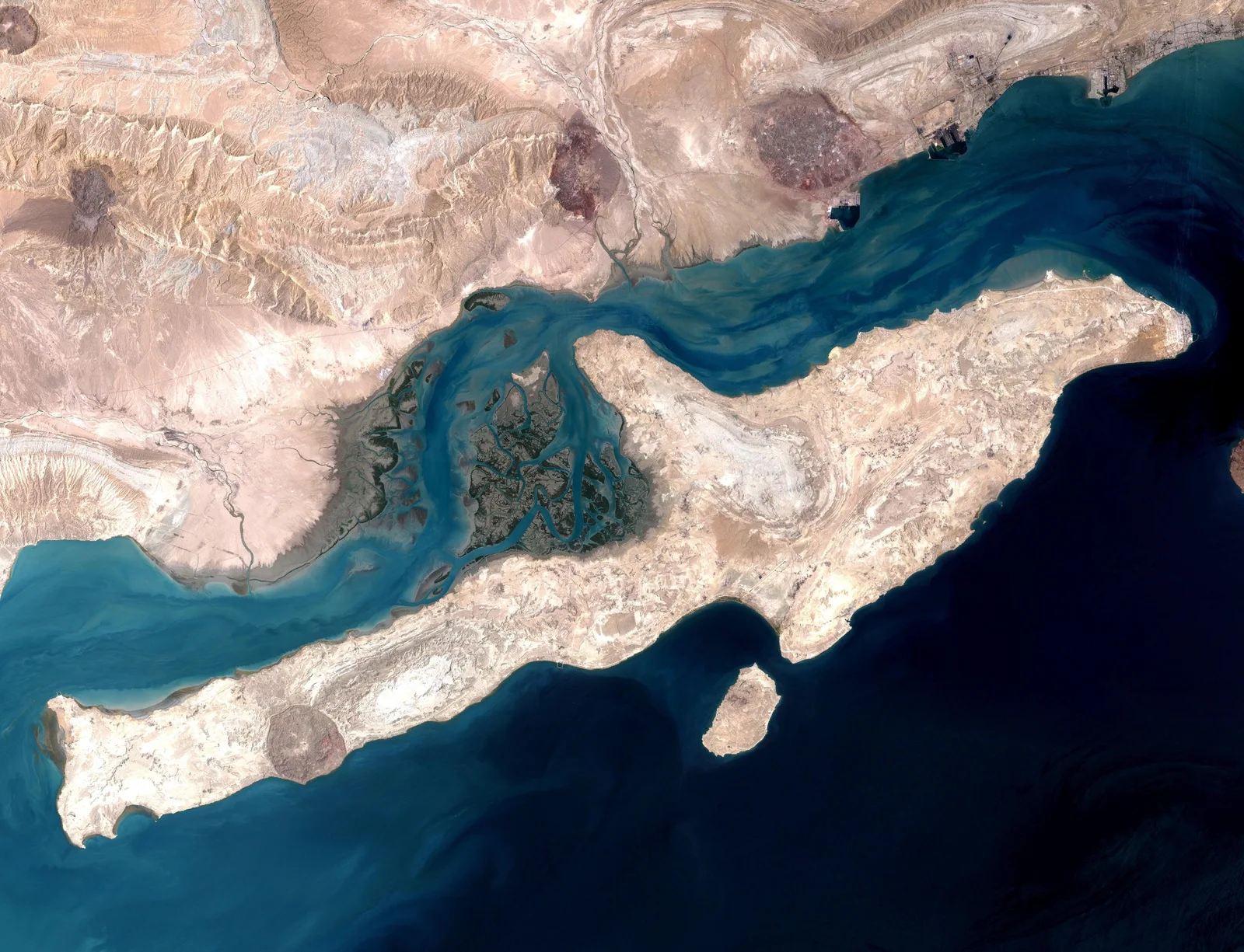
American strikes on November 2 against military installations on Iran's Qeshm Island demonstrated the fragility of this suspension. Washington described the operation as a defensive measure targeting surface-to-air missile systems threatening its forces. American officials nevertheless indicated that these limited strikes did not necessarily signal the beginning of another major military campaign.
This distinction is essential. The war has not disappeared; its rhythm has changed. It continues through targeted strikes, threats of retaliation, maritime restrictions, and negotiations conducted under military pressure. Each side seeks to improve its position without immediately bearing the costs of another general escalation.
Hormuz, the Real Center of Gravity
The Strait of Hormuz now occupies a decisive position in the balance of power. This maritime passage between Iran and the Arabian Peninsula is one of the world's principal energy corridors. Before the war, oil shipments passing through it were equivalent to approximately one-fifth of global petroleum consumption.
Iran's ability to disrupt this traffic transforms conventional military weakness into strategic leverage. Tehran does not possess the resources to compete indefinitely with American air and naval forces in a direct confrontation. It nevertheless retains asymmetric capabilities — anti-ship missiles, drones, mines, fast attack craft, and coastal installations — capable of making navigation dangerous, expensive, and difficult to secure.
The events of November 5 illustrate this strategy. Iran's Revolutionary Guards reported several incidents involving oil tankers and a tugboat in the strait, including fires attributed to mines or the use of unauthorized shipping routes. The United Kingdom Maritime Trade Operations organization, meanwhile, recorded at least five maritime incidents since November 1. Iranian claims alone cannot establish the full circumstances of these events, but they demonstrate how maritime insecurity has become an instrument of confrontation.
Pressure on Hormuz extends far beyond the volume of oil actually prevented from passing through. It affects insurance premiums, transportation costs, delivery schedules, shipowners' decisions, and market expectations. A maritime route can remain partially open while becoming sufficiently uncertain to disrupt international trade.
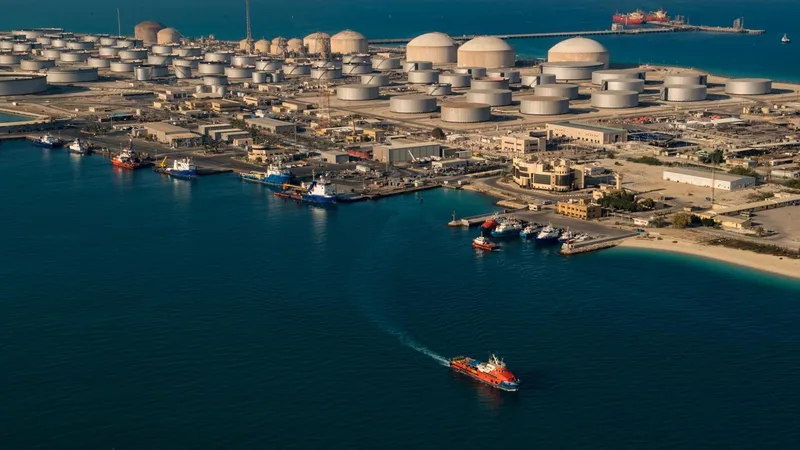
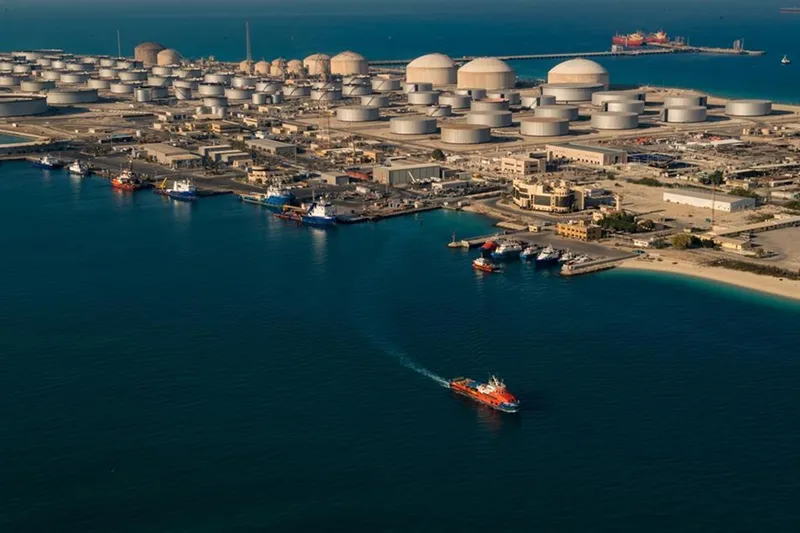
This distinction explains why the recovery of some shipping volumes does not signify a return to normal conditions. Gulf producers are seeking to make greater use of terminals and infrastructure capable of bypassing the strait, particularly through Oman, Fujairah, and the Red Sea. These alternatives reduce certain vulnerabilities but cannot fully replace the corridor's capacity.
On November 5, Brent crude closed at $98.29 per barrel and US West Texas Intermediate at $90.52, following increases of approximately 3.9% and 2.7%, respectively. These movements followed a substantial correction driven by hopes of a diplomatic settlement. They illustrate how oil prices now respond to the alternating signals of negotiations and military incidents.
Oil has therefore become both an indicator of the war and an instrument within it. For importing economies, prolonged disruption means pressure on energy costs, transportation, inflation, and public finances. For Gulf producers, the problem is different: possessing vast reserves no longer guarantees the ability to export them freely.
Washington Confronts the Limits of Coercion
American military power remains a central factor in the conflict. The United States possesses intelligence, air projection, precision-strike, and naval protection capabilities that enable it to degrade Iranian military installations and maintain a substantial operational presence across the region.
Yet this superiority does not automatically resolve the political problem.
Destroying air-defense batteries, launchers, or military infrastructure is not sufficient to guarantee the disappearance of Iran's disruptive capabilities. Some of these assets can be dispersed, concealed, rebuilt, or replaced by less expensive systems. More importantly, no bombing campaign can, by itself, guarantee Tehran's acceptance of American conditions.
The Trump administration faces this contradiction. Renewed offensives could increase pressure on Iranian authorities, but they would also expose American forces, regional partners, and energy markets to further retaliation. Conversely, an agreement leaving significant Iranian capabilities intact could be portrayed by domestic political opponents as an inadequate settlement.
The American elections of November 3 introduced an additional domestic constraint. The conflict, increasingly unpopular among substantial sections of public opinion, became an issue in the electoral debate, although attributing the results to this factor alone would be excessive. Donald Trump and Vice President JD Vance have themselves acknowledged its political costs.
Washington must now reconcile three objectives that do not necessarily reinforce one another: maintaining credible pressure on Iran, preventing further economic destabilization, and securing an agreement that can be presented as a strategic achievement.
This equation becomes more difficult as the war continues. Time, initially expected to strengthen pressure on Tehran, is also becoming a constraint on American policy.
Tehran, Between Resistance and Exhaustion
Iran's strategy follows a different logic. Confronted with a militarily superior adversary, the objective is not necessarily to achieve a conventional victory, but to preserve political continuity, retain retaliatory capabilities, and impose sufficiently high costs to make continued military operations less attractive.
The partial closure of Hormuz, threats against American interests, and mobilization of regional networks form part of this approach. They allow Iran to transfer some of the war's costs to its adversaries and the international economy.
But this strategy has its own limits.
The destruction sustained, commercial restrictions, sanctions, and economic uncertainty reduce the Iranian state's financial capacity. Military pressure weighs on infrastructure and the resources required for reconstruction. A prolonged confrontation can also aggravate domestic economic difficulties and social tensions.
Tehran is therefore seeking to convert its capacity for resistance into political and economic guarantees. Demands reported by Reuters include lifting the American naval blockade, easing sanctions, releasing frozen Iranian assets, and obtaining war reparations. Iranian authorities also want ceasefire arrangements to take account of other regional fronts, particularly Lebanon.
These conditions reflect a fundamental concern: preventing a suspension of hostilities from leaving Iran economically weakened, militarily exposed, and deprived of its principal bargaining instruments.
Iran's position should not, however, be confused with an unlimited capacity to resist. The country may prolong the costs of confrontation without necessarily being able to control all its consequences. The longer the war continues, the greater the potential divergence between available resources and declared ambitions.
Diplomacy Trapped by Its Own Conditions
Qatar occupies a central position in mediation efforts. Doha has intensified exchanges with Iranian and American representatives in an attempt to narrow positions that remain far apart.
On November 5, a senior Iranian official told Reuters that a new nuclear proposal had been transmitted to Washington through Qatar. The detailed contents of the proposal were not made public. Tehran nevertheless maintains that certain preliminary conditions must be met before substantive nuclear negotiations can begin, while Washington intends to incorporate the nuclear issue into the earliest stages of a settlement.
This disagreement reveals the principal diplomatic obstacle: the two sides cannot agree on the sequence of concessions.
Iran wants economic and security guarantees before addressing nuclear restrictions. The United States, by contrast, seeks assurance that reducing its pressure will produce verifiable commitments concerning Iran's nuclear program and maritime security.
The negotiations therefore concern not only the concessions themselves, but also their timing, reversibility, and verification mechanisms.
A provisional agreement could theoretically provide for a simultaneous reduction in maritime attacks and American restrictions. Such an arrangement might reduce immediate risks without resolving every nuclear and regional dispute. Its difficulty would lie in the guarantees: each side fears that the other could benefit from initial concessions without fulfilling subsequent obligations.
The visit to Moscow by Iranian official Mohsen Rezaei, who met Vladimir Putin on November 5, also highlights the international dimension of this search for guarantees. Russia has strategic interests in its relationship with Tehran, but its diplomatic involvement does not mean it can impose a compromise on Washington.
China, for its part, is pursuing energy and commercial stability. Its economic relationship with Iran gives it instruments of influence, while its dependence on international trade encourages it to avoid prolonged disruption of maritime routes.
The conflict has thus entered a configuration in which several powers can facilitate de-escalation without individually possessing the means to guarantee its success.
Israel and the Limits of a Partial Agreement
For Israel, the Iranian question extends beyond the Strait of Hormuz and the restoration of oil exports.
Israeli concerns focus primarily on nuclear capabilities, ballistic missiles, and armed organizations supported by Tehran. An agreement restoring maritime trade without guarantees concerning these dimensions could therefore leave some of the underlying causes of confrontation unresolved.
This potential divergence between American and Israeli priorities is an important factor. Washington must consider the war's global economic consequences, its regional military commitments, and its domestic political constraints. Israel places particular emphasis on the evolution of the Iranian military threat and its own security.
The two approaches may converge on certain objectives while differing over acceptable levels of risk and the conditions of a settlement.
Lebanon adds another layer of difficulty. Confrontations involving Hezbollah and tensions on other regional fronts complicate the definition of a genuinely comprehensive ceasefire. A suspension of hostilities between Washington and Tehran could coexist with continued violence elsewhere, rapidly undermining any arrangement.
The war against Iran cannot therefore be understood as a strictly bilateral confrontation. It belongs to a regional security system in which developments on one front can influence the others.
November and December: The Period of Decisions
Three trajectories remain conceivable in the short term.
The first would involve a prolonged but limited confrontation. The United States would continue occasional operations intended to protect its forces and reduce Iran's disruptive capabilities. Tehran would maintain calculated maritime and regional pressure, while mediators sought to prevent a return to large-scale offensives.
This configuration would allow each side to retain bargaining leverage, but it would prolong the risk of incidents. An attack on a vessel, a strike causing substantial casualties, or a miscalculation could trigger an escalation that neither side had initially intended.
The second trajectory would involve a new American military campaign, potentially coordinated with Israel. It could target military infrastructure, missile systems, and certain Iranian strategic facilities on a broader scale. Its consequences would depend on the extent of the strikes and Tehran's response. Intensified attacks against energy infrastructure or maritime routes could generate another shock in international markets.
The third trajectory would be a provisional agreement. A gradual de-escalation formula could allow Hormuz to become more secure, certain restrictions to be relaxed, and nuclear discussions to resume. It would not constitute a definitive peace, but could create the conditions for broader negotiations.
These scenarios are not necessarily mutually exclusive over time. A period of limited confrontation may precede an agreement, while advanced negotiations can be interrupted by military action. The sequence of events matters as much as their nature.
The most significant indicators will be American force movements, the intensity of maritime attacks, changes in commercial traffic, statements by mediators, and, above all, the possible emergence of reciprocal commitments supported by verification mechanisms.
The First Half of 2027: Rebuilding Regional Security
In the medium term, the conflict raises a question broader than the immediate cessation of strikes: what security system can emerge after eight months of war?
One possibility would be the stabilization of a deterrence equilibrium. Iran would retain certain military capabilities, the United States would maintain a reinforced presence in the Gulf, and the principal actors would seek to avoid operations capable of triggering a general confrontation. Such a situation could reduce the intensity of fighting without eliminating the war's underlying causes.
A second possibility would be the establishment of a more structured negotiating framework, combining nuclear guarantees, maritime arrangements, and regional mechanisms for preventing incidents. Such a framework would require gradual concessions, credible monitoring, and coordination among actors whose interests remain substantially divergent.
A third possibility would be the entrenchment of intermittent confrontation, with negotiation phases alternating with military operations and episodes of economic disruption. This situation could encourage the permanent militarization of energy routes and accelerate investment in alternative infrastructure without delivering genuine stability.
For the Gulf monarchies, the consequences would be profound. Economic diversification strategies, industrial investment, logistics infrastructure, and financial ambitions depend on a relatively predictable trading environment. Increasing security risks raise protection costs and may alter investment decisions.
For Europe and Asia, the war is a reminder that energy security depends not only on available production volumes, but also on transportation, financing, and insurability. Even when global production remains sufficient, the geographical concentration of energy flows creates vulnerabilities capable of transmitting a regional crisis rapidly across the international economy.
Over a longer horizon, the consequences could also affect military doctrine. The conflict demonstrates the potential of asymmetric capabilities to challenge freedom of navigation, but also the limitations of air coercion when it is not accompanied by a political settlement.
Victory and Peace Are Not the Same Thing
The war against Iran exposes an old contradiction in international relations, now particularly visible in the Gulf: a power may possess overwhelming military superiority without having the means to impose a political order accepted by its adversary.
The United States can strike Iranian installations, neutralize military systems, and protect certain maritime routes. It cannot mechanically transform those capabilities into durable diplomatic guarantees. Iran can disrupt trade, impose economic costs, and preserve retaliatory instruments. Yet it cannot indefinitely compel its adversaries without exposing its own economy and security.
These two logics intersect in a situation where each side retains the means to prolong confrontation, while the conditions necessary to end it remain contested.
The decisive question in the coming weeks will therefore not simply be whether further strikes take place. It will be whether Washington and Tehran can accept a mechanism in which one side's concessions are not immediately interpreted as the other's victory.
The Strait of Hormuz could reopen more fully before a nuclear agreement is reached. Bombing could cease without sanctions being lifted. Diplomatic exchanges could advance without regional tensions disappearing. Each of these developments would represent a partial reduction in conflict, not necessarily its resolution.
Eight months after the beginning of the war, the difficulty is no longer simply to measure what military operations have destroyed. It is to understand what they have made politically possible.
Peace will not emerge merely because the means of fighting have been exhausted. It will depend on the adversaries' ability to construct guarantees they consider less dangerous than continuing the war.
For now, that condition remains beyond reach.
Main Sources
- Reuters, November 3, 2026 — American strikes on Qeshm Island and the state of negotiations between Washington and Tehran.
- Associated Press, November 3, 2026 — Military developments, regional mediation, and the positions of the principal parties.
- Reuters, November 5, 2026 — Tanker incidents in the Strait of Hormuz and UK Maritime Trade Operations reporting.
- Reuters, November 5, 2026 — Transmission of an Iranian nuclear proposal to the United States through Qatar.
- Reuters and oil market data, November 3–5, 2026 — Brent and WTI price movements and market reactions to diplomatic developments and maritime risks.
- The Washington Post, November 5, 2026 — Economic and domestic political consequences of the war in the United States.
- The Wall Street Journal, November 2026 — Adjustments to Gulf oil flows and regional logistical constraints.
Analysis current as of November 6, 2026. Reported developments are distinguished from strategic interpretations and prospective scenarios, which should not be understood as definitive forecasts.
Atlas Limits Research Desk
Atlas Limits’ editorial and analytical desk.