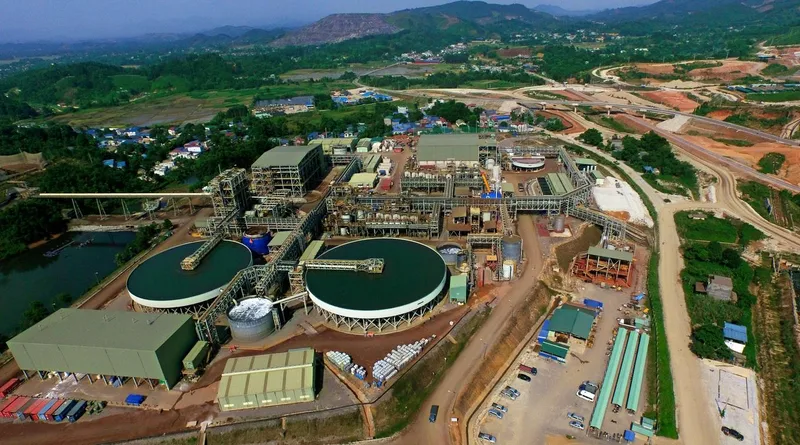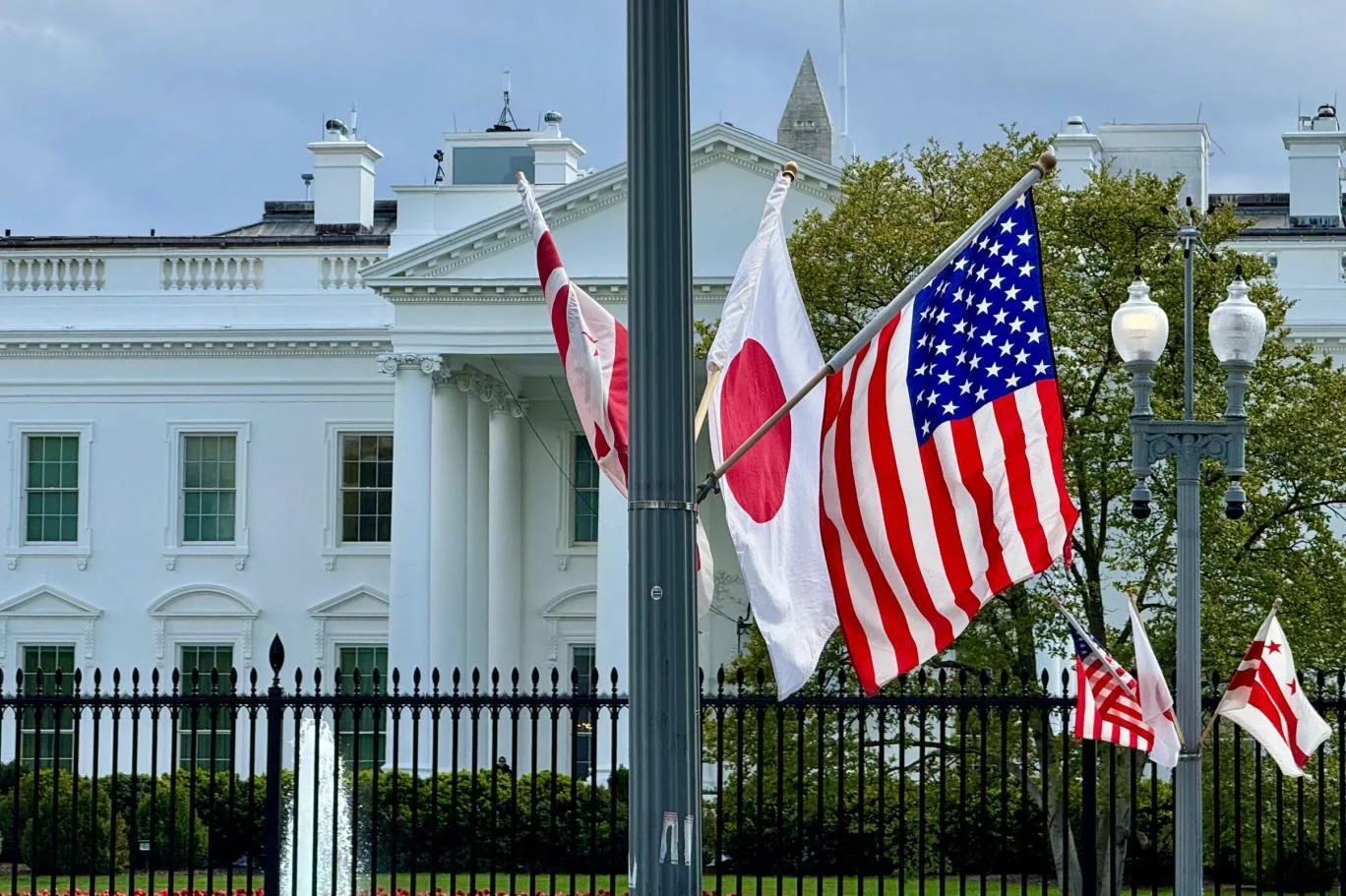
By committing to mobilize up to $550 billion to support investment in the United States, Japan is participating in a profound transformation of the economic relationship between Washington and its allies. Behind the promise of stronger industrial cooperation lies a strategic contradiction: Tokyo is helping finance American reindustrialization precisely when it is attempting to rebuild its own technological capabilities. Caught between security dependence, commercial imperatives, and ambitions for industrial sovereignty, the US–Japan alliance is entering a new phase in which capital itself has become an instrument of geopolitical negotiation.
An Alliance That Now Extends Beyond Trade
For several decades, the economic relationship between the United States and Japan rested on a relatively identifiable form of complementarity.
Japanese companies exported to the American market, gradually established local manufacturing operations, and participated in value chains organized around international trade and economic integration.
This relationship frequently experienced tensions, particularly in automobiles, electronics, and semiconductors. Nevertheless, it remained grounded in a shared conviction: economic interdependence was a source of prosperity and strategic stability.
That framework is changing.
Washington is no longer interested merely in attracting Japanese products, technologies, and corporate investment. The United States increasingly seeks to mobilize the financial resources of its partners to accelerate the reconstruction of its domestic industrial base.
Japan's commitment to an investment and financing framework potentially reaching $550 billion is among the clearest manifestations of this transformation.
The figure does not represent an immediate budgetary transfer from Tokyo to Washington.
Rather, it encompasses potential investments, loans, guarantees, and other financing instruments intended to support industrial projects on American territory.
This distinction is essential.
The arrangement is not a single public expenditure but a financial architecture capable of directing substantial capital toward sectors considered strategically important by the United States.
The implications therefore extend beyond the headline figure.
The central issue is whether one economic power can influence another sovereign and technologically advanced country's investment priorities through the combined leverage of trade, finance, and security.
Japan is becoming a financial partner in America's industrial reconstruction while simultaneously attempting to address its own structural vulnerabilities.
$550 Billion: The Financial Transformation of the Alliance
The scale of Japan's commitment must be understood within the broader transformation of American economic policy.
For several years, Washington has pursued the reshoring of industrial activities considered essential to its economic and national security.
Semiconductors, batteries, energy infrastructure, critical minerals, and advanced manufacturing equipment have become central components of this strategy.
American industrial policy combines several instruments: tax incentives, subsidies, technological restrictions, investment screening, and bilateral trade negotiations.
A further dimension is now emerging: the mobilization of allied capital.
Japan occupies a particularly important position within this framework.
Having ranked as the world's third-largest economy for decades before being overtaken by Germany, Japan retains substantial industrial and financial capabilities.
Its companies occupy critical positions in advanced materials, manufacturing equipment, automotive production, robotics, and electronic components.
Japanese financial institutions also possess extensive experience in international infrastructure and industrial project financing.
Organizations such as the Japan Bank for International Cooperation (JBIC) and Nippon Export and Investment Insurance (NEXI) can play important roles in structuring cross-border financing arrangements.
Such institutions make it possible to mobilize capital volumes considerably greater than direct government expenditure alone.
But their involvement raises a fundamental question.
When financial resources supported by the Japanese state are directed toward American infrastructure, how much of the resulting industrial value ultimately returns to Japan?
The answer depends on the structure of individual projects.
An investment in the United States may benefit a Japanese company, generate equipment exports, or strengthen its international commercial position.
Conversely, it may primarily create employment, productive capacity, and technological advantages within the American economy.
The origin of financing does not necessarily determine where industrial value is created.
This separation between financial contribution and industrial control is what makes Japan's commitment a geopolitical issue.
Semiconductors: The Clearest Expression of a Strategic Contradiction
The semiconductor industry provides perhaps the most revealing example of the tensions emerging within this relationship.
During the 1980s, Japan held a dominant position in several segments of the global semiconductor industry.
Companies such as NEC, Toshiba, Hitachi, and Fujitsu ranked among the sector's leading manufacturers.
Japanese strength rested on a combination of manufacturing excellence, technological research, industrial coordination, and government support.
Over time, however, that dominance eroded.
The rise of South Korean manufacturers, Taiwan's emergence as a global center for advanced chip fabrication, and the transformation of semiconductor business models fundamentally altered the industry's structure.
American companies consolidated their leadership in chip design, while specialized Asian foundries became increasingly important in manufacturing.
Japan retained strategic positions in materials, production equipment, and selected components but lost much of its influence in advanced logic semiconductor manufacturing.
Tokyo is now attempting to reverse that decline.
One of the central pillars of this ambition is Rapidus, a semiconductor company supported by the Japanese government and several major domestic industrial groups.
Its objective is to restore Japan's ability to manufacture advanced chips through international technological partnerships.
The undertaking is exceptionally ambitious.
It requires enormous capital investment, highly specialized expertise, and the construction of an industrial ecosystem capable of competing with the world's most advanced manufacturers.
Yet while Japan is pursuing this domestic technological revival, it is also participating in the financing of additional semiconductor manufacturing capacity in the United States.
Industrial projects under consideration in New York State illustrate this development.
The expansion of American semiconductor production, including projects associated with GlobalFoundries, reflects Washington's determination to strengthen domestic supply security and reduce selected external dependencies.
These facilities are not necessarily direct technological competitors to Rapidus.
GlobalFoundries focuses extensively on differentiated semiconductor technologies and specialized manufacturing processes, whereas Rapidus aims to produce leading-edge logic chips.
The contradiction therefore does not lie primarily in immediate competition between two factories.
It lies in the potential competition for financial resources, manufacturing equipment, engineering talent, and political priorities.
Japan is attempting to rebuild a strategic industry at home while helping reinforce the industrial capabilities of its principal ally.
The underlying question is one of strategic priorities.
Rapidus: Rebuilding a Lost Technological Power
Rapidus represents one of Japan's most consequential industrial initiatives in decades.
Its development reflects a broader strategic realization.
Control over advanced semiconductors is no longer simply a matter of commercial competitiveness.
It increasingly determines military capabilities, artificial intelligence development, telecommunications infrastructure, digital systems, and technological autonomy.
Tokyo now considers excessive dependence on foreign production centers a national vulnerability.
These concerns have intensified amid tensions between China and Taiwan, disruptions to international supply chains, and increasingly restrictive American controls on selected technologies.
Japan nevertheless retains important advantages.
Its industrial ecosystem possesses expertise in ultra-pure materials, specialized chemicals, semiconductor manufacturing equipment, and precision engineering.
Companies such as Tokyo Electron, SCREEN Holdings, Shin-Etsu Chemical, and JSR operate in essential segments of the global semiconductor supply chain.
But having competitive suppliers does not automatically translate into the ability to manufacture advanced chips domestically.
Such an industry requires sufficient production volumes, international customers, reliable energy infrastructure, and continuous investment.
It also requires the capacity to absorb the considerable financial risks associated with each successive technological generation.
Rapidus must therefore overcome several challenges simultaneously.
It must master advanced manufacturing processes, achieve commercially viable production yields, attract customers, and secure the financing required for future expansion.
Government support is intended to address these constraints.
Yet that support comes amid a particularly difficult fiscal environment.
Japan has one of the highest public debt burdens among advanced economies.
Population aging, social expenditure, and infrastructure modernization needs place persistent pressure on public finances.
Against this backdrop, every major international financial commitment raises questions about resource allocation.
It would be misleading to claim that Japanese investment in the United States automatically prevents Tokyo from financing Rapidus.
The instruments involved, their beneficiaries, and their financial structures may differ substantially.
Nevertheless, both strategies draw upon Japan's broader national capacity to organize, guarantee, and sustain large-scale industrial investment.
The relevant trade-off is therefore not exclusively budgetary.
It is institutional, technological, and strategic.
Washington Turns Market Access Into Industrial Leverage
American industrial policy rests on a fundamental economic reality: the United States possesses a domestic market whose importance remains difficult for major trading partners to ignore.
For Japanese companies, particularly automotive manufacturers, access to American consumers is critically important.
Japanese automakers have operated manufacturing facilities in the United States for decades.
Toyota, Honda, Nissan, and other companies progressively established local production, assembly, and research capabilities.
Initially, these investments served several purposes: reducing logistics costs, navigating trade barriers, limiting currency exposure, and bringing production closer to customers.
The current approach goes further.
Industrial localization is increasingly becoming an explicit component of trade negotiations.
Washington uses its market power to encourage investment decisions that favor American territory.
Tariffs, market access conditions, and financial commitments are becoming interconnected elements of a broader negotiating framework.
For Tokyo, the equation is difficult.
Rejecting American demands could expose Japanese companies to less favorable commercial conditions.
Accepting them may strengthen America's productive base without guaranteeing equivalent benefits for Japan's domestic economy.
This creates an asymmetry.
The United States possesses considerable commercial leverage, while Japan must simultaneously preserve its exports, industrial interests, and strategic alliance.
The question is not whether Washington and Tokyo remain partners.
They unquestionably do.
The question is how the costs and benefits of that partnership are distributed.
The China Factor: Security Dependence Shapes Economic Choices
The economic relationship between Japan and the United States cannot be separated from its geopolitical environment.
Japan occupies a central position within the strategic tensions of the Indo-Pacific.
China's growing military capabilities, territorial disputes in the East China Sea, developments surrounding Taiwan, and North Korea's ballistic missile programs shape Tokyo's security calculations.
Under these circumstances, the alliance with Washington remains a fundamental pillar of Japanese defense.
The American military presence, deterrence capabilities, and bilateral security arrangements contribute directly to the protection of the Japanese archipelago.
This strategic dependence inevitably influences economic negotiations.
Tokyo does not negotiate with Washington as it would with a trading partner that plays no role in its national security.
Industrial and commercial disputes exist within a much broader political relationship.
Japanese policymakers must consider the possibility that major economic disagreements could complicate security cooperation.
This does not mean Japan lacks autonomy.
Tokyo possesses considerable negotiating capabilities, independent strategic interests, and substantial influence in several industrial sectors.
Nevertheless, the security asymmetry affects the conditions under which those interests can be defended.
Washington can combine economic and strategic objectives that Tokyo cannot entirely separate.
American power increasingly derives from precisely this capacity to integrate different dimensions of bilateral relationships.
Markets, technology, finance, and security become mutually reinforcing instruments.
The Paradox of Japanese Global Value Chains
The analysis cannot, however, be reduced to a simple opposition between foreign investment and domestic industrial sovereignty.
Modern value chains are deeply internationalized.
An American semiconductor factory may depend on Japanese machinery, Japanese materials, and components supplied by Japanese companies.
It may also create additional demand for manufacturers operating within Japan.
This is particularly relevant in semiconductors.
Chip fabrication depends on highly specialized equipment, a significant portion of which is supplied by Japanese industrial companies.
The expansion of American manufacturing capacity can therefore generate additional orders for these suppliers.
Financing new facilities in the United States may consequently produce positive economic effects for Japan even when the factories themselves are located abroad.
But these interdependencies have limits.
The location of a factory determines a substantial share of direct employment, operational expertise, infrastructure investment, and tax revenue.
It also influences the development of regional ecosystems connecting suppliers, universities, research institutions, and specialized businesses.
Over time, such industrial concentrations can generate cumulative advantages.
A region that attracts advanced factories also attracts engineers, investment capital, research laboratories, and additional suppliers.
This is one reason governments are increasingly determined to locate strategic production capabilities within their own borders.
Japan may therefore benefit from American industrial expansion without capturing all its structural advantages.
The fundamental distinction is between participating in a value chain and controlling an industrial ecosystem.
Opportunity Cost Matters More Than the Headline Figure
The $550 billion commitment naturally attracts attention because of its magnitude.
But its economic significance cannot be assessed without examining its composition.
A repayable loan is not equivalent to a subsidy.
A public guarantee does not necessarily result in a cash disbursement.
A private investment may generate positive financial returns.
Similarly, financing provided to a Japanese company expanding its American operations may strengthen that company's international competitiveness.
Treating all these mechanisms as an economic loss for Japan would therefore be incorrect.
The relevant concept is opportunity cost.
Which projects might have been financed in the absence of these commitments?
What financial risks are being assumed by Japanese institutions?
Which companies receive the financing?
What proportion of the equipment, technologies, and services originates in Japan?
Where are the highest-value activities located?
And, most importantly, what lasting industrial capabilities result from these investments?
Without such information, it is impossible to conclude that Japan's commitments represent a net economic sacrifice.
But it would be equally premature to assume that they automatically constitute a balanced partnership.
The financial return on an investment and its strategic return are not necessarily identical.
A project may be profitable for investors while primarily strengthening the industrial sovereignty of the host country.
Conversely, international investment may help secure supply chains, expand commercial opportunities, and reinforce the technological position of the financing country.
The assessment must therefore extend beyond capital flows.
It must examine the actual distribution of the industrial capabilities being created.
Japan's Domestic Economic Vulnerabilities
Japan's international financial commitments come at a time of profound domestic economic transformation.
The country must simultaneously confront population aging, a shrinking workforce, rising energy requirements, and the modernization of several industrial sectors.
The yen's depreciation over recent years has also altered the economic balance.
A weaker currency can improve export competitiveness but increases the domestic cost of imported energy, raw materials, and certain industrial equipment.
For an economy heavily dependent on external energy supplies, this creates a significant constraint.
The energy transition represents another major challenge.
Japan is attempting to secure reliable electricity supplies while gradually reducing the carbon intensity of its economy.
Yet technological reindustrialization requires growing quantities of electricity.
Semiconductor factories, data centers, and artificial intelligence infrastructure depend on reliable grids, adequate generation capacity, and long-term investment.
Technological sovereignty is therefore inseparable from energy security.
This relationship is particularly important for Japan's industrial ambitions.
Building an advanced semiconductor facility is insufficient if electricity infrastructure, workforce capabilities, and supply chains cannot sustain its operations.
Tokyo must consequently balance several domestic priorities.
Semiconductor reconstruction, energy modernization, artificial intelligence development, defense capabilities, and demographic adaptation all require substantial resources.
Against this background, international financial commitments must be assessed alongside the transformation needs of Japan's own economy.
Is America Reindustrializing With Allied Capital?
Japan's case forms part of a broader transformation of American economic policy.
Washington is attempting to reduce industrial dependencies it considers strategically dangerous.
But rebuilding domestic production requires enormous investment.
Energy infrastructure, advanced manufacturing facilities, electricity networks, and critical supply chains demand substantial capital.
The United States possesses deep financial markets and exceptional investment-attraction capabilities.
Nevertheless, it increasingly seeks to mobilize resources from its trading partners.
This strategy offers several advantages to Washington.
It can accelerate industrial investment, distribute financial risks, and integrate foreign companies into the reconstruction of domestic production capacity.
It can also influence the geographic investment decisions of multinational corporations.
Over time, this approach could transform the nature of economic alliances.
Under the traditional model, partners exchanged products, invested across borders, and cooperated in selected strategic industries.
Under the emerging model, privileged access to the American market may increasingly be associated with financial commitments and industrial localization requirements.
The relationship becomes more explicitly transactional.
This development is not limited to Japan.
European and South Korean economies also face difficult choices between domestic investment priorities and American incentives to manufacture within the United States.
However, the terms of these relationships differ significantly.
Japan's case is distinctive because of the scale of its financial commitment and its security dependence on Washington.
It therefore provides an important illustration of the evolving economic relationship between the United States and its allies.
Industrial Sovereignty Is Not Measured by Investment Alone
One of the central lessons of this transformation concerns the definition of industrial sovereignty itself.
For much of the twentieth century, industrial sovereignty was associated primarily with the presence of powerful national corporations.
A country possessing major automotive, electronics, or chemical manufacturers could reasonably be considered an industrial power.
That definition is increasingly insufficient.
Multinational corporations distribute their operations across multiple territories.
Their investment decisions reflect market access, taxation, regulation, and competitiveness.
A Japanese company may develop a factory in the United States while retaining its headquarters, research centers, and some suppliers in Japan.
Yet certain skills and production capabilities may gradually become concentrated outside its home country.
Industrial sovereignty therefore depends on several factors: technological control, infrastructure availability, access to critical resources, financing capacity, and control over strategic decisions.
It also depends on whether a country can maintain essential production during a crisis.
From this perspective, the issue is not simply whether Japanese companies invest in America.
It is whether Japan retains the capacity to manufacture, innovate, and make independent decisions when its interests diverge from those of its partners.
This distinction becomes particularly important in dual-use industries serving both civilian and military applications.
Semiconductors, artificial intelligence, and advanced communications technologies sit precisely at this intersection.
An Economically Rational but Politically Asymmetric Alliance
It would be simplistic to portray Japan's financial commitment as an act of industrial surrender.
Tokyo may be pursuing several rational objectives.
Maintaining favorable commercial conditions with the United States provides major benefits for Japanese exporters.
The development of new American factories can create additional demand for Japanese industrial suppliers.
Technological partnerships may also improve access to specialized expertise and infrastructure.
Finally, close economic cooperation with Washington contributes to the stability of a security alliance essential to Japan's defense.
These benefits are real, even when they are difficult to quantify.
But they do not eliminate the underlying asymmetry.
The United States can use its domestic market and security role to influence the economic priorities of its partners.
Japan, meanwhile, must reconcile immediate commercial interests with its long-term industrial ambitions.
The outcome will depend on the specific structure of the projects financed.
If Japanese commitments support profitable activities, expand equipment exports, and strengthen domestic corporations, they may contribute to Japan's competitiveness.
If, however, they systematically favor American industrial localization at the expense of strategic domestic projects, their long-term industrial cost could become substantial.
It is too early to reach a definitive conclusion.
Yet the existence of this trade-off reveals an important transformation.
The alliance no longer rests solely on cooperation between two industrial powers.
It is also becoming a mechanism through which capital and productive capacity are redistributed geographically.
The Risk of a Two-Tier Industrial Sovereignty
Over the long term, this evolution could produce a paradox.
The United States could strengthen its industrial autonomy through investment from its partners, while those same partners remain dependent on Washington for security and access to selected technologies.
Such an arrangement would not necessarily disadvantage every company involved.
It might even improve the profitability of some Japanese corporations.
But the interests of multinational companies do not always coincide perfectly with the industrial objectives of their countries of origin.
A profitable factory in the United States does not automatically replace a strategic production capability in Japan.
Likewise, financial participation in American infrastructure does not guarantee priority access to its output during an international crisis.
Governments may impose export restrictions, redirect production, or prioritize domestic requirements.
Recent disruptions to international supply chains have demonstrated that the physical location of industrial capacity remains critically important.
This is precisely why governments are investing so heavily in domestic manufacturing capabilities.
Japan cannot ignore that reality.
Its strategy will likely require a balance between international industrial integration and the preservation of critical domestic capabilities.
The challenge will be determining which activities can be developed abroad without compromising national autonomy, and which must remain within Japanese territory.
The Real Test: Where Will Industrial Value Be Created?
The coming years will determine the actual consequences of Japan's commitment.
Announcing a financial framework is not sufficient to establish its effectiveness.
The projects ultimately approved, the amounts actually disbursed, the companies receiving support, and the financing conditions will all require scrutiny.
Industrial outcomes will matter just as much.
Will American facilities make extensive use of Japanese equipment?
Will Japanese companies retain decisive technological positions?
Will the financing arrangements generate sufficient returns to compensate for the risks assumed?
Will domestic projects, particularly Rapidus, obtain the resources necessary for their development?
And will the new American production capabilities strengthen collective economic security or create additional dependence on American territory?
These questions will determine whether Japan's commitment represents balanced industrial cooperation or a lasting redirection of its financial power toward Washington.
The $550 billion figure is therefore not, by itself, the decisive indicator.
The true measure will be the industrial value created, where that value is located, and who ultimately controls it.
Conclusion — The Price of Economic Security
The relationship between Japan and the United States is entering a phase in which the boundaries between trade, industry, finance, and national security are becoming increasingly difficult to distinguish.
Washington is seeking to rebuild its industrial base and is mobilizing the financial resources of its partners to support that objective.
Tokyo is simultaneously attempting to preserve access to the American market, strengthen its security alliance, and restore its own technological power.
These objectives are not inherently incompatible.
Well-structured industrial cooperation can benefit both economies.
But their coexistence does not guarantee an equitable distribution of advantages.
Japan must now resolve a major strategic contradiction: contributing to American industrial sovereignty without undermining the reconstruction of its own.
This contradiction extends beyond semiconductors.
It concerns energy, infrastructure, advanced technologies, and, more broadly, the ability of sovereign states to retain control over their economic trajectories.
America's evolving industrial policy is gradually transforming its relationships with allied economies.
Market access, infrastructure financing, and investment localization are becoming interconnected components of a single strategic negotiation.
For Japan, the challenge is to transform this pressure into productive cooperation rather than deeper dependence.
Because the fundamental question is not how much Tokyo will invest in the United States. It is what kind of industrial power Japan will remain once those investments have produced their consequences.
Atlas Limits — Understanding the forces reshaping the global economy.
Atlas Limits Research Desk
Atlas Limits’ editorial and analytical desk.